
 This is a re-post of the first of a series of articles I wrote about the trip my wife and I made to Gettysburg in 2010. On this, the 150th anniversary of the first day of that great and decisive Civil War battle, I thought it would be a fine idea to put this old post back into service. Part travelogue, part history lesson, it’s a good way to walk the hallowed battlefield and enjoy the charms of the town if you can’t actually be in Gettysburg for this weekend’s sesquicentennial events.
* * * * * * * * *
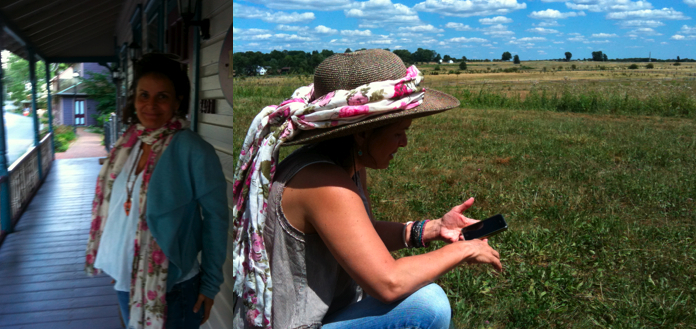

On Sunday June 27th, my wife Victoria and I gave our last performance of “The Vic & Paul Show” in it’s three-week run at PUSH Lounge in Woodland Hills. It was a satisfying end to a wonderful run — made all the more special by so many great friends, Northwestern pals, and people we dearly love but haven’t seen in ages who showed up to share the experience with us. It had been more than twenty years since we’d done a comedy show together – and exactly twenty years since we’d said “I do” in a Greek Orthodox service on a blistering hot day in Chicago.

With our 20th wedding anniversary on June 30th, the show was essentially a celebration of our two decades of married bliss – and as we struck the stage at PUSH for the last time, our thoughts turned to our upcoming anniversary trip: a return to the great Civil War battlefield at Gettysburg.
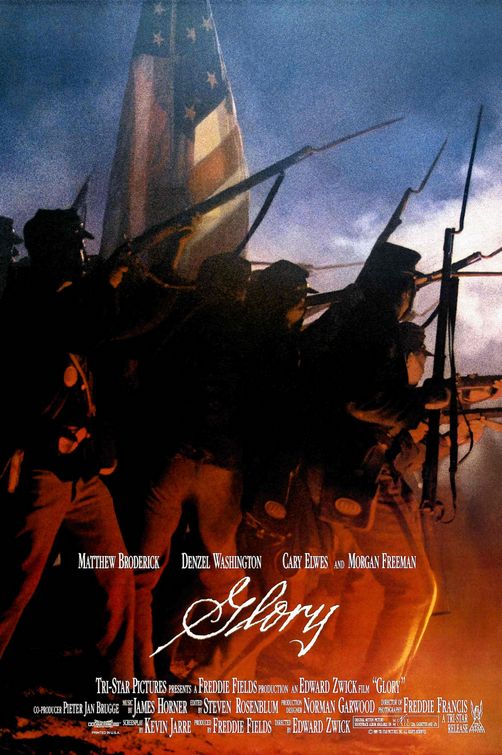 We were we going to Gettysburg for our 20th anniversary because that’s where we spent our first honeymoon in 1990. Back then I was in the early throes of a mad crush on Civil War history that was inspired by the Oscar-winning 1989 movie Glory and had continued unabated since. As we planned our nuptials, I gave my darling bride a choice of honeymoon excursions
1. A tour of National League ballparks
2. A tour of Civil War battlefields
That I could even propose two such options to my bride-to-be was proof that I was already the luckiest man in the world – but when she chose the battlefield tour, I was certain that our union (just like the Union that Lincoln’s armies defended on that hallowed ground) would long endure.
Our first stop in 1990 was Gettysburg, and while we did not plan it that way, we arrived on July 1st – the 127th anniversary of the first day of that epic 3-day battle. It was kismet. We were where we were meant to be. Thus, it felt right that on such a momentous marital (and martial) anniversary, we should go back to the small Pennsylvania crossroads town where Robert E. Lee’s 1863 invasion of the North came to a bold and bloody end. Romantic, yes?
 We flew into Philadelphia on June 30th, the eve of the battle, and drove west to Gettysburg. We wanted to make sure that we got to our Bed & Breakfast while these was still light on the battlefield. It was a 3-hour drive and we were hungry, so we stopped for a late lunch. But no service plaza grub would suit this history-loving couple – and with the help of her iPhone, Victoria located the perfect spot for a picturesque and historic nosh just a few miles off the turnpike. So, we turned off at the Morgantown exit, headed for the Inn at Saint Peters Village.
Saint Peters Village was entered onto the National Register of Historic Places in 2003. It’s a small, late 19th century industrial “company village” on the banks of French Creek in Chester County, PA.
 For about half a mile, vintage buildings line the main drag that winds up a steep, rocky ravine, with the creek running through giant boulders below. Artists and craftsmen have set up shop in the clapboard 19th century storefronts, and the biggest and most architecturally impressive of these is The Inn at Saint Peter’s Village, where we enjoyed lunch on a large wooden deck overlooking French Creek. It was beautiful. So far, so good.
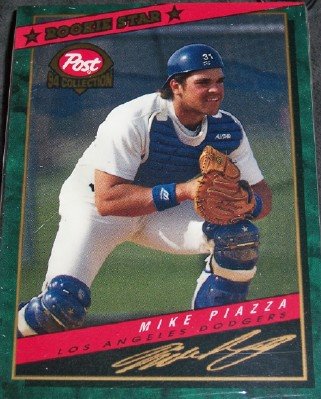 Interestingly, National League baseball managed to re-enter our honeymoon thoughts when our waitress casually mentioned that Mike Piazza’s dad “owned the whole town.” It turns out that arguably the greatest hitting catcher in Major League history (427 Home runs, career .308 batting average) grew up in nearby Phoenixville with his parents, Vince and Veronica. It was nice slice of local history to go with my pizza.
Hey, pizza and Piazza!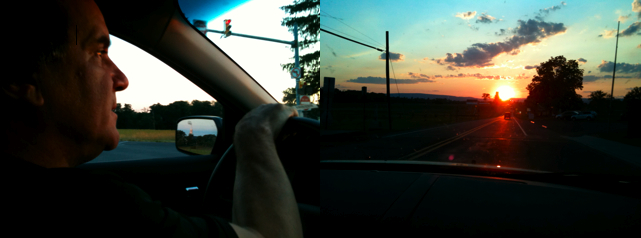
 It was nearing 6:00 PM as we drove into Gettysburg down PA Route 30 and onto the old Chambersburg Pike – the same road that General John Buford rode into town with his division of Union cavalry late in the day on June 30th, 1863. That evening long ago, a grimly determined Buford watched with concern as a brigade of Confederate infantry under General Pettigrew probed south from Cashtown along the Chambersburg Pike toward Gettysburg.
Pettigrew’s brigade had been sent by his division commander, General Henry Heth, of A.P. Hill’s Corps in search of much-needed supplies — including a cache of shoes they understood to be in the town.
But when Pettigrew saw Buford’s cavalry arriving south of town, he returned to Cashtown and told Heth and Hill what he had seen. Despite Pettigrew’s claim that Federal cavalry was on the Chambersburg Pike, neither of his superiors believed there was anything more than Pennsylvania militia in Gettysburg.
 Fate – and the fighting – would wait until tomorrow. And so, as Victoria and I pulled into the parking lot of The Doubleday Inn, would our own adventures on the Gettysburg battlefield wait until the following day.
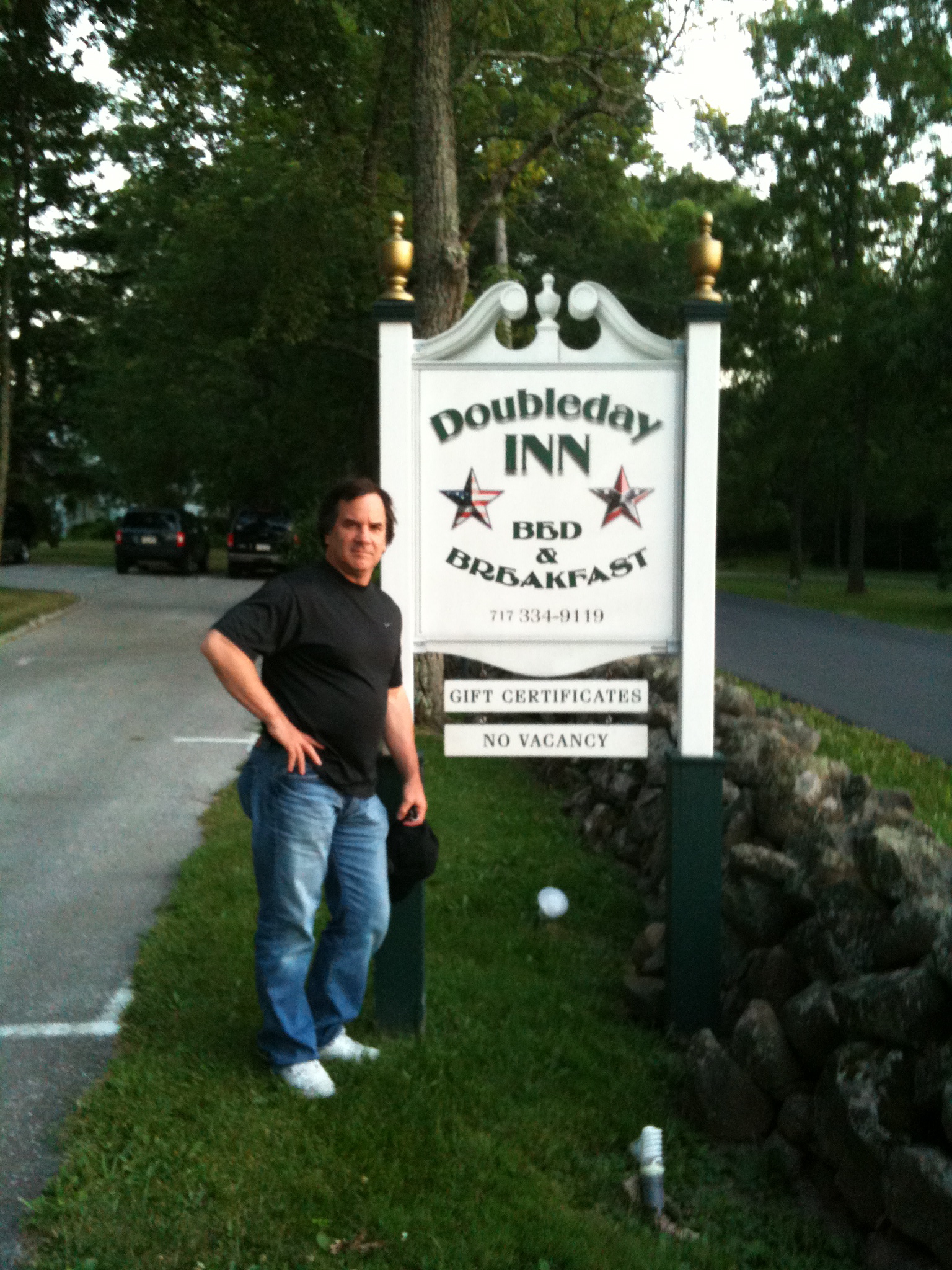 The charming house at 104 Doubleday Avenue, now The Doubleday Inn, was built in 1939 and it’s the only B & B or hotel located on the grounds of the Gettysburg National Military Park. It stands on the very ground that Buford and his cavalry would defend the next morning. There are 42 battlefield monuments within a quarter mile of the Inn honoring the regiments that took part in the fierce fighting that took place here on July 1, 1863.
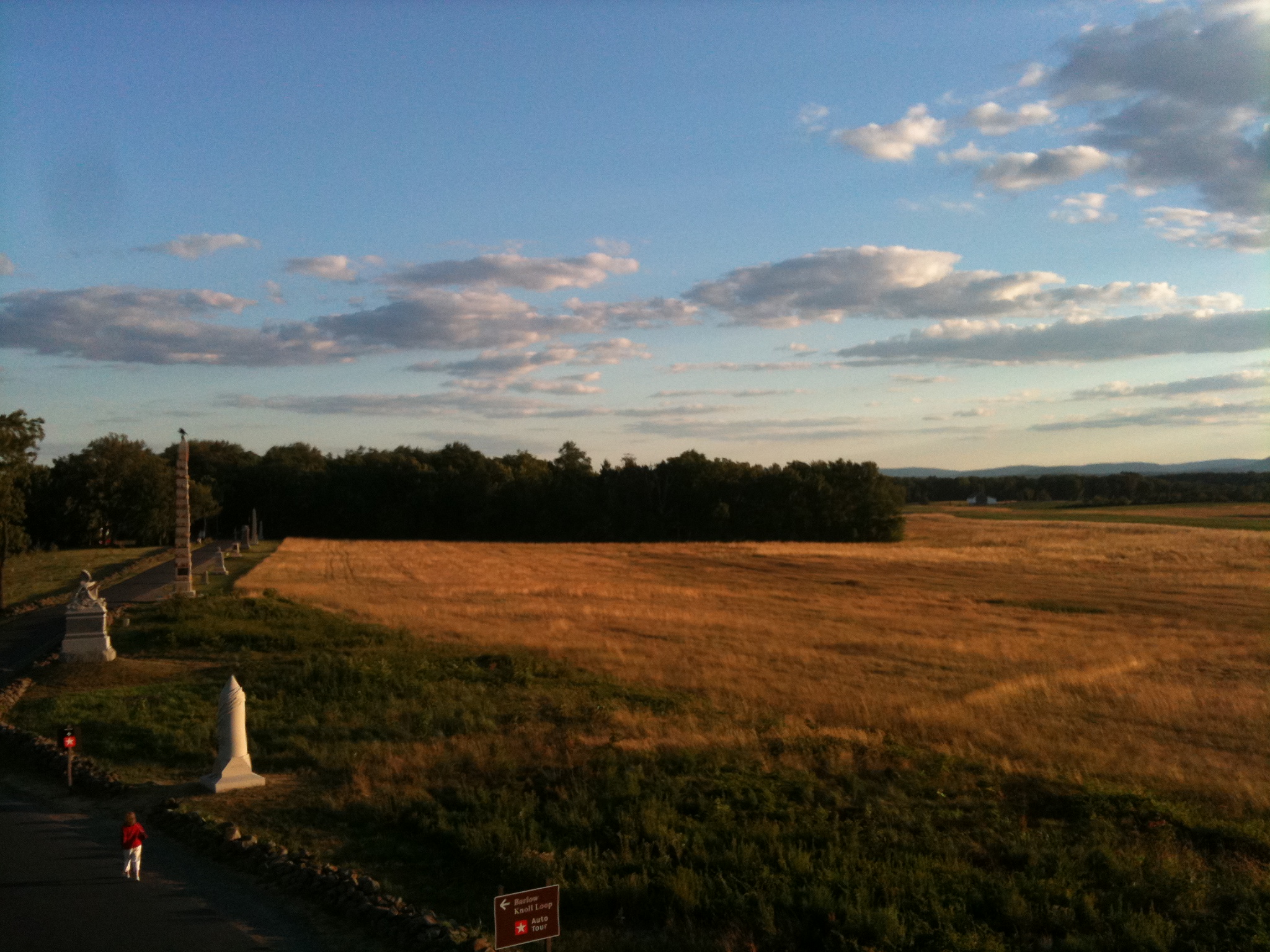 Before we turned in for the night, we took a sunset stroll along Doubleday Avenue on Oak Ridge to check out the monuments lining the road in front of the Inn.
Our favorite was the monument dedicated to the 11th Pennsylvania Volunteer Infantry. All of the monuments at Gettysburg are stirring, heartbreaking testaments to valor and sacrifice – but this one is unique because of a dog.
On the side of the monument that faced the enemy that bloody day is a cast iron representation of the regiment’s beloved mascot, a terrier named “Sallie,” who was said to have hated three things: Rebels, Democrats, and Women.
 According to the well-documented story, after the first day’s battle was over, faithful Sallie refused to leave the field where her brave boys had fought and fell. She stayed with her dead soldiers until she was found, weakened and close to death, a day after the battle. Sallie’s regiment nursed her back to health and she fought with them until she was killed in battle in February 1865. Sallie’s boys never forgot their faithful canine comrade – immortalizing her on their regimental monument.
 To this day, visitors paying their respects at the 11th Pennsylvania monument on Oak Ridge often leave dog biscuits and bones for the devoted Sallie – as they did on the evening that Victoria and I paused to remember the regiment’s service and sacrifice before going back to the Doubleday Inn to prepare for the next morning:
July 1, 1863 – the first day of the Battle of Gettysburg.

 “Forward men, forward for God’s sake…”
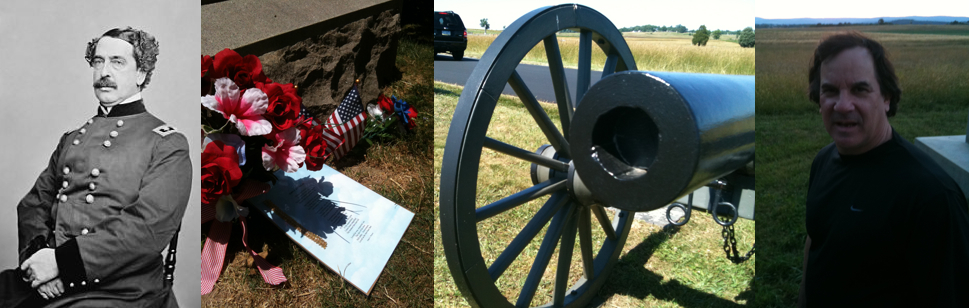

 On the morning of July 1st, my wife, Victoria, and I got up early enough to enjoy breakfast at The Doubleday Inn with our housemates — a collection of congenial history buffs and their spouses.
One of our fellow guests, a 40-something Pennsylvanian named John, was there by himself, and this was clearly not his first visit to Gettysburg. It was fun to see how enthused he was about getting out on the battlefield.
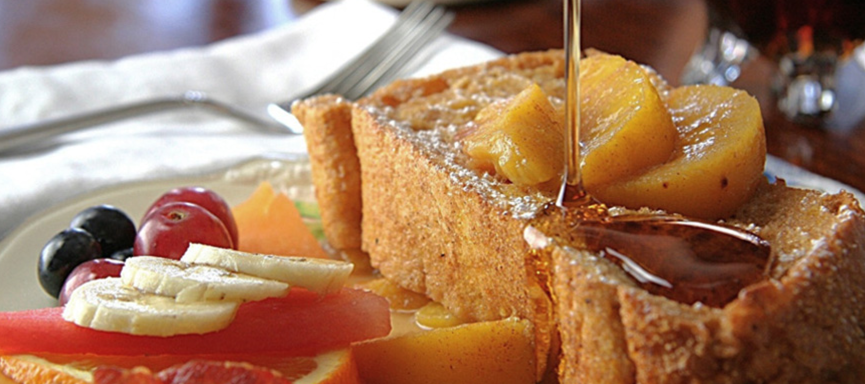 I shared John’s excitement as I downed my breakfast, a delicious, maple syrup drenched version of French toast that proved too heavy for Victoria. She needn’t have worried about the calories: battlefield tramping burns ‘em off big time.
By the time we left the Doubleday Inn on Oak Ridge that morning, headed for the new Gettysburg Visitor Center and Museum, we could imagine General John Buford’s battle-weary cavalry corps falling back under fire from Confederate General Henry Heth’s reinforced infantry to positions along Oak Ridge (and the adjacent McPherson’s Ridge) 147 years ago.
Buford’s boys had been fighting off Heth’s two brigades since 5:00 AM, and here we were, two honeymooning sluggards, just getting into action at 9:00.
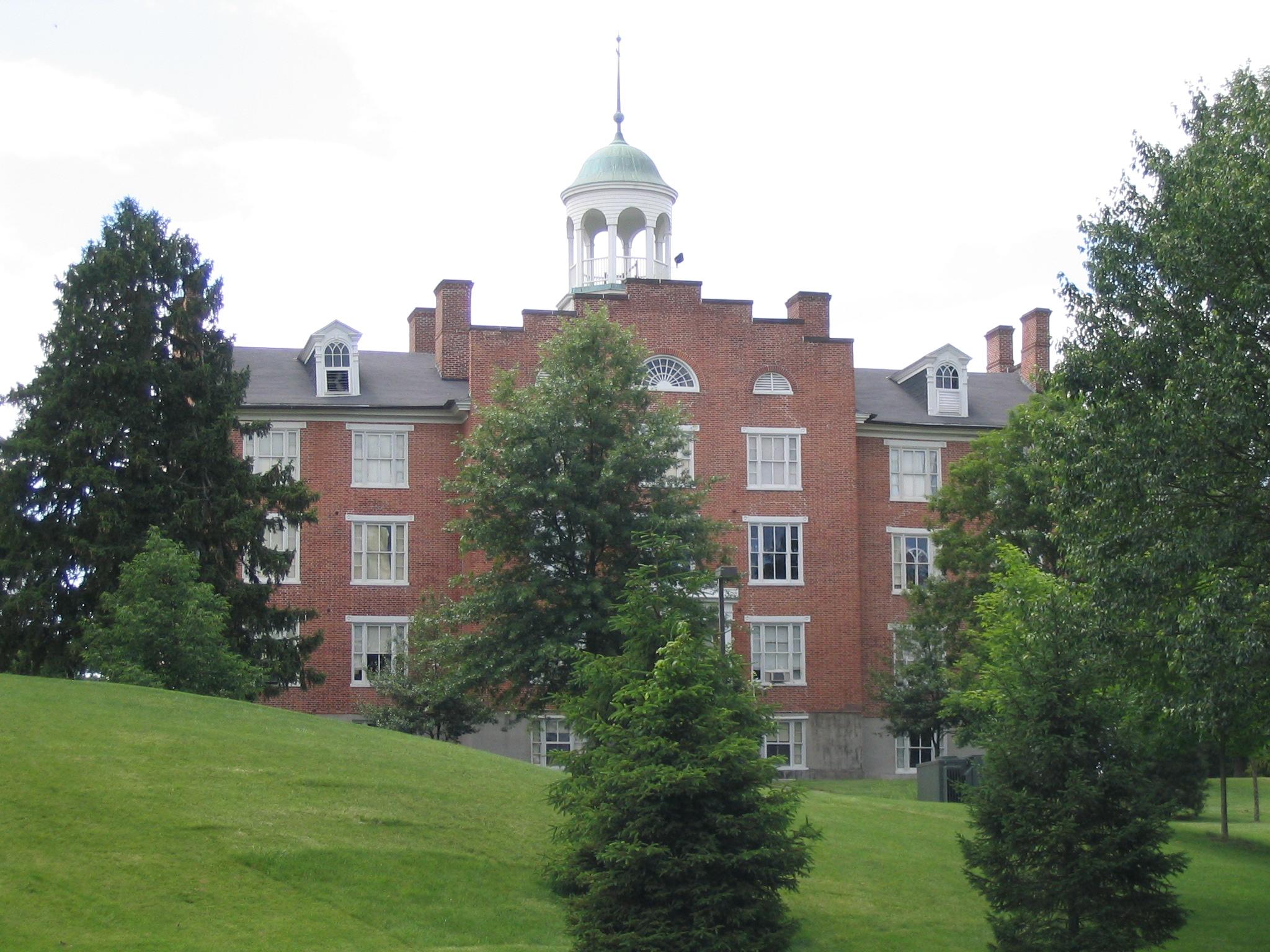 As we drove toward town and the Visitor Center, we could see the distinctive cupola of the Lutheran Seminary along Seminary Ridge, an important landmark on the battlefield in 1863 – and to this day. We could envision a grimly determined General Buford up in that cupola, field glasses in hand, watching the progress of the battle raging to his front, and looking anxiously to the rear for the approach of General Reynolds and his infantry corps.
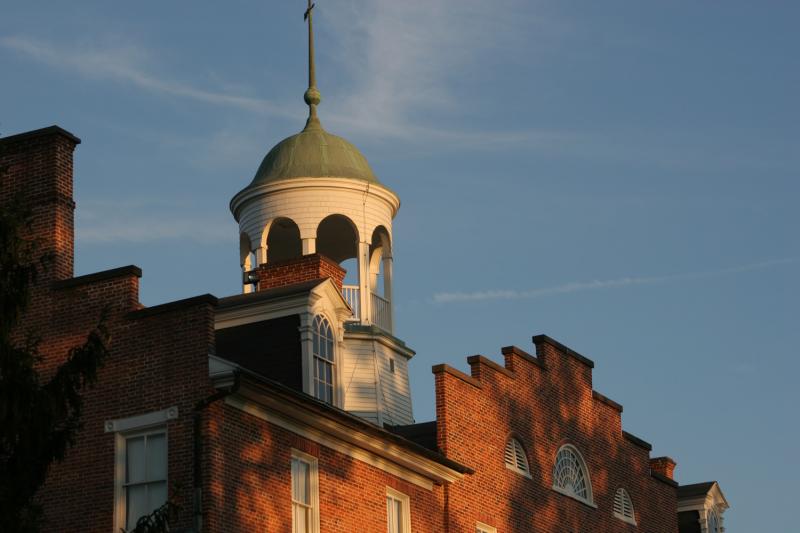 In fact, if we were there on that fateful morning in 1863, General Reynolds would soon be passing us on the road, riding up to the seminary and calling up to Buford, “How goes it, John?” Buford would reply, “The devil’s to pay!” and the next chapter of Gettysburg history would soon be written. But that would have to wait. We wanted to check out the new Visitor Center first.
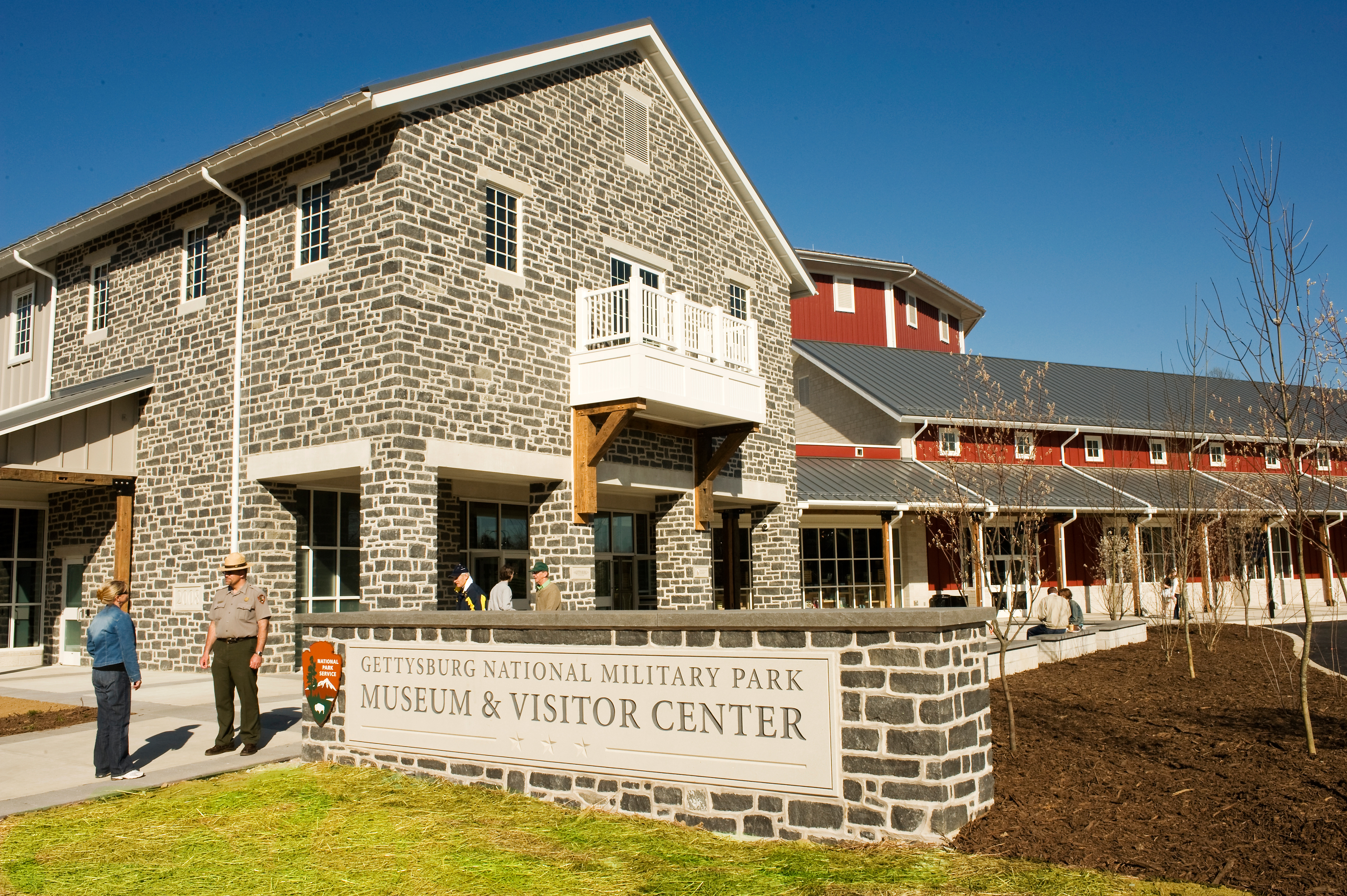 Our hosts at the Doubleday Inn (and several of our fellow guests) had spoken in glowing terms about the wonders of the new Museum and Visitor Center, which opened in April 2008 — and they were not blowing smoke. Victoria and I have been to a lot of National Park visitor centers, and this one blows them all away.
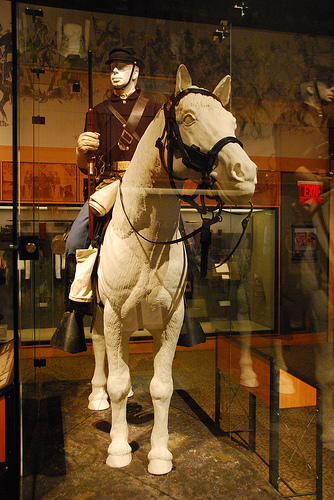 Far more than the usual place to pick up maps, brochures and a gift or two, the Gettysburg Museum and Visitor Center is 22,000 square feet of exhibits, battlefield relics, inter-active exhibits, and multi-media presentations, including the film, “A New Birth of Freedom”, narrated by Morgan Freeman (who also starred in the film, Glory, which triggered my Civil War obsession in 1989).
Victoria and I watched the film and checked out the incredible exhibits – including the stretcher used to carry the mortally wounded Stonewall Jackson from the field at Chancellorsville on May 2, 1863. (Jackson’s death 8 days later would have dramatic repercussions at Gettysburg.)
 The humble furnishings of Robert E. Lee’s personal field quarters were also on display, as were hundreds of period muskets, rifles, pistols, artillery shells, uniforms, and other treasures discovered on the battlefield over the years. It would be very easy to spend the entire day there – but with General Reynolds arriving on Seminary Ridge to reinforce Buford and the first day’s fighting heating up – we were eager to get back on the battlefield.
But first, we had to see the fully restored Gettysburg Cyclorama.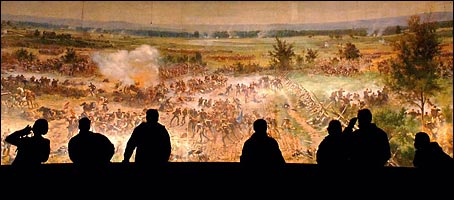
 We’d seen it 20 years ago, when it was something of a sideshow attraction along with the old electronic map with its more than 600 lights that, for forty years, tracked the major action in the battle for visitors. Today, in its new home, the Gettysburg Cyclorama — the nation’s largest painting — gets its due.
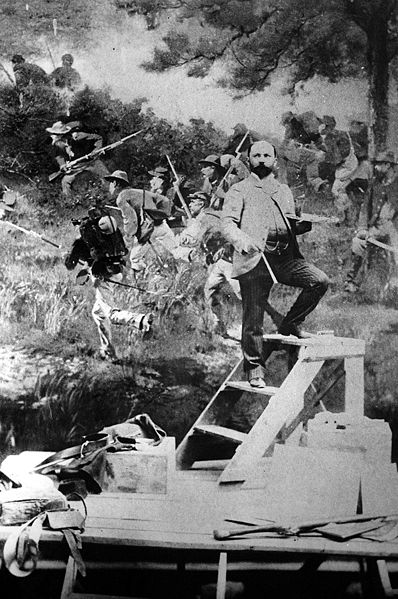 The massive artwork, entitled “The Battle of Gettysburg”, is a 360-degree cyclorama by the French artist Paul Dominique Philippoteaux. The vivid painting wraps around the curved walls of the exhibit, surrounding the viewer with a stunning, colorful, and violent depiction of “Pickett’s Charge” on July 3, 1863 – the climactic action of the three-days of unprecedented valor, fury and sacrifice that was The Battle of Gettysburg. You really have to see it to understand the scale and power of this thing. The whole experience made me proud to think “Your tax dollars at work.”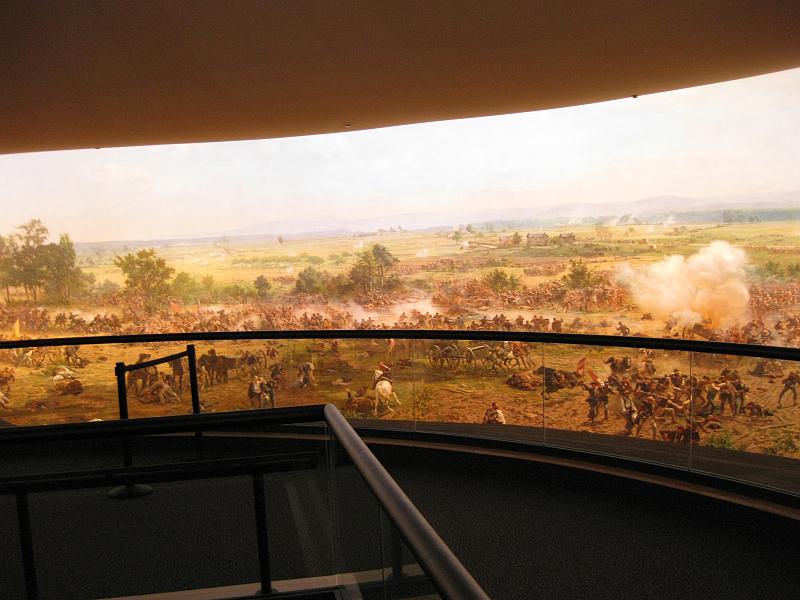

- “Reynolds and the Iron Brigade” by Keith Rocco. © Keith Rocco and Traditional Studios http://www.keithrocco.com

 After our rewarding morning at the Visitor Center, we drove back out to McPherson’s Ridge, where Heth’s reinforced Confederate brigades of General A.P. Hill’s corps were about to confront the vanguard of the Union Army of the Potomac, hurriedly deployed by its commander, General John Reynolds. Reynolds First Corps included the famous Iron Brigade, wearing their distinctive tall black hats. For Heth’s rebels, one look at “those damn black hats” made it clear that one of the Union’s hardest-fighting, battle-tested veteran infantry units had now joined the fight for the Gettysburg high ground.
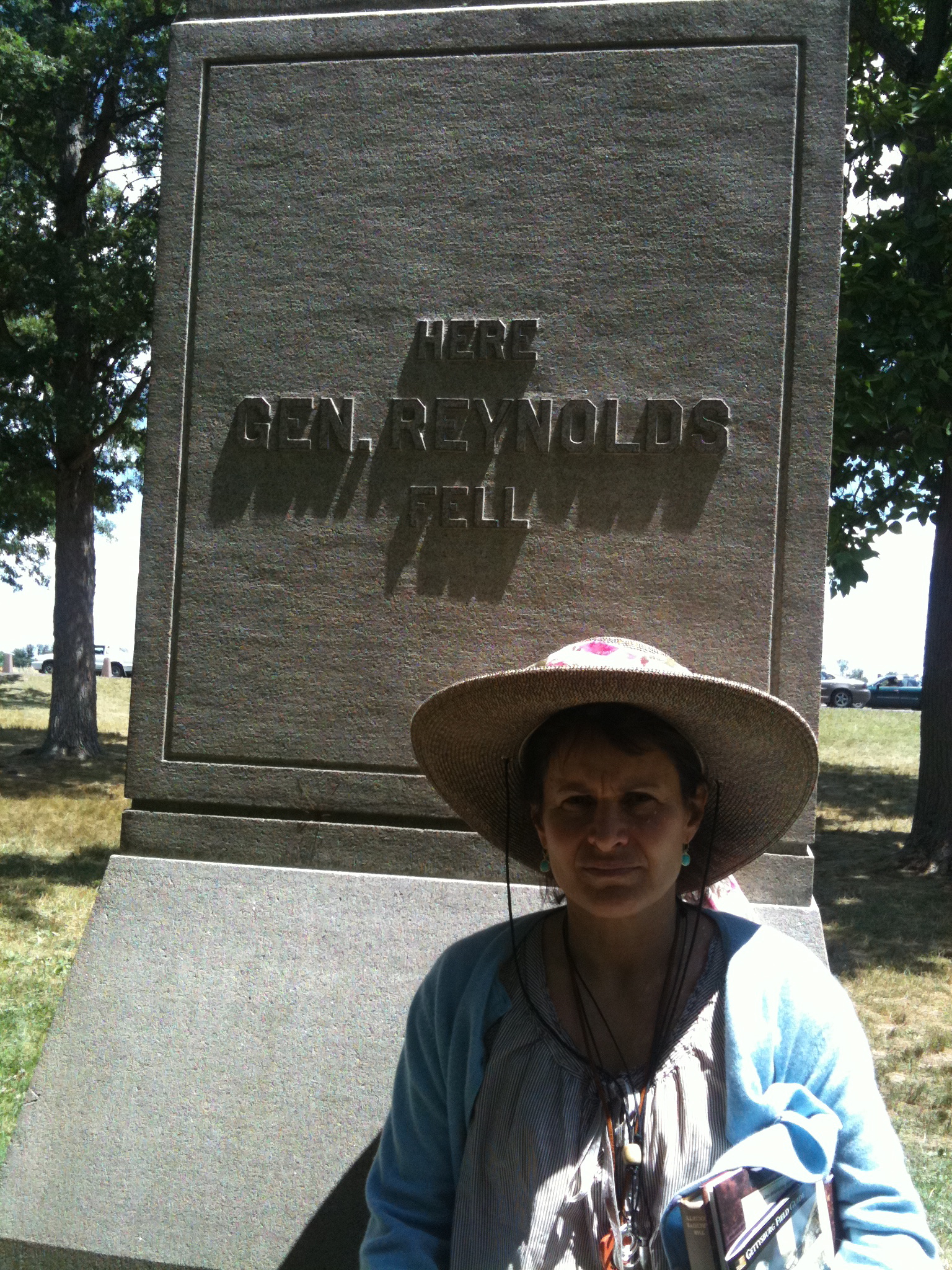 Victoria and I knew that our first stop on McPherson’s Ridge would be a somber one: the spot where Reynolds fell, shot from his horse in the opening moments of the engagement as he urged his troops forward, bellowing, “Forward men, forward for God’s sake and drive those fellows out of those woods!”(Generals led from the front in those days.)
The sudden loss of Reynolds was a brutal blow to the Union cause. John Reynolds wasn’t just any general – he was one of the Union army’s best.
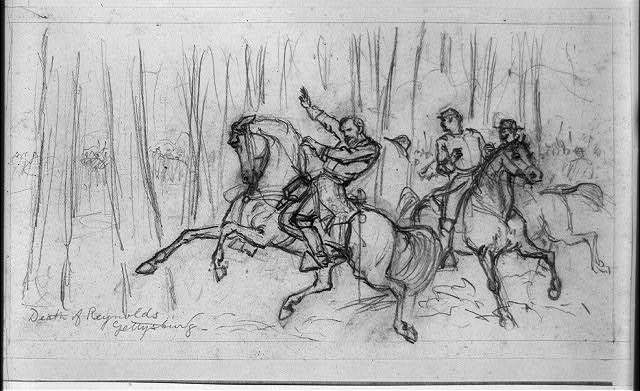
Some historians maintain that Lincoln wanted to give Reynolds command of the Army of the Potomac, but that Reynolds demanded more autonomy than Lincoln could grant him. Ultimately, Lincoln put Pennsylvanian George Meade in charge of the Army of the Potomac with Reynolds leading the army’s First, Third, and Eleventh Corps.

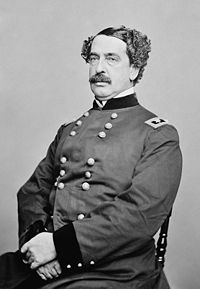 Upon Reynold’s death, command of the Union forces fighting on McPherson’s Ridge and Oak Ridge devolved to General Abner Doubleday. (The Doubleday Inn, get it?) Two years earlier, Captain Doubleday had fired the first shot in defense of Fort Sumter, now, promoted to general, he was called upon to once again play a pivotal role in an epic moment.
And while it may well be that the claim Doubleday invented baseball in 1839 (he was in West Point at the time) is no more than a legend, what he did for the five furious hours after Reynolds death would have been legend enough for any man.
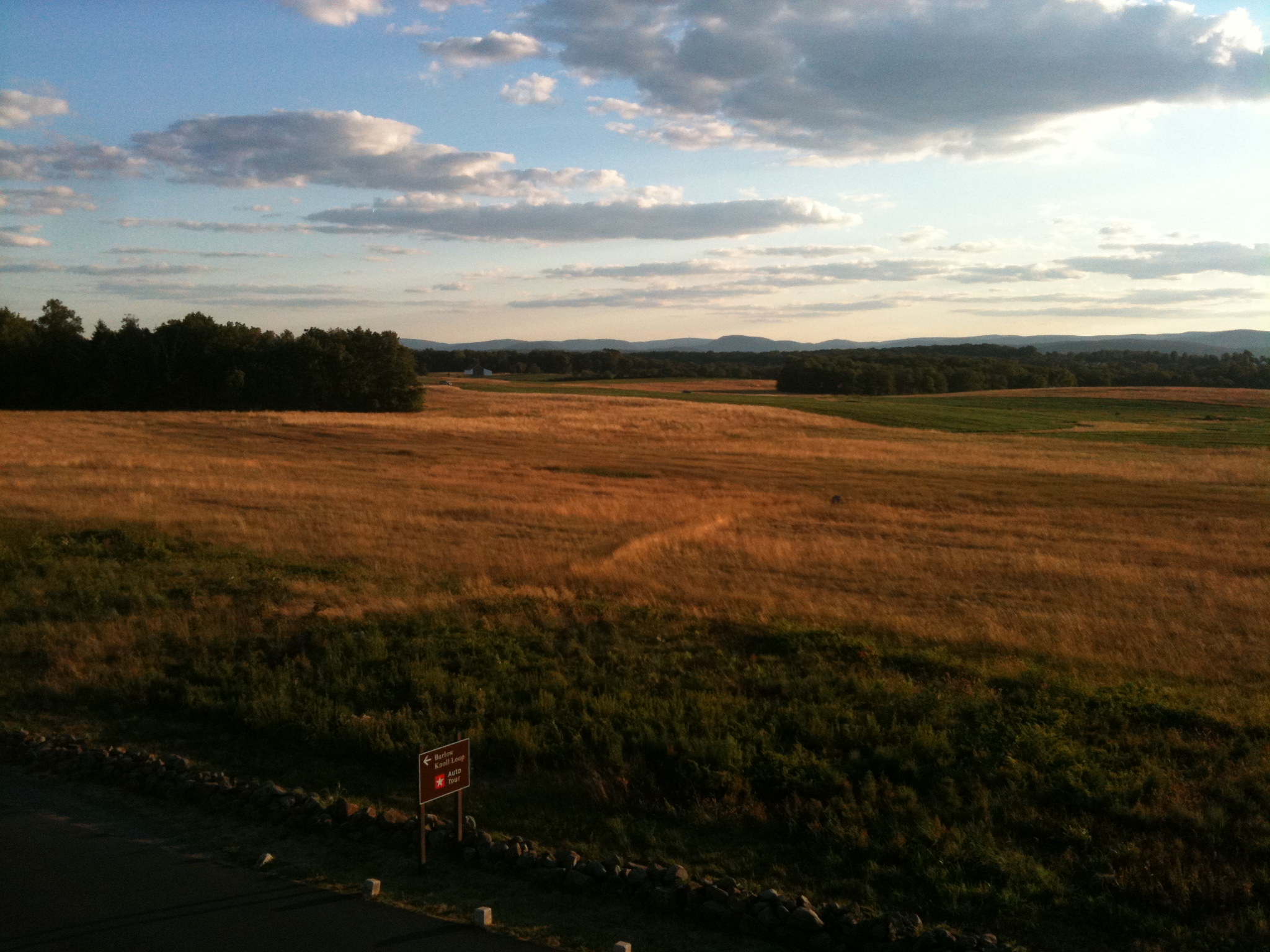
Doubleday’s men fought hard all morning, holding fast to the critical ridgelines just outside of town. As the Confederates threw wave upon wave of reinforcements into the fray, Doubleday’s 9,500 men battled ten Rebel brigades numbering more than 16,000, inflicting casualties on their attackers ranging from 35 to 50 percent in various regiments. The monuments that line McPherson’s Ridge and Oak Ridge are silent testaments to the valiant resistance of Doubleday’s troops in the face of overwhelming odds.
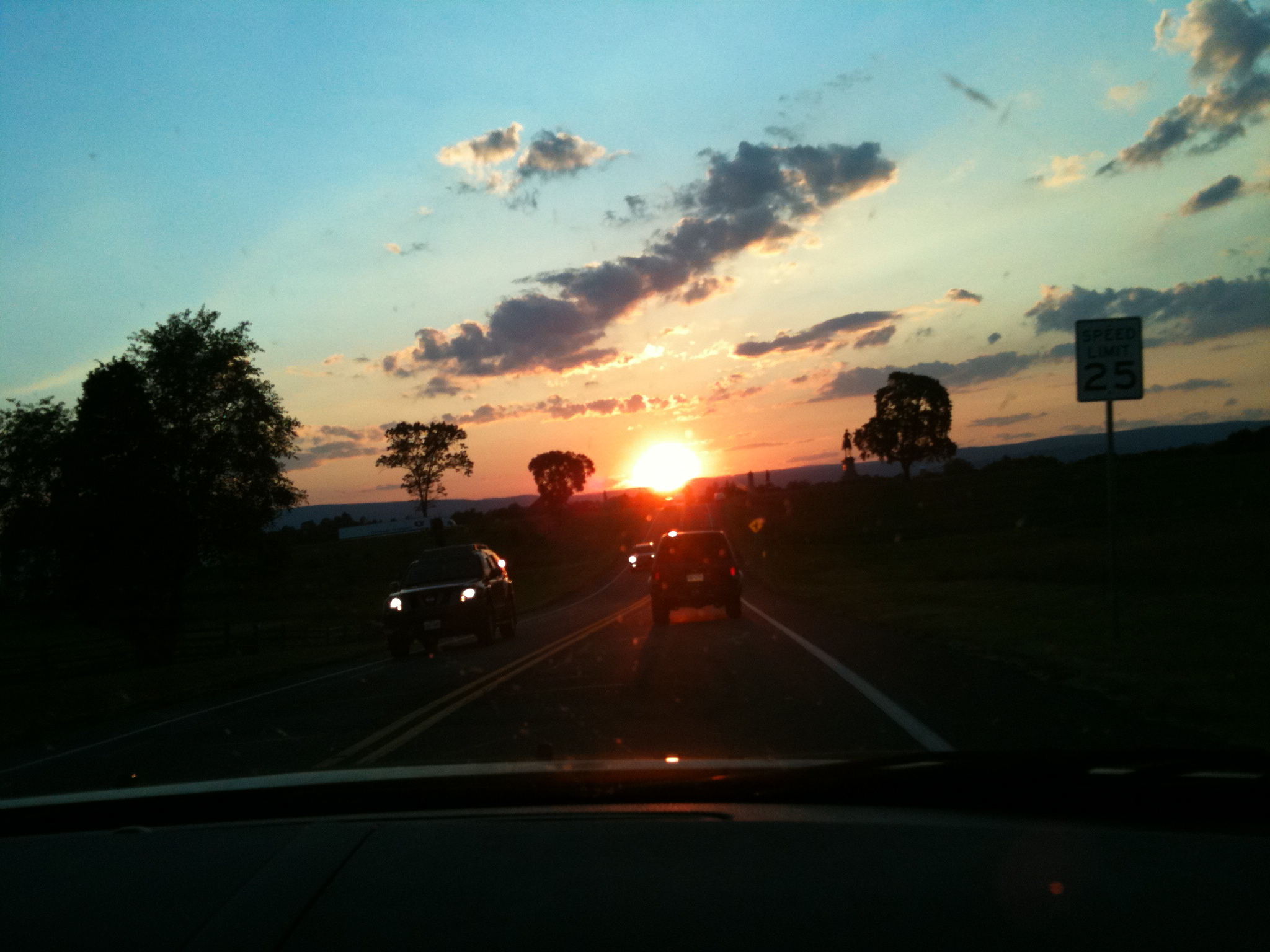
Eventually, Confederate troops finally pushed Doubleday off those ridgelines, past the Lutheran Seminary, and onto Cemetery Hill — where Union troops were concentrating to secure the high ground overlooking the town and fields below. At day’s end, Doubleday’s First Corps had lost two thirds of its men, dead, wounded, taken prisoner, or missing in action. But their sacrifice saved the day. The gallant stand made by Buford, Reynolds and Doubleday had kept the Confederates from reaching the high ground on Cemetery Hill.
The contest for that high ground – and victory on the bloody Gettysburg battlefield — would last two more days.
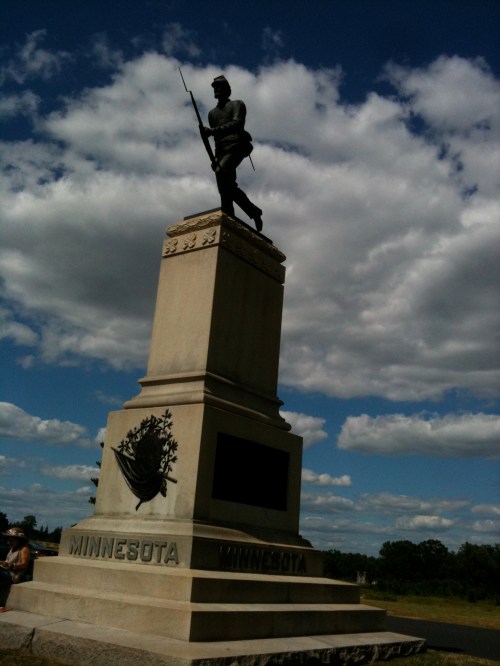
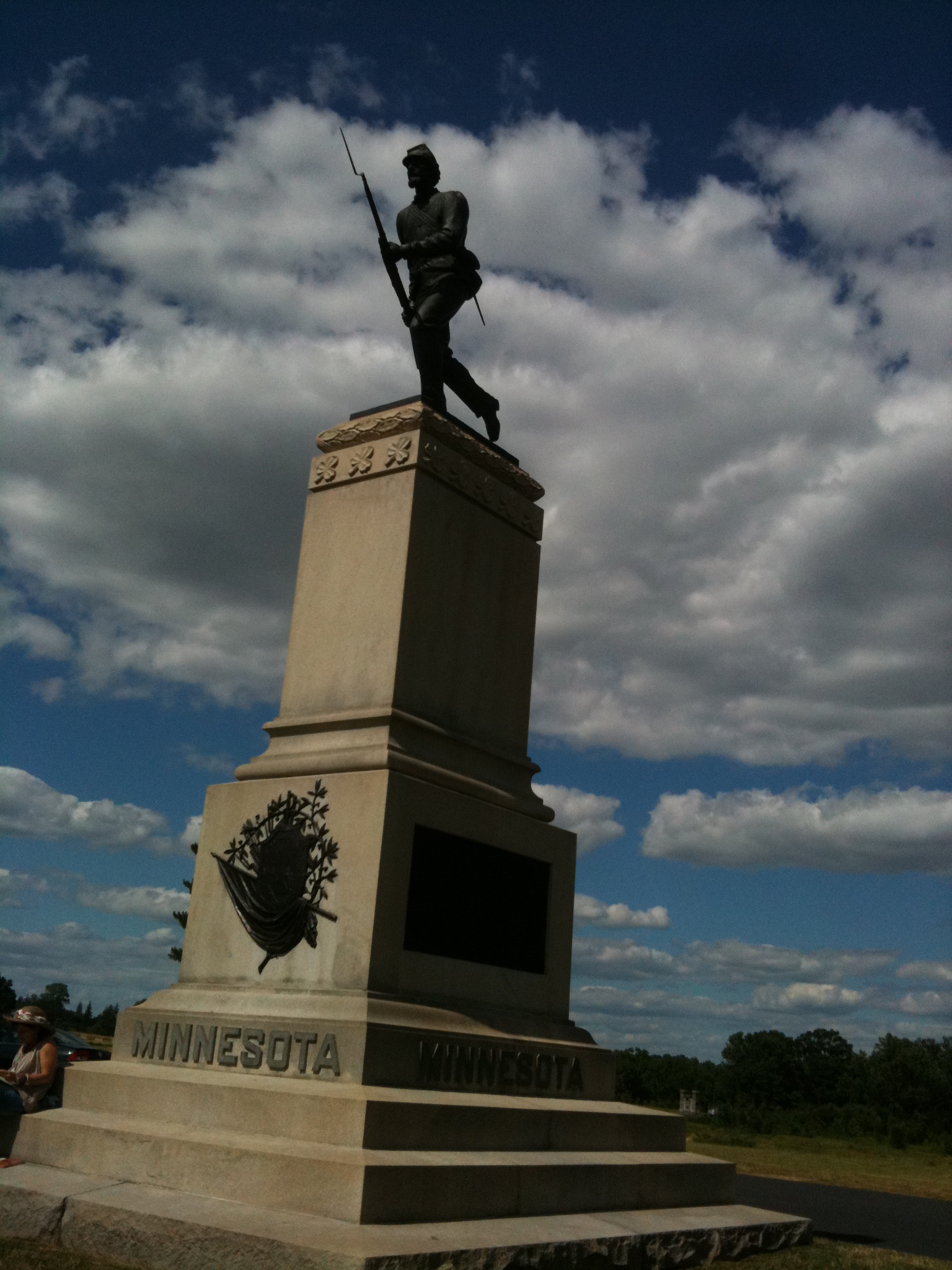
- First Minnesota monument at the base of Cemetery Hill: Heroism on Day #2
Victoria and I returned to The Doubleday Inn with a greater appreciation of the man whose name our pleasant B&B bore.
To be continued…
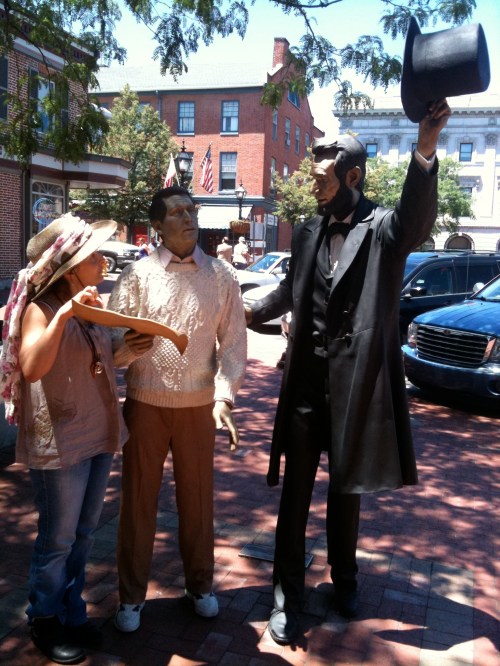
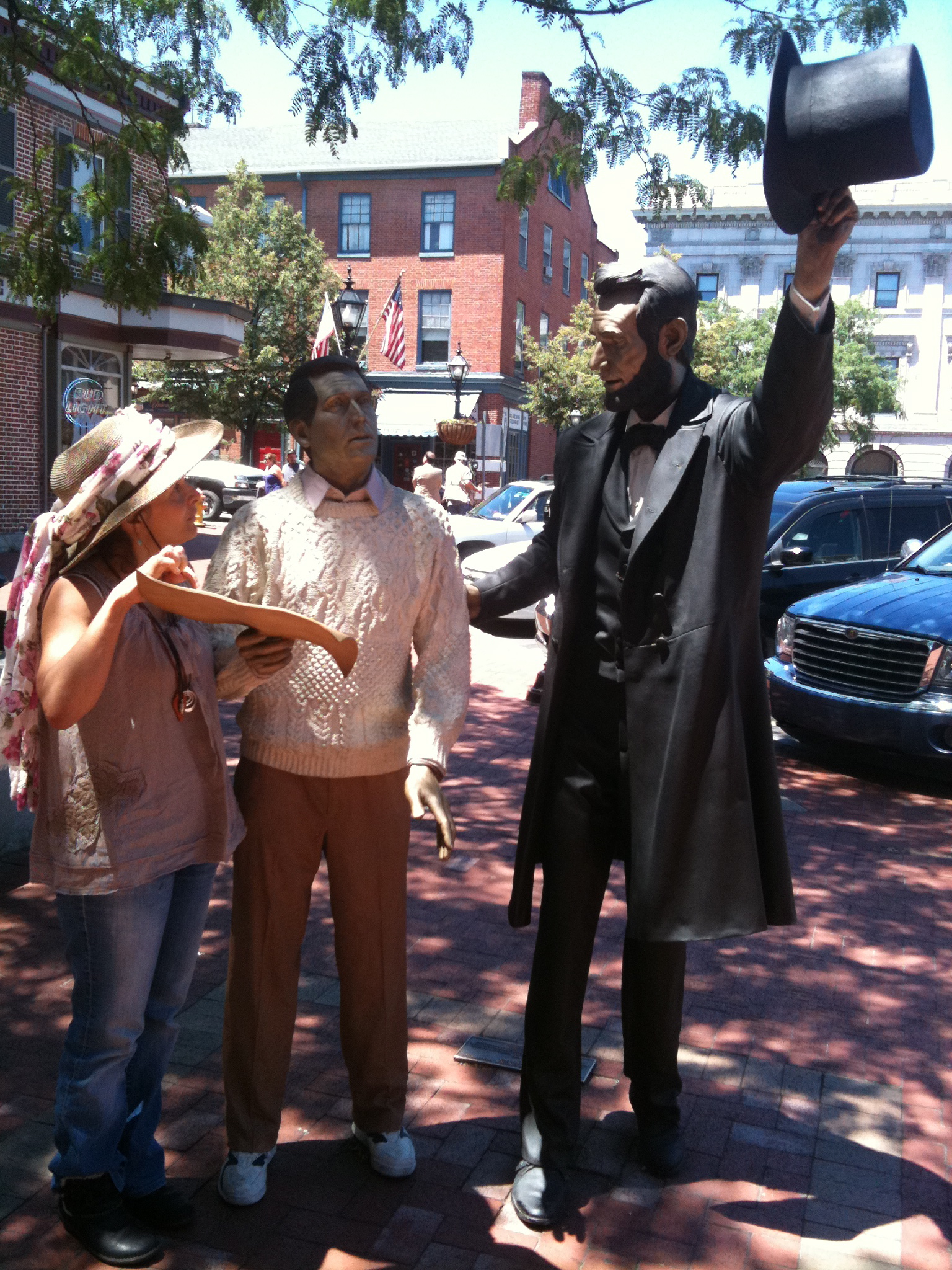
- Victoria and a friend ask Honest Abe for directions in downtown Gettysburg.





























![photo[2]](https://pab58.com/wp-content/uploads/2013/04/photo2.jpg)
![photo[1]](https://pab58.com/wp-content/uploads/2013/04/photo1.jpg)
![photo[8]](https://pab58.com/wp-content/uploads/2013/04/photo8.jpg)


 Paul's Voyage of Discovery & Etc.