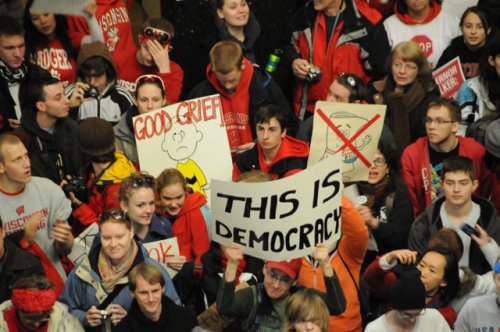
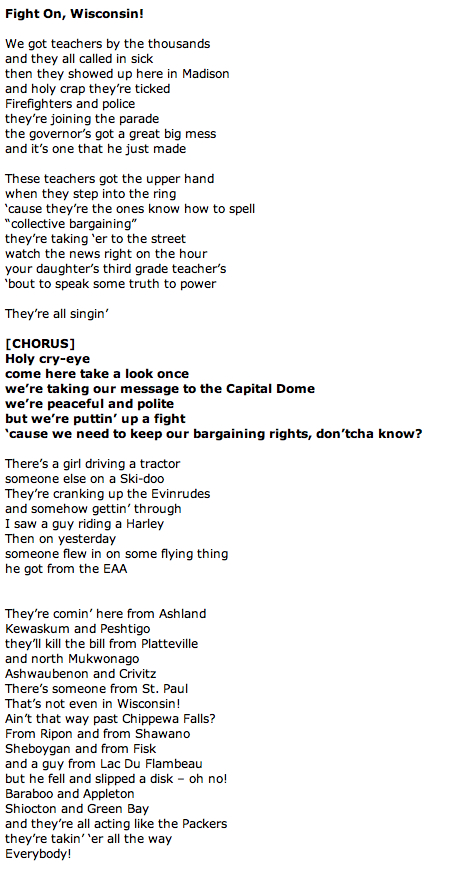
Holy cry-eye! Come here, take a look once! We’re takin’ our message to the Capitol Dome…
Wisconsin native, Practical Theatre veteran, and musical genius Steve Rashid’s pro-union marching song for the Cheddar Revolution was recently played on Thom Hartmann’s national radio show. But more people need to hear it. And the folks on the front lines in Madison could use a good laugh.
So, we’re taking “Fight on, Wisconsin” to YouTube.
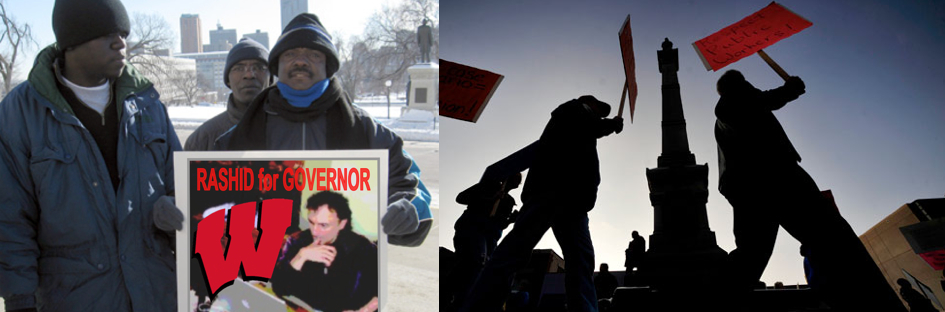
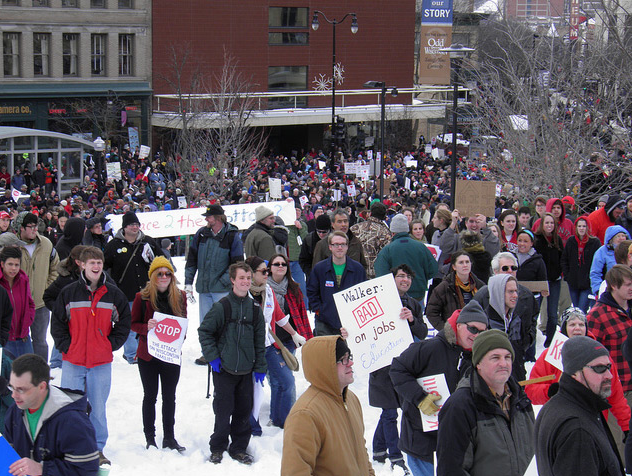
Here’s a video I put together at Steve’s dining room table, illustrated with photos of the Madison Uprising by Bill Cronon. Ya Hey!
Another day — and another fine progressive artist rushes to the Madison barricades!
In this case, our good friend, Steve Rashid, a multi-talented musician, composer, recording engineer – and native of Ripon, Wisconsin – combined his skills on behalf of the pro-union protestors in his home state.
The result is a timely and humorous protest song that you can hear by clicking the link below.
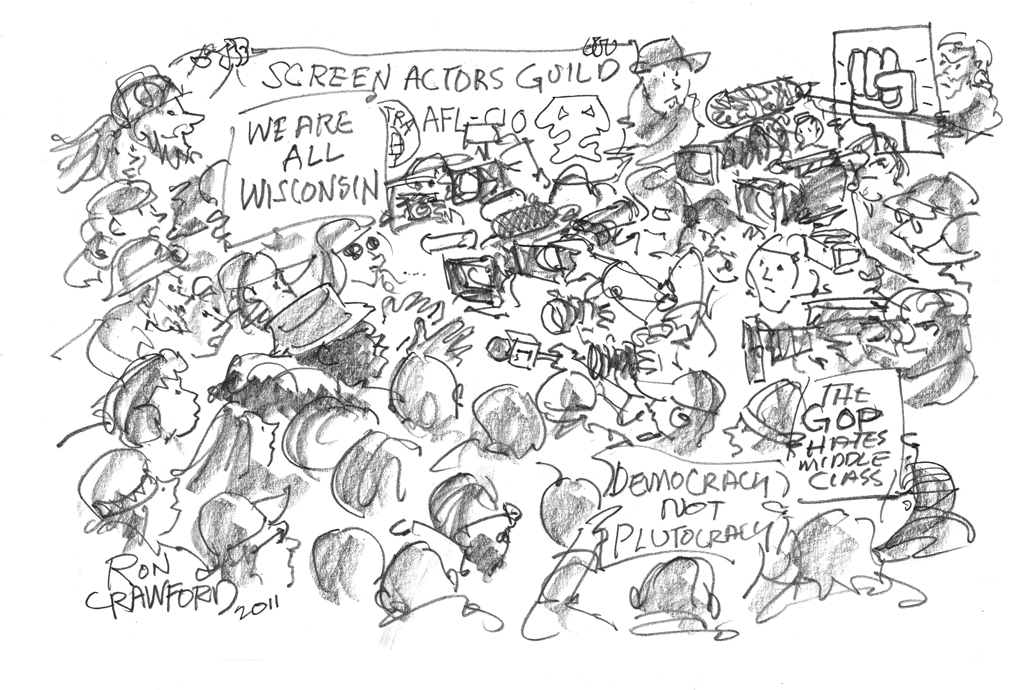
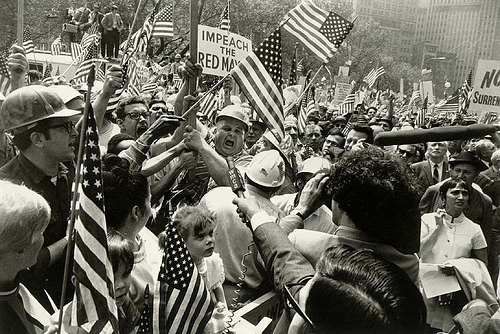
Our resident (and favorite) artist, Ron Crawford, sent us his rendering of today’s demonstration in New York by Screen Actors Guild members in solidarity with their fellow unionists in Madison, Wisconsin. (That’s Ron himself depicted in the upper right corner of his drawing, holding the sign with a clenched fist.) How Ron manages to be in the moment and yet capture the overall moment is just one aspect of his singular talent.
Meanwhile, the momentum from the Madison uprising is being felt in Statehouses across the Midwest. And today, a national poll shows that, by a 2-1 margin, Americans oppose taking away the collective bargaining rights of public employees. According to a new USA Today/Gallup poll, 61% percent said they oppose legislation stripping public employees’ collective bargaining rights in their states, as compared to only 33% who favor such union-busting laws. The majority speaks!
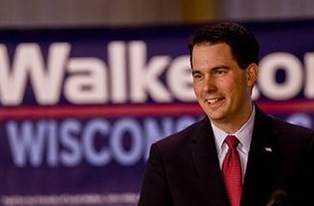
Hosni Mubarak, meet Scott Walker. Walker’s got a popular uprising on his hands, too.
A funny thing happened on the way to Wisconsin Governor Scott Walker’s goal of rolling back the hard-earned rights and benefits of his state’s public employee unions. Tens of thousands of citizens began marching in the streets of Madison.
A newly elected Republican, Governor Walker wants his GOP-controlled state legislature to pass a law that forces state workers to pay more for their pensions and health insurance coverage and takes away most of their collective bargaining rights. Ironically, Wisconsin was the first state in the nation to grant public employees collective bargaining rights.
An imperious Governor Walker says there will be no negotiations on his union-busting budget plan. If the legislature doesn’t pass his plan, Walker has threatened massive layoffs and cuts in state services that will cost thousands of jobs.
And in a move that would make Hosni proud, Walker put the National Guard on alert in case state workers strike or rise in protest. The Wisconsin Guard hasn’t been called out in a labor dispute since 1934. (And that situation was deadly.)
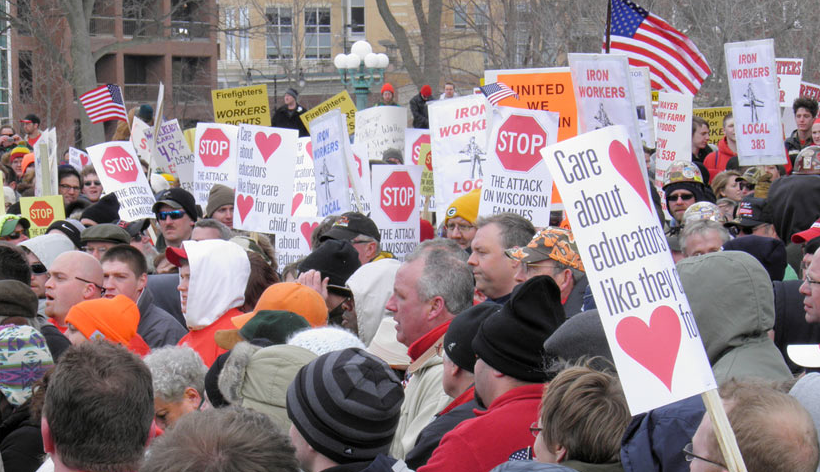
On Tuesday, February 15, approximately 15,000 people jammed inside the Capitol building and on the grounds to express their opposition to Walker. The next day, schools in Madison were closed as 40% of the teachers union’s 2,600 members called in sick and joined the growing throng of protestors at the Capitol.
Also on Tuesday, more than a thousand demonstrators gathered outside Governor Walker’s home. The line of protestors was ten blocks long.
Surely, this is all big national news, right?
In recent weeks, our national news media was awash with breathless coverage of the mass demonstrations in Egypt that brought down a dictatorship. That was as it should be. The defiant pro-democracy rallies in Cairo’s Tahrir Square were clearly and importantly newsworthy. So why isn’t it newsworthy when 10,000 Wisconsin citizens gather in the frigid streets of Madison chanting, “This is what Democracy looks like!”
In fact, many of the protesters in Madison recognize similarities between their struggle to maintain their rights and the Egyptians’ battle against an autocratic, oppressive regime. Some protest signs in Wisconsin say things like, “Hosni Walker,” “Don’t Dictate, Negotiate,” and “Dictators Will Fall.”
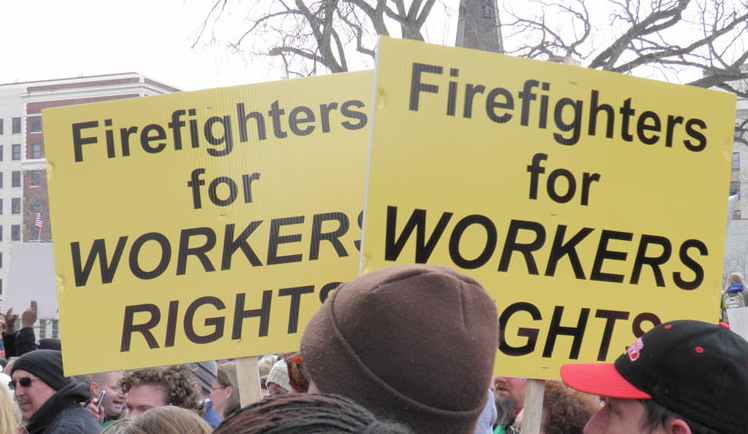
Our news media should be showing all Americans the sights and sounds of this popular uprising within our own borders. There should be up-close-and-personal feature stories about the local Madison businesses giving free food and coffee to the demonstrators — or police officers buying lunch for protesting state workers. Or the cheers that rose up when a column of hundreds of firefighters from across the state joined the protest, marching to the sound of their bagpipers.
Governor Walker had tried to keep the cops and firefighters out of this fight by exempting them from his regressive new anti-labor law – but Walker’s gambit to divide key groups of Wisconsin’s public employees against each other didn’t work. The President of Madison Fire Fighters Local 311 declared that even if supporting the protest leads to the cops and firemen getting their rights and benefits cut, too – organized labor sticks together.
“Oh you can’t scare me, I’m stickin’ to the union…”
According to all reports, the uniformed cops monitoring the protests are friendly and supportive — and off-duty officers are carrying “Cops for Labor” signs.
Of course, the struggle in Madison isn’t just about public workers’ rights in Wisconsin. It could be a pivotal event for the labor movement in America: a galvanizing moment when working people begin to push back against the 30-year conservative war on organized labor that began when Ronald Reagan broke the PATCO union during the air traffic controller’s strike.
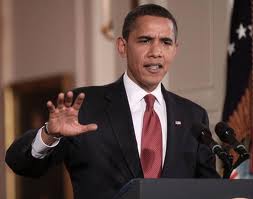
President Obama appears to understand the larger implications of (what I’m calling) the Great Badger Labor Revolt…
“Some of what I’ve heard coming out of Wisconsin, where you’re just making it harder for public employees to collectively bargain generally seems like more of an assault on unions. And I think it’s very important for us to understand that public employees, they’re our neighbors, they’re our friends. These are folks who are teachers and they’re firefighters and they’re social workers and they’re police officers.
“They make a lot of sacrifices and make a big contribution. And I think it’s important not to vilify them or to suggest that somehow all these budget problems are due to public employees.”
But where Obama sees “neighbors” and “friends” who “make a lot of sacrifices and make a big contribution” – right wing gasbag Rush Limbaugh sees only enemies, calling teachers “parasites” and union workers part of an “anti-democracy” movement.”
It’s sad to think that Limbaugh’s ranting may carry farther on the media airwaves than President Obama’s pro-union message.
And why has Governor Walker launched his assault on middle-class jobs and collective bargaining? Walker claims his state is broke — but an independent analysis by the Wisconsin Fiscal Bureau projects a net positive balance of $56 million for the state budget at the end of 2011. And a report by the Institute for Wisconsin’s Future estimates the cuts in public employees’ pay will cost the state $1.1 billion in reduced economic activity annually – which will lead to the loss of some 9,000 private sector jobs.
Walker’s plan is not about what’s good for Wisconsin.
This trumped-up “budget crisis” is really an extension of the Republican war against workers’ rights that Walker’s fellow GOP governors, like Ohio’s John Kasich and Arizona’s Jan Brewer, are also waging.
But in Wisconsin, Walker is facing a revolt. And that revolt has spread to the legislature itself.
Today, on Thursday February 17, in the midst of heated debate as Walker pressed his GOP majority to hastily ram his budget plan through the legislature — all 14 members of the Senate Democratic caucus walked out — depriving the state Senate the three-fifths majority it needs for a quorum on budgetary issues. Soon afterward, the NBC affiliate in Madison reported that the Democrats left the state entirely.
“I know the whereabouts of not a single Democratic senator,” said Democratic Party communications director Graeme Zielinski Zielinski. “I do not know what latitude they’re on, or know what longitude they’re on. I assume they’re in this hemisphere, I’ll say that.”
GOP Senate Majority Leader Scott Fitzgerald said that at some point, if necessary, Republicans will call upon the State Patrol to round up the Democratic diaspora and return them to the Senate floor. (And how’s this for nepotism, cronyism, and conflict of interest? The state Senate leader and the Assembly Speaker are brothers — and the new head of the State Patrol is their dad. You just can’t make this stuff up.)
Working people in America are fighting for their survival. This uprising by unions members and citizens of Wisconsin should be a major news story.
We’ll see what kind of play it gets in the corporate-controlled (and thus, anti-union) national media — other than MSNBC.
Will we see Anderson Cooper live from the Capitol Grounds in Madison?
I hope so.
I doubt he’ll have to worry about any Cheese-heads hitting him in the head.
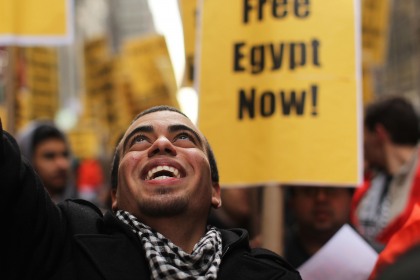
On February 11, 2011, after massive public protest, Egyptian dictator Hosni Mubarak announced he was relinquishing the power he held over his ancient country for the past three decades. Mubarak’s grudging resignation capped an incredible 18 days of revolutionary reality television – and while it’s far too soon for anyone not wearing an Egyptian military officer’s uniform to predict the form Egypt’s next government will ultimately take, now is the time to marvel at what we’ve witnessed on the streets of Cairo, in the shadow of the Great Pyramids. From one of the cradles of human civilization came another great victory for human civilization.
Peaceful change.
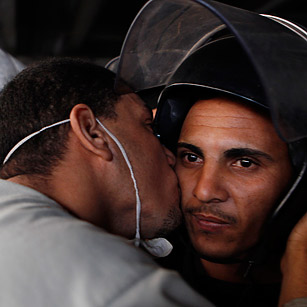
Indelible images of Molotov cocktail-tossing provocateurs and whip-cracking thugs on camelback notwithstanding, the most important aspect of this spontaneous popular uprising was that it was an essentially peaceful protest. Against all odds, and despite desperate acts of violent provocation by forces loyal to (or paid by) Mubarak’s regime, millions of unarmed Egyptian citizens stood strong in the streets day after day to demand redress of their long-suffered grievances.
Many of those on the barricades in Cairo’s Tahrir Square echoed the language of American patriots from our own Revolution. “Give me liberty,” I heard one student declare to a listening world on CNN, “Or give me death!” And he meant it every bit as much as Patrick Henry did. We tend to forget that, like the anti-Mubarak protestors we saw chanting and praying on our TV screens, our revolutionary forbears really were risking their lives and fortunes in a bid to free themselves from the yoke of despotism. Unlike King George III, however, Hosni Mubarak either would not – or could not – get his army to mete out the “death” option to his rebellious subjects. (It’ll take a while before we see how the “liberty” option plays out.)
Regime change without war.
Think about it. The 30-year reign of a powerful dictator who sanctioned the torture of his enemies while looting his country and driving millions of his citizens into economic despair was overthrown by the non-violent mobilization of a resolute citizenry: by people taking to the streets armed with nothing but their resolve to reclaim their national dignity and demand a better future for themselves and for their children. Incredibly, regime change came without guns.
The Power of Social Media
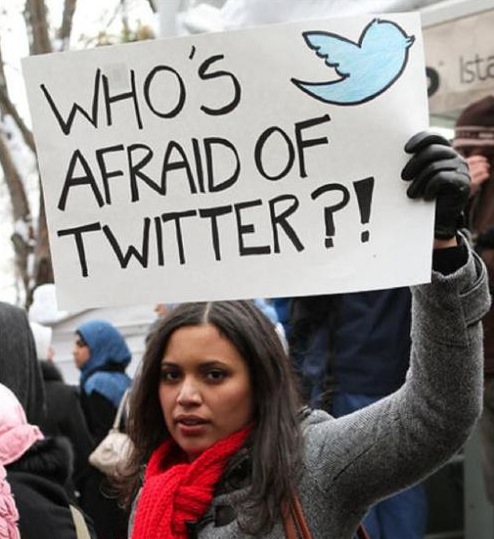
Egyptian demonstrators used Facebook and Twitter to help organize their massive protests and share news and information in a country whose mainstream media was controlled by the party line lies of Mubarak’s totalitarian regime. It’s shocking to see how little politicians are aware of the power, speed and reach of the Internet and social media – whether it’s an Egyptian despot or a Republican Congressman looking for extra-marital love on Craig’s List. In both cases, ignorance of the scope of electronic media led to inevitable resignations.
Though in many ways this epochal event exposed the limits of American power and influence in the Middle East, President Obama and his administration managed to signal a guarded solidarity with the aggrieved Egyptian populace while at the same time cautioning the Egyptian military to stand down and encouraging Mubarak (our hold-your-nose regional ally) to accede to the will of his people.
A clarion call on behalf of the protestors may have thrilled some less temperate lovers of democracy, but the American President was wise not to be seen as encouraging a foreign population to revolt – especially in a volatile region where autocratic Middle Eastern leaders love to scapegoat foreign interference in their domestic affairs. President Obama was firm but diplomatic. Which is, after all, the way diplomacy works. (Sorry, Fox News, but this was never about Barack Obama anyway.)
Unemployment had a lot to do with this Egyptian revolution. One thing is certain: a person without a job – and without the prospect of a job – has both a reason to march in the streets and the time to march in the streets! I can only hope that the outsourcing, shortsighted, anti-American corporate toadies at the U.S. Chamber of Commerce have been paying attention to what has happened in Egypt the past few weeks. You can send all of our manufacturing jobs overseas, you can have all of our service calls routed through Bangalore and New Delhi – but when 20% of the U.S. population is out of work: beware.
When a future generation of dispossessed and disenfranchised Americans comes out into the streets to demand that their corporate overlords listen to their grievances and share the wealth, will the U.S. military – our all-volunteer force – turn their guns on their fathers, uncles, brothers, high school buddies, mothers and sisters? Egypt’s army did not. I can’t imagine that the U.S. Army would either. (Maybe that’s why Bush and Cheney were so busy funding and training Blackwater, now Xe Services LLC?)
But I digress. Let’s get back to the historic events in Egypt. And let’s celebrate this display of human courage and dignity. We don’t know what the future will hold for Egypt. Will their next government roll rightward toward religious zealotry and anti-Semitism? Or will it become a liberal lantern that lights the way to true freedom in the region? That’s for Egyptians to decide.
The opportunity to make another giant leap for human civilization is within Egypt’s grasp. Chances to fundamentally advance humanity come along very few times in a millennia. Or two. Or three. Or four…
“If I went to work in a factory, the first thing I would do is join a union.”Franklin D. Roosevelt.
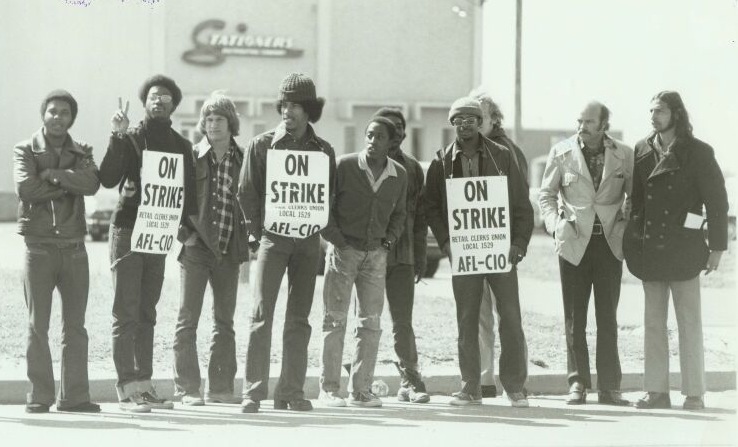
In the mid 20th Century, back in the day when the postwar United States was the preeminent world power, we could boast a robust and growing organized labor movement which improved conditions for working Americans — union and non-union alike — and helped to build the great middle class in this country. But the labor movement – union men and women alike – paid in blood to give generations of their fellow workers a share of the American Dream.
Big Business didn’t just give Americans the 5-day working week, the 8-hour workday, and vacation and overtime pay. The Robber Barons didn’t give up Dickensian child labor without a fight. Do you think you’d have a pension today if your union brothers and sisters hadn’t fought for it? Many brave men and women in the Labor Movement died to win these basic workplace conditions. We take for granted so much of what organized labor earned for us over nearly two centuries of heroic struggle.
But the battle for workers’ rights didn’t end back in the 1930’s and 40’s. There’s been no final victory. Rather, the struggle for economic justice in the workplace is ongoing. And for the past three decades, American workers have been losing what little we’ve gained.
Ever since President Ronald Reagan broke the air traffic controllers strike in the summer of 1981, the right wing has mounted a steady counter-attack against organized labor. In 1983, 20% of U.S. workers were union members. By 2009, only 12% of American workers were unionized. Today, 30 years after Reagan renewed the right wing assault on labor unions, only one in 10 workers are union members. That’s right. Union membership has been cut by half since Reagan took office.
And the anti-union drumbeat continues.
Today, revenue-strapped GOP governors complain that hard-earned public employee pensions are generous boondoggles we can’t afford. Teachers unions are constantly under attack — as though earning about $40 thousand dollars a year for heroically schooling America’s youth (while working most weekends grading papers and spending personal funds for school supplies) is too high a price to pay for an educated electorate. Right wing politicians call out nurses and firefighters as overpaid unionists with luxurious benefit packages. Meanwhile, in the halls of Congress, contemporary union-busters are taking steps to weaken unions and limit American workers’ ability to bargain collectively.
Greedy elitists have been working very hard for the past three decades to give unions a bad name.
The Republicans and their corporate overlords have managed to confuse a shockingly large percentage of blue-collar lunch-bucket working Americans to buy into their anti-union rhetoric – despite the fact that the gap between executive and worker pay has become truly obscene.
In 1965, American CEOs earned 24 times what the average worker in their company took home. By 1978, the CEOs got paid 35 times more than their average employee. That figure rose to 71 times more in 1989. By 2005, CEO pay had risen astronomically.
Blue collar, Joe the Plumber Republicans might be shocked to learn that the average American CEO in 2005 earned 262 times the pay of their average worker. In other words, CEOs earned more in one day than an average worker earned in 52 weeks. And in the last five years, it’s only gotten worse. Today, according to the accounting firm, Towers Perrin, the average CEO is paid 500 times more than the average worker.
And that’s only half the story. Working class fans of conservative supply side economic theory should know: nothing trickled down.
While the top corporate executives were lining their pockets, the wages of working Americans declined in real dollars.
In 1979 the average hourly wage in the U.S. was equal to $15.91 in 2001 dollars. By 1989 it was only $16.63 per hour: a gain of just 7 measly cents a year for the entire Reagan decade. (In case you already forgot: CEO pay during that same period rose from 35 times what workers earned to 71 times what the guy on the line made.)
During the Clinton years, there was a slight up-tick in workers wages. Between 1995 and 2000, the average wage rose to $18.33 per hour, driven in part by higher pay for college-educated workers in the tech and service sectors.
But for the more than 100 million laborers without a college degree, average inflation-adjusted hourly wages at the end of 2000 were less than they were in 1979.
That’s what blue collar Reagan Democrats got for switching their allegiance from a union-friendly party to a union-busting party. Reagan and his corporate cronies waved the flag at hardworking blue collar Americans, puffed them up with pride about that “shining city on a hill”, riled them up about abortion and gay marriage – and then robbed them blind. The right wing is still doing it. And working class people are still falling for it.
The shameless profit-grab at the top of the corporate food chain has taken place while for the past 30 years U.S. worker productivity rose steadily as wages remained flat.
Since Ronald Reagan took office in 1980, American worker productivity has increased by nearly 40%. Yet, I remind you, real hourly wages for workers have declined since Reagan’s inauguration.
So who got the reward from all that increased worker productivity? Who got the big performance bonuses? The CEO’s, upper management and Wall Street middlemen did. (Of course, today’s grease monkey, shipping clerk, loading dock foreman, or self-styled Joe plumber can dream of one day becoming a CEO or stock trader himself himself. Or he can play the lottery.)
Workers have fallen behind while the fat cats stuffed record profits into their bulging pockets. (All the while crying that the unions were making it impossible for their companies to compete.) Yet the corporate elite aren’t satiated with their outsized slice of the economic pie. So, their right wing tools in government are stepping up their attacks on organized labor.
In my own home state of Ohio, newly-elected Republican Governor John Kasich proposes to deny the right of 14,000 state-financed child care and home care workers to unionize. He also wants to ban strikes by teachers, much the way some states bar strikes by the police and firefighters.
“If they want to strike, they should be fired,” Mr. Kasich said in a speech. “They’ve got good jobs, they’ve got high pay, they get good benefits, a great retirement. What are they striking for?”
By the way, this is the same Governor Kasich who has complained (rightly) that white-collar state employees are not paid enough to attract the best candidates to public service in Ohio. (In the GOP worldview, what’s good for college educated white-collar workers need not be shared by lowly blue-collar workers. Yet they have the nerve to call Democrats “elitists”.)
The right wing attacks the labor movement to convince blue collar Americans that unions are simply greedy and corrupt. This anti-union calumny is promoted by the GOP and bankrolled by big business execs and Wall Street moneymen whose own greed and corruption was manifest in the final years of the Bush administration. (BTW, it was blue-collar working Americans whose hard-earned payroll and income taxes bailed these A-holes out.)
Of course, there have certainly been some illegal shenanigans now and then in the annals of organized labor. (We still don’t know where Jimmy Hoffa is buried.) But that doesn’t change the fact that the union movement in America has been a force for good in this country. And that union men and women paid for what we now take for granted in the workplace with their freedom and their lives.
Listen up, my working class friends who vote Republican: I’m talking to YOU. It’s time for a history lesson. A history, alas, that you can no longer read about in most public school textbooks, thanks to conservative members of your local school board.
April 27, 1825: Carpenters in Boston are the first to strike for a 10-hour workday.
July 1835: Child laborers in the silk mills of Paterson, New Jersey strike so they only have to work an 11-hour day — 6 days a week.
July 1851: Two railroad strikers are shot dead by the state militia in Portage, New York.
January 13, 1874: Unemployed workers demonstrating in NYC’s Tompkins Square Park are attacked by mounted cops who charge into the crowd, beating men, women and children with billy-clubs. There are hundreds of casualties, but the Police Commissioner says, “It was the most glorious sight I ever saw.”
July 14, 1877: The “Battle of the Viaduct” in the Pilsen neighborhood of Chicago. Protesting members of the Chicago German Furniture Workers Union are put down by federal troops (recently returned from an Indian massacre) killing 30 workers and wounding more than 100.
September 5, 1882: 30,000 workers march in the first Labor Day parade in New York City.
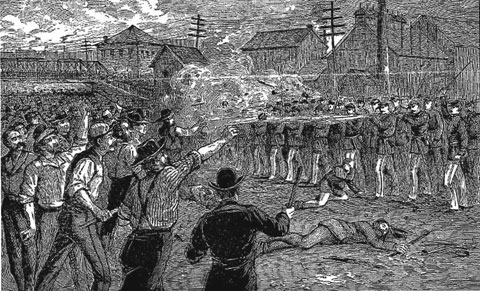
May 1, 1886:Bay View Tragedy. About 2,000 Polish workers walk off their jobs in Milwaukee in protest of the ten-hour workday. They march through the city, gathering other workers until they are 16,000 strong and gather at Rolling Mills, sleeping in nearby fields. Wisconsin Governor Jeremiah Rusk calls out the state militia, and on May 5th, as the workers chant for an eight-hour workday, the commanding officer of the militia orders his men to shoot into the crowd (some of whom were armed with sticks, bricks, and scythes) killing seven, including a child.
October 4, 1887: The Louisiana Militia, aided by bands of “prominent citizens,” shoot 35 unarmed black sugar workers striking to gain a dollar-per-day wage. They also lynch two strike leaders.
May 11 to July 10, 1894: A nationwide strike against the Pullman Company begins when workers walk off the job after their wages are drastically reduced. On July 5, the 1892 World’s Columbian Exposition in Chicago is set ablaze, and the mobs begin burning and looting railroad cars and fighting police in the streets. On July 10, 14,000 federal and state troops succeeded in putting down the strike, killing 34 American Railway Union members. Strike leaders, including Eugene Debs, are imprisoned for violating injunctions, causing disintegration of the union.
September 1897: The Lattimer Massacre. 19 unarmed striking coal miners are killed and 36 wounded by a county sheriff’s posse for refusing to disperse near Hazelton, PA. Most of the victims are shot in the back.
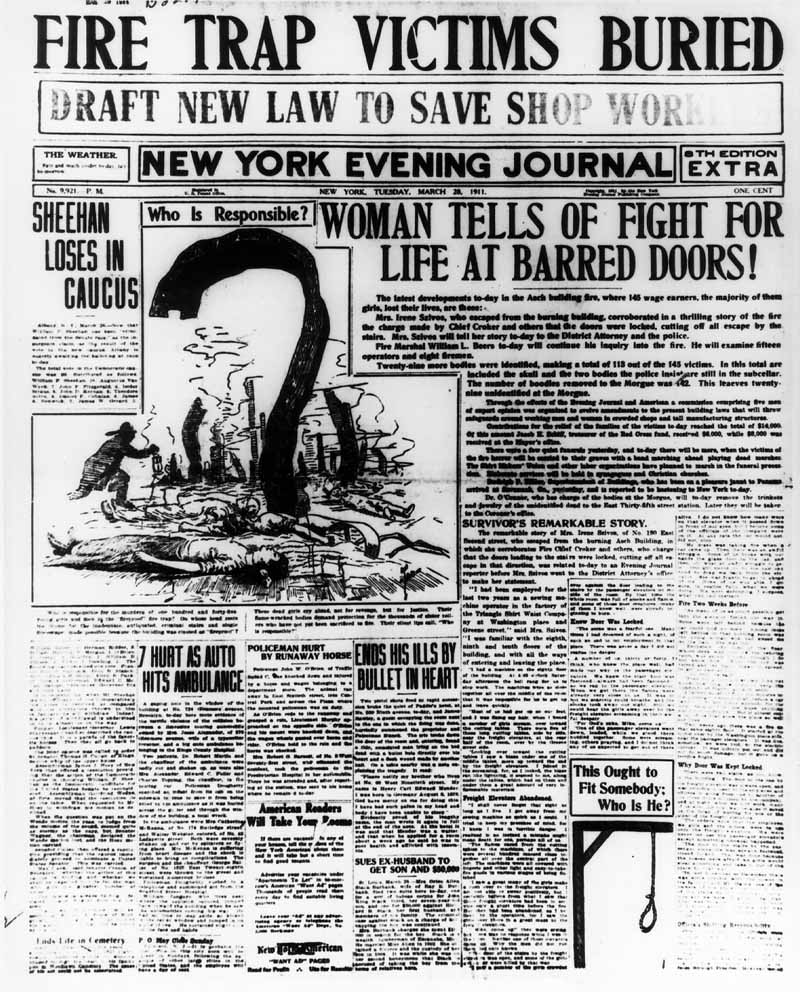
March 25, 1911: The Triangle Shirtwaist Factory, occupying the top three floors of a ten-story building in New York City, is consumed by fire. 147 people, mostly women and young girls working in sweatshop conditions are killed. Greatly adding to the death toll was the incredible fact that Triangle bosses had locked the factory doors from the outside to keep the ladies from taking breaks.
June 11, 1913: Cops gun down three maritime workers (one of whom is killed) who are striking against the United Fruit Company in New Orleans.
1914: According to the Commission on Industrial Relations, approximately 35,000 workers were killed in industrial accidents and 700,000 workers were injured in the U.S.
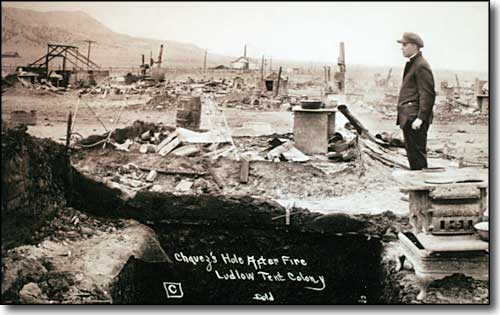
April 20, 1914: The “Ludlow Massacre.” In an attempt to force strikers at Colorado’s Ludlow Mine Field to go back to work, company “guards” (hired by John D. Rockefeller, Jr. and other mine operators) attack a union tent camp with machine guns, then set it afire — killing five men, two women and twevlve children.
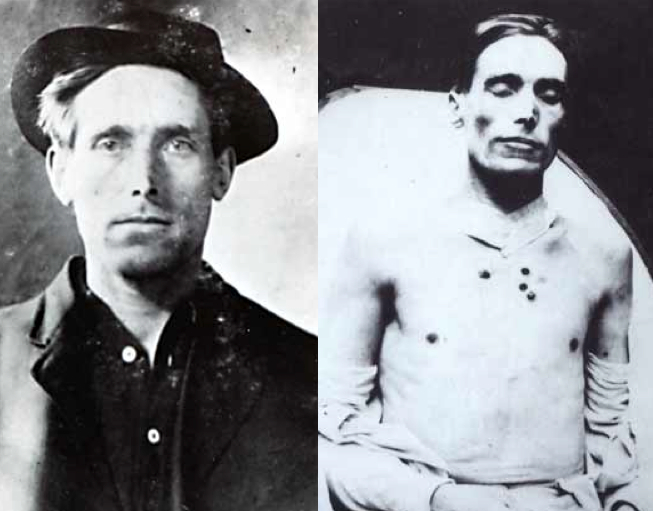
January 9, 1915: The famous labor leader Joe Hill is arrested in Salt Lake City and convicted on trumped up murder charges. Despite worldwide protests and two attempts to intervene by President Woodrow Wilson. Hill is later executed. In a letter written shortly before his death, Hill urged his supporters, “Don’t mourn – organize!”
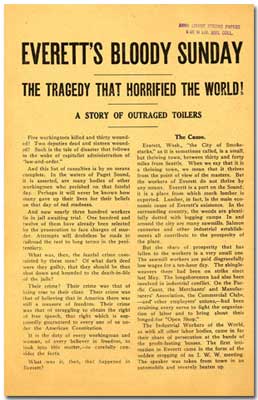
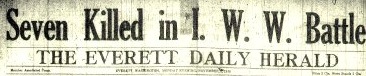
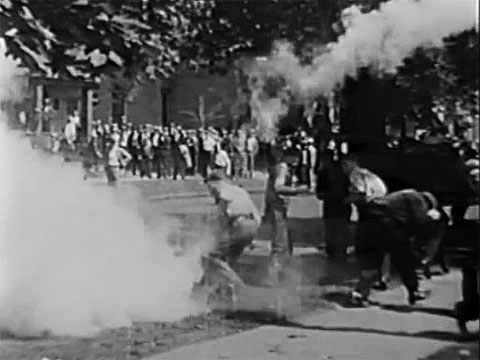
August 19, 1916: Strikebreakers attack picketing strikers in Everett, Washington, while local police refuse to intervene.
Three days later, 22 union men attempting to speak out are arrested. On October 30, vigilantes force union speakers to run a gauntlet, whipping, tripping and kicking them, and impaling them against a spiked cattle guard at the end of the gauntlet.
In response, the union calls for a meeting on November 5 – but when the union men arrive, they are fired upon. Seven people are killed in The Everett Massacre (also known as Bloody Sunday) and 50 are wounded. An unknown number wind up missing.
March 15, 1917: The Supreme Court approves the Eight-Hour Act under the threat of a national railway strike.
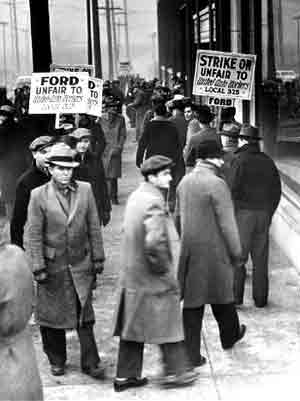
March 7, 1932: Police kill striking workers at Ford’s Dearborn, Michigan plant.
October 10, 1933: 18,000 cotton workers go on strike in Pixley, California. Four are killed before the workers win a pay hike.
1934: During the Electric Auto-Lite Strike in Toledo, Ohio, 1,300 National Guardsmen including three machine gun companies are called in to break up as many as 10,000 strikers and protesters. Two strikers are killed and over two hundred wounded.
September 1-22, 1934: A strike in Woonsocket, Rhode Island results in the deaths of three workers. Over 420,000 workers ultimately go on strike.
1935: The National Labor Relations Act is passed. It guarantees covered workers the right to organize and join labor movements, to choose representatives bargain collectively, and to strike.
May 30, 1937: Police kill 10 and wound 30 during the “Memorial Day Massacre” at the Republic Steel plant in Chicago.
June 25, 1938: The Wages and Hours Act passes, banning child labor and setting the 40-hour work week. It establishes minimum wages and maximum hours for all workers engaged in covered “interstate commerce.”
That’s the basic progressive history of labor unions before Ronald Reagan (himself a former Screen Actors Guild union president) began his successful counter-attack against organized labor.
The fact is that unions have a positive impact on the wages and working conditions of unionized and non-unionized workers alike.
Unions raise the pay of unionized workers by roughly 20% — and raise compensation, including both wages and benefits, by 28%. Plus, unions raise wages more for blue-collar than for white-collar workers — and more for workers who do not have a college degree. Unions force nonunion employers to follow suit. Organized labor’s impact on total nonunion wages is almost as big as its impact on union wages.
Wake up, working class Americans! Conservative GOP anti-union politicians are not on your side. Organized labor is on your side.
As Woody Guthrie sang, “You can’t scare me, I’m sticking to the union!”
Here’s the legendary Pete Seeger (who I’ve had the honor to interview and see perform) with Woody’s son, Arlo Guthrie singing “Union Maid”.
And finally, here’s old Pete throwing down the gauntlet. “Which Side Are You On?”
Rarely have I awakened to the news of two more miserable performances – in two totally different spheres – than I did today.
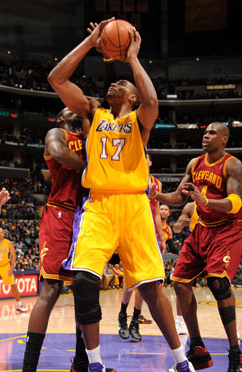
Yesterday, my hometown Cleveland Cavaliers came to Los Angeles and embarrassed themselves in an historic way. Yes, they lost LeBron James last year – but now they are in danger of losing their dignity as professional sportsmen.
The Cavs lost their 11th straight game, as the Lakers cruised to a 112-57 beat-down. It was The Lakers best defensive performance of the shot clock era, their second largest margin of victory, ever — and a new record for points allowed by the Lakers: eight fewer than their previous low of 66.
The line score looked like this.
It was, in every way, a miserable performance.
“It can’t be any worse than this. If it is, someone will have to help me because I don’t know how much of this I can take,” said Cavalier Antawn Jamison. “This by far is rock-bottom. It’s definitely by far one of the most embarrassing moments that I’ve been a part of as far as basketball.”
Luckily for the Cavaliers, Sarah Palin chose today to come out of hiding (at least electronically) after the tragic shooting in Tuscon. Like Bin Laden in his cave, Sarah has sent us all a video so that we should hear her message loud and clear.
Palin’s message is shameless and entirely self-serving. Not a hint of grief. Not a moment of self-reflection. Only a crassly-constructed case for her own victimhood, including an awful reference to “blood libel,” which has even right wing commentators like Jonah Goldberg scratching their heads.
I wont bother to post her video here. You can find it easily on YouTube. You may especially enjoy the exquisite madness of her reference to how American political discourse was more polarized back in the day when there was dueling. Yes, Aaron Burr vs. Alexander Hamilton has so much to teach us about the events in Tuscon…
On the day when President Obama is scheduled to address a national memorial ceremony in Tuscon, sister Sarah’s attempt at hand-washing via video could not have come at a more inappropriate time. I doubt she understands why.
Both the Cavaliers and Sarah Palin have just turned in absolutely miserable performances.
I can forgive the Cavs.
In closing, here’s a sign that was left at the spontaneous memorial outside of the medical center in Tuscon where Rep. Giffords and other victims are being treated. In just a few symbols, it says what Sarah Palin can never allow herself to say.
I never imagined that my first blog entry of 2011 would be about something as tragic as this…
I’m wrestling with a lot of thoughts and emotions in the wake of the horrific shooting in Tuscon, Arizona that wounded Congresswoman Gabrielle Giffords and killed six others, including a federal judge and a 9-year old girl.
The first thing that comes to mind is this:
Let us all pray for the victims: the slain, the injured, and those who survived but will always have that awful scene seared into their memories. Let’s hope that Rep. Giffords recovers from her terrible wound and returns to Congress to pursue the work that her would-be assassin tried to destroy.
The next thing that occurs to me is this:
The killer shot 19 out of the three-dozen people at that gathering – killing six of them. How in the world do we, in a civilized society, allow people to legally arm themselves with that kind of automatic firepower? Could this coward have slaughtered that many people in so short of time with a knife, a hunting rife, a shotgun, or a six-shot revolver? Not a chance.
Sorry NRA supporters and Second Amendment apologists, but anyone who thinks they need that kind of firepower for self-defense must imagine that their enemies are coming at them with even bigger firepower. (Like their own government?) They are clearly fearful and paranoid. And frightened paranoids are the last people we want to have armed with automatic weapons.
I also think about this:
Sheriff Clarence W. Dupnik is a hero. At the press conference on Saturday, he called it like it is – whether it was politically correct or not. He said over and over that the vitriolic anti-government political rhetoric spewed by some voices in the media contributed to this tragedy. Sheriff Dupnik reminded us of the consequences of that kind of speech. He’ll be savaged by the right wing in the coming days – but he spoke the truth.
The right wing is selling hate and intolerance – and this is the inevitable result.
What an awful way to start the year.
I’d rather have written about the wild results in the first round of the NFL playoffs.
Let’s hope this makes Beck and Limbaugh and Sarah “cross-hairs” Palin think before they rant. But, then again, they aren’t really paid to think.
Today, December 15th 2010 is the 219th birthday of the Bill of Rights.
And while constitutional scholars — from former constitutional law professor President Barack Obama, to Supreme Court Justice Antonin “Original Intent” Scalia, to Christine “Really? Separation of Church and State is in the First Amendment? It says that? Really?” O’Donnell – may differ on their interpretations of the Bill of Rights, there is little debate that the first ten amendments to the United States Constitution (ratified by three-fourths of the states on December 15, 1791) provide Americans with freedoms and protections that have inspired the world and made American citizenship a privilege.
And that previous sentence is just about as long-winded and complex as many of the amendments in the Bill of Rights.
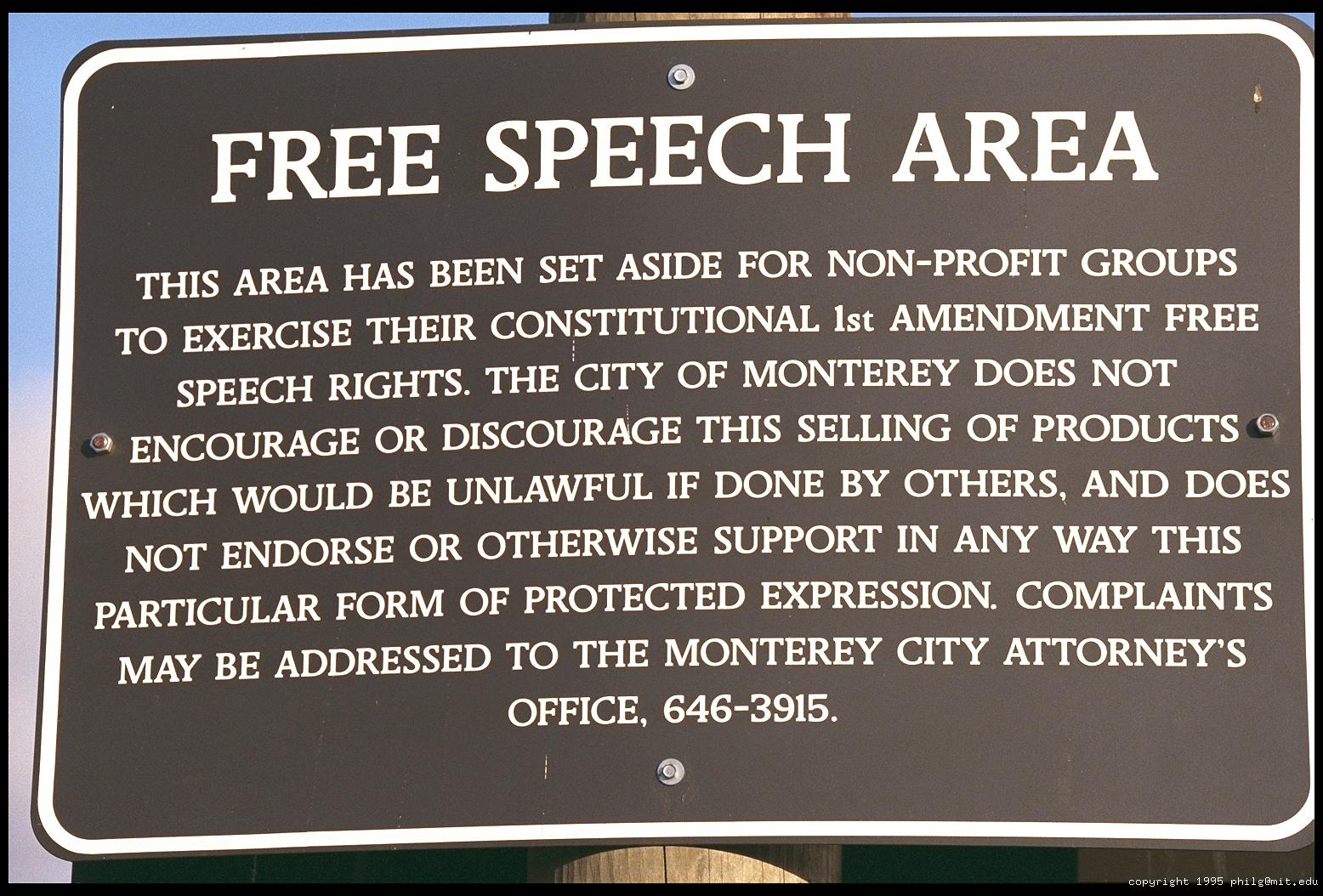
The First Amendment guarantees freedom of speech, freedom of the press, the right to free assembly, the right to petition the government for redress – and the little clause that stumped the failed Delaware Senate candidate/witch: “Congress shall make no law respecting an establishment of religion, or prohibiting the free exercise thereof…”
The Second Amendment gives us all the right to keep and bear arms. In other words, we can all have guns, right? Now, what the amendment actually says is, “A well regulated Militia being necessary to the security of a free State, the right of the people to keep and bear arms shall not be infringed.” So I guess we must all be part of a well-regulated militia, right? Is the NRA a well-regulated militia? I know the Aryan Nation is. (So glad those boys have automatic weapons, aren’t you?)
The Third Amendment prohibits the government from quartering troops in your house without your consent. I know we’ve all dealt with this problem at one time or another — usually around the holidays. Your house is already filled with visiting relatives – and a battalion of Marine infantry shows up at your door hoping to squeeze into your guest room for the night. Thanks to the Bill of Rights, you can point them in the direction of the nearest Holiday Inn.
The Fourth Amendment provides protection from unreasonable search and seizure. Unless, of course, you are a poor young non-Caucasian male suspected of having drugs in your home, or you’re on a terrorist watch list, or your electronic mail is swept up in an elaborate intelligence gathering effort, or… (Let’s face it. After the Patriot Act, the ‘ol Fourth Amendment has taken a beating.)
The Fifth Amendment provides due process in legal proceedings and protections against double jeopardy and self-incrimination. This is another amendment that conservatives don’t like. They think it’s too soft on criminal suspects and suspected terrorists. Unless, of course, conservatives are the ones under indictment. (Which happens a lot.) Then due process is a good thing to observe.
The Sixth Amendment provides for trial by jury and enumerates the rights of the accused. But what about victims rights? I can hear Rush Limbaugh now. “Those damn bleeding-heart liberal Framers!”
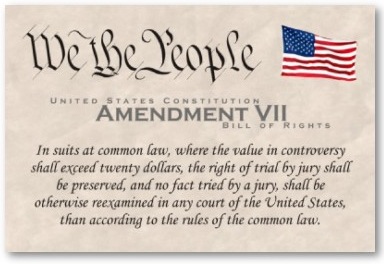
The Seventh Amendment provides for civil trial by jury. It is the most boring amendment. (In fact, I feel asleep writing that last sentence.)
However, you gotta love that the Seventh Amendment actually says, “In suits at common law, where the value in controversy shall exceed twenty dollars, the right of trial by jury shall be preserved…”
Did I mention they ratified this thing in 1791?
The Eighth Amendment prohibits excessive bail and bars cruel and unusual punishment. This is another amendment that’s been taking a beating lately.
Actually, it’s been waterboarded.
The Ninth Amendment is a catchall. It protects rights not specifically enumerated in the Constitution. Like the right to enjoy macaroni and cheese in church without having to share it with a soldier who is reading a naughty magazine. Stuff like that. I think.
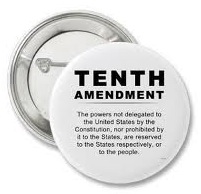
The Tenth Amendment is another grab bag. “The powers not delegated to the United States by the Constitution, nor prohibited by it to the States, are reserved to the States respectively, or to the people.” Read that ten times fast. C’mon, Justice Scalia. I dare you.
So, happy birthday to our poor, beleaguered, bloodied-but-still-standing Bill of Rights!
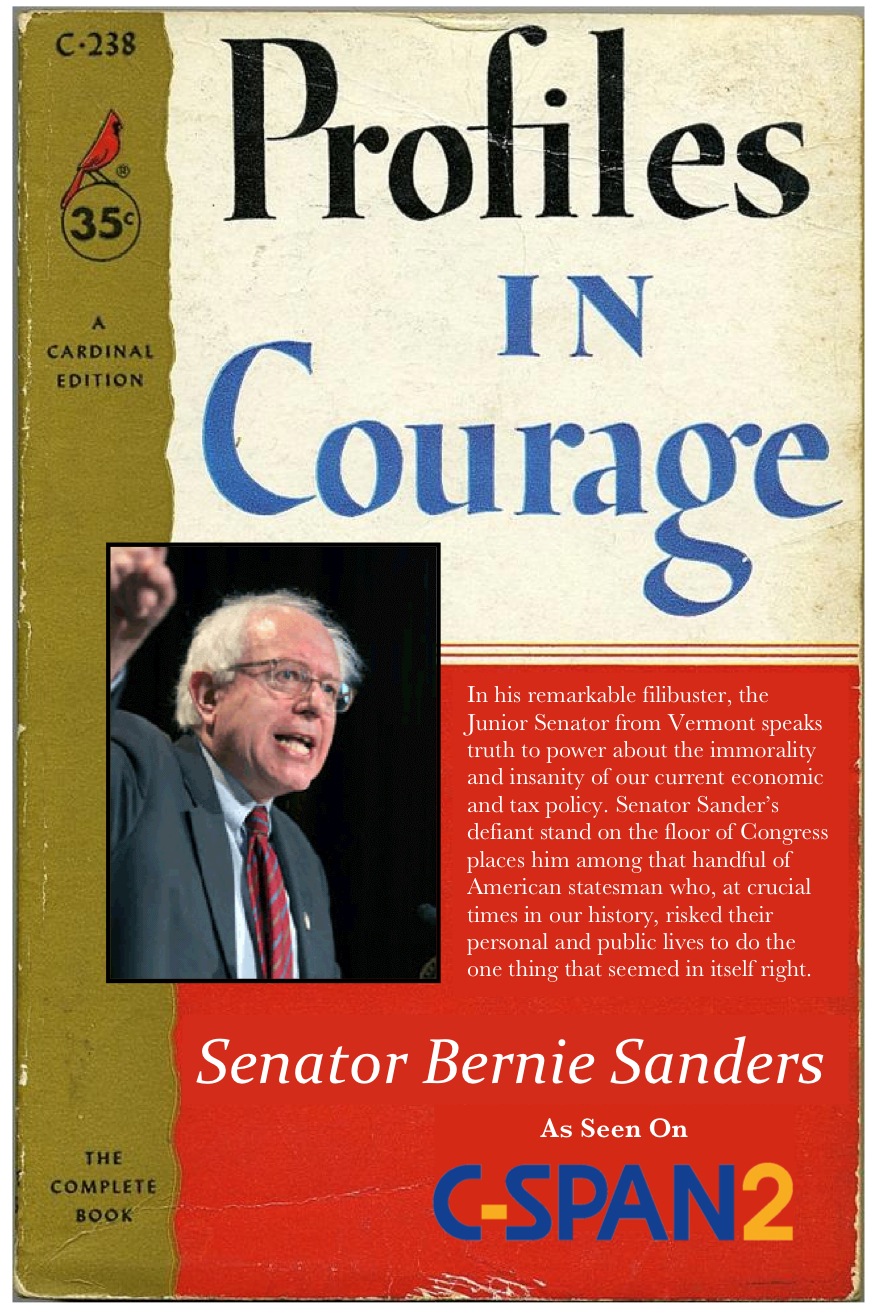
You won’t hear about it much on the TV news, but today — on Friday December 10, 2010 — Senator Bernie Sanders of Vermont began conducting a good old-fashioned Mr. Smith Goes to Washington-style filibuster. An Independent who caucuses with the Democrats, Senator Sanders is outraged by the Obama-GOP tax giveaway to the mega-rich. Sanders is speaking truth to power — and giving us all a history lesson of the past lost decade.
While what Sanders is doing is not a filibuster under the traditional definition – he began speaking at 10:25 am ET – and, of this writing at 5:42 ET – he’s still going strong. Sander’s righteous stand has attracted so much attention today that it temporarily shut down the Senate video server.
We’ll hear about this historic moment on MSNBC, but will ABC, CBS, NBC and CNN give Bernie’s Big Speech much play? I’ll be surprised if they do. You can forget FOX.
Sanders began his marathon with a 2-hour speech against the tax cut deal before handing over the lectern to Sen. Sherrod Brown (my progressive Senator from Ohio) and then Sen. Mary Landrieu (D-La., actually acting like one this time).
“How can I get by on one house?” Sanders said. “I need five houses, ten houses! I need three jet planes to take me all over the world! Sorry, American people. We’ve got the money, we’ve got the power, we’ve got the lobbyists here and on Wall Street. Tough luck. That’s the world, get used to it. Rich get richer. Middle class shrinks.”
A Sanders spokesman said that the 69-year-old senator will talk “as long as he can”. He hasn’t taken a break since this morning or had anything but water. “He doesn’t have an end time.”
Here’s to you, Senator Sanders: a true profile in courage.

 Holy cry-eye! Come here, take a look once! We’re takin’ our message to the Capitol Dome…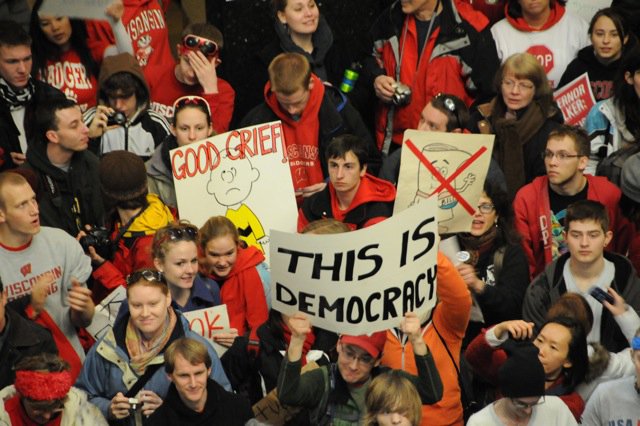
 Wisconsin native, Practical Theatre veteran, and musical genius Steve Rashid’s pro-union marching song for the Cheddar Revolution was recently played on Thom Hartmann’s national radio show. But more people need to hear it. And the folks on the front lines in Madison could use a good laugh.












































 Paul's Voyage of Discovery & Etc.
