
 It’s another interesting day in the Sesquicentennial of The American Civil War.
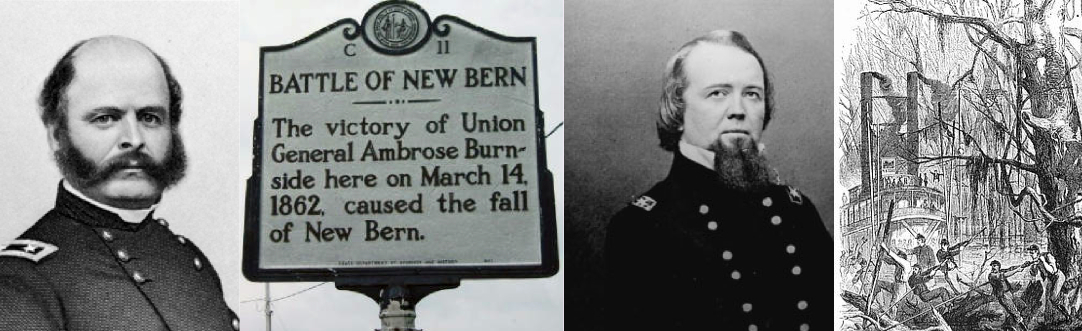
150 years ago today two little known events took place on Civil War battlefields in the Eastern and Western theatres of the conflict. And while few remember this day on the Civil War calendar, it was a pivotal one. On March 14, 1862 the South lost two key places on their map that they’d never regain: on the Atlantic coast of North Carolina — and on the western shore of the Mississippi River.
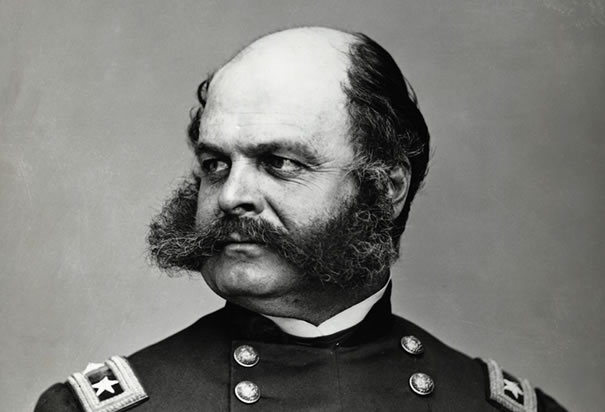
General Ambrose Burnside
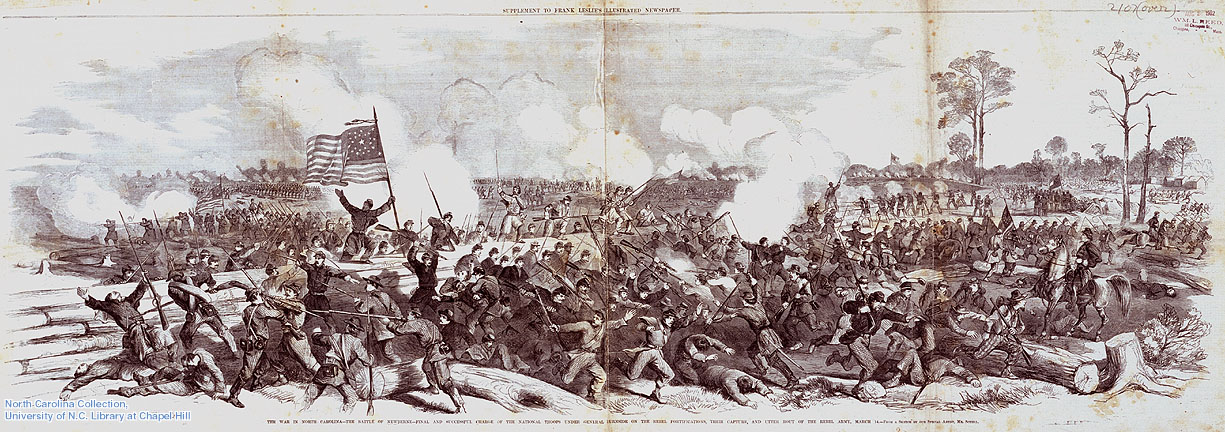
Some have called March 14, 1862 “The Day Ambrose Burnside Drove Old Dixie Down” – and with apologies to Robbie Robertson and The Band – there’s some truth to that, because 150 years ago, General Burnside fought and won The Battle of New Bern (AKA The Battle of New Berne).
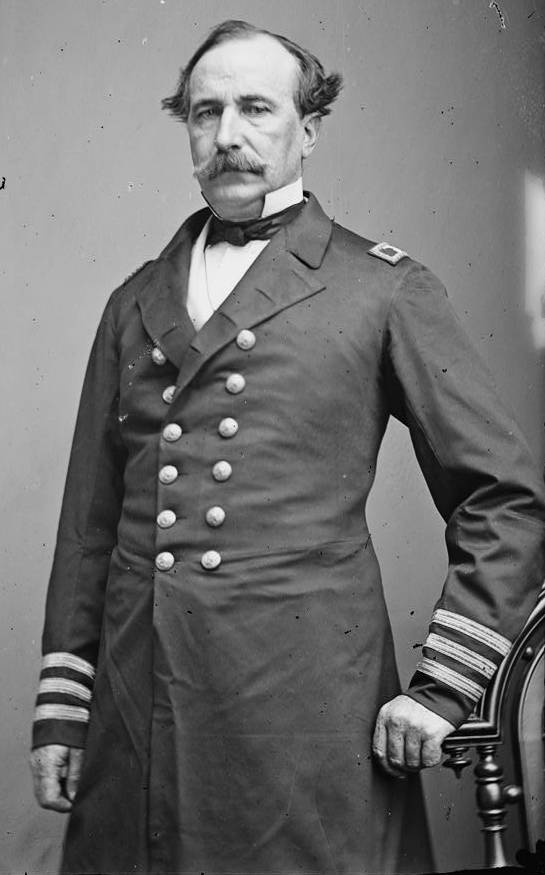
Commodore Stephen C. Rowan
Brigadier General Ambrose E. Burnside’s 12,000 Union troops, many of them battle-tested veterans, were backed by 13 gunboats commanded by Commodore Stephen C. Rowan of the Union Navy. This powerful, combined Union Army-Navy operation confronted a relatively untrained and ill-equipped Confederate force of 4,500 North Carolina soldiers and militia led by Brigadier General Lawrence O’Bryan Branch, a political general who represented North Carolina in the U.S. Congress before the war. (Branch was ultimately killed just six months after New Bern at the Battle of Antietam.)
 Naval cannon bombarded the Confederate line in the early hours of March 14th. Outgunned and outmanned, the Confederates fought behind their breastworks for almost 4 hours until the attacking Federal troops penetrated a weak spot in the center of the Rebel line — causing the green, unsteady militiamen to waver and break, leading the whole Confederate force to retreat.
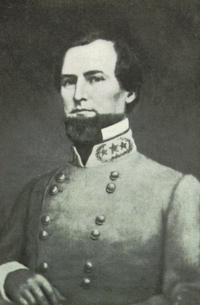
General Branch
General Branch could not stop the rout and New Bern came under Federal control for the duration of the war.
The Union army had gained a strategic toehold on the North Carolina coast. The Confederacy gave up a valuable port and railroad terminal it could not afford to lose.
The highlight of New Berne for the South was the courage and leadership displayed by North Carolina’s future wartime governor, Zebulon Vance of the 26th North Carolina Infantry.
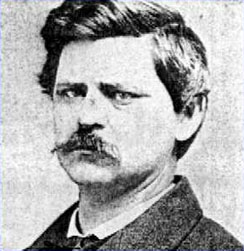
Zebulon Vance
Vance and his handful of defenders held off a vastly superior Union force, preventing damage to New Bern and it’s populace by delaying the Federal onslaught. But New Bern fell, and by December 1862 a Federal army of well over 20,000 troops were stationed in the town once known as “The Athens of the South”.
It’s ironic to note that while Brig. Gen. Branch was getting killed in September 1862 — six months after New Bern – that same month Zebulon Vance won the North Carolina gubernatorial election.
Meanwhile that same day, on the Missouri shore of The Mississippi River, the guns had fallen silent after The Battle of New Madrid.
 Before the Battle of New Madrid, that small Missouri town was best known as the epicenter of a series of epic earthquakes that shook the entire Midwest 50 years earlier, between December 16, 1811 and February 7, 1812. The last major temblor in the series was a magnitude 7.7 quake that destroyed New Madrid and changed the course of the Mississippi River.
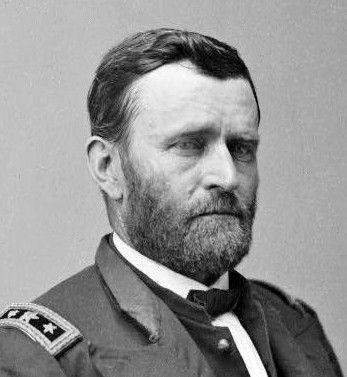
General U.S. Grant
The unheralded Battle of New Madrid would help to change the course of the war.
In February of 1862, the unknown upstart General U.S. Grant began to break the South’s grip on the Mississippi River by his bold captures of Fort Henry and Fort Donelson, forcing the renowned Confederate commander in the west, General Albert Sidney Johnston, to fall back to a new defensive line blocking the Mississippi at New Madrid and Island No. 10. Grant was not the only Union general on the move in the area at the time.

General John Pope
General John Pope had orders to capture New Madrid and Island No. 10. Pope’s army numbered 18,547 “present for duty” when he began his siege of New Madrid on March 3, 1862. Nine days later, Pope reported that he was facing 9,000 Confederate defenders at New Madrid — the same day his siege guns arrived. The next day, on the morning of March 13, Pope opened his gunboat, mortar and cannon bombardment — beginning an artillery exchange that lasted most of the day.
 Meanwhile, Pope’s infantrymen made use of their shovels, slowly advancing their trenches ever closer to the Confederate defensive lines. Realizing that defeat was imminent, the Confederates evacuated New Madrid and made their escape to the opposite bank of the Mississippi.
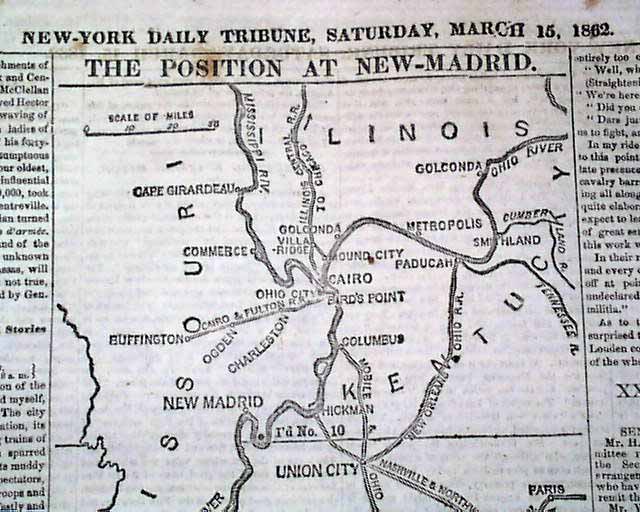 The following morning, on March 14th, Pope’s troops formed ranks, prepared for a final, bloody assault on the enemy line – when Rebel pickets appeared with a flag of truce. General Pope had captured a key Confederate position on the Mississippi River with remarkably few losses. In the Battle of New Madrid, Pope’s army lost just 8 dead, 21 wounded and 3 missing. But while this was the beginning of the end of the Confederate army in the west, much, much more blood would be shed before the South, like the defenders of New Madrid, bowed to the inevitable.
The Battles of New Bern and New Madrid: 150 years ago today in The American Civil War.



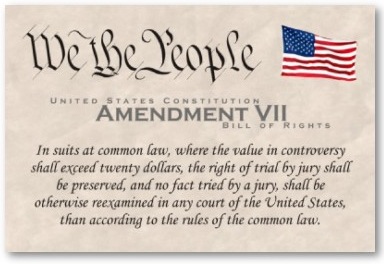



Abigail Adams vs. The U.S. Constitution
In The Practical Theatre Company’s most recent comedy revue, Quick! Before We’re Cancelled!, we imagined what the brilliant and fearlessly opinionated Abigail Adams might have to say to her husband John and his patriot pal Thomas Jefferson regarding the newly-written Constitution of the United States of America. It’s a sitcom circa 1787 entitled…
“OH, ABIGAIL!”
MUSIC: Harpsichord: “Yankee Doodle”
IT’S THE FALL OF 1787, FOUR YEARS AFTER OUR NATION HAS WON ITS INDEPENDENCE. THE CONSTITUTIONAL CONVENTION HAS JUST FINISHED DRAFTING THE DOCUMENT THAT WILL BE OUR DEMOCRATIC TEMPLATE FOR THE NEXT 238 YEARS.
WE TAKE YOU NOW TO THE HOME OF JOHN AND ABIGAIL ADAMS, WHO ARE HOSTING THOMAS JEFFERSON FOR A CELEBRATORY DINNER.
ADAMS: A toast, my dear Thomas! Here’s to our new Constitution! The ink is barely dry on it – but ‘tis done at last!
JEFFERSON: To the constitution! I daresay the world will be astonished at what our patriotic brothers have fashioned: the birth of true representative democracy on the Earth!
ADAMS: Here, here!
ABIGAIL ENTERS, CARRYING A SHEAF OF PARCHMENT.
ABIGAIL: Ahem… Excuse me, please….
ADAMS: Ah, forgive me, Abigail. Please join us!
ABIGAIL: Gentlemen, much as I esteem you both. I have certain questions about the document as written.
BEAT. JEFFERSON DOES A SPIT TAKE.
JEFFERSON: Do you mean to say that you’ve read our Constitution?
ABIGAIL: Of course I have! I read everything that John brings home.
ADAMS: So, that’s where my copy went!
JEFFERSON: Your copy? Good heavens man, that’s the only copy!
ABIGAIL PRODUCES THE DOCUMENT, PUTS ON HER READING GLASSES.
ABIGAIL: If you gentlemen will just indulge me. To begin with, I’m concerned that the Article Two Executive Branch Powers have not been clearly delineated.
ADAMS: Oh, Abigail, we’ve no need of further comment…
ABIGAIL: (IGNORING HER HUSBAND) What, pray tell, might happen if an unscrupulous, mendacious and avaricious man should occupy the office of President, taking unto himself powers not anticipated in your sacred constitution and make of himself a despot — seeking to accrue ever more power and wealth unto himself?
ADAMS: Oh, Abigail! ‘Tis impossible to conceive that a man of such low character could ever win the hearts of God-fearing, freedom loving Americans!
JEFFERSON: Well said, John! The noble virtues and innate wisdom of our rustic electorate are a bulwark against the rise of despotism and tyranny!
ADAMS: Thomas is right, Abigail. Can you imagine that men who have just fought a revolution to throw off the yolk of royal subjugation would ever submit to a grasping despot as their President?
JEFFERSON: It is to laugh!
ADAMS & JEFFERSON: Hahahaha!
ABIGAIL: I only ask you to consider a scenario in which a narcissistic, manipulative scoundrel seduces our rustic electorate with vague appeals to greatness and disingenuous promises of security and prosperity.
ADAMS: Oh, Abigail! ‘Tis the very reason we have designed a system of checks and balances
JEFFERSON: Three co-equal branches of government!
ADAMS & JEFFERSON: The Legislative, The Executive and the Judicial!
ABIGAIL: But what if this miscreant asserts that he can bypass Congress and ignore the Courts?
ADAMS: Oh, Abigail!
ADAMS: The wise men of the Courts and the Congress would no doubt rise to meet the moment.
JEFFERSON: And vigorously affirm their Constitutional authority!
ADAMS: Should this soulless mountebank that you describe attempt such a perfidious scheme, he would be promptly impeached by the steadfast men of the House of Representatives!
JEFFERSON: And convicted by the temperate and sagacious men of the Senate!
ABIGAIL: The Senate? There, gentlemen, I daresay you have made a grave error.
JEFFERSON: How so? The Senate, Abigail, is the saucer that cools the heat of what the House has brewed.
ABIGAIL: But sirs. You have apportioned the seats in the House of Representatives based on the state’s population.
ADAMS: Of course. ‘Tis only fair.
ABIGAIL: And yet you’ve designated two Senators for each-and-every state, no matter the size of its population?
JEFFERSON: ‘Tis fair and balanced, is it not?
ABIGAIL: “Tis not, Thomas! Let’s game this out, boys. You’ve got a huge state like New York with five times the population of, say, Georgia – and they both get two Senators? How is that fair?
ADAMS & JEFFERSON: Oh, Abigail!
ABIGAIL: States with so few people they have just one House Member get two Senators? Do the math! It’s an undemocratic disaster!
ADAMS AND JEFFERSON LOOK AT EACH OTHER.
JEFFERSON: That might have been the night we drank all that port.
ADAMS: I’ll make a note
ABIGAIL: And what about this so-called “Supreme” Court – with judges appointed to lifetime positions by the President?
JEFFERSON: Lifetime appointments insulate the Justices from the petty politics of the day.
ABIGAIL: But suppose this Supreme Court becomes so corrupt that it takes bribes from wealthy benefactors and goes so far as to grant the sitting President immunity for crimes committed while in office?
ADAMS: Oh, Abigail!
JEFFERSON: Suppose one day there are flying machines! And horseless carriages!
ADAMS: And magic potions to eradicate disease!
ADAMS & JEFFERSON: Hahahahaha!
ABIGAIL: But gentlemen…!
ADAMS: Fear not, Abigail! The court shall be made up of landed, well-educated men of impeccable judgement. Such men would never put personal or parochial interests above the good of the nation…
JEFFERSON: Why, if the court ever gave the President immunity, that would make him, in effect, a King!
ADAMS: Precisely what American patriots rejected on bloody battlefields from Lexington to Yorktown!
JEFFERSON: To our great victory! And the brave men who fought and died for it!
ADAMS: Hear! Hear!
ABIGAIL: With respect, gentlemen, I worry that your Constitution as written relies too much on Civic Virtue as a Moral Compass. If you would form a lasting, egalitarian government, binding us to lofty ideals that will inspire generations to come — you may need a rewrite.
JEFFERSON: You’re a real Debbie Downer, Abigail. (ASIDE, to ADAMS) John! Why do you leave important documents lying around where she can read them and form her own opinions?
ADAMS: My Abigail may overstate the case, Thomas, but perhaps ‘tis better we take another whack, what say?
JEFFERSON: Why not let Abigail have at it? She’s proven so adept at pointing out the flaws in our Constitution – I’m sure we’d all like to hear her proposed solutions! If, that is, she has any.
ABIGAIL: Well, I do have one suggestion that may improve your document and add to its democratic vision.
ADAMS AND JEFFERSON LOOK AT ABIGAIL.
ADAMS: And what is that, my dear?
A BEAT.
ABIGAIL: Give women the right to vote!
ADAMS & JEFFERSON: Oh, Abigail!
ADAMS & JEFFERSON LAUGH AS LIGHTS FADE.
Share this post:
Leave a comment
Filed under Art, Comedy, History, Improvisation, Politics, Random Commentary, Truth, Uncategorized
Tagged as Abigail Adams, Am, america, American history, American Revolution, cabaret, comedy, Constitutional Law, Dana Olsen, history, improvisational comedy, John Adams, Paul Barrosse, Politics, The Practical Theatre, Thomas Jefferson, U.S. Constitution, Victoria Zielinski