Category Archives: History

150 Years Ago Today…

It’s another interesting day in the Sesquicentennial of The American Civil War.

150 years ago today two little known events took place on Civil War battlefields in the Eastern and Western theatres of the conflict. And while few remember this day on the Civil War calendar, it was a pivotal one. On March 14, 1862 the South lost two key places on their map that they’d never regain: on the Atlantic coast of North Carolina — and on the western shore of the Mississippi River.
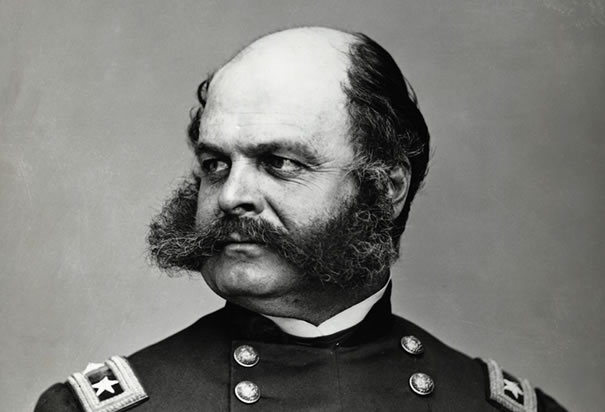
General Ambrose Burnside

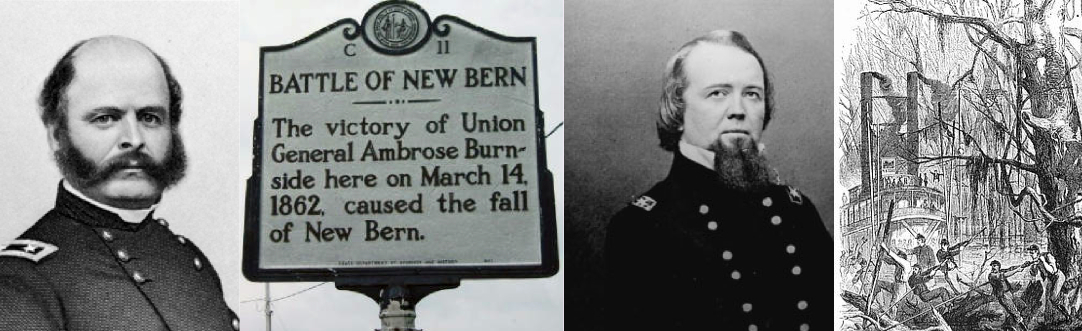
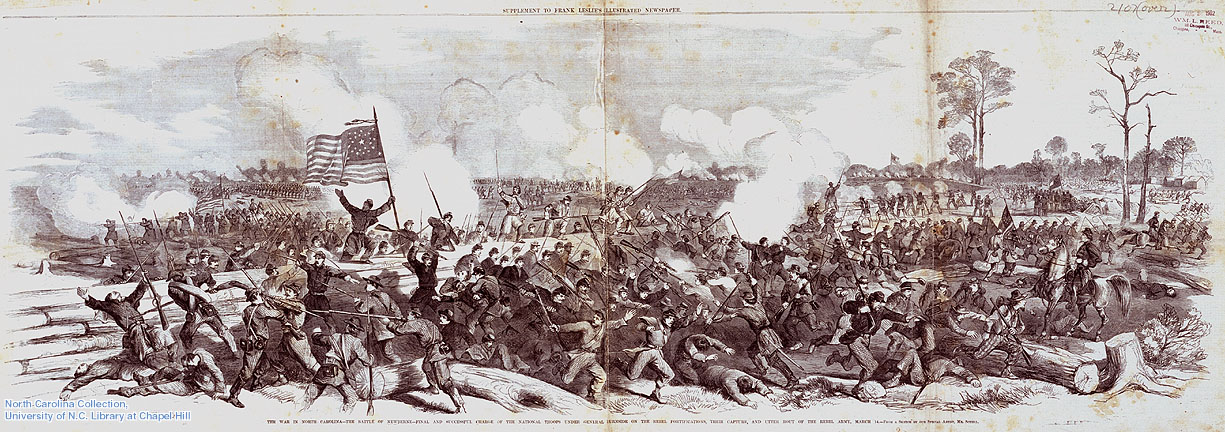
Some have called March 14, 1862 “The Day Ambrose Burnside Drove Old Dixie Down” – and with apologies to Robbie Robertson and The Band – there’s some truth to that, because 150 years ago, General Burnside fought and won The Battle of New Bern (AKA The Battle of New Berne).
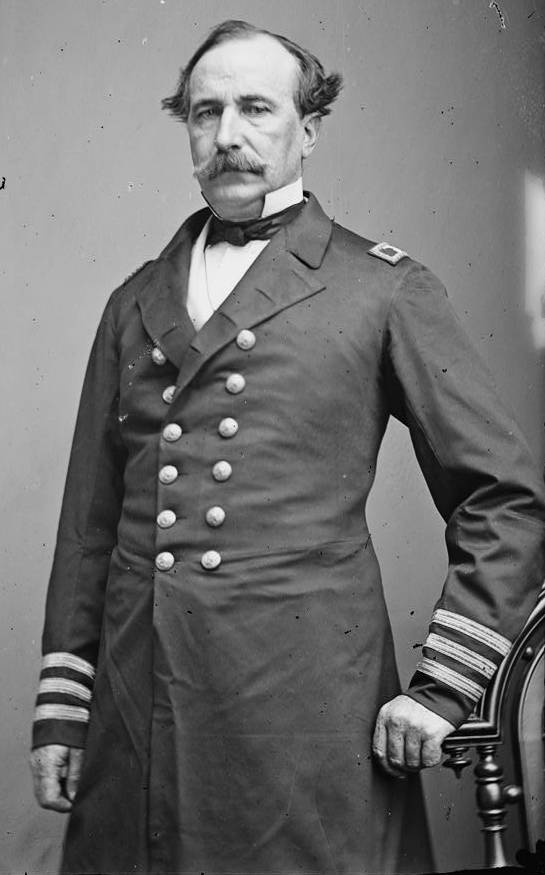
Commodore Stephen C. Rowan

Brigadier General Ambrose E. Burnside’s 12,000 Union troops, many of them battle-tested veterans, were backed by 13 gunboats commanded by Commodore Stephen C. Rowan of the Union Navy. This powerful, combined Union Army-Navy operation confronted a relatively untrained and ill-equipped Confederate force of 4,500 North Carolina soldiers and militia led by Brigadier General Lawrence O’Bryan Branch, a political general who represented North Carolina in the U.S. Congress before the war. (Branch was ultimately killed just six months after New Bern at the Battle of Antietam.)

Naval cannon bombarded the Confederate line in the early hours of March 14th. Outgunned and outmanned, the Confederates fought behind their breastworks for almost 4 hours until the attacking Federal troops penetrated a weak spot in the center of the Rebel line — causing the green, unsteady militiamen to waver and break, leading the whole Confederate force to retreat.
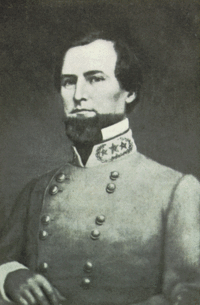
General Branch

General Branch could not stop the rout and New Bern came under Federal control for the duration of the war.

The Union army had gained a strategic toehold on the North Carolina coast. The Confederacy gave up a valuable port and railroad terminal it could not afford to lose.

The highlight of New Berne for the South was the courage and leadership displayed by North Carolina’s future wartime governor, Zebulon Vance of the 26th North Carolina Infantry.
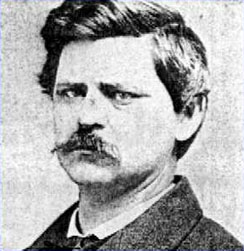
Zebulon Vance

Vance and his handful of defenders held off a vastly superior Union force, preventing damage to New Bern and it’s populace by delaying the Federal onslaught. But New Bern fell, and by December 1862 a Federal army of well over 20,000 troops were stationed in the town once known as “The Athens of the South”.

It’s ironic to note that while Brig. Gen. Branch was getting killed in September 1862 — six months after New Bern – that same month Zebulon Vance won the North Carolina gubernatorial election.

Meanwhile that same day, on the Missouri shore of The Mississippi River, the guns had fallen silent after The Battle of New Madrid.

Before the Battle of New Madrid, that small Missouri town was best known as the epicenter of a series of epic earthquakes that shook the entire Midwest 50 years earlier, between December 16, 1811 and February 7, 1812. The last major temblor in the series was a magnitude 7.7 quake that destroyed New Madrid and changed the course of the Mississippi River.
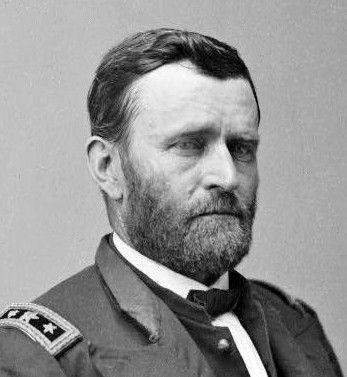
General U.S. Grant

The unheralded Battle of New Madrid would help to change the course of the war.

In February of 1862, the unknown upstart General U.S. Grant began to break the South’s grip on the Mississippi River by his bold captures of Fort Henry and Fort Donelson, forcing the renowned Confederate commander in the west, General Albert Sidney Johnston, to fall back to a new defensive line blocking the Mississippi at New Madrid and Island No. 10. Grant was not the only Union general on the move in the area at the time.

General John Pope

General John Pope had orders to capture New Madrid and Island No. 10. Pope’s army numbered 18,547 “present for duty” when he began his siege of New Madrid on March 3, 1862. Nine days later, Pope reported that he was facing 9,000 Confederate defenders at New Madrid — the same day his siege guns arrived. The next day, on the morning of March 13, Pope opened his gunboat, mortar and cannon bombardment — beginning an artillery exchange that lasted most of the day.

Meanwhile, Pope’s infantrymen made use of their shovels, slowly advancing their trenches ever closer to the Confederate defensive lines. Realizing that defeat was imminent, the Confederates evacuated New Madrid and made their escape to the opposite bank of the Mississippi.
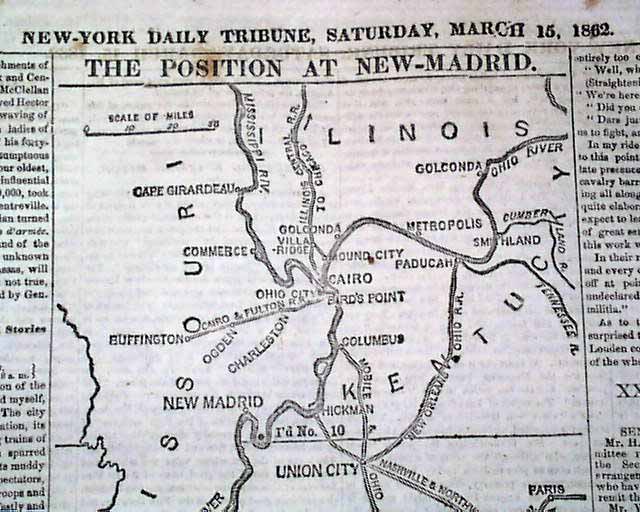
The following morning, on March 14th, Pope’s troops formed ranks, prepared for a final, bloody assault on the enemy line – when Rebel pickets appeared with a flag of truce. General Pope had captured a key Confederate position on the Mississippi River with remarkably few losses. In the Battle of New Madrid, Pope’s army lost just 8 dead, 21 wounded and 3 missing. But while this was the beginning of the end of the Confederate army in the west, much, much more blood would be shed before the South, like the defenders of New Madrid, bowed to the inevitable.

The Battles of New Bern and New Madrid: 150 years ago today in The American Civil War.
4 Comments

Filed under History

30 Years Ago…

We measure our lives in years, but we experience life moment to moment. Some moments in time are more memorable than others. Some are unforgettable. And yet, even our most remarkable moments become generalized in our memories. Years later, we no longer see them in sharp focus. What we remember becomes wrapped in gauze: kept warm and fuzzy.

And then sometimes, even after three busy, event-filled decades, something can stir the memory of a special time in your life and you relive a moment you thought you remembered well — but hadn’t really seen clearly for a long, long while.

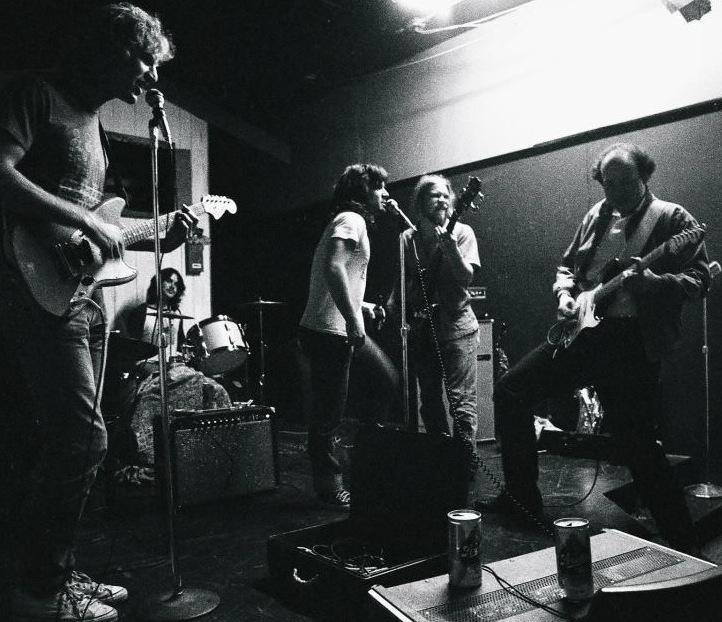
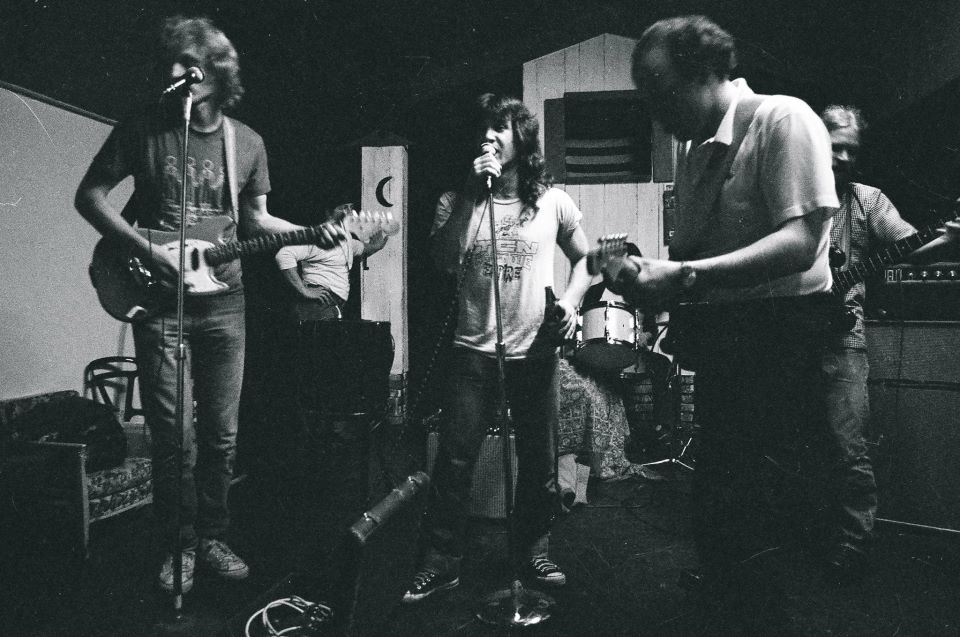
Recently, my good friend and college roommate Rob Mendel brought a wonderful moment in time back to life when he posted a vivid series of photographs he took in and around The Practical Theatre on Howard Street in Evanston, on the northern border of Chicago, in the winter of 1981-82.

The halcyon moment in time that Rob captured with his camera was charged with a mix of creativity and youthful energy that would ultimately – in just six more months – change our lives in an unexpected and dramatic way.

It would be, perhaps, too precious to say that Robbie caught us in the last relatively innocent and naïve moment of our young adult lives. But he did.

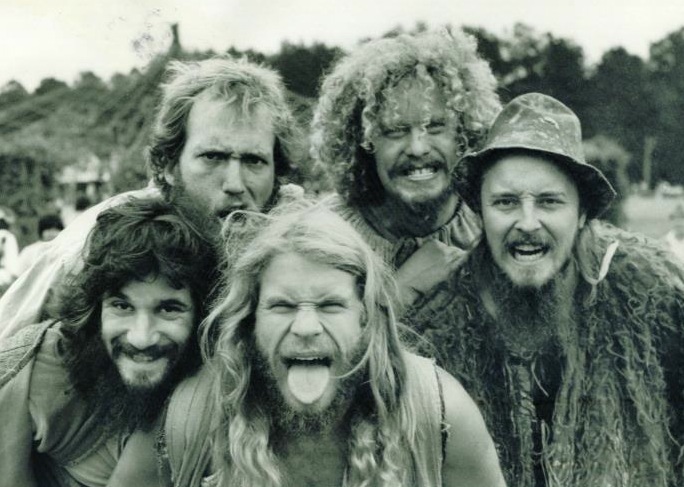
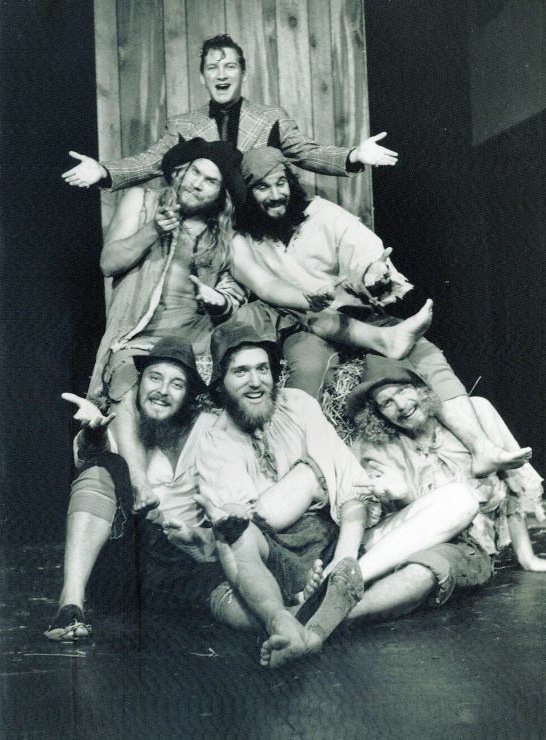
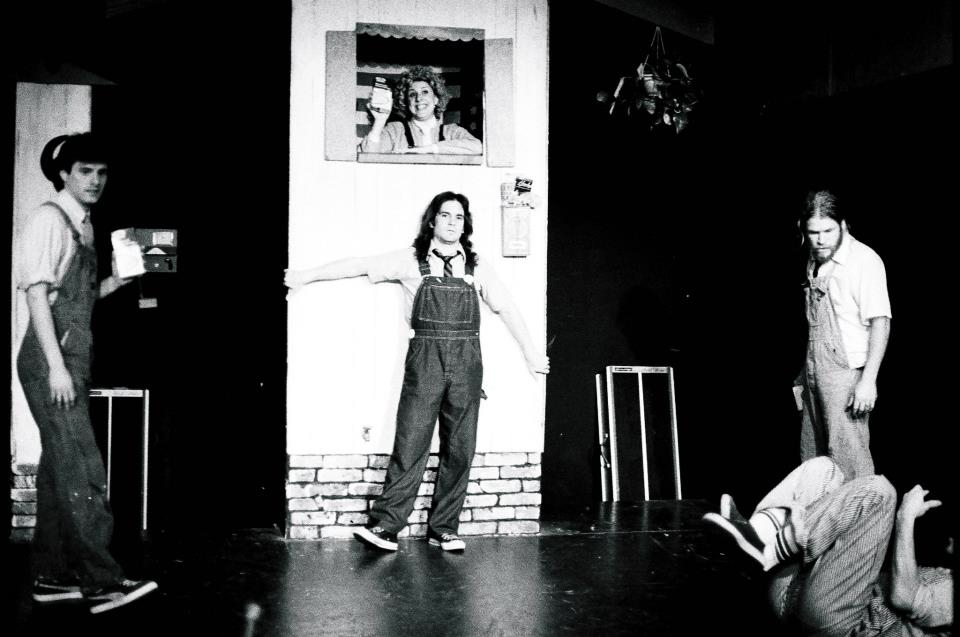
Asked for his recollections of how he came to take this trove of photos, Rob replied, “I can hardly remember! It was after traveling back to Evanston from Texas on the Big O with Rush, I think. “Beggars Holiday” was in rehearsal. We took publicity shots for that. But am I mixing it up?”

Not really. Beggar’s Holiday opened at The PTC’s John Lennon Auditorium at 703 Howard Street on November 28, 1981 – so Rob’s publicity photos must have been taken in early November, soon after we (The Sturdy Beggars) got back from our muddy stint at The Texas Renaissance Festival.

“The Rockmes were rehearsing, I had my camera with me. I took pix of the Beggars in Texas and again in Evanston.”

Now, here Rob’s memory begins to fade.

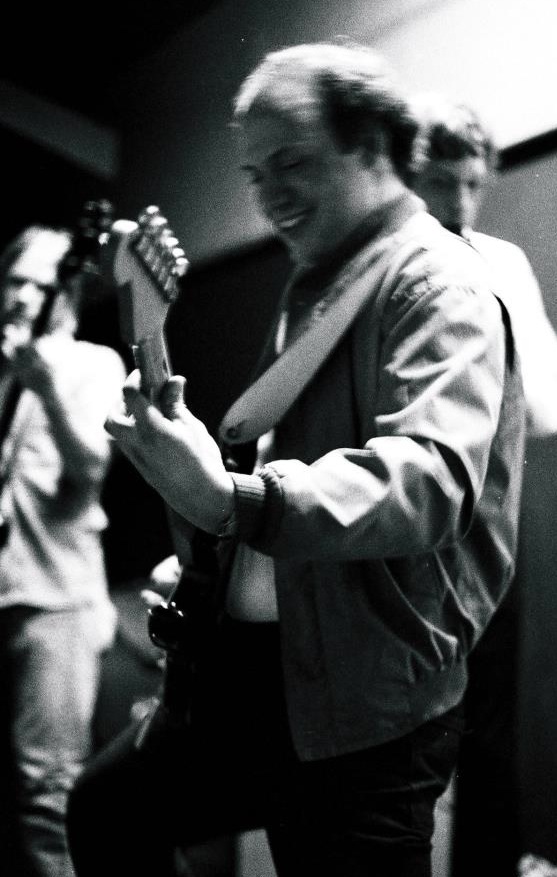
Rob’s photos of The PTC’s house band Riffmaster & The Rockme Foundation in rehearsal at the JLA were clearly taken after Beggar’s Holiday closed and our 1982 season opener, the improvisational comedy revue The Brothers Bubba, was in rehearsal.

You can tell because I’ve shaved my beggar beard.

So, Rob’s photos of the Rockmes in rehearsal must have been taken in the first months of 1982 – exactly 30 years ago!

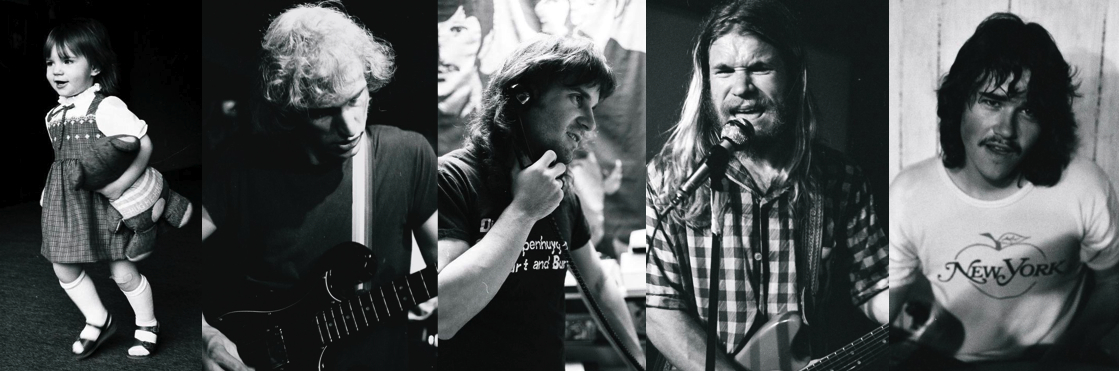
The band was formed late in the spring of ’81, and had been playing together less than a year when these shots were snapped.

Looking at the eager, earnest, passionate (and hairy) young garage band that Rob got on film that day in the winter of ’82 – it’s deeply satisfying to know that the Rockme adventure has continued.

In fact, the band shown in these pics is the same group of guys that still manage to reunite and rock together to this day.

Next gig? June 8th in Portola Valley, California. The beat goes on…

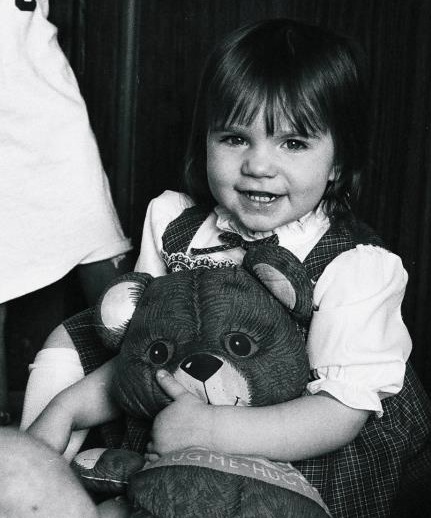
“Mo was two. I took her to the playground a couple of times… Used to chant, “She’s still a baby!” and she’d respond, “I’m not a baby!” She was the cutest thing!”

Okay, these photos just melt my heart. My daughter Maura was, indeed, the cutest thing. Little Mo was less than two years old at the time. (She turned two on July 3rd, 1982.) Rob snapped her in the lobby of The John Lennon Auditorium – with the “Build-a-Bear” that my mom made for her.Rob also shot this portrait of Maura in the lobby of the JLA with her Godfather Rush Pearson.And with Uncle Brad Hall, our mascot Sri Abdul Aziz, and Godfather Rush.Here’s the delightful toddler Maura with her dad a few doors west up Howard Street from the JLA at the legendary Cottage Restaurant, a classic diner. We’re waiting for old Bob to serve us a couple “chezzies” and a “shooker”. (Six months later, a UPI reporter would interview the cast of The Golden Jubilee at The Cottage to get the story of our sudden, shocking ascent to Saturday Night Live.)

Robbie’s camera also found us in rehearsal for The Brothers Bubba.

In this photo, Gary Kroeger, Jane Muller, your author, Rush Pearson and Brad Hall are rehearsing the musical number, “Macaroni & Cheese.”

In these photos, Brad and I are perfecting our impression of Simon and Garfunkel performing “The Boxer” — another sketch from The Bothers Bubba. 

 The Bothers Bubba opened at The JLA on April 1, 1982 and became the PTC’s biggest hit yet, playing to sold-out houses that demonstrated our 42-seat storefront was too small to contain our rapidly growing success.

Events were moving quickly, success was advancing swiftly, and as Bob Dylan said, the times they were a-changing. 

 Less than half a year after Rob’s photos were taken, the Practical Theatre Company, in partnership with Bernie Sahlins, owner of The Second City, opened our new cabaret theatre space at Piper’s Alley with The Golden 50th Anniversary Jubilee — a collection of our best sketches and songs performed by Brad Hall, Gary Kroeger, Julia Louis-Dreyfus and your humble author.

Robbie Mendel’s camera caught the spirit and drama of an unsuspecting cast of characters doing what they love – with no idea of what was to come.

“I remember that I had bought a camera, because the rental house I was working at in Hollywood had a bunch of guys who mentored me to get a camera and learn how to take pictures properly. I was using B&W for publicity pix for the Beggars, I believe, and that’s why they are not in color.”

Who cares about color? The classic black and white format adds to the drama of these memories: a glorious moment in time – just half a year before our lives were transformed — captured so indelibly by Robbie Mendel’s camera.

“When I returned to Hollywood, I landed my PA job on the TV movie with Susan St. James and I laid a publicity packet about PTC on Dick Ebersol there, but I think the PTC got on his radar separately, also. These pix preceded all of that, eh?”

That’s Rob Mendel for you. I never knew (or maybe I’d forgotten) that Robbie had hipped Saturday Night Live Executive Producer Dick Ebersol to The Practical Theatre just months before The Golden Jubilee opened at Piper’s Alley.It’s another intriguing brick in the wonderwall of that seminal moment in our lives.

5 Comments

Filed under Art, History, Music

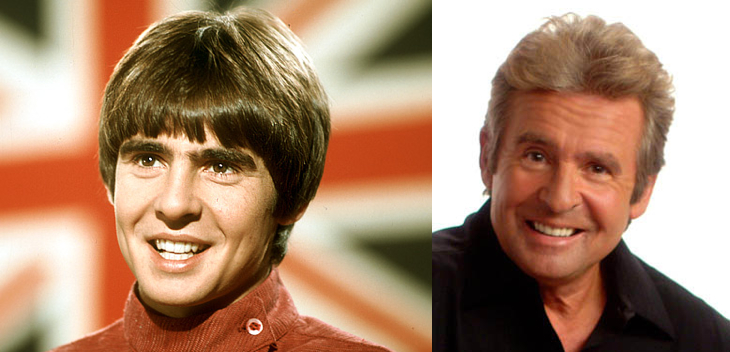
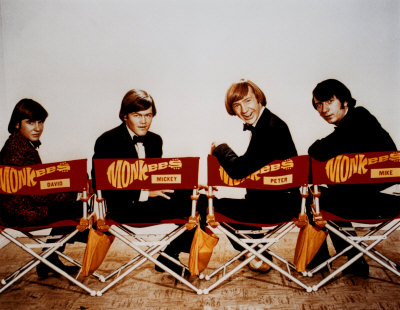
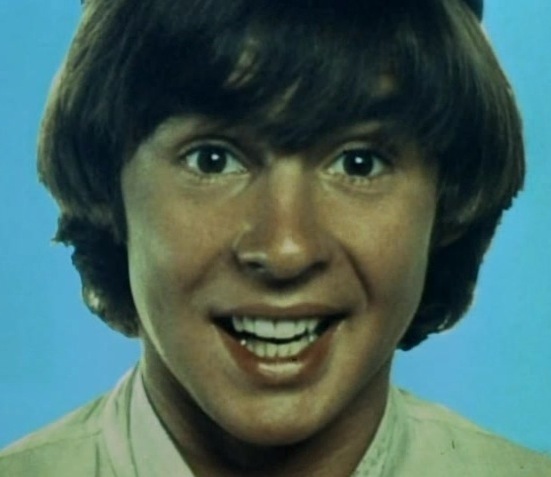
Goodbye, Davy Jones.

At 1:30 pm EST today, NBC News reported: “Singer Davy Jones of The Monkees has died of a heart attack at 66, the medical examiner’s office in Martin County, Fla. has confirmed to NBC News.”

This one really hurts.

Aside from The Beatles, no band stirred my youthful soul like The Monkees. And as a short, dark-haired lad myself, Davy was an inspiration. On episode after episode of The Monkees’ revolutionary television series, Davy showed that the little guy could get the girl.

And Davy’s voice?  And all those great songs? Simply wonderful.

The glorious three-year period from 1966 to 1968 during which Davy Jones and The Monkees challenged The Beatles for the top of the Billboard charts were the greatest years in the history of AM radio – and the formative years of my life.

It’s hard to say where songs like Daydream Believer, I Wanna Be Free, and “Look Out (Here Comes Tomorrow)” end and I begin.

Three decades after my youthful immersion in late 60’s Monkee Mania, I had the opportunity to write and produce The Monkees: Behind the Music. During the course of my work on that show I met and interviewed Peter Tork and Micky Dolenz, and came away impressed by their warm, easygoing and generous natures. Michael Nesmith was at the time avoiding all things Monkee – but getting Davy on board was still a possibility. So, I called him at his home in Pennsylvania.

Sadly, my call with Davy revealed a conflicted and unhappy man, still struggling with the ups and down of his legendary life as a Monkee. Devoted to his family, his daughters and his horses, Davy was ambivalent about his role as a 60’s pop music icon and his current status as a fading former phenomenon. We talked for nearly an hour. I wish I had written it all down. In the end, Davy passed on being interviewed for my show — but I was honored to have the opportunity to talk to him.

Few performers reach the heights that Davy reached. Alone among The Monkees, he was already a star when he was cast in the band. Heck, he even appeared on The Ed Sullivan Show on the same bill with The Beatles. (As the Artful Dodger in a number from the smash Broadway musical, “Oliver”.)

Much will now be written of Davy’s last years. Was he at peace? Was he still troubled? What were the states of his relationships with the other Monkees?

I hope that Peter, Micky and Mike will soon give us their thoughts on the passing of their bantam band mate. Meanwhile, Monkees fans worldwide can only say, “Thanks for the great music, Davy. And all the fun. Rest in peace.”

5 Comments

Filed under Art, History, Music

The King & Abe…

While few Americans other than American Civil War buffs like me seem to be aware of it — we are in the midst of the sesquicentennial of The War Between the States. (Or as many southerners refer to it, The War of Northern Aggression.)

150 years ago today, our country had been at war with itself for nearly ten months — ever since rebellious hotheads in South Carolina fired the first cannonball at Fort Sumter in Charleston Harbor on Friday, April 12, 1861.

Until the 150th anniversary of Confederate General Robert E. Lee’s surrender to Union General Ulysses S. Grant on April 9, 2015, this blog will celebrate the Civil War Sesquicentennial by periodically noting interesting and significant days in Civil War history.

We begin with Monday, February 3, 1862 — and an event that had no military impact, but is damn interesting nonetheless. In fact, as much as I’ve studied the Civil War, today’s 150th anniversary was news to me – and, as I discovered, a subject of debate among Civil War historians.

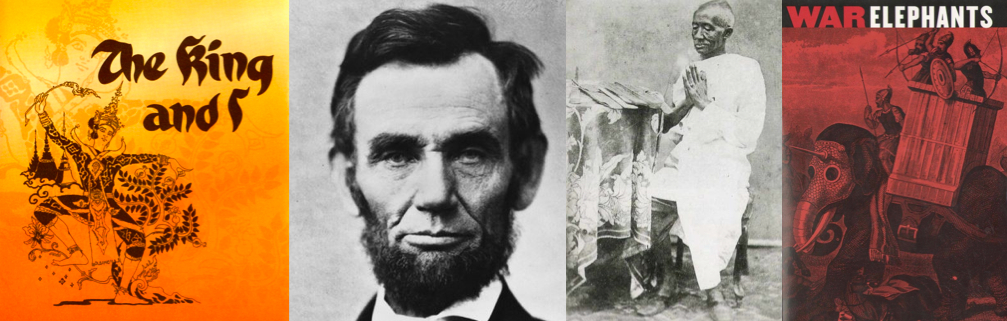
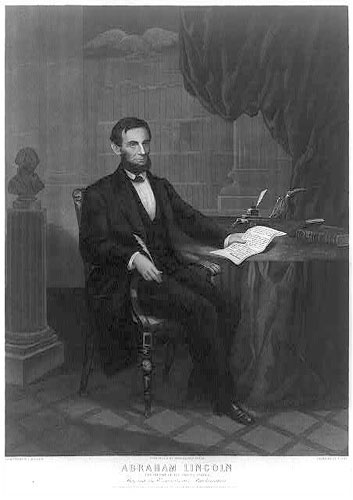
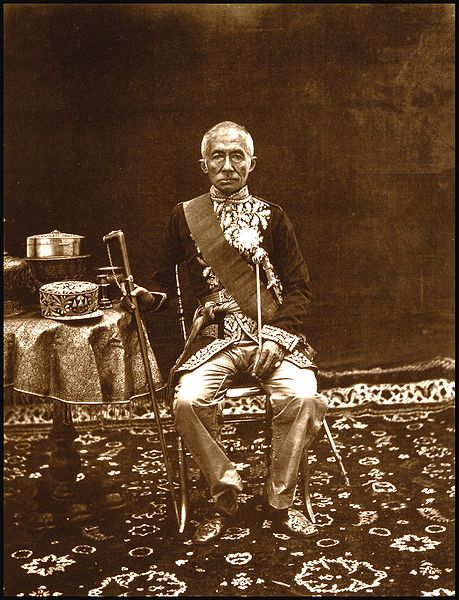
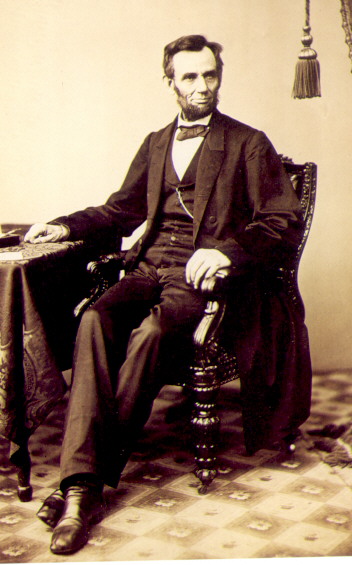
On this day President Abraham Lincoln wrote what some have called one of the most eloquent letters of his Presidential career. Lincoln had been given a letter from King Mongkut of Siam (originally written to Abe’s predecessor, President James Buchanan). The King of Siam (AKA King Rama IV) offered to send war elephants to America — but Lincoln’s tactful missive noted that he was unable to accept the King’s offer, as the United States were located at a latitude that did not “favor the multiplication of the elephant.”

The King of Siam’s curious letter arrived late in the Buchanan administration, but like other larger problems, Buchanan left it for Lincoln to deal with.

Though it’s a much more exciting story, contrary to popular myth, King Mongkut did not offer a herd of war elephants to President Lincoln for use against the South. Instead, he offered domesticated elephants to use as beasts of burden and a means of transportation. The royal letter was written before the Civil War started, and by the time it reached the White House, Buchanan was no longer in office.

In his reply on February 3, 1862, President Lincoln didn’t mention the Civil War. He declined the King of Siam’s proposal, politely pointing out that steam power had overtaken the need for heavy animal power of this kind.

This exchange between Lincoln and the King of Siam has inspired a great deal of fanciful conjecture. What if the Civil War armies had used war elephants? How would herds of huge, charging, armored pachyderms have changed the course of the critical battles at Fredericksburg, Shiloh and Gettysburg? Would Pickett’s Charge have fared better if Lee’s troops were mounted on elephants?

Here’s the text of Abe Lincoln’s letter to King Rama IV of Siam…

To the King of Siam
February 3, 1862
Abraham Lincoln
President of the United States of America

To His Majesty Somdetch Phra Paramendr Maha Mongut

King of Siam

Great and Good Friend:

I have received Your Majesty’s two letters of the date of February 14th, 1861.

I have also received in good condition the royal gifts which accompanied those letters, namely, a sword of costly materials and exquisite workmanship; a photographic likeness of Your Majesty and of Your Majesty’s beloved daughter; and also two elephants’ tusks of length and magnitude such as indicate that they could have belonged only to an animal which was a native of Siam.

Your Majesty’s letters show an understanding that our laws forbid the President from receiving these rich presents as personal treasures. They are therefore accepted in accordance with Your Majesty’s desire as tokens of your good will and friendship for the American People. Congress being now in session at this capital, I have had great pleasure in making known to them this manifestation of Your Majesty’s munificence and kind consideration.

Under their directions the gifts will be placed among the archives of the Government, where they will remain perpetually as tokens of mutual esteem and pacific dispositions more honorable to both nations than any trophies of conquest could be.

I appreciate most highly Your Majesty’s tender of good offices in forwarding to this Government a stock from which a supply of elephants might be raised on our own soil. This Government would not hesitate to avail itself of so generous an offer if the object were one which could be made practically useful in the present condition of the United States.

Our political jurisdiction, however, does not reach a latitude so low as to favor the multiplication of the elephant, and steam on land, as well as on water, has been our best and most efficient agent of transportation in internal commerce.

I shall have occasion at no distant day to transmit to Your Majesty some token of indication of the high sense which this Government entertains of Your Majesty’s friendship.

Meantime, wishing for Your Majesty a long and happy life, and for the generous and emulous People of Siam the highest possible prosperity, I commend both to the blessing of Almighty God.

Your Good Friend,
ABRAHAM LINCOLN
Washington, February 3, 1862.

2 Comments

Filed under History

The Death of Satire

Satire (500 B.C. – February 2, 2012)

Satire died today at the approximate age of 2,512 years.

Satire had been in ill health for decades since the Vice Presidential term of Dan Quayle in the late 1980’s made the popular form of comedic commentary nearly superfluous.

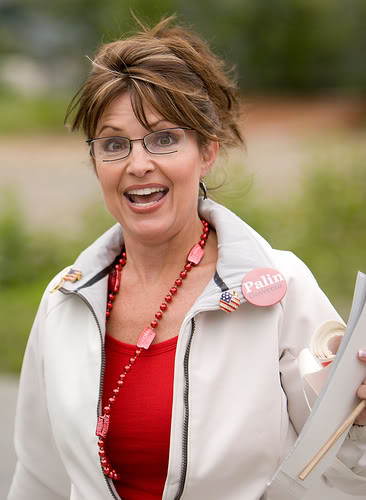
In recent years, the rise of former beauty queen and Alaska Governor Sarah Palin to national prominence and the clown car full of insanity known as the 2012 Republican Presidential candidates have made it even more difficult for Satire and the many writers and comedians who have struggled valiantly to keep it alive.

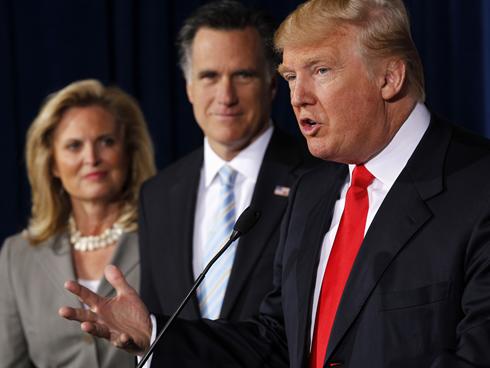
Today, with Donald’s Trump’s endorsement of Mitt Romney for President of the United States, Satire finally pulled the plug on itself. “There’s just no point in going on,” said Satire moments before passing away, “If a rich politician with an image problem as an out-of-touch, self-promoting multi-millionaire is going to publicly accept the endorsement of the most egregiously shameless huckster mutli-millionaire in the country, I just don’t see the point of existing anymore. What can I possibly add to that?”

Before contemporary political madness rendered it redundant, Satire had enjoyed a long history as a means of pointing out life’s absurdities with an eye toward improving society. Reached for comment upon Satire’s untimely death, Wikipedia noted Satire’s vast contributions to literary tradition and society in general. “Vices, follies, abuses, and shortcomings were held up to ridicule, ideally with the intent of shaming individuals, and society itself, into improvement. Although satire was usually meant to be funny, its greater purpose was often constructive social criticism, using wit as a weapon.”

Satire’s longtime friend and neighbor, Fat Dave Silberger added, “Ya just can’t shame guys like Romney and Gingrich into improvement. Not that Satire didn’t try — every night, busting its ass on The Daily Show and Colbert. But when Trump endorsed Romney – ya just can’t hold a thing like that up to ridicule. It’s just ridiculous on its face. Satire knew the time had come to end it all with dignity.”

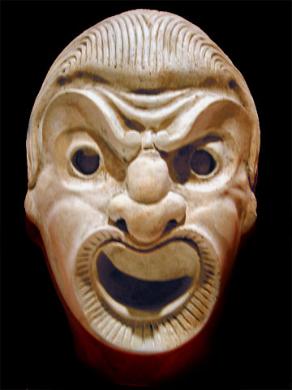
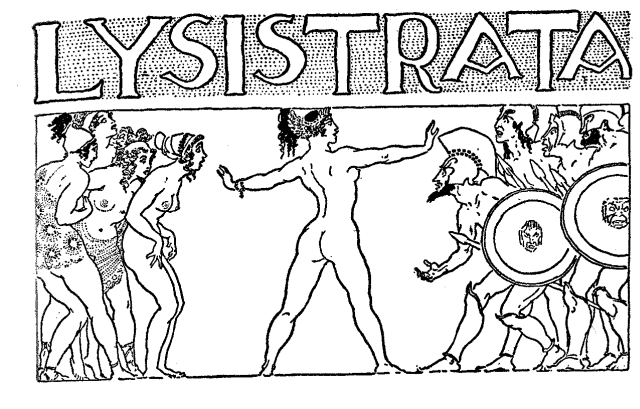
Satire’s earliest years were spent in Greece, where it was born around 500 B.C., taking the form of bawdy comic plays, often performed by men dressed as Satyrs: mythological creatures that were half-man and half-goat or horse. These were happy years for Satire, helping to expose the foibles of Athenian society in such comedies as Aristophanes’ The Clouds and Lysistrata.

Moving to Rome around 65 B.C., Satire became involved with Quintus Horatius Flaccus (AKA Horace), who came to be considered one of the first great Roman satirists. Horace could not be reached for comment because, of course, he’s been dead for over two millennia.

Satire is survived by thousands of practitioners of the form who have been left to contend with the remainder of the 2012 Presidential race without one of mankind’s most essential literary tools.

There will be no public service. Donations to the Delphic Oracle can be made in lieu of flowers.

7 Comments

Filed under Comedy, History, Politics

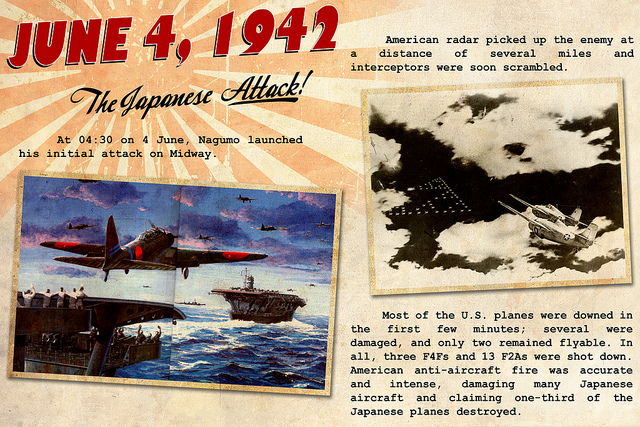
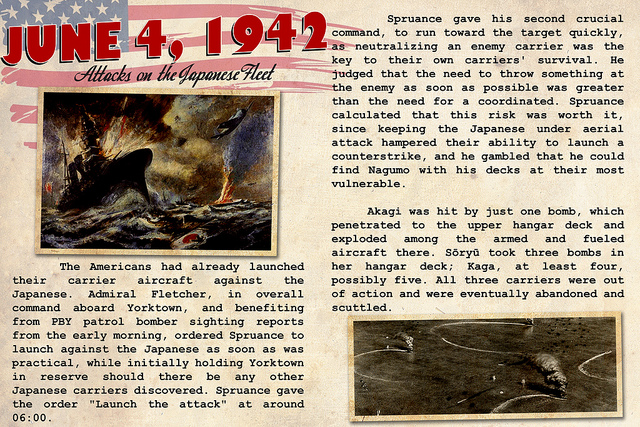
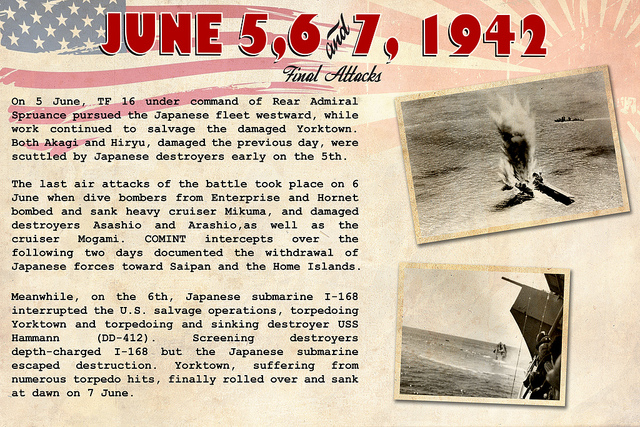
My Book Report: “The Battle of Midway”

Let’s be honest. Book reports are one of the scourges of youth.

Even if you enjoyed reading the book that you were assigned in grade school, or that you read in some summer reading program, the book report was always hanging over you. You had to write them. Teachers had to grade them. Nobody was really happy about it.

Now that I’m out of school and read mostly for pleasure, I enjoy sharing my enthusiasm for books I’ve read. And since I’m in no longer in danger of being graded by Sister Philomena, it’s time to rehabilitate the book report.

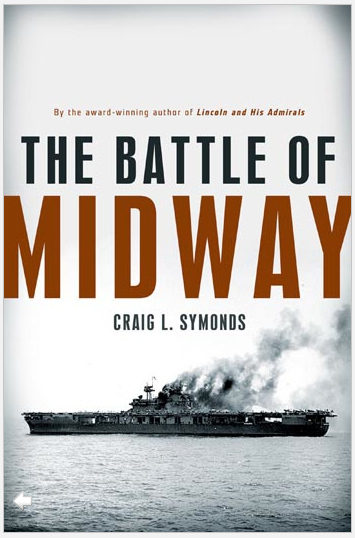
When I read a good book this year, I’ll post a book report on this blog — and The Battle of Midway by Craig L. Symonds is a very good book.

I confess that most of my recreational reading time is spent devouring history, especially military history: tales of Lord Nelson’s navy, the American Civil War, World War One aviation, and the great battles of World War Two. So, “The Battle of Midway” is right up my alley.

Having read a lot of history books, I’m not easy to please. Too often, history is written in a dry and academic way. I dare you to hack your way through Thermopylae: The Battle That Changed the World by Paul Cartledge. The legendary last-stand heroism of King Leonidas and his 300 Spartans deserved more than a repetitive, impenetrable compendium of scholarly knowledge with no regard to dramatic storytelling.

Ever since I read the great Civil War histories of Bruce Catton and Shelby Foote, I’ve come to appreciate that the best, most readable history books address their subjects with a novelist’s gift for character and story. And that’s what Craig Symonds brings to his stirring account of the Battle of Midway: a game-changing confrontation that was essentially the Gettysburg of World War Two in the Pacific.

As the sun rose on June 4, 1942, six months after Pearl Harbor, the Japanese navy was supreme in the Pacific. Before the day was over, the U.S. Navy had turned the tide. Like the Confederacy after Gettysburg, the Japanese would continue to fight – and the bloodiest years of the war lay ahead – but the Japanese could no longer win the war.

I’ve enjoyed Craig Symonds’ work before. A retired professor and chairman of the history department at the U.S. Naval Academy, Symonds wrote A Battlefield Atlas of the Civil War (1983) and Gettysburg: A Battlefield Atlas (1992), both of which I’m proud to have on my groaning history bookshelf. Those two books, with their easy-to-read maps and clear, concise copy make the great Civil War battles easy to comprehend. With no less clarity, Symonds goes deeper into the personalities and drama in The Battle of Midway.

Symonds begins by painting a bleak picture of American naval power after the disastrous surprise attack on Pearl Harbor. But, as dire as the situation was, with a seemingly unstoppable Japanese aircraft carrier force (the Kido Butai) imposing it’s will across the Pacific, the U.S. Navy’s own carriers had been absent from Pearl Harbor – and, within six months, would provide the platform for a counterstrike that would lay waste to the Kido Butai.

Symonds draws all the main characters with the skill of a novelist: Admirals Nimitz, “Bull” Halsey and Spruance as well as the poker-loving gambler, Admiral Yamamoto. But Symonds doesn’t dwell solely on the brass – he also gives us a chance to meet the pantheon of heroes who flew the torpedo bombers, dive-bombers, and fighter planes, as well as the seamen who manned the guns on the ships, fought the fires on their decks, and patched up the holes to keep them afloat.

By the time Symonds gets to the fateful, pivotal and incredible five-minute period in which American dive-bombers mortally wounded three of the four Japanese carriers in the Kido Butai – and thus changed the course of the war in 300 seconds — it’s clear how it happened, why it happened, and who was responsible.

“What I tried to do is put together the oral histories to recreate a moment” to make readers feel like they’re there, Symonds has said. “It allows us to put ourselves in their place.”

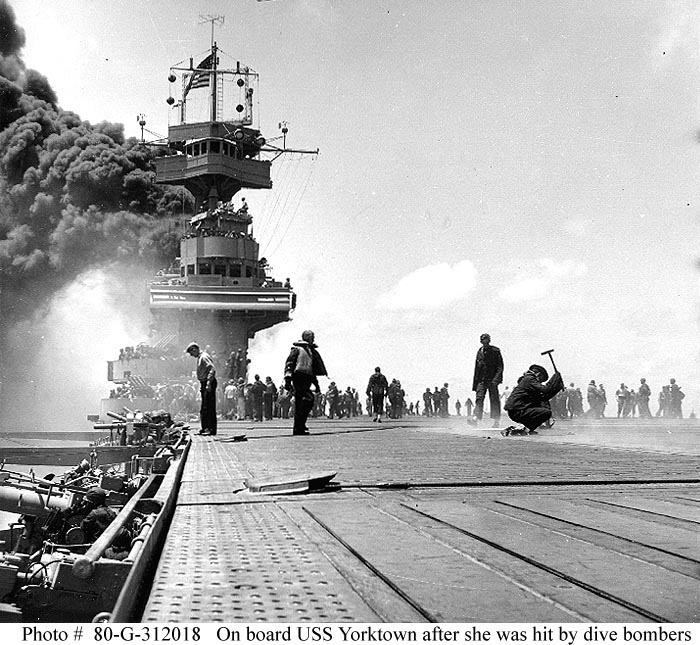
Particularly compelling in Symonds’ account is the story of the American carrier, USS Yorktown. The Yorktown had been badly damaged by a Japanese bomb on May 8, 1942 in The Battle of the Coral Sea. The crippled Yorktown limped into Pearl Harbor on May 27. It was expected that repairs would take three months. But Admiral Nimitz needed the Yorktown for his planned attack on the Kido Butai at Midway – so the repair crews at Pearl Harbor fixed her up and sent her back out to sea in just three days. Four days later, the Yorktown was fighting the Battle of Midway. Alas, the Yorktown did not survive Midway, but before she went down, her dive-bombers had sunk the Japanese carrier Soryu.

The Battle of Midway is part of Oxford’s Pivotal Moments in American History series — and in the introduction to his book, Symonds writes: “there are few moments in American history in which the course of events tipped so suddenly and dramatically as it did on June 4, 1942. At ten o’clock that morning, the Axis powers were winning the Second World War… An hour later, the balance had shifted the other way. By 11:00 a.m., three Japanese aircraft carriers were on fire and sinking. A fourth was launching a counterstrike, yet before the day was over, it too would be located and mortally wounded. The Japanese thrust was turned back. Though the war had three more years to run, the Imperial Japanese Navy would never again initiate a strategic offensive…”

The Battle of Midway is a great read. The resolute self-sacrifice of the doomed Navy torpedo bombers will bring you to tears. The courage, ingenuity and resourcefulness of the fire suppression and repair crews on the Yorktown will amaze you.

And, among other vastly interesting things, you’ll find out how Chicago’s O’Hare Airport got its name.

If you think you don’t like military history books, give this one a try.

3 Comments

Filed under History

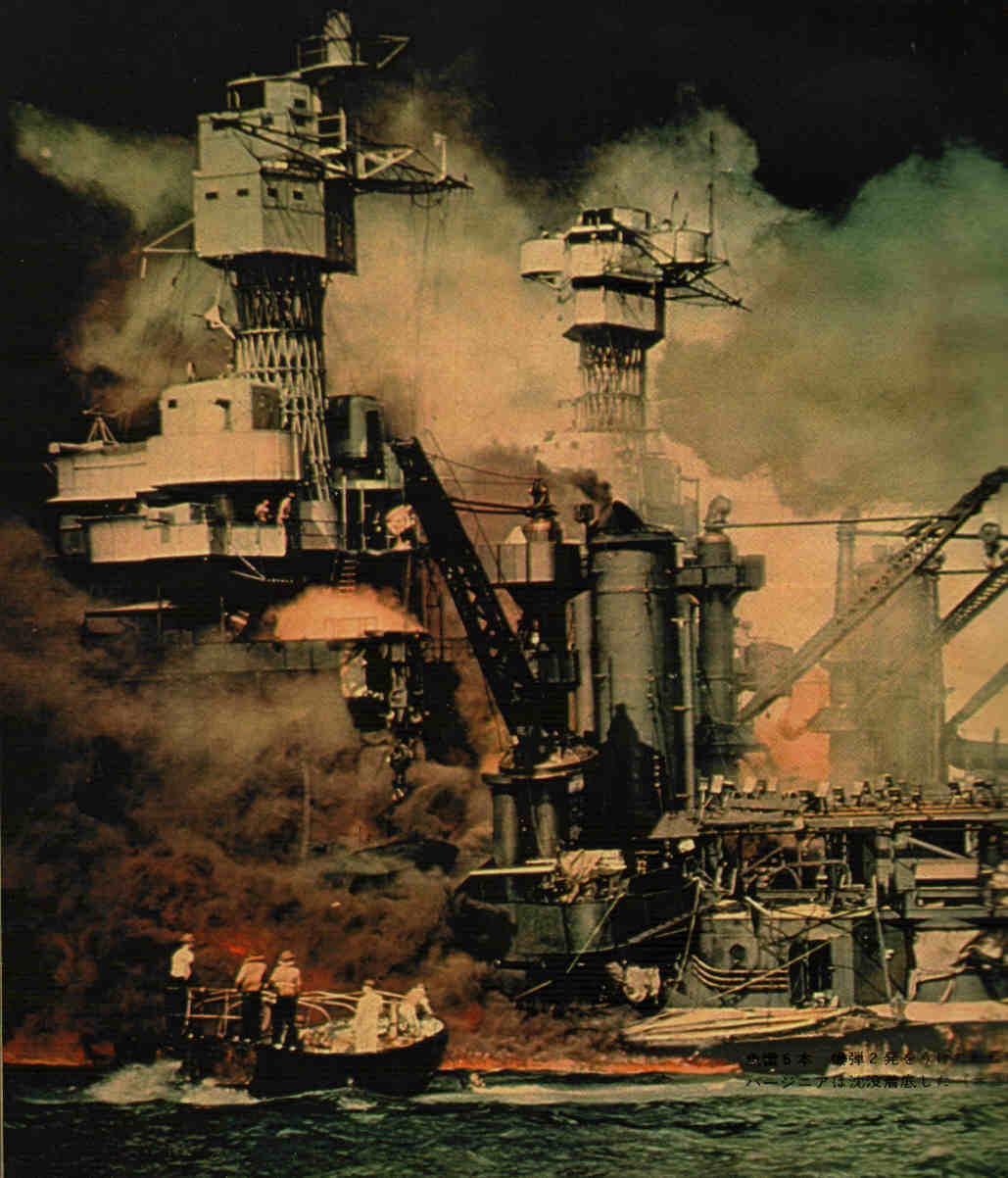
Victory at Pearl Harbor…

(This was orginally posted last year.)

The significance of December 7, 1941 is something that most of our parents do not need to be reminded about. It was a shocking, indelible moment for them, much like September 11, 2001 was for another generation of Americans. I don’t want to spend time here comparing those two disastrous attacks: one by a hostile state, the other by a handful of extremists. That’s for another time, another post.

This is a day of remembrance.

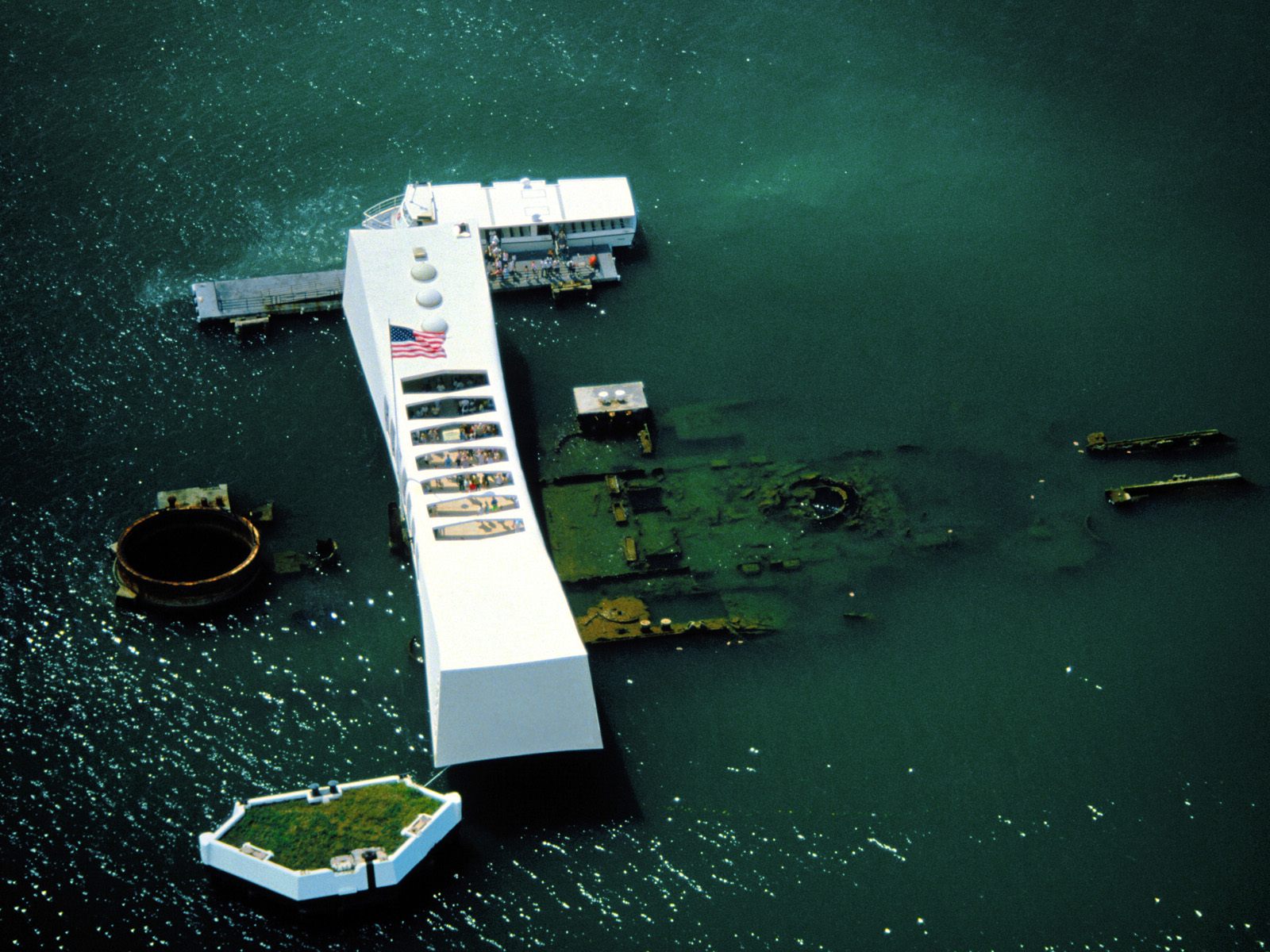
There are not many veterans of Pearl Harbor still with us. Not many left who saw the Japanese planes diving out of the sky, felt the concussions as great battleships shuddered, burned, and sank. Not many left who can stand on the observation deck of the USS Arizona Memorial, gaze at that sunken iron tomb and say, “I knew a guy who went down with that ship.”

On December 7th, we remember what was lost at Pearl Harbor: the lives, the ships, the planes – our national innocence.

But on this day, we should also remember the miracle of Pearl Harbor: the incredible effort that raised so many of those ships from the bottom of the harbor, patched them up – and sent them back into the fight. Only three of the ships that were bombed in Pearl Harbor on that day of infamy were forever lost to the fleet.

And of the 30 ships in the Japanese fleet that attacked Pearl Harbor, only one survived the war without being sunk.

The dynamism, optimism and resolve displayed by those military crewmen and civilians who, within months, raised and repaired the devastated wreckage of Pearl Harbor are qualities that Americans must call on once again to overcome our national challenges. Would that our leaders would spend less time sowing the fear of future attacks – and more time appealing to the better angels of our national identity.

“Can do” was the unofficial motto of the Seabees, the legendary Navy outfit that led the reconstruction effort at Pearl Harbor.

Where’s that American “Can do” spirit now?

P.S. Click here for a WWII-era Pearl Harbor song I found online. It may seem a bit too upbeat at first, but in the context of our ultimate victory at Pearl Harbor, it’s not too bouncy after all. It’s got that confidence and “Can do” spirit.

4 Comments

Filed under History

The Top 10 Rock & Roll Singers of All Time.

Ever since The Beatles turned me on to rock and roll at the age of 5, I’ve been singing along to the radio, trying to recreate the style and power of the great rock voices that inspired me.

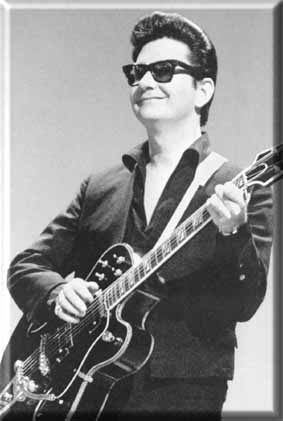
Some signature performances, like Roy Orbison’s operatic masterpiece “It’s Over” and Freddie Mercury’s incredible “Bohemian Rhapsody”, challenged my limits as a singer. On my best day, I couldn’t reach those soaring heights of vocal power — but trying to sing along with Roy and Freddie made me a better singer.

I’ve been singing in rock and roll bands since high school, and there’s nothing like trying to cover a classic song to make you appreciate the artist who sang that song on the record. Just listen to teenage Stevie Winwood sing “Gimme Some Lovin’” by the Spencer Davis Group — or Bob Seeger tearing through “Get Out Of Denver”. Those performances literally leave you breathless.

Over the years, I’ve become a connoisseur of fine rock and roll vocals. So, just to start one of my favorite arguments, I’ve come up with a list of the Top Ten Rock & Roll Singers of All Time. This is not a list of my favorite singers. Indeed, many of my favorite singers – Van Morrison, Tom Waits, Bob Dylan, and Paul Rogers to name a few – did not make the list.

This is a list of the ten best rock and roll vocalists who ever picked up a microphone.

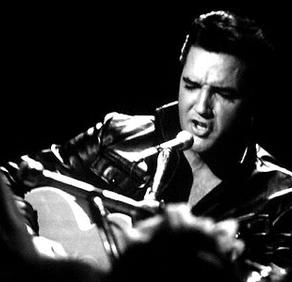
1. Elvis Presley

Elvis is King. Period. And I don’t want to hear from a bunch of folks who can’t get that bloated, drug addled Elvis out of their minds. Elvis put rock and roll on the map because his voice was magic. There is a quality to Elvis Presley’s voice that thrills the listener – in the same way the sound of Paul McCartney and John Lennon singing harmony gives you goose bumps. Every rock and roll singer after Elvis has been singing in his shadow. That’s why Elvis was the first inductee into the Rock & Roll Hall of Fame in 1986. (The Hall of Fame website calls him “the undisputed King of Rock and Roll”.) Listen to Elvis sing “Trying To Get To You” – and bow down to The King.

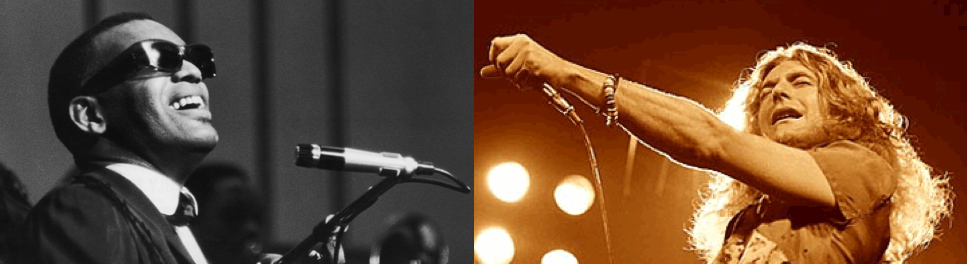
2. Ray Charles

There’s nothing Ray Charles couldn’t sing. The blues, country, rock and roll, soul, and rhythm and blues – Ray knocked them all out of the park. But as versatile as he was, no matter what style of song he sang, he made that tune inimitably his own. If Ray Charles had put a rock and roll band together in the 1950’s, he would have owned the rock and roll top 10. And though he recorded everything from gospel to standards – Ray Charles rocked hard enough to be in the first class inducted into the Rock & Roll Hall of Fame in 1986.  Check out Ray rocking “Baby, What’d I Say?”

3. James Brown

Another member of that first class of Rock & Roll Hall of Famers, James Brown is one of those singers that you just don’t even try to cover. Not even in your most drunken moment in a karaoke bar. Even if James Brown didn’t have the most out-a-sight dance moves ever invented, even if he didn’t have the most fabulous pompadour that ever adorned a rocker’s head – he would still have the most dynamic voice in rock and roll history. Like Ray Charles, James Brown didn’t make a lot records that would be considered straight up rock and roll: he was far too funky to play it in 1-4-5. But all you have do is listen to James belt out “(I Got You) I Feel Good” to know why he’s in the Rock & Roll Hall of Fame.

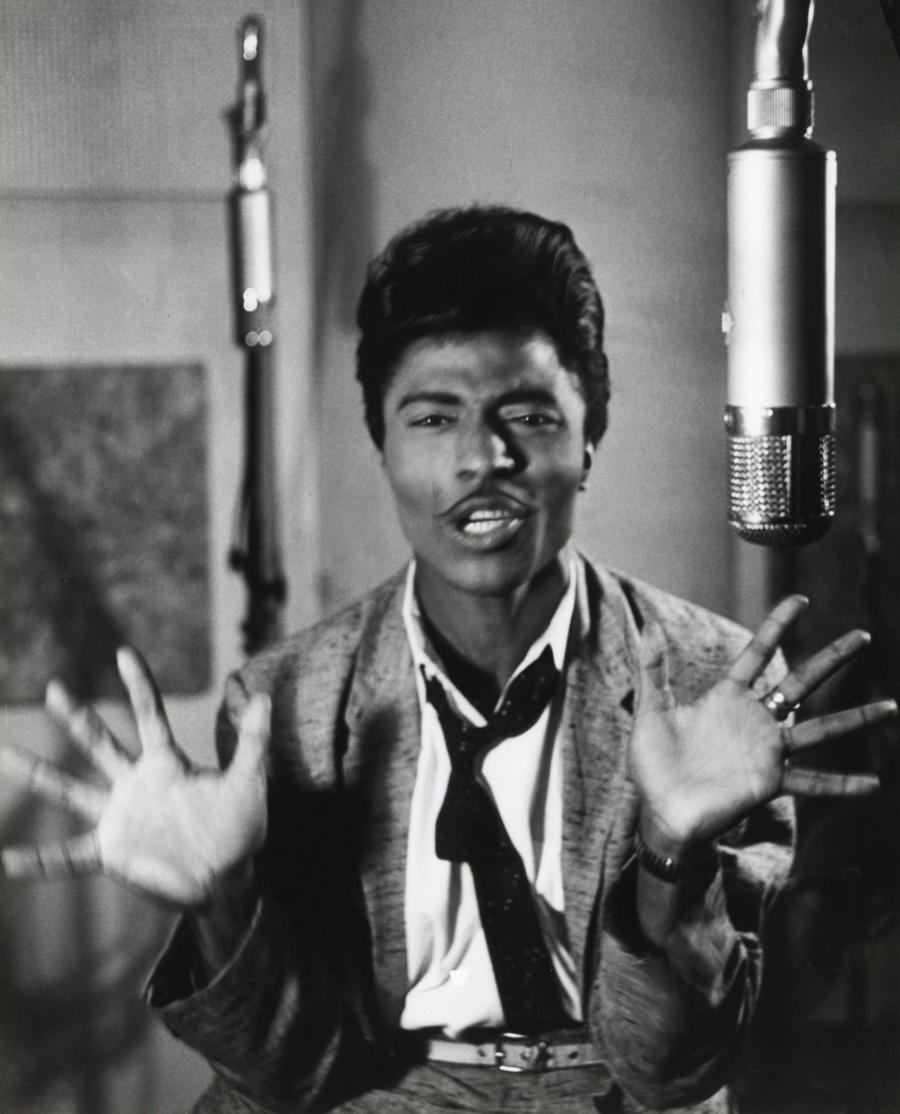
4. Little Richard

Along with Elvis, Little Richard wrote the other half of the rock and roll singer’s lexicon in the 1950’s. Without him, The Beatles don’t wag their heads and sing, “Oooooh!” I can’t imagine what rock and roll singing would be like without the example of Little Richard: the freedom, the abandon, the soaring screams and “wooohs” – the joyous, anarchic, frenetic, rhythm-pounding pulse of his performances have influenced every rock and roller who followed. That’s why, he’s another guy they put in the Rock & Roll Hall of Fame in 1986. Imagine what conservative Middle American parents thought when they heard Little Richard sing “Long Tall Sally”. Dangerous, man. Wild and dangerous.

5. Paul McCartney

The best singer in the best rock and roll band of all time, Paul McCartney earns a spot on this list even if his only vocal performance in consideration was a song he released after The Beatles broke up. No singer dares to cover Paul’s “Maybe I’m Amazed” – one of the most spectacular rock vocals of all time. And Paul can still sing this song today at the age of 69. I heard him sing it at Staples Center in Los Angeles a few years back and it was still powerful. Paul McCartney is a force of nature. Here’s he is, decades before his Knighthood, singing “Maybe I’m Amazed” with his other band, Wings.

6. Janis Joplin

Janis Joplin is not just one of the best female rock and roll singers ever – she’s one of the greatest rock and roll vocalists period. There’s never been another woman who fronted a rock band with such a fearless, soulful, and savage style. Like the great blues singers, Janis understood the sexual subtext of rock and roll – but she didn’t sell sex on the stage – she sold the power of the music. She was magnetic and magnificent. All I ask is that other, inevitably lesser singers stop trying to cover Janis’ classic, “Piece Of My Heart”. It just can’t be done.

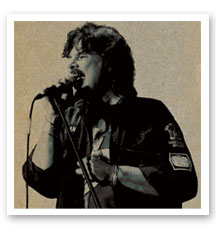
7. Burton Cummings

Perhaps the least recognizable name on this list – and probably the only Canadian – Burton Cummings is hands-down one of the very best rock and roll singers that came out of the 1960’s. Lead singer for The Guess Who, Cummings sang classics like “No Sugar Tonight”, “American Woman” and “Share The Land”. But if you want to know why I think he’s one of the best rock vocalists of all time, all you need to do is listen to him sing “These Eyes.” Toward the end, when he does a soaring riff on, “These eyes are crying” – it’s one of those vocal moments that try as I might, I’ve never been able to replicate in the shower or in my car. Burton Cummings is a master class in rich, powerful, and exhilarating rock and roll singing.

8. Roger Daltrey

Roger Daltrey is the best rock and roll screamer of all time. I personally owe him a lot. (Back in college, Fat Dave Silberger compared me to Daltrey, and I still haven’t gotten over his undeserved but much appreciated flattery.) Fronting a magnificent trio – Daltrey’s voice was the fourth instrument in one of the most powerful live rock bands to ever take the stage. Pete Townshend is one of the great rock and roll songwriters of all time – and Roger’s incredible voice made Pete’s ambitious, operatic songs possible. Case in point: “Love, Reign O’er Me”

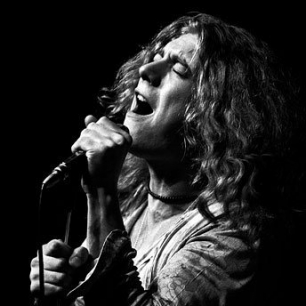
9. Robert Plant

I was never a huge Led Zeppelin fan back in the day, but in retrospect, maybe it was because I was afraid to cover their songs. Why? Because of freaking Robert Plant! Led Zeppelin was extremely popular inn the early 70’s when I was in my first high school band, but trying to belt my way through Zeppelin’s “Rock & Roll” or attempt “Stairway to Heaven” was to invite comparison with Robert Plant and, thus, failure. Still, trying to sing along with Plant made me a better singer. I saw him a few years ago at The Greek Theatre in Los Angeles during his tour with Alison Krauss. Dude’s still got it.

10. John Fogerty

I love John Fogerty. My father was born in New Orleans, Louisiana – but Berkeley, California native Fogerty had even more bayou in his soul than my dad did. When I was an 11-year old kid, the songs of Creedence Clearwater Revival jumped off the radio and connected with me more than anything other than The Beatles. It was that crunchy, snarling guitar groove – and John Fogerty’s voice: a rolling, driving, inescapable growl – like an unrelenting, passionate Little Richard with more politics than sex on his mind. I devoted myself to screaming through Creedence songs like Fogerty, pushing myself to my vocal limits. But I’ve never approached the master’s performance on “Fortunate Son.” Listen – and, once again, bow down…

39 Comments

Filed under History, Music

The PTC Arrives on Wikipedia.

Fans, friends and former members of The Practical Theatre Company can now celebrate another PTC milestone: The PTC has made it to Wikipedia.

Thanks to the good work of University Archivist Kevin Leonard and his staff at the Northwestern University Archives, a brief history of The Practical Theatre is now available worldwide on the largest and most popular general reference site on the Internet. Check out The Practical Theatre Company’s Wikipedia page at: http://en.wikipedia.org/wiki/The_Practical_Theatre_Company

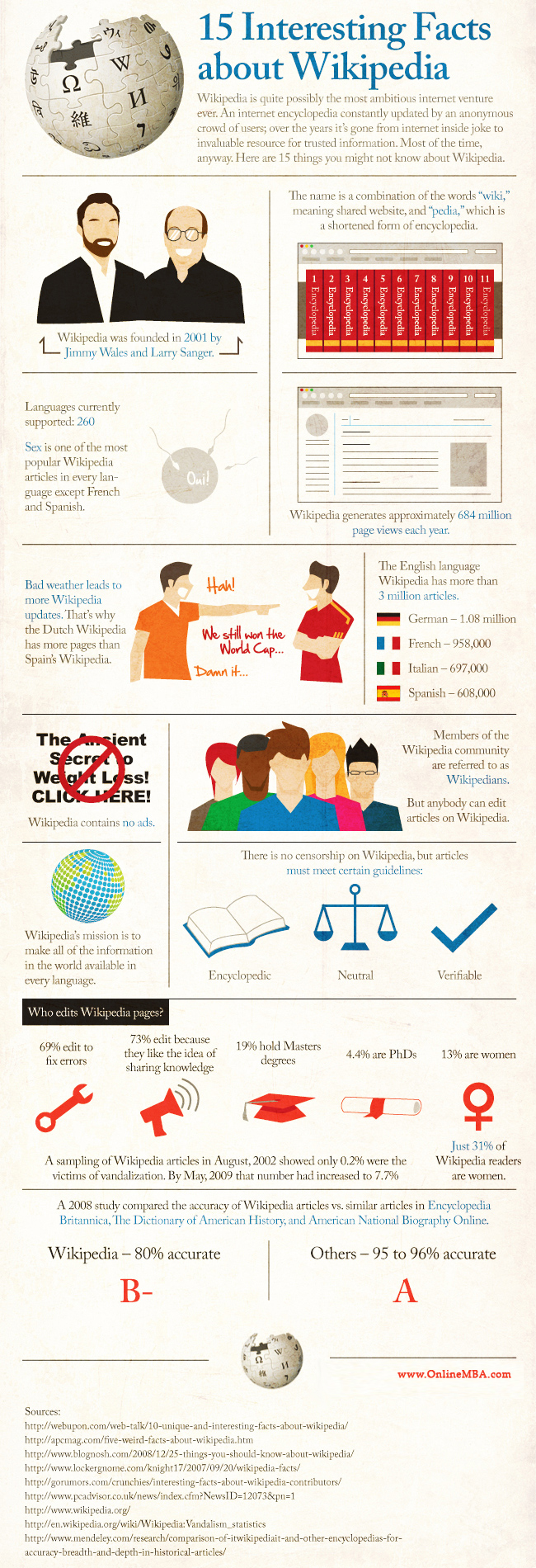
Here’s a few interesting facts about Wikipedia from http://www.OnlineMBA.com...

3 Comments

Filed under Comedy, History, Improvisation

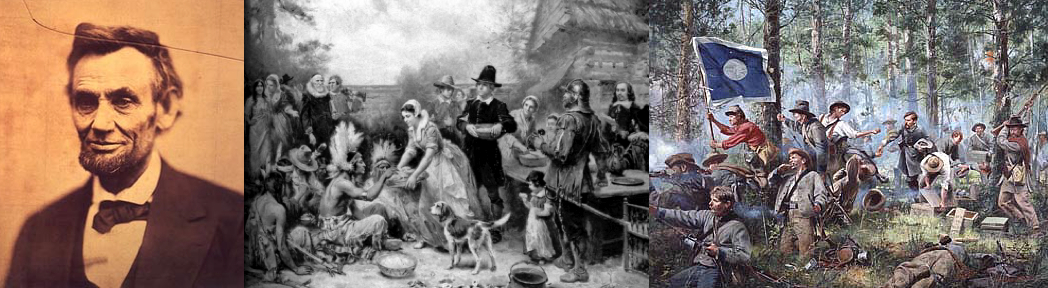
Lincoln’s Proclamation of Thanksgiving: Context, Conflict and Commemoration.

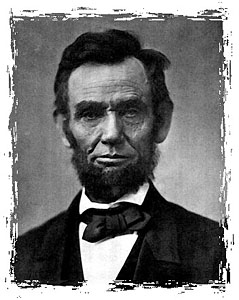
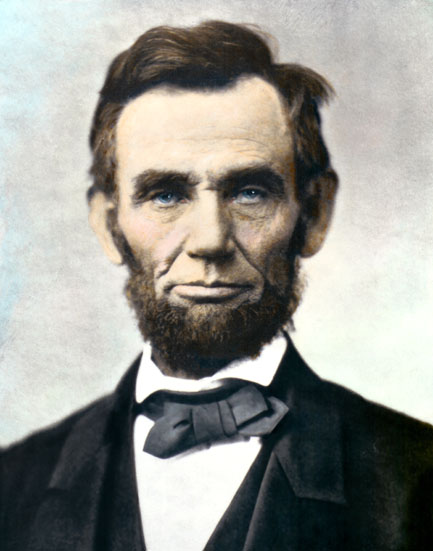
Abraham Lincoln issued the Presidential proclamation that set the precedent for our national day of Thanksgiving on October 3, 1863.

On that date, America was just past the halfway point in the Civil War. The great Union victories at Gettysburg and Vicksburg in July of ‘83 had raised hopes in the North that the Southern rebellion was doomed – but two months later, the Confederate victory at Chickamauga proved that the war was far from over.

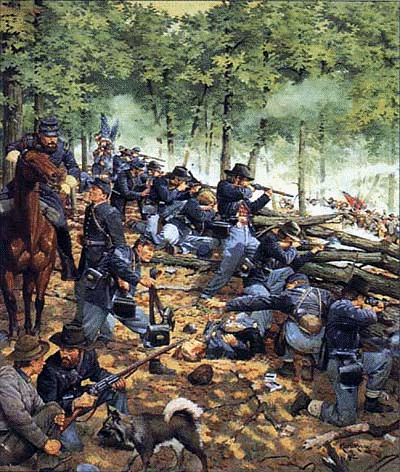
The Battle of Chickamauga, September 19 and 20, 1863, were the two bloodiest days in American history. Chickamauga claimed the lives of 1,657 Federal troops — with 9,756 soldiers wounded and 4,757 missing for a total of 16,170 casualties out of 58,000 troops.

Painting by Keith Rocco

Confederate losses were just as steep: 2,312 dead, 14,674 wounded and 1,468 missing for a total of 18,545 out of 66,000 troops.

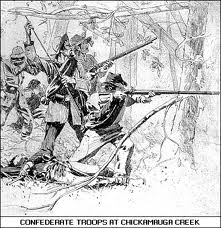
It was only the courageous rear-guard stand of Union General George “Pap” Thomas – the legendary “Rock of Chickamauga” – that kept the Federal army from suffering a total rout in northern Georgia — and set the table for a Union victory at the Battle of Missionary Ridge two months later on November 25, 1863.

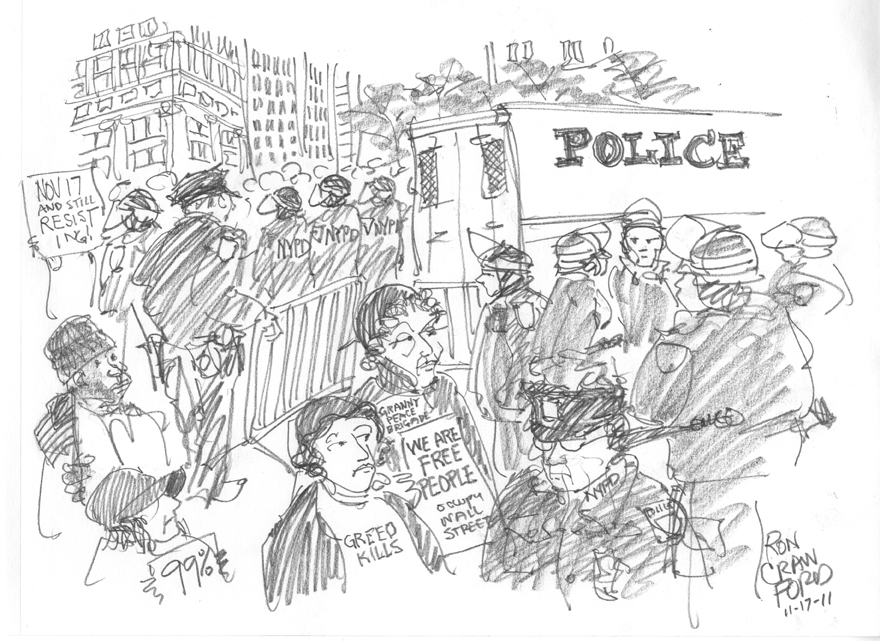
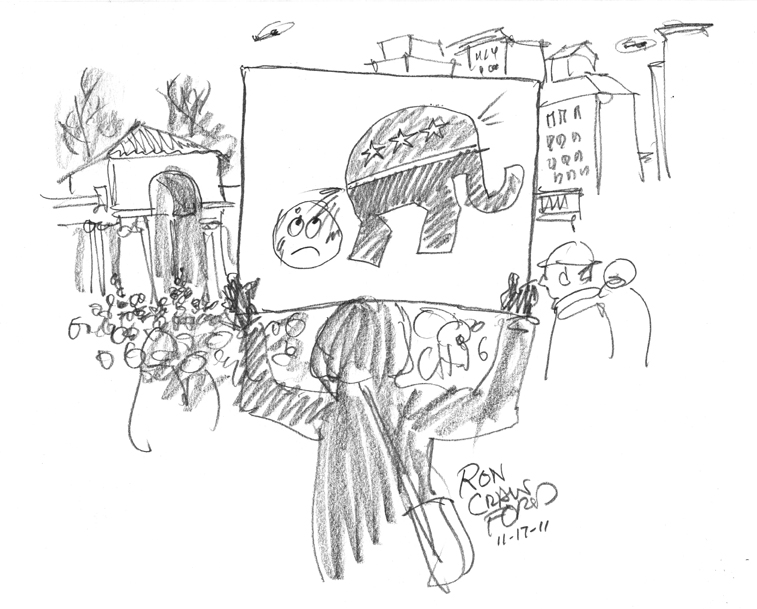
Drawing by Ron Crawford

Today, though the Occupy Wall Street movement is provoking a healthy dialogue about the plight of the 99% versus the insane, unbalanced power, influence and affluence of the 1% — America is not embroiled in a civil war on the scale of the 19th Century War Between the States.

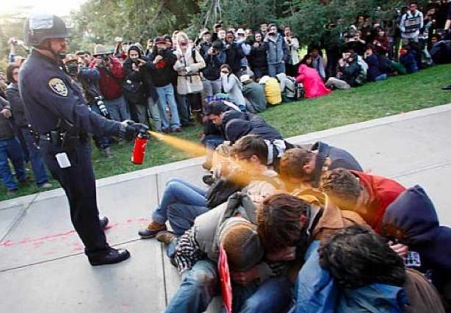
But, with pepper spray, police “batons”, riot gear, and other forms of authoritarian violence being directed against ordinary Americans seeking freedom and social and economic justice — it’s not entirely beyond the pale to suggest that this year’s Thanksgiving celebration falls on a date fraught with historic significance.

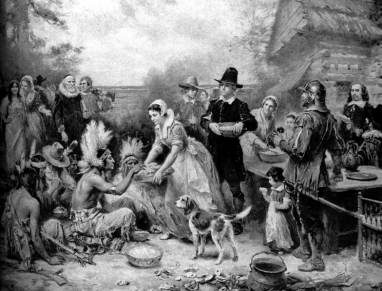
So today, November 24, 2011, let’s remember why Abe Lincoln established Thanksgiving as a national holiday in a much more desperate and pivotal moment in our national history. And let the Occupy Wall Street movement dine on turkey today — and draw strength for the battles ahead.

By the President of the United States of America.

A Proclamation.

The year that is drawing towards its close has been filled with the blessings of fruitful fields and healthful skies. To these bounties, which are so constantly enjoyed that we are prone to forget the source from which they come, others have been added, which are of so extraordinary a nature, that they cannot fail to penetrate and soften even the heart which is habitually insensible to the ever watchful providence of Almighty God.

In the midst of a civil war of unequaled magnitude and severity, which has sometimes seemed to foreign States to invite and to provoke their aggression, peace has been preserved with all nations, order has been maintained, the laws have been respected and obeyed, and harmony has prevailed everywhere except in the theatre of military conflict; while that theatre has been greatly contracted by the advancing armies and navies of the Union.

Needful diversions of wealth and of strength from the fields of peaceful industry to the national defense, have not arrested the plough, the shuttle or the ship; the axe has enlarged the borders of our settlements, and the mines, as well of iron and coal as of the precious metals, have yielded even more abundantly than heretofore.

Population has steadily increased, notwithstanding the waste that has been made in the camp, the siege and the battlefield; and the country, rejoicing in the consciousness of augmented strength and vigor, is permitted to expect continuance of years with large increase of freedom. No human counsel hath devised nor hath any mortal hand worked out these great things. They are the gracious gifts of the Most High God, who, while dealing with us in anger for our sins, hath nevertheless remembered mercy.

It has seemed to me fit and proper that they should be solemnly, reverently and gratefully acknowledged as with one heart and one voice by the whole American People.

I do therefore invite my fellow citizens in every part of the United States, and also those who are at sea and those who are sojourning in foreign lands, to set apart and observe the last Thursday of November next, as a day of Thanksgiving and Praise to our beneficent Father who dwelleth in the Heavens. And I recommend to them that while offering up the ascriptions justly due to Him for such singular deliverances and blessings, they do also, with humble penitence for our national perverseness and disobedience, commend to His tender care all those who have become widows, orphans, mourners or sufferers in the lamentable civil strife in which we are unavoidably engaged, and fervently implore the interposition of the Almighty Hand to heal the wounds of the nation and to restore it as soon as may be consistent with the Divine purposes to the full enjoyment of peace, harmony, tranquillity and Union.

In testimony whereof, I have hereunto set my hand and caused the Seal of the United States to be affixed.

Done at the City of Washington, this Third day of October, in the year of our Lord one thousand eight hundred and sixty-three, and of the Independence of the Unites States the Eighty-eighth.

By the President: Abraham Lincoln

Happy Thanksgiving, everybody!

And god bless the Occupy Wall Street Movement!

3 Comments

Filed under Art, History, Politics