Category Archives: History

The Top 10 Rock & Roll Singers of All Time.

Ever since The Beatles turned me on to rock and roll at the age of 5, I’ve been singing along to the radio, trying to recreate the style and power of the great rock voices that inspired me.

Some signature performances, like Roy Orbison’s operatic masterpiece “It’s Over” and Freddie Mercury’s incredible “Bohemian Rhapsody”, challenged my limits as a singer. On my best day, I couldn’t reach those soaring heights of vocal power — but trying to sing along with Roy and Freddie made me a better singer.

I’ve been singing in rock and roll bands since high school, and there’s nothing like trying to cover a classic song to make you appreciate the artist who sang that song on the record. Just listen to teenage Stevie Winwood sing “Gimme Some Lovin’” by the Spencer Davis Group — or Bob Seeger tearing through “Get Out Of Denver”. Those performances literally leave you breathless.

Over the years, I’ve become a connoisseur of fine rock and roll vocals. So, just to start one of my favorite arguments, I’ve come up with a list of the Top Ten Rock & Roll Singers of All Time. This is not a list of my favorite singers. Indeed, many of my favorite singers – Van Morrison, Tom Waits, Bob Dylan, and Paul Rogers to name a few – did not make the list.

This is a list of the ten best rock and roll vocalists who ever picked up a microphone.

1. Elvis Presley
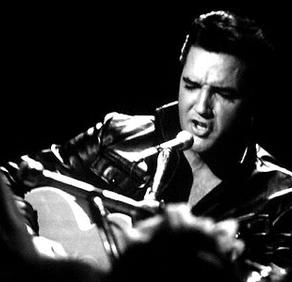
Elvis is King. Period. And I don’t want to hear from a bunch of folks who can’t get that bloated, drug addled Elvis out of their minds. Elvis put rock and roll on the map because his voice was magic. There is a quality to Elvis Presley’s voice that thrills the listener – in the same way the sound of Paul McCartney and John Lennon singing harmony gives you goose bumps. Every rock and roll singer after Elvis has been singing in his shadow. That’s why Elvis was the first inductee into the Rock & Roll Hall of Fame in 1986. (The Hall of Fame website calls him “the undisputed King of Rock and Roll”.) Listen to Elvis sing “Trying To Get To You” – and bow down to The King.

2. Ray Charles

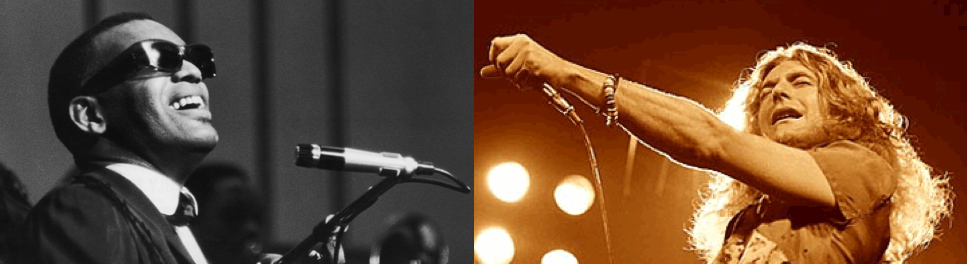
There’s nothing Ray Charles couldn’t sing. The blues, country, rock and roll, soul, and rhythm and blues – Ray knocked them all out of the park. But as versatile as he was, no matter what style of song he sang, he made that tune inimitably his own. If Ray Charles had put a rock and roll band together in the 1950’s, he would have owned the rock and roll top 10. And though he recorded everything from gospel to standards – Ray Charles rocked hard enough to be in the first class inducted into the Rock & Roll Hall of Fame in 1986.  Check out Ray rocking “Baby, What’d I Say?”

3. James Brown

Another member of that first class of Rock & Roll Hall of Famers, James Brown is one of those singers that you just don’t even try to cover. Not even in your most drunken moment in a karaoke bar. Even if James Brown didn’t have the most out-a-sight dance moves ever invented, even if he didn’t have the most fabulous pompadour that ever adorned a rocker’s head – he would still have the most dynamic voice in rock and roll history. Like Ray Charles, James Brown didn’t make a lot records that would be considered straight up rock and roll: he was far too funky to play it in 1-4-5. But all you have do is listen to James belt out “(I Got You) I Feel Good” to know why he’s in the Rock & Roll Hall of Fame.

4. Little Richard
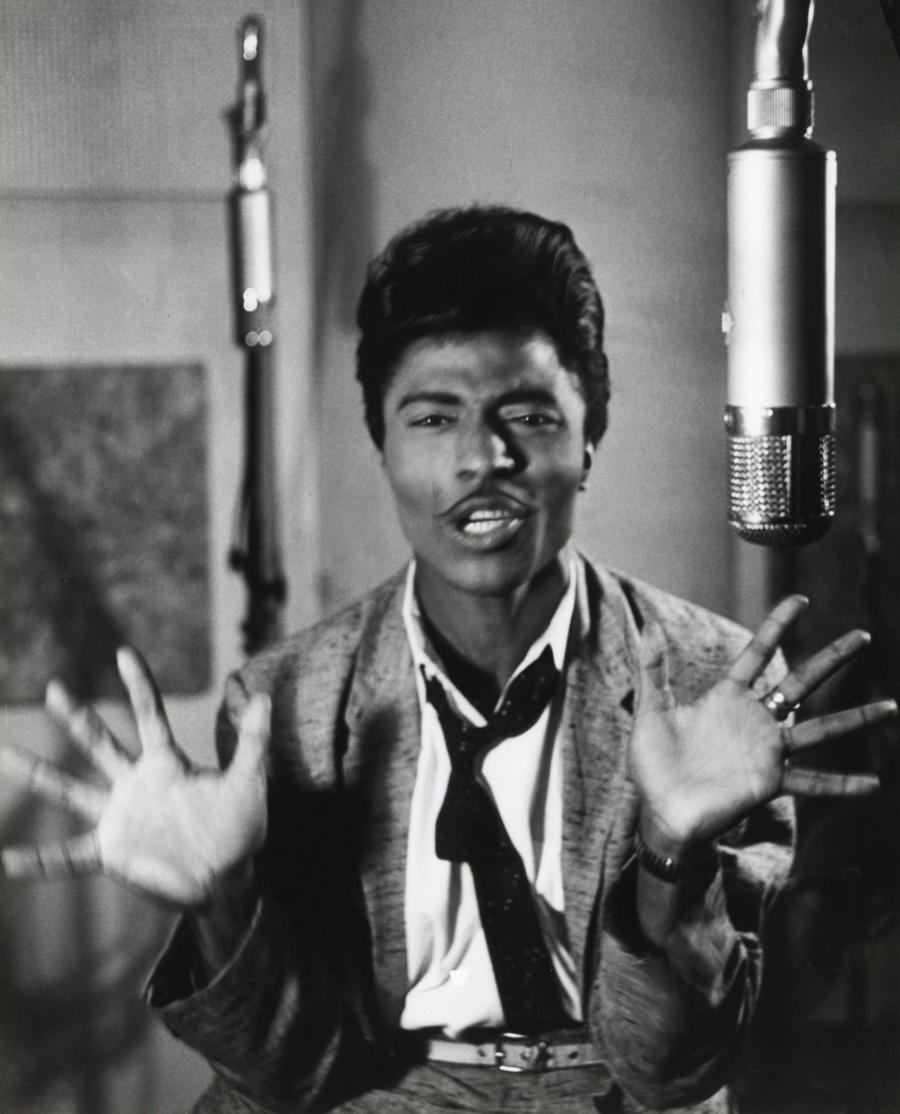
Along with Elvis, Little Richard wrote the other half of the rock and roll singer’s lexicon in the 1950’s. Without him, The Beatles don’t wag their heads and sing, “Oooooh!” I can’t imagine what rock and roll singing would be like without the example of Little Richard: the freedom, the abandon, the soaring screams and “wooohs” – the joyous, anarchic, frenetic, rhythm-pounding pulse of his performances have influenced every rock and roller who followed. That’s why, he’s another guy they put in the Rock & Roll Hall of Fame in 1986. Imagine what conservative Middle American parents thought when they heard Little Richard sing “Long Tall Sally”. Dangerous, man. Wild and dangerous.

5. Paul McCartney

The best singer in the best rock and roll band of all time, Paul McCartney earns a spot on this list even if his only vocal performance in consideration was a song he released after The Beatles broke up. No singer dares to cover Paul’s “Maybe I’m Amazed” – one of the most spectacular rock vocals of all time. And Paul can still sing this song today at the age of 69. I heard him sing it at Staples Center in Los Angeles a few years back and it was still powerful. Paul McCartney is a force of nature. Here’s he is, decades before his Knighthood, singing “Maybe I’m Amazed” with his other band, Wings.

6. Janis Joplin

Janis Joplin is not just one of the best female rock and roll singers ever – she’s one of the greatest rock and roll vocalists period. There’s never been another woman who fronted a rock band with such a fearless, soulful, and savage style. Like the great blues singers, Janis understood the sexual subtext of rock and roll – but she didn’t sell sex on the stage – she sold the power of the music. She was magnetic and magnificent. All I ask is that other, inevitably lesser singers stop trying to cover Janis’ classic, “Piece Of My Heart”. It just can’t be done.

7. Burton Cummings
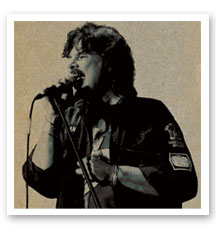
Perhaps the least recognizable name on this list – and probably the only Canadian – Burton Cummings is hands-down one of the very best rock and roll singers that came out of the 1960’s. Lead singer for The Guess Who, Cummings sang classics like “No Sugar Tonight”, “American Woman” and “Share The Land”. But if you want to know why I think he’s one of the best rock vocalists of all time, all you need to do is listen to him sing “These Eyes.” Toward the end, when he does a soaring riff on, “These eyes are crying” – it’s one of those vocal moments that try as I might, I’ve never been able to replicate in the shower or in my car. Burton Cummings is a master class in rich, powerful, and exhilarating rock and roll singing.

8. Roger Daltrey

Roger Daltrey is the best rock and roll screamer of all time. I personally owe him a lot. (Back in college, Fat Dave Silberger compared me to Daltrey, and I still haven’t gotten over his undeserved but much appreciated flattery.) Fronting a magnificent trio – Daltrey’s voice was the fourth instrument in one of the most powerful live rock bands to ever take the stage. Pete Townshend is one of the great rock and roll songwriters of all time – and Roger’s incredible voice made Pete’s ambitious, operatic songs possible. Case in point: “Love, Reign O’er Me”

9. Robert Plant
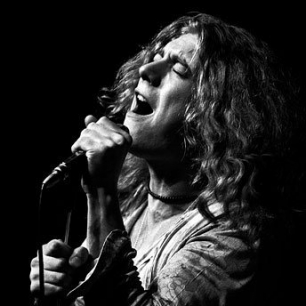
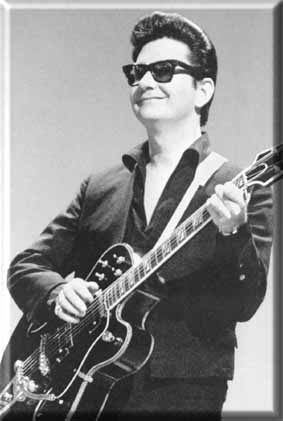
I was never a huge Led Zeppelin fan back in the day, but in retrospect, maybe it was because I was afraid to cover their songs. Why? Because of freaking Robert Plant! Led Zeppelin was extremely popular inn the early 70’s when I was in my first high school band, but trying to belt my way through Zeppelin’s “Rock & Roll” or attempt “Stairway to Heaven” was to invite comparison with Robert Plant and, thus, failure. Still, trying to sing along with Plant made me a better singer. I saw him a few years ago at The Greek Theatre in Los Angeles during his tour with Alison Krauss. Dude’s still got it.

10. John Fogerty

I love John Fogerty. My father was born in New Orleans, Louisiana – but Berkeley, California native Fogerty had even more bayou in his soul than my dad did. When I was an 11-year old kid, the songs of Creedence Clearwater Revival jumped off the radio and connected with me more than anything other than The Beatles. It was that crunchy, snarling guitar groove – and John Fogerty’s voice: a rolling, driving, inescapable growl – like an unrelenting, passionate Little Richard with more politics than sex on his mind. I devoted myself to screaming through Creedence songs like Fogerty, pushing myself to my vocal limits. But I’ve never approached the master’s performance on “Fortunate Son.” Listen – and, once again, bow down…

39 Comments

Filed under History, Music

The PTC Arrives on Wikipedia.

Fans, friends and former members of The Practical Theatre Company can now celebrate another PTC milestone: The PTC has made it to Wikipedia.

Thanks to the good work of University Archivist Kevin Leonard and his staff at the Northwestern University Archives, a brief history of The Practical Theatre is now available worldwide on the largest and most popular general reference site on the Internet. Check out The Practical Theatre Company’s Wikipedia page at: http://en.wikipedia.org/wiki/The_Practical_Theatre_Company

Here’s a few interesting facts about Wikipedia from http://www.OnlineMBA.com...

3 Comments

Filed under Comedy, History, Improvisation

Lincoln’s Proclamation of Thanksgiving: Context, Conflict and Commemoration.

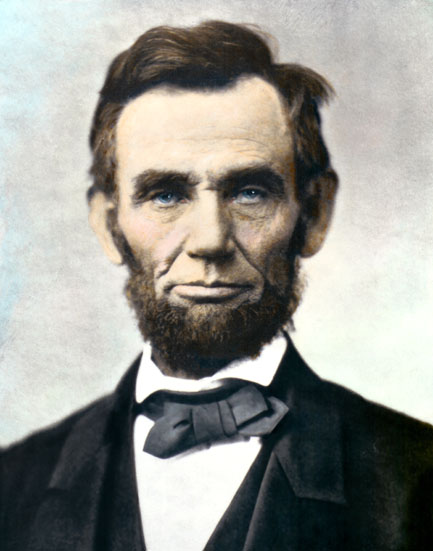
Abraham Lincoln issued the Presidential proclamation that set the precedent for our national day of Thanksgiving on October 3, 1863.

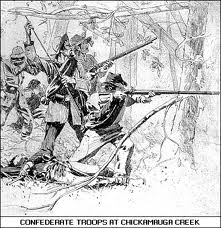
On that date, America was just past the halfway point in the Civil War. The great Union victories at Gettysburg and Vicksburg in July of ‘83 had raised hopes in the North that the Southern rebellion was doomed – but two months later, the Confederate victory at Chickamauga proved that the war was far from over.

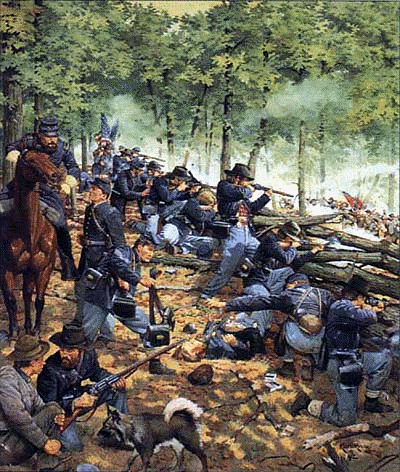
The Battle of Chickamauga, September 19 and 20, 1863, were the two bloodiest days in American history. Chickamauga claimed the lives of 1,657 Federal troops — with 9,756 soldiers wounded and 4,757 missing for a total of 16,170 casualties out of 58,000 troops.

Painting by Keith Rocco

Confederate losses were just as steep: 2,312 dead, 14,674 wounded and 1,468 missing for a total of 18,545 out of 66,000 troops.

It was only the courageous rear-guard stand of Union General George “Pap” Thomas – the legendary “Rock of Chickamauga” – that kept the Federal army from suffering a total rout in northern Georgia — and set the table for a Union victory at the Battle of Missionary Ridge two months later on November 25, 1863.

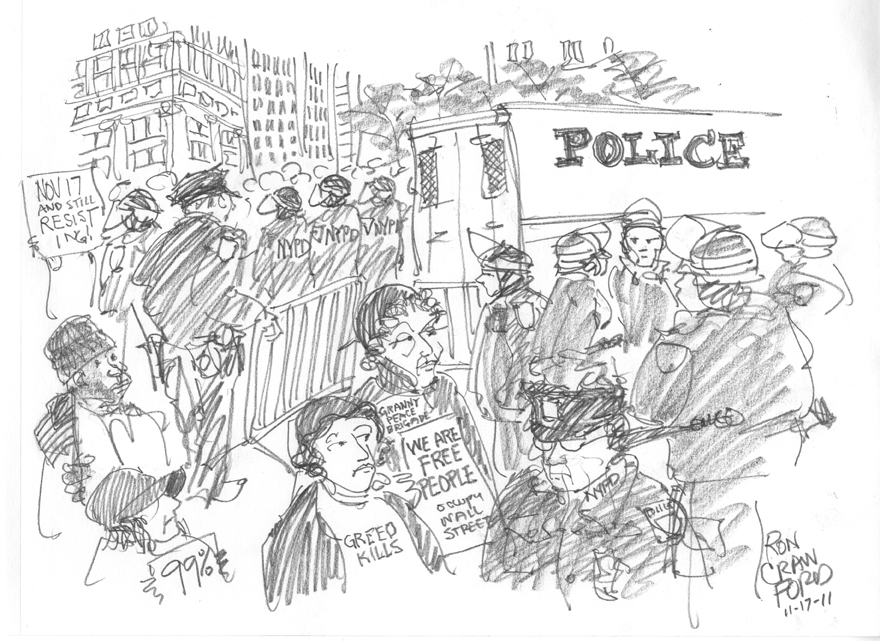
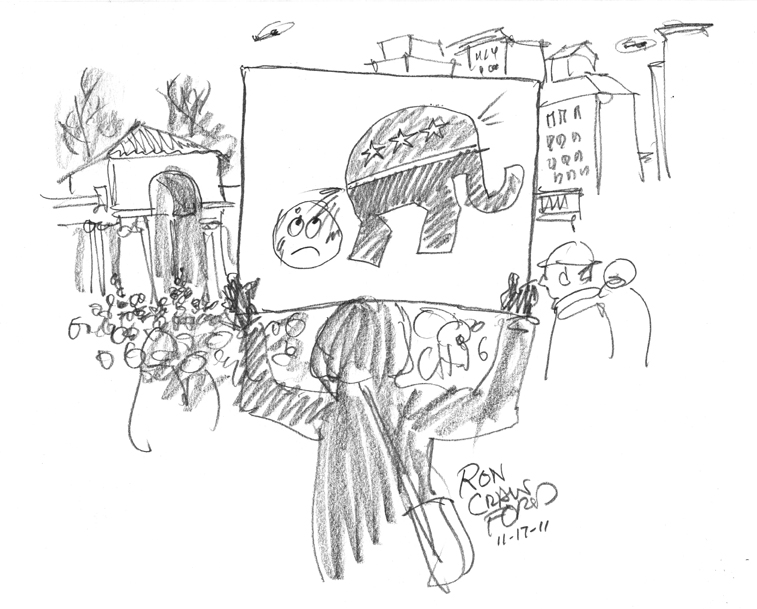
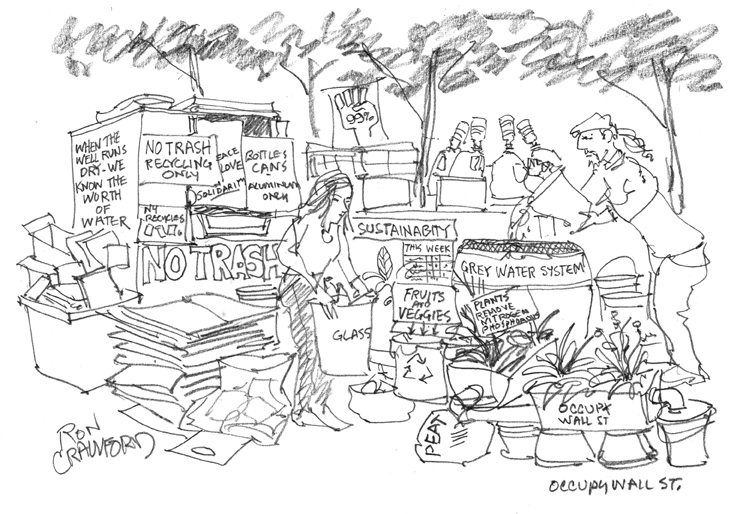
Drawing by Ron Crawford

Today, though the Occupy Wall Street movement is provoking a healthy dialogue about the plight of the 99% versus the insane, unbalanced power, influence and affluence of the 1% — America is not embroiled in a civil war on the scale of the 19th Century War Between the States.

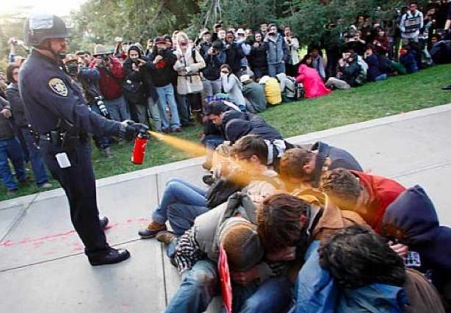
But, with pepper spray, police “batons”, riot gear, and other forms of authoritarian violence being directed against ordinary Americans seeking freedom and social and economic justice — it’s not entirely beyond the pale to suggest that this year’s Thanksgiving celebration falls on a date fraught with historic significance.

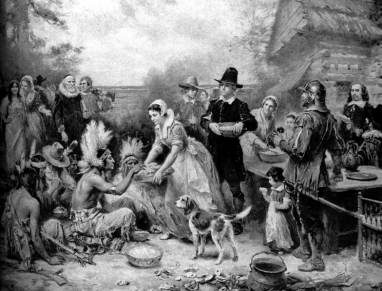
So today, November 24, 2011, let’s remember why Abe Lincoln established Thanksgiving as a national holiday in a much more desperate and pivotal moment in our national history. And let the Occupy Wall Street movement dine on turkey today — and draw strength for the battles ahead.

By the President of the United States of America.

A Proclamation.

The year that is drawing towards its close has been filled with the blessings of fruitful fields and healthful skies. To these bounties, which are so constantly enjoyed that we are prone to forget the source from which they come, others have been added, which are of so extraordinary a nature, that they cannot fail to penetrate and soften even the heart which is habitually insensible to the ever watchful providence of Almighty God.

In the midst of a civil war of unequaled magnitude and severity, which has sometimes seemed to foreign States to invite and to provoke their aggression, peace has been preserved with all nations, order has been maintained, the laws have been respected and obeyed, and harmony has prevailed everywhere except in the theatre of military conflict; while that theatre has been greatly contracted by the advancing armies and navies of the Union.

Needful diversions of wealth and of strength from the fields of peaceful industry to the national defense, have not arrested the plough, the shuttle or the ship; the axe has enlarged the borders of our settlements, and the mines, as well of iron and coal as of the precious metals, have yielded even more abundantly than heretofore.

Population has steadily increased, notwithstanding the waste that has been made in the camp, the siege and the battlefield; and the country, rejoicing in the consciousness of augmented strength and vigor, is permitted to expect continuance of years with large increase of freedom. No human counsel hath devised nor hath any mortal hand worked out these great things. They are the gracious gifts of the Most High God, who, while dealing with us in anger for our sins, hath nevertheless remembered mercy.

It has seemed to me fit and proper that they should be solemnly, reverently and gratefully acknowledged as with one heart and one voice by the whole American People.

I do therefore invite my fellow citizens in every part of the United States, and also those who are at sea and those who are sojourning in foreign lands, to set apart and observe the last Thursday of November next, as a day of Thanksgiving and Praise to our beneficent Father who dwelleth in the Heavens. And I recommend to them that while offering up the ascriptions justly due to Him for such singular deliverances and blessings, they do also, with humble penitence for our national perverseness and disobedience, commend to His tender care all those who have become widows, orphans, mourners or sufferers in the lamentable civil strife in which we are unavoidably engaged, and fervently implore the interposition of the Almighty Hand to heal the wounds of the nation and to restore it as soon as may be consistent with the Divine purposes to the full enjoyment of peace, harmony, tranquillity and Union.

In testimony whereof, I have hereunto set my hand and caused the Seal of the United States to be affixed.

Done at the City of Washington, this Third day of October, in the year of our Lord one thousand eight hundred and sixty-three, and of the Independence of the Unites States the Eighty-eighth.

By the President: Abraham Lincoln

Happy Thanksgiving, everybody!

And god bless the Occupy Wall Street Movement!

3 Comments

Filed under Art, History, Politics

Louis D — RIP

Louis DiCrescenzo (right) and Terry Shaughnessey backstage at "Bozo the Town".

The one and only Louis DiCrescenzo, the gifted artist who designed and built both The John Lennon Auditorium at 703 Howard Street and The Piper’s Alley Theatre at North & Wells, passed away last week.

Brad Hall, his cast-mate in the original production of “Do Black Patent Leather Shoes Really Reflect Up?”, introduced Louis to The Practical Theatre Company in 1981. Louis’ imprint on the PTC was much, much larger than the big man himself.

The big man in a note session backstage with us during "Bozo the Town". (From right) Sheldon Patinkin, Vic, Paul, Louis D., Bea and Steve Rashid. (Kyle Hefner, below left)

Big, affable, talented Louis D will be remembered by members, friends and fans of The Practical Theatre Company not only for his visionary theatre designs – but also for his scene-stealing performances as stage manager in “Art, Ruth & Trudy” and “Bozo the Town”, as well as his wonderful turns on the PTC/WMAQ-TV projects, “Overnight Guest” (as landlord, Nick Nickolopopolous) and the Emmy-winning live broadcast of “Deer Season.”

Paul, Louis, Kyle and Vic in "Bozo the Town". (1987)

Louis D was larger than life.

And we were glad to have worked, rehearsed, performed – and laughed – with him.

RIP Louis.

We love you.

Here’s Louis’ obituary in The Chicago Tribune…
13 Comments

Filed under Art, Comedy, History

Capturing Occupy Wall Street: The Crawford Chronicles

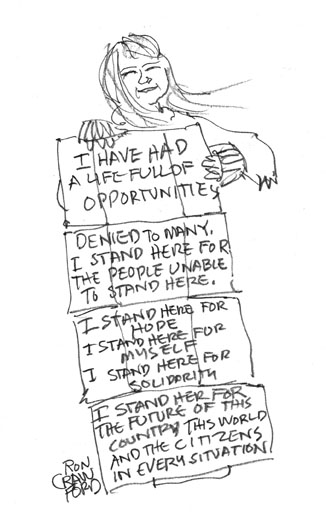
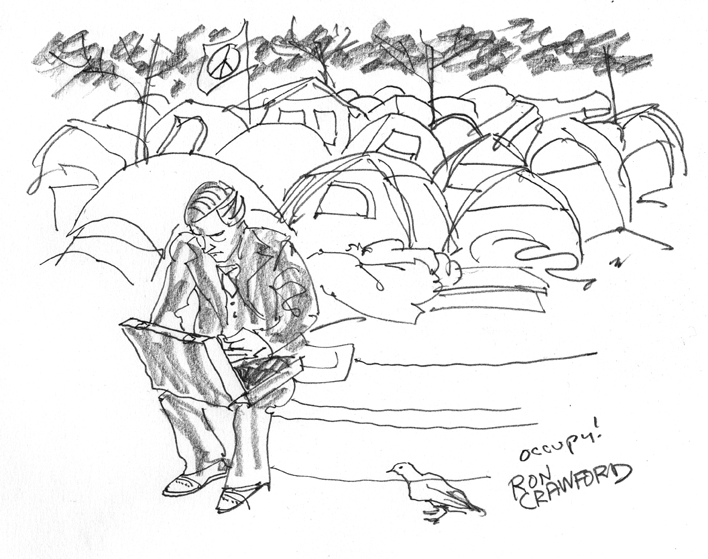
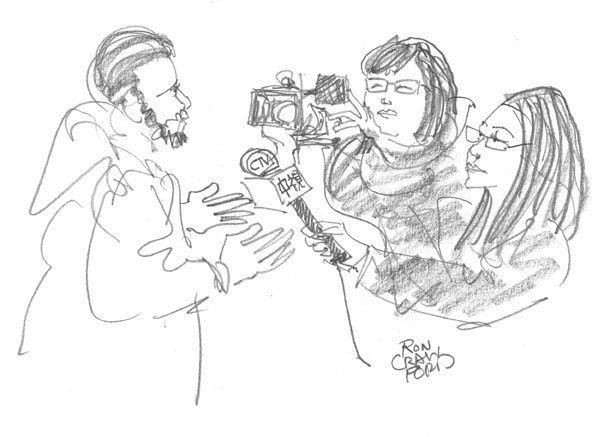
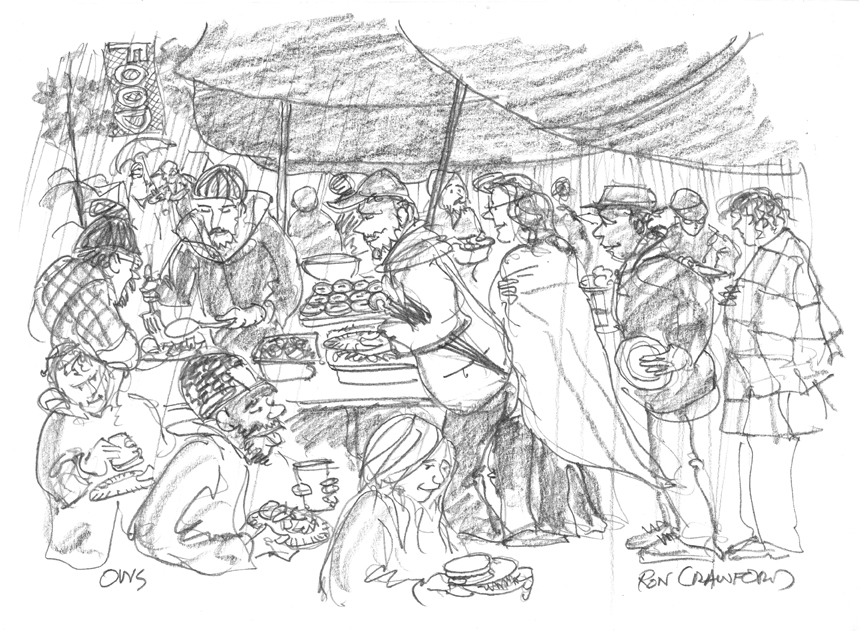
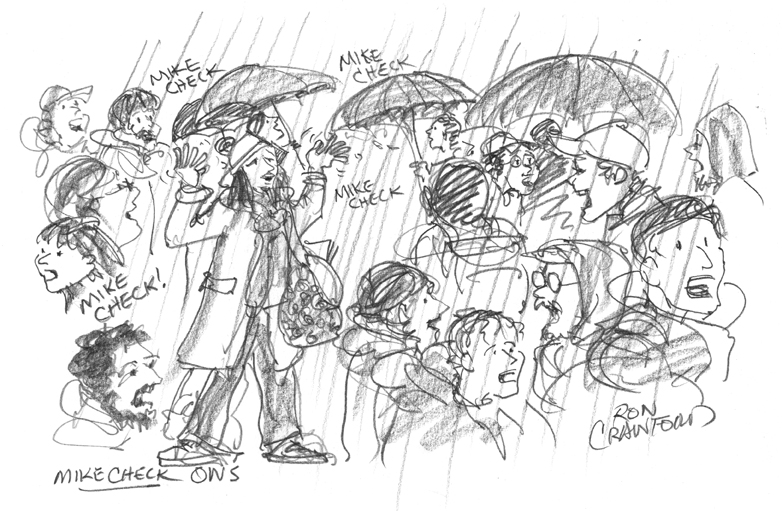
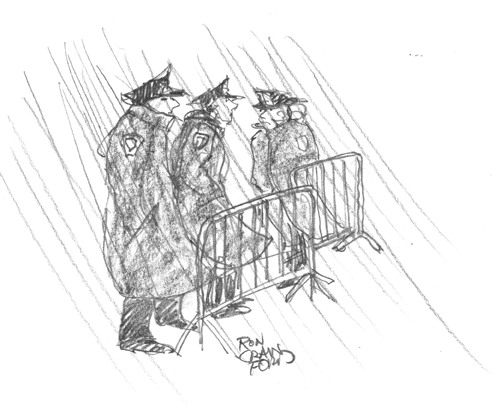
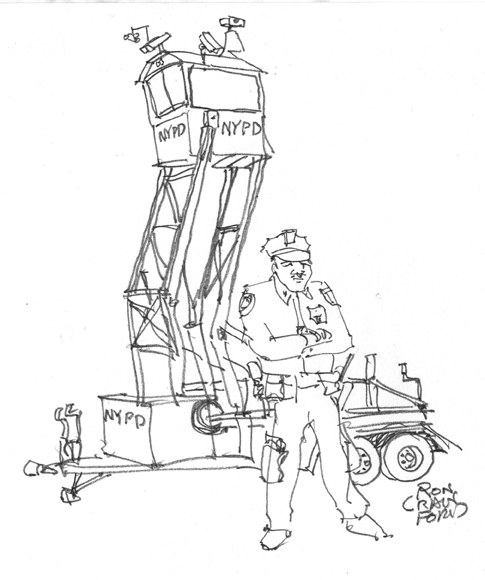
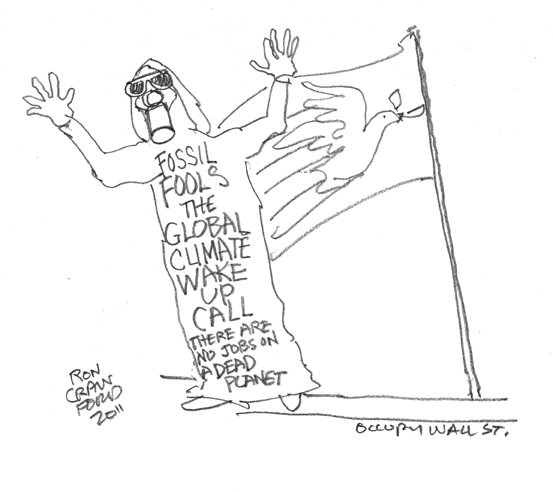
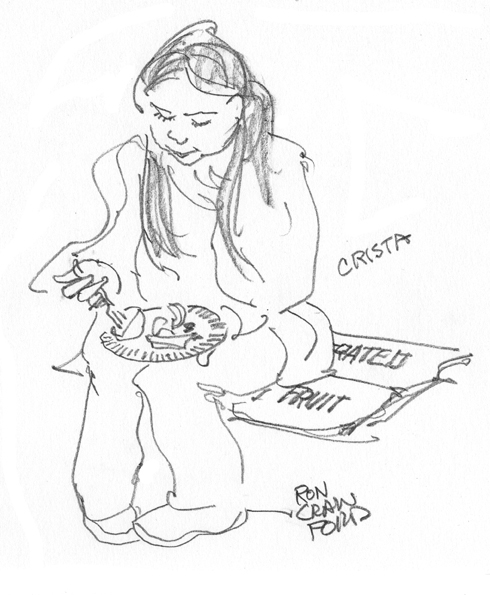
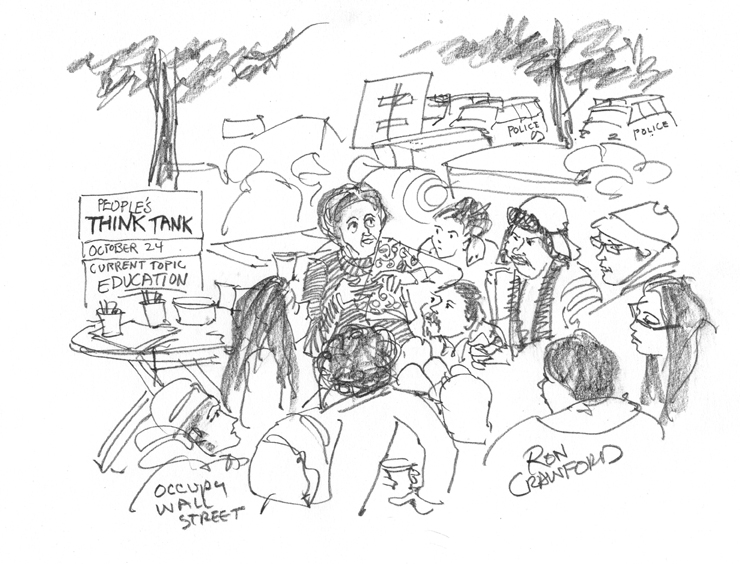
Our great friend, the outrageously talented artist, Ron Crawford, has been spending a lot of time at Occupy Wall Street in lower Manhattan. Here’s another gallery of images that Ron has captured with his keen eye and splendid pen.

Solidarity forever!

The commentary that follows is Ron’s own.

“Down this morning to OWS. Keeping the place neat and clean. We donated some thin metallic blankets for warmth.”

“Here is the brass statue made famous in the 9-11 photo.”

“The fire department took their bio-diesel generator away so they’re recharging cell phones and computers with bicycle generators. The rigs were brought in by Times Up. Note their logo on the computer guy’s cap.”

1 Comment

Filed under Art, History, Politics

Occupy Wall Street: Thomas Paine & Ron Crawford Capture the Moment

Words by Thomas Paine — Drawings by Ron Crawford..

“These are the times that try men’s souls…

“The summer soldier and the sunshine patriot will, in this crisis, shrink from the service of his country; but he that stands by it now, deserves the love and thanks of man and woman.”

“Tyranny, like hell, is not easily conquered; yet we have this consolation with us, that the harder the conflict, the more glorious the triumph.”

1 Comment

Filed under Art, History, Politics

An Artist Occupies Wall Street.

My good friend, the great artist Ron Crawford, went to Zuccotti Park on Friday October 21st and did what he does best: capture a scene in a few dynamic sweeps of his gifted pen.

Click on the drawing and blow it up.

I always love to see which details Ron chooses to focus on in his inspired sketches — like the word “Empathy” and the concerned fellow with a briefcase in the foreground.

Thanks, Ron – for giving those of us who can’t be there an eyewitness view of Occupy Wall Street that is, in many ways, more personal and revealing than a photo. (More drawings after the video.)

2 Comments

Filed under Art, History, Music, Politics

A New Presidential Biography Reminds Us Why We Should Like Ike.

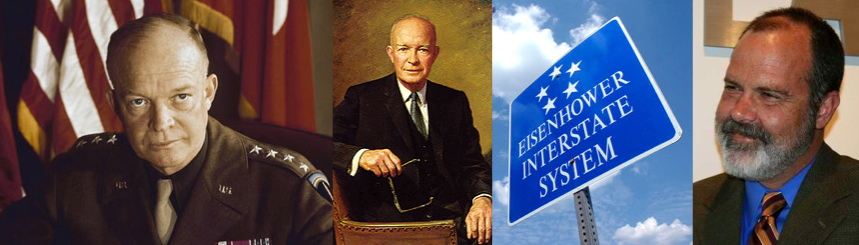
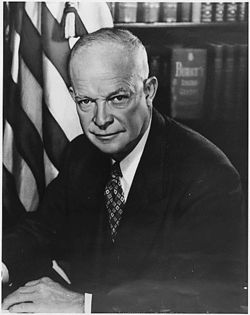
On October 4th, Jim Newton’s Presidential biography, Eisenhower: The White House Years arrives in bookstores.

This is exciting news. Not just because the author is a very dear friend of mine – but because I can’t think of a more apropos time since his Presidency ended in 1960 for us to look back on Ike’s two terms in the Oval Office.

My buddy Jim Newton is a veteran newspaperman who began his career at the New York Times. Since I’ve known him, he’s been an editor at the Los Angeles Times, where he’s now the editor-at-large. In 2006, Jim wrote a definitive biography of Chief Justice Earl Warren entitled, Justice for All.

Now, he’s focused his brilliance and talent on the man who put Earl Warren on the court.

Hold on. It was Republican who put the classic “activist judge” Earl Warren on the Supreme Court?

Indeed. And that’s just one of the reasons it’s a good time to revisit the Eisenhower Presidency.

More than a half-century after Dwight D. Eisenhower left office, his old campaign slogan “I like Ike” has become a cliché. But, in this era of Tea Party Republicans and Ronald Reagan worship, it’s nostalgic to recall a Republican President who would never have said, “The nine most terrifying words in the English language are, ‘I’m from the government and I’m here to help.’”

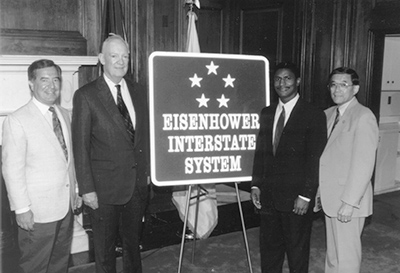
That kind of simplistic, anti-government demagoguery would not have appealed to the complex man who built our interstate highway system and sent Federal troops to Little Rock, Arkansas to enforce school desegregation.

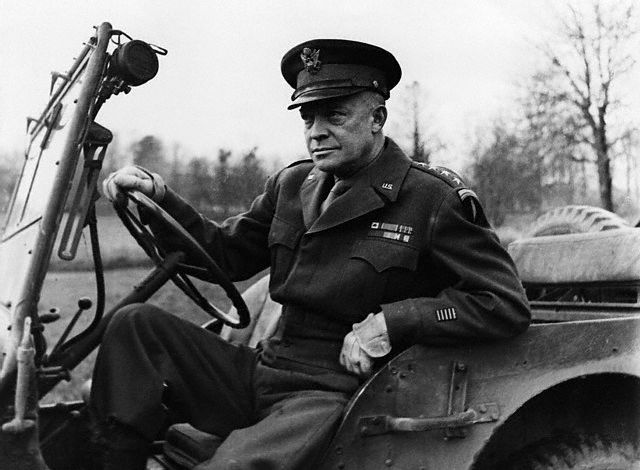
In a move that would be anathema to today’s dogmatic GOP states’ rights defenders, Ike ordered units from the 101st Airborne Division to Little Rock on September 24, 1957. The next day, those soldiers escorted nine black students through the front door of Central High and into its formerly all-white classrooms. Of course, Ike had some previous experience with the paratroopers of the 101st. 13 years earlier in a little dustup called D-Day on June 6th, 1944. The Screaming Eagles followed Ike’s orders into their drop zones behind the beaches at Normandy – and into the hallways of a Little Rock high school.

But Jim’s book is not about General Dwight Eisenhower, the Supreme Allied Commander who led his forces to victory in World War Two. It’s about the Eisenhower, who, like George Washington and Ulysses S. Grant, went from the highest-ranking military leader in an epochal war to Commander in Chief as the thirty-fourth President of the United States.

I was born in 1958 during Ike’s second term, but John F. Kennedy was the first President that I was aware of – and my first clear memory of Kennedy was watching his funeral on TV.

During my boyhood, President Eisenhower was a distant figure: even more dimly remembered than General Eisenhower, the hero of D-Day and all those World War Two movies I loved and re-created in my backyard.

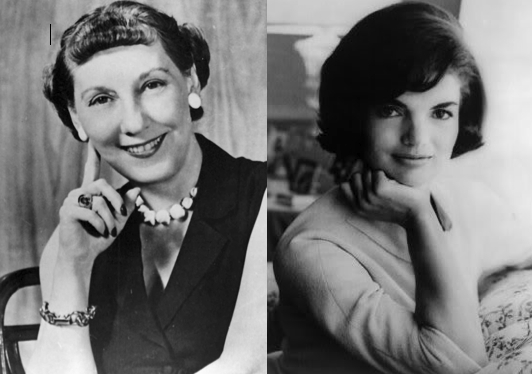
Comedians made jokes about Ike playing golf and how homely his wife Mamie was. After the glorious Jackie Kennedy enchanted The White House, dowdy Mamie didn’t have a chance.

By the time I was in high school, my sense was that Eisenhower’s Presidency, if I thought of it at all, didn’t amount to much. He was a dull President in a dull time. Thank goodness, 16-year old Paul didn’t write the book on Ike.

I certainly wasn’t alone in thinking of Eisenhower as little more than the Caretaker-in-Chief, hitting the links with Bob Hope and presiding over an easygoing, black & white, “Leave It To Beaver” American society. Long after I graduated from college in 1980 that was still the prevailing attitude about Ike’s time in the Oval Office. There was, however, residual gratitude on the Democratic Left for Eisenhower’s lukewarm endorsement of Vice President Dick Nixon in the 1960 race against Kennedy.

The laugh was on Dick. Dick got the last laugh.

Pressed by reporters to give an example of Nixon making a key contribution to his administration, Ike said, “Give me a week and I’ll think of one!” Priceless. Nixon went on to lose to Kennedy in one of the tightest Presidential races in American history. Nixon got the last laugh, though. Not only did Tricky Dick win the White House eight years later – that same year, 1968, Nixon’s daughter Julie won the hand of Ike’s grandson David in marriage.

But, looking back at Ike’s Presidency, it’s hard to imagine why, as a callow youth, I thought his time in office so inconsequential. Eisenhower was the second President to have an atomic bomb in his arsenal — and he refused to use it. He kept radical anti-Communist McCarthyism at arm’s length until it became, as he called it, “McCarthywasm.”

And, after lifting the nation out of its post World War Two debt, he was the last president until Democrat Bill Clinton to leave office with a budget surplus. The top marginal tax rate under Eisenhower was 91%. George W. Bush slashed that rate to 35%. Ike paid for WWII and built our highway system. George W. Bush built nothing and left us in debt to China.

For these, and many more reasons, this lifelong Democrat likes Ike. And I like Jim’s book. But you don’t have to depend upon my endorsement (which is so much more enthusiastic than Ike’s backing of Nixon) – you can just check out these amazing reviews…

“A truly great book, spirited, balanced, and not just the story of President Eisenhower but of an era.”
 Bob Woodward

Jim Newton does a masterful job illustrating the forces that confronted Dwight Eisenhower during his years in the White House, from nuclear politics to race relations to the federal debt and deficit. He paints a vivid portrait of a president struggling to find middle ground—sometimes successfully, sometimes not — but always with the good of the country in mind.” 
Dianne Feinstein, U.S. Senator

”

“Newton’s contribution is as cogent an inventory of Eisenhower’s White House years as I’ve ever read… This is a book for all who are interested in a better understanding of how America and the World were shaped post–WWII and for those who aspire to lead: Read Newton’s book first.”
 Chuck Hagel, U.S. Senator (1997–2009)

“Ike’s wisdom, born of experience and intellect, is on display in this important book, which heightens appreciation for his leadership. Newton reveals, for instance, that after the Korean War, only one American soldier was killed in combat during Eisenhower’s presidency. This volume contributes to our understanding of an outstanding human being.”
 George P. Shultz, 60th U.S. Secretary of State

“Jim Newton’s ‘Eisenhower, The White House Years’, simply and eloquently, delivers the man, his Presidency and, if America is paying attention, the life lessons that are his legacy.”
 Norman Lear

“Jim Newton’s brilliant reassessment of Eisenhower’s presidency is long overdue, and his book makes it clear that Ike was indeed a great president. Ike’s insistence on always doing the right thing for the country despite party pressure and personal predilection serves as a valuable model for politicians in all three branches of government.” Former FBI Director, William S. Sessions.

Buy my friend Jim Newton’s book today — and learn what a principled, heroic Republican used to be. And, alas, you’ll know why bipartisanship is a thing of the past.

I still like Ike.

Now more than ever.*

* With apologies to Nixon’s 1972 campaign.

3 Comments

Filed under History, Politics

A Hilarious History Goes Home.

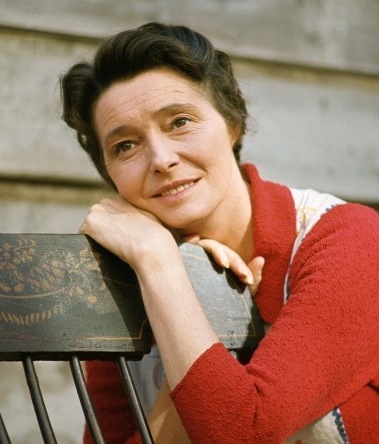
What do Leopold & Loeb’s original 1924 ransom note, Patricia Neal’s 1972 Golden Globe, one of former Illinois Governor Rod Blagojevich’s 1978 college blue books, and Practical Theatre Company memorabilia, circa 1979-1989, have in common?

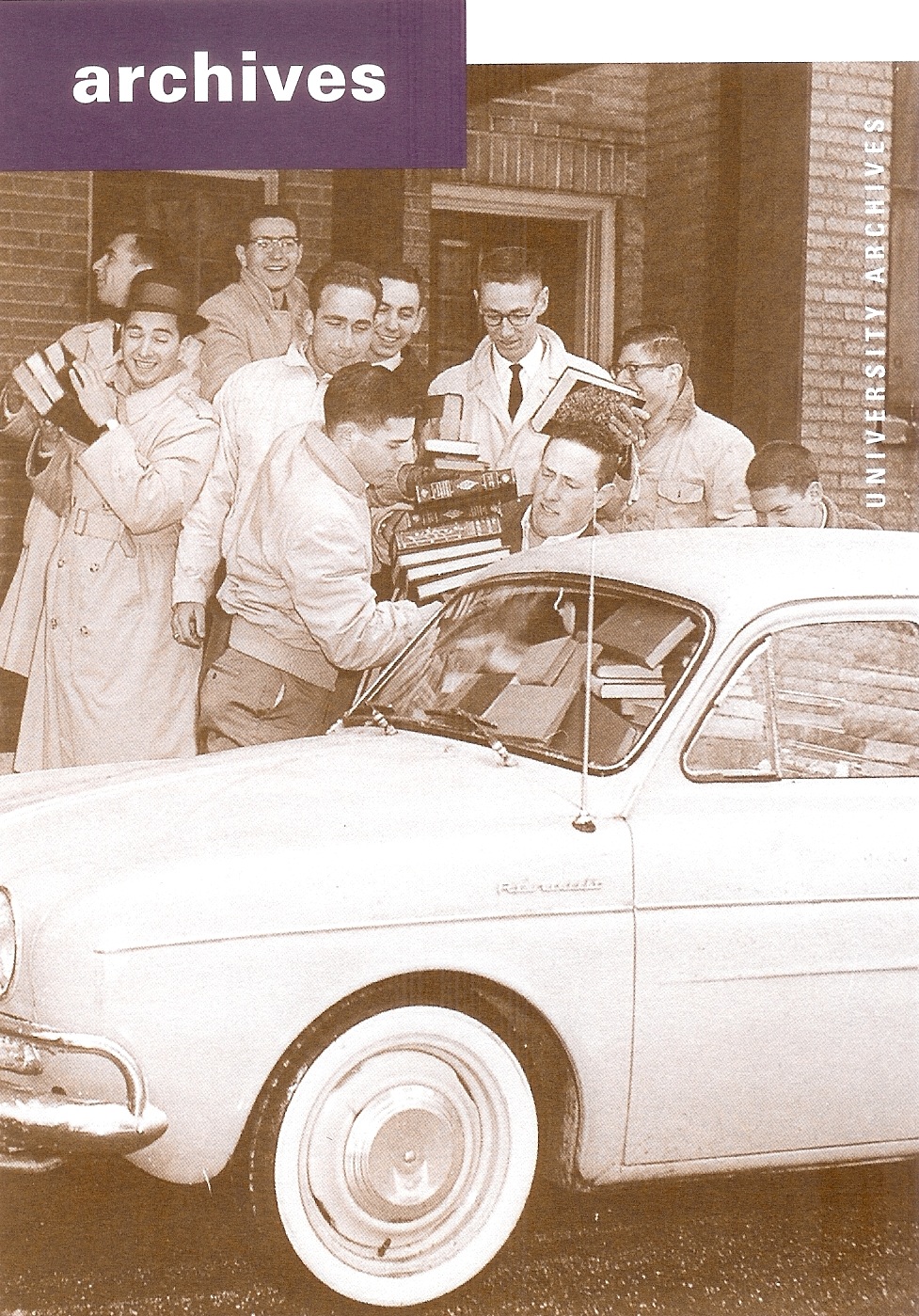
This year, everyone who ever worked at The Practical Theatre Company has been accorded a great honor by Northwestern University. For generations to come, a decade’s worth of our adventures (and some misadventures) — from “Clowns” to the musical “Rockme” — are now enshrined among the Special Collections in the Northwestern University Archives.

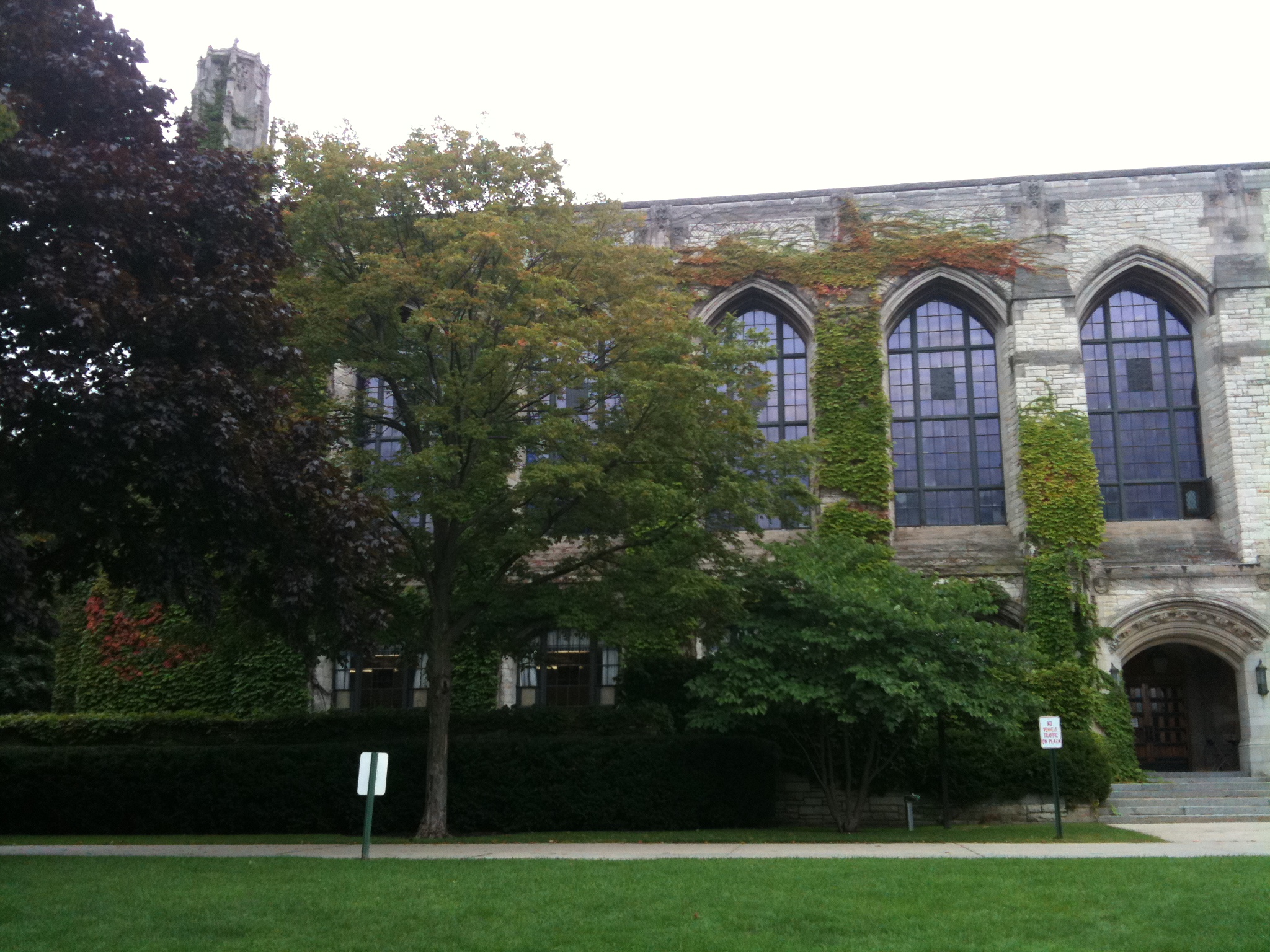
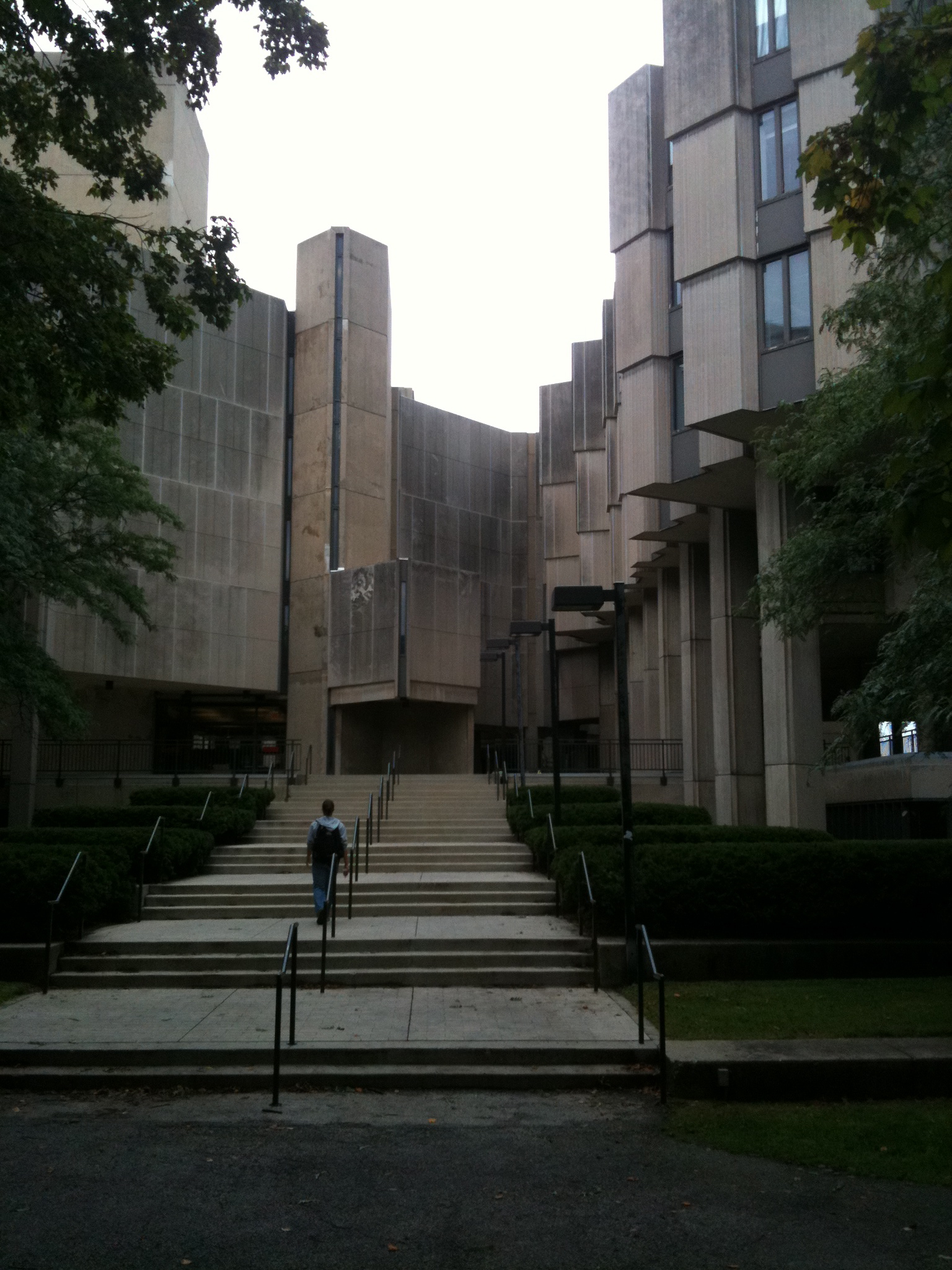
The written and videotaped record of that brilliant, madcap, kinetic and creative period — from Shanley Hall to the John Lennon Auditorium, from Piper’s Alley to Briar Street – have been lovingly placed upon the venerable shelves of the Old Deering Library. (Not the concrete monstrosity built in 1970 – but the grand cathedral-like edifice, built between 1931 and 1933 and, perhaps apocryphally, derided as an “upside down pig” by Frank Lloyd Wright.)

This vulgarity is not the PTC archive's home. We're in the magnificent old library building. Yeah!

How did this come to pass?

The 4-part PTC history I penned for this blog got the attention of University Archivist, Kevin B. Leonard, who made me an offer I couldn’t refuse: a chance to place the tangible history of the PTC in safekeeping at Northwestern Library, where it can be studied by students, researchers, writers, and anyone with an interest in the exploits of the Practical Theatre, Chicago theatre in the 1980’s, improvisational theatre, and the legend of Tomaloochie Falls.

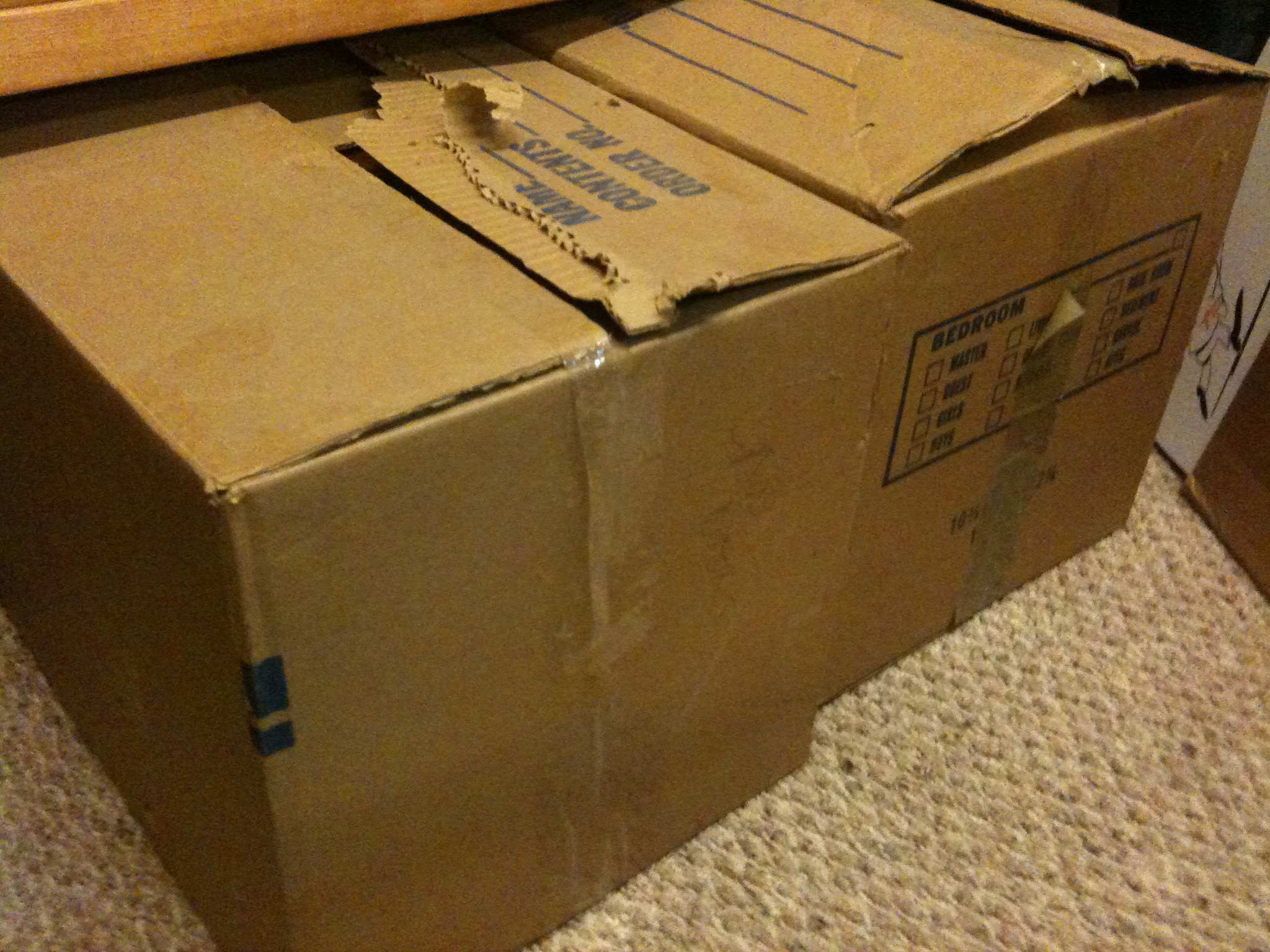
I’ve been hauling the PTC’s history around in as many as twenty battered cardboard boxes, from house to house, and state to state for over two decades. And it’s a very heavy history.

A couple of years ago, my wise and wonderful wife, Victoria, urged me to clean up our cluttered garage and turn it into a room that our teenage daughters could use for music and recreation.

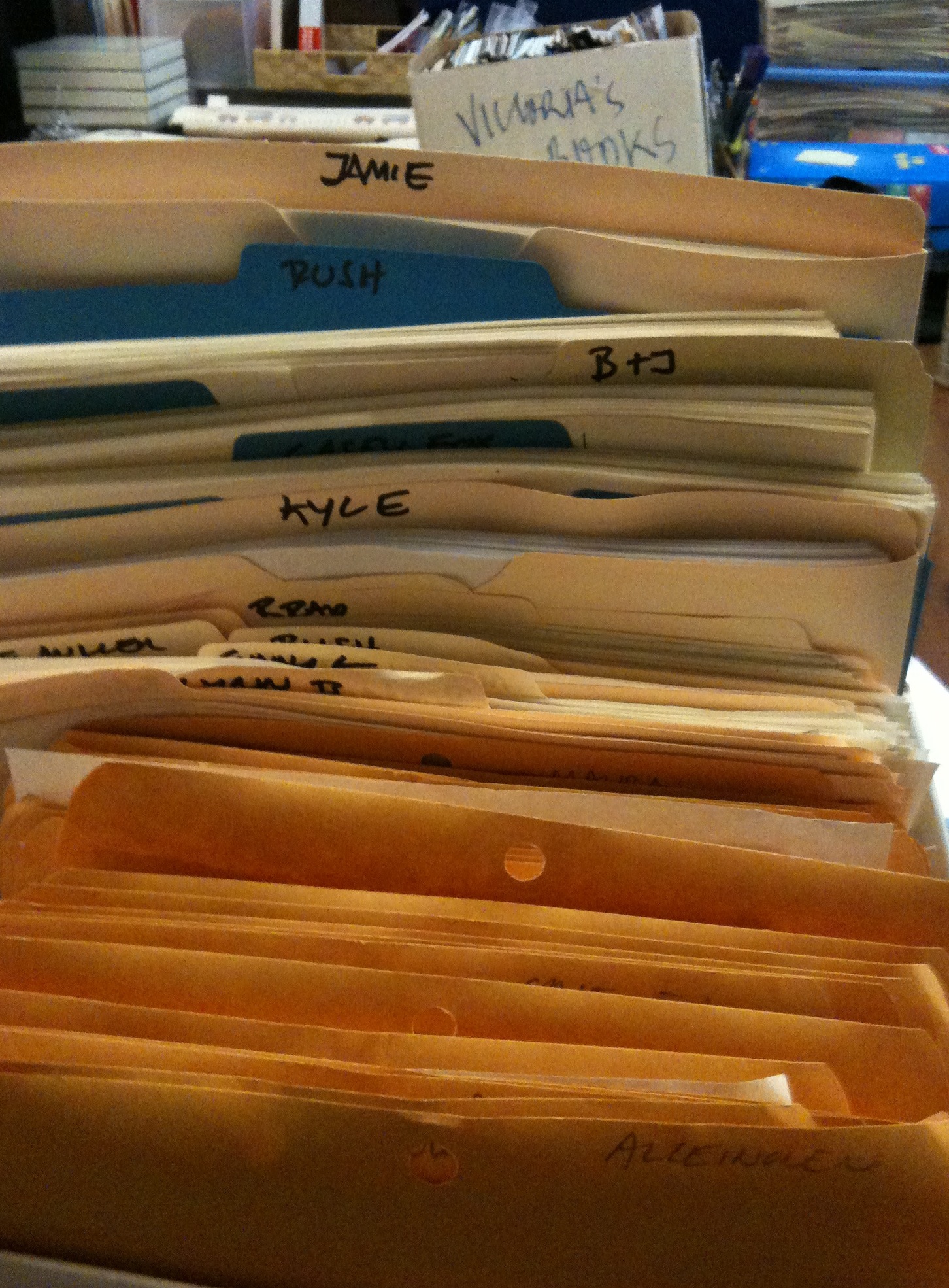
A key part of that effort involved opening all those dusty, damaged boxes of PTC files, photos, artwork, oddities and rarities and putting them into file cabinets where they’d be out of the way – and protected.

Some of this stuff had not been seen by anyone since it was packed up when we left The John Lennon Auditorium in 1985.

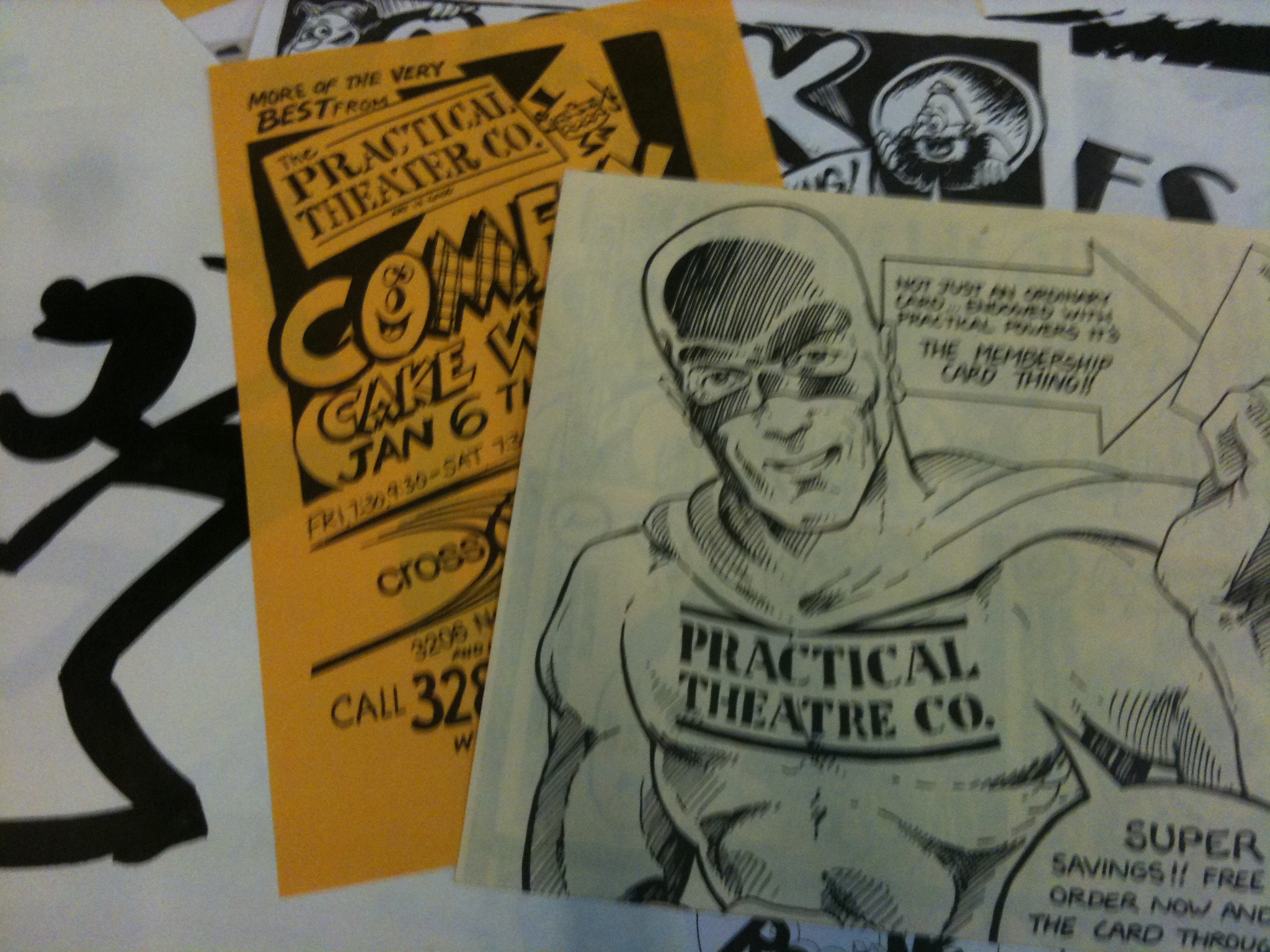
Now that this jumbled mass of an archive was stuffed into file drawers, it was easy to get lost for hours poring over ancient documents, from “Bag O’ Fun” scripts, to PTC Board meeting minutes, and other goodies, including season brochures and posters illustrated by a grand gallery of great artists: Ron Crawford, John Goodrich, Paul Guinan and Gary Whitney, among others. These rediscoveries inspired my blog series on the PTC’s history – and provided the graphic material that brought those articles to life.

But as I transferred those precious pieces of history from cardboard boxes to metal file cabinets, an alarming number of water-damaged documents reminded me of how a flash flood in the basement of my first home in Woodland Hills came dangerously close to destroying this accumulated treasure of legendary theatrical lore. So, when the NU Archives offered to provide a safe home for the documentary history of the PTC, I was happy to get this trove off my hands and into the grasp of professional archivists.

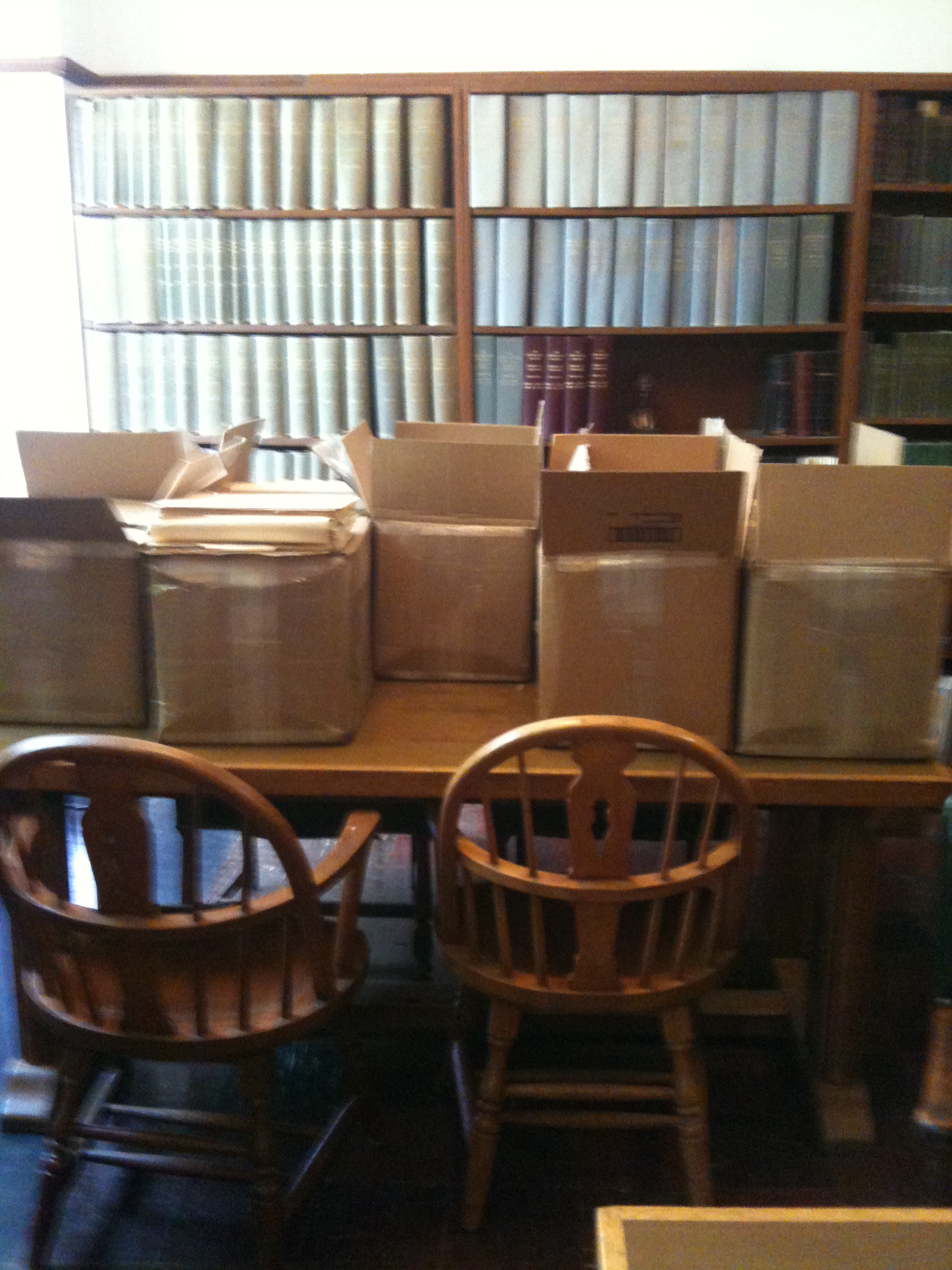
Over the course of six months, working some weekends and grabbing a few hours here and there, I dove into the process of sorting and arranging all those bulging file cabinets full of raw, confused files into something the NU Archives could work with upon receipt. I suppose I could’ve just sent Kevin Leonard the whole, unadulterated pile of Practical – but Mama Barrosse raised me better than that.

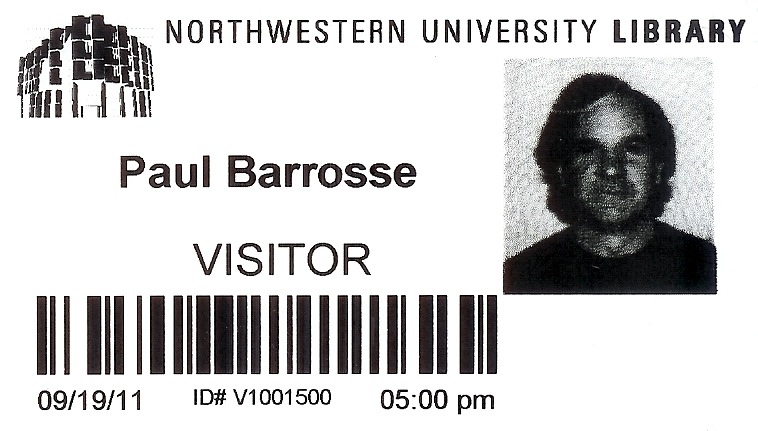
Finally, the PTC archives were ready for delivery, along with four boxes of my personal papers, covering my post-PTC adventures and TV shows like Totally Hidden Video, Strange Universe and Behind the Music. I was relieved to know that, after all these years, this archive was headed home to Northwestern, where the whole adventure began.

From: Paul Barrosse
Sent: Thursday, September 15, 2011
To: Kevin B Leonard
Subject: Practical Archives
 
Hi, Kevin!
 
I dropped the boxes off at UPS on Monday night — so they probably got shipped to you on Tuesday.
 
One note: Each box has files arranged alphabetically — but each box goes A-Z.
 For instance, you may find files for “Art, Ruth & Trudy”, “Babalooney” and “Scubba Hey” in several boxes. Generally, this is not the same material, but additional material I discovered as I filled each box.

See you soon, Paul

In mid-September, I flew to Chicago with my daughter Emilia, a junior at Northwestern. I had three good reasons for the trip.

I had to help Emilia move into an off-campus house.

My daughter Emilia on move-in day with an armload of important staples.

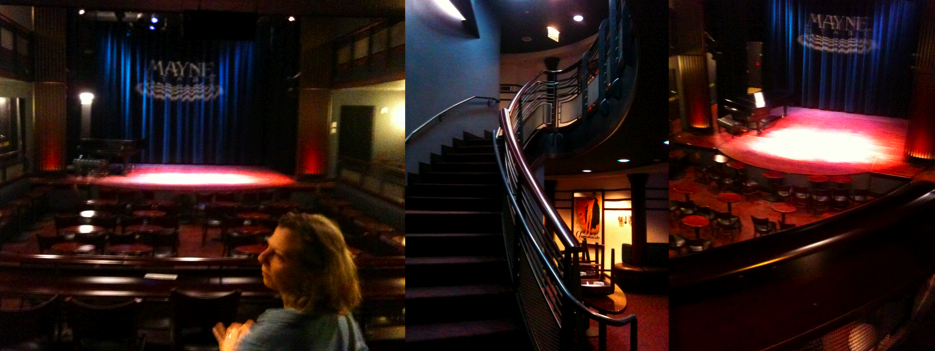
I wanted to check out the fabulous Mayne Stage in Rogers Park, where The Vic & Paul Show will run this December 20th through 30th. (Have you gotten your tickets yet?)

Bea Rashid joined us for our visit to the exquisite Mayne Stage cabaret in Rogers Park.

And I wanted to meet with Kevin Leonard and confirm that my boxes had arrived at the NU Archives.

The boxes had arrived. And here they are — in Kevin Leonard’s really cool office in the basement of Deering Library..

Now, the history that so many of us – NU alums and non-alums alike – made together in the 1980’s is now home alongside the papers of such notables at Patricia Neal, Frank Galati and Viola Spolin, the Queen Mother of improvisation.

BTW – Viola’s son, Paul Sills, founded the Story Theatre in the Piper’s Alley space behind Second City: the very same space that became the PTC’s Piper’s Alley Theatre – home of The Golden 50th Anniversary Jubilee, Megafun, and Babalooney. (There are a lot of cool connections to be made at the NU Archives.)

Soon, the list of everything that’s available for study in the PTC archives will be accessible online through a searchable database.

I encourage you to drop by Old Deering Library and pay a visit to the Northwestern Archives. Check out the Special Collections — and get your hands on the history of The Practical Theatre Company. Especially those of you who helped to make that history.

Kevin Leonard might have some really cool things to show you.

16 Comments

Filed under Art, History

You CAN Go Home Again.

In his 1940 novel, You Can’t Go Home Again, Thomas Wolfe’s protagonist, George Webber, is an author who writes a book about his hometown – and winds up pissing off his old hometown peeps to the point where he gets death threats. In the novel, Webber comes to the realization that, “You can’t go back home to your family, back home to your childhood … back home to a young man’s dreams of glory and of fame … back home to the old forms and systems of things which once seemed everlasting but which are changing all the time — back home to the escapes of Time and Memory.”

Over the years, the phrase “You can’t go home again” has entered the popular vernacular, representing the notion that once you move away from the place of your birth – especially to a bigger city — it’s impossible to return to your old stomping grounds and find satisfaction. Your fond, gauzy memories of the past will be disappointed by what you find upon your return.

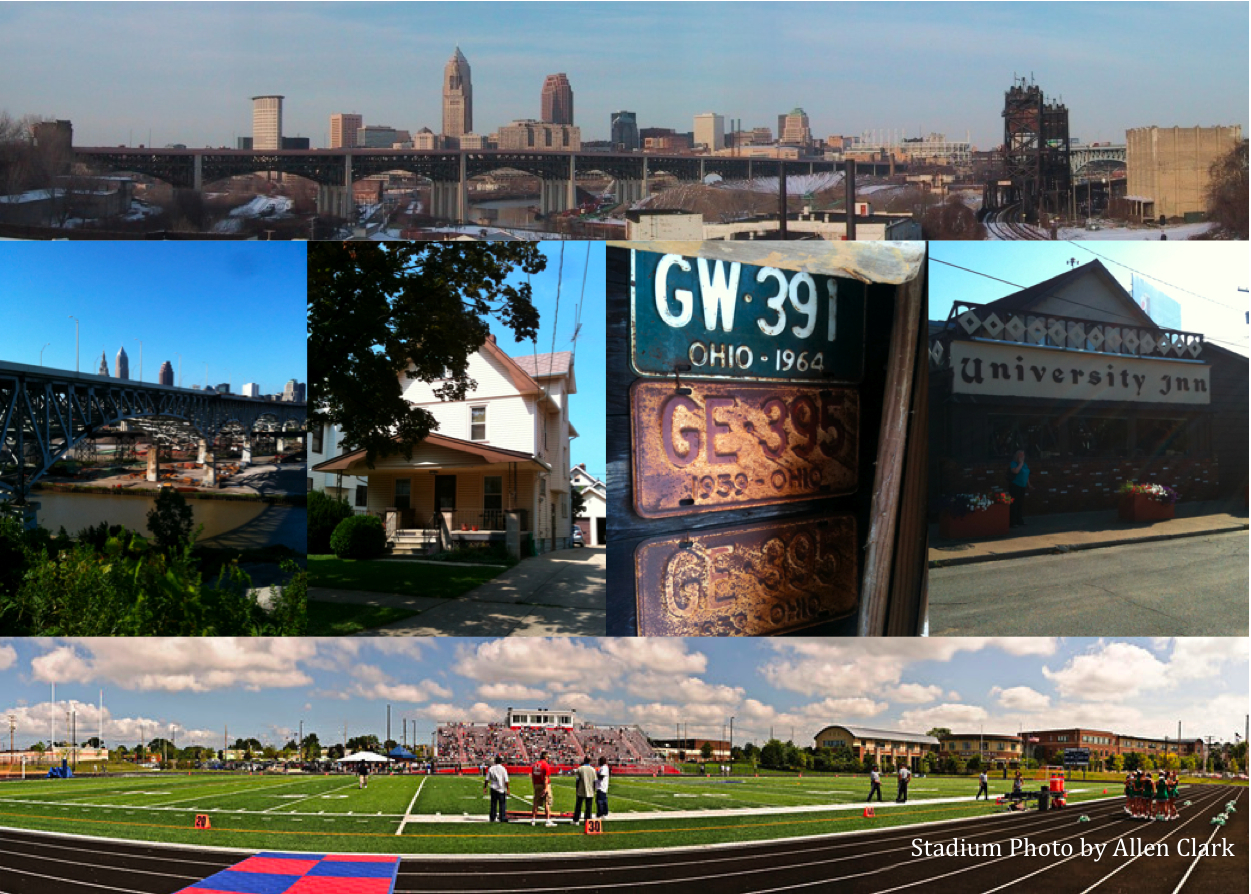
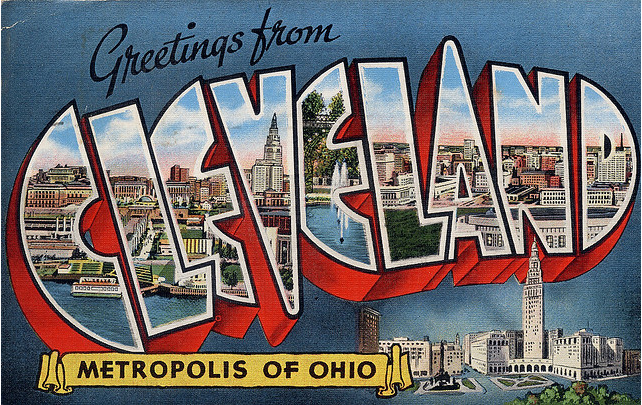
Well, if Thomas Wolfe had come along with me on my trip back to Cleveland, Ohio this summer, he might have re-written his famous novel. You can go home again. At least you can go home to Cleveland.

I had two good reasons to return to Cleveland this past August. First, it was time to spend some quality time with my mother and sister – who still live in the same West Side neighborhood that I grew up in. Second, my high school, Cleveland Central Catholic, was hosting an alumni event, culminating in a football game on our brand new football field. (We never had our own home field when I toiled on the gridiron for CCC.) It was a happy confluence of events: a chance to see old friends and family.

The first impression I got as I drove my rental car into my old neighborhood on Cleveland’s West Side was that the ‘hood had seen better days.

In my youth “Old Brooklyn” was always a working class neighborhood – but that was at a time in the early 60’s to mid 70’s when the working class was more upwardly mobile. The sons and daughters of increasingly unionized factory employees, union steel workers and public school teachers were going to college in record numbers. And I was one of them.

I’ll spare us all the rest of my socio-economic rant. Suffice to say that, like all the big, brawny Rust Belt manufacturing cities that flourished for a hundred years on the Great Lakes, Cleveland has struggled economically in the post Free Trade economy.

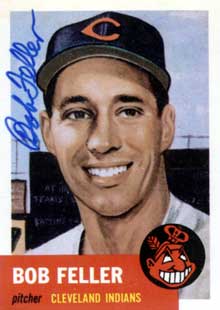
But while it may no longer claim to be “The Best Location in the Nation” – or the largest city in Ohio (the former state capitol backwater, Columbus, now holds that title) — my hometown is a proud old metropolis with strong cultural institutions, from the Cleveland Orchestra to The Cleveland Playhouse, The Cleveland Clinic and it’s beloved Browns and Indians, long-suffering sports franchises with storied histories of heartbreak and glory. It’s the city of Bob Feller and Jim Brown.

‘Nuff said.

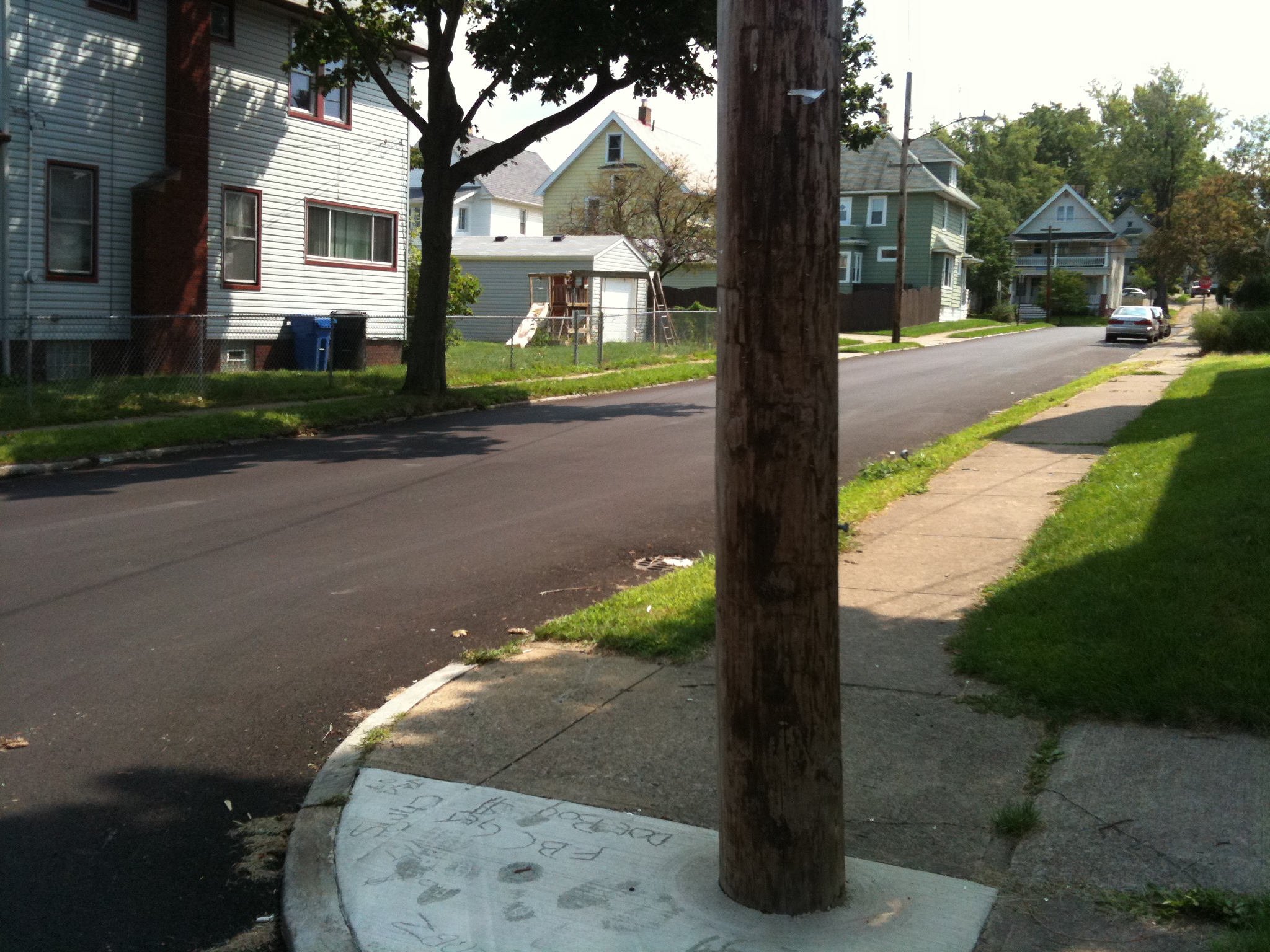
The neighborhood I grew up in from first grade until I went away to college is on the West Side near the Cleveland Zoo. My mom’s house is just a block away from the intersection of Pearl Road and State, near the bus barns. (When I was a kid, on a hot day in late summer, the old streetcar tracks could still be seen peeking through the receding asphalt, fanning out from the bus barns.)

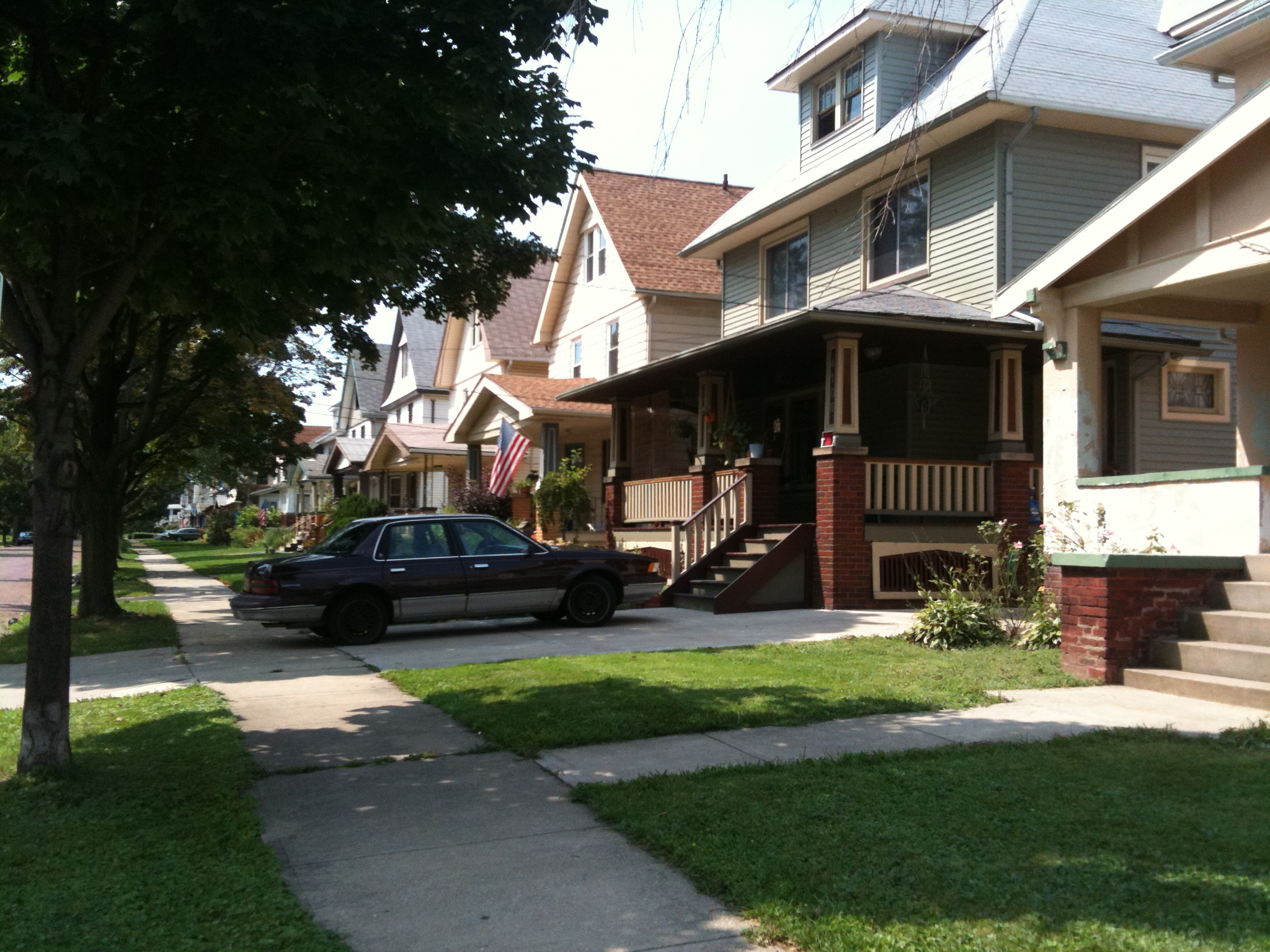
A while ago, folks in my old neighborhood were given the choice of keeping their red brick streets or having them paved with asphalt. My mom’s block voted to keep their bricks. It was good call. Cleveland winters are hell on blacktop. Plus, the brick street gives my mom’s block character. Those bricks were unforgiving when you wiped out on your bike or during games of street hockey and “kick the can” – but they sure look good. Still do.

I took a walk around the neighborhood, down my own Spokane Avenue and along my old paper route on adjacent Henritze Ave. (Oh yeah, remember when ambitious kids could earn some cash and gain experience as young entrepreneurs by delivering the daily newspapers? Don’t get me started.)

My solitary ramble through this familiar landscape was revelatory. All along my street, and on my old paper route, I saw tidy, well-maintained, middle class homes interspersed with properties that had clearly seen better days. Yet, throughout the neighborhood, I saw people painting their houses and working on their landscaping. I also saw something you don’t see much of in my suburban neighborhood in Woodland Hills, California: porch life. People sitting on their porches and front steps, chatting with neighbors and watching the world go by. And, in this case, one strange, expatriate wanderer.

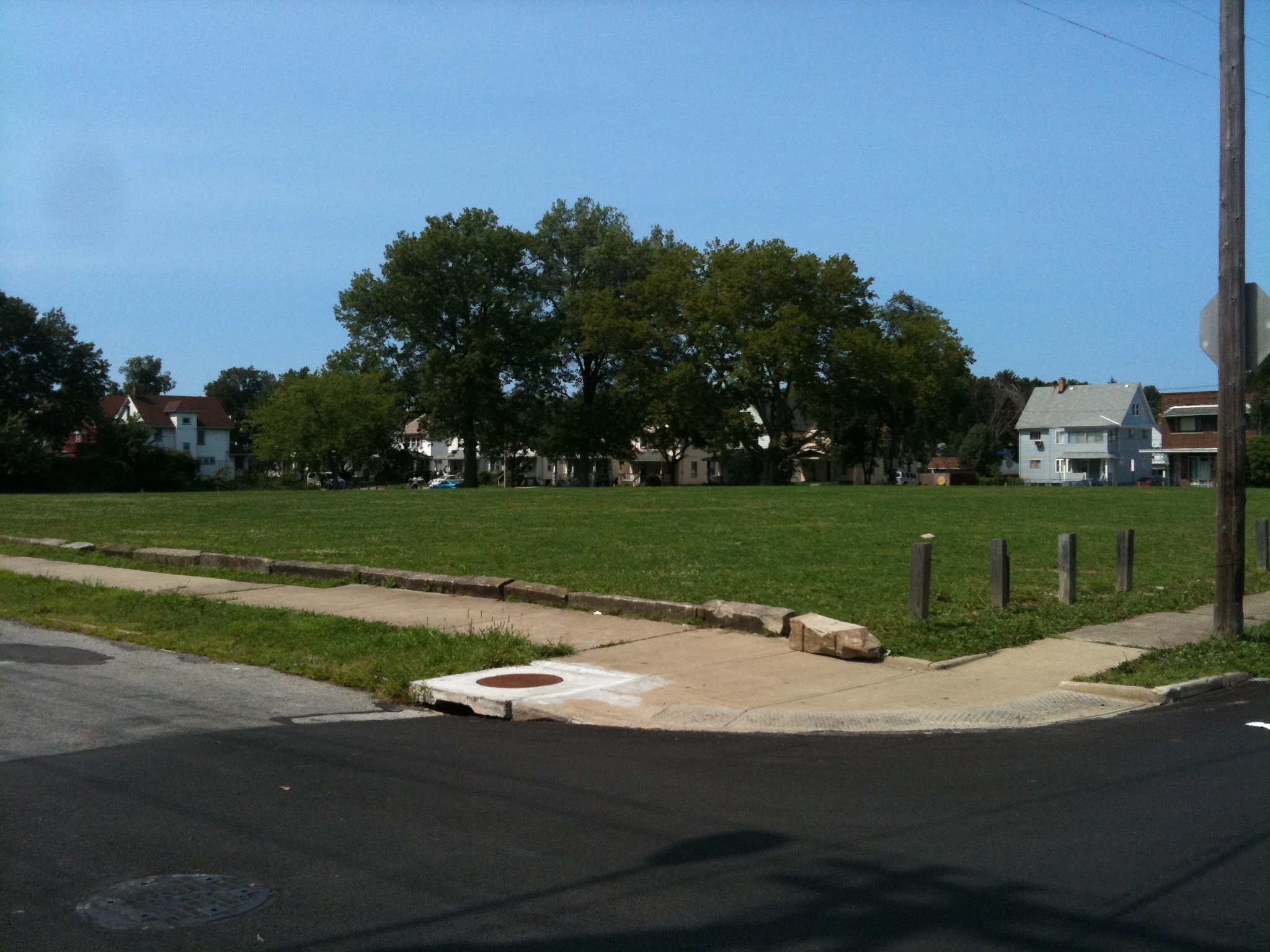
But at the corner of Henritze and West 41st St., I came face to face with a clear and undeniable sign of my neighborhood’s decline: a grassy empty lot that was once Memphis Elementary School. In my day, Memphis School was a vital center of activity in the neighborhood. I never went to school there, but I swung on its swing sets, took advantage of its summer youth programs, and played “strikeouts” against boxes drawn on its walls. And yes, I also learned to avoid the unsavory elements of “The Memphis Gang”. Now, all those childhood memories have been reduced to a patch of lawn.

When we first moved to Spokane Avenue in the early 60’s, huge, majestic elm trees on each “tree lawn” dominated the far end of our block – their branches reaching across the street to embrace each other. Riding down the street to Scott Tyndall’s house was like entering the forest primeval. Our end of the block had no trees. I remember when the city planted a little maple tree sapling in front of our house.

By the time I began high school, the ravages of Dutch Elm Disease had claimed the big trees down the block – and today, more than three decades later, our little Maple trees now dominate Spokane Avenue. And the tree in front of my house is one of the biggest on the street.

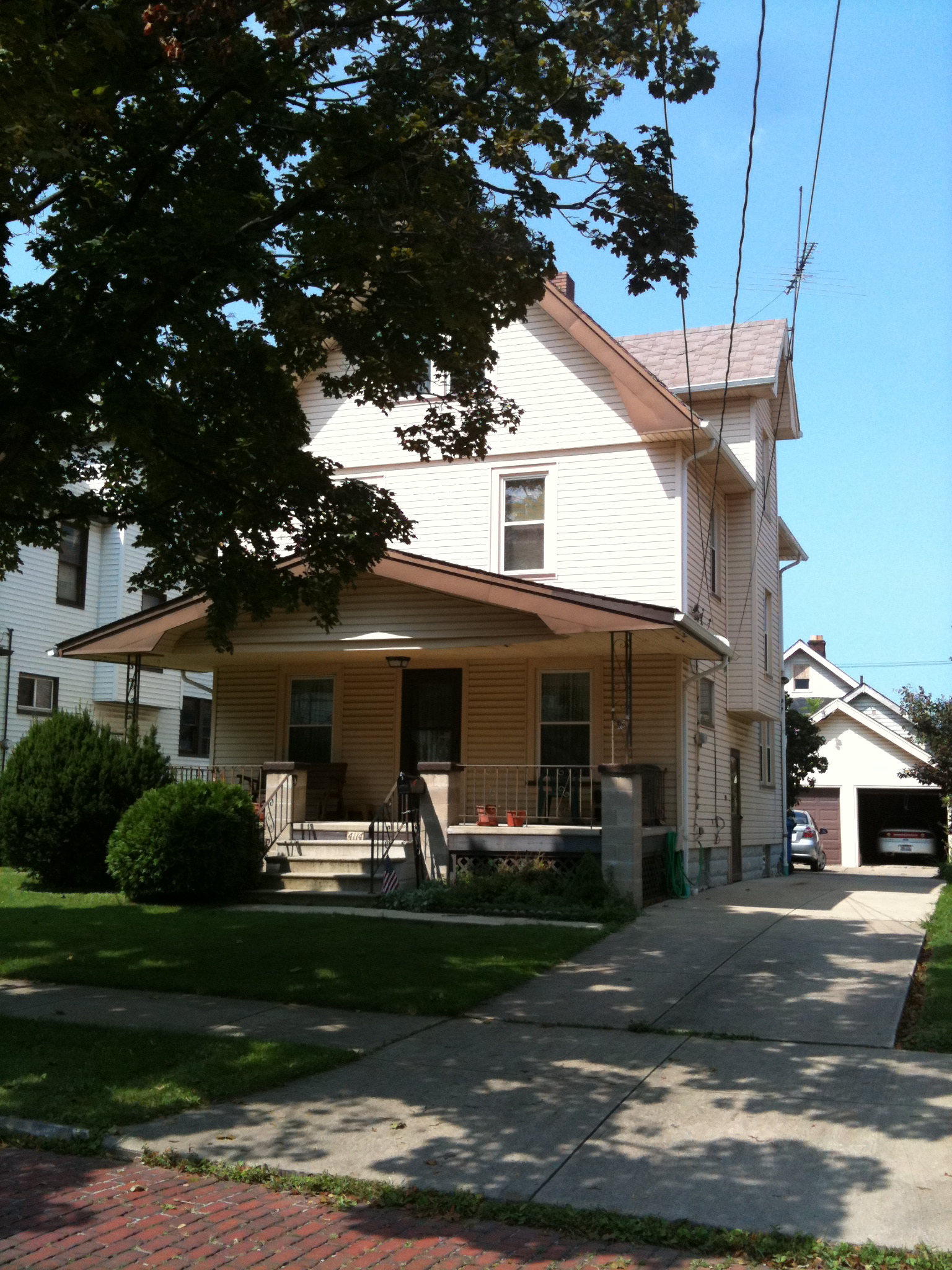
Ah, my house. I love this house. My family moved here in 1964 (or was it ’65?). I thought we’d moved into a mansion. Built in 1910, as was much of the housing stock in the neighborhood, it’s a 3-story, 1,366 square foot modest Victorian masterpiece – and it served our family of five very, very well. My mom still lives in this house, and she’s done a great job of fixing it up. Adding a bathroom downstairs was brilliant! Renovating the bathroom upstairs was also a great idea.

And leaving my old second floor bedroom untouched is all right with me.

Seeing it now, it’s hard to imagine all the things we did in my backyard.

It looks so small now – but, back in the day, my pals and I found plenty of room to play football (complete with NFL Films-style dramatic self-narration), recreate scenes from “Combat” and “Lost in Space”, play games like “Red Rover” and “Kick the Can” – and compete in our version of “Home Run Derby.”

“Home Run Derby” was played with a Wiffle ball. Teams were usually 2 versus 2 — or 3 against 3. The batter stood at home plate facing the back of the house. The pitcher threw the plastic ball – and the batter did his best to loft it onto the second floor porch (a home run) – or onto the roof (also a home run). However, if the ball was hit onto the roof, the fielders had a chance to catch the ball as it rolled off the roof. If they did, the batter was out. Batted balls that hit the house below the second floor were singles. Balls that hit the second floor were doubles. Balls that smacked against the third floor were triples. In every case, if the fielders managed to catch the ball as it rebounded off the wall – the batter was out.

We played “Home Run Derby” for hours. We broke a lot of windows, too.

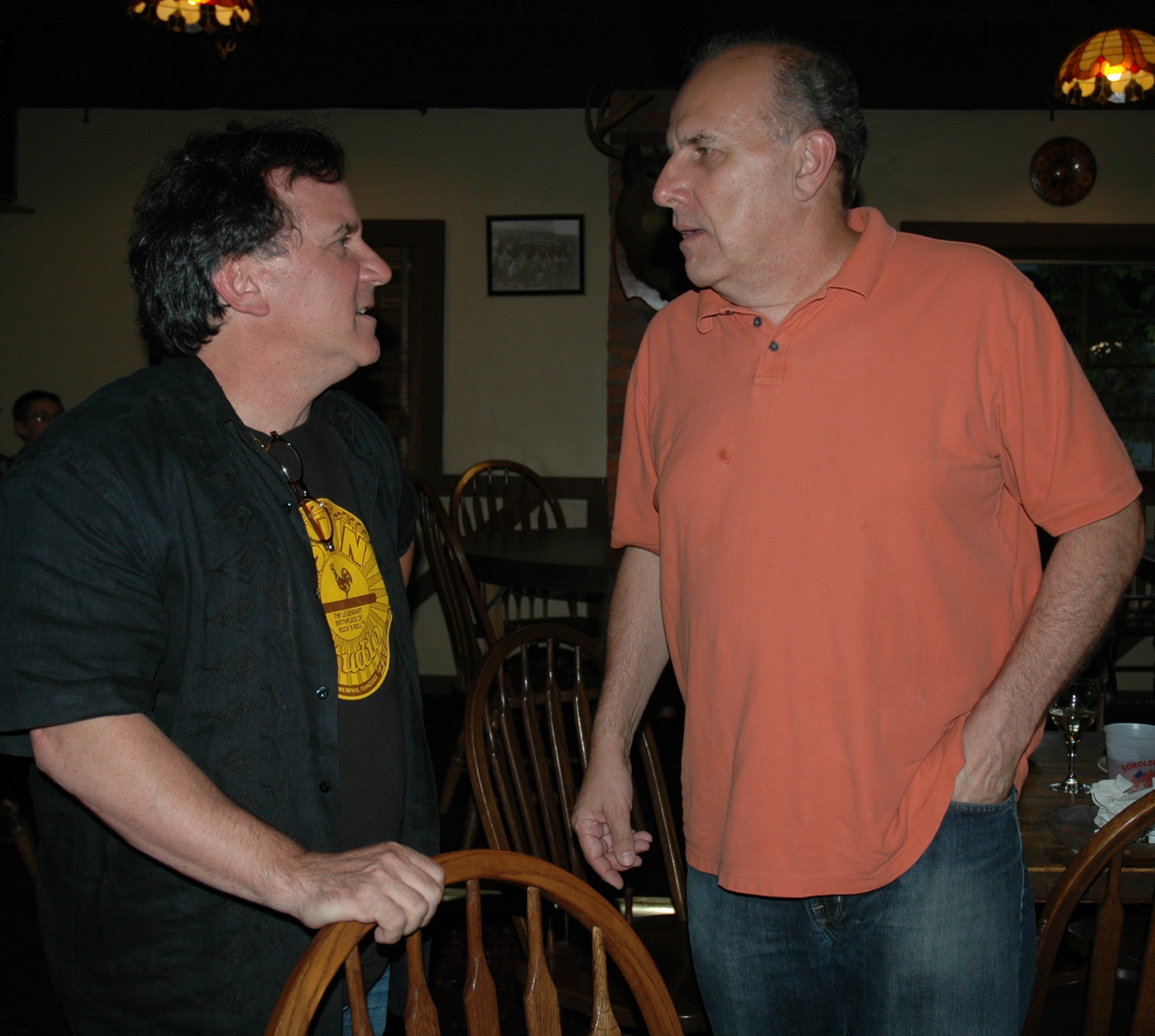
That evening, I drove my rental car north to meet some of my high school teachers and friends at Sokolowski’s University Inn, a Tremont area institution that sits on the western rim of The Flats – the industrial flatland through which the Cuyahoga River winds to Lake Erie.

Across The Flats, in downtown Cleveland, The Jake was hosting a Cleveland Indians game.

Now, I know that a big insurance company purchased the “naming rights” to Jacobs Field — but I’ll start calling that great ballpark “Progressive Field” about the same time I refer to Sears Tower in Chicago as “Willis Tower”.  Which is never.

And speaking of “You can’t go home again” – tell that to former Cleveland Indians star and future Hall of Famer Jim Thome, one of eight Major League ballplayers to hit more than 600 career home runs. On the same weekend that I was returning to my hometown, Jim Thome was at The Jake playing his first game in a Cleveland uniform since the dark day in 2002 when he accepted a six-year $85 million offer from the Philadelphia Phillies.

The CCC welcoming committee in front of Sokolowski's. (Photo by Allen Clark)

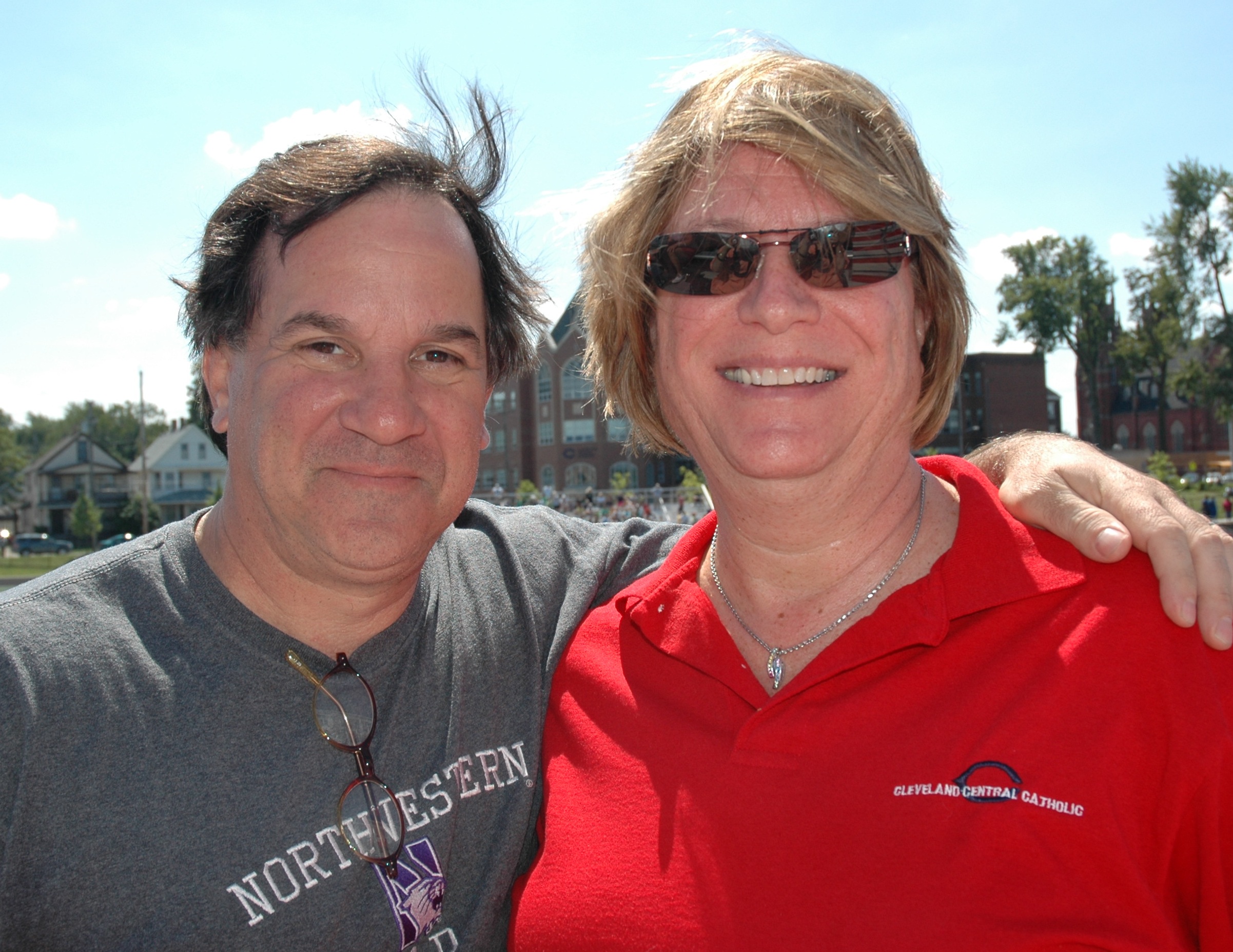
As Cleveland’s baseball fans warmly welcomed Thome back to town, so too did the Cleveland Central Catholic community gathered at Sokolowski’s welcome the prodigal son who left in 1976 to go to Chicago and attend Northwestern University.

Among the hometown heroes I reconnected with that night were my former Social Studies teacher, the ageless Elda Borroni, my former Art teacher and beloved mentor, Ellen Howard (Ellen Fasko in those days), and my classmate and quirky, creative buddy, Dancin’ Dave Wicinski.

Me and Dancin' Dave, one of my best CCC buddies & a classic character. (Photo by Ellen Howard)

With Elda Borroni, a teacher who challenged me politically and intellectually -- and still does. (Photo by Allen Clark)

With Ellen Howard: my Art teacher, Yearbook advisor, mentor and lifelong friend. If you only have a few teachers like Ellen in your high school years -- you're damn lucky. (Photo by Allen Clark)

The next day, I brought my mother Mary and sister Nancy to the East Side campus of Cleveland Central Catholic for a back-to-school event for alumni – and a football game at my alma mater’s brand new football field. Before the game, we took a tour of the Forman campus (the former St. Stan’s High School) where I’d spent so much time during my high school years, especially at football practice and in the basement where the Art Department was housed.

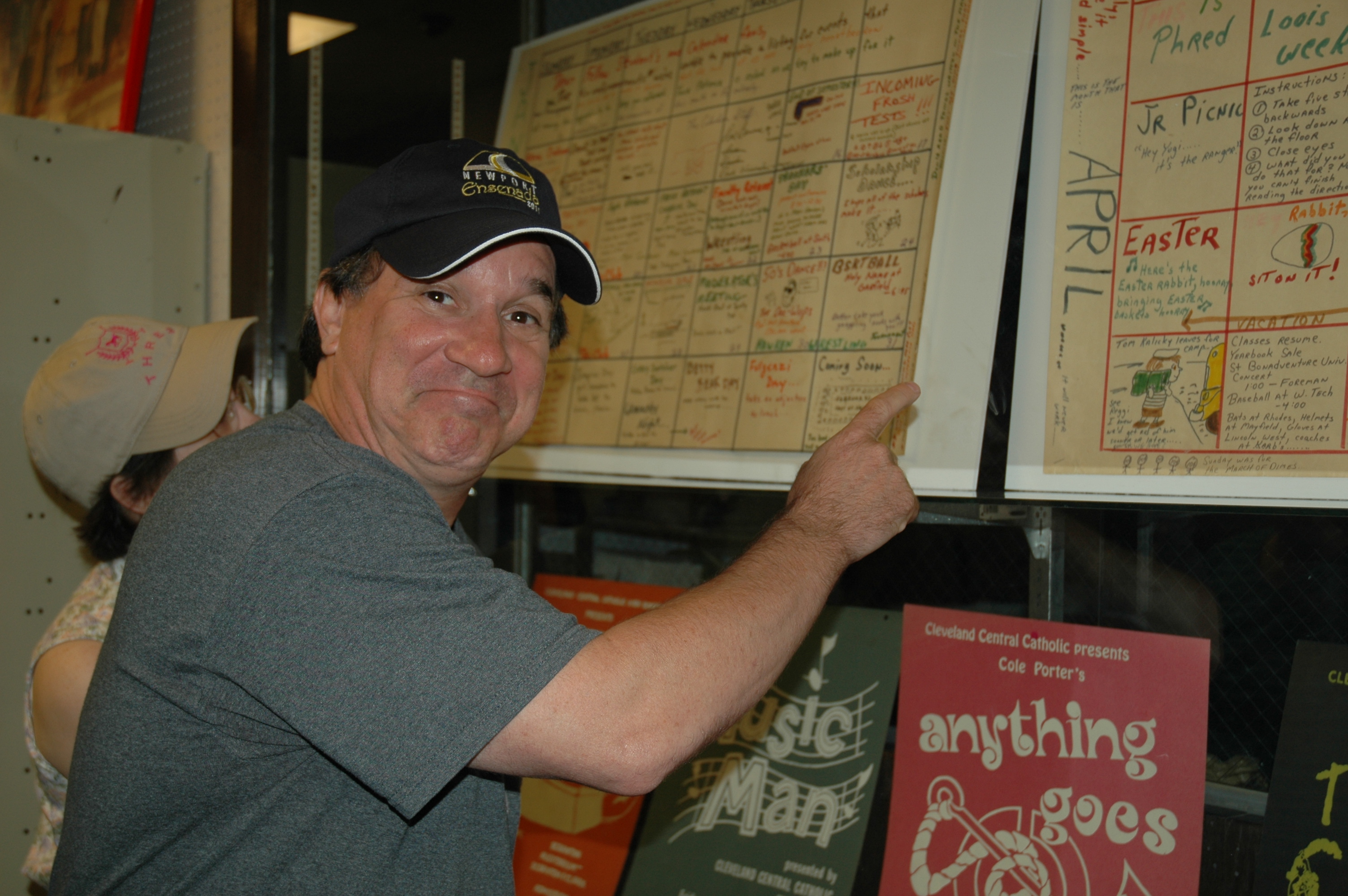
I was thrilled to see some of the school calendars I helped create have been preserved and installed in the Art Department hallway. (Note the "Music Man" poster. I was Prof. Harold Hill in that production.)

I played football at CCC for four years as an enthusiastic but seriously undersized defensive back and running back. By senior year I was a starting cornerback – and the smallest player on the field in every game I played. And in all those years, we never had our own football field. Our varsity home games were played at Garfield High.

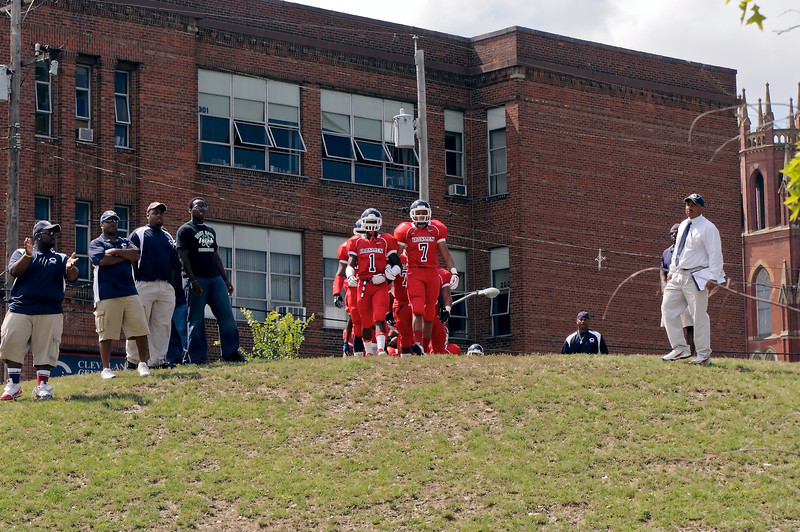
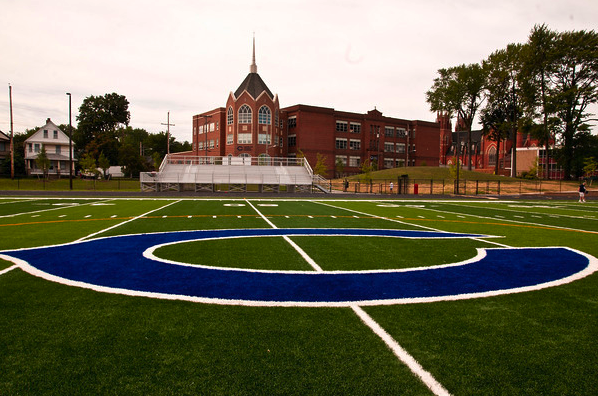
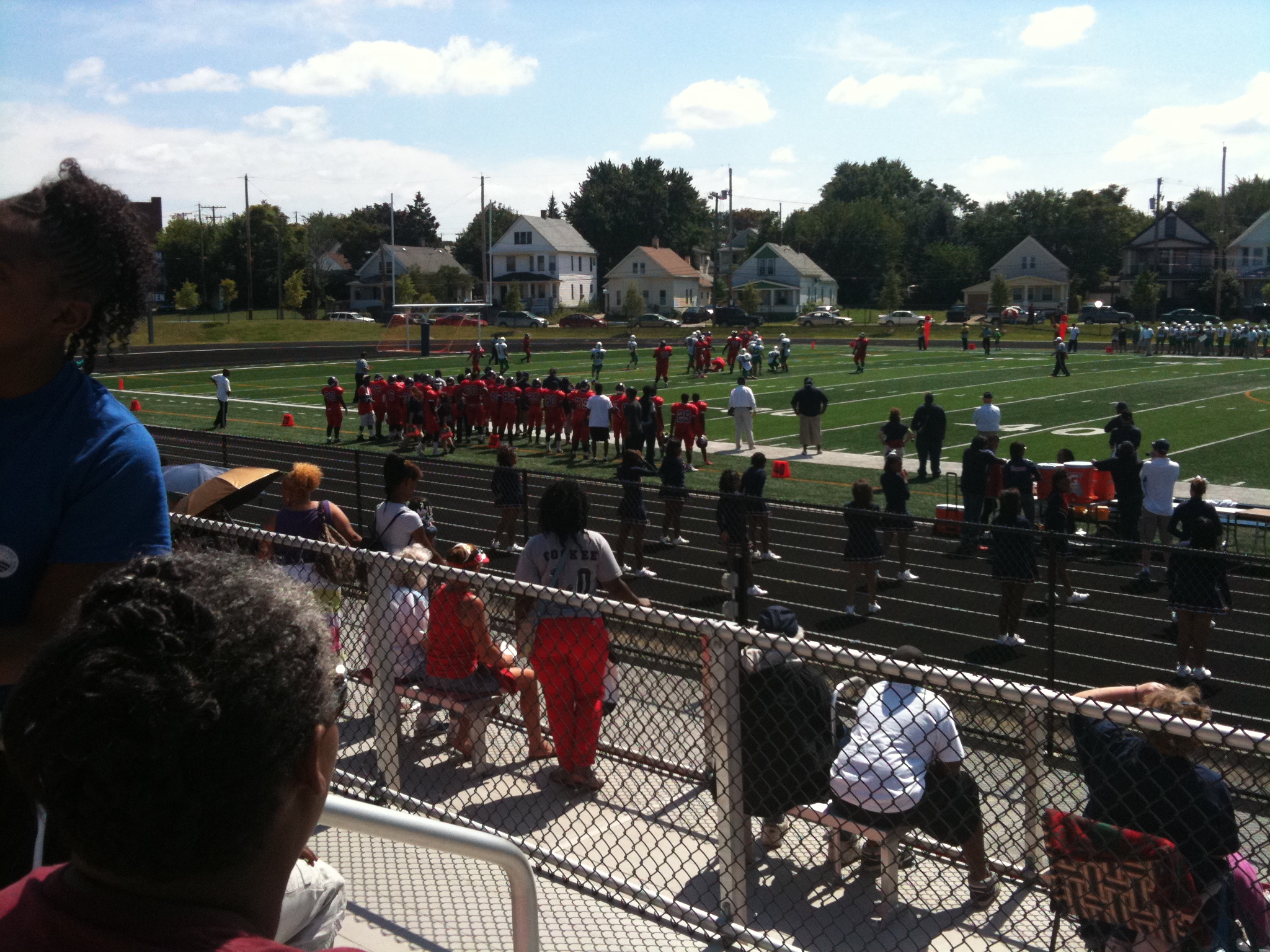
Now, thanks to the generosity and community-minded spirit of the Stefanski family and other CCC alumni donors, we have a splendid new stadium that has helped to rejuvenate a downtrodden, once-proud neighborhood. It’s truly amazing. It’s clear to see that Friday Night lights will be a big deal at CCC.

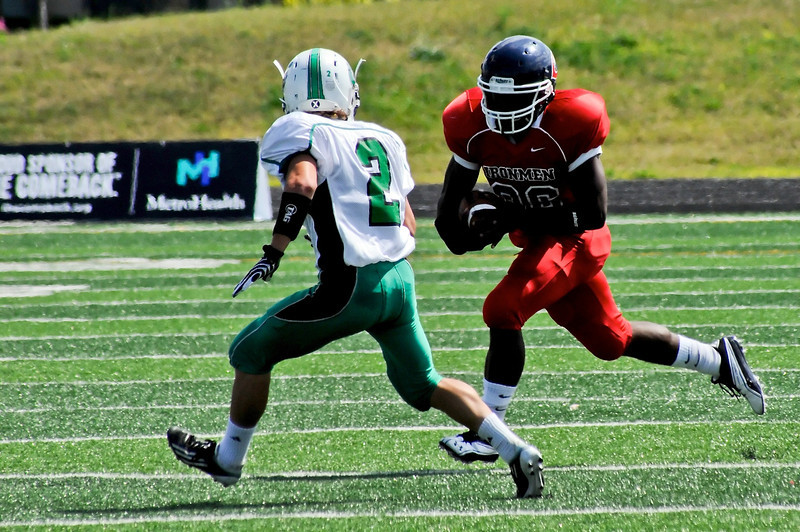
Check out the following game photos by Central Catholic’s talented official photographer, Allen Clark.

The Cleveland Central Catholic Ironmen won the game, too!

The new football field has truly transformed the whole neighborhood. (Photo by Allen Clark)

Over the course of the weekend I got to reconnect with my wrestling coach and all-time inspirational hero, Joel Solomon, his younger brother (and my football and wrestling teammate) John Solomon — and Martha Benek, the girl who played Marian the Librarian opposite my fast-talking charlatan, Harold Hill in “The Music Man”. Amazingly enough, Martha is now the librarian at CCC! (I have not, however, been selling marching band instruments from town to town.)

Harold Hill (Paul) and Marian the Librarian (Martha). She's really a librarian!

On Sunday, I drove out to Twinsburg, Ohio to spend a delightful afternoon with my former Scranton campus principal, George Costa — and his wonderful and witty wife, my high-spirited high school theatre director, Mary Ann Zampino.

George was the coolest principal you can possibly imagine – and “Zamp” cast me as Marryin’ Sam in “Li’l Abner” and honored me with the title role in “The Music Man”.  She was also the person with whom I performed in my first comedy revue.

How can you ever say “thank you” to such people? The only way is to see them more often — and share more than just memories.

It was an awesome three days in August spent with wonderful people in the Best Location in the Nation.

You can go home again.

And you should.

11 Comments

Filed under Beauty, History