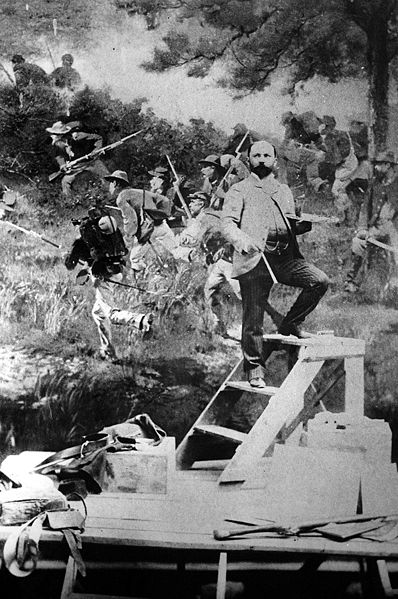
Category Archives: History

“I’m Stickin’ to the Union…”

“If I went to work in a factory, the first thing I would do is join a union.” Franklin D. Roosevelt.

In the mid 20th Century, back in the day when the postwar United States was the preeminent world power, we could boast a robust and growing organized labor movement which improved conditions for working Americans — union and non-union alike — and helped to build the great middle class in this country. But the labor movement – union men and women alike – paid in blood to give generations of their fellow workers a share of the American Dream.
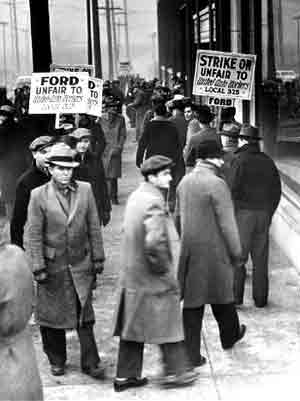
Big Business didn’t just give Americans the 5-day working week, the 8-hour workday, and vacation and overtime pay. The Robber Barons didn’t give up Dickensian child labor without a fight. Do you think you’d have a pension today if your union brothers and sisters hadn’t fought for it? Many brave men and women in the Labor Movement died to win these basic workplace conditions. We take for granted so much of what organized labor earned for us over nearly two centuries of heroic struggle.

But the battle for workers’ rights didn’t end back in the 1930’s and 40’s. There’s been no final victory. Rather, the struggle for economic justice in the workplace is ongoing. And for the past three decades, American workers have been losing what little we’ve gained.

Ever since President Ronald Reagan broke the air traffic controllers strike in the summer of 1981, the right wing has mounted a steady counter-attack against organized labor. In 1983, 20% of U.S. workers were union members. By 2009, only 12% of American workers were unionized. Today, 30 years after Reagan renewed the right wing assault on labor unions, only one in 10 workers are union members. That’s right. Union membership has been cut by half since Reagan took office.

And the anti-union drumbeat continues.

Today, revenue-strapped GOP governors complain that hard-earned public employee pensions are generous boondoggles we can’t afford. Teachers unions are constantly under attack — as though earning about $40 thousand dollars a year for heroically schooling America’s youth (while working most weekends grading papers and spending personal funds for school supplies) is too high a price to pay for an educated electorate. Right wing politicians call out nurses and firefighters as overpaid unionists with luxurious benefit packages. Meanwhile, in the halls of Congress, contemporary union-busters are taking steps to weaken unions and limit American workers’ ability to bargain collectively.
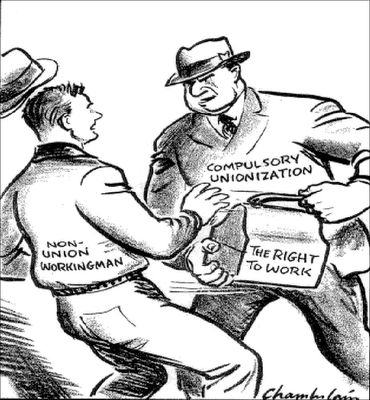
Greedy elitists have been working very hard for the past three decades to give unions a bad name.

The Republicans and their corporate overlords have managed to confuse a shockingly large percentage of blue-collar lunch-bucket working Americans to buy into their anti-union rhetoric – despite the fact that the gap between executive and worker pay has become truly obscene.

In 1965, American CEOs earned 24 times what the average worker in their company took home. By 1978, the CEOs got paid 35 times more than their average employee. That figure rose to 71 times more in 1989. By 2005, CEO pay had risen astronomically.

Blue collar, Joe the Plumber Republicans might be shocked to learn that the average American CEO in 2005 earned 262 times the pay of their average worker. In other words, CEOs earned more in one day than an average worker earned in 52 weeks. And in the last five years, it’s only gotten worse. Today, according to the accounting firm, Towers Perrin, the average CEO is paid 500 times more than the average worker.

And that’s only half the story. Working class fans of conservative supply side economic theory should know: nothing trickled down.

While the top corporate executives were lining their pockets, the wages of working Americans declined in real dollars.

In 1979 the average hourly wage in the U.S. was equal to $15.91 in 2001 dollars. By 1989 it was only $16.63 per hour: a gain of just 7 measly cents a year for the entire Reagan decade. (In case you already forgot: CEO pay during that same period rose from 35 times what workers earned to 71 times what the guy on the line made.)

During the Clinton years, there was a slight up-tick in workers wages. Between 1995 and 2000, the average wage rose to $18.33 per hour, driven in part by higher pay for college-educated workers in the tech and service sectors.

But for the more than 100 million laborers without a college degree, average inflation-adjusted hourly wages at the end of 2000 were less than they were in 1979.
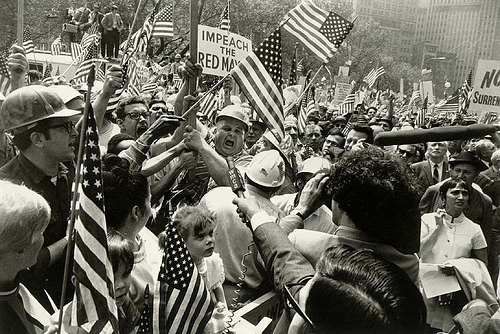
That’s what blue collar Reagan Democrats got for switching their allegiance from a union-friendly party to a union-busting party. Reagan and his corporate cronies waved the flag at hardworking blue collar Americans, puffed them up with pride about that “shining city on a hill”, riled them up about abortion and gay marriage – and then robbed them blind. The right wing is still doing it. And working class people are still falling for it.

The shameless profit-grab at the top of the corporate food chain has taken place while for the past 30 years U.S. worker productivity rose steadily as wages remained flat.

Since Ronald Reagan took office in 1980, American worker productivity has increased by nearly 40%. Yet, I remind you, real hourly wages for workers have declined since Reagan’s inauguration.

So who got the reward from all that increased worker productivity? Who got the big performance bonuses? The CEO’s, upper management and Wall Street middlemen did. (Of course, today’s grease monkey, shipping clerk, loading dock foreman, or self-styled Joe plumber can dream of one day becoming a CEO or stock trader himself himself. Or he can play the lottery.)

Workers have fallen behind while the fat cats stuffed record profits into their bulging pockets. (All the while crying that the unions were making it impossible for their companies to compete.) Yet the corporate elite aren’t satiated with their outsized slice of the economic pie. So, their right wing tools in government are stepping up their attacks on organized labor.

In my own home state of Ohio, newly-elected Republican Governor John Kasich proposes to deny the right of 14,000 state-financed child care and home care workers to unionize. He also wants to ban strikes by teachers, much the way some states bar strikes by the police and firefighters.

“If they want to strike, they should be fired,” Mr. Kasich said in a speech. “They’ve got good jobs, they’ve got high pay, they get good benefits, a great retirement. What are they striking for?”

By the way, this is the same Governor Kasich who has complained (rightly) that white-collar state employees are not paid enough to attract the best candidates to public service in Ohio. (In the GOP worldview, what’s good for college educated white-collar workers need not be shared by lowly blue-collar workers. Yet they have the nerve to call Democrats “elitists”.)

The right wing attacks the labor movement to convince blue collar Americans that unions are simply greedy and corrupt. This anti-union calumny is promoted by the GOP and bankrolled by big business execs and Wall Street moneymen whose own greed and corruption was manifest in the final years of the Bush administration. (BTW, it was blue-collar working Americans whose hard-earned payroll and income taxes bailed these A-holes out.)

Of course, there have certainly been some illegal shenanigans now and then in the annals of organized labor. (We still don’t know where Jimmy Hoffa is buried.) But that doesn’t change the fact that the union movement in America has been a force for good in this country. And that union men and women paid for what we now take for granted in the workplace with their freedom and their lives.

Listen up, my working class friends who vote Republican: I’m talking to YOU. It’s time for a history lesson. A history, alas, that you can no longer read about in most public school textbooks, thanks to conservative members of your local school board.

April 27, 1825: Carpenters in Boston are the first to strike for a 10-hour workday.

July 1835: Child laborers in the silk mills of Paterson, New Jersey strike so they only have to work an 11-hour day — 6 days a week.

July 1851: Two railroad strikers are shot dead by the state militia in Portage, New York.

January 13, 1874: Unemployed workers demonstrating in NYC’s Tompkins Square Park are attacked by mounted cops who charge into the crowd, beating men, women and children with billy-clubs. There are hundreds of casualties, but the Police Commissioner says, “It was the most glorious sight I ever saw.”
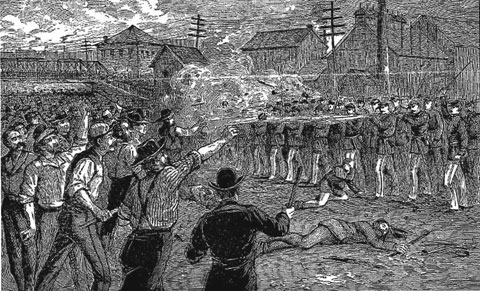
July 14, 1877: The “Battle of the Viaduct” in the Pilsen neighborhood of Chicago. Protesting members of the Chicago German Furniture Workers Union are put down by federal troops (recently returned from an Indian massacre) killing 30 workers and wounding more than 100.

September 5, 1882: 30,000 workers march in the first Labor Day parade in New York City.

May 1, 1886: Bay View Tragedy. About 2,000 Polish workers walk off their jobs in Milwaukee in protest of the ten-hour workday. They march through the city, gathering other workers until they are 16,000 strong and gather at Rolling Mills, sleeping in nearby fields. Wisconsin Governor Jeremiah Rusk calls out the state militia, and on May 5th, as the workers chant for an eight-hour workday, the commanding officer of the militia orders his men to shoot into the crowd (some of whom were armed with sticks, bricks, and scythes) killing seven, including a child.

October 4, 1887: The Louisiana Militia, aided by bands of “prominent citizens,” shoot 35 unarmed black sugar workers striking to gain a dollar-per-day wage. They also lynch two strike leaders.
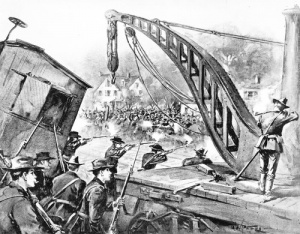
May 11 to July 10, 1894: A nationwide strike against the Pullman Company begins when workers walk off the job after their wages are drastically reduced. On July 5, the 1892 World’s Columbian Exposition in Chicago is set ablaze, and the mobs begin burning and looting railroad cars and fighting police in the streets. On July 10, 14,000 federal and state troops succeeded in putting down the strike, killing 34 American Railway Union members. Strike leaders, including Eugene Debs, are imprisoned for violating injunctions, causing disintegration of the union.

September 1897: The Lattimer Massacre. 19 unarmed striking coal miners are killed and 36 wounded by a county sheriff’s posse for refusing to disperse near Hazelton, PA.  Most of the victims are shot in the back.

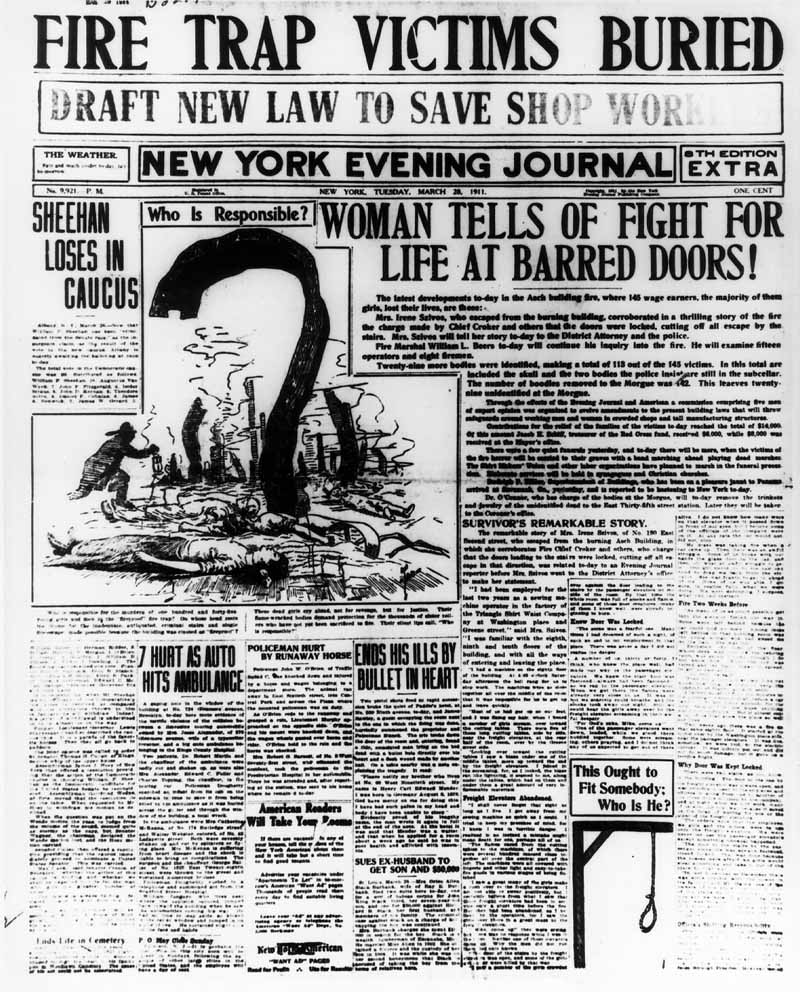
March 25, 1911: The Triangle Shirtwaist Factory, occupying the top three floors of a ten-story building in New York City, is consumed by fire. 147 people, mostly women and young girls working in sweatshop conditions are killed. Greatly adding to the death toll was the incredible fact that Triangle bosses had locked the factory doors from the outside to keep the ladies from taking breaks.
June 11, 1913: Cops gun down three maritime workers (one of whom is killed) who are striking against the United Fruit Company in New Orleans.

1914: According to the Commission on Industrial Relations, approximately 35,000 workers were killed in industrial accidents and 700,000 workers were injured in the U.S.
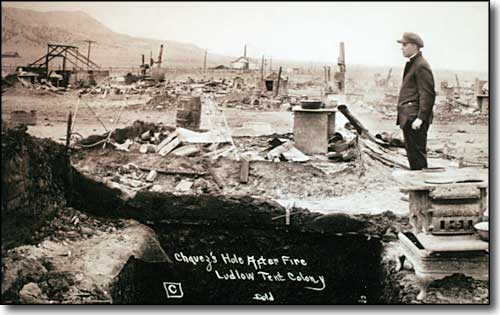
April 20, 1914: The “Ludlow Massacre.” In an attempt to force strikers at Colorado’s Ludlow Mine Field to go back to work, company “guards” (hired by John D. Rockefeller, Jr. and other mine operators) attack a union tent camp with machine guns, then set it afire — killing five men, two women and twevlve children.
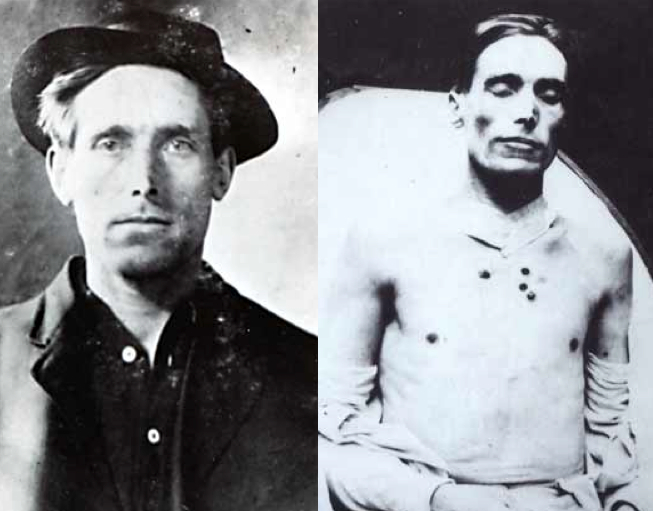
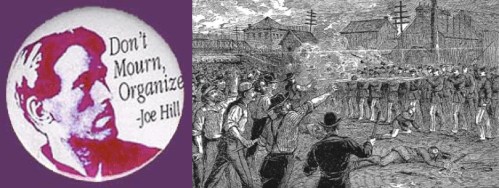
January 9, 1915: The famous labor leader Joe Hill is arrested in Salt Lake City and convicted on trumped up murder charges. Despite worldwide protests and two attempts to intervene by President Woodrow Wilson. Hill is later executed. In a letter written shortly before his death, Hill urged his supporters, “Don’t mourn – organize!”
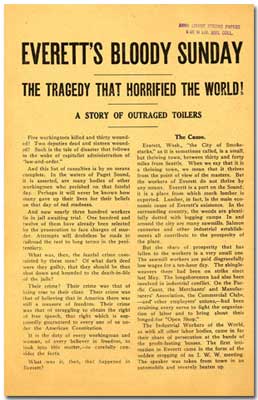
August 19, 1916: Strikebreakers attack picketing strikers in Everett, Washington, while local police refuse to intervene.

Three days later, 22 union men attempting to speak out are arrested. On October 30, vigilantes force union speakers to run a gauntlet, whipping, tripping and kicking them, and impaling them against a spiked cattle guard at the end of the gauntlet.

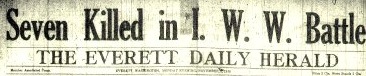
In response, the union calls for a meeting on November 5 – but when the union men arrive, they are fired upon. Seven people are killed in The Everett Massacre (also known as Bloody Sunday) and 50 are wounded. An unknown number wind up missing.
March 15, 1917: The Supreme Court approves the Eight-Hour Act under the threat of a national railway strike.

August 26, 1919: United Mine Worker organizer Fannie Sellins is gunned down by mining company goons.

March 7, 1932: Police kill striking workers at Ford’s Dearborn, Michigan plant.

October 10, 1933: 18,000 cotton workers go on strike in Pixley, California. Four are killed before the workers win a pay hike.
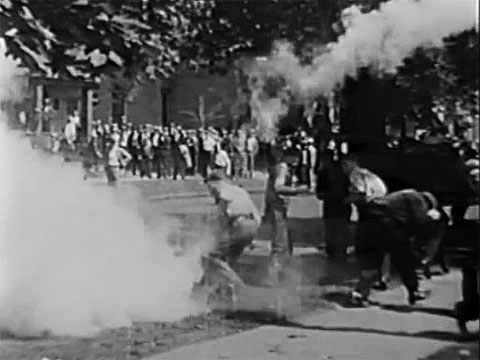
1934: During the Electric Auto-Lite Strike in Toledo, Ohio, 1,300 National Guardsmen including three machine gun companies are called in to break up as many as 10,000 strikers and protesters. Two strikers are killed and over two hundred wounded.

September 1-22, 1934: A strike in Woonsocket, Rhode Island results in the deaths of three workers. Over 420,000 workers ultimately go on strike.

1935: The National Labor Relations Act is passed. It guarantees covered workers the right to organize and join labor movements, to choose representatives bargain collectively, and to strike.

May 30, 1937: Police kill 10 and wound 30 during the “Memorial Day Massacre” at the Republic Steel plant in Chicago.

June 25, 1938: The Wages and Hours Act passes, banning child labor and setting the 40-hour work week. It establishes minimum wages and maximum hours for all workers engaged in covered “interstate commerce.”

That’s the basic progressive history of labor unions before Ronald Reagan (himself a former Screen Actors Guild union president) began his successful counter-attack against organized labor.

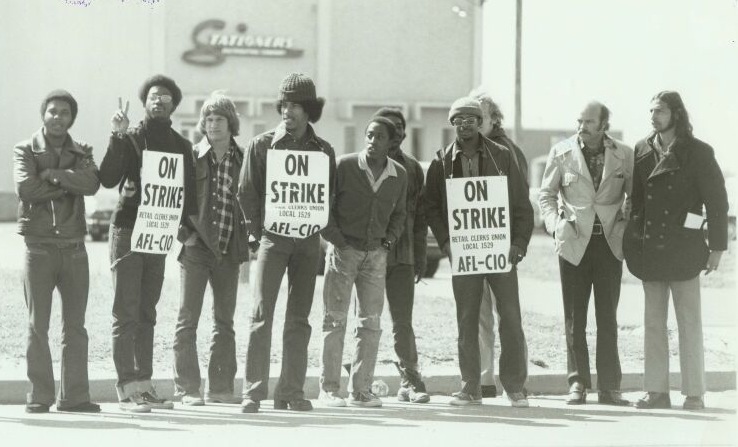
The fact is that unions have a positive impact on the wages and working conditions of unionized and non-unionized workers alike.

Unions raise the pay of unionized workers by roughly 20% — and raise compensation, including both wages and benefits, by 28%. Plus, unions raise wages more for blue-collar than for white-collar workers — and more for workers who do not have a college degree. Unions force nonunion employers to follow suit. Organized labor’s impact on total nonunion wages is almost as big as its impact on union wages.

Wake up, working class Americans! Conservative GOP anti-union politicians are not on your side. Organized labor is on your side.

As Woody Guthrie sang, “You can’t scare me, I’m sticking to the union!”

Here’s the legendary Pete Seeger (who I’ve had the honor to interview and see perform) with Woody’s son, Arlo Guthrie singing “Union Maid”.

And finally, here’s old Pete throwing down the gauntlet. “Which Side Are You On?”
13 Comments

Filed under History, Politics

Happy Birthday Bill of Rights!

Today, December 15th 2010 is the 219th birthday of the Bill of Rights.

And while constitutional scholars — from former constitutional law professor President Barack Obama, to Supreme Court Justice Antonin “Original Intent” Scalia, to Christine “Really? Separation of Church and State is in the First Amendment? It says that? Really?” O’Donnell – may differ on their interpretations of the Bill of Rights, there is little debate that the first ten amendments to the United States Constitution (ratified by three-fourths of the states on December 15, 1791) provide Americans with freedoms and protections that have inspired the world and made American citizenship a privilege.

And that previous sentence is just about as long-winded and complex as many of the amendments in the Bill of Rights.

The First Amendment guarantees freedom of speech, freedom of the press, the right to free assembly, the right to petition the government for redress – and the little clause that stumped the failed Delaware Senate candidate/witch: “Congress shall make no law respecting an establishment of religion, or prohibiting the free exercise thereof…”

The Second Amendment gives us all the right to keep and bear arms. In other words, we can all have guns, right? Now, what the amendment actually says is, “A well regulated Militia being necessary to the security of a free State, the right of the people to keep and bear arms shall not be infringed.” So I guess we must all be part of a well-regulated militia, right? Is the NRA a well-regulated militia? I know the Aryan Nation is. (So glad those boys have automatic weapons, aren’t you?)

The Third Amendment prohibits the government from quartering troops in your house without your consent. I know we’ve all dealt with this problem at one time or another — usually around the holidays. Your house is already filled with visiting relatives – and a battalion of Marine infantry shows up at your door hoping to squeeze into your guest room for the night. Thanks to the Bill of Rights, you can point them in the direction of the nearest Holiday Inn.

The Fourth Amendment provides protection from unreasonable search and seizure. Unless, of course, you are a poor young non-Caucasian male suspected of having drugs in your home, or you’re on a terrorist watch list, or your electronic mail is swept up in an elaborate intelligence gathering effort, or… (Let’s face it. After the Patriot Act, the ‘ol Fourth Amendment has taken a beating.)

The Fifth Amendment provides due process in legal proceedings and protections against double jeopardy and self-incrimination. This is another amendment that conservatives don’t like. They think it’s too soft on criminal suspects and suspected terrorists. Unless, of course, conservatives are the ones under indictment. (Which happens a lot.) Then due process is a good thing to observe.

The Sixth Amendment provides for trial by jury and enumerates the rights of the accused. But what about victims rights? I can hear Rush Limbaugh now. “Those damn bleeding-heart liberal Framers!”

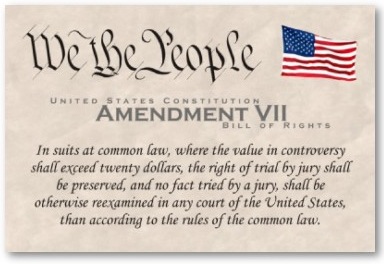
The Seventh Amendment provides for civil trial by jury. It is the most boring amendment. (In fact, I feel asleep writing that last sentence.)

However, you gotta love that the Seventh Amendment actually says, “In suits at common law, where the value in controversy shall exceed twenty dollars, the right of trial by jury shall be preserved…”

Did I mention they ratified this thing in 1791?

The Eighth Amendment prohibits excessive bail and bars cruel and unusual punishment. This is another amendment that’s been taking a beating lately.

Actually, it’s been waterboarded.

The Ninth Amendment is a catchall. It protects rights not specifically enumerated in the Constitution. Like the right to enjoy macaroni and cheese in church without having to share it with a soldier who is reading a naughty magazine. Stuff like that. I think.

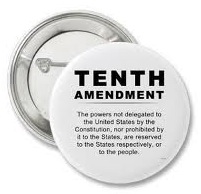
The Tenth Amendment is another grab bag. “The powers not delegated to the United States by the Constitution, nor prohibited by it to the States, are reserved to the States respectively, or to the people.” Read that ten times fast. C’mon, Justice Scalia. I dare you.

So, happy birthday to our poor, beleaguered, bloodied-but-still-standing Bill of Rights!

Hopefully, it can survive for another 219 years.

5 Comments

Filed under History, Politics, Truth

Victory at Pearl Harbor…

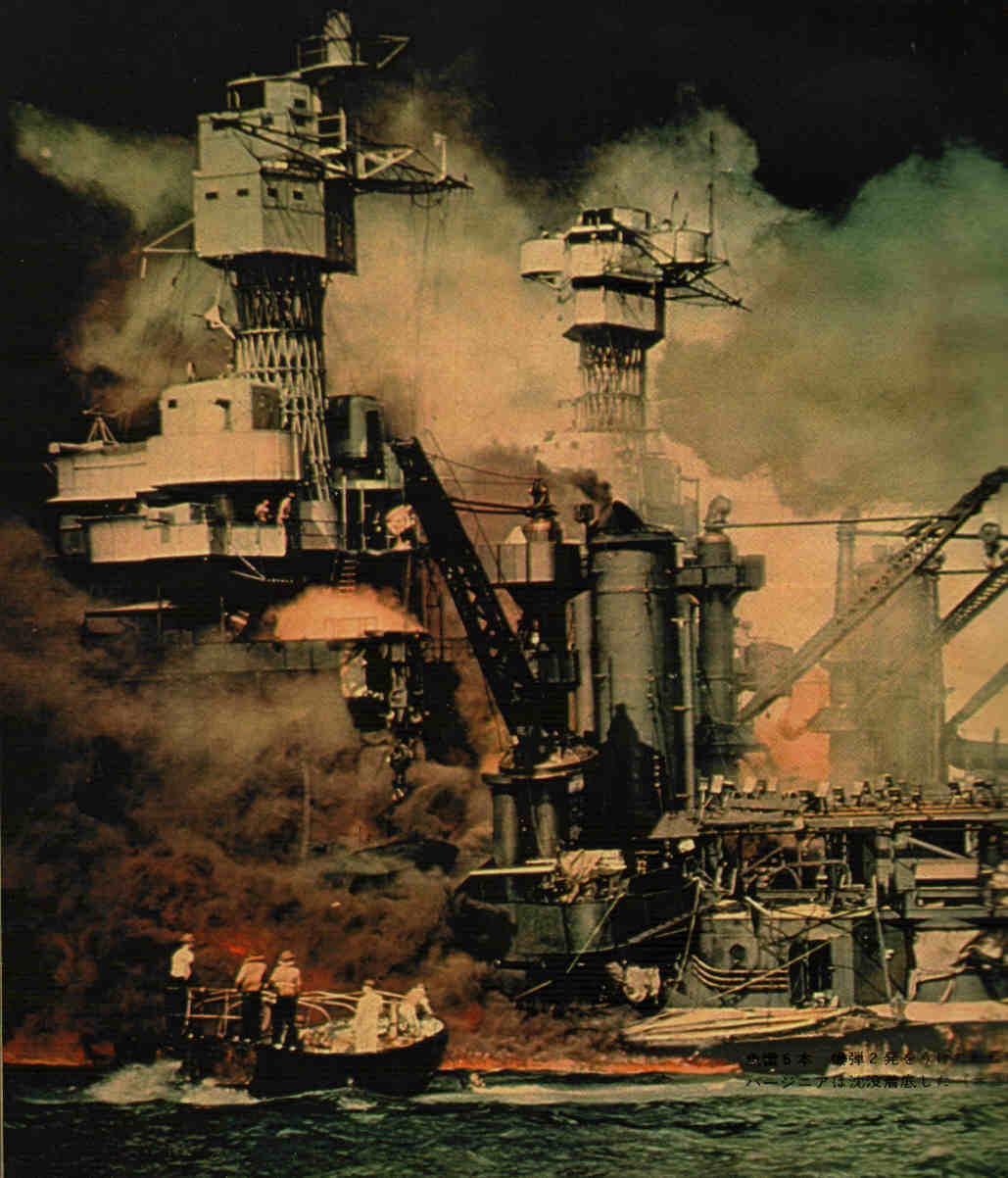
The significance of December 7, 1941 is something that most of our parents do not need to be reminded about. It was a shocking, indelible moment for them, much like September 11, 2001 was for another generation of Americans. I don’t want to spend time here comparing those two disastrous attacks: one by a hostile state, the other by a handful of extremists. That’s for another time, another post.

This is a day of remembrance.

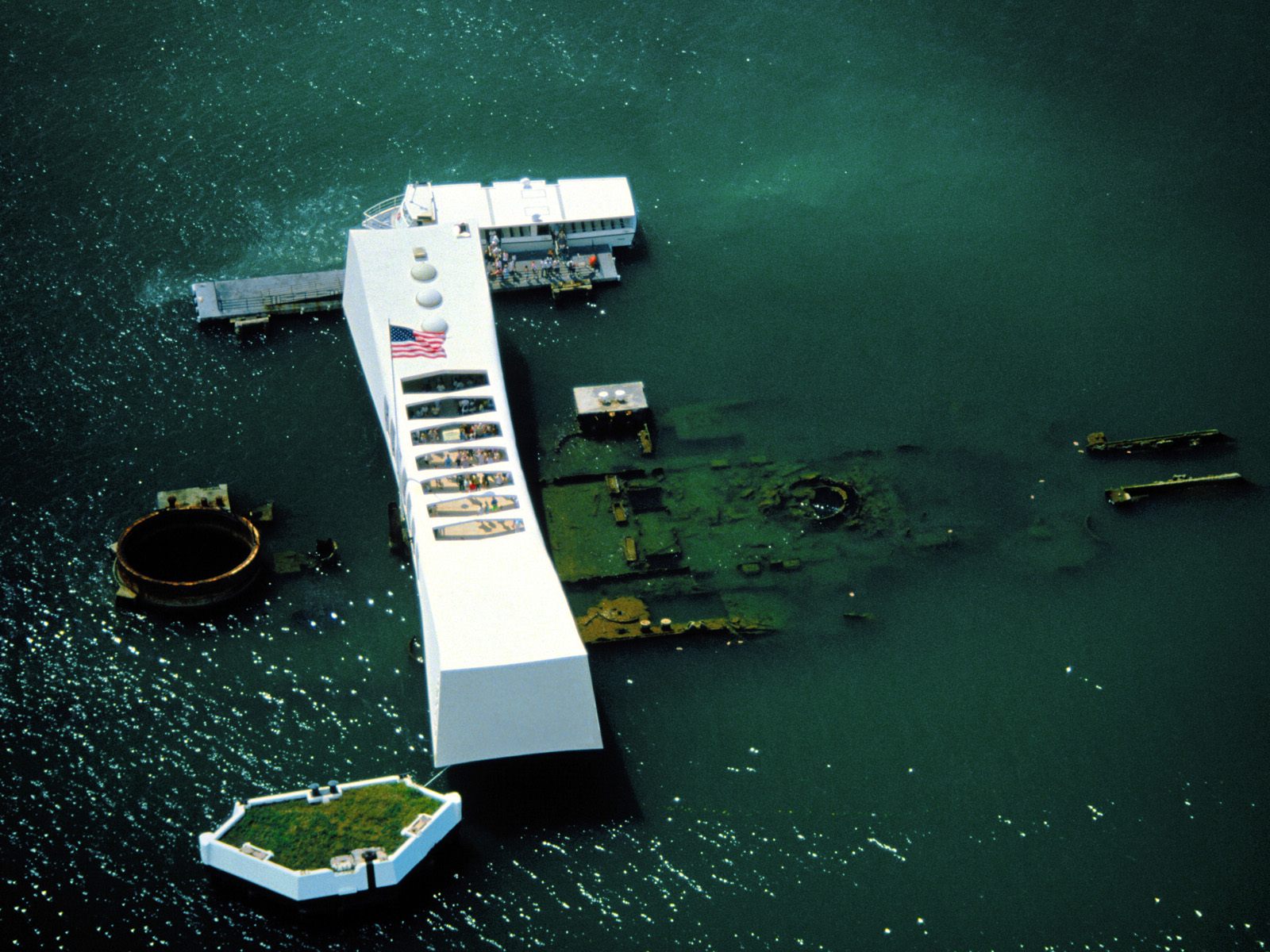
There are not many veterans of Pearl Harbor still with us. Not many left who saw the Japanese planes diving out of the sky, felt the concussions as great battleships shuddered, burned, and sank. Not many left who can stand on the observation deck of the USS Arizona Memorial, gaze at that sunken iron tomb and say, “I knew a guy who went down with that ship.”

On December 7th, we remember what was lost at Pearl Harbor: the lives, the ships, the planes – our national innocence.

But on this day, we should also remember the miracle of Pearl Harbor: the incredible effort that raised so many of those ships from the bottom of the harbor, patched them up – and sent them back into the fight. Only three of the ships that were bombed in Pearl Harbor on that day of infamy were forever lost to the fleet.

And of the 30 ships in the Japanese fleet that attacked Pearl Harbor, only one survived the war without being sunk.

The dynamism, optimism and resolve displayed by those military crewmen and civilians who, within months, raised and repaired the devastated wreckage of Pearl Harbor are qualities that Americans must call on once again to overcome our national challenges. Would that our leaders would spend less time sowing the fear of future attacks – and more time appealing to the better angels of our national identity.

“Can do” was the unofficial motto of the Seabees, the legendary Navy outfit that led the reconstruction effort at Pearl Harbor.

Where’s that American “Can do” spirit now?

P.S. Click here for a WWII-era Pearl Harbor song I found online. It may seem a bit too upbeat at first, but in the context of our ultimate victory at Pearl Harbor, it’s not too bouncy after all. It’s got that confidence and “Can do” spirit.

6 Comments

Filed under History

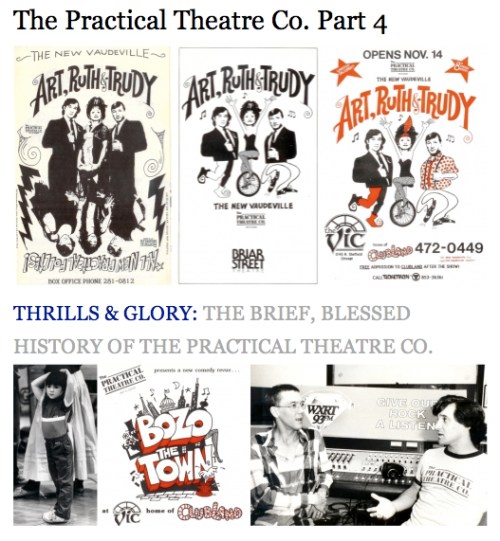
Practical Theatre: The Last Laugh

I’ve finally wrapped up my four-part personal history of The Practical Theatre Co. To read the final chapter of the Practical Theatre story click here — or click on the graphic above. You can also find a link to all four chapters under “Landmarks” on the right hand side of the home page.

It only took me two decades to finish this project — so please enjoy!

Leave a comment

Filed under Art, History

More Thrills & Glory…

THRILLS & GLORY: THE BRIEF, BLESSED HISTORY OF THE PRACTICAL THEATRE CO.

Part Three: A Tale of Two Spaces

To read the latest chapter in my personal history of The Practical Theatre Company, click here.

After you’ve read our ancient history, you can check out video clips of far more recent PTC-style comedy if you click here.

Leave a comment

Filed under Art, History

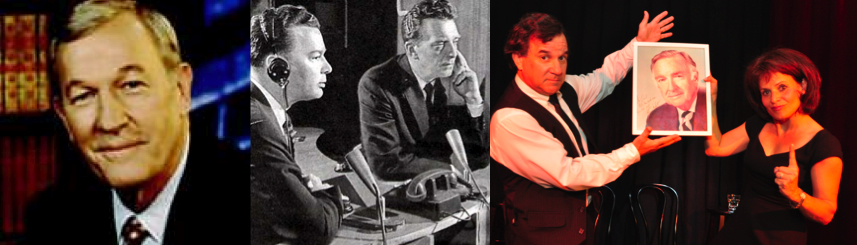
A Salute to Walter Cronkite

“And that’s the way it is.”

Those of us who are of a certain age remember the days when there were only three TV networks (and those two weird UHF channels) – and network news was the Big Deal every night. In those years, back when the network evening news was an important daily event, Walter Cronkite was the Big Man Behind the Anchor Desk.

Walter Cronkite, the anchorman of CBS Evening News, was the most trusted man in America. Seriously. He really was. And he deserved our trust. After all, it was Walter Cronkite who went to Vietnam and said, essentially, game over: we’re losing and we should get out. (Can you imagine Wolf Blitzer going out on that limb?)

So, what’s happened to TV news since the days of the legendary Walter Cronkite?

Here’s a musical reflection on the gradual ruin of television news from “The Vic & Paul Show”, written and performed by Paul Barrosse and Victoria Zielinski — with musical director Steve Rashid.

The show was directed by Shelly Goldstein and performed in June 2010 at Push Lounge in Woodland Hills, CA.

This is the final installment of clips from “The Vic & Paul Show” available for free on this blog and on YouTube. The entire show will be available very soon on DVD. If you’re interested in getting a copy of the DVD, let me know by e-mail or via comment to this blog entry.

I’ll send you a copy of the whole show for $5.00 – which should just about cover the cost. (It’s the cheapest, coolest, and funniest Christmas gift ever!) You can send me a check when you get the DVD.

And that’s the way it is…

9 Comments

Filed under Art, History, Music, Politics

“Now, Voyager” Revised

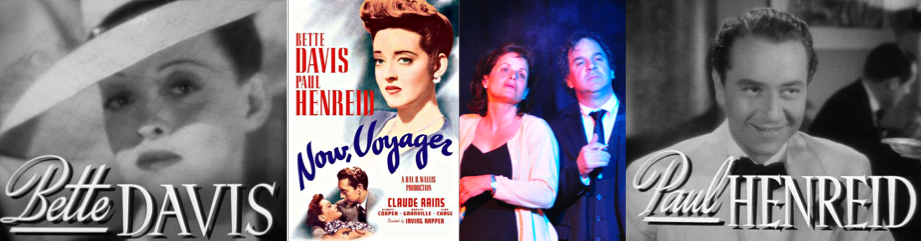
My wife is a huge Bette Davis fan and years ago she introduced me to one of Bette’s best films: Now, Voyager.

Based on the popular romantic novel by Olive Higgins Prouty, Now, Voyager was released in 1942. Mega-star Bette Davis was Oscar-nominated for her performance in the film, which was selected in 2007 by the Library of Congress for preservation in the U.S. National Film Registry. Like all the great movies accorded that honor, Now, Voyager was deemed to be “culturally, historically, or aesthetically significant.”

Now Voyager may be a timeless classic – but there’s one central aspect of the film that has not aged very well: all that smoking.

Of course, until the last 20 years or so, everybody smoked in the movies – and in the 40’s and 50’s, cigarette smoke filled nearly every romantic drama, gangster movie, western and film noir frame. But Now, Voyager made smoking a central character.

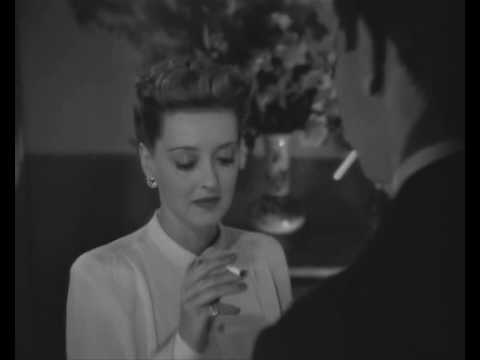
In the film’s signature moment, Paul Henreid lights two cigarettes in his mouth at the same time and hands one to Bette. Henreid’s ultra-romantic two-cigarette move was first used ten years earlier in the film, The Rich Are Always With Us – but when Paul Henreid did it in Now, Voyager — it caused a sensation. For years afterward, Henreid couldn’t go anywhere without women begging him to pop two cigarettes in his mouth and fire them up.

Back then — unlike Bette and Paul’s relatively chaste and unrequited lovers — Hollywood and the cigarette companies were in bed together. Check out this fine article for some eye-opening details on this unhealthy alliance, including Bette’s contract with Lucky Strikes – and Paul Henreid’s own radio promotion, using his role in Now, Voyager to flog cigarettes.

68 years later, Now, Voyager’s smoky and sensual signature bit of dramatic business just wouldn’t fly in today’s more health conscious, socially and politically correct Hollywood.

So, while we were working on “The Vic & Paul Show” early this year, we asked ourselves, “What would happen if Now Voyager was re-made in 2010?”

Here’s our answer to that question, performed puff by puff at the Push Lounge in Woodland Hills in June 2010.

3 Comments

Filed under Art, History

History & Honeymoon: Part Three

“My god, are these all the men we have here?”

On the morning of July 2, as we enjoyed our communal Doubleday Inn breakfast of orange juice and a tasty vegetable, egg, and cheese dish, I was particularly excited about our agenda for the day. The plan was to experience the second day’s fighting at Gettysburg by assaulting the Union positions in the Peach Orchard and on Little Round Top from the perspective of Confederate General Longstreet’s attacking infantry.

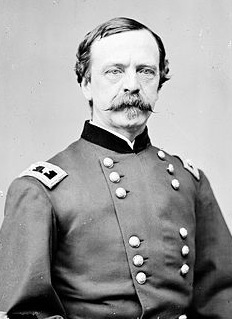
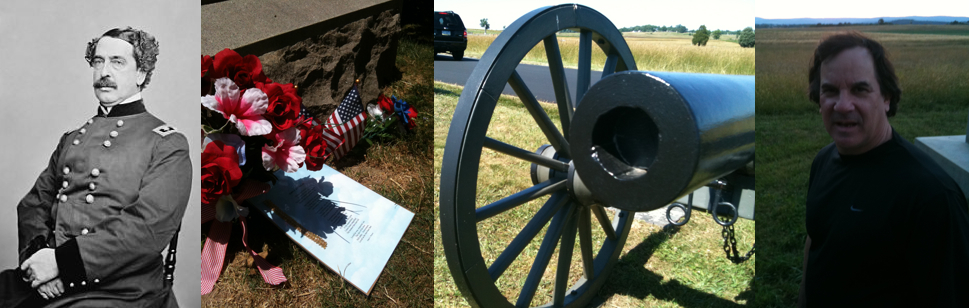
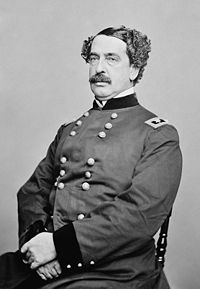
General Sickles, when he still had two legs.

The second day at Gettysburg was a violent, chaotic stage on which many of our favorite Civil War characters played their most memorable roles, including Colonel Joshua Lawrence Chamberlain of the 20th Maine, Union Generals Winfield Scott Hancock, Dan Sickles (Vic’s offbeat romantic antihero), Gouverneur Warren, and Strong Vincent — plus Colonel Colvill’s First Minnesota Volunteers. Some of these guys would survive the day’s brutal fighting and some would not – and at least one would survive, though not in one piece.

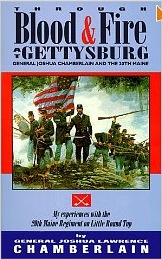
For the day’s campaign, Victoria and I armed ourselves with Joshua Chamberlain’s battle memoir Through Blood & Fire at Gettysburg and the volume of Battles and Leaders of the Civil War covering the second day’s fighting at Gettysburg. Battles and Leaders was first published as a series of articles in “The Century” magazine between 1884 and 1887. The articles were penned by Union and Confederate officers with their own personal insights, reflections, and in some cases grievances, regarding the battles they fought and the enemies they contended with – both in the opposing army and their own.

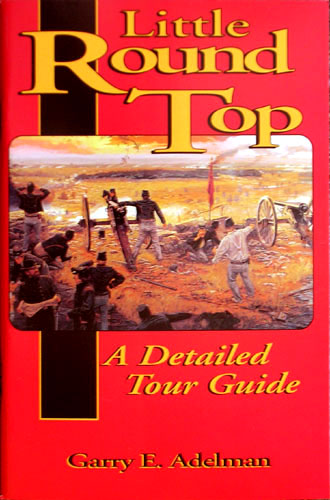
In addition, we carried a handy, little guide to the monuments and sites on Little Round Top.

BTW – You can actually read any and all of Battles and Leaders on this link. Articles on the second day at Gettysburg begin in Volume 3 on page 290. You may want to check out the article “Reply to General Longstreet” on page 355 to see how the battle was still being re-fought among veteran officers two decades after the guns fell silent at Gettysburg.

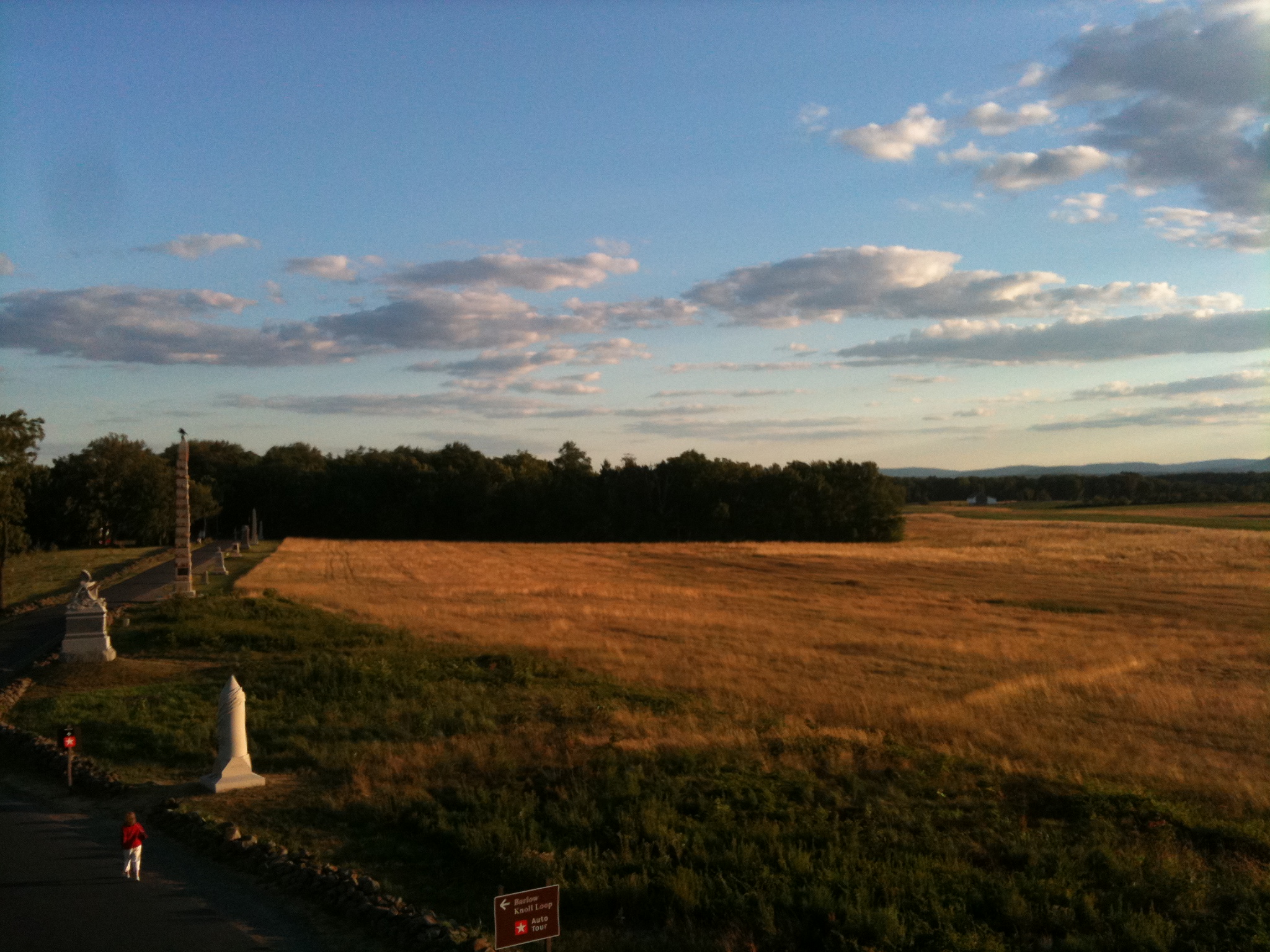
Victoria and I left the Doubleday Inn and drove west along Seminary Ridge toward Longstreet’s position on the Confederate right wing, passing the positions held by the bulk of Lee’s army at the end of the battle’s first day. On July 1, 1863 the Union forces had been driven from Seminary Ridge to the higher ground on Cemetery Ridge, nearly a mile of flat, open farmland to the south.

The two-lane road that runs along the Rebel lines, SW Confederate Avenue, is lined with vintage cannon marking each of the Army of Virginia’s artillery batteries, and monuments to all of the Southern states that fought at Gettysburg.

Every state in the Confederacy, including far-off Texas, was represented in the ranks of Lee’s invading army.

The South Carolina Monument.

Of these monuments, the South Carolina monument is the most compelling, dedicated to the Southern state that had more soldiers – and more casualties at Gettysburg than any other. The huge, imposing monument to General Robert E. Lee shows how the South, quite literally, put Lee on a pedestal – and still does to this day.

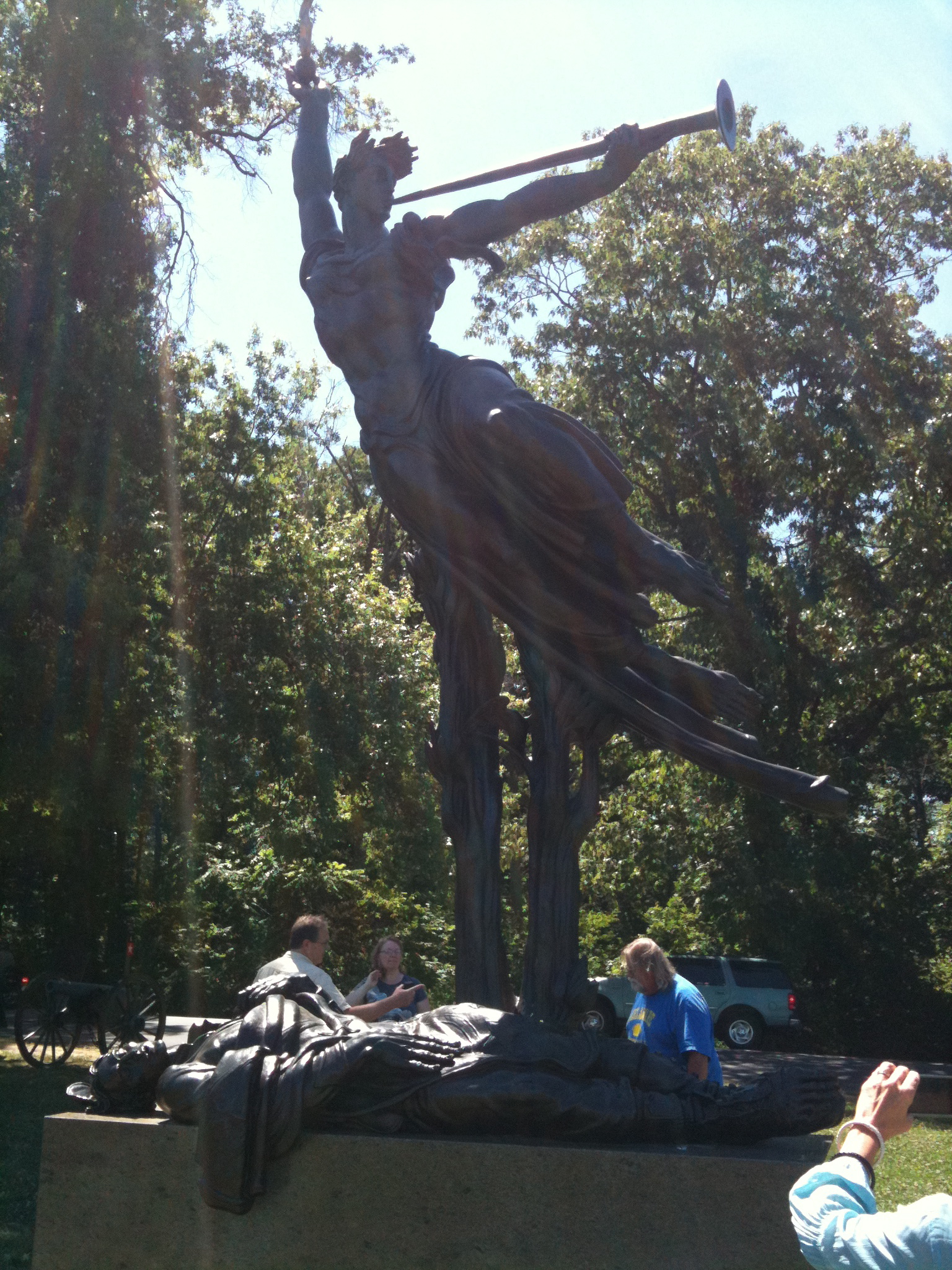
The Louisiana monument (below) is also dramatic: one of the very few to portray a fallen Rebel soldier.

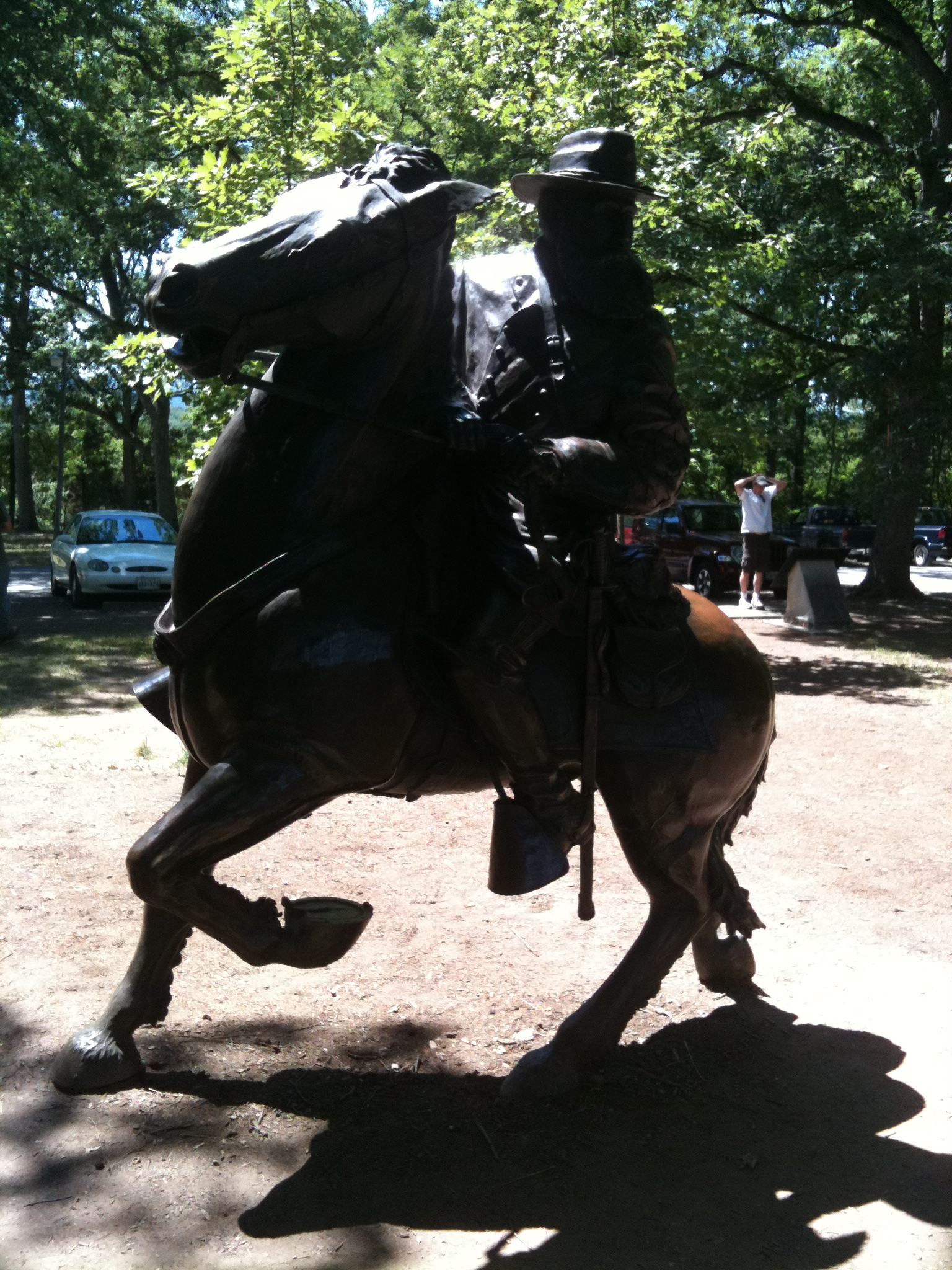
At the far right of the Confederate line, where General James Longstreet made his headquarters, stands the Longstreet monument. Sculpted by Gary Casteel and unveiled on July 3, 1998, Longstreet’s monument is not only one of the very last to be erected on the battlefield — it is striking for what it is not. It is not a grand or heroic memorial in the manner of all the other monuments dedicated to commanders of both sides.

Longstreet is not placed on a pedestal, and he is practically hidden in Pitzer’s Woods.

If you’re curious about why it took so long to honor Longstreet at Gettysburg – and why his memorial is so understated – I challenge you to explore the post-war controversy that arose over the man his troops called “Old Pete” and the soldier General Lee referred to affectionately as “my old War Horse.” This link will take you to an article that’s a fine start to such an exploration.

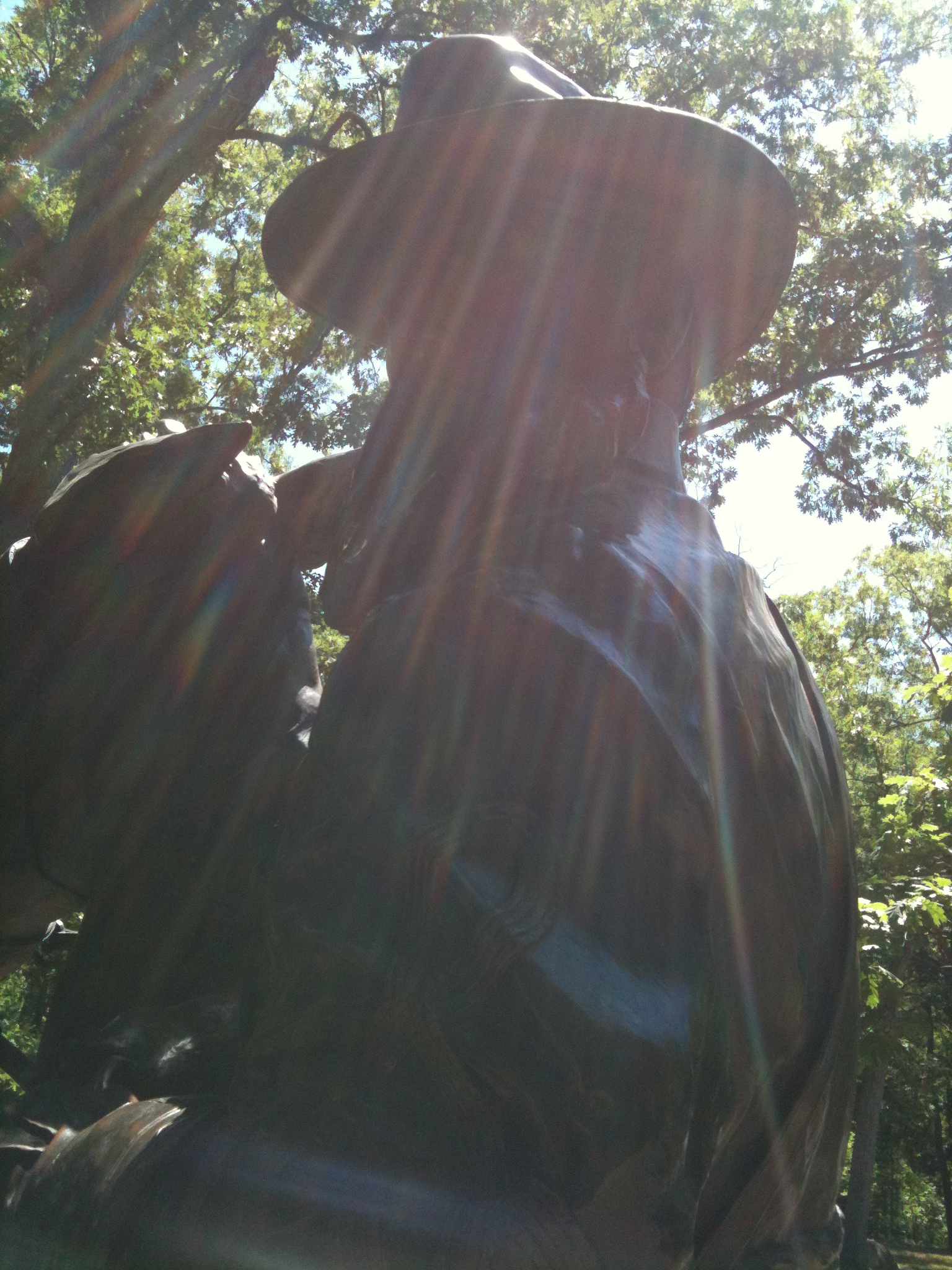
Longstreet’s statue stands in the eastern edge of Pitzer’s Woods, where the general reins in his favorite horse, “Hero” — as they both look across the fields toward the enemy.

"Longstreet" by Mort Kuntsler

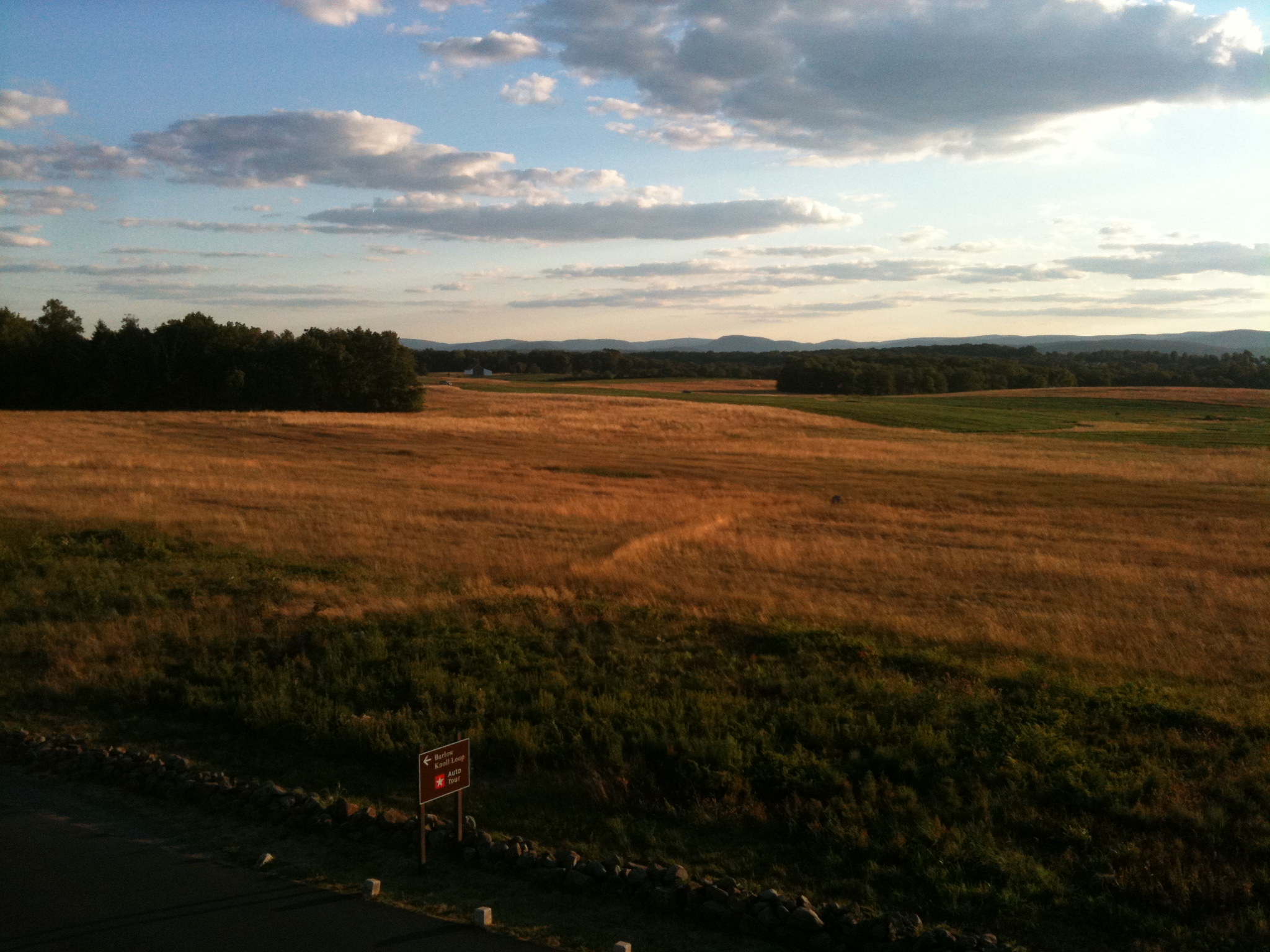
From this shady spot, Victoria and I began our own assault on the Union forces waiting for us across the sun-blasted farmland to the southeast – just as Old Pete’s corps did on July 2, 1863. Victoria, driven by motivations both historical and health-conscious, had decided that we should tramp the battlefield on foot. So we parked the car near Longstreet’s monument and stepped off into the knee-high wheat and weeds, books in hand, headed toward the rocky prominence of Little Round Top.

Our objective: Little Round Top, across a mile of open killing ground.

A little more than halfway across the wide swale between Seminary and Cemetery ridges runs the Emmitsburg Road (now interstate Route 15) – then as now, a fence-lined barrier across the battlefield. It was on the other side of this road that the Rebel advance ran into something unexpected: Union General Dan Sickles’ Third Corps, posted in a peach orchard. At the time, Sickles was the only Union corps commander without a West Point education. But while Dan Sickles was not a professional soldier, he was a born leader with great confidence in his own abilities. A pugnacious New Yorker, Sickles did not shy away from a fight. And he was about to have an epic one.

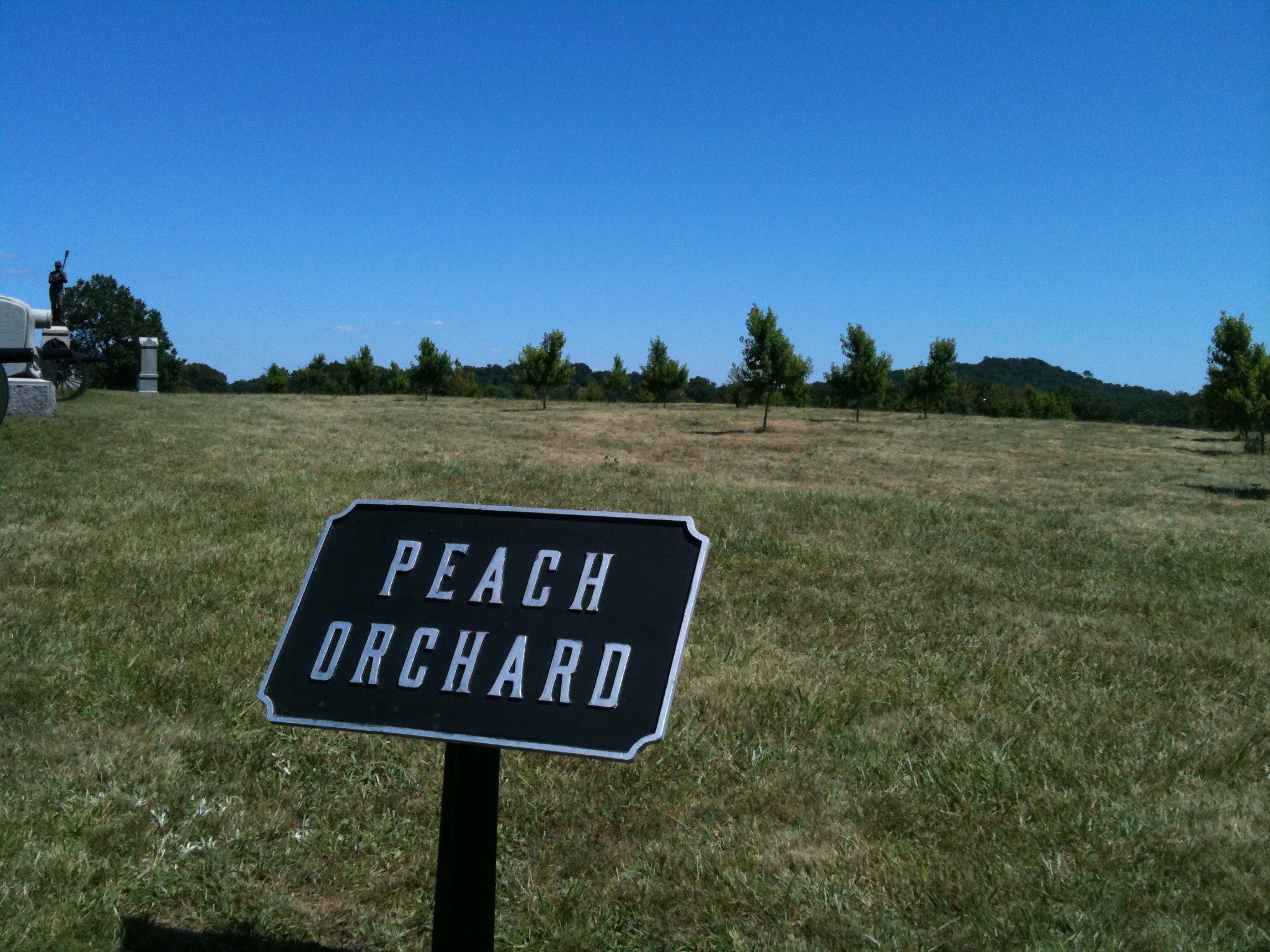
There are innumerable peach orchards in the United States, just as there were on July 2, 1863. But the stand of peach trees that Dan Sickles’ Third Corps defended from 4:00 to 6:30 PM that day would become known ever after as The Peach Orchard.

How Dan Sickles’ troops came to be posted in The Peach Orchard is another longstanding Gettysburg cause célèbre. The commander of the Army of the Potomac, General George Meade, had ordered Sickles to align his right flank with the rest of the Union defensive line along the base of Cemetery Hill, with his left flank anchored on the rocks below Little Round Top. But, after looking over the terrain where Meade had placed his corps, Sickles had another idea.

General Sickles could see that the ground rose in front of his position for half a mile until it reached an elevated ridgeline in that peach orchard along the Emmitsburg Road. Sickles was concerned that Rebel artillery might soon occupy that ridgeline — and rain down shot and shell on his position in “the hole” that Meade had placed him in along the base of Cemetery Ridge. So, Sickles took it upon himself to order his men forward to occupy the high ground in The Peach Orchard before Johnny Reb’s cannon got there first.

Sickles’ initiative put his men on higher ground, but it also created a huge, exposed gap between his right flank and the rest of the Union line thousands of yards behind him – and between his left flank and the base of Little Round Top, which was virtually undefended. Sickles’ Third Corps now occupied an exposed salient, far in advance of any support or reinforcement from the Union rear: reinforcement they would soon need.

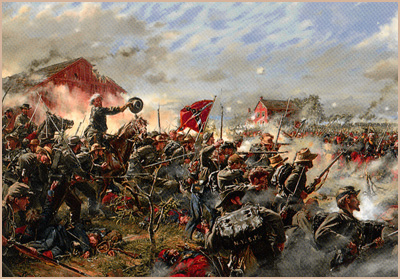
"Barksdale's Charge" by Don Troiani

After a deadly exchange of artillery fire in which both ends of Sickles’ salient got hammered, Longstreet’s infantry announced its assault with a Rebel yell. Confederate Brigadier General William Barksdale’s brigade of Mississippians smashed into Sickles’ center and Brigadier General Wofford’s Georgians hit him on his left. The fighting was fierce, but Sickles’ troops could not hold their line, and eventually fell back across the pulverized peach orchard.

"Retreat by Recoil" by Don Troiani. The 9th Massachusetts battery fights a heroic rear guard action against Barksdale's brigade at Gettysburg.

Where the Excelsior Brigade made their stand.

As Sickles’ line broke, the Thirds Corps’ Excelsior Brigade, made up of several New York regiments made their stand in the orchard and along the Emmitsburg road. Among them were The Second Fire Zouaves, a regiment of New York City volunteer firemen.

Alas, the brave defense of the Excelsior Brigade could not stem the tide as the Rebels flooded the peach orchard, charging hard to exploit the wide gap in the Union lines caused by Sickles’ debacle.

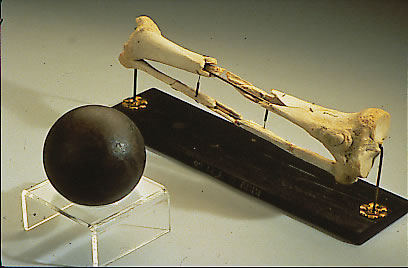
Meanwhile, General Sickles tried to rally his men – when his leg was nearly torn off by a cannon ball. While his aides applied a tourniquet to staunch the bleeding, Sickles was alert, smoking a cigar, and issuing orders even as he was being borne to the rear. An army surgeon’s saw soon claimed Sickles’ leg. (What happened to that leg is another story. See item #3 in this article.)

A painting by Don Troiani depicts the critical moment as troops from Sickles Corps retreat and a mounted General Hancock readies the First Minnesota to save the day.

The collapse of Sickles’ salient created a rapidly developing crisis on the Union left. As the Confederates raced across the peach orchard in hot pursuit of the retreating remnants of the Union Third Corps, General Winfield Scott Hancock – in command of the Union center – knew that, in just a few minutes, the Rebels would charge through the gap and get behind his main defensive line. The day, the battle, and the war, could soon be lost.

Hancock spurred his horse toward the crisis point and tried to rally Sickles’ retreating troops. But the few shell-shocked soldiers willing to reform their lines would not be enough. Hancock had called for reserves — but they’d never arrive in time. He needed something to plug the gap: that something turned out to be the First Minnesota Volunteer Infantry Regiment. Hancock, fate, and a band of stalwart men were about to meet their moment.

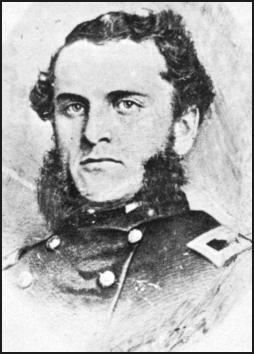
Colonel Colvill

Arriving on the scene, Hancock saw a fresh regiment providing support for an artillery battery and wondered aloud, “My god, are these all the men we have here?” Hancock asked the unit’s officer, “What regiment is this?” “First Minnesota,” replied 23-year old Colonel William Colvill. With the clock ticking toward disaster second-by-second, Hancock pointed toward the oncoming Rebel horde, and bellowed, “Charge those lines!”

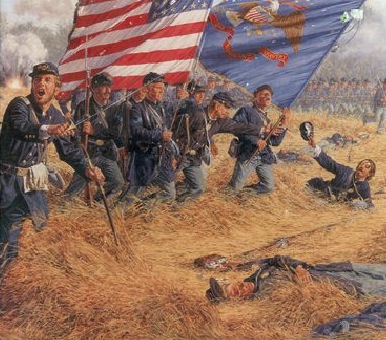
"The First Minnesota" by Don Troiani

“Every man realized in an instant what that order meant — death or wounds to us all, the sacrifice of the regiment to gain a few minutes’ time and save the position” recalled First Minnesota veteran Lt. William Lochren, “And every man saw and accepted the necessity for the sacrifice”.

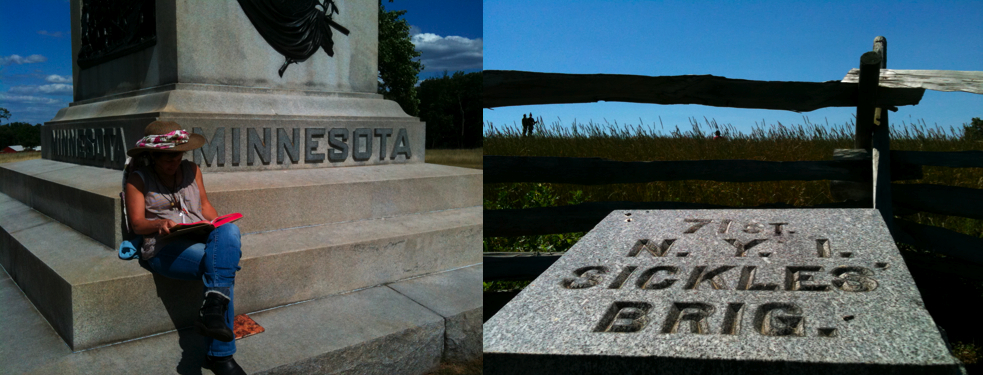
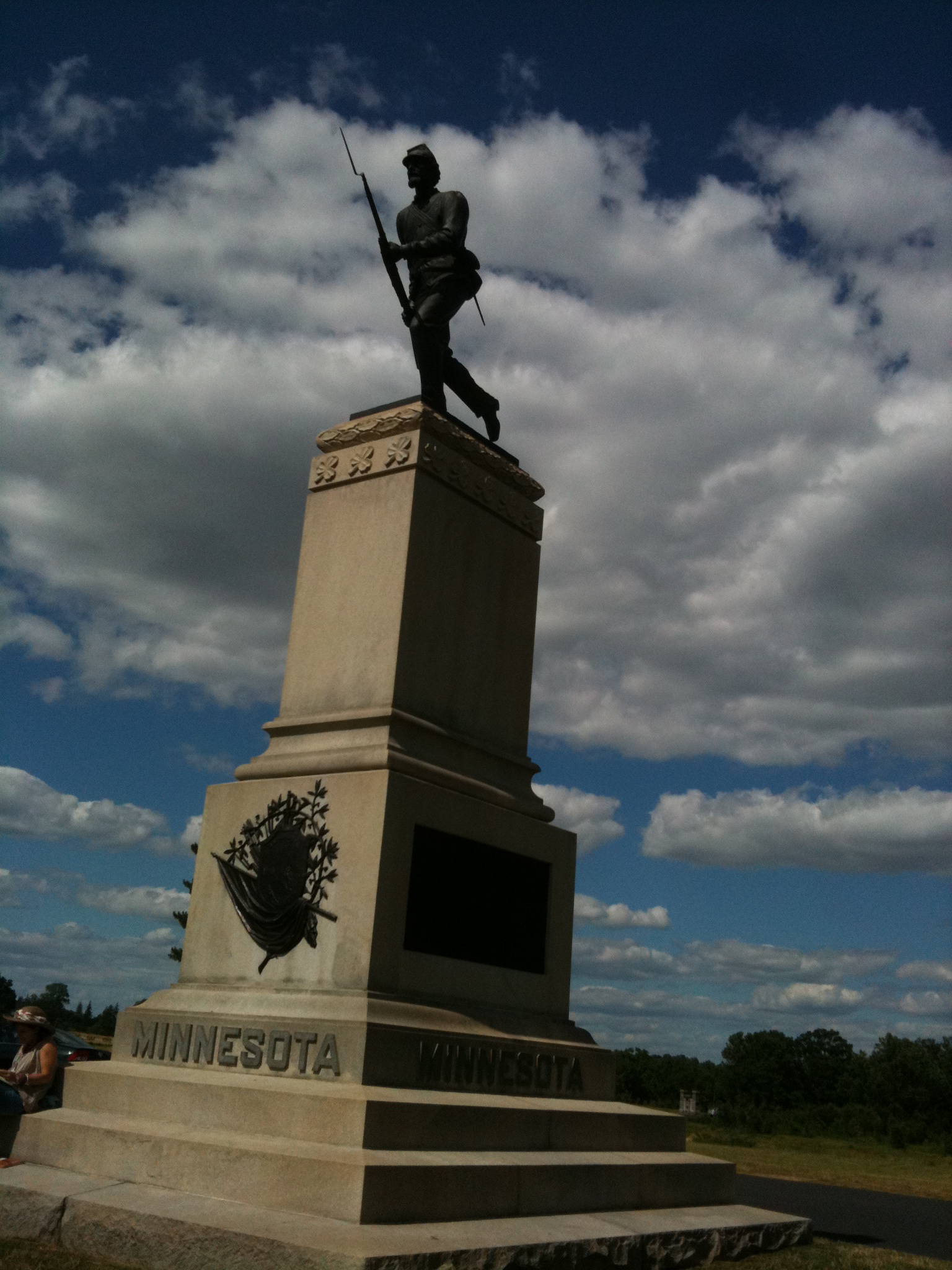
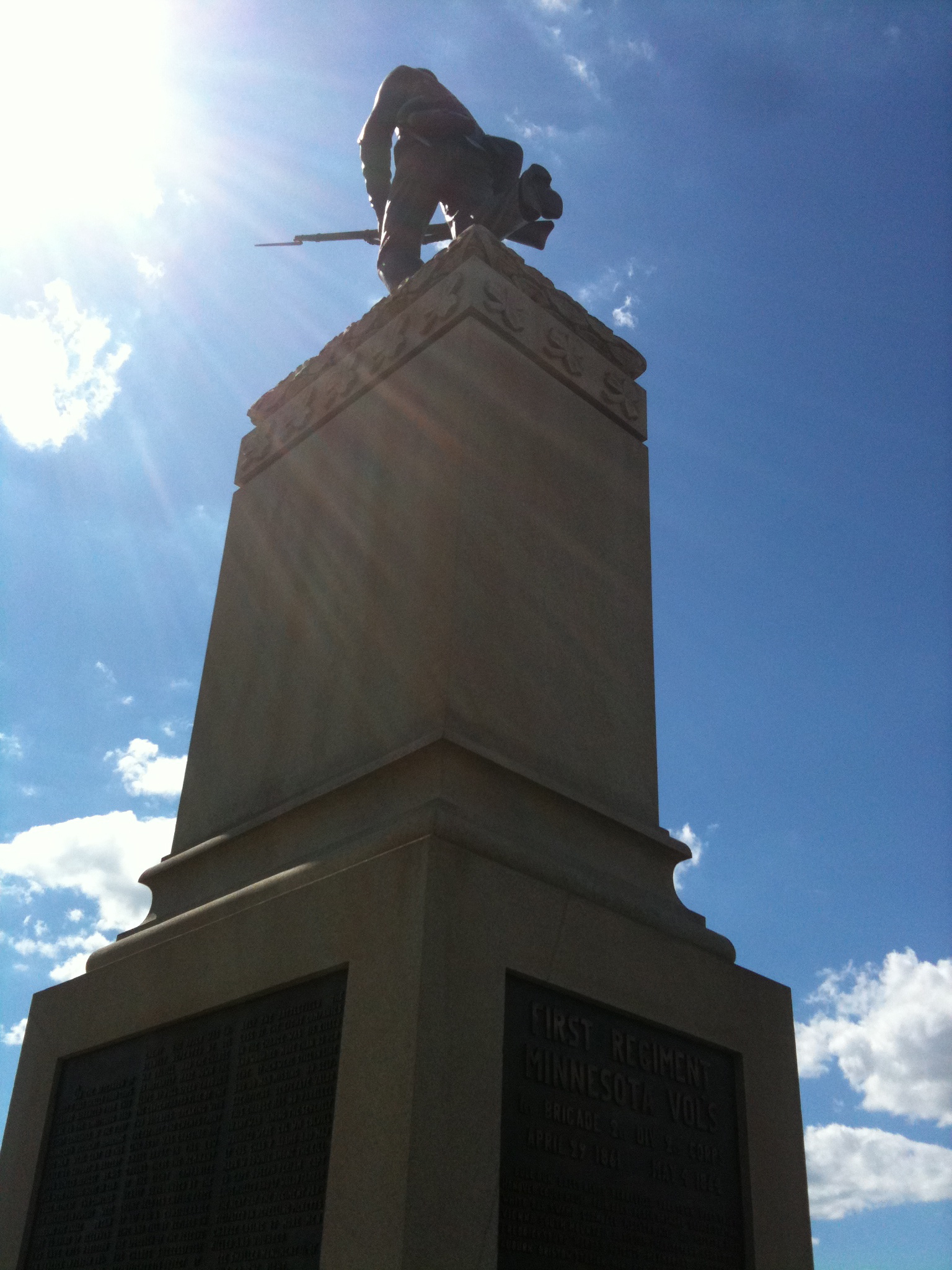
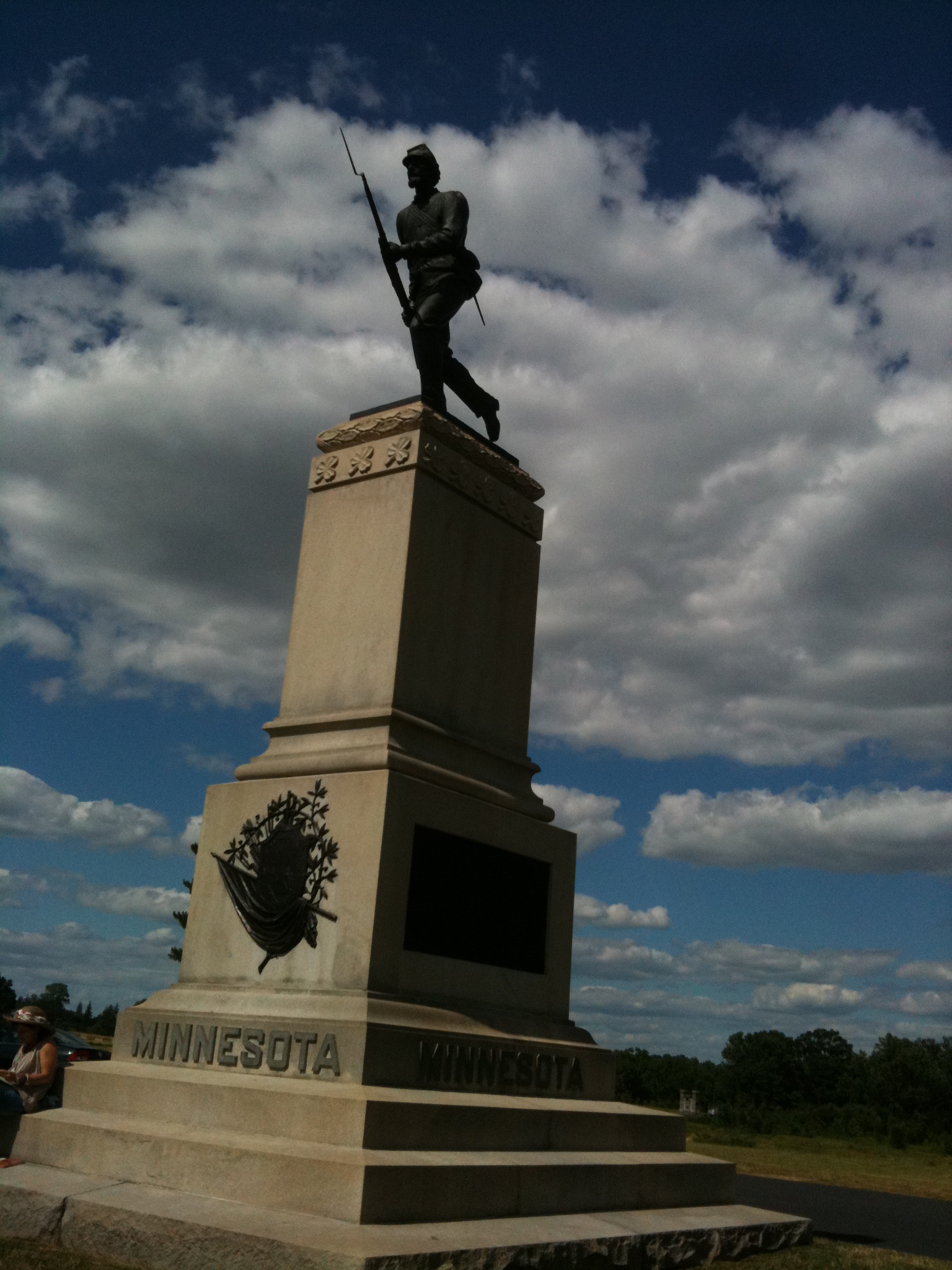
The First Minnesota Monument.

Imagine that scene. At such a moment, moral and physical courage are joined. The moral courage to give and obey such an order: the physical courage to make such a desperate, sacrificial charge.

Led by Colvill, the 262 men and officers of The First Minnesota advanced on “the double quick” in line of battle, shouldering their muskets through a hail of lead as they bore down upon the center of the enemy’s line. Relentlessly, without pausing to fire, upon Colvill’s order to “Charge!” the Minnesotans ran toward their foe, leveling their bayonets. As the lines collided with a vicious shock, muskets blazed away and savage fighting raged hand-to hand. The First Minnesota’s flag fell five times — but it was taken up again each time.

The Confederates were staggered by the First Minnesota’s fury and tenacity, and for 15 precious minutes, paid for in blood, the Rebel advance was stalled. Ultimately, sheer force of numbers prevailed, and Colvill’s surviving troops fell back to the Union lines. But by then, the men of The First Minnesota had bought Hancock the time he needed to plug reinforcements into the gap in the Union defenses.

Of the 262 men who made that heroic charge, only 47 survivors rallied back to General Hancock: an 83% casualty rate that remains the greatest loss by any American military unit in a single battle. The regimental flag that was saved five times in that fateful fifteen minutes is now safely enshrined in the rotunda of the Minnesota Capitol building.

Soon after the disastrous drama of Sickles’ debacle turned a peach orchard into The Peach Orchard, a nearby wheat field just a few thousand yards to the southwest was becoming The Wheat Field.

Victoria settled beneath a tree along the road overlooking The Wheat Field and read from Battles and Leaders. I didn’t know much about this part of the battle, but Victoria regaled me with the story of how a Confederate division of Longstreet’s Corps under General John Bell Hood was ordered to take the high ground of Little Round Top.

Below that rocky summit lay a jumbled landscape of giant boulders, thick woods, and a hilly, undulating wheat field: terrain General Hood called, “the worst ground I ever saw.” (At least that’s what he said in the movie, Gettysburg.)

"Gettysburg: Into the Wheatfield" by Bradley Schmehl

The fighting back and forth across the wheat field and nearby woods claimed more than 4,000 Union and Confederate casualties. Billy Yank and Johnny Reb traded possession of farmer George Rose’s 19 acres of bloodstained wheat six times – but the Rebels could not gain the high ground on Little Round Top.

The now-silent, weed-choked acreage infamous as The Wheat Field was truly one of the deadliest patches of battlefield at Gettysburg.

"Saving the flag" by Don Troiani. Colonel Jeffords of the 4th Michigan rescues the regiment's flag in the wheatfield.

I ran from monument to monument in that field, trying to take in the ebb and flow of the fighting. But I couldn’t dwell on The Wheat Field much longer.

Like General Hood, our objective was Little Round Top.

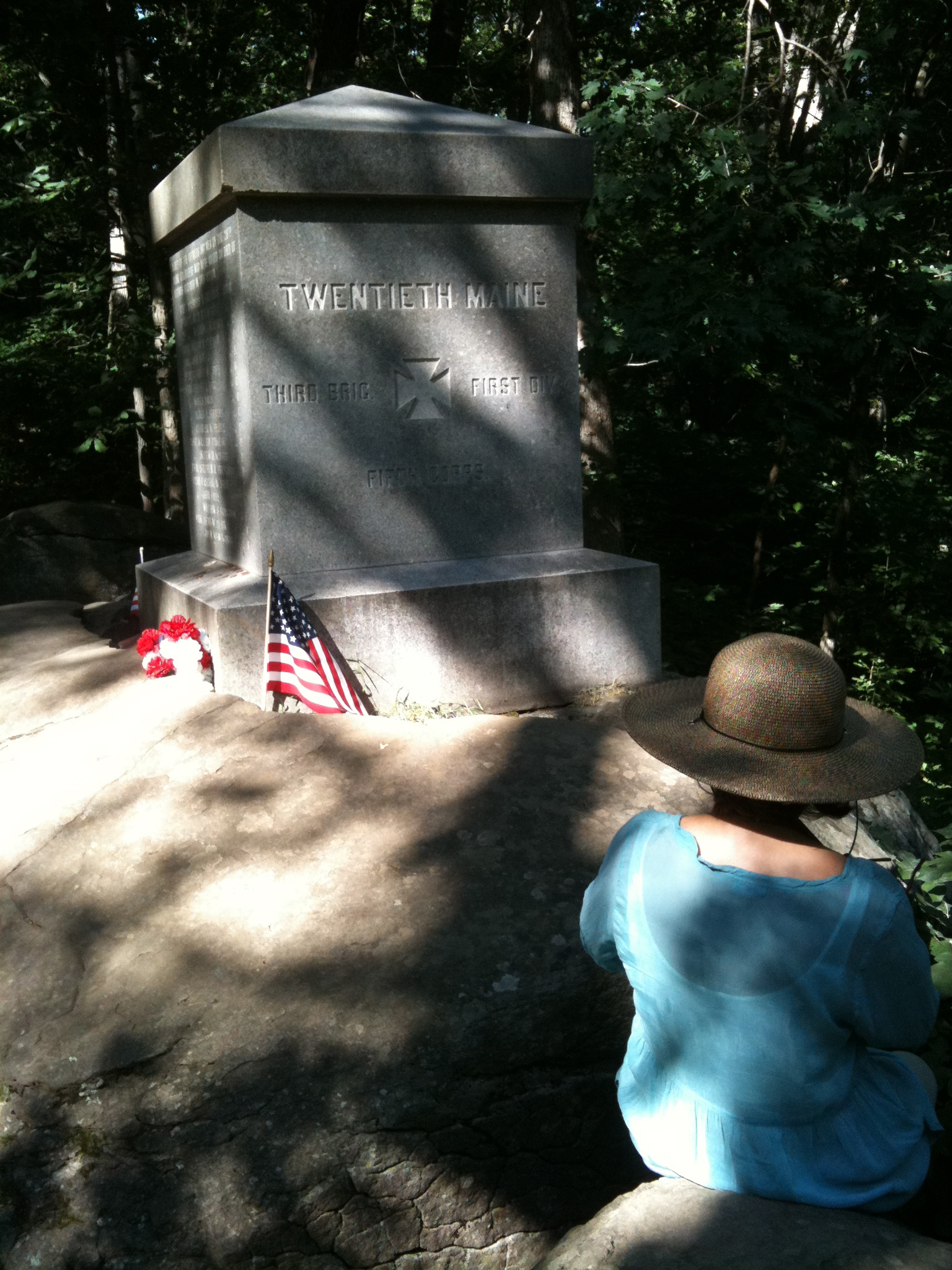
On the second day at Gettysburg, that rocky promontory, rising 650 feet above The Wheat Field, was the scene of the Civil War story closest to our hearts: the defense of Little Round Top by “The Fighting Professor” Joshua Lawrence Chamberlain and the volunteers of the 20th Maine.

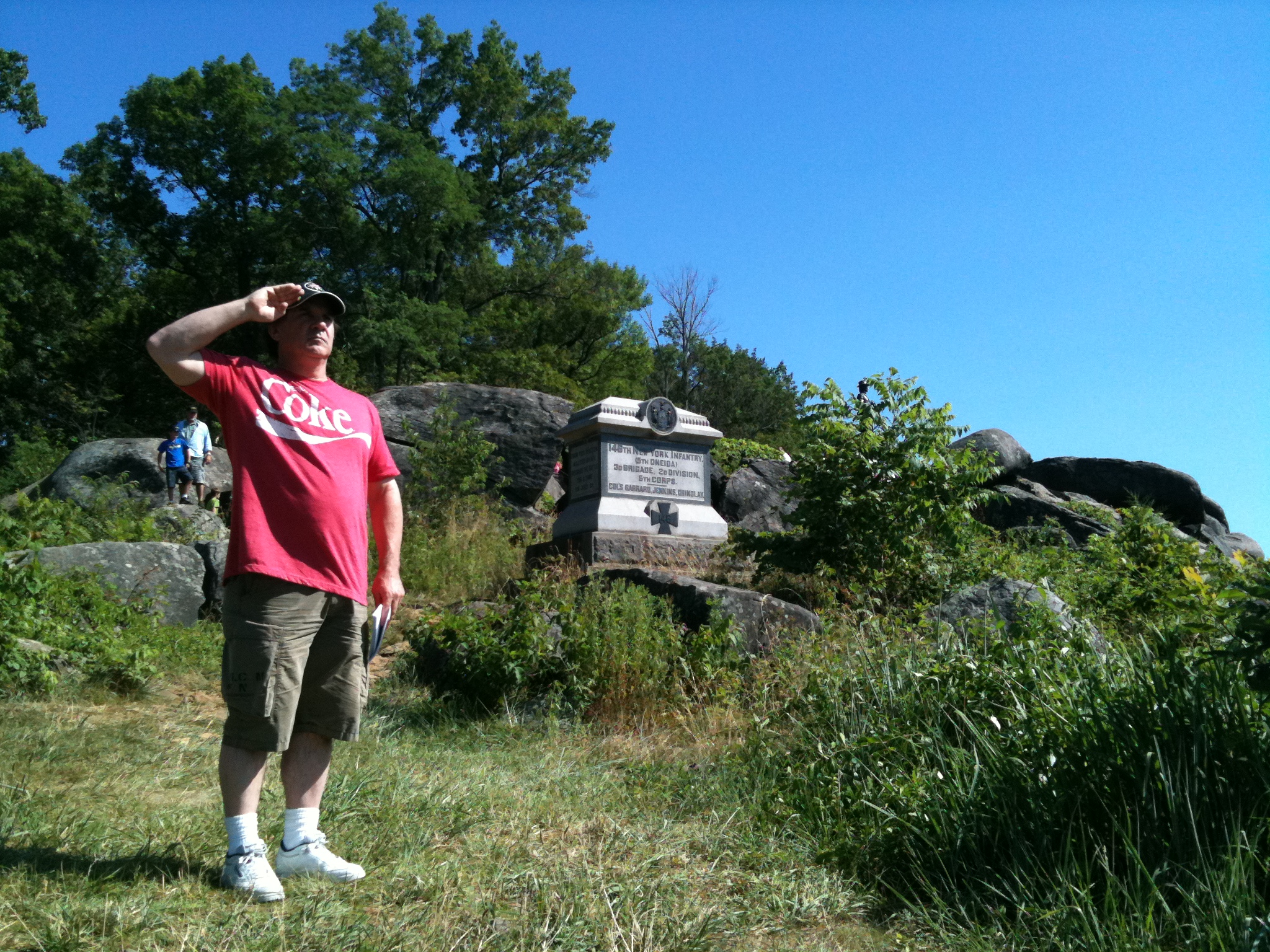
I begin our exploration of Little Round Top with a salute to those who fought there.

Soon before the fights in The Peach Orchard and Wheat Field raged, Union General Gouvernor K. Warren, chief engineer of the Army of the Potomac, reconnoitered Little Round Top and noticed a Confederate battle line forming on the ridges beyond The Wheat Field. Seeing that Sickles’ ill-considered advance had left Little Round Top essentially undefended, Warren took it upon himself to protect the high ground. He didn’t have much time, sending couriers scrambling for units to help defend the hill.

One of Warren’s couriers encountered 26-year old Colonel Strong Vincent (what a fabulous name!), in charge of a brigade, and asked for his commanding officer. Sensing the high stakes of the moment, Vincent replied, “What are your orders?” Told that General Warren needed troops “to occupy yonder hill,” Vincent declared, “I will do so and take the responsibility.”

Not waiting for formal orders from his superiors, Vincent rushed to Little Round Top and placed the four regiments of his brigade in line on the extreme left of the Union army: the 16th Michigan, 44th New York, 83rd Pennsylvania, and Chamberlain’s 20th Maine. Soon after Vincent’s brigade took up their positions, the Confederate assault began — and Vincent, brandishing his wife’s riding crop, urged his men, “Don’t give an inch!” It wasn’t long before Strong Vincent fell, mortally wounded. Like General Warren, Vincent had done his part to save the Union left flank. Now, it was up to Chamberlain’s 20th Maine to play their role in the deadly, decisive drama on Little Round Top.

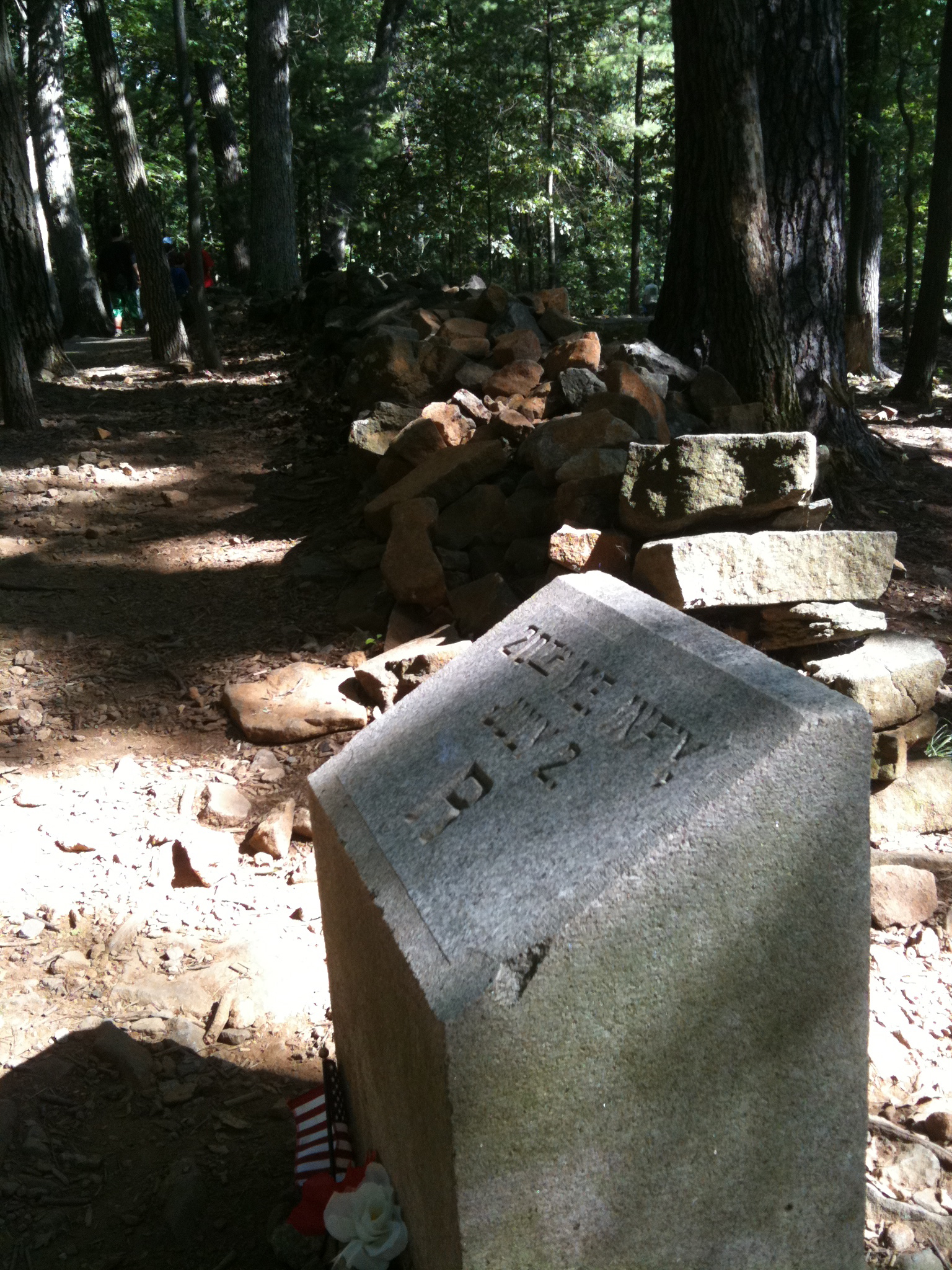
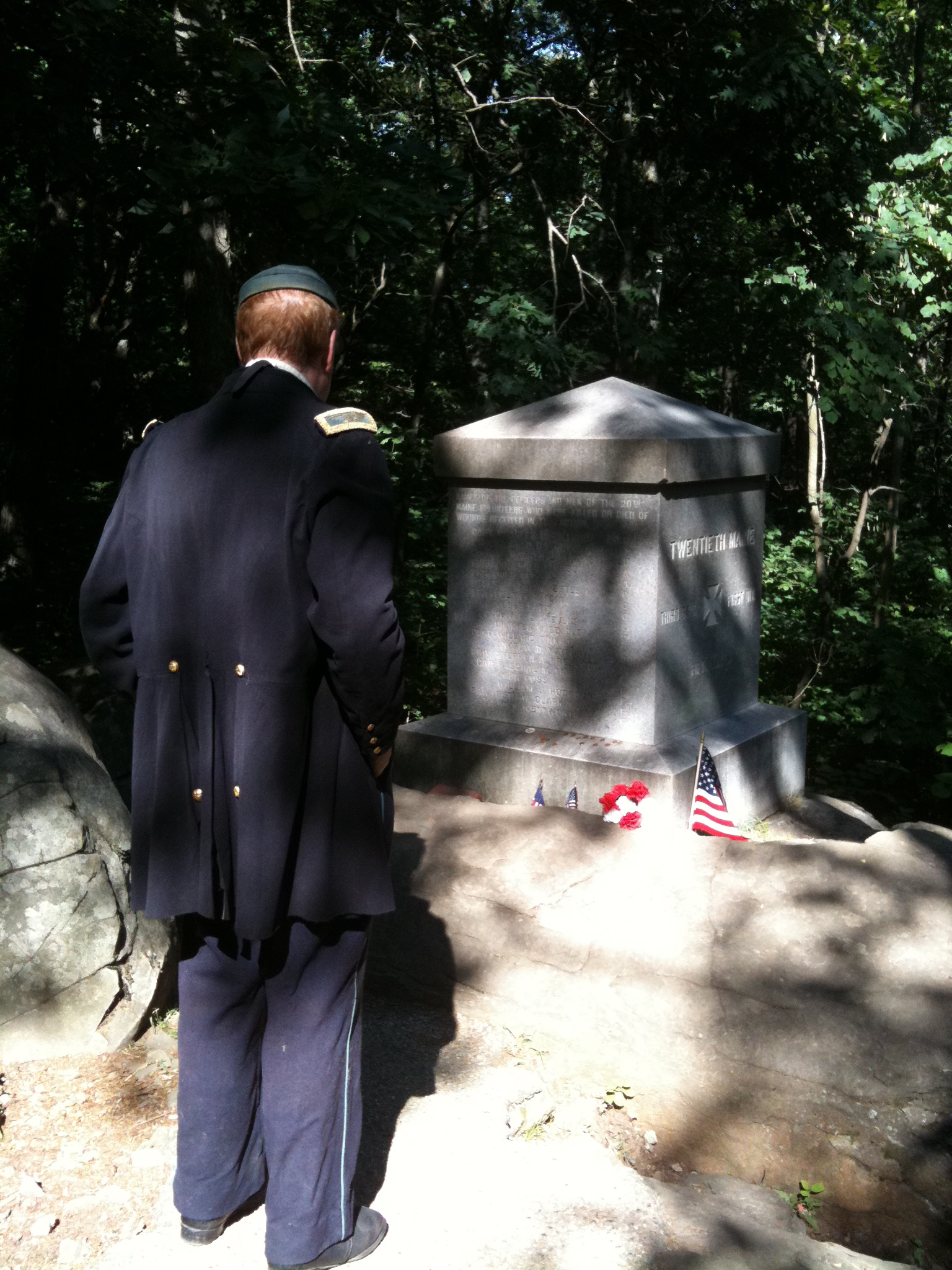
The right flank of the 20th Maine on Little Round Top.

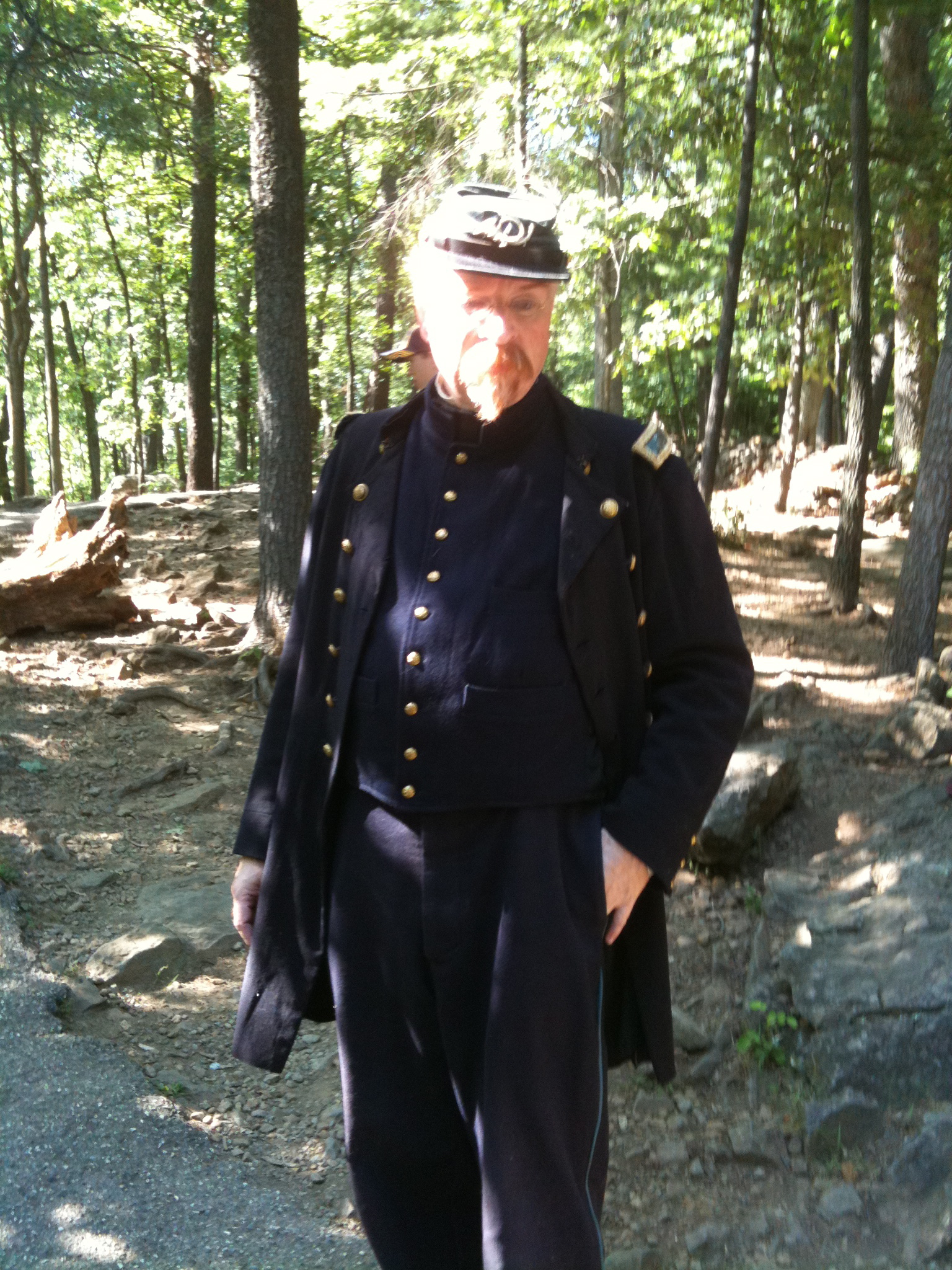
Victoria and I hiked up to the position defended by Chamberlain and the 385 men of his regiment. There, we found a Civil War re-enactor dressed as an infantryman in the 20th Maine. He knew the details of the battle pretty well, and I enjoyed sharing the story with him as we stood together on that hallowed ground where Little Round Top, the Union Army – and perhaps the nation – was saved.

At about 6:30 PM, after once more repulsing an uphill attack by the 15th Alabama, Chamberlain’s troops were nearly out of ammunition. And they were running out of time.

"The 20th Maine & 15th Alabama at Gettysburg" by Dale Gallon

They had been fighting for several hours and had inflicted and suffered heavy losses. Ordered by Vincent to “Hold the ground at all hazards,” The Fighting Professor knew he could not retreat. He ordered his men to “fix bayonets.”

"Chamberlain's Charge" by Mort Kunstler

According to Chamberlain’s own words, “I ordered the bayonet. The word was enough. It ran like fire along the line, from man to man, and rose into a shout, with which they sprang forward on the enemy, now not 30 yards away. The effect was surprising; many of the enemy’s first line threw down their arms and surrendered. An officer fired his pistol at my head with one hand, while he handed me his sword with the other. Holding fast by our right, and swinging forward our left, we made an extended “right wheel,” before which the enemy’s second line broke and fell back, fighting from tree to tree, many being captured, until we had swept the valley and cleared the front of nearly our entire brigade.”

Longstreet’s Corps had failed to take Little Round Top – and Victoria and I had failed to take any water with us on our battlefield hike. So, a dehydrated Vic and I joined exhausted Johnny Reb as he retreated across the Gettysburg farm fields and regrouped for the fighting that would climax on the Third Day.

The sun was starting to set but it was still plenty hot as we tramped back down Little Round Top, through The Wheat Field, across The Peach Orchard, over the Emmitsburg Road, and all the way to Pitzer’s Woods, where General Longstreet and his warhorse defended our rental car.

To be continued…

11 Comments

Filed under Adventure, History

History & Honeymoon: Part Two

“Forward men, forward for God’s sake…”

On the morning of July 1st, my wife, Victoria, and I got up early enough to enjoy breakfast at The Doubleday Inn with our housemates — a collection of congenial history buffs and their spouses.

One of our fellow guests, a 40-something Pennsylvanian named John, was there by himself, and this was clearly not his first visit to Gettysburg. It was fun to see how enthused he was about getting out on the battlefield.

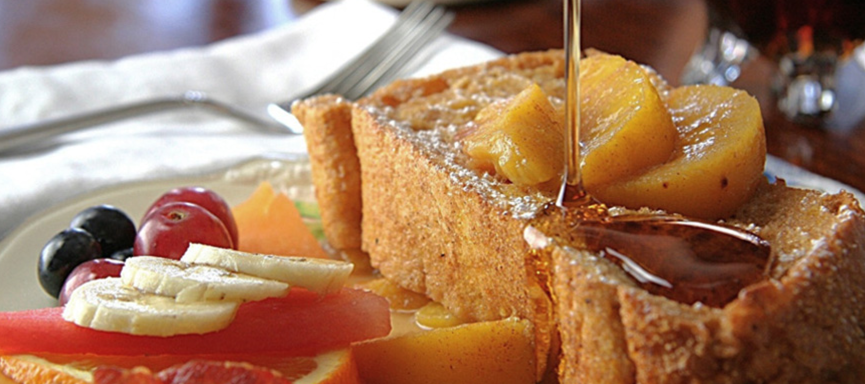
I shared John’s excitement as I downed my breakfast, a delicious, maple syrup drenched version of French toast that proved too heavy for Victoria. She needn’t have worried about the calories: battlefield tramping burns ‘em off big time.

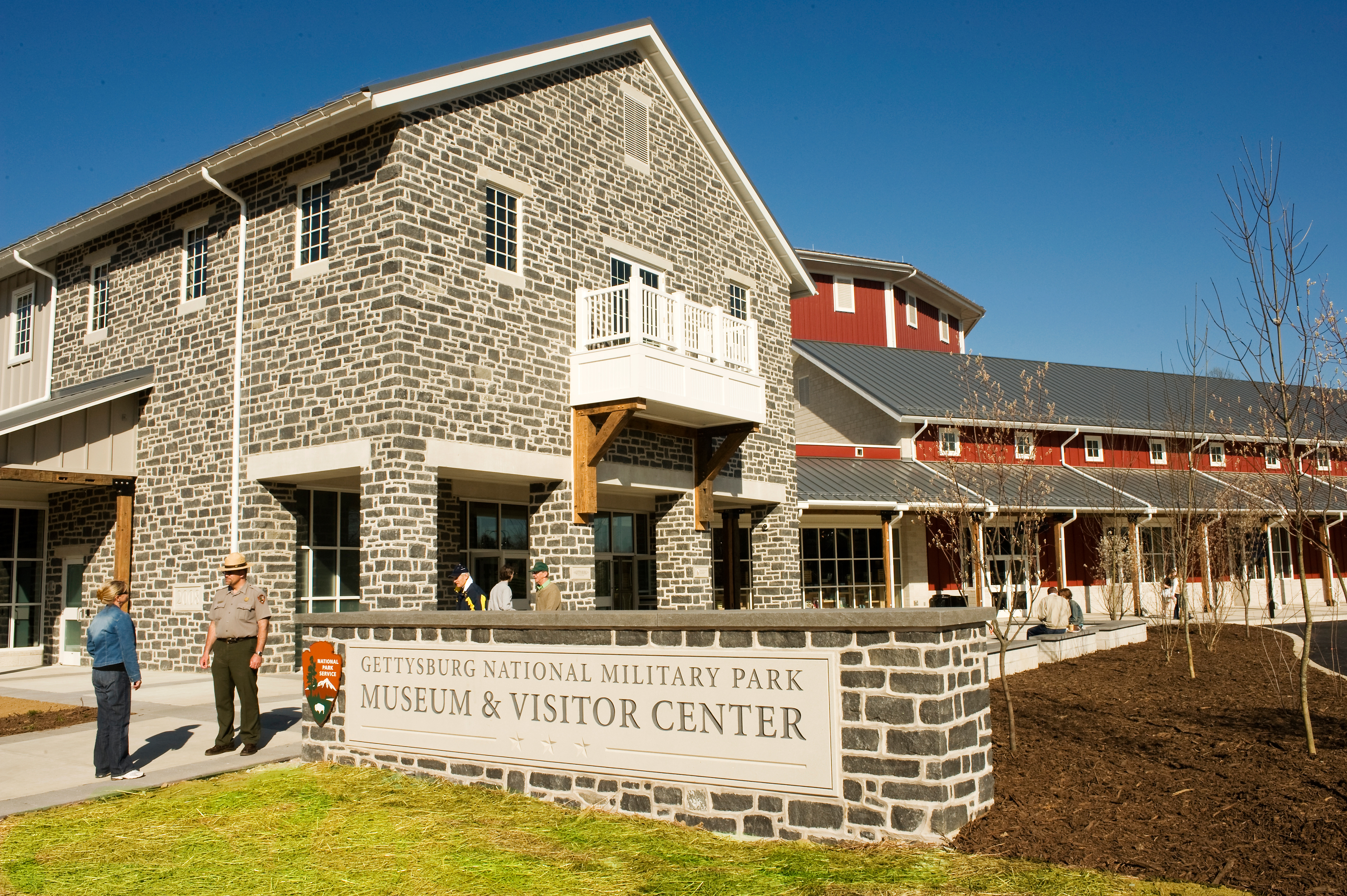
By the time we left the Doubleday Inn on Oak Ridge that morning, headed for the new Gettysburg Visitor Center and Museum, we could imagine General John Buford’s battle-weary cavalry corps falling back under fire from Confederate General Henry Heth’s reinforced infantry to positions along Oak Ridge (and the adjacent McPherson’s Ridge) 147 years ago.

Buford’s boys had been fighting off Heth’s two brigades since 5:00 AM, and here we were, two honeymooning sluggards, just getting into action at 9:00.

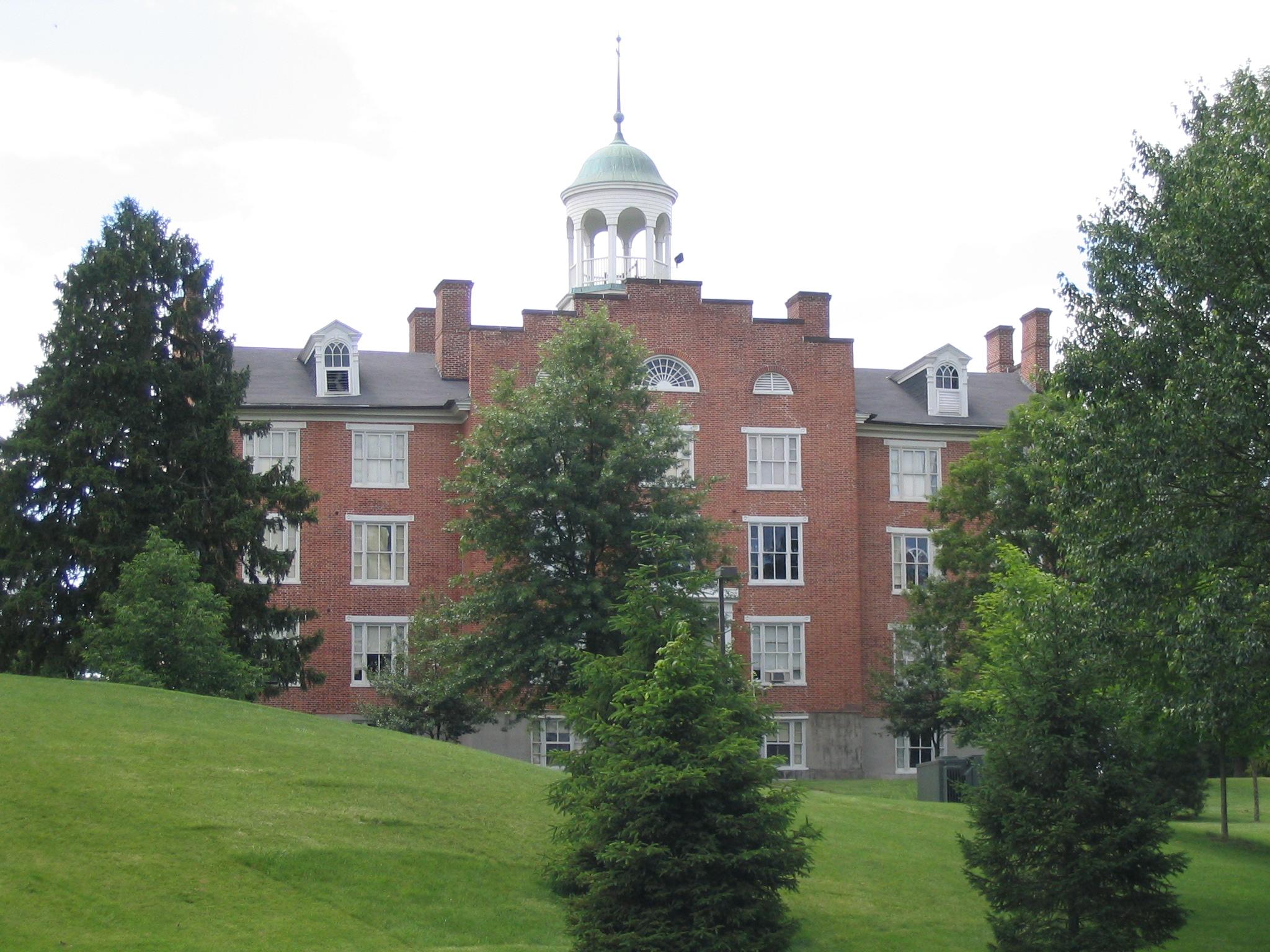
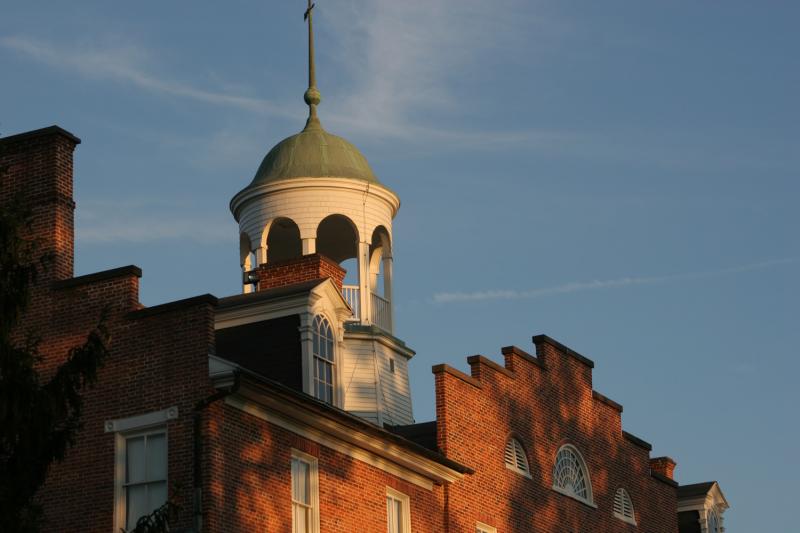
As we drove toward town and the Visitor Center, we could see the distinctive cupola of the Lutheran Seminary along Seminary Ridge, an important landmark on the battlefield in 1863 – and to this day. We could envision a grimly determined General Buford up in that cupola, field glasses in hand, watching the progress of the battle raging to his front, and looking anxiously to the rear for the approach of General Reynolds and his infantry corps.

In fact, if we were there on that fateful morning in 1863, General Reynolds would soon be passing us on the road, riding up to the seminary and calling up to Buford, “How goes it, John?” Buford would reply, “The devil’s to pay!” and the next chapter of Gettysburg history would soon be written. But that would have to wait. We wanted to check out the new Visitor Center first.
Our hosts at the Doubleday Inn (and several of our fellow guests) had spoken in glowing terms about the wonders of the new Museum and Visitor Center, which opened in April 2008 — and they were not blowing smoke. Victoria and I have been to a lot of National Park visitor centers, and this one blows them all away.

Far more than the usual place to pick up maps, brochures and a gift or two, the Gettysburg Museum and Visitor Center is 22,000 square feet of exhibits, battlefield relics, inter-active exhibits, and multi-media presentations, including the film, “A New Birth of Freedom”, narrated by Morgan Freeman (who also starred in the film, Glory, which triggered my Civil War obsession in 1989).

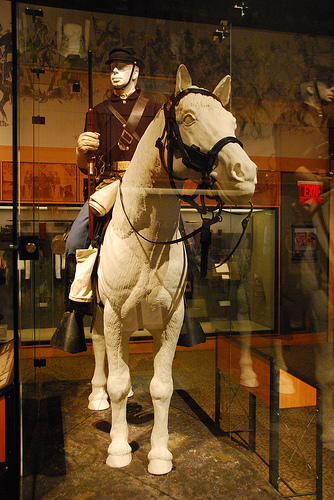
Victoria and I watched the film and checked out the incredible exhibits – including the stretcher used to carry the mortally wounded Stonewall Jackson from the field at Chancellorsville on May 2, 1863. (Jackson’s death 8 days later would have dramatic repercussions at Gettysburg.)

The humble furnishings of Robert E. Lee’s personal field quarters were also on display, as were hundreds of period muskets, rifles, pistols, artillery shells, uniforms, and other treasures discovered on the battlefield over the years. It would be very easy to spend the entire day there – but with General Reynolds arriving on Seminary Ridge to reinforce Buford and the first day’s fighting heating up – we were eager to get back on the battlefield.

But first, we had to see the fully restored Gettysburg Cyclorama.

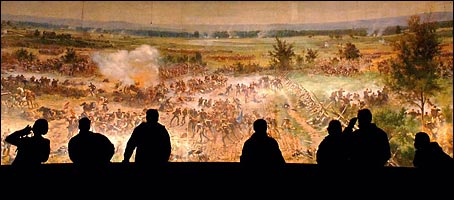
We’d seen it 20 years ago, when it was something of a sideshow attraction along with the old electronic map with its more than 600 lights that, for forty years, tracked the major action in the battle for visitors. Today, in its new home, the Gettysburg Cyclorama — the nation’s largest painting — gets its due.

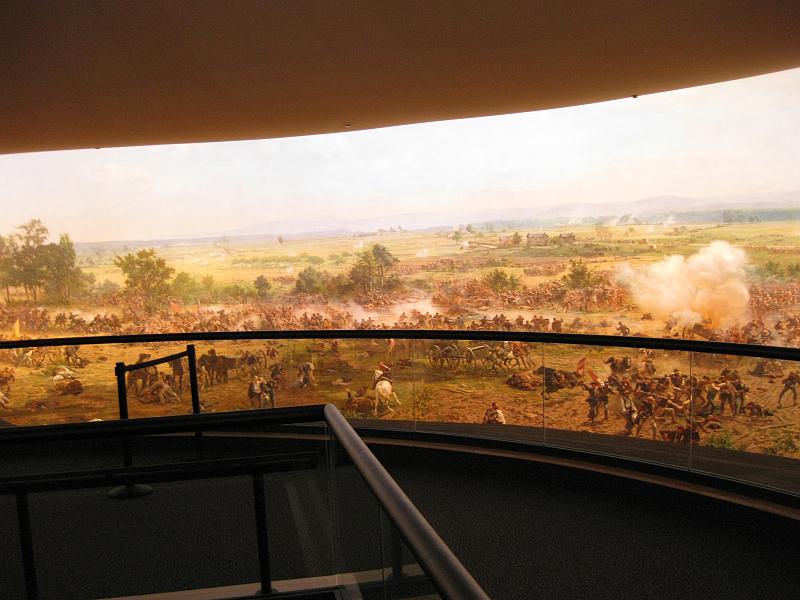
The massive artwork, entitled “The Battle of Gettysburg”, is a 360-degree cyclorama by the French artist Paul Dominique Philippoteaux. The vivid painting wraps around the curved walls of the exhibit, surrounding the viewer with a stunning, colorful, and violent depiction of “Pickett’s Charge” on July 3, 1863 – the climactic action of the three-days of unprecedented valor, fury and sacrifice that was The Battle of Gettysburg. You really have to see it to understand the scale and power of this thing. The whole experience made me proud to think “Your tax dollars at work.”
"Reynolds and the Iron Brigade" by Keith Rocco. © Keith Rocco and Traditional Studios http://www.keithrocco.com

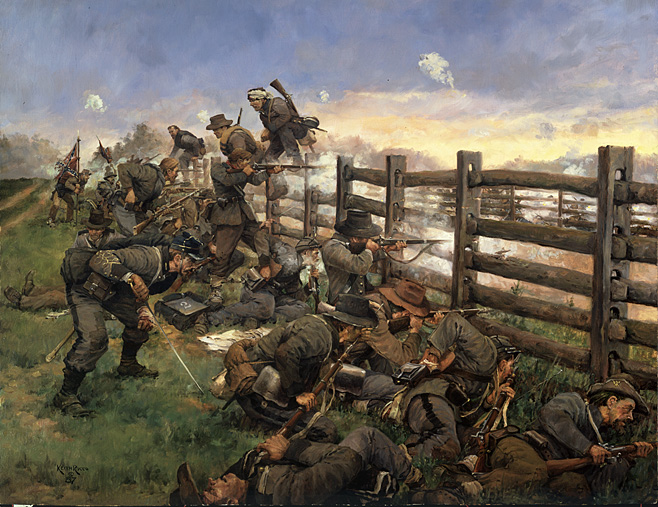
After our rewarding morning at the Visitor Center, we drove back out to McPherson’s Ridge, where Heth’s reinforced Confederate brigades of General A.P. Hill’s corps were about to confront the vanguard of the Union Army of the Potomac, hurriedly deployed by its commander, General John Reynolds. Reynolds First Corps included the famous Iron Brigade, wearing their distinctive tall black hats. For Heth’s rebels, one look at “those damn black hats” made it clear that one of the Union’s hardest-fighting, battle-tested veteran infantry units had now joined the fight for the Gettysburg high ground.

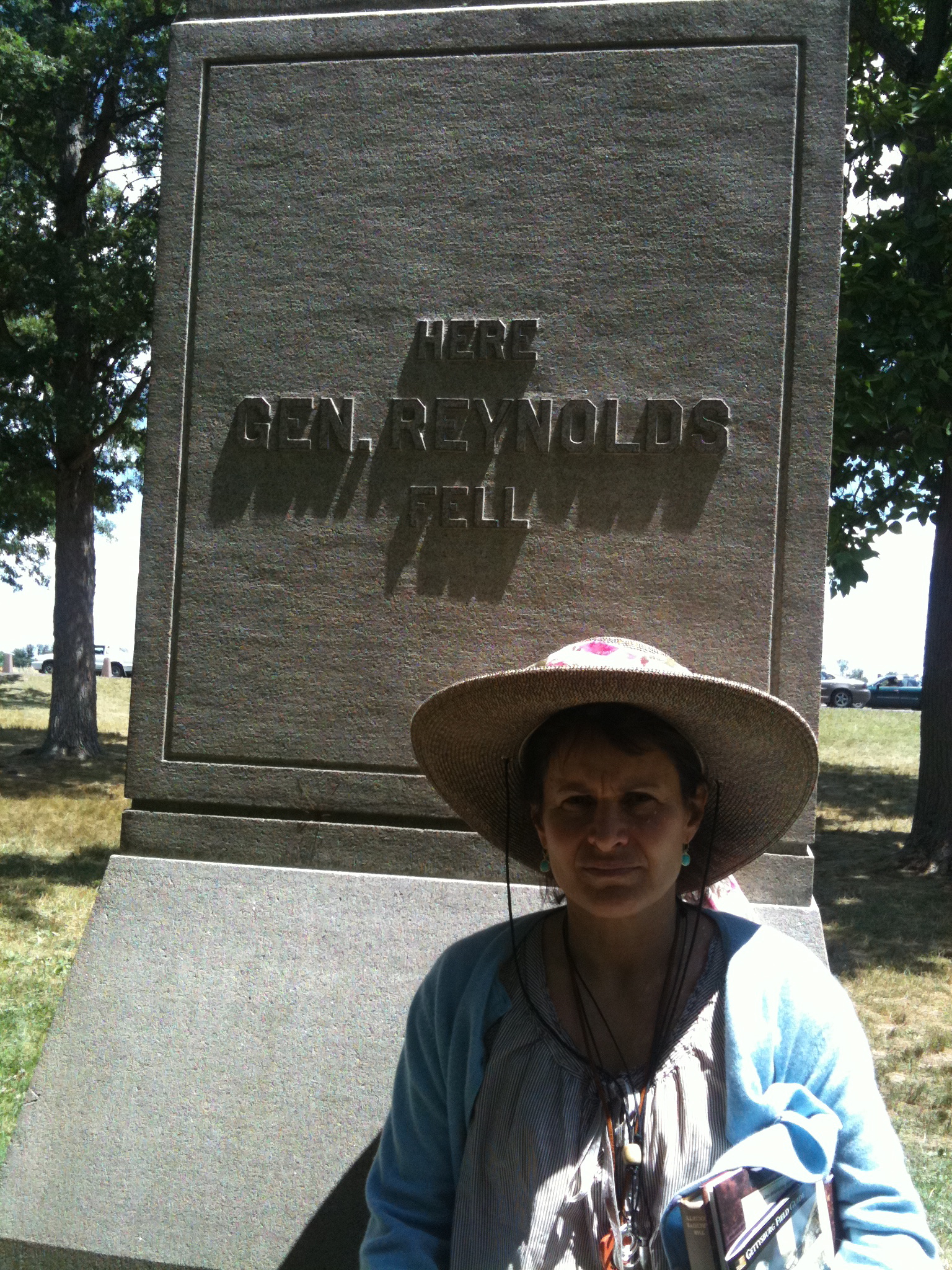
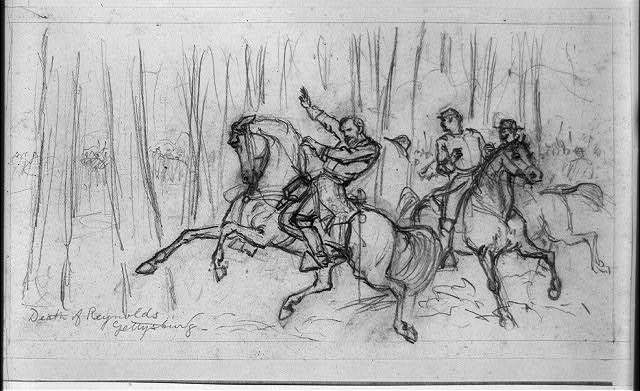
Victoria and I knew that our first stop on McPherson’s Ridge would be a somber one: the spot where Reynolds fell, shot from his horse in the opening moments of the engagement as he urged his troops forward, bellowing, “Forward men, forward for God’s sake and drive those fellows out of those woods!”(Generals led from the front in those days.)

The sudden loss of Reynolds was a brutal blow to the Union cause. John Reynolds wasn’t just any general – he was one of the Union army’s best.

"The Death of Reynolds" by Alfred R. Waud (1828-1891)

Some historians maintain that Lincoln wanted to give Reynolds command of the Army of the Potomac, but that Reynolds demanded more autonomy than Lincoln could grant him. Ultimately, Lincoln put Pennsylvanian George Meade in charge of the Army of the Potomac with Reynolds leading the army’s First, Third, and Eleventh Corps.

Tributes left on July 1, 2010 at the spot where Reynolds fell include a poem someone wrote to honor him. Like the dog biscuits still left for Sallie the regimental mascot, these battlefield tokens always break my heart, yet also fill me with joy that, for some, history is a living thing.

Upon Reynold’s death, command of the Union forces fighting on McPherson’s Ridge and Oak Ridge devolved to General Abner Doubleday. (The Doubleday Inn, get it?) Two years earlier, Captain Doubleday had fired the first shot in defense of Fort Sumter, now, promoted to general, he was called upon to once again play a pivotal role in an epic moment.

And while it may well be that the claim Doubleday invented baseball in 1839 (he was in West Point at the time) is no more than a legend, what he did for the five furious hours after Reynolds death would have been legend enough for any man.

Oak Ridge (McPherson's Ridge is to the left beyond the trees)

Doubleday’s men fought hard all morning, holding fast to the critical ridgelines just outside of town. As the Confederates threw wave upon wave of reinforcements into the fray, Doubleday’s 9,500 men battled ten Rebel brigades numbering more than 16,000, inflicting casualties on their attackers ranging from 35 to 50 percent in various regiments. The monuments that line McPherson’s Ridge and Oak Ridge are silent testaments to the valiant resistance of Doubleday’s troops in the face of overwhelming odds.

Evening falls on the Chambersburg Pike, looking toward the advancing Confederates.

Eventually, Confederate troops finally pushed Doubleday off those ridgelines, past the Lutheran Seminary, and onto Cemetery Hill — where Union troops were concentrating to secure the high ground overlooking the town and fields below. At day’s end, Doubleday’s First Corps had lost two thirds of its men, dead, wounded, taken prisoner, or missing in action. But their sacrifice saved the day. The gallant stand made by Buford, Reynolds and Doubleday had kept the Confederates from reaching the high ground on Cemetery Hill.

The contest for that high ground – and victory on the bloody Gettysburg battlefield — would last two more days.

The FIrst Minnesota monument at the base of Cemetery Hill: Heroism on Day #2

Victoria and I returned to The Doubleday Inn with a greater appreciation of the man whose name our pleasant B&B bore.

To be continued…

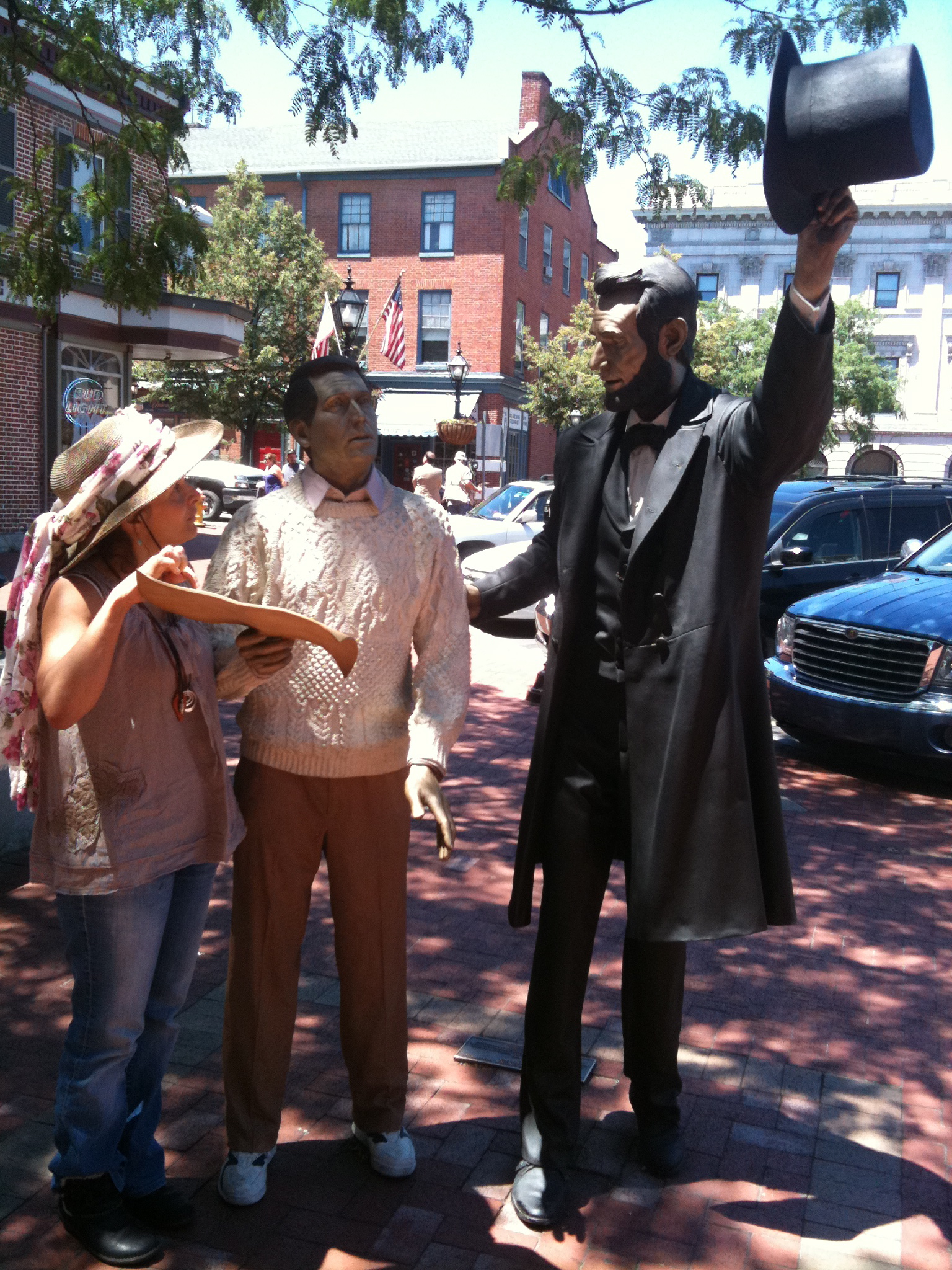
Victoria and a friend ask Honest Abe for directions in downtown Gettysburg.

9 Comments

Filed under Adventure, History

History & Honeymoon: Part One

On Sunday June 27th, my wife Victoria and I gave our last performance of “The Vic & Paul Show” in it’s three-week run at PUSH Lounge in Woodland Hills. It was a satisfying end to a wonderful run — made all the more special by so many great friends, Northwestern pals, and people we dearly love but haven’t seen in ages who showed up to share the experience with us. It had been more than twenty years since we’d done a comedy show together – and exactly twenty years since we’d said “I do” in a Greek Orthodox service on a blistering hot day in Chicago.

With our 20th wedding anniversary on June 30th, the show was essentially a celebration of our two decades of married bliss – and as we struck the stage at PUSH for the last time, our thoughts turned to our upcoming anniversary trip: a return to the great Civil War battlefield at Gettysburg.

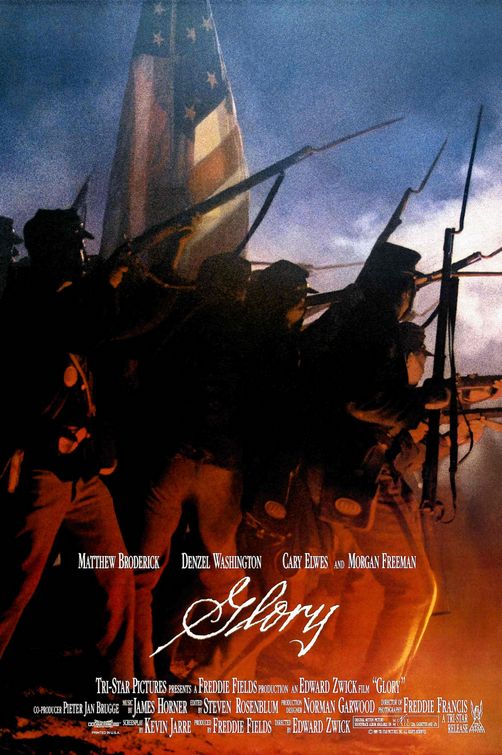
We were we going to Gettysburg for our 20th anniversary because that’s where we spent our first honeymoon in 1990. Back then I was in the early throes of a mad crush on Civil War history that was inspired by the Oscar-winning 1989 movie Glory and had continued unabated since. As we planned our nuptials, I gave my darling bride a choice of honeymoon excursions

1. A tour of National League ballparks

2. A tour of Civil War battlefields

That I could even propose two such options to my bride-to-be was proof that I was already the luckiest man in the world – but when she chose the battlefield tour, I was certain that our union (just like the Union that Lincoln’s armies defended on that hallowed ground) would long endure.

Our first stop in 1990 was Gettysburg, and while we did not plan it that way, we arrived on July 1st – the 127th anniversary of the first day of that epic 3-day battle. It was kismet. We were where we were meant to be. Thus, it felt right that on such a momentous marital (and martial) anniversary, we should go back to the small Pennsylvania crossroads town where Robert E. Lee’s 1863 invasion of the North came to a bold and bloody end. Romantic, yes?

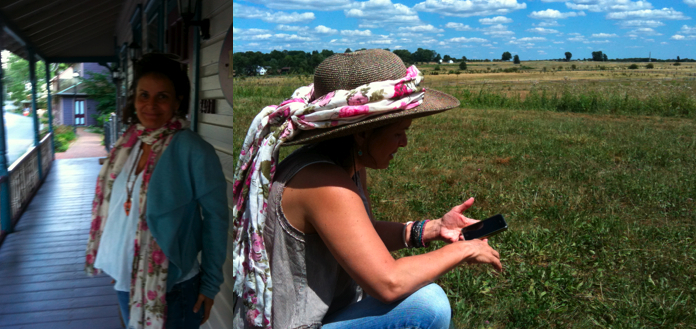
We flew into Philadelphia on June 30th, the eve of the battle, and drove west to Gettysburg. We wanted to make sure that we got to our Bed & Breakfast while these was still light on the battlefield. It was a 3-hour drive and we were hungry, so we stopped for a late lunch. But no service plaza grub would suit this history-loving couple – and with the help of her iPhone, Victoria located the perfect spot for a picturesque and historic nosh just a few miles off the turnpike. So, we turned off at the Morgantown exit, headed for the Inn at Saint Peters Village.

Saint Peters Village was entered onto the National Register of Historic Places in 2003. It’s a small, late 19th century industrial “company village” on the banks of French Creek in Chester County, PA.

For about half a mile, vintage buildings line the main drag that winds up a steep, rocky ravine, with the creek running through giant boulders below. Artists and craftsmen have set up shop in the clapboard 19th century storefronts, and the biggest and most architecturally impressive of these is The Inn at Saint Peter’s Village, where we enjoyed lunch on a large wooden deck overlooking French Creek. It was beautiful. So far, so good.

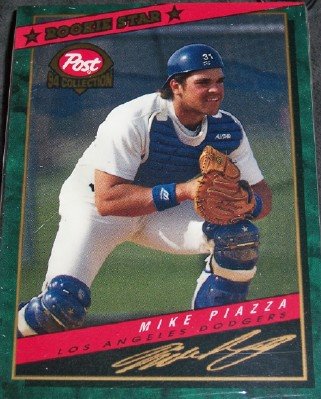
Interestingly, National League baseball managed to re-enter our honeymoon thoughts when our waitress casually mentioned that Mike Piazza’s dad “owned the whole town.” It turns out that arguably the greatest hitting catcher in Major League history (427 Home runs, career .308 batting average) grew up in nearby Phoenixville with his parents, Vince and Veronica. It was nice slice of local history to go with my pizza.

Hey, pizza and Piazza!

It was nearing 6:00 PM as we drove into Gettysburg down PA Route 30 and onto the old Chambersburg Pike – the same road that General John Buford rode into town with his division of Union cavalry late in the day on June 30th, 1863. That evening long ago, a grimly determined Buford watched with concern as a brigade of Confederate infantry under General Pettigrew probed south from Cashtown along the Chambersburg Pike toward Gettysburg.

Pettigrew’s brigade had been sent by his division commander, General Henry Heth, of A.P. Hill’s Corps in search of much-needed supplies — including a cache of shoes they understood to be in the town.

But when Pettigrew saw Buford’s cavalry arriving south of town, he returned to Cashtown and told Heth and Hill what he had seen. Despite Pettigrew’s claim that Federal cavalry was on the Chambersburg Pike, neither of his superiors believed there was anything more than Pennsylvania militia in Gettysburg.

Fate – and the fighting – would wait until tomorrow. And so, as Victoria and I pulled into the parking lot of The Doubleday Inn, would our own adventures on the Gettysburg battlefield wait until the following day.

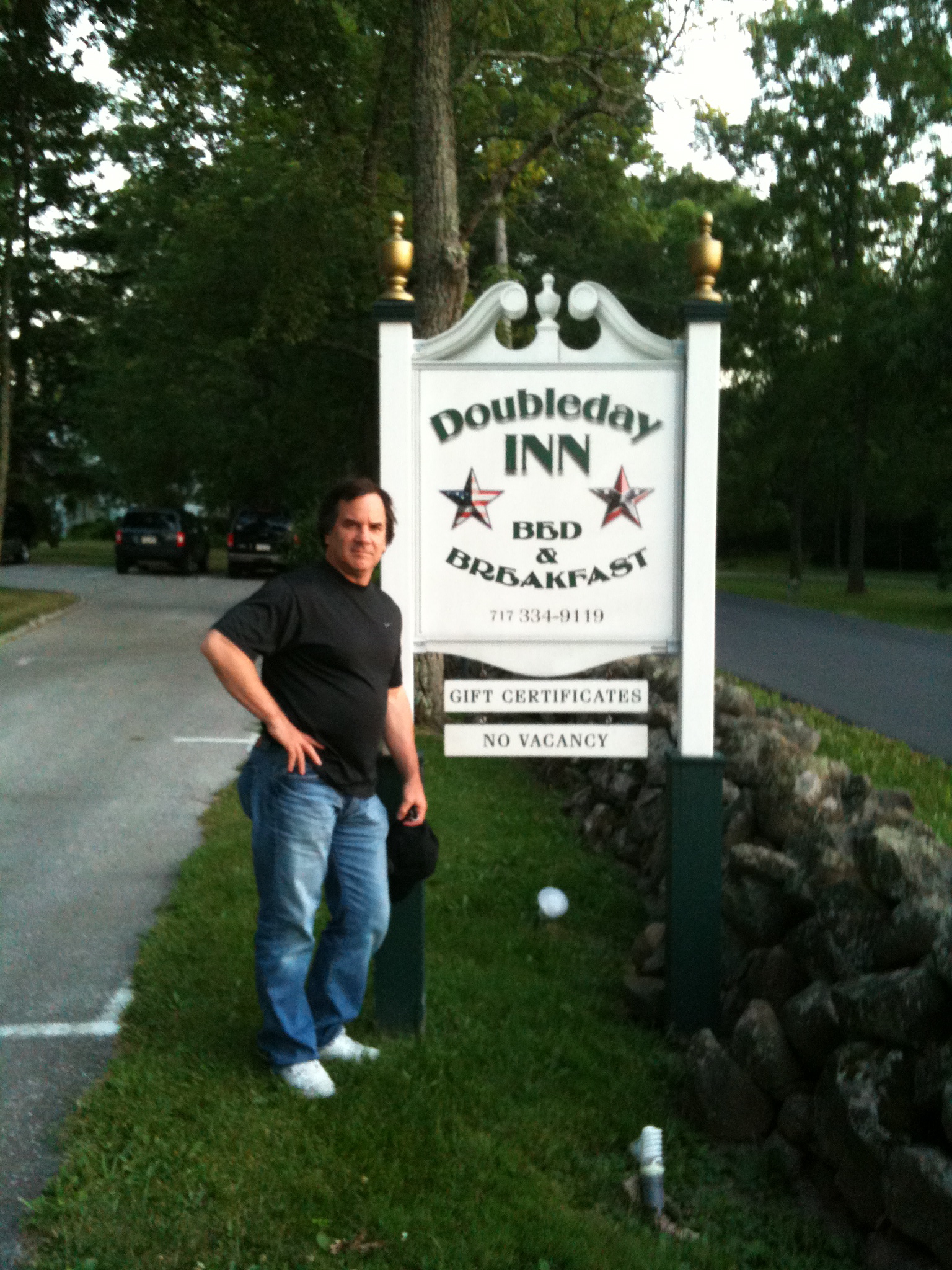
The charming house at 104 Doubleday Avenue, now The Doubleday Inn, was built in 1939 and it’s the only B & B or hotel located on the grounds of the Gettysburg National Military Park. It stands on the very ground that Buford and his cavalry would defend the next morning. There are 42 battlefield monuments within a quarter mile of the Inn honoring the regiments that took part in the fierce fighting that took place here on July 1, 1863.

Before we turned in for the night, we took a sunset stroll along Doubleday Avenue on Oak Ridge to check out the monuments lining the road in front of the Inn.

Our favorite was the monument dedicated to the 11th Pennsylvania Volunteer Infantry. All of the monuments at Gettysburg are stirring, heartbreaking testaments to valor and sacrifice – but this one is unique because of a dog.

On the side of the monument that faced the enemy that bloody day is a cast iron representation of the regiment’s beloved mascot, a terrier named “Sallie,” who was said to have hated three things: Rebels, Democrats, and Women.

According to the well-documented story, after the first day’s battle was over, faithful Sallie refused to leave the field where her brave boys had fought and fell. She stayed with her dead soldiers until she was found, weakened and close to death, a day after the battle. Sallie’s regiment nursed her back to health and she fought with them until she was killed in battle in February 1865. Sallie’s boys never forgot their faithful canine comrade – immortalizing her on their regimental monument.

To this day, visitors paying their respects at the 11th Pennsylvania monument on Oak Ridge often leave dog biscuits and bones for the devoted Sallie – as they did on the evening that Victoria and I paused to remember the regiment’s service and sacrifice before going back to the Doubleday Inn to prepare for the next morning:

July 1st – the first day of the Battle of Gettysburg.

To be continued…

11 Comments

Filed under Adventure, History