Category Archives: History

The Second Day at Gettysburg: 150 Years Ago Today

The second in a series of articles I first posted in 2010.“My god, are these all the men we have here?”

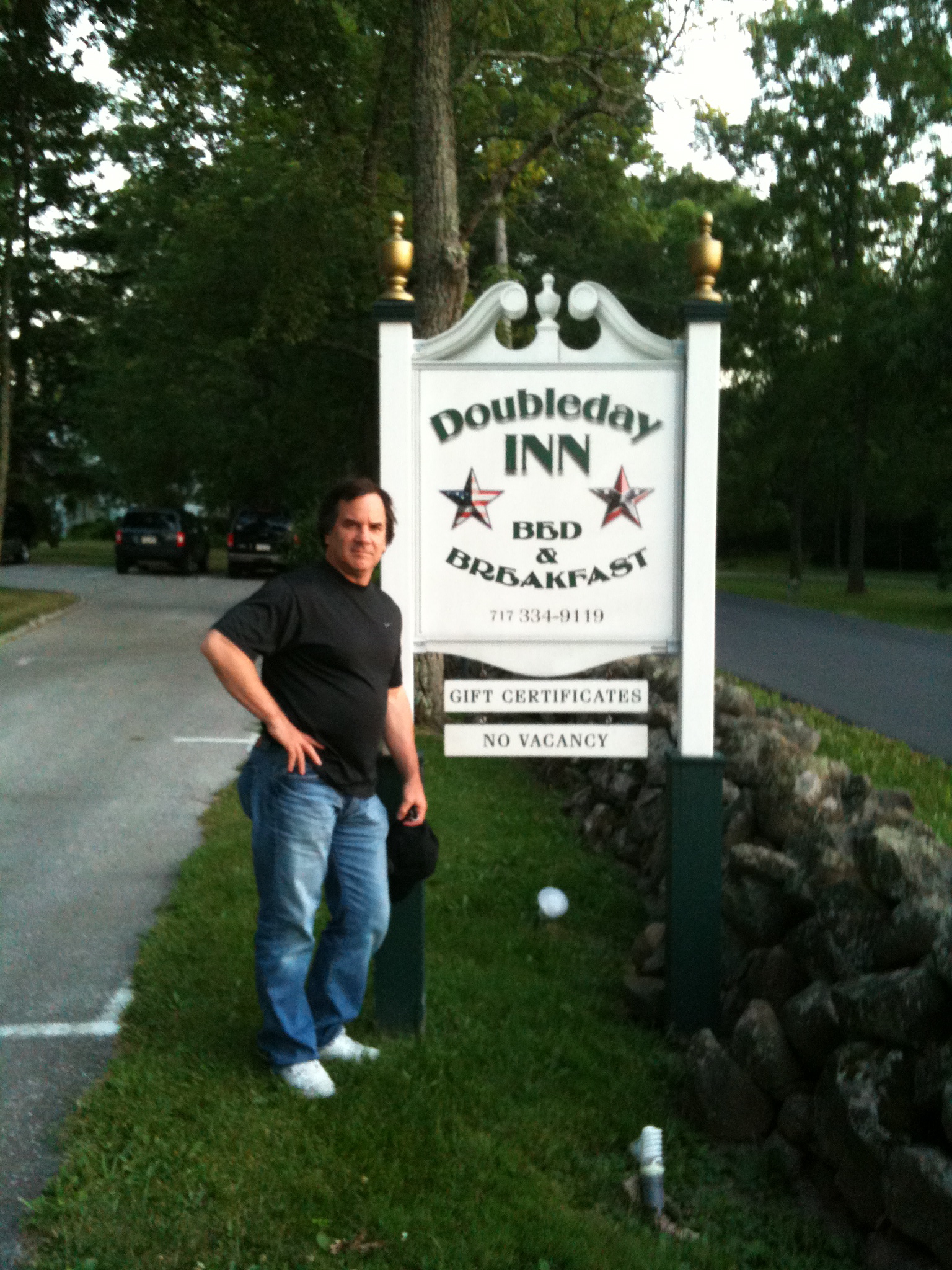
On the morning of July 2, as we enjoyed our communal Doubleday Inn breakfast of orange juice and a tasty vegetable, egg, and cheese dish, I was particularly excited about our agenda for the day. The plan was to experience the second day’s fighting at Gettysburg by assaulting the Union positions in the Peach Orchard and on Little Round Top from the perspective of Confederate General Longstreet’s attacking infantry.

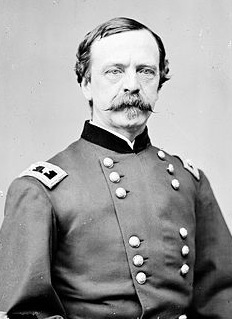
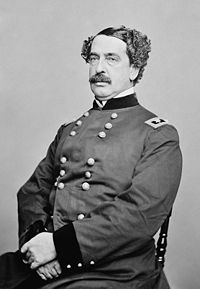
General Sickles, when he still had two legs.

The second day at Gettysburg was a violent, chaotic stage on which many of our favorite Civil War characters played their most memorable roles, including Colonel Joshua Lawrence Chamberlain of the 20th Maine, Union Generals Winfield Scott Hancock, Dan Sickles (Vic’s offbeat romantic antihero), Gouverneur Warren, and Strong Vincent — plus Colonel Colvill’s First Minnesota Volunteers. Some of these guys would survive the day’s brutal fighting and some would not – and at least one would survive, though not in one piece.

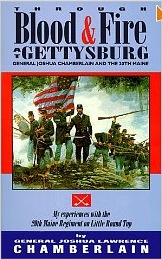
For the day’s campaign, Victoria and I armed ourselves with Joshua Chamberlain’s battle memoirThrough Blood & Fire at Gettysburg and the volume of Battles and Leaders of the Civil War covering the second day’s fighting at Gettysburg. Battles and Leaders was first published as a series of articles in “The Century” magazine between 1884 and 1887. The articles were penned by Union and Confederate officers with their own personal insights, reflections, and in some cases grievances, regarding the battles they fought and the enemies they contended with – both in the opposing army and their own.

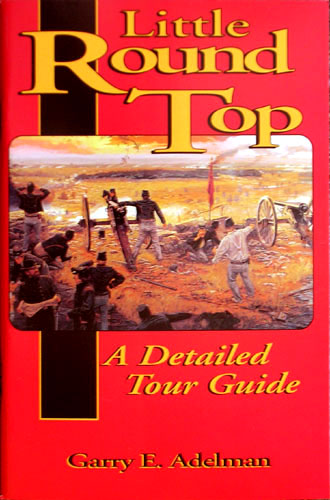
In addition, we carried a handy, little guide to the monuments and sites on Little Round Top.

BTW – You can actually read any and all of Battles and Leaders on this link. Articles on the second day at Gettysburg begin in Volume 3 on page 290. You may want to check out the article “Reply to General Longstreet” on page 355 to see how the battle was still being re-fought among veteran officers two decades after the guns fell silent at Gettysburg.

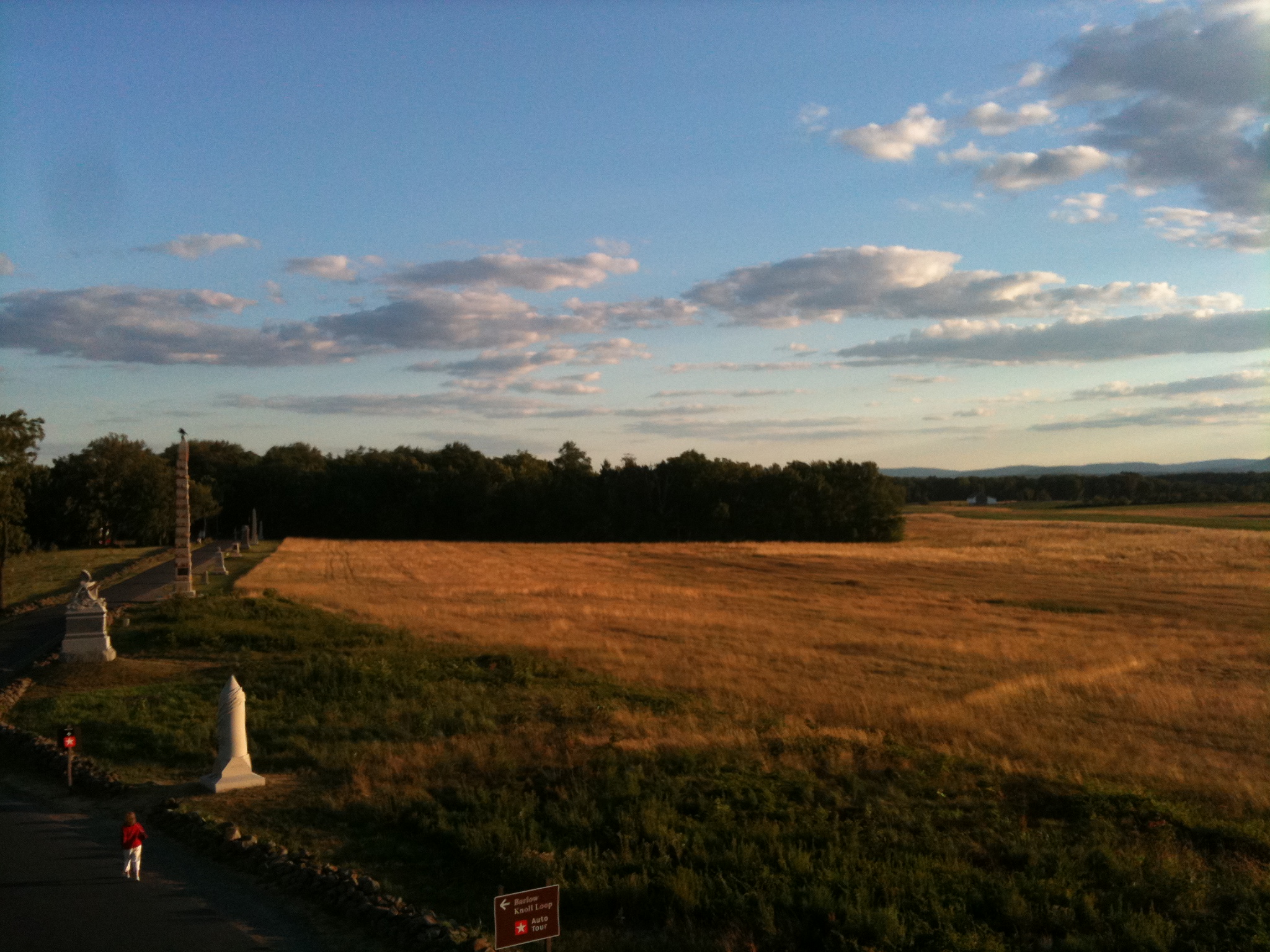
Victoria and I left the Doubleday Inn and drove west along Seminary Ridge toward Longstreet’s position on the Confederate right wing, passing the positions held by the bulk of Lee’s army at the end of the battle’s first day. On July 1, 1863 the Union forces had been driven from Seminary Ridge to the higher ground on Cemetery Ridge, nearly a mile of flat, open farmland to the south.

The two-lane road that runs along the Rebel lines, SW Confederate Avenue, is lined with vintage cannon marking each of the Army of Virginia’s artillery batteries, and monuments to all of the Southern states that fought at Gettysburg.

Every state in the Confederacy, including far-off Texas, was represented in the ranks of Lee’s invading army.

The South Carolina Monument.

Of these monuments, the South Carolina monument is the most compelling, dedicated to the Southern state that had more soldiers – and more casualties at Gettysburg than any other. The huge, imposing monument to General Robert E. Lee shows how the South, quite literally, put Lee on a pedestal – and still does to this day.

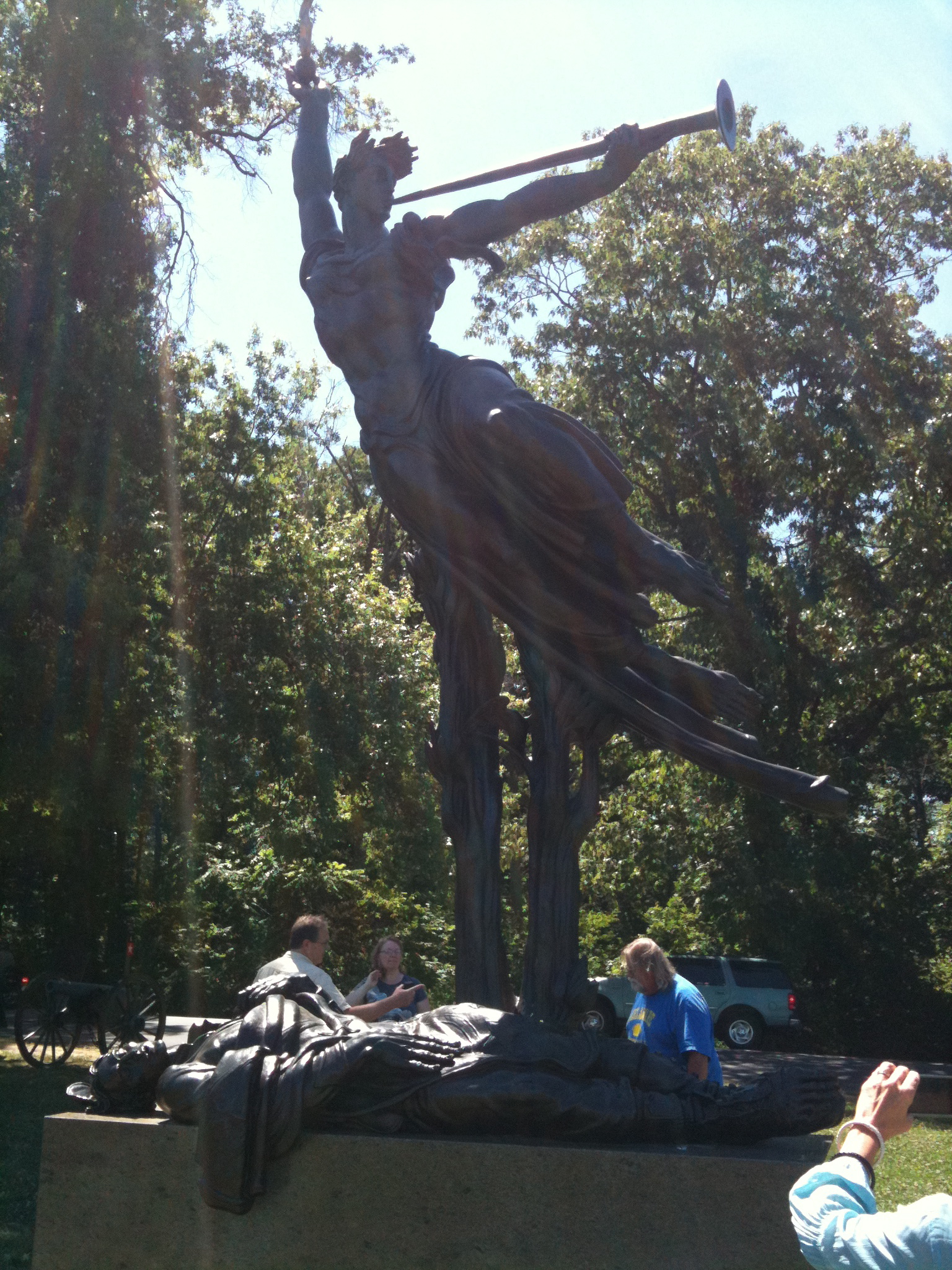
The Louisiana monument (below) is also dramatic: one of the very few to portray a fallen Rebel soldier.

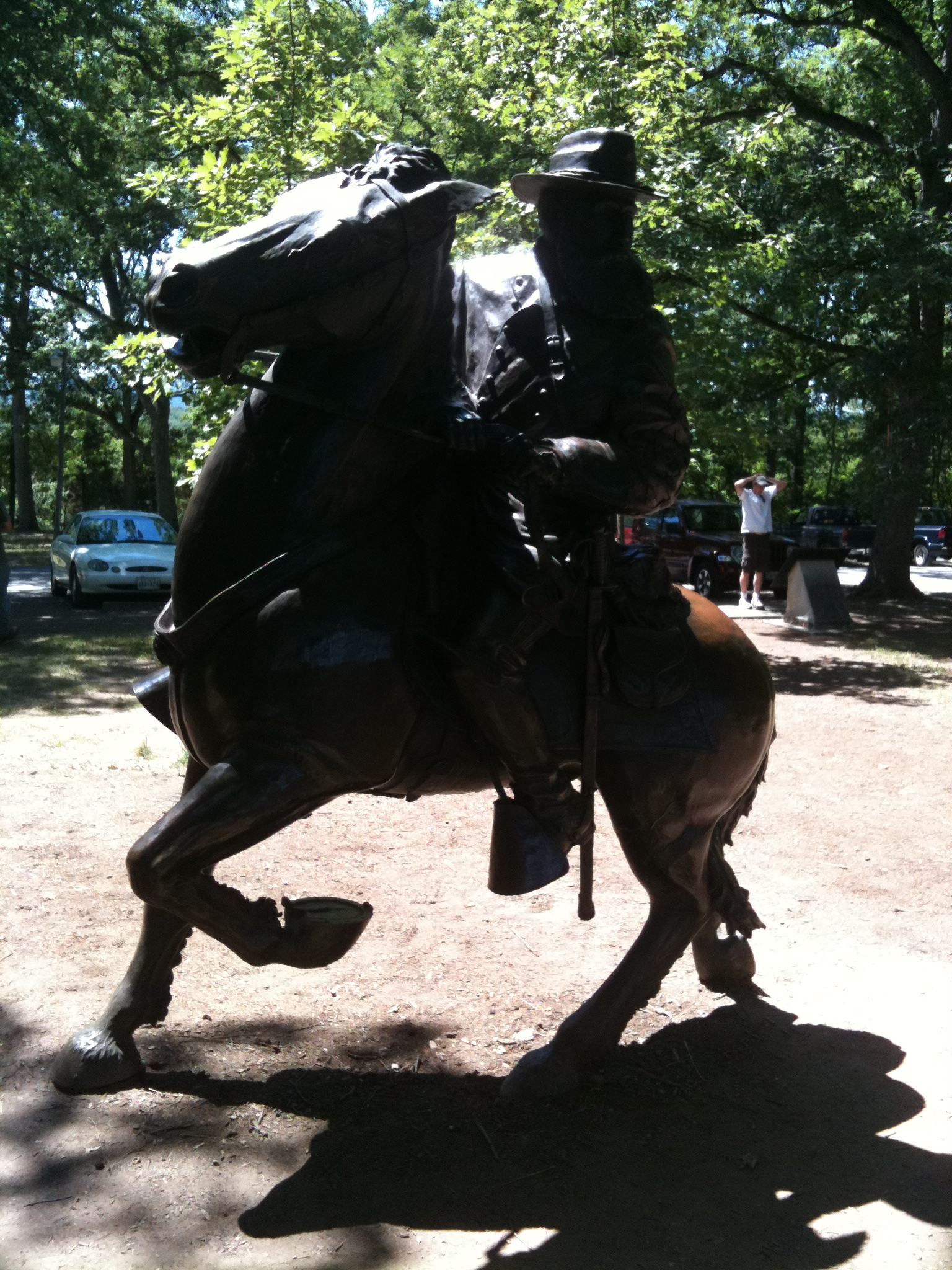
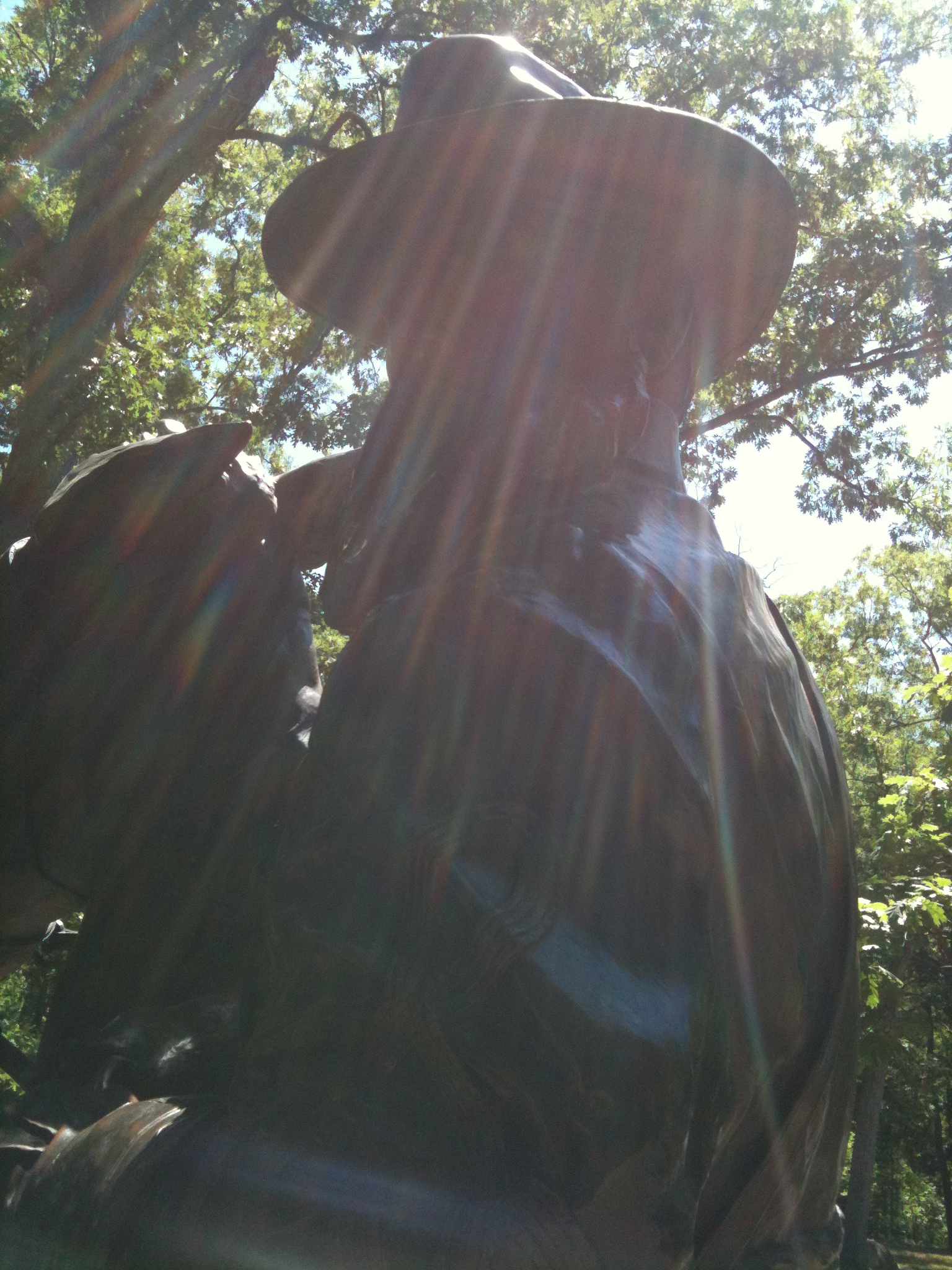
At the far right of the Confederate line, where General James Longstreet made his headquarters, stands the Longstreet monument. Sculpted by Gary Casteel and unveiled on July 3, 1998, Longstreet’s monument is not only one of the very last to be erected on the battlefield — it is striking for what it is not. It is not a grand or heroic memorial in the manner of all the other monuments dedicated to commanders of both sides.

Longstreet is not placed on a pedestal, and he is practically hidden in Pitzer’s Woods.

If you’re curious about why it took so long to honor Longstreet at Gettysburg – and why his memorial is so understated – I challenge you to explore the post-war controversy that arose over the man his troops called “Old Pete” and the soldier General Lee referred to affectionately as “my old War Horse.” This link will take you to an article that’s a fine start to such an exploration.

Longstreet’s statue stands in the eastern edge of Pitzer’s Woods, where the general reins in his favorite horse, “Hero” — as they both look across the fields toward the enemy.

“Longstreet” by Mort Kuntsler

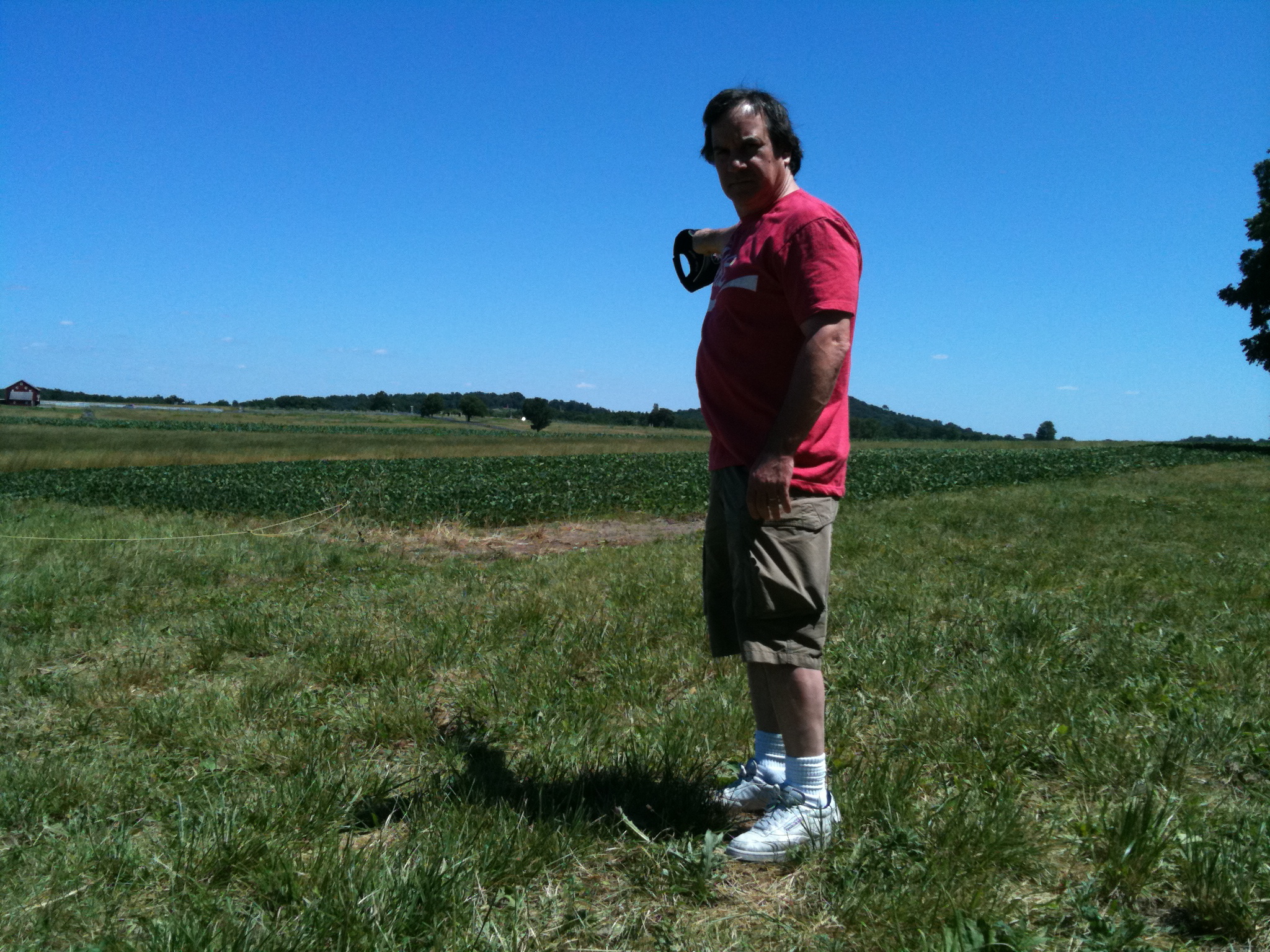
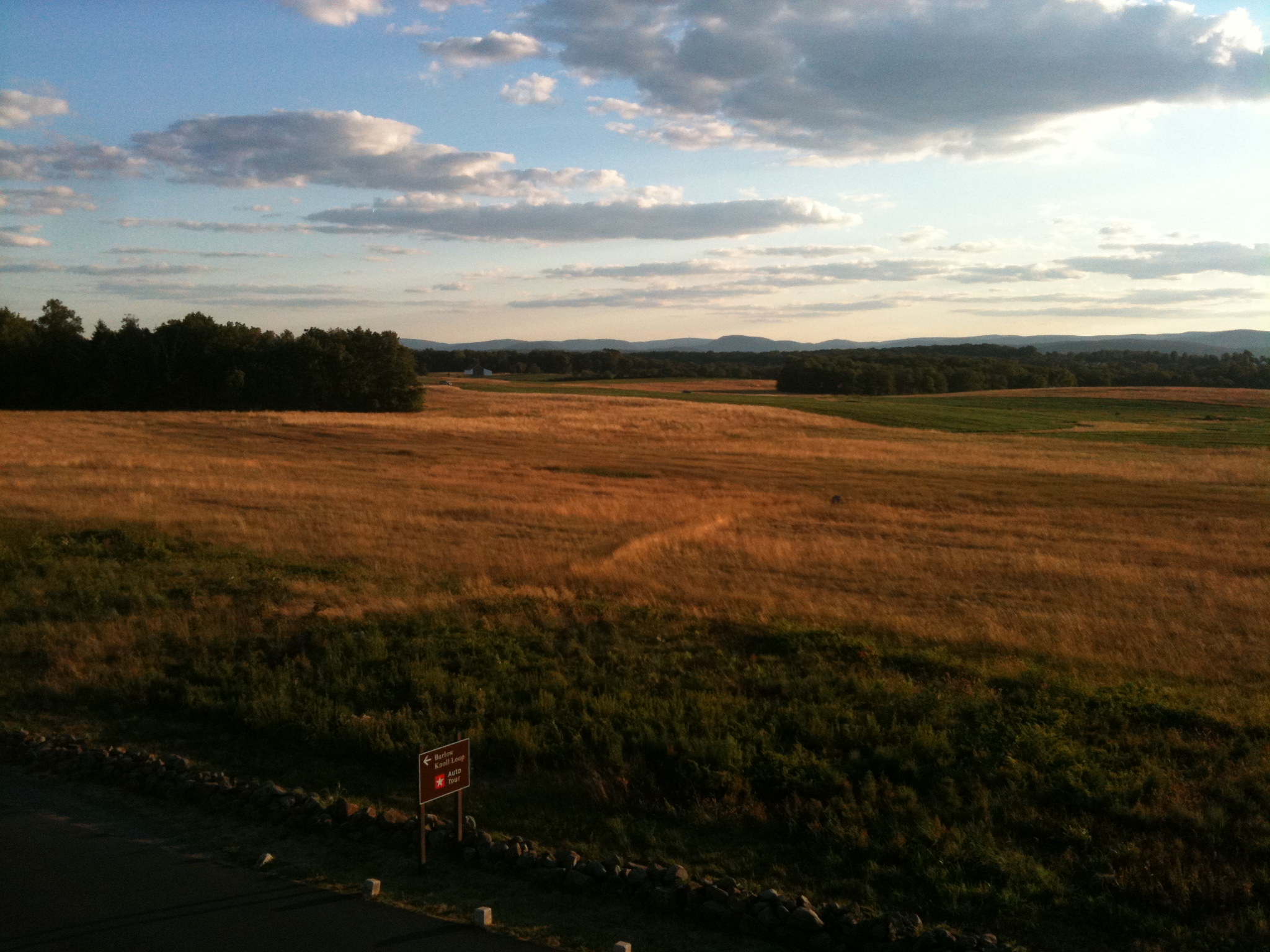
From this shady spot, Victoria and I began our own assault on the Union forces waiting for us across the sun-blasted farmland to the southeast – just as Old Pete’s corps did on July 2, 1863. Victoria, driven by motivations both historical and health-conscious, had decided that we should tramp the battlefield on foot. So we parked the car near Longstreet’s monument and stepped off into the knee-high wheat and weeds, books in hand, headed toward the rocky prominence of Little Round Top.

Our objective: Little Round Top, across a mile of open killing ground.

A little more than halfway across the wide swale between Seminary and Cemetery ridges runs the Emmitsburg Road (now interstate Route 15) – then as now, a fence-lined barrier across the battlefield. It was on the other side of this road that the Rebel advance ran into something unexpected: Union General Dan Sickles’ Third Corps, posted in a peach orchard. At the time, Sickles was the only Union corps commander without a West Point education. But while Dan Sickles was not a professional soldier, he was a born leader with great confidence in his own abilities. A pugnacious New Yorker, Sickles did not shy away from a fight. And he was about to have an epic one.

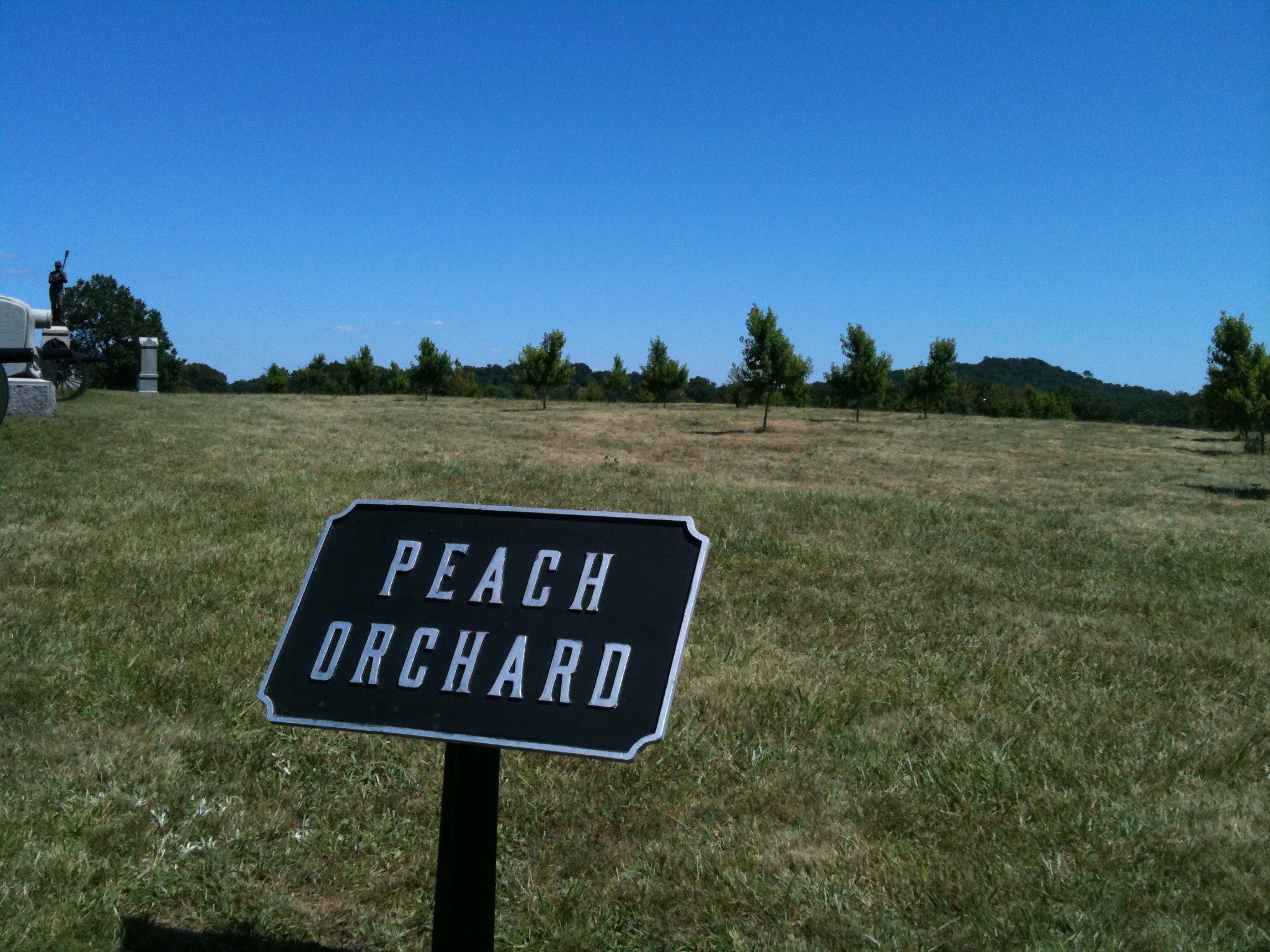
There are innumerable peach orchards in the United States, just as there were on July 2, 1863. But the stand of peach trees that Dan Sickles’ Third Corps defended from 4:00 to 6:30 PM that day would become known ever after as The Peach Orchard.

How Dan Sickles’ troops came to be posted in The Peach Orchard is another longstanding Gettysburg cause célèbre. The commander of the Army of the Potomac, General George Meade, had ordered Sickles to align his right flank with the rest of the Union defensive line along the base of Cemetery Hill, with his left flank anchored on the rocks below Little Round Top. But, after looking over the terrain where Meade had placed his corps, Sickles had another idea.

General Sickles could see that the ground rose in front of his position for half a mile until it reached an elevated ridgeline in that peach orchard along the Emmitsburg Road. Sickles was concerned that Rebel artillery might soon occupy that ridgeline — and rain down shot and shell on his position in “the hole” that Meade had placed him in along the base of Cemetery Ridge. So, Sickles took it upon himself to order his men forward to occupy the high ground in The Peach Orchard before Johnny Reb’s cannon got there first.

Sickles’ initiative put his men on higher ground, but it also created a huge, exposed gap between his right flank and the rest of the Union line thousands of yards behind him – and between his left flank and the base of Little Round Top, which was virtually undefended. Sickles’ Third Corps now occupied an exposed salient, far in advance of any support or reinforcement from the Union rear: reinforcement they would soon need.

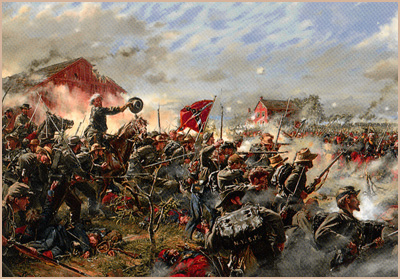
“Barksdale’s Charge” by Don Troiani

After a deadly exchange of artillery fire in which both ends of Sickles’ salient got hammered, Longstreet’s infantry announced its assault with a Rebel yell. Confederate Brigadier General William Barksdale’s brigade of Mississippians smashed into Sickles’ center and Brigadier General Wofford’s Georgians hit him on his left. The fighting was fierce, but Sickles’ troops could not hold their line, and eventually fell back across the pulverized peach orchard.

“Retreat by Recoil” by Don Troiani. The 9th Massachusetts battery fights a heroic rear guard action against Barksdale’s brigade at Gettysburg.

Where the Excelsior Brigade made their stand.

As Sickles’ line broke, the Thirds Corps’ Excelsior Brigade, made up of several New York regiments made their stand in the orchard and along the Emmitsburg road. Among them were The Second Fire Zouaves, a regiment of New York City volunteer firemen.

Alas, the brave defense of the Excelsior Brigade could not stem the tide as the Rebels flooded the peach orchard, charging hard to exploit the wide gap in the Union lines caused by Sickles’ debacle.

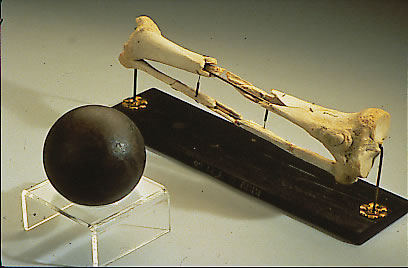
Meanwhile, General Sickles tried to rally his men – when his leg was nearly torn off by a cannon ball. While his aides applied a tourniquet to staunch the bleeding, Sickles was alert, smoking a cigar, and issuing orders even as he was being borne to the rear. An army surgeon’s saw soon claimed Sickles’ leg. (What happened to that leg is another story. See item #3 in this article.)

A painting by Don Troiani depicts the critical moment as troops from Sickles Corps retreat and a mounted General Hancock readies the First Minnesota to save the day.

The collapse of Sickles’ salient created a rapidly developing crisis on the Union left. As the Confederates raced across the peach orchard in hot pursuit of the retreating remnants of the Union Third Corps, General Winfield Scott Hancock – in command of the Union center – knew that, in just a few minutes, the Rebels would charge through the gap and get behind his main defensive line. The day, the battle, and the war, could soon be lost.

Hancock spurred his horse toward the crisis point and tried to rally Sickles’ retreating troops. But the few shell-shocked soldiers willing to reform their lines would not be enough. Hancock had called for reserves — but they’d never arrive in time. He needed something to plug the gap: that something turned out to be the First Minnesota Volunteer Infantry Regiment. Hancock, fate, and a band of stalwart men were about to meet their moment.

Colonel Colvill

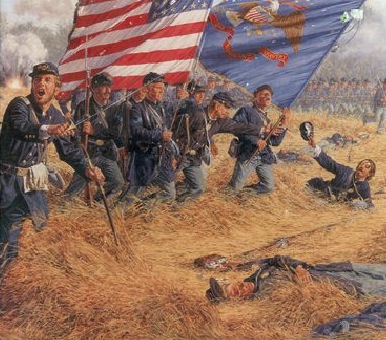
Arriving on the scene, Hancock saw a fresh regiment providing support for an artillery battery and wondered aloud, “My god, are these all the men we have here?” Hancock asked the unit’s officer, “What regiment is this?” “First Minnesota,” replied 23-year old Colonel William Colvill. With the clock ticking toward disaster second-by-second, Hancock pointed toward the oncoming Rebel horde, and bellowed, “Charge those lines!”
“The First Minnesota” by Don Troiani

“Every man realized in an instant what that order meant — death or wounds to us all, the sacrifice of the regiment to gain a few minutes’ time and save the position” recalled First Minnesota veteran Lt. William Lochren, “And every man saw and accepted the necessity for the sacrifice”.
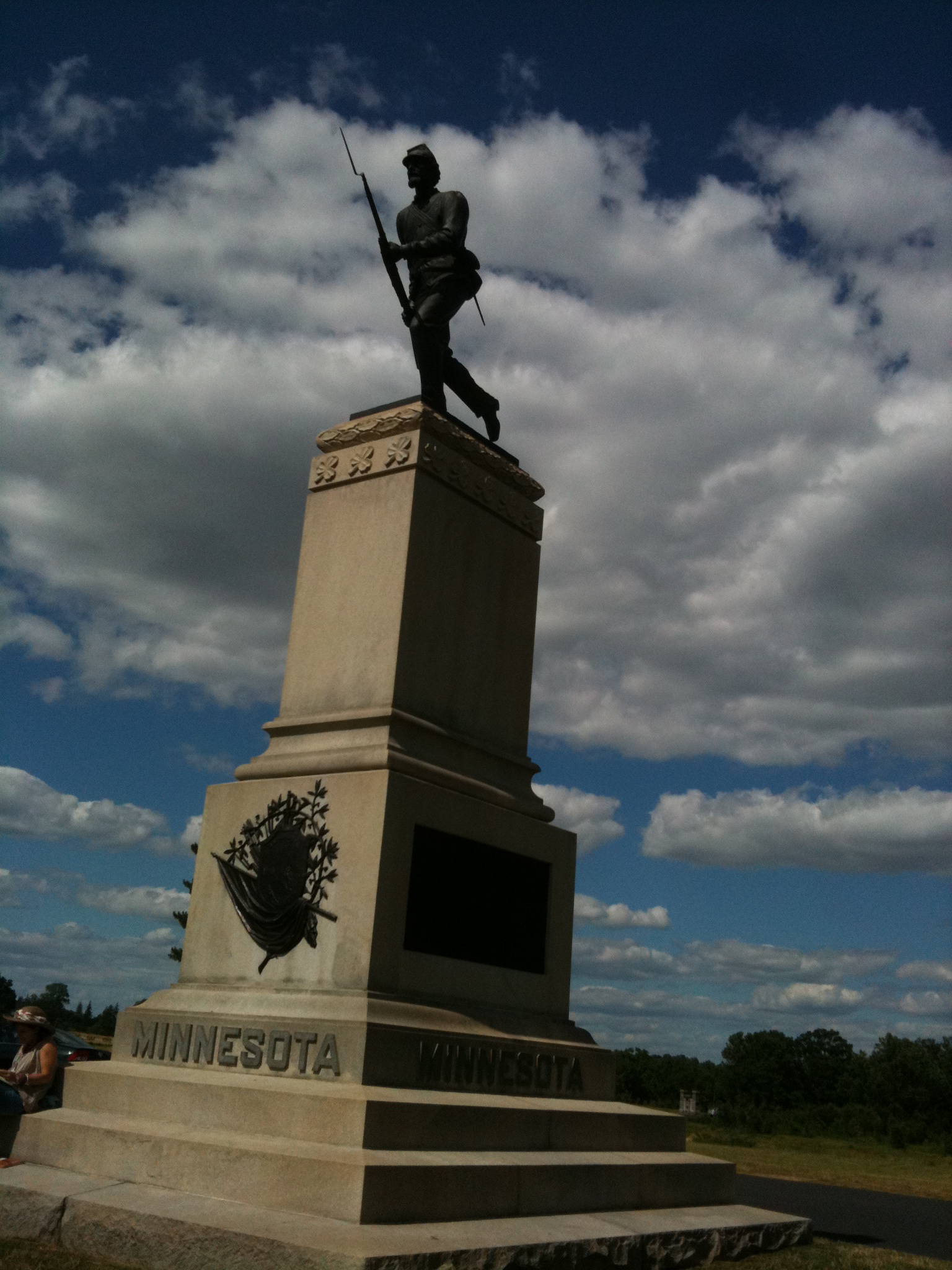
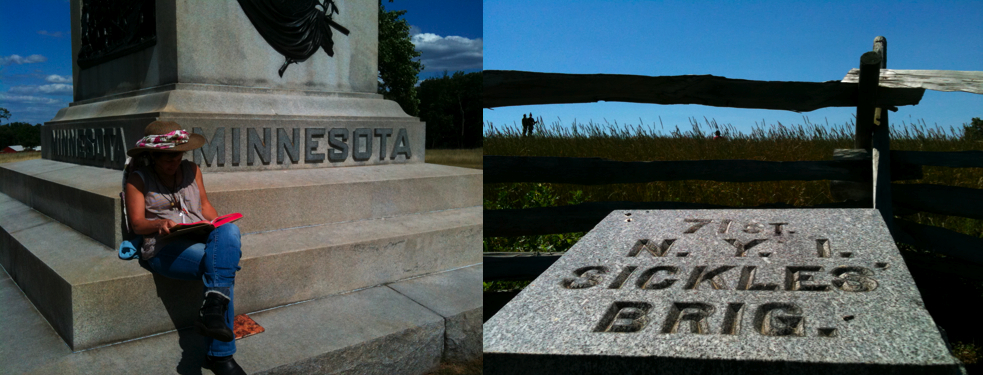
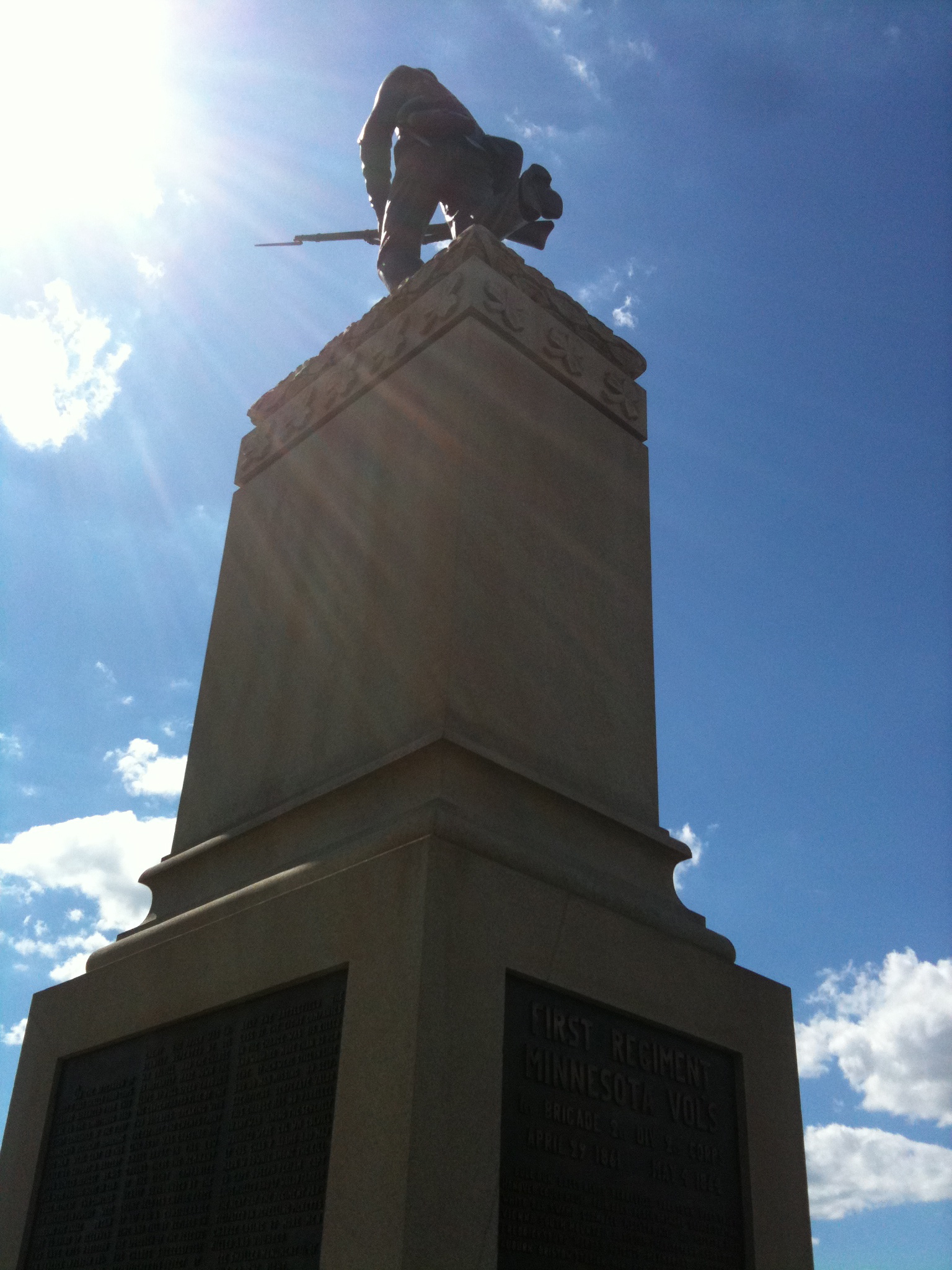
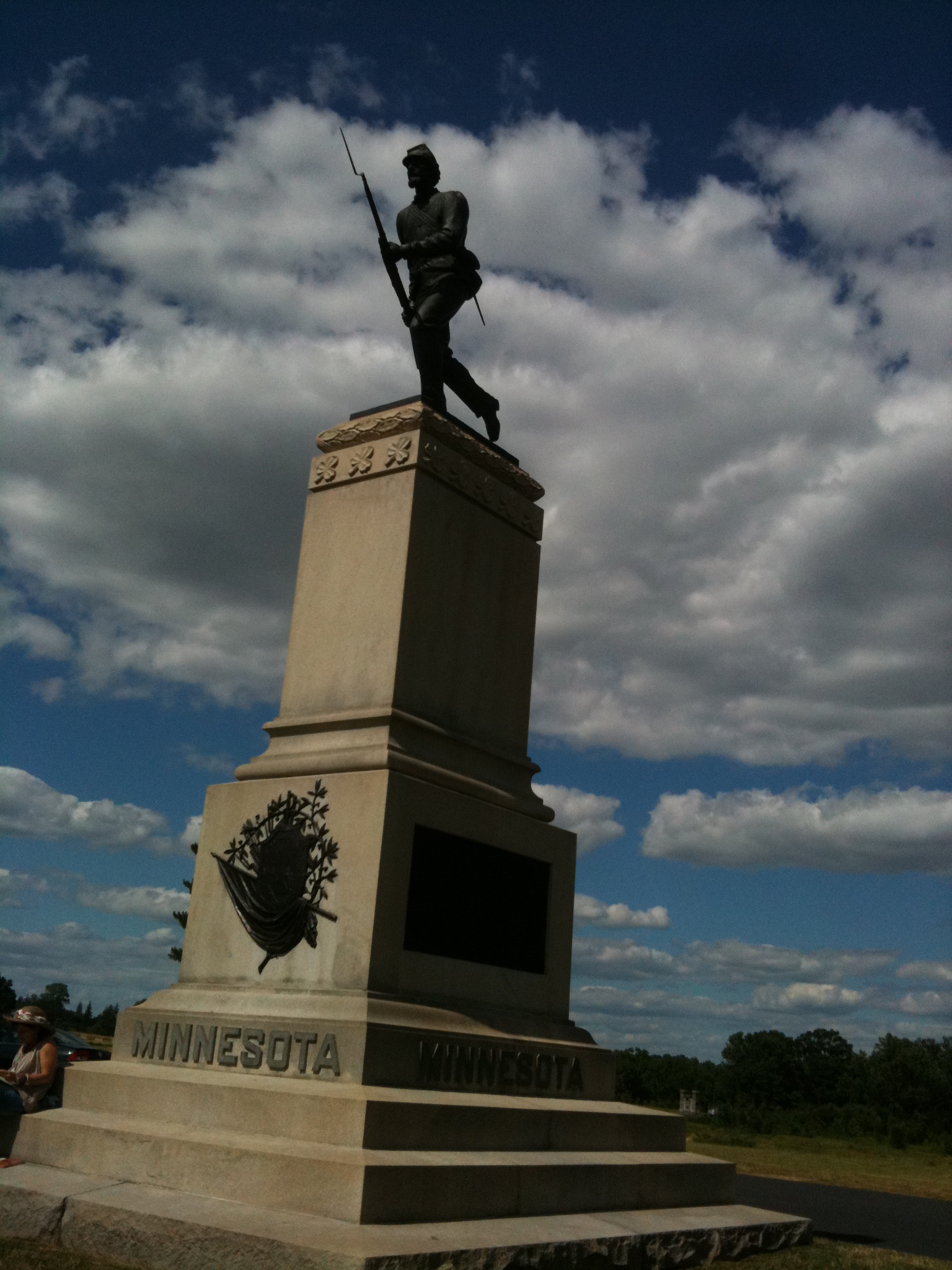
The First Minnesota Monument.

Imagine that scene. At such a moment, moral and physical courage are joined. The moral courage to give and obey such an order: the physical courage to make such a desperate, sacrificial charge.

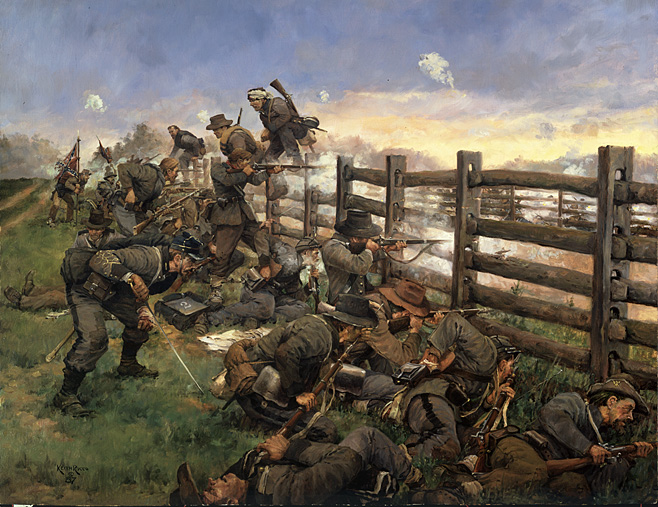
Led by Colvill, the 262 men and officers of The First Minnesota advanced on “the double quick” in line of battle, shouldering their muskets through a hail of lead as they bore down upon the center of the enemy’s line. Relentlessly, without pausing to fire, upon Colvill’s order to “Charge!” the Minnesotans ran toward their foe, leveling their bayonets. As the lines collided with a vicious shock, muskets blazed away and savage fighting raged hand-to hand. The First Minnesota’s flag fell five times — but it was taken up again each time.
The Confederates were staggered by the First Minnesota’s fury and tenacity, and for 15 precious minutes, paid for in blood, the Rebel advance was stalled. Ultimately, sheer force of numbers prevailed, and Colvill’s surviving troops fell back to the Union lines. But by then, the men of The First Minnesota had bought Hancock the time he needed to plug reinforcements into the gap in the Union defenses.

Of the 262 men who made that heroic charge, only 47 survivors rallied back to General Hancock: an 83% casualty rate that remains the greatest loss by any American military unit in a single battle. The regimental flag that was saved five times in that fateful fifteen minutes is now safely enshrined in the rotunda of the Minnesota Capitol building.

Soon after the disastrous drama of Sickles’ debacle turned a peach orchard into The Peach Orchard, a nearby wheat field just a few thousand yards to the southwest was becoming The Wheat Field.

Victoria settled beneath a tree along the road overlooking The Wheat Field and read from Battles and Leaders. I didn’t know much about this part of the battle, but Victoria regaled me with the story of how a Confederate division of Longstreet’s Corps under General John Bell Hood was ordered to take the high ground of Little Round Top.

Below that rocky summit lay a jumbled landscape of giant boulders, thick woods, and a hilly, undulating wheat field: terrain General Hood called, “the worst ground I ever saw.” (At least that’s what he said in the movie, Gettysburg.)
“Gettysburg: Into the Wheatfield” by Bradley Schmehl

The fighting back and forth across the wheat field and nearby woods claimed more than 4,000 Union and Confederate casualties. Billy Yank and Johnny Reb traded possession of farmer George Rose’s 19 acres of bloodstained wheat six times – but the Rebels could not gain the high ground on Little Round Top.

The now-silent, weed-choked acreage infamous as The Wheat Field was truly one of the deadliest patches of battlefield at Gettysburg.

“Saving the flag” by Don Troiani. Colonel Jeffords of the 4th Michigan rescues the regiment’s flag in the wheatfield.

I ran from monument to monument in that field, trying to take in the ebb and flow of the fighting. But I couldn’t dwell on The Wheat Field much longer.

Like General Hood, our objective was Little Round Top.

On the second day at Gettysburg, that rocky promontory, rising 650 feet above The Wheat Field, was the scene of the Civil War story closest to our hearts: the defense of Little Round Top by “The Fighting Professor” Joshua Lawrence Chamberlain and the volunteers of the 20th Maine.
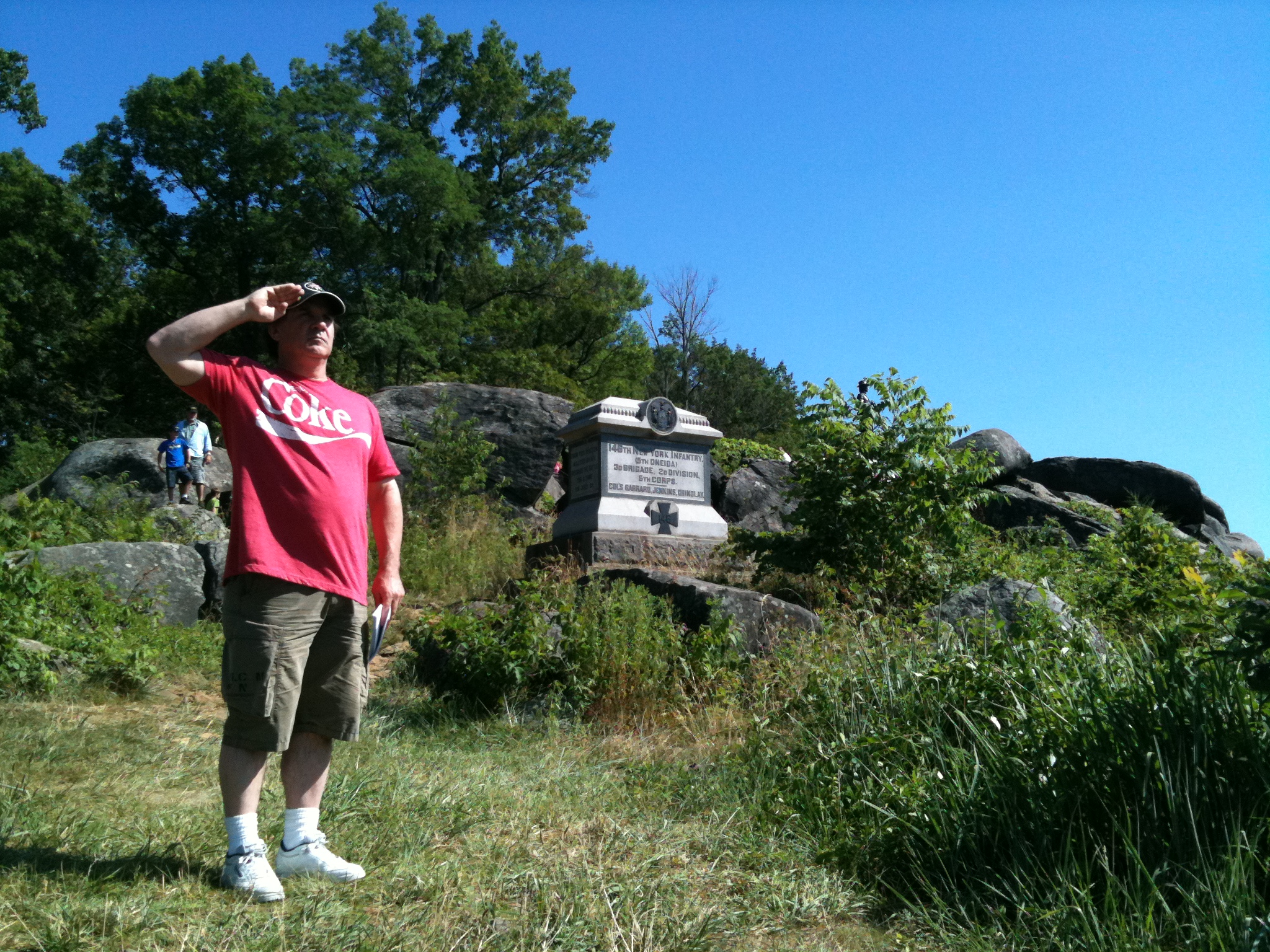
I begin our exploration of Little Round Top with a salute to those who fought there.

Soon before the fights in The Peach Orchard and Wheat Field raged, Union General Gouvernor K. Warren, chief engineer of the Army of the Potomac, reconnoitered Little Round Top and noticed a Confederate battle line forming on the ridges beyond The Wheat Field. Seeing that Sickles’ ill-considered advance had left Little Round Top essentially undefended, Warren took it upon himself to protect the high ground. He didn’t have much time, sending couriers scrambling for units to help defend the hill.
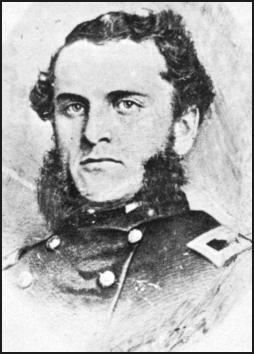
One of Warren’s couriers encountered 26-year old Colonel Strong Vincent (what a fabulous name!), in charge of a brigade, and asked for his commanding officer. Sensing the high stakes of the moment, Vincent replied, “What are your orders?” Told that General Warren needed troops “to occupy yonder hill,” Vincent declared, “I will do so and take the responsibility.”

Not waiting for formal orders from his superiors, Vincent rushed to Little Round Top and placed the four regiments of his brigade in line on the extreme left of the Union army: the 16th Michigan, 44th New York, 83rd Pennsylvania, and Chamberlain’s 20th Maine. Soon after Vincent’s brigade took up their positions, the Confederate assault began — and Vincent, brandishing his wife’s riding crop, urged his men, “Don’t give an inch!” It wasn’t long before Strong Vincent fell, mortally wounded. Like General Warren, Vincent had done his part to save the Union left flank. Now, it was up to Chamberlain’s 20th Maine to play their role in the deadly, decisive drama on Little Round Top.
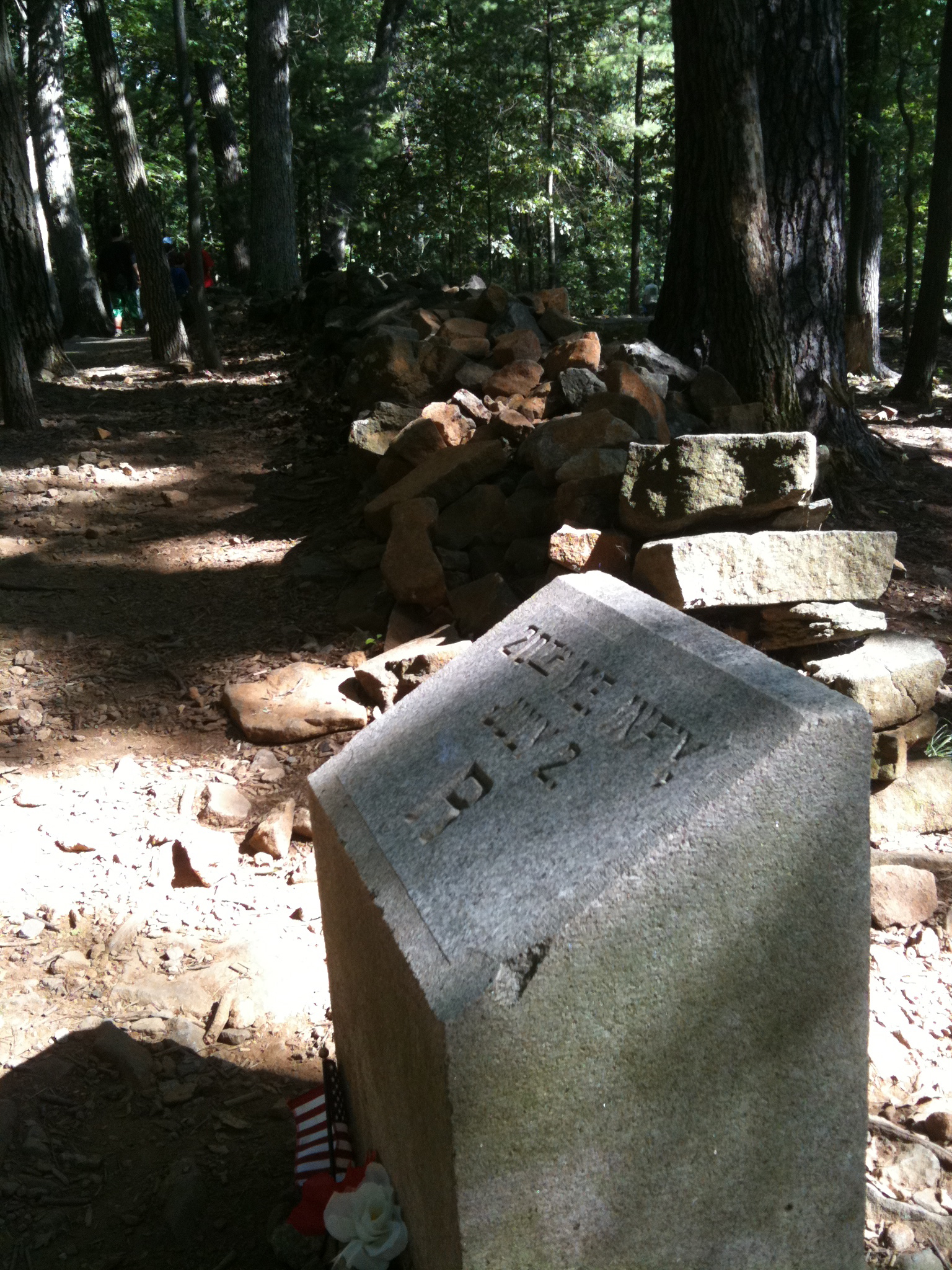
The right flank of the 20th Maine on Little Round Top.
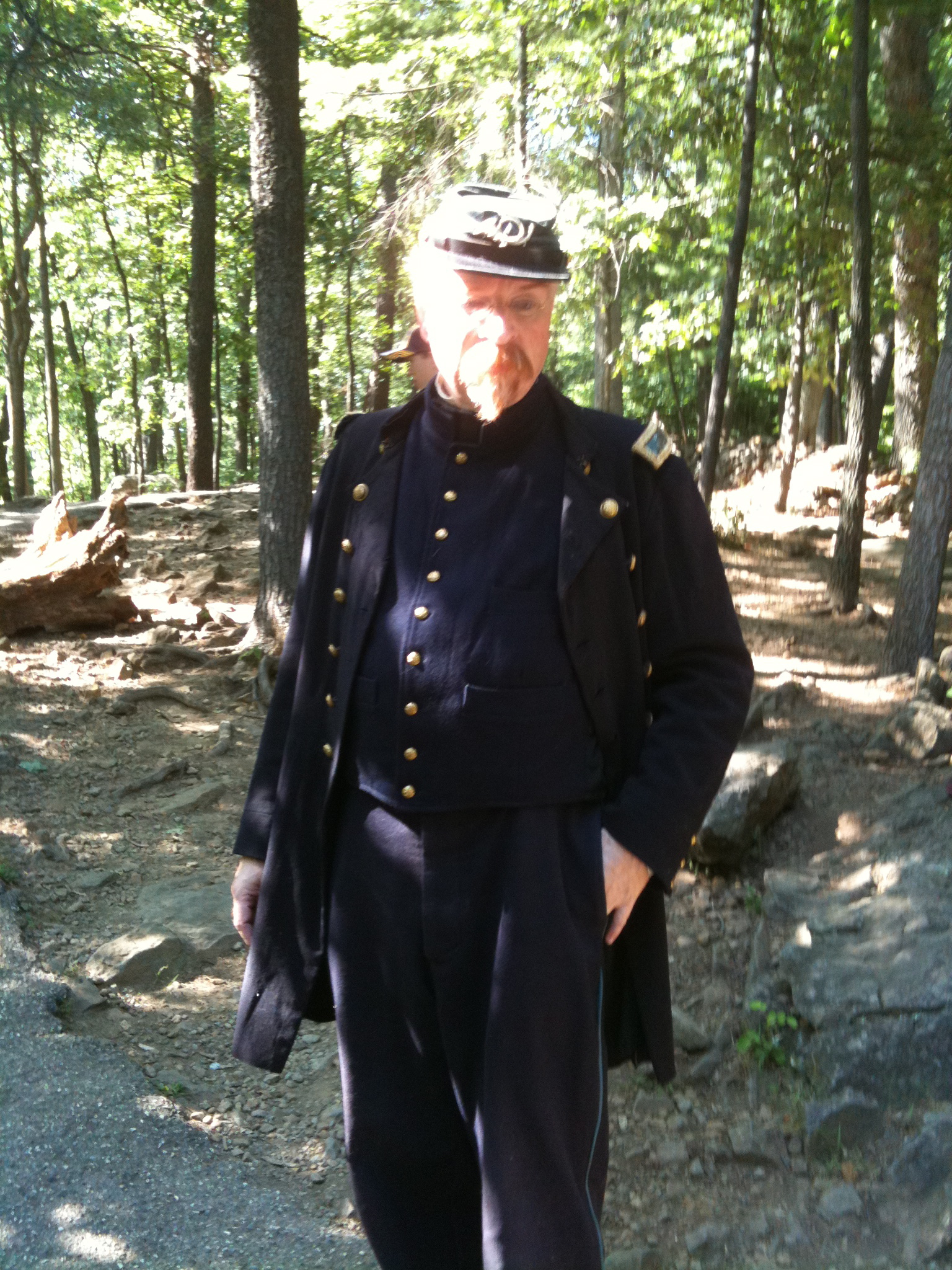
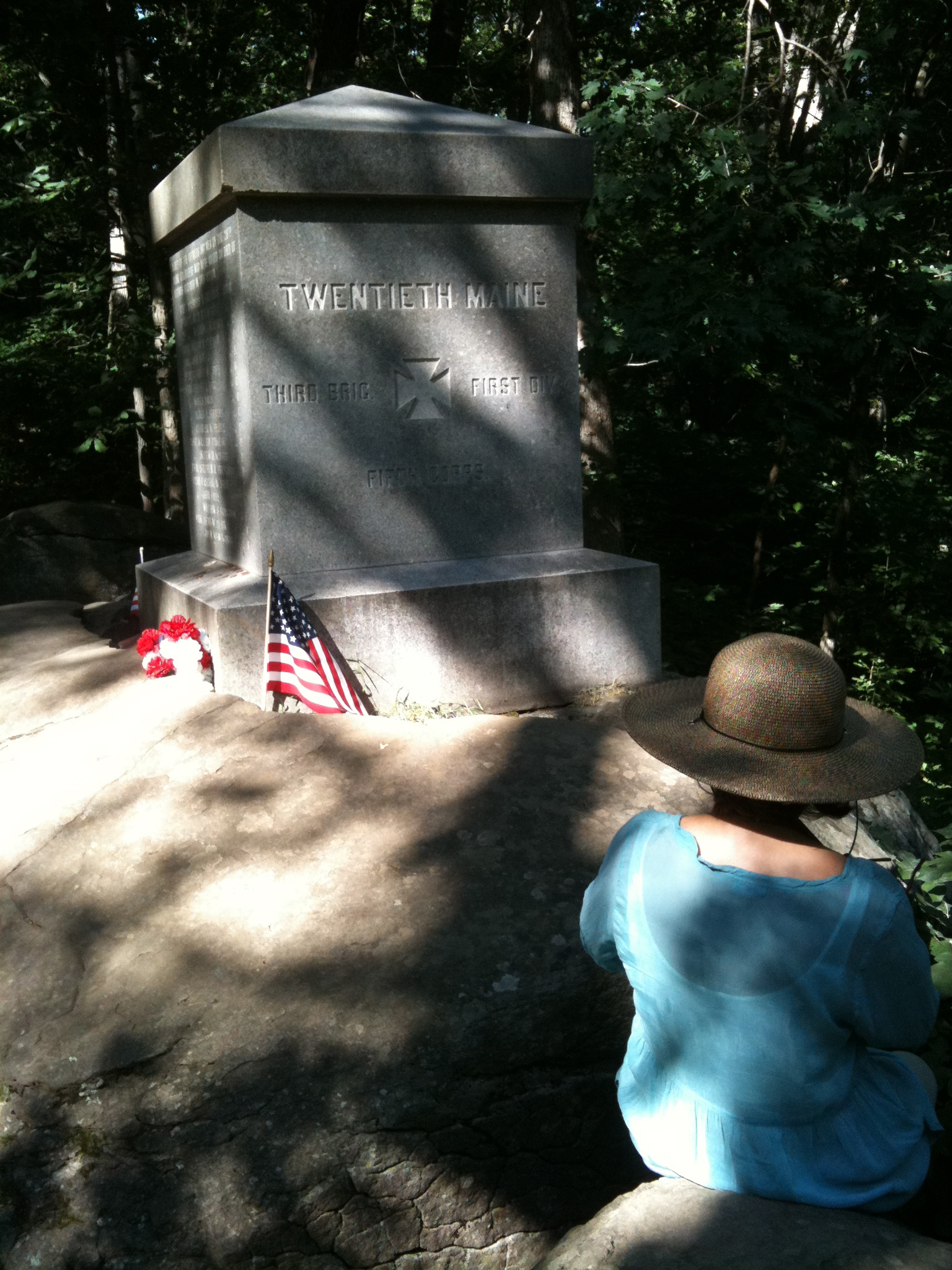
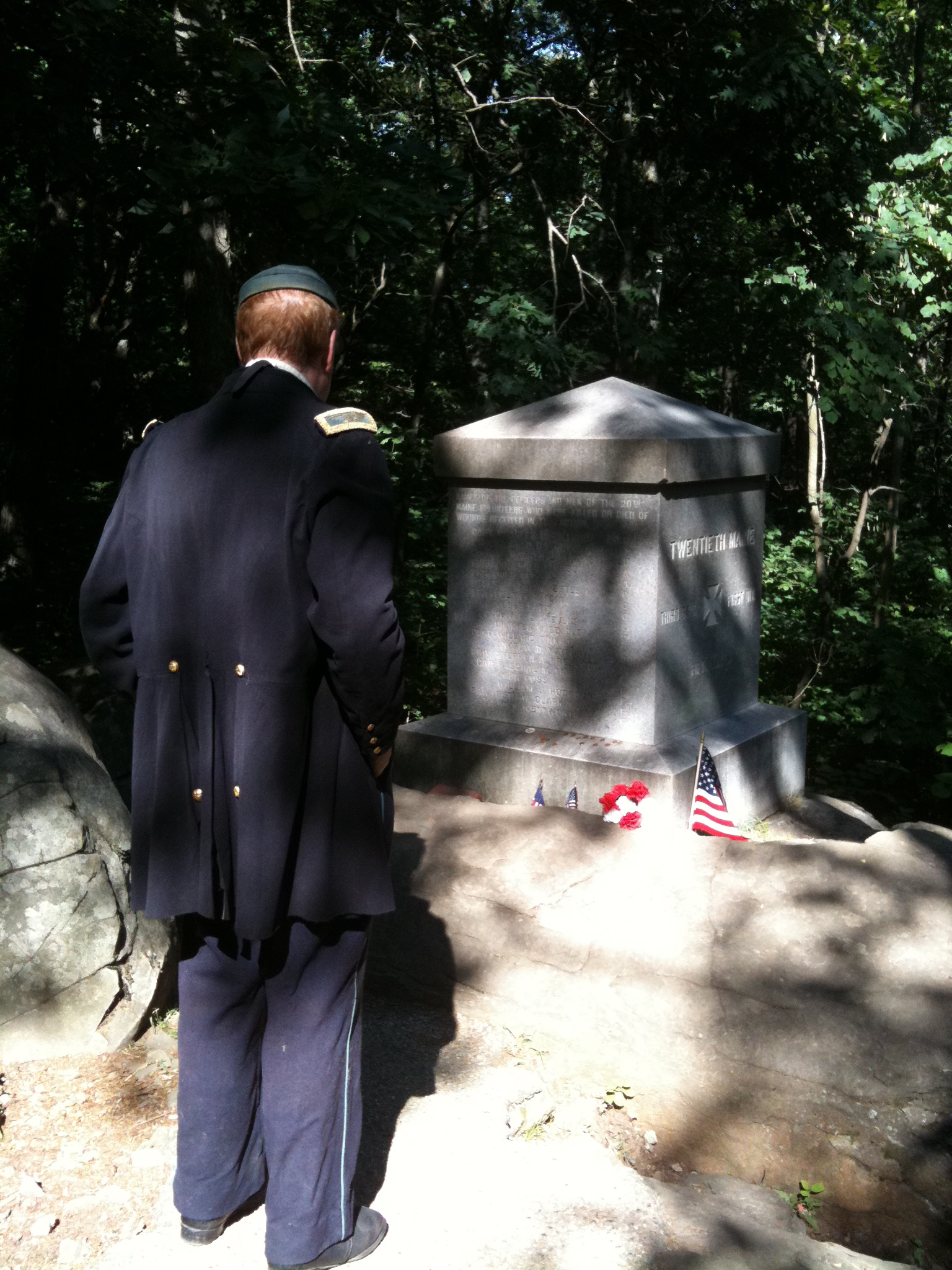
Victoria and I hiked up to the position defended by Chamberlain and the 385 men of his regiment. There, we found a Civil War re-enactor dressed as an infantryman in the 20th Maine. He knew the details of the battle pretty well, and I enjoyed sharing the story with him as we stood together on that hallowed ground where Little Round Top, the Union Army – and perhaps the nation – was saved.

At about 6:30 PM, after once more repulsing an uphill attack by the 15th Alabama, Chamberlain’s troops were nearly out of ammunition. And they were running out of time.

“The 20th Maine & 15th Alabama at Gettysburg” by Dale Gallon

They had been fighting for several hours and had inflicted and suffered heavy losses. Ordered by Vincent to “Hold the ground at all hazards,” The Fighting Professor knew he could not retreat. He ordered his men to “fix bayonets.”

“Chamberlain’s Charge” by Mort Kunstler

According to Chamberlain’s own words, “I ordered the bayonet. The word was enough. It ran like fire along the line, from man to man, and rose into a shout, with which they sprang forward on the enemy, now not 30 yards away. The effect was surprising; many of the enemy’s first line threw down their arms and surrendered. An officer fired his pistol at my head with one hand, while he handed me his sword with the other. Holding fast by our right, and swinging forward our left, we made an extended “right wheel,” before which the enemy’s second line broke and fell back, fighting from tree to tree, many being captured, until we had swept the valley and cleared the front of nearly our entire brigade.”
Longstreet’s Corps had failed to take Little Round Top – and Victoria and I had failed to take any water with us on our battlefield hike. So, a dehydrated Vic and I joined exhausted Johnny Reb as he retreated across the Gettysburg farm fields and regrouped for the fighting that would climax on the Third Day.

The sun was starting to set but it was still plenty hot as we tramped back down Little Round Top, through The Wheat Field, across The Peach Orchard, over the Emmitsburg Road, and all the way to Pitzer’s Woods, where General Longstreet and his warhorse defended our rental car.

To be continued…
Leave a comment

Filed under Adventure, History

Cork, Ireland is Hobbiton, Middle Earth

My daughter Emilia in now in Cork, Ireland. And “Lord of the Rings” fans take note: she may have found Frodo’s hometown…

ebarrosse9291's avatarGetting Free

When I arrived on the ground in Cork, Ireland, I immediately felt a strange attachment to the place. It was uncanny and uncalled for, especially because I’d only been there 15 minutes and was just walking down a street carrying all my luggage with no specific experiences yet made. But I felt a connection, and now I know why. It’s because Cork, Ireland, ISHobbiton. Let me explain.

I am a huge Lord of the Rings fan. I won’t go in to serious detail, but I’ve seen every movie/special feature at least 4 times (not exaggerating), I’ve probably watched the Helm’s Deep battle scene upwards of 15 times, and I’m certainly not done watching them. I’ve only just begun. Anyways, Hobbiton has always been my favorite location from the LOTR films. Yes, Rivendell is beautiful and serene, Mordor is eerie and mysterious, Gondor is magnificent—but Hobbiton (within…

View original post 237 more words

Leave a comment

Filed under Adventure, Art, Beauty, History

The First Day at Gettysburg: 150 Years Ago Today

This is a re-post of the first of a series of articles I wrote about the trip my wife and I made to Gettysburg in 2010. On this, the 150th anniversary of the first day of that great and decisive Civil War battle, I thought it would be a fine idea to put this old post back into service. Part travelogue, part history lesson, it’s a good way to walk the hallowed battlefield and enjoy the charms of the town if you can’t actually be in Gettysburg for this weekend’s sesquicentennial events.

* * * * * * * * *

On Sunday June 27th, my wife Victoria and I gave our last performance of “The Vic & Paul Show” in it’s three-week run at PUSH Lounge in Woodland Hills. It was a satisfying end to a wonderful run — made all the more special by so many great friends, Northwestern pals, and people we dearly love but haven’t seen in ages who showed up to share the experience with us. It had been more than twenty years since we’d done a comedy show together – and exactly twenty years since we’d said “I do” in a Greek Orthodox service on a blistering hot day in Chicago.

With our 20th wedding anniversary on June 30th, the show was essentially a celebration of our two decades of married bliss – and as we struck the stage at PUSH for the last time, our thoughts turned to our upcoming anniversary trip: a return to the great Civil War battlefield at Gettysburg.

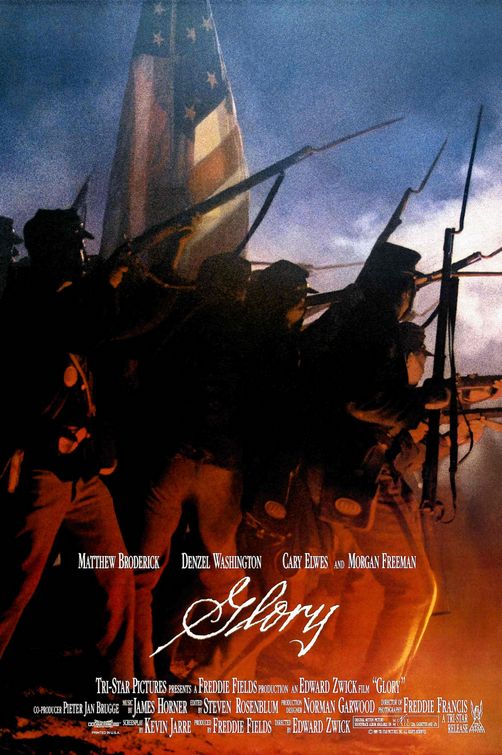
We were we going to Gettysburg for our 20th anniversary because that’s where we spent our first honeymoon in 1990. Back then I was in the early throes of a mad crush on Civil War history that was inspired by the Oscar-winning 1989 movie Glory and had continued unabated since. As we planned our nuptials, I gave my darling bride a choice of honeymoon excursions

1. A tour of National League ballparks

2. A tour of Civil War battlefields

That I could even propose two such options to my bride-to-be was proof that I was already the luckiest man in the world – but when she chose the battlefield tour, I was certain that our union (just like the Union that Lincoln’s armies defended on that hallowed ground) would long endure.

Our first stop in 1990 was Gettysburg, and while we did not plan it that way, we arrived on July 1st – the 127th anniversary of the first day of that epic 3-day battle. It was kismet. We were where we were meant to be. Thus, it felt right that on such a momentous marital (and martial) anniversary, we should go back to the small Pennsylvania crossroads town where Robert E. Lee’s 1863 invasion of the North came to a bold and bloody end. Romantic, yes?

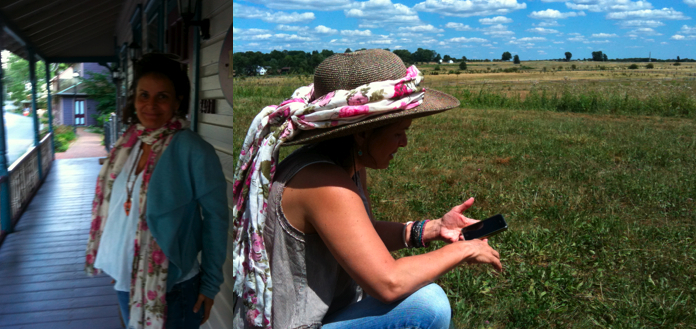
We flew into Philadelphia on June 30th, the eve of the battle, and drove west to Gettysburg. We wanted to make sure that we got to our Bed & Breakfast while these was still light on the battlefield. It was a 3-hour drive and we were hungry, so we stopped for a late lunch. But no service plaza grub would suit this history-loving couple – and with the help of her iPhone, Victoria located the perfect spot for a picturesque and historic nosh just a few miles off the turnpike. So, we turned off at the Morgantown exit, headed for the Inn at Saint Peters Village.

Saint Peters Village was entered onto the National Register of Historic Places in 2003. It’s a small, late 19th century industrial “company village” on the banks of French Creek in Chester County, PA.

For about half a mile, vintage buildings line the main drag that winds up a steep, rocky ravine, with the creek running through giant boulders below. Artists and craftsmen have set up shop in the clapboard 19th century storefronts, and the biggest and most architecturally impressive of these is The Inn at Saint Peter’s Village, where we enjoyed lunch on a large wooden deck overlooking French Creek. It was beautiful. So far, so good.

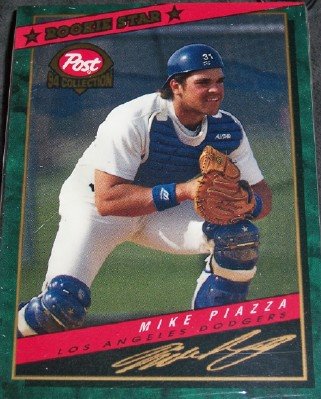
Interestingly, National League baseball managed to re-enter our honeymoon thoughts when our waitress casually mentioned that Mike Piazza’s dad “owned the whole town.” It turns out that arguably the greatest hitting catcher in Major League history (427 Home runs, career .308 batting average) grew up in nearby Phoenixville with his parents, Vince and Veronica. It was nice slice of local history to go with my pizza.

Hey, pizza and Piazza!

It was nearing 6:00 PM as we drove into Gettysburg down PA Route 30 and onto the old Chambersburg Pike – the same road that General John Buford rode into town with his division of Union cavalry late in the day on June 30th, 1863. That evening long ago, a grimly determined Buford watched with concern as a brigade of Confederate infantry under General Pettigrew probed south from Cashtown along the Chambersburg Pike toward Gettysburg.

Pettigrew’s brigade had been sent by his division commander, General Henry Heth, of A.P. Hill’s Corps in search of much-needed supplies — including a cache of shoes they understood to be in the town.

But when Pettigrew saw Buford’s cavalry arriving south of town, he returned to Cashtown and told Heth and Hill what he had seen. Despite Pettigrew’s claim that Federal cavalry was on the Chambersburg Pike, neither of his superiors believed there was anything more than Pennsylvania militia in Gettysburg.

Fate – and the fighting – would wait until tomorrow. And so, as Victoria and I pulled into the parking lot of The Doubleday Inn, would our own adventures on the Gettysburg battlefield wait until the following day.

The charming house at 104 Doubleday Avenue, now The Doubleday Inn, was built in 1939 and it’s the only B & B or hotel located on the grounds of the Gettysburg National Military Park. It stands on the very ground that Buford and his cavalry would defend the next morning. There are 42 battlefield monuments within a quarter mile of the Inn honoring the regiments that took part in the fierce fighting that took place here on July 1, 1863.

Before we turned in for the night, we took a sunset stroll along Doubleday Avenue on Oak Ridge to check out the monuments lining the road in front of the Inn.

Our favorite was the monument dedicated to the 11th Pennsylvania Volunteer Infantry. All of the monuments at Gettysburg are stirring, heartbreaking testaments to valor and sacrifice – but this one is unique because of a dog.

On the side of the monument that faced the enemy that bloody day is a cast iron representation of the regiment’s beloved mascot, a terrier named “Sallie,” who was said to have hated three things: Rebels, Democrats, and Women.

According to the well-documented story, after the first day’s battle was over, faithful Sallie refused to leave the field where her brave boys had fought and fell. She stayed with her dead soldiers until she was found, weakened and close to death, a day after the battle. Sallie’s regiment nursed her back to health and she fought with them until she was killed in battle in February 1865. Sallie’s boys never forgot their faithful canine comrade – immortalizing her on their regimental monument.

To this day, visitors paying their respects at the 11th Pennsylvania monument on Oak Ridge often leave dog biscuits and bones for the devoted Sallie – as they did on the evening that Victoria and I paused to remember the regiment’s service and sacrifice before going back to the Doubleday Inn to prepare for the next morning:

July 1, 1863 – the first day of the Battle of Gettysburg.

“Forward men, forward for God’s sake…”

On the morning of July 1st, my wife, Victoria, and I got up early enough to enjoy breakfast at The Doubleday Inn with our housemates — a collection of congenial history buffs and their spouses.

One of our fellow guests, a 40-something Pennsylvanian named John, was there by himself, and this was clearly not his first visit to Gettysburg. It was fun to see how enthused he was about getting out on the battlefield.

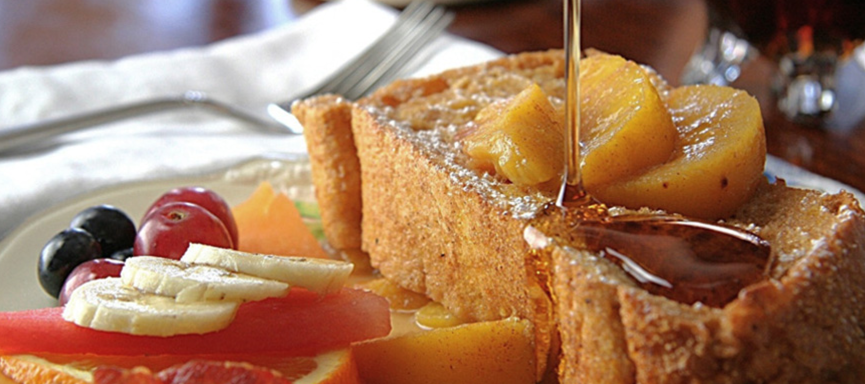
I shared John’s excitement as I downed my breakfast, a delicious, maple syrup drenched version of French toast that proved too heavy for Victoria. She needn’t have worried about the calories: battlefield tramping burns ‘em off big time.

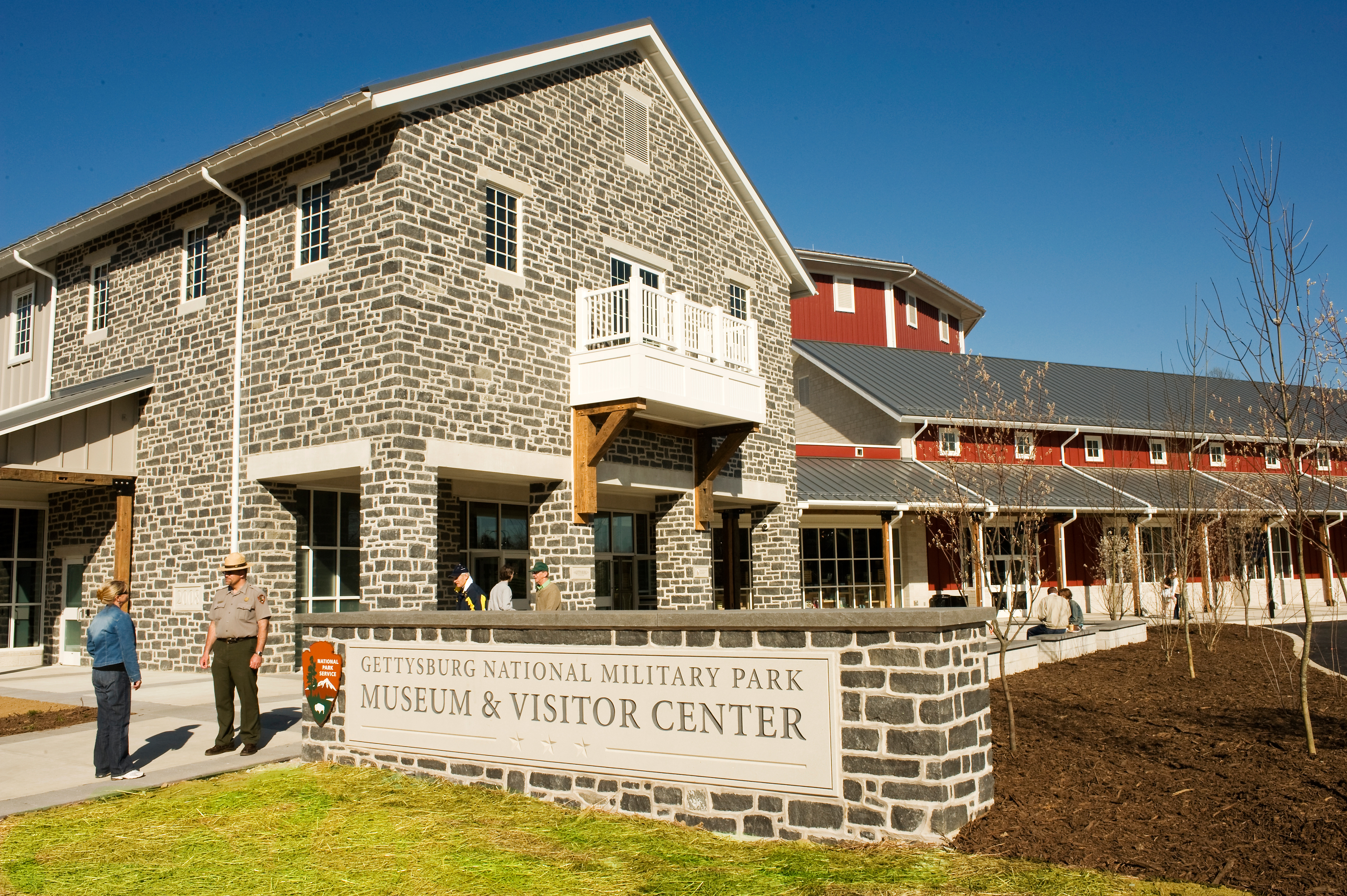
By the time we left the Doubleday Inn on Oak Ridge that morning, headed for the new Gettysburg Visitor Center and Museum, we could imagine General John Buford’s battle-weary cavalry corps falling back under fire from Confederate General Henry Heth’s reinforced infantry to positions along Oak Ridge (and the adjacent McPherson’s Ridge) 147 years ago.

Buford’s boys had been fighting off Heth’s two brigades since 5:00 AM, and here we were, two honeymooning sluggards, just getting into action at 9:00.

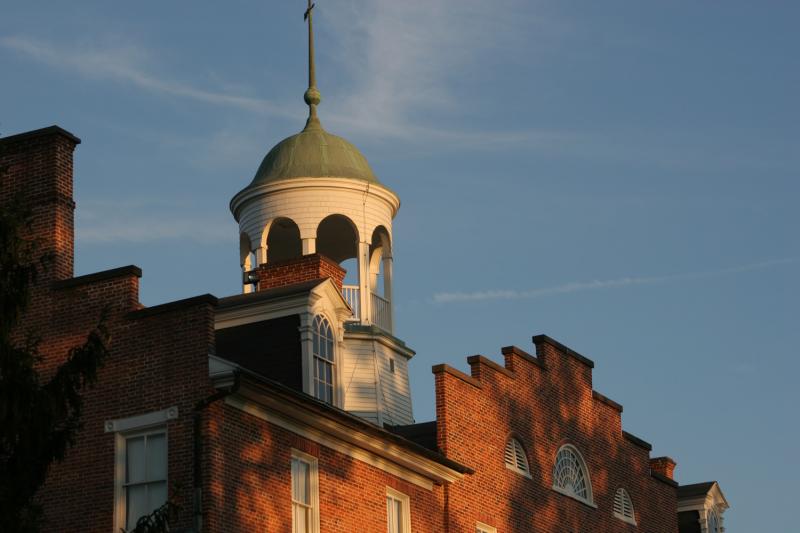
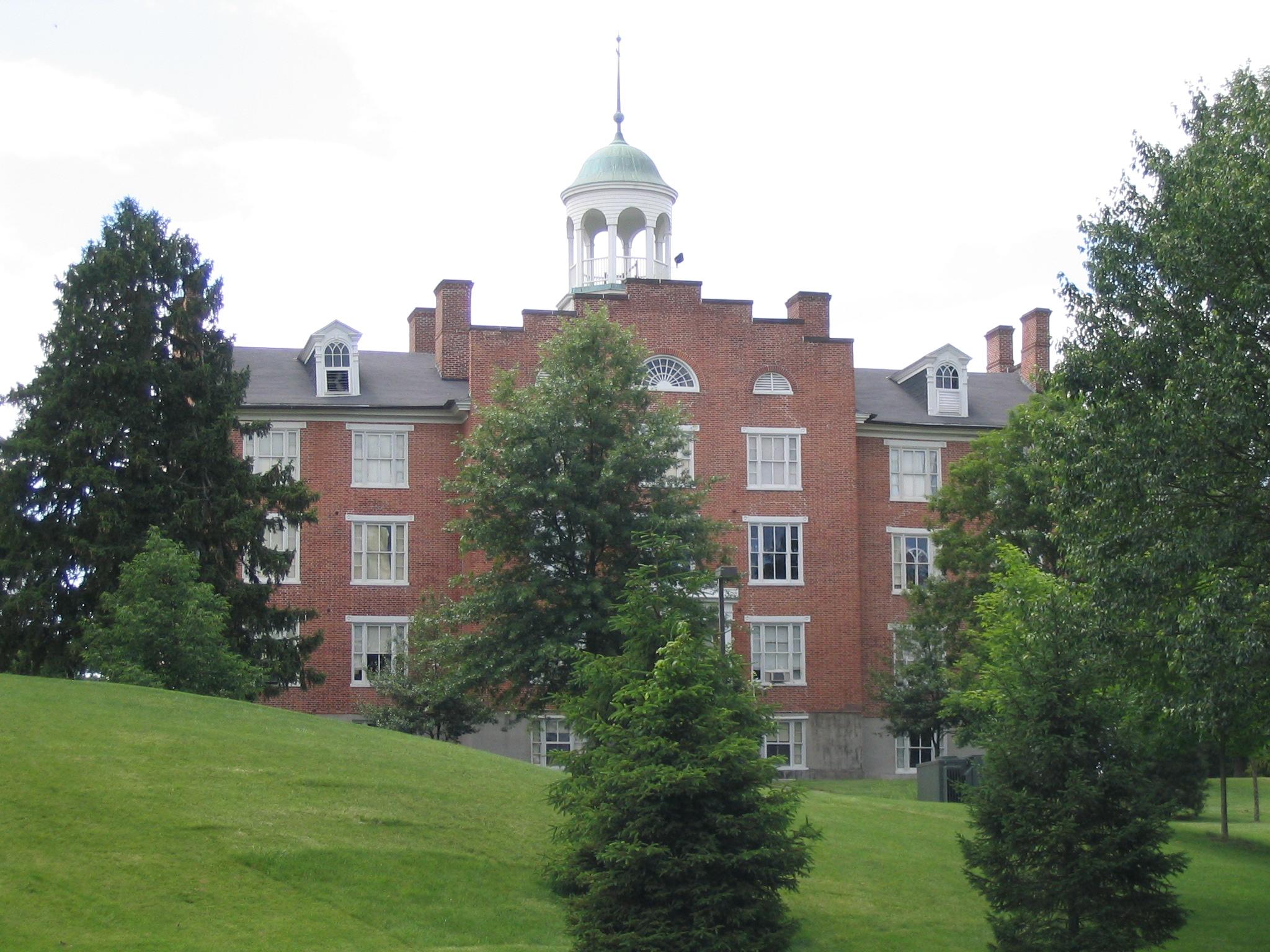
As we drove toward town and the Visitor Center, we could see the distinctive cupola of the Lutheran Seminary along Seminary Ridge, an important landmark on the battlefield in 1863 – and to this day. We could envision a grimly determined General Buford up in that cupola, field glasses in hand, watching the progress of the battle raging to his front, and looking anxiously to the rear for the approach of General Reynolds and his infantry corps.

In fact, if we were there on that fateful morning in 1863, General Reynolds would soon be passing us on the road, riding up to the seminary and calling up to Buford, “How goes it, John?” Buford would reply, “The devil’s to pay!” and the next chapter of Gettysburg history would soon be written. But that would have to wait. We wanted to check out the new Visitor Center first.

Our hosts at the Doubleday Inn (and several of our fellow guests) had spoken in glowing terms about the wonders of the new Museum and Visitor Center, which opened in April 2008 — and they were not blowing smoke. Victoria and I have been to a lot of National Park visitor centers, and this one blows them all away.

Far more than the usual place to pick up maps, brochures and a gift or two, the Gettysburg Museum and Visitor Center is 22,000 square feet of exhibits, battlefield relics, inter-active exhibits, and multi-media presentations, including the film, “A New Birth of Freedom”, narrated by Morgan Freeman (who also starred in the film, Glory, which triggered my Civil War obsession in 1989).

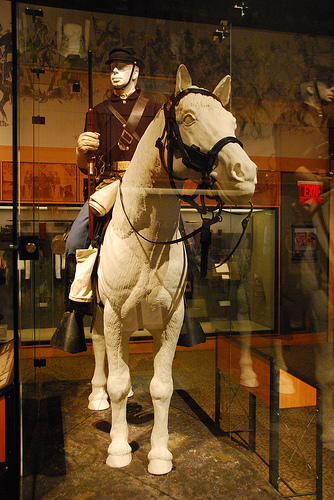
Victoria and I watched the film and checked out the incredible exhibits – including the stretcher used to carry the mortally wounded Stonewall Jackson from the field at Chancellorsville on May 2, 1863. (Jackson’s death 8 days later would have dramatic repercussions at Gettysburg.)

The humble furnishings of Robert E. Lee’s personal field quarters were also on display, as were hundreds of period muskets, rifles, pistols, artillery shells, uniforms, and other treasures discovered on the battlefield over the years. It would be very easy to spend the entire day there – but with General Reynolds arriving on Seminary Ridge to reinforce Buford and the first day’s fighting heating up – we were eager to get back on the battlefield.

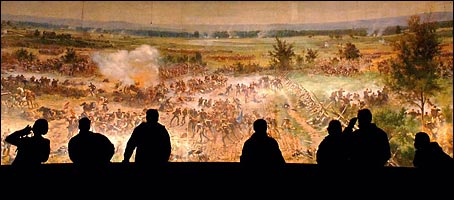
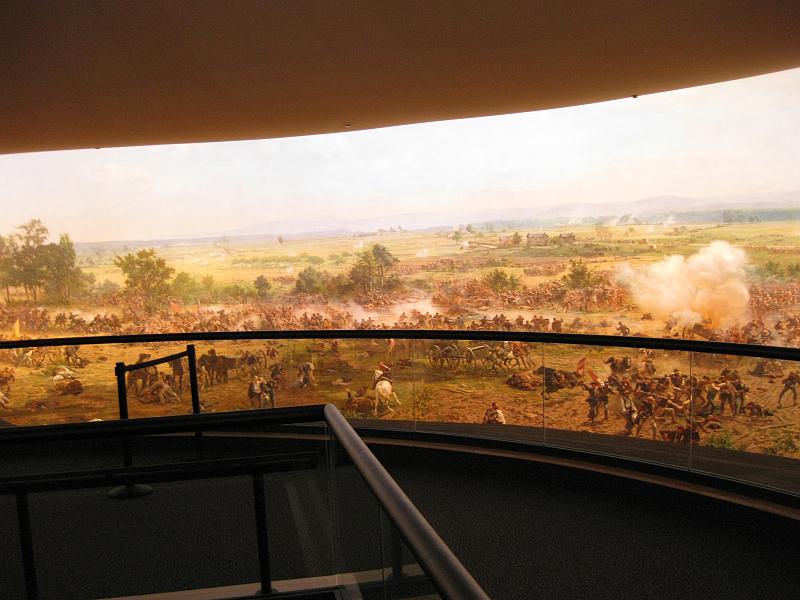
But first, we had to see the fully restored Gettysburg Cyclorama.

We’d seen it 20 years ago, when it was something of a sideshow attraction along with the old electronic map with its more than 600 lights that, for forty years, tracked the major action in the battle for visitors. Today, in its new home, the Gettysburg Cyclorama — the nation’s largest painting — gets its due.

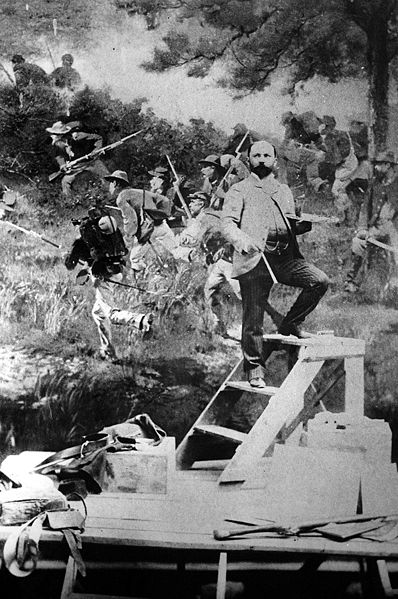
The massive artwork, entitled “The Battle of Gettysburg”, is a 360-degree cyclorama by the French artist Paul Dominique Philippoteaux. The vivid painting wraps around the curved walls of the exhibit, surrounding the viewer with a stunning, colorful, and violent depiction of “Pickett’s Charge” on July 3, 1863 – the climactic action of the three-days of unprecedented valor, fury and sacrifice that was The Battle of Gettysburg. You really have to see it to understand the scale and power of this thing. The whole experience made me proud to think “Your tax dollars at work.”

“Reynolds and the Iron Brigade” by Keith Rocco. © Keith Rocco and Traditional Studios http://www.keithrocco.com

After our rewarding morning at the Visitor Center, we drove back out to McPherson’s Ridge, where Heth’s reinforced Confederate brigades of General A.P. Hill’s corps were about to confront the vanguard of the Union Army of the Potomac, hurriedly deployed by its commander, General John Reynolds. Reynolds First Corps included the famous Iron Brigade, wearing their distinctive tall black hats. For Heth’s rebels, one look at “those damn black hats” made it clear that one of the Union’s hardest-fighting, battle-tested veteran infantry units had now joined the fight for the Gettysburg high ground.

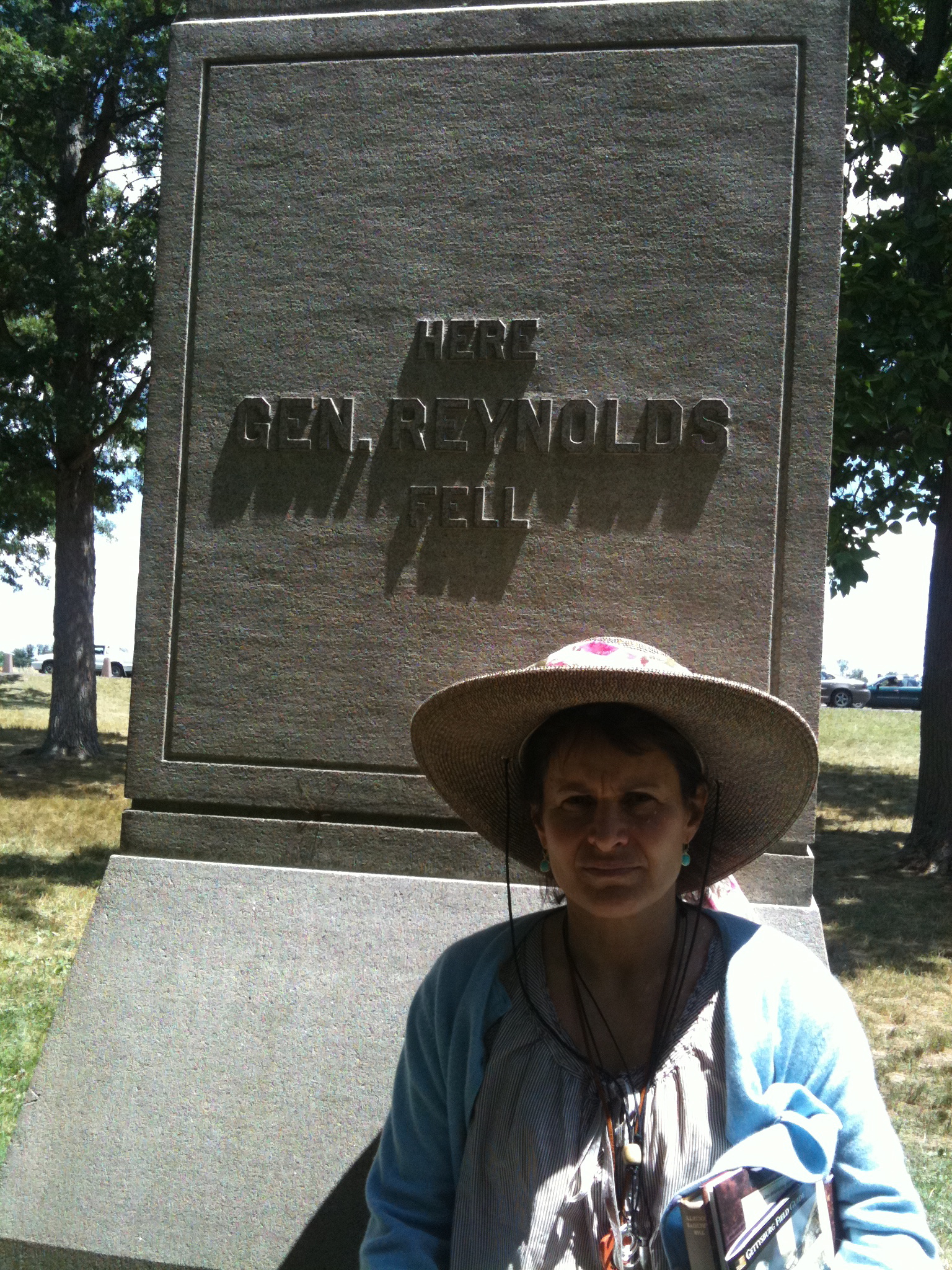
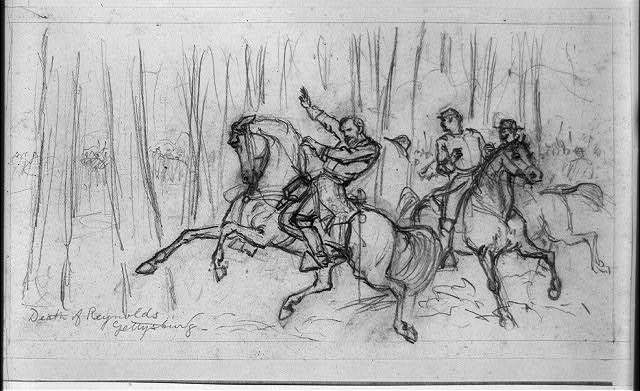
Victoria and I knew that our first stop on McPherson’s Ridge would be a somber one: the spot where Reynolds fell, shot from his horse in the opening moments of the engagement as he urged his troops forward, bellowing, “Forward men, forward for God’s sake and drive those fellows out of those woods!”(Generals led from the front in those days.)

The sudden loss of Reynolds was a brutal blow to the Union cause. John Reynolds wasn’t just any general – he was one of the Union army’s best.

Some historians maintain that Lincoln wanted to give Reynolds command of the Army of the Potomac, but that Reynolds demanded more autonomy than Lincoln could grant him. Ultimately, Lincoln put Pennsylvanian George Meade in charge of the Army of the Potomac with Reynolds leading the army’s First, Third, and Eleventh Corps.

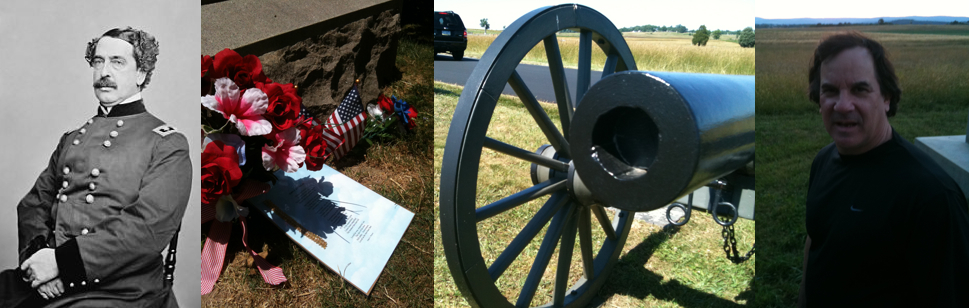
Upon Reynold’s death, command of the Union forces fighting on McPherson’s Ridge and Oak Ridge devolved to General Abner Doubleday. (The Doubleday Inn, get it?) Two years earlier, Captain Doubleday had fired the first shot in defense of Fort Sumter, now, promoted to general, he was called upon to once again play a pivotal role in an epic moment.

And while it may well be that the claim Doubleday invented baseball in 1839 (he was in West Point at the time) is no more than a legend, what he did for the five furious hours after Reynolds death would have been legend enough for any man.

Doubleday’s men fought hard all morning, holding fast to the critical ridgelines just outside of town. As the Confederates threw wave upon wave of reinforcements into the fray, Doubleday’s 9,500 men battled ten Rebel brigades numbering more than 16,000, inflicting casualties on their attackers ranging from 35 to 50 percent in various regiments. The monuments that line McPherson’s Ridge and Oak Ridge are silent testaments to the valiant resistance of Doubleday’s troops in the face of overwhelming odds.

Eventually, Confederate troops finally pushed Doubleday off those ridgelines, past the Lutheran Seminary, and onto Cemetery Hill — where Union troops were concentrating to secure the high ground overlooking the town and fields below. At day’s end, Doubleday’s First Corps had lost two thirds of its men, dead, wounded, taken prisoner, or missing in action. But their sacrifice saved the day. The gallant stand made by Buford, Reynolds and Doubleday had kept the Confederates from reaching the high ground on Cemetery Hill.

The contest for that high ground – and victory on the bloody Gettysburg battlefield — would last two more days.

First Minnesota monument at the base of Cemetery Hill: Heroism on Day #2

Victoria and I returned to The Doubleday Inn with a greater appreciation of the man whose name our pleasant B&B bore.

To be continued…
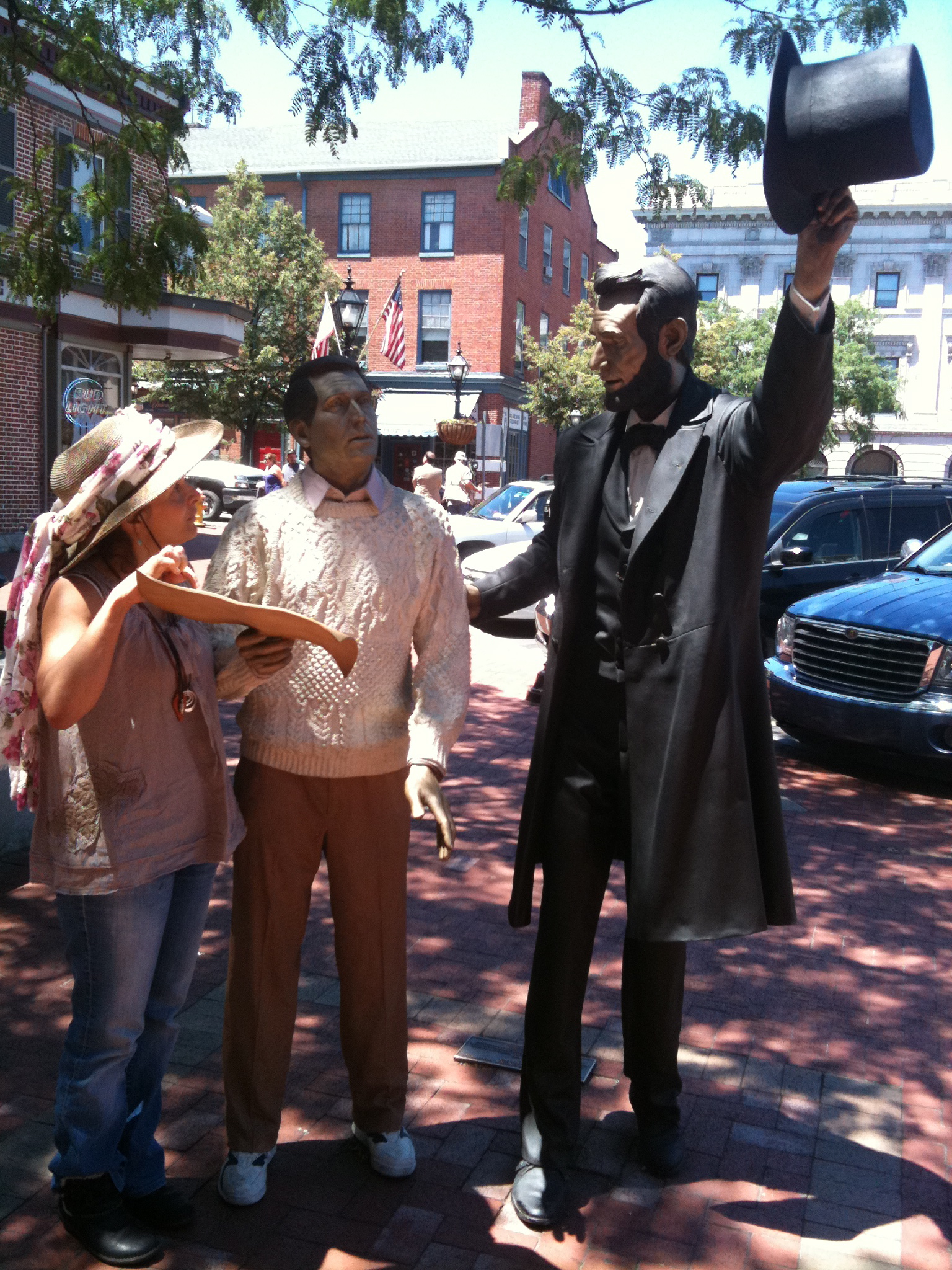
Victoria and a friend ask Honest Abe for directions in downtown Gettysburg.

Leave a comment

Filed under Adventure, History

A Journey to the Land of Dreams…
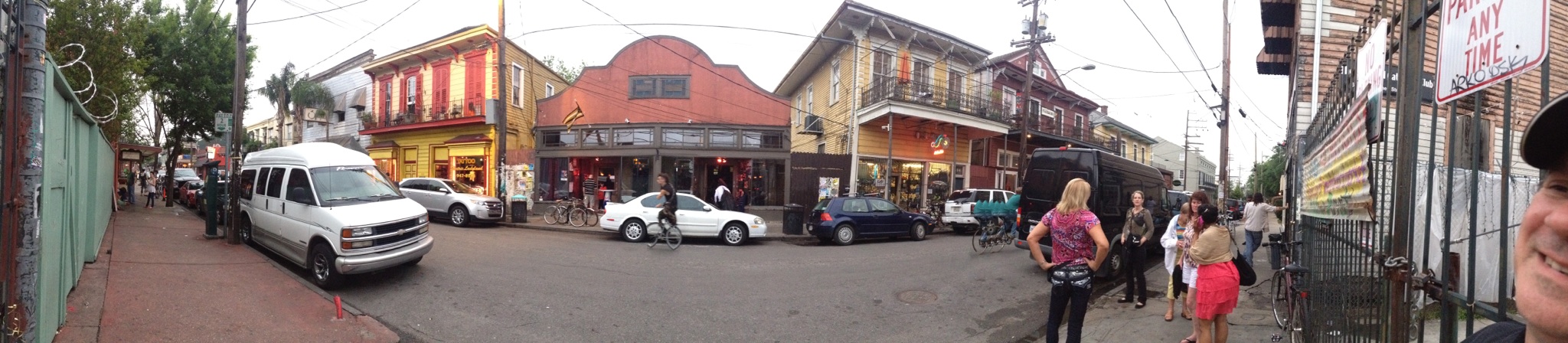
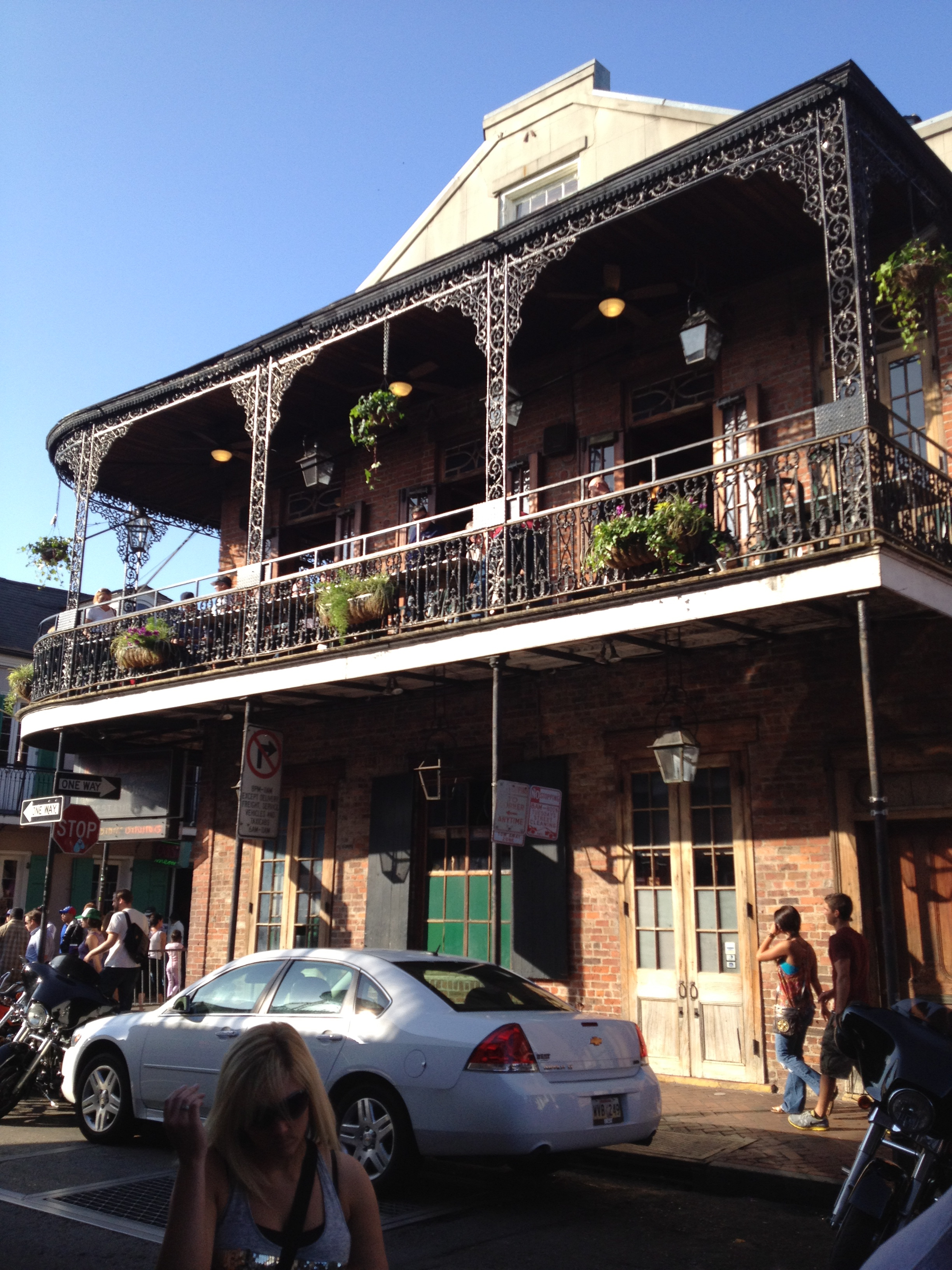
IMG_1214NOLA1NOLA3nolabanner5Won’t you come with me?
Down the Mississippi?
We’ll take a trip to the land of dreams
Going down the river, down to New OrleansIMG_1106

From the time that I was old enough to understand it was my father’s birthplace, New Orleans has always held a special place in my heart and my imagination.

IMG_1097Before I ever set foot in the Crescent City – or even knew it was called “the Crescent City” — my grandmother’s annual Mardi Gras packages aroused a fascination with my dad’s exotic hometown. Grandma’s annual package included three essential items: her homemade fudge (maple and chocolate), Mardi Gras beads and doubloons, and a couple weeks worth of Times Picayune front pages.

Incredibly, I still haven’t been to New Orleans during Mardi Gras.

I was somewhere around 6 or 8-years old when we made our first family pilgrimage from Cleveland to New Orleans to visit Grandma Barrosse and the rest of my dad’s family. We went by train. It was the biggest adventure of my young life – and the moist summer evening heat, the scent of magnolia and honeysuckle, the little Confederate flag some relative gave me, and my terror of voodoo queen Marie Laveau are still among my most cherished childhood memories.

Cannons-MB-House-447-wideI was around 12-years old when we returned to New Orleans – this time by car. I remember that trip in sharper focus because I was old enough to appreciate taking in the wonders of the French Quarter, City Park and the Chalmette Battlefield, site of the 1815 Battle of New Orleans.

That second trip was also memorable because of my determination to capture green anole lizards (the dime store chameleons of my youth) in my Grandma’s backyard. I captured more than a dozen of them among the honeysuckle vines before my grasping hand, plunging into the vines after my prey — got stung by three wasps at once. Though they laid me low for a full day, I survived those stings – and most of my lizards survived the drive home to Cleveland.

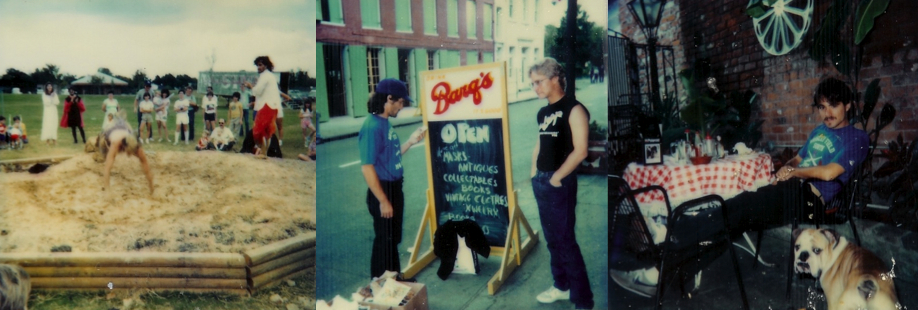
Ross Salinger, the author, and John Goodrich at the Renn Faire in Metairie (1984)

Ross Salinger, the author, and John Goodrich at the Renn Faire in Metairie (1984)

A couple decades later, I returned to New Orleans for two years in a row to perform at a Renaissance faire in the suburb of Metairie.

Those two working trips to the Big Easy were a chance to reconnect with my nonagenarian grandmother, my aunts and uncles, and my father’s amazing hometown with its unique history, music, food and culture.

(Right) Doing the Sturdy Beggars Mud Show. (Center) The author and Ross Salinger in the French Quarter. (Right) John Goodrich relaxes in the courtyard of Napoleon House.

(Left) Doing the Sturdy Beggars Mud Show. (Center) The author and Ross Salinger in the French Quarter. (Right) John Goodrich relaxes in the courtyard of Napoleon House. (1984)

With Victoria at Napoleon House waiting for a Pimms Cup. (1985)

With Victoria at Napoleon House waiting for a Pimms Cup.

On the second trip, in 1985, Victoria (now my wife) joined me to work at the Renaissance Faire, meet the Barrosse clan, and enjoy the pleasures of the French Quarter.

But, until this year, I’d never taken any of my three daughters to New Orleans.photo 2

Well, I wish I was in New Orleans,
I can see it in my dreams
Arm-in-arm down Burgundy,
a bottle and my friends and me
                                                   Tom Waits

My youngest daughter, Evangeline (a good Louisiana name)  applied to Tulane University in New Orleans – and this spring, we were delighted when she was accepted with an academic scholarship. So, a 3-day father-daughter trip to my dad’s hometown was in order. The choice was between UCLA and Tulane – and this trip would help her decide.

IMG_1081Eva is a songwriter – and New Orleans is a musical melting pot unlike any other, where jazz, blues, big band, marching band, rock and roll, Zydeco, and all the rhythms of the Caribbean and Mississippi Delta come together in the streets, restaurants and bars.

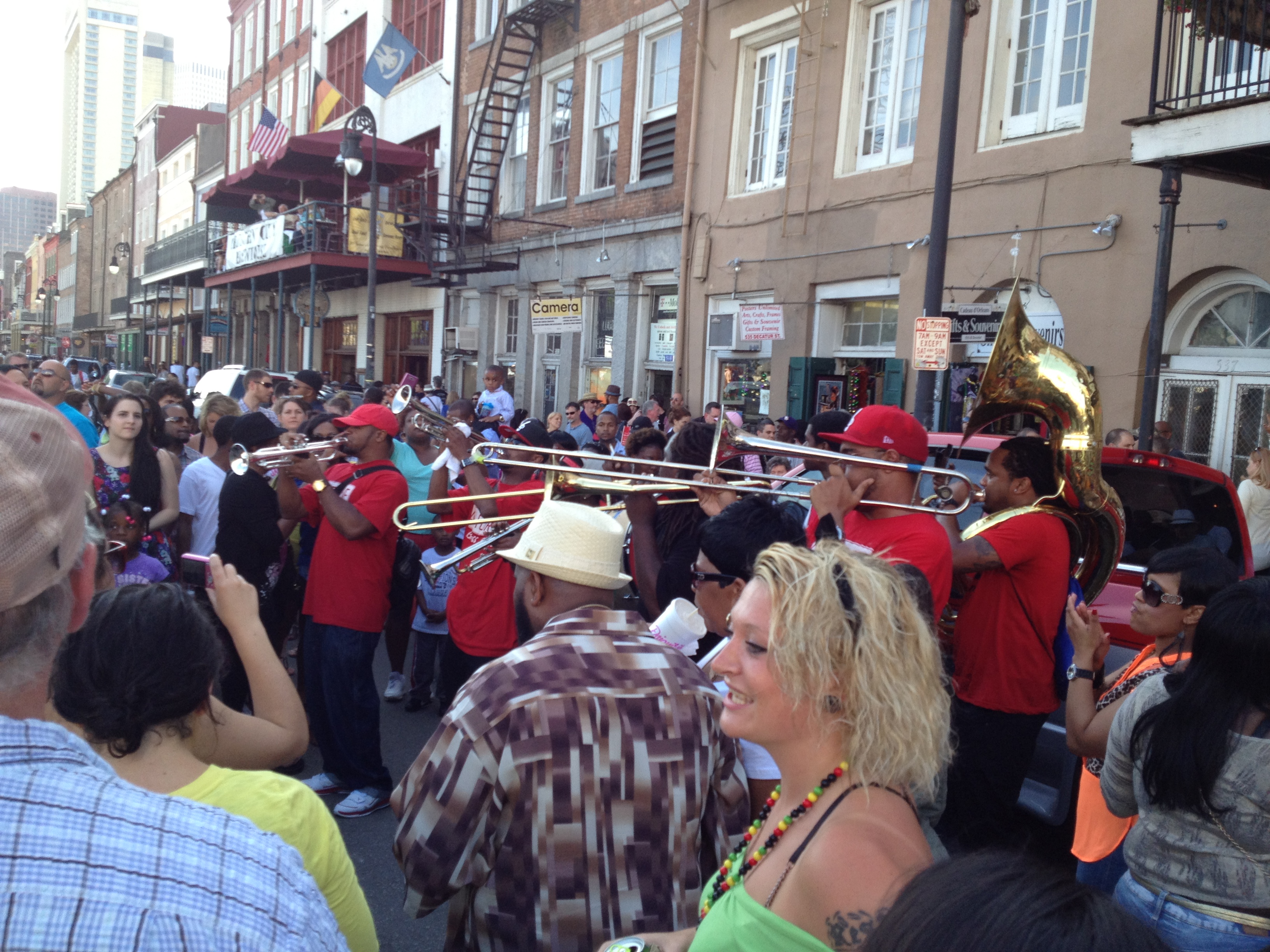
On the day we arrived in town, we were delighted to discover that the last day of the French Quarter Festival was still underway and the Quarter was jammed with musicians and bands on nearly every corner — including this dynamic face-off between brass bands on Decatur Street.

IMG_1180We also went to Preservation Hall. My daughters had seen the Preservation Hall Jazz Band in concert at The Gainey Vineyard in Southern California’s Santa Ynez Valley – but to see these wonderful musicians playing their hearts out as we sat on the worn wooden floor of that modest, intimate musical temple in the French Quarter is a whole different experience.

There's music on just about every block of the Vieux Carre.

There’s music on just about every block of the Vieux Carre.

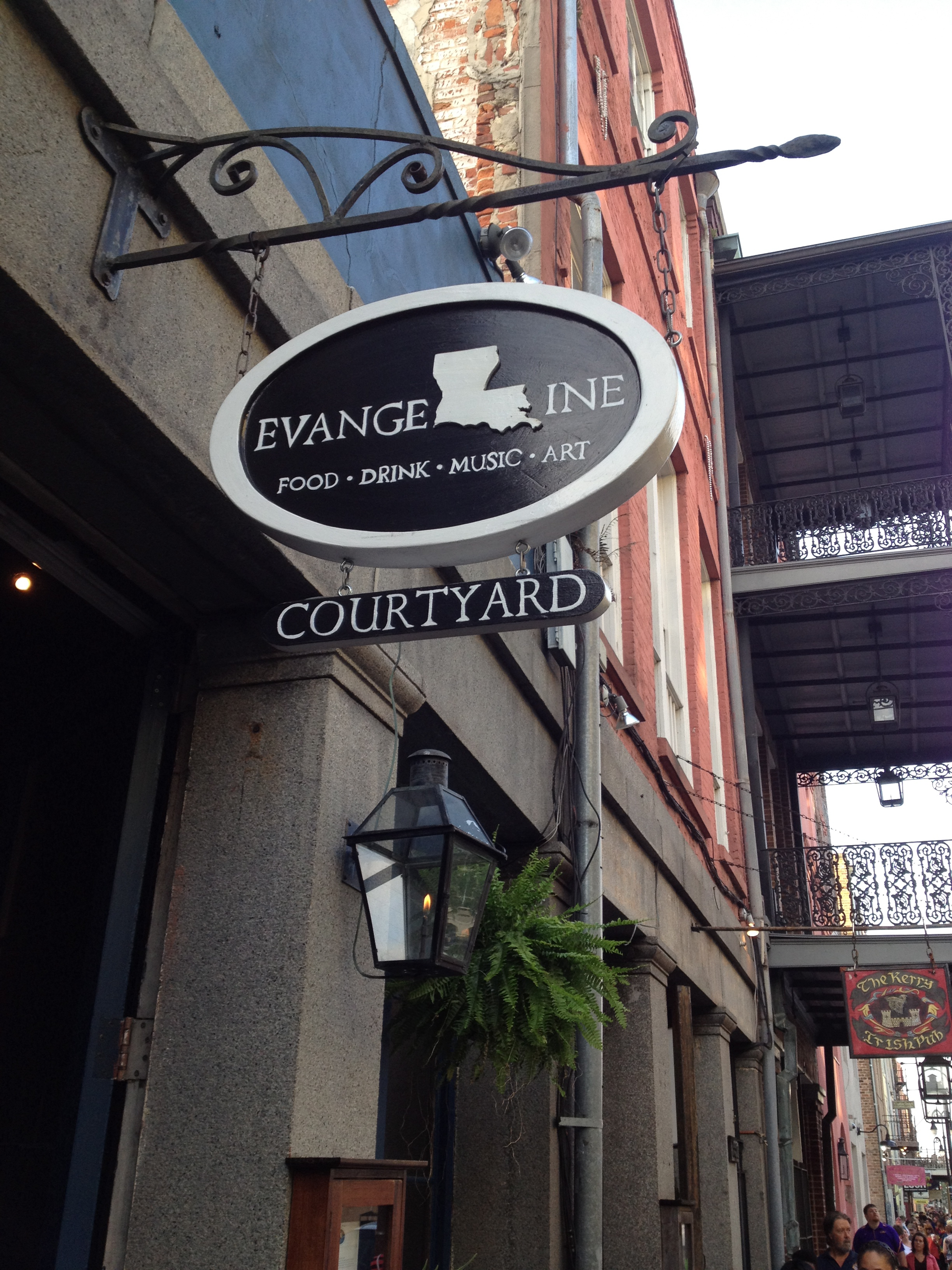
IMG_1115And then there’s the food. Nobody should visit New Orleans on a diet. Our first restaurant experience called out to us from its sign: Evangeline.

The food at Evangeline was superb.

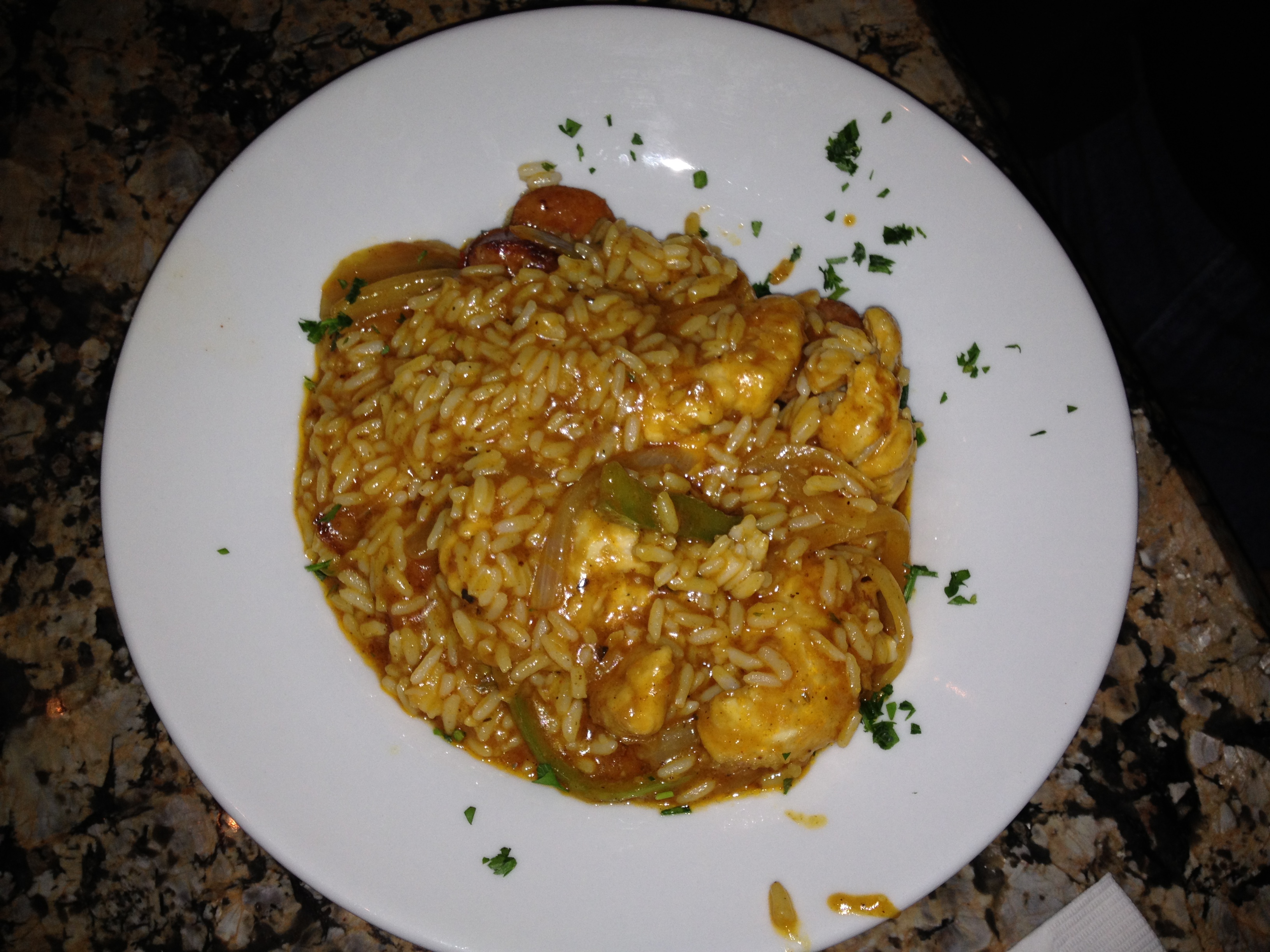
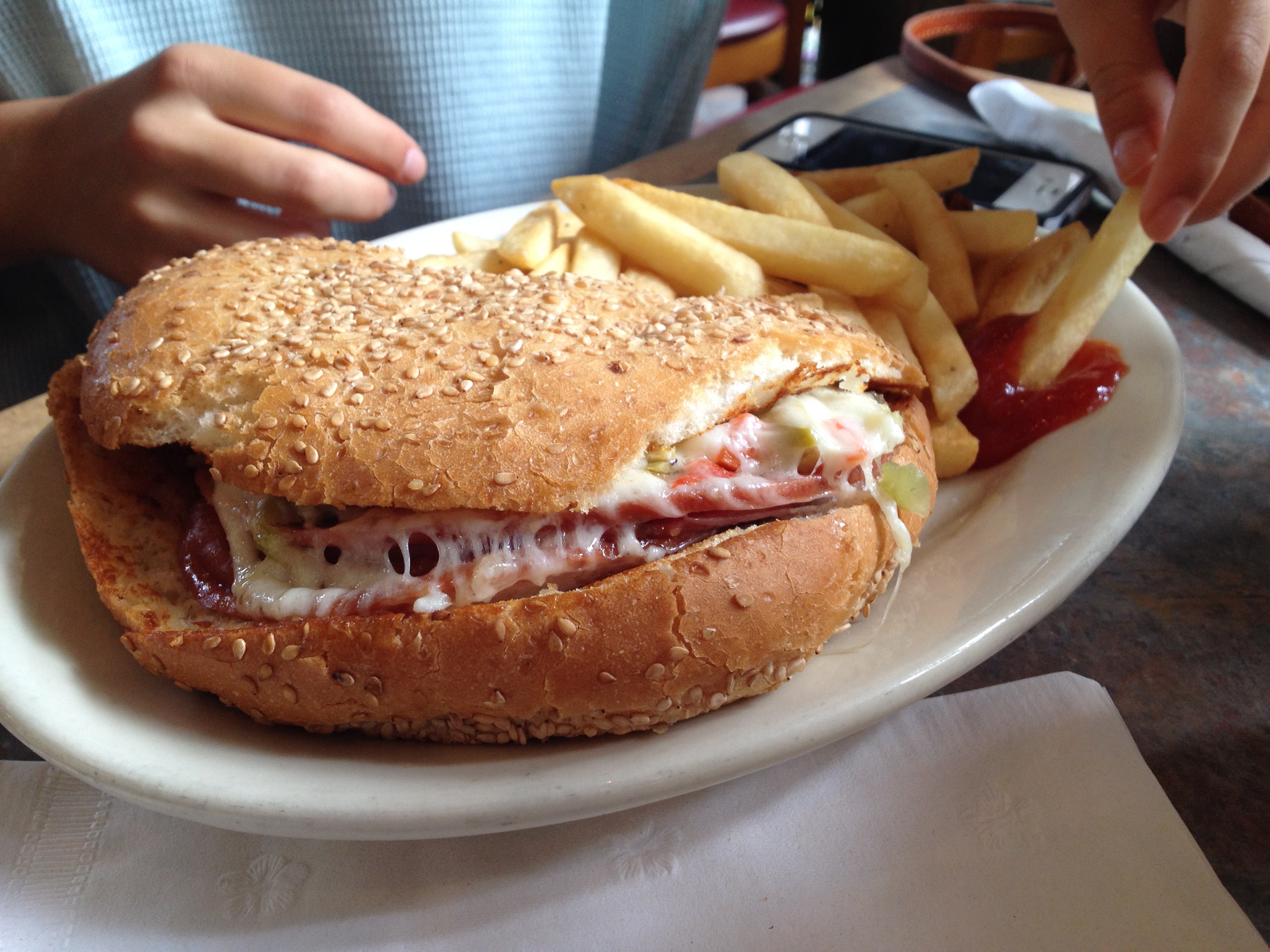
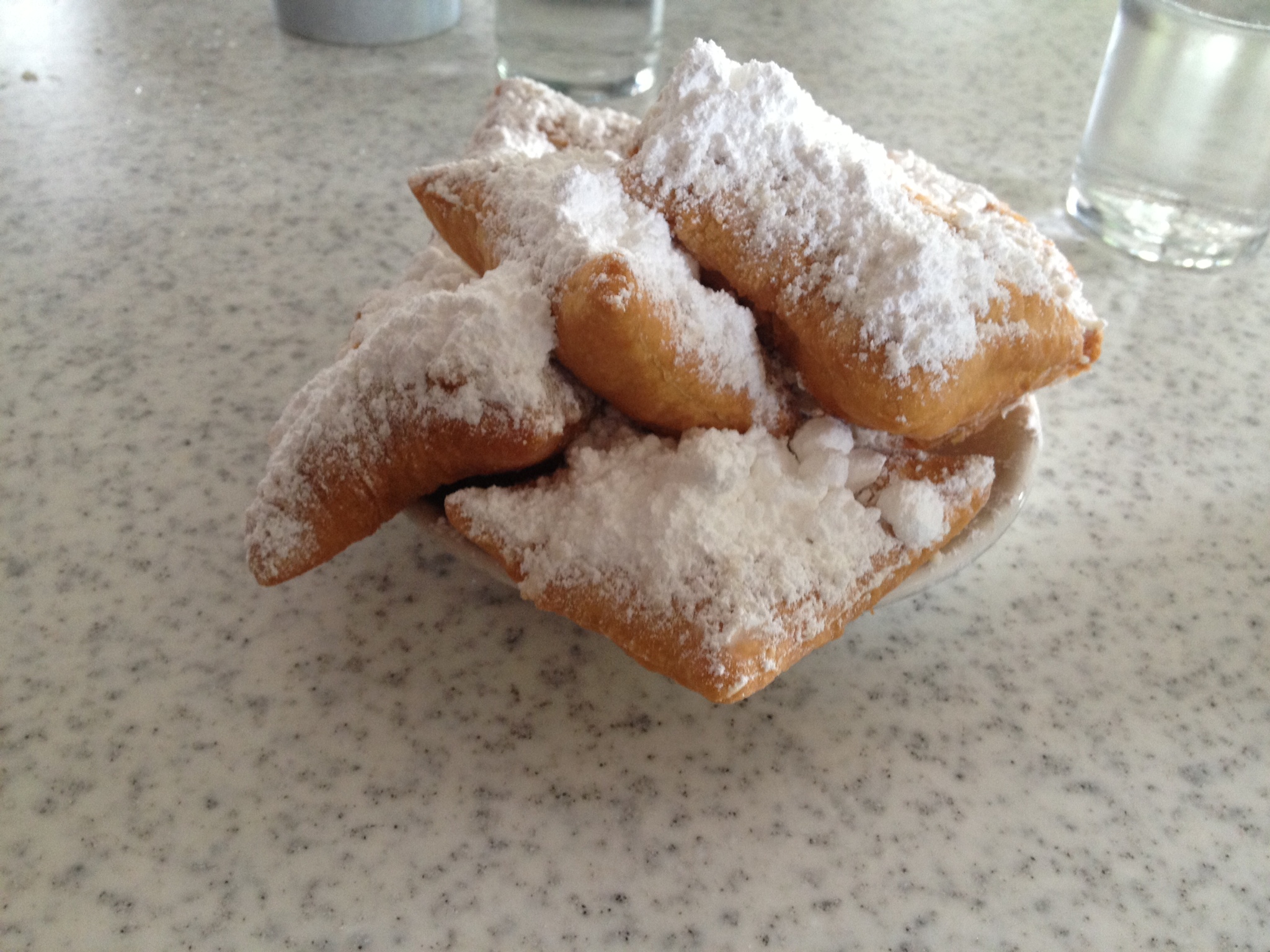
Here’s just a sample of the many spicy and tasty delights we consumed at Evangeline and at other French Quarter eateries, including The Gumbo Shop, during our visit…

Jambalaya at Evangeline. Perfectly wonderful.

Jambalaya at Evangeline. Perfectly wonderful.

Gumbo at -- where else? -- The Gumbo Shop.

Gumbo at — where else? — The Gumbo Shop.

Eva enjoyed her muffaletta on Decatur Street.

Eva enjoyed her muffaletta on Decatur Street.

And, of course, we had to have our beignets at Cafe Du Monde.

And, of course, we had to have our beignets at Cafe Du Monde.


So long mom.
So long pop.
I’m goin’ to New Orleans or else
I’ll drop dead
Down in New Orleans
You know I love it there
And I ain’t been there yet.
                          The Rockme FoundationIMG_1136

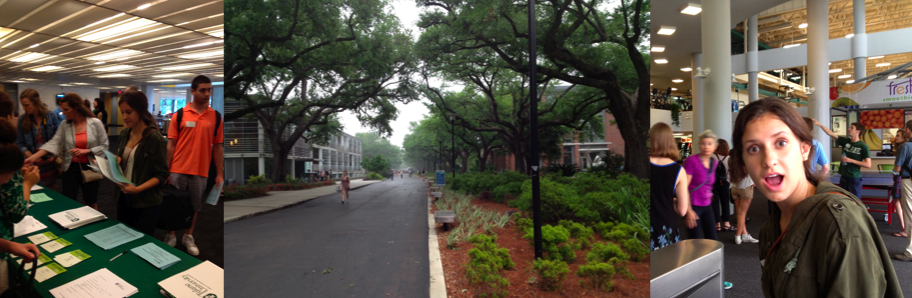
The second day of our trip was the reason we were in New Orleans in the first place: my daughter’s visit to Tulane University.tulane

IMG_1132Tulane is a beautiful place.

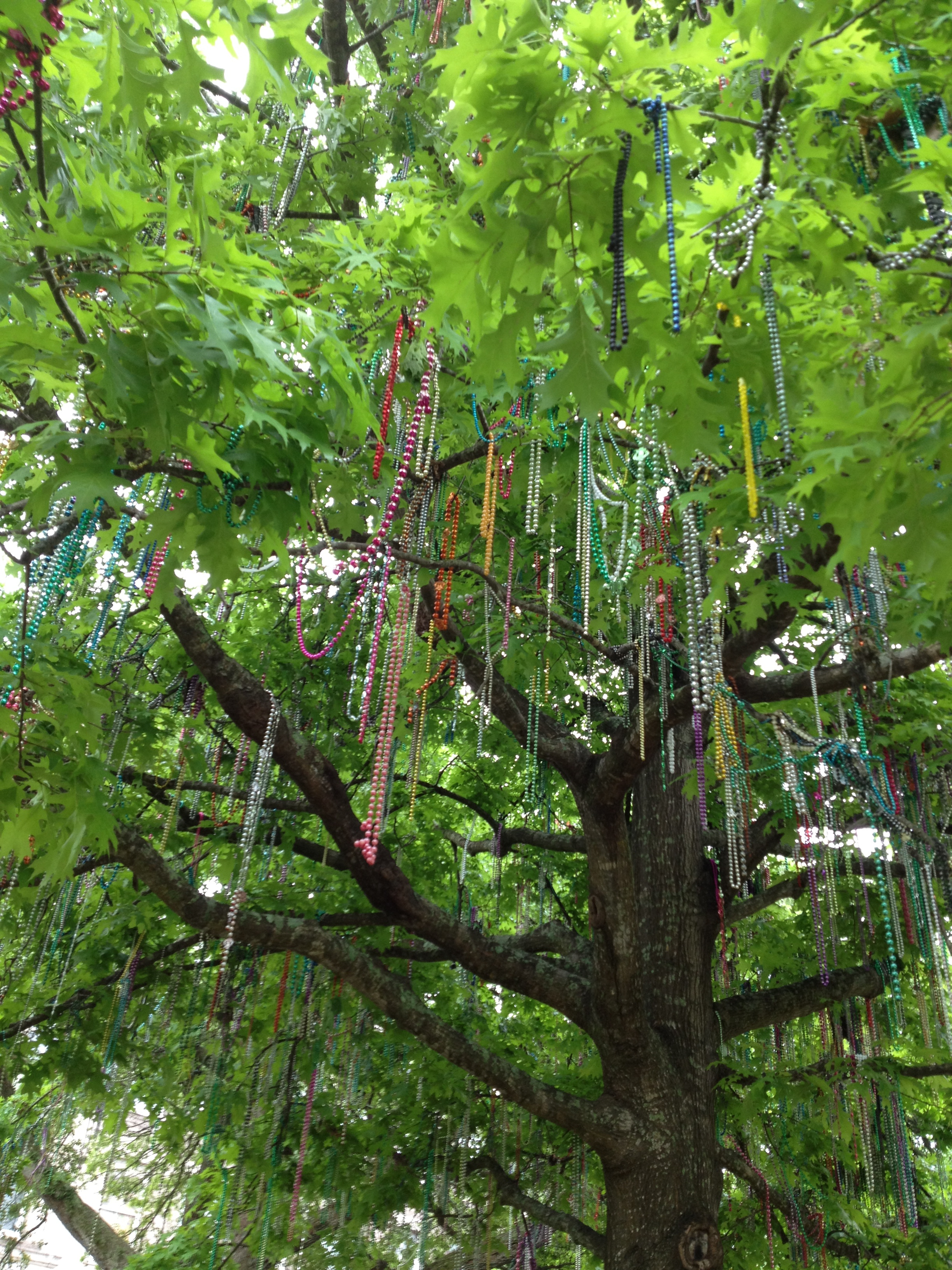
I could imagine Eva attending class among the spreading trees, draped with Mardi Gras beads.

Perhaps she could even take James Carville’s political science class someday.

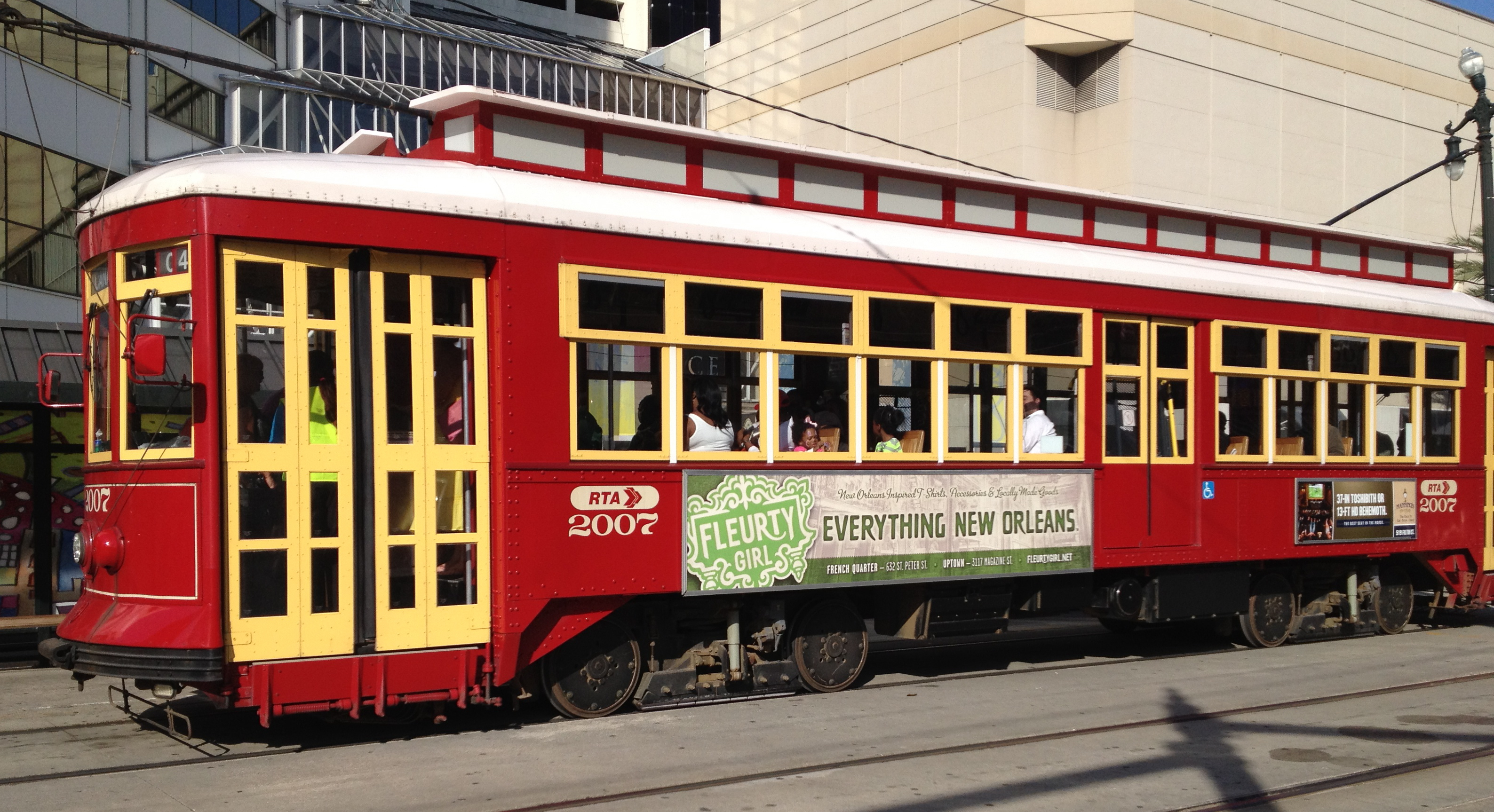
On weekends, she could take the St. Charles street car to the French Quarter and soak in music and culture that would inform her songs.streetcar

IMG_1135After our visit to Tulane we hopped that street car and returned to the French Quarter. The streets weren’t as crowded as they’d been the day before for the French Quarter Festival — but the the mood was still celebratory and the music was still playing.

Here, Eva is caught up in the New Orleans blues and the fancy steps of a veteran swing dancing devotee.

Dad and daughter at UCLA.

Dad and daughter at UCLA.

Ultimately, my daughter Eva chose to attend UCLA instead of Tulane. (Go, Bruins!) She’s a California girl — and we’re perfectly happy with her choice.

But on our father-daughter trip she fell in love with New Orleans.

And my love affair with my dad’s city was renewed.

We’ll be back in the Big Easy, the Crescent City, the Land of Dreams.

And New Orleans – as it has for centuries – will be waiting to fascinate and delight.

What follows is a photo essay to further celebrate the wonders of my father’s wondrous, historic, culturally resplendent hometown…

Dad poses across the street from our temporary home, The St. James Hotel on Magazine Street.

Dad poses across the street from our temporary home, The St. James Hotel on Magazine Street.

Dad gazes upward toward Jackson Square in the French Quarter.

Dad gazes upward toward Jackson Square in the French Quarter.

Magnificent trees rise above the artwork hanging on the Jackson Square fence.

Magnificent trees rise above the artwork hanging on the Jackson Square fence.

The street scene on the east side of Jackson Square.

The street scene on the east side of Jackson Square.

Local legend has it that Napoleon Bonaparte's

Local legend has it that Napoleon Bonaparte’s friends provided this house for his exile.

Eva in the courtyard of Napoleon House. Her dad's Pimm's Cup is on the way.

Eva in the courtyard of Napoleon House. Her dad’s Pimm’s Cup is on the way.

The aforementioned Pimm's Cup.

The aforementioned Pimm’s Cup. I already ate the traditional cucumber slice.

Classic, lovely New Orleans decay in the Napoleon House  courtyard.

Classic, lovely New Orleans decay in the Napoleon House courtyard.

Eva in front of the house where William Faulkner lived and wrote while in New  Orleans.

Eva in front of the house where William Faulkner lived and wrote while in New Orleans.

NO#10

You're not allowed to take photos at Preservation Hall. So, I don't know what this is...

You’re not allowed to take photos at Preservation Hall. So, I don’t know what this is…

NO#12

NO#13

NO#14

Eva poses in the gaudy costume of a Mardi Gras Indian.

Eva poses in the gaudy costume of a Mardi Gras Indian.

The French Quarter House with the famous cornstalk gate.

The French Quarter House with the famous cornstalk gate.

The cornstalk gate.

The cornstalk gate.

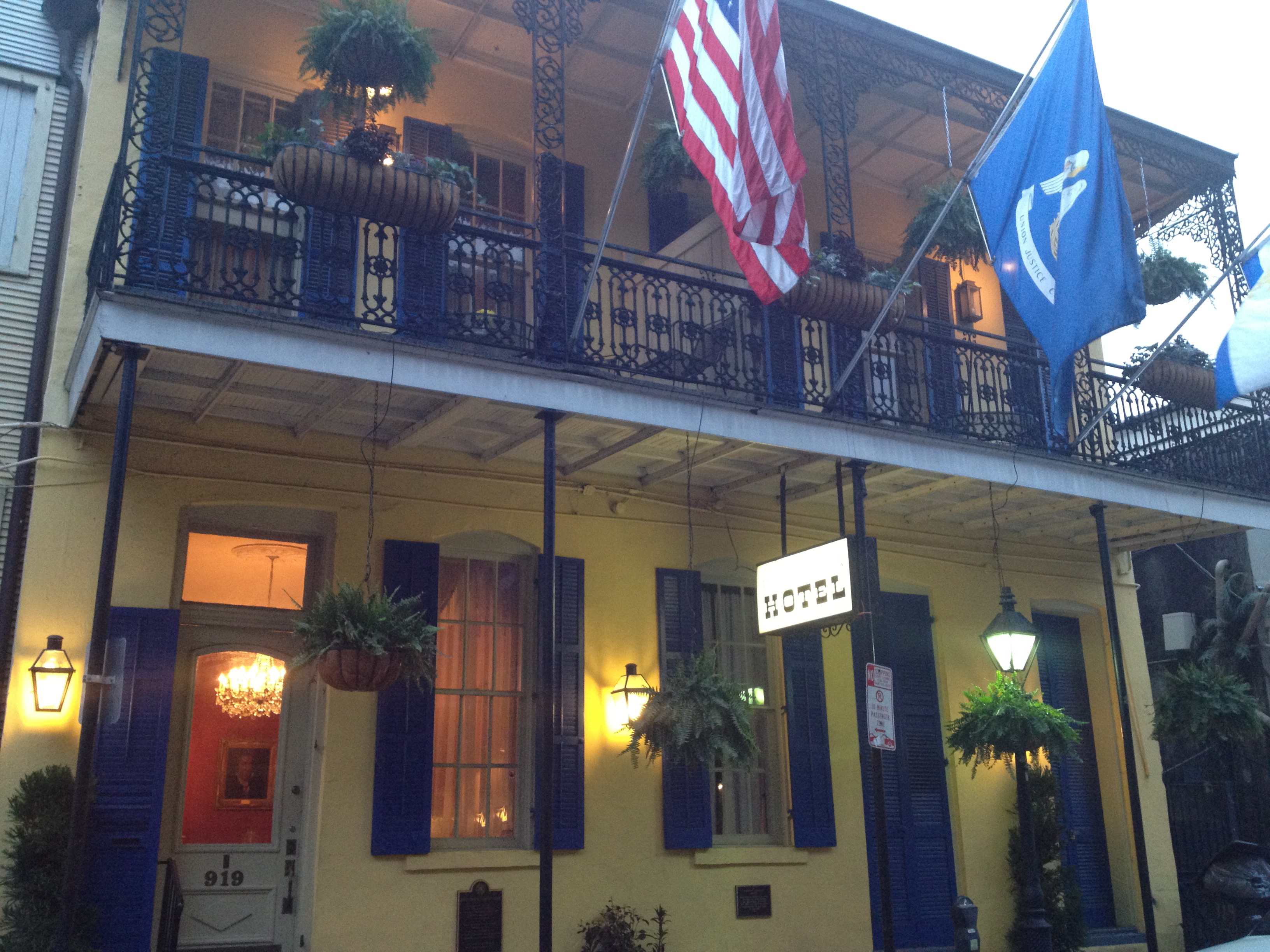
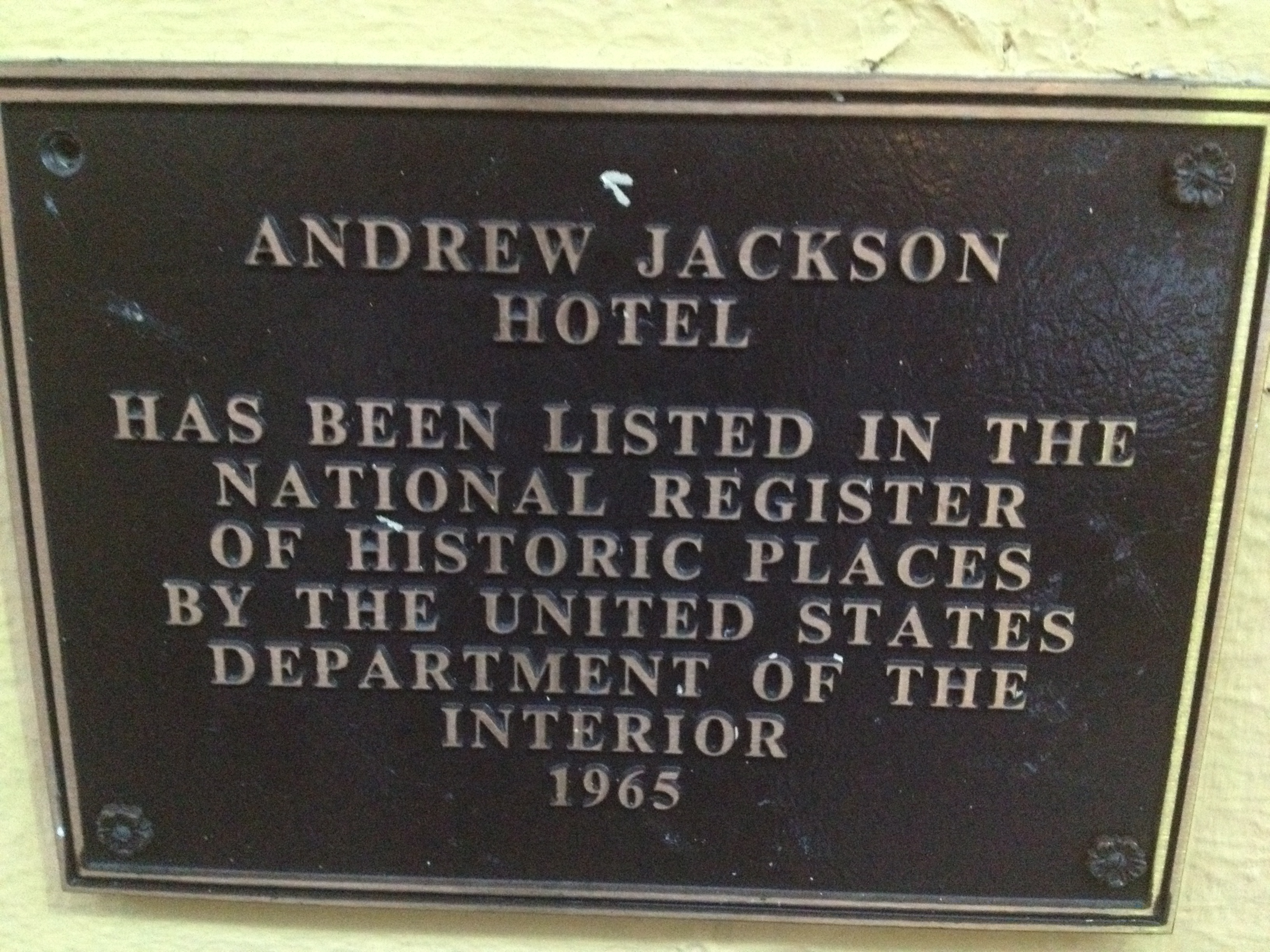
The Andrew Jackson Hotel -- where Victoria and I stayed in 1985.

The Andrew Jackson Hotel — where Victoria and I stayed in 1985.

NO#19

A French Quarter door.

A French Quarter door.

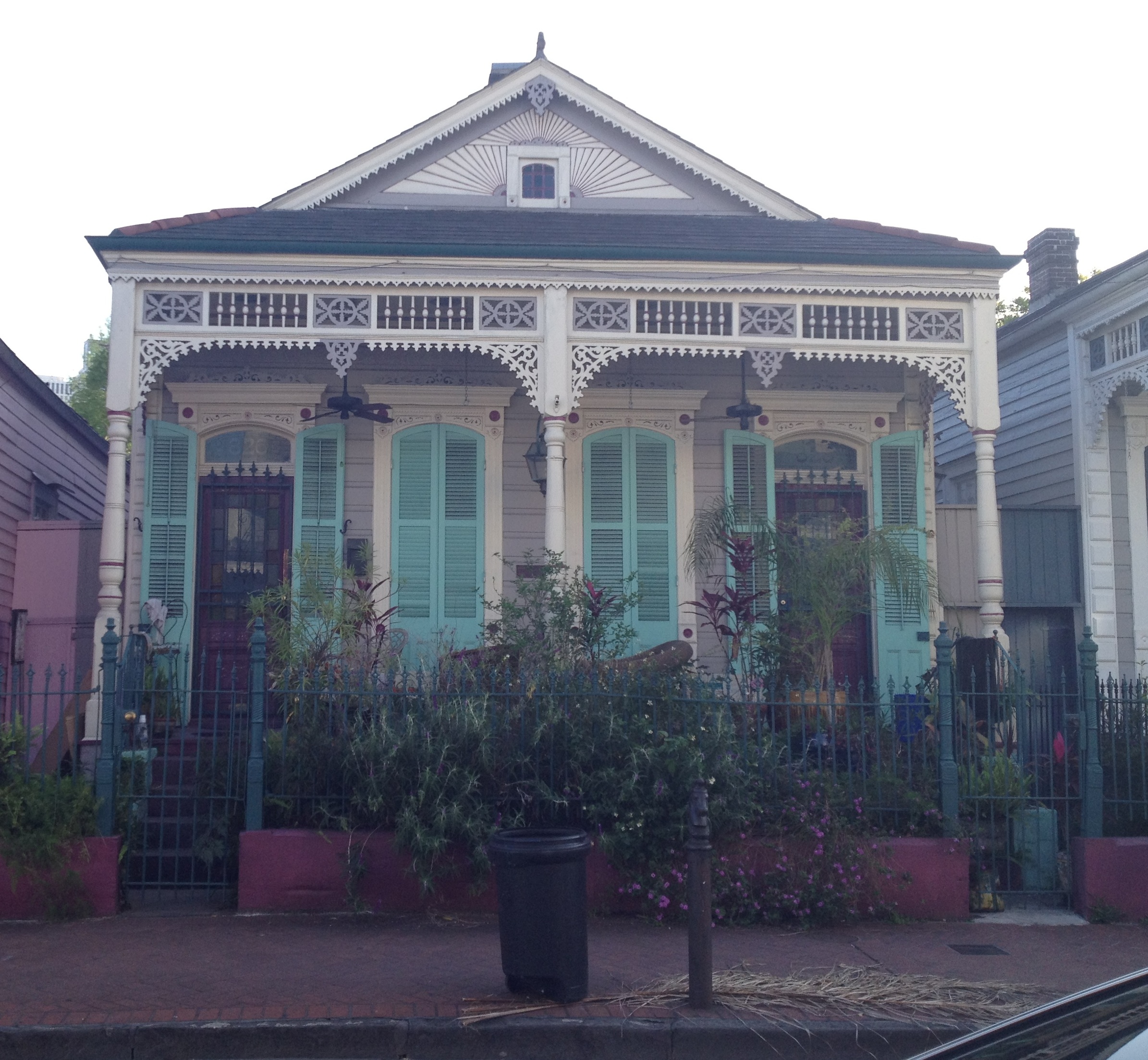
Typical French Quarter architecture and porch gardening.

Typical French Quarter architecture and porch gardening.

NO#22

Evangeline looks at home in the Vieux Carre.

Evangeline looks at home in the Vieux Carre.

One gorgeous building after another...

One gorgeous building after another…

That's all, folks! New Orleans is waiting for YOU!

New Orleans is a taste of Old Europe in the New World.

6 Comments

Filed under Adventure, Art, Beauty, History

The Biggest Man in Pro Sports Today…

k-bigpicWhat a great day for professional sports.

DownloadedFileThe film “42” is in theatres, celebrating the transformational story of how Jackie Robinson broke the color line in Major League Baseball with the Brooklyn Dodgers in 1947.

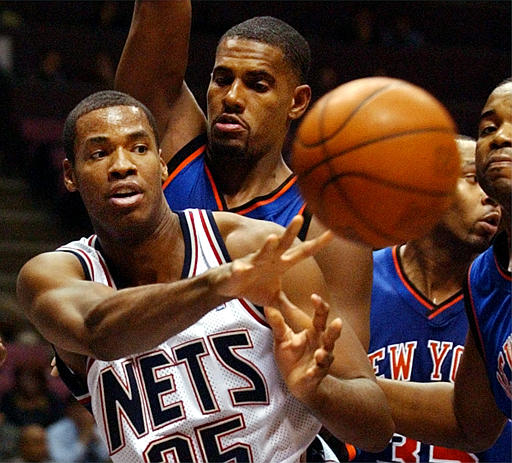
Today, 66 years later, professional basketball player Jason Collins overcame another taboo in pro sports by announcing to the world that he is a gay man – becoming the first openly gay man active in a major American professional sport.

xxx-stanford---usc-3_4_r536_c534A first round pick in the 2001 NBA draft, Jason Collins is a 12-year NBA veteran. An All-American center at Stanford, Jason and his twin brother Jarron both enjoyed decade-long careers in the National Basketball Association. Jason’s dozen years in the NBA are further proof – as if needed – that it’s not if there are gay men in pro sports – but how many pro athletes are gay? And why should we even care?

COLLINS THOMAS WEATHERSPOON HARRINGTONThe New Jersey fans that cheered for Jason Collins during seven seasons with the Nets – and the ticket buyers who rooted for him in his NBA stops since leaving New Jersey – weren’t cheering for a heterosexual man or gay man. They were cheering for a talented and durable big man who fought for rebounds and scored consistently in the paint. Team player Jason has also always been considered a good guy in the locker room.

975820-jason-collinsTrivia note: The Dodgers played in Brooklyn NY when Jackie Robinson made history in 1947. The Nets, the NBA team that drafted Jason Collins in 2001, is now playing its first season in Brooklyn. (Significant? Probably not. But us sports fans love us some trivia.)

la-me-ln-jason-collins-aunt-20130429Jason’s revelation regarding his sexuality reminds me of the silly debate over gays in the military. There have always been gay men in the military – and there have always been gay men in sports. From the first moment men clashed in battle – whether in war or on the playing field – a percentage of those men have been gay. That’s only natural. Completely natural.

jason-collins-siSo, congratulations, Jason Collins!

I’m honored that Jason attended the same San Fernando Valley grade school that my daughters attended. Sierra Canyon School should be prouder than ever of Jason.

His college and NBA basketball achievements have been laudable.

His honesty and courage today make him an American hero for the ages.

2 Comments

Filed under History, Sports, Truth

150 Years Ago Today: A Victory for Modern Naval Warfare…

cropped-Carnage-140th-Spotsylvaniamontauk1pAs we continue to acknowledge the Sesquicentennial of the American Civil War…

On Saturday, February 28, 1863, 150 years ago today, a now-forgotten Civil War engagement pointed the way toward the future of naval warfare.

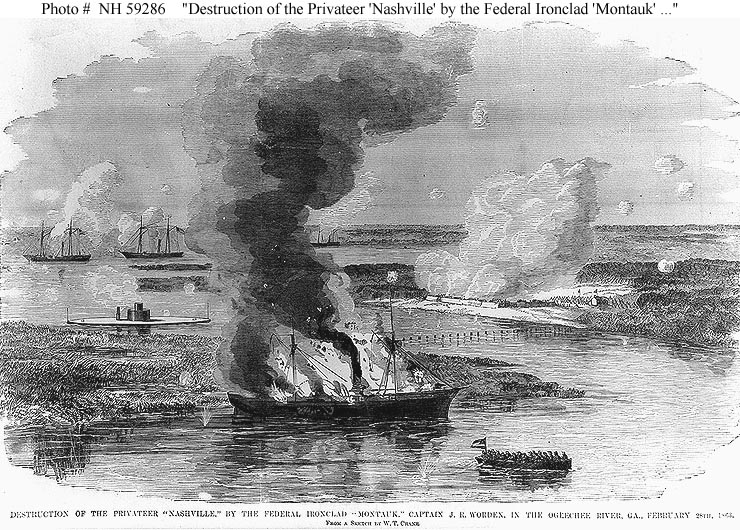
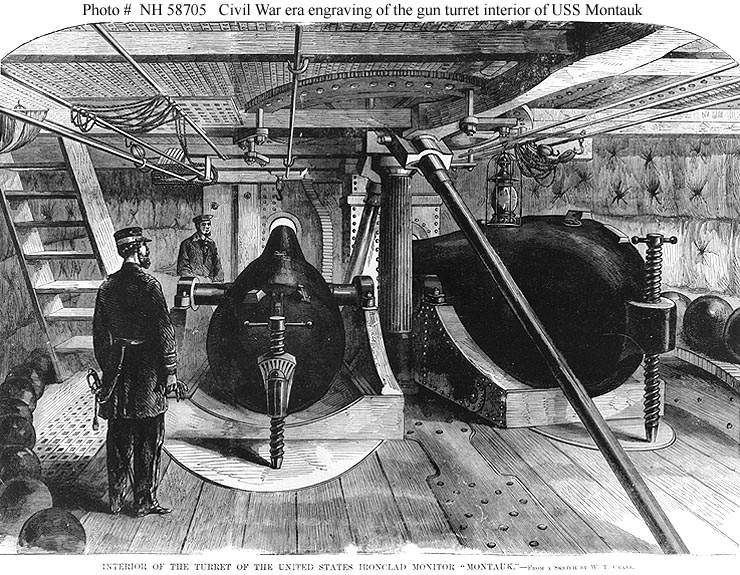
imagesOn this day, Federal Naval Commander, Captain John L. Worden (former captain of the original Union ironclad USS Monitor) was at the helm of the Union ironclad warship USS Montauk on the Ogeechee River south of Savannah, Georgia — when he saw the CSS Nashville, sold as a privateer and now named Rattlesnake, run aground, lying under the guns of Fort McAllister.

With the U.S. Navy gunboats Wissahickon, Seneca and Dawn providing supporting fire, Captain Worden trained The Montauk’s batteries upon the enemy ship and started firing.

h59286Minutes later, the Montauk’s cannonade hit the CSS Nashville, struck her gunpowder magazine — and the Confederate ship exploded with “terrific violence.”

Alas, after his brief, triumphant engagement with the Confederate privateer, Commander Worden’s own ship hit a submerged mine, and he had to beach the USS Montauk on a mud bar to make repairs.montauk1j

The Confederacy could hardly afford the loss of the Nashville. The CSA commissioned shipbuilders to build 50 warships — and 22 were built and sent into battle, including CSS Virginia, CSS Arkansas, CSS Tennessee, and CSS Nashville.

21862The fate of the Nashville on this day in 1863 is not very well known – but what happened one year earlier to the CSS Virginia — the first steam-powered ironclad warship in the Confederate States Navy – became an epochal moment in naval warfare.

Built as a Confederate ironclad from the hull and steam engines of the scuttled Union warship, USS Merrimack — the CSS Virginia was sunk by the Union ironclad USS Monitor in the Battle of Hampton Roads on March 9, 1862: the first battle between ironclad, armored warships.

h58899150 years ago today – on the banks of Georgia’s Ogeechee River — the American Civil war adds another explosive, revolutionary chapter to the history of modern warfare.

Five months from now, in July, we’ll note the 150th anniversary of The Battle of Gettysburg.

And there won’t be a boat, ironclad or otherwise, anywhere near the battlefield.gettysburg

1 Comment

Filed under History, Truth

A Day at the Races: Birthday Fun at Santa Anita Park.

Club House and Grand Stand Santa Anita, Los Angeles Turf Club ArcadiaDSC_6796 - 2013-02-16 at 14-12-58DSC_6805 - 2013-02-16 at 14-18-03(Color photos by Steve Stroud.)

Damon Runyon would have loved it: a splendid day at Santa Anita, the crown jewel of So Cal horse racing.

RUNYON-DAMON-PHOTOOf course, Runyon was a New City habitué, following the ponies at Aqueduct rather than the historic track at the foot of the mountains in Arcadia, California.

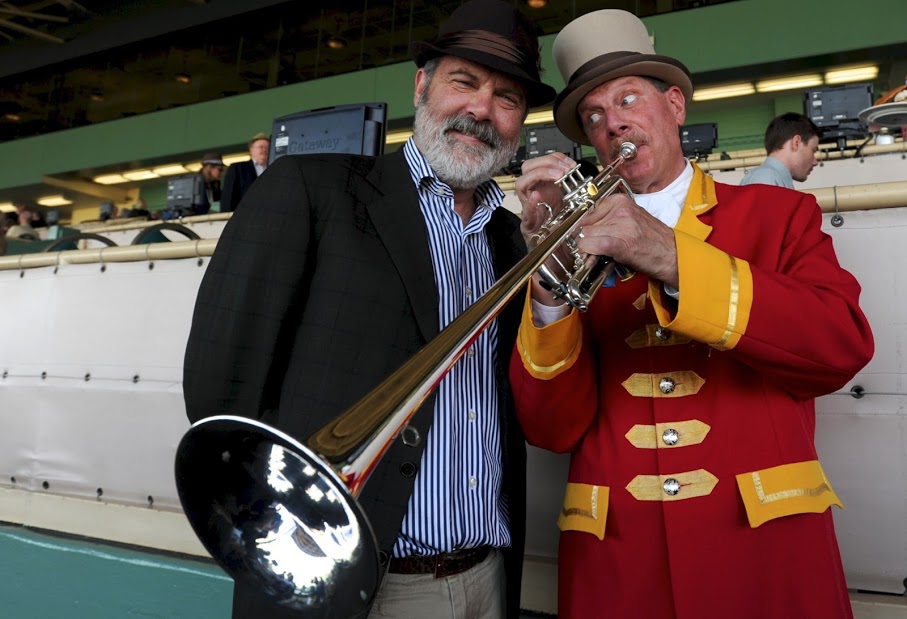
But the guys and dolls who gathered at The Turf Club to mark our great friend Jim Newton’s 50th birthday were the kind of colorful characters that Runyon would have loved to populate his classic stories.

It’s fitting that Runyon was a newspaperman, because “Gentleman Jim” Newton — and so many of our dear friends who joined us at Santa Anita Park on Saturday, February 16th — are journalists who have toiled at The Los Angeles Times.DSC_6914 - 2013-02-16 at 17-17-59

the-lemondrop-kid-bob-hope-william-frawleyIt felt a bit like a scene from Sorrowful Jones or The Lemon Drop Kid as this Pulitzer Prize-winning group of writers and reporters were soon turned into a bunch of rabid horseracing railbirds.

My wife Victoria, daughter and I were attending Santa Anita Park for the first time – nearly eight decades after the oldest racetrack in Southern California opened on Christmas Day 1934.
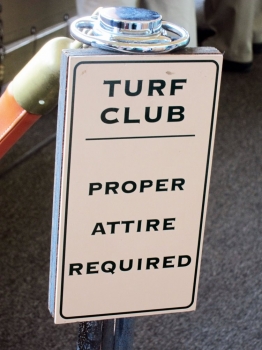
img_5288-dress-code-signMovie producer Hal Roach – the guy who brought us Laurel & Hardy and The Little Rascals – helped to open The Turf Club: the very same swanky section of the park that we gathered to celebrate Jim’s birthday.

We were all dressed appropriately for the venue — and ready for an afternoon of adventure at the track.

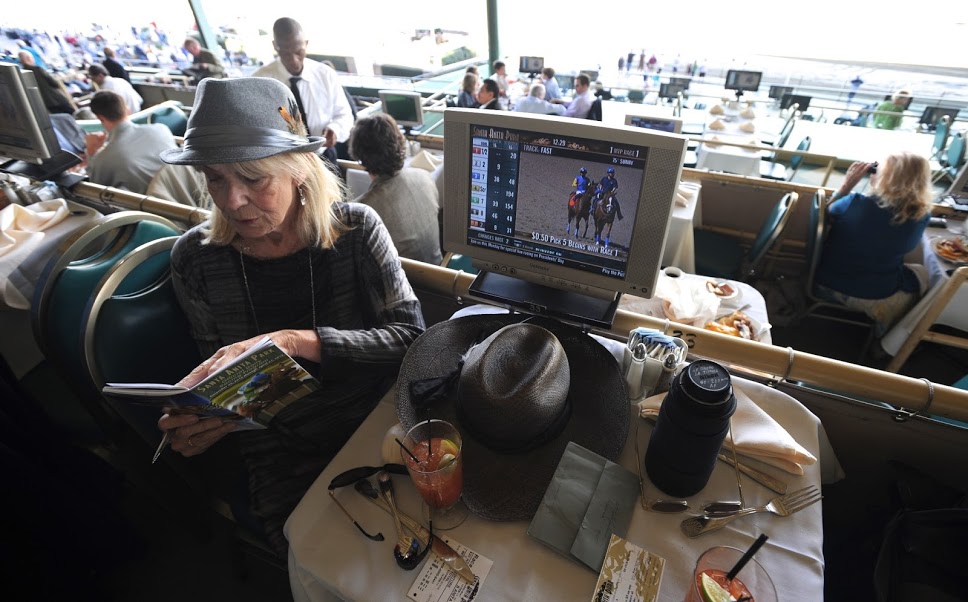
Carol "Lucky Lady" Stogsdil peruses the racing form in search of a winner.

Carol “Lucky Lady” Stogsdill peruses the racing form in search of a winner.

Henry "The Horse" Weinstein makes notes on his next wager.

Henry “The Horse” Weinstein makes notes on his next wager.

hollywood-park-inglewood-curtis-burnett-grantIn its glory days, Santa Anita attracted Hollywood luminaries including Betty Grable, Lana Turner, Jane Russell and Cary Grant. Bing Crosby and Al Jolson were among the stockholders. Spencer Tracy, Errol Flynn, and “Jeopardy” host Alex Trebek have owned horses that raced at Santa Anita. (One of horses racing the day we were there is owned by pro golf great, Greg Norman.) Santa Anita was the place where, in 1940, the legendary racehorse Seabiscuit won the Santa Anita Handicap in his last start.

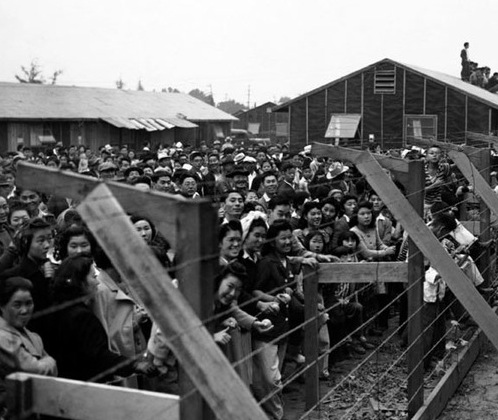
021912-opinions-history-internment-matsumoto-gallery-4-ss-662wOf course, historian Jim Newton was quick to inform me that from 1942 to 1944, Santa Anita Park was used by the U.S. government as a transport center for nearly 20,000 Japanese-Americans bound for internment camps like Manzanar in California’s Owens Valley.

Unlike those unfortunate internees during that infamous episode in Santa Anita’s history, we came to the racetrack voluntarily – and once we beheld the glorious view from the grandstand, gazing out across the exquisitely groomed grounds to that mountainous backdrop – it was hard to understand why, after more than 20 years of life in Los Angeles, we’d never been to Santa Anita before.DSC_6924 - 2013-02-16 at 17-54-54

Spending the day at The Turf Club made our Santa Anita experience even more special. You can’t find a better place to people-watch between races.

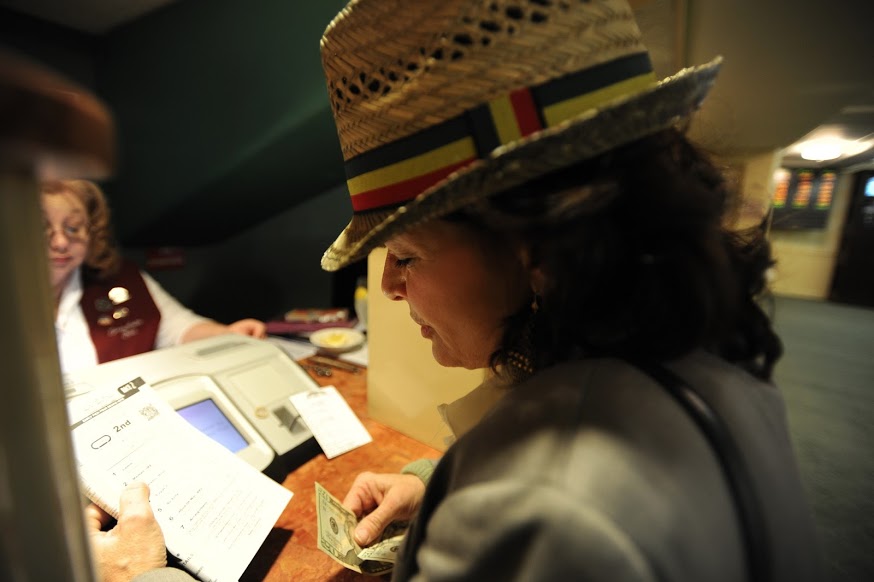
DSC_6807 - 2013-02-16 at 14-27-15Ordering a drink at the luxurious Turf Club bar or placing your bets at the club’s private wagering windows, it’s easy to conjure the excitement and glamour of Santa Anita’s heyday.

With its dress code strictly enforced and its aura of opulence and classic, old school charm, the Turf Club is a bastion of civilization in a rapidly changing time.

And then there are the horses.DSC_6734 - 2013-02-16 at 13-32-47

DSC_6749 - 2013-02-16 at 13-44-50Over the course of the 10 races that day, Victoria and I placed our wagers on thoroughbreds with names like God Of War, Smil’n From Above, Great Hot (an 8-1 shot that earned Victoria $80 on a $10 bet), Camille C, Jubilant Girl, Jesse’s Giacomo and Hard Buns.

DSC_6854 - 2013-02-16 at 14-50-43I should have bet on Judy In Disguise to win in the 8th race. My rock & roll instincts told me to go with the filly named after the 1968 hit song by John Fred and his Playboy Band (also covered by Gary Lewis & The Playboys later that same year) – but I second-guessed myself. Judy in Disguise won the race going away.

One of the horses was named Ghost of a Chance. C’mon. Really? How can you put your money down on a horse his owner calls a Ghost of a Chance?

By the time the last horse crossed the finish line, Victoria and I broke even betting on the ponies – but our day at races was a clear winner.

And here’s a sure bet.

It won’t be another two decades before we pay our next visit to Santa Anita Park.

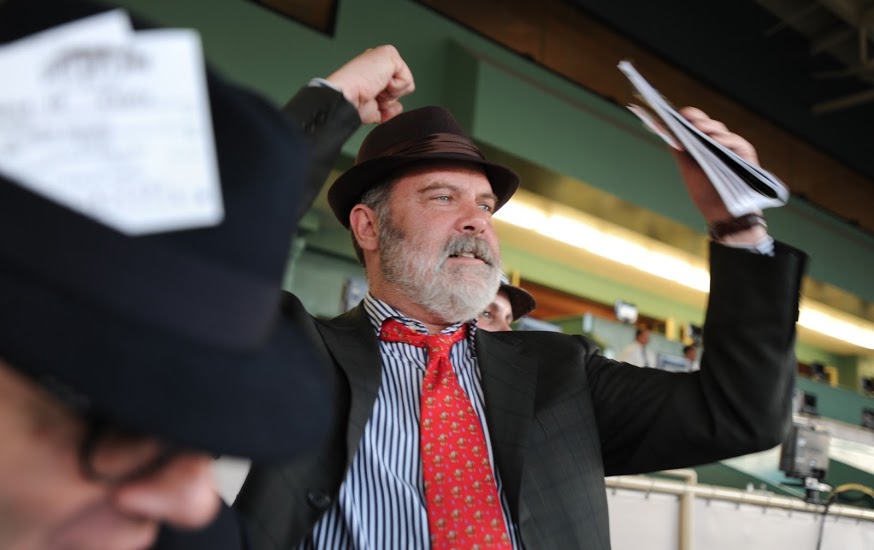
Birthday boy Jim Newton celebrates a winner!

Birthday boy “Gentleman Jim” Newton celebrates a winner!

Our photographer, Steve "Shutter Bug" Stroud, at The Turf Club.

Our photographer friend, Steve “Shutter Bug” Stroud, at The Turf Club.

Our hosts, Jim & Karlene: the First Couple of Cool.

Our hosts, Jim & Karlene: the First Couple of Cool.

6 Comments

Filed under Beauty, History, Sports

Wrestling with an Olympic Outrage

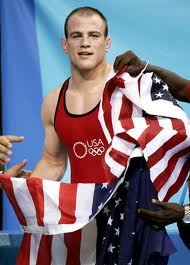
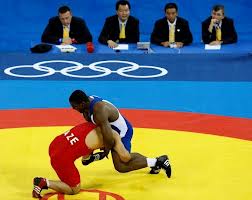
wrestling banner 2Wrestling banner 1If anyone needs a clear sign of the end of Western Civilization, as we know it, they can look no further than the decision of the International Olympic Committee to drop wrestling from the Olympic program beginning with the 2020 Games.

Somehow, the brilliant minds that guide the modern Olympic movement saw fit to preserve team handball, rhythmic gymnastics, and badminton over a sport that has been an Olympic staple since 708 BC.

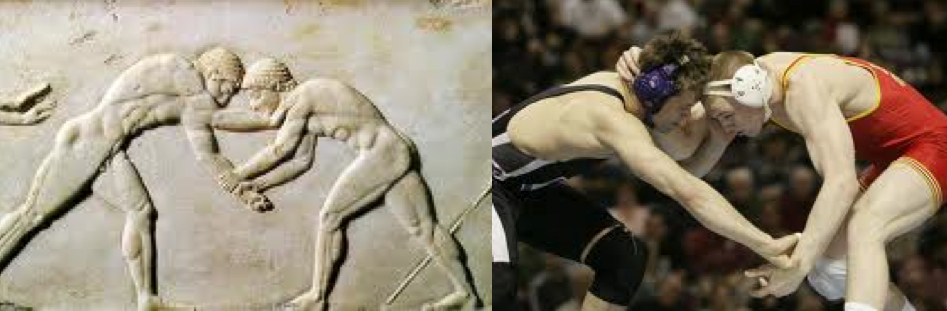
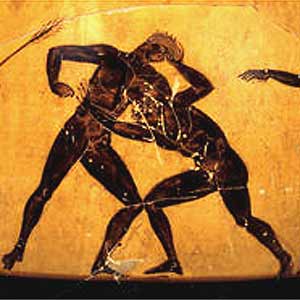
The-Ancient-Olympics-2Olympic wrestling has a time-honored place among such revered, historic, millennia-old classical athletic events as marathon running, sprinting, and tossing the javelin and discus. You won’t see beach volleyball or curling pictured on ancient Greek vases, but scenes of grappling wrestlers festoon plates, vases and mosaics throughout ancient Greece: the birthplace of the Olympic Games.

Wrestling 2For the ancient Greeks, wrestling was highly valued as a form of military exercise without weapons. For those of us who grappled for high school wrestling teams (like Cleveland Central Catholic), scholastic freestyle wrestling was the one-on-one crucible that tested our will to achieve personal excellence – and our capacity to do more than we ever imagined we could.

Wrestling 1Of all my high school experiences, it was my years as a varsity wrestler, under the guidance of my inspired coach Joel Solomon, that taught me the value of hard work, perseverance, commitment to a goal — and to never, never sell myself short: to never quit on myself.

Right now, across America and around the world, the sport of wrestling is teaching those values to young men and women – as they strive for what?

DownloadedFile-6Do high school, college and Olympic wrestlers strive for professional riches? (There’s no real professional wrestling. Sorry, WWE.)

Do they compete for lucrative endorsements? (Did the great NCAA and Olympic Champions Dan Gable and Cael Sanderson make a fortune selling Wheaties – let alone a Rolex watch or a KIA Optima?)

DownloadedFile-5The boys and girls who grapple on the high school and college wrestling mats of America (and around the world) do so to measure themselves against their competition. And the very best do so with one goal in mind: to someday compete for an NCAA championship, to win the U.S.A. Olympic trials – and compete for an Olympic Gold Medal. Why take that away from them?

Wrestling, both freestyle and Greco-Roman events, goes back to the inaugural modern Olympics in Athens in 1896 — which means that wrestling had been an Olympic sport for 2,686 years.

DownloadedFile-2And this year, the IOC decides that wrestling is no longer an Olympic sport???

For shame, IOC, for shame!

If this incomprehensible decision stands, then I have watched my final Olympic Games.

If wrestling is not reinstated as an Olympic Sport, I will never watch the Olympic Games again.

DownloadedFile-3Am I serious?

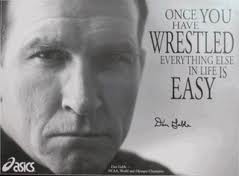
Take a look at Dan Gable.

Does Mr. Gable look serious?

8 Comments

Filed under History, Sports, Truth

Banal & Bankrupt Notions from the Squishy & Feckless Political Center: An Examination of the Weak, Useless, and (perhaps) Willfully Naive Thinking of Columnist Doyle McManus of The Los Angeles Times.

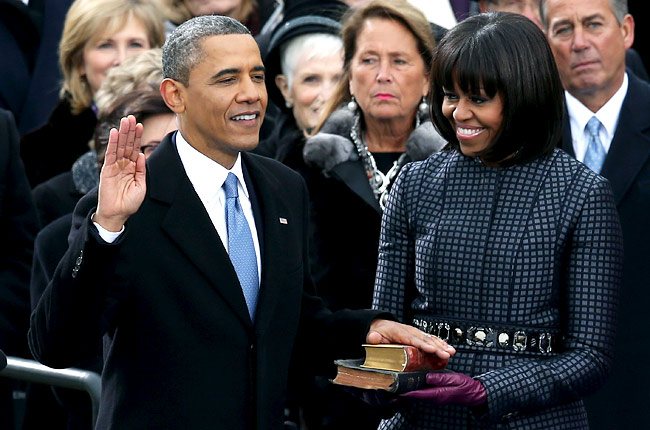
doylebanner 1Barack Obama Sworn In As U.S. President For A Second TermWithin days of President Barack Obama’s triumphant and stirring Second Inaugural Address, we were treated to a seemingly profound and thoughtful newspaper column by Los Angeles Times opinion writer, Doyle McManus, who gave us his sage and pointedly disappointed observations on the tone of Obama’s speech. Deeply serious Mr. McManus thought President Obama’s Second Inaugural Address should have struck a less partisan attitude. But who the hell is Doyle McManus? What is he thinking? Why is he such a naïve, right of center, post-partisan fetishist? And why should we just ignore what he writes?

6a00d8341c7de353ef0133f5907330970b-320wiDoyle McManus is a son of privilege. Born in 1952, the son of a San Francisco advertising executive, he graduated from Stanford University. A Fulbright scholar, Doyle attended the University of Brussels before joining The Los Angeles Times in 1978. Thirty years later The Tribune Company made him a columnist. Mr. McManus is an accomplished journalist — he’s covered every presidential election since 1984 — but he’s managed to keep his rose colored classes perched on the bridge of his centrist nose.

And his opinion of President Obama’s Second Inaugural Address is a gob of lukewarm spit.

Here’s middling, piddling, pusillanimous Doyle’s opinion column in The Los Angeles Times, along with my commentary IN BOLD CAPS:

Obama’s reach wasn’t long enough

By Doyle McManus, Los Angeles Times

On the eve of Inauguration Day, White House political strategist David Plouffe promised that President Barack Obama’s inaugural address would include a call for bipartisan cooperation.

“He is going to say that our political system does not require us to resolve all of our differences or settle all of our disputes, but it is absolutely imperative that our leaders try and seek common ground,” Plouffe said on ABC.

But it was hard to find that outstretched hand in the inaugural speech Obama gave Monday.

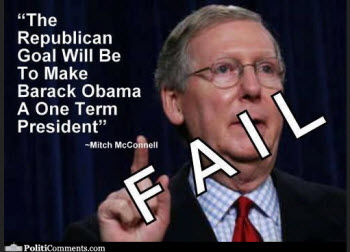
mitch-mcconnell-make-obama-one-term-presidentREALLY, MR. DOYLE? DID YOU REALLY EXPECT THAT, AFTER REPUBLICAN SENATE MINORITY LEADER MITCH McCONNELL GREETED OBAMA’S FIRST INAUGURAL BIPARTISAN OVERTURE WITH A CLEARLY STATED DETERMINATION TO MAKE PRESIDENT OBAMA “A ONE TERM PRESIDENT”, THAT OBAMA WOULD STRETCH OUT HIS HAND TO HAVE IT BITTEN AGAIN?

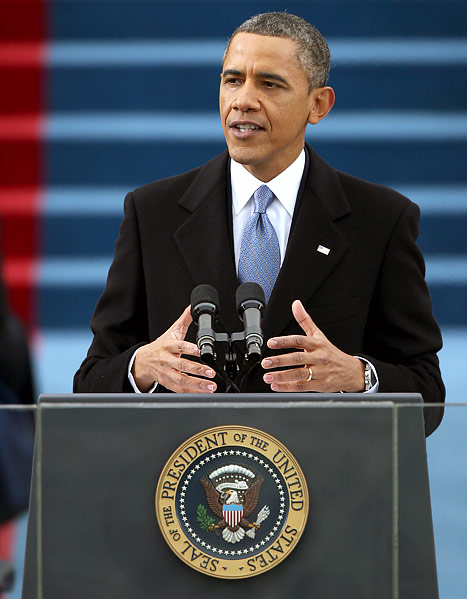
In 19 minutes, Obama delivered an eloquent, powerful and often combative summary of his values as a progressive Democrat who believes that an activist federal government helps make America great.

And if there was any question about how ambitious an agenda Obama intends to pursue in his second term, the answer was clear: He’s going big, not small, just as he did in 2009.

The president listed a daunting series of priorities: a fiscal deal including tax reform, measures to reduce health care costs, a new immigration law, gun control and education reform. He made a point of promising progress on climate change, a priority he seemed to have abandoned during his difficult first term. He added full equality for gay Americans, an item that made its way onto his first-term agenda only through a campaign-year back door.

Obama knows that he will need to win some Republican votes, especially in the House, to accomplish any of those goals. But on Monday he chose to assert his electoral mandate rather than extend an olive branch.

0122-OBAMA-BOEHNER-sized.jpg_full_600AH, YES – THE OLIVE BRANCH! JUST HOW WILL EXTENDING AN OLIVE BRANCH – WHICH McCONNELL AND BOEHNER REJECTED DURING OBAMA’S LAST TERM – GET THESE NEANDERTHAL, TEA PARTY-DRIVEN REPUBLICANS TO MOVE FORWARD ON TAX REFORM, REDUCING HEALTH CARE COSTS, COMPREHENSIVE IMMIGRATION LAW, GUN CONTROL AND EDUCATION REFORM – LET ALONE EQUALITY FOR GAY AMERICANS? ARE YOU SERIOUS, MR. McMANUS?

If there’s a second half of his strategy — a secret plan to help bring some Republicans to “yes” — the president is keeping it well hidden.

Most inaugural speeches are so anodyne — full of airy invocations of national unity and vague calls to greatness — that the words are forgotten by lunchtime. Not this one. It was a progressive’s call to arms.

1358788602_barack-obama-inauguration-speech-467OF COURSE IT WAS. IT WAS A MAJORITY OF AMERICANS – PROGRESSIVES, LIBERALS AND DEMOCRATS – WHO ELECTED HIM. AND HE WAS SPEAKING TO US – THE MAJORITY WHO ELECTED HIM AND WANT TO MOVE THE COUNRTY FORWARD. WHY DOES THAT SURPRISE YOU, MR. McMANUS?

“We have always understood that when times change, so must we,” Obama said, “that fidelity to our founding principles requires new responses to new challenges” (are you listening, Tea Party?) and “that preserving our individual freedoms ultimately requires collective action.

“A great nation must care for the vulnerable and protect its people from life’s worst hazards. Now, more than ever, we must do these things together, as one nation and one people.”

And instead of gauzy invocations of common ground, Obama issued a series of surprisingly tart political zingers aimed, not so subtly, at his adversaries.

“Our country cannot succeed when a shrinking few do very well and a growing many barely make it,” he said. “We do not believe that in this country freedom is reserved for the lucky or happiness for the few.

“We reject the belief that America must choose between caring for the generation that built this country and investing in the generation that will build its future.”

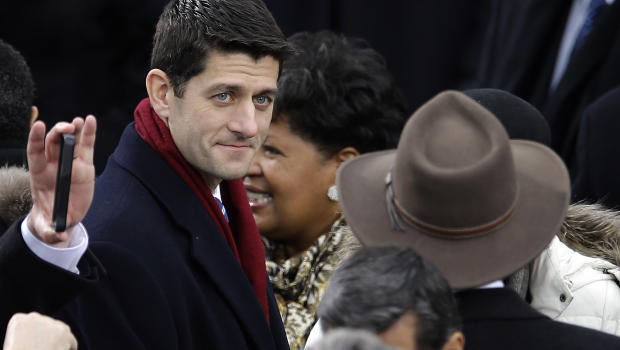
He even took aim at Rep. Paul Ryan, the Republican vice presidential nominee, who has derided recipients of federal benefits as “takers” rather than “makers.”

photoAMAZING! OBAMA ACTUALLY RE-STATED THE ARGUMENTS THAT WON HIM RE-ELECTION! MR. McMANUS SEEMS TO BE SHOCKED THAT PRESIDENT OBAMA WOULD ACTUALLY EMPHASIZE THE KEYS TO HIS VICTORY: CHAMPIONING THE 99% — AND PROTECTING FDR’S NEW DEAL SOCIAL SAFETY NET.

“The commitments we make to each other through Medicare and Medicaid and Social Security … do not make us a nation of takers,” he said.

Ryan, who was on the platform listening, took the high road with a statement that said: “We (have) strong disagreements over the direction of the country. But today we put those disagreements aside. Today we remember what we share in common.”

Privately, though, many Republicans were seething.

AP771916897310_620x350BOO HOO HOO. PAUL RYAN IS SEETHING. CRY ME A RIVER, McMANUS. CAN YOU IMAGINE ANYTHING OBAMA MIGHT HAVE SAID THAT WOULD HAVE PLACATED ANTI-NEW DEAL TEA PARTIERS LIKE RYAN? SPARE ME THEIR CROCODILE TEARS. 

It was a long way from the Barack Obama of 2009, the brash young idealist who promised to change the way Washington worked, seek post-partisan solutions and banish “the stale political arguments that have consumed us for so long.”

2700349-president-barack-obama-2013-obama-inauguration-650-430IT WAS A LONG WAY FROM THE RELENTLESS PUNCHES THAT OBAMA TOOK IN THE FACE FROM THE GOP AFTER OFFERING AN OLIVE BRANCH IN HIS 2009 SPEECH. WERE YOU THERE, MR. McMANUS? DID YOU MISS PRESIDENT OBAMA’S FIRST ADMINISTRATION? WERE YOU SLEEPING THE PAST FOUR YEARS – AND JUST WOKE UP, IMAGINING YOU’RE IN POLITICAL FANTSASY LAND?

This year, instead of an outstretched hand, he delivered a slap. “We cannot mistake absolutism for principle, or substitute spectacle for politics, or treat name-calling as reasoned debate,” he said.

Obama has been trying this more pugnacious approach since the November election, and it has undeniably made him more effective — so far. He forced Republicans to back down on income tax rates at the edge of the “fiscal cliff,” and he appears to have forced them to back down again on their threats to block an increase in the federal debt ceiling.

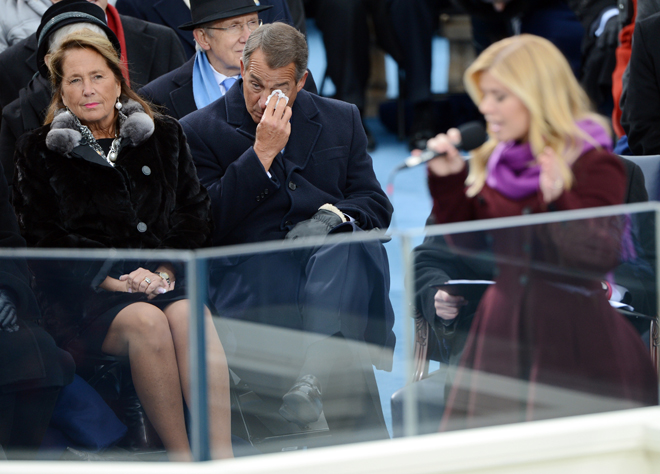
boehner-kelly-clarksonDUH. GETTING TOUGH WITH THESE GOP CLOWNS ACTUALLY WORKS. BECAUSE REPUBLICAN IDEAS ARE MORIBUND – AND THEIR LEGISLATIVE AGENDA IS DETRIMENTAL TO PROGRESS.

It’s impossible to blame any politician, even a president who once promised post-partisan hope and change, for surrendering to reality and doing what works. But it sure isn’t pretty, and, more important, it may not always be effective.

At some point, Obama is likely to need willing collaborators from the opposition — if he hopes to pass an immigration reform law, for example, or negotiate a long-term deal to reduce the deficit.

When that day comes, the president may find himself wishing he had devoted a few more words of his second inaugural address to offering an outstretched hand.

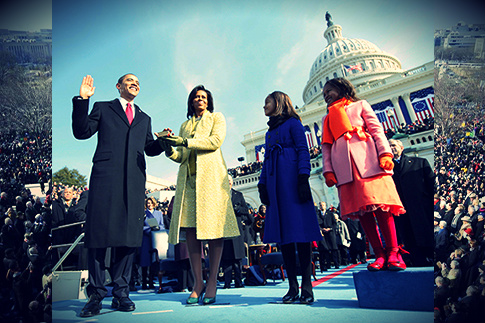
obama-inauguration-elite-dailyREALLY, DOYLE McMANUS? DESPITE ALL HISTORICAL EVIDENCE TO THE CONTRARY, DO YOU TRULY BELIEVE THAT THE GOP CULTURE WARRIORS AND TAX FETISHISTS WERE GOING TO BE ASSUAGED BY OBAMA SPEAKING A FEW “MORE WORDS” IN THEIR FAVOR?

DO YOU TRULY BELIEVE THAT BOEHNER, RYAN, McCONNEL, RAND PAUL AND THE REST OF THE GOP WILL ACTUALLY RESPOND POSITIVELY TO OBAMA “OFFERING AN OUTSTRECHED HAND”?

IF SO, THEN DOYLE McMANUS — YOU ARE EITHER A COMPLETE FOOL OR SOMETHING MUCH, MUCH WORSE. 

3 Comments

Filed under History, Politics

Victory at Pearl Harbor…

(This was orginally posted in 2010.)

The significance of December 7, 1941 is something that most of our parents do not need to be reminded about. It was a shocking, indelible moment for them, much like September 11, 2001 was for another generation of Americans. I don’t want to spend time here comparing those two disastrous attacks: one by a hostile state, the other by a handful of extremists. That’s for another time, another post.

This is a day of remembrance.

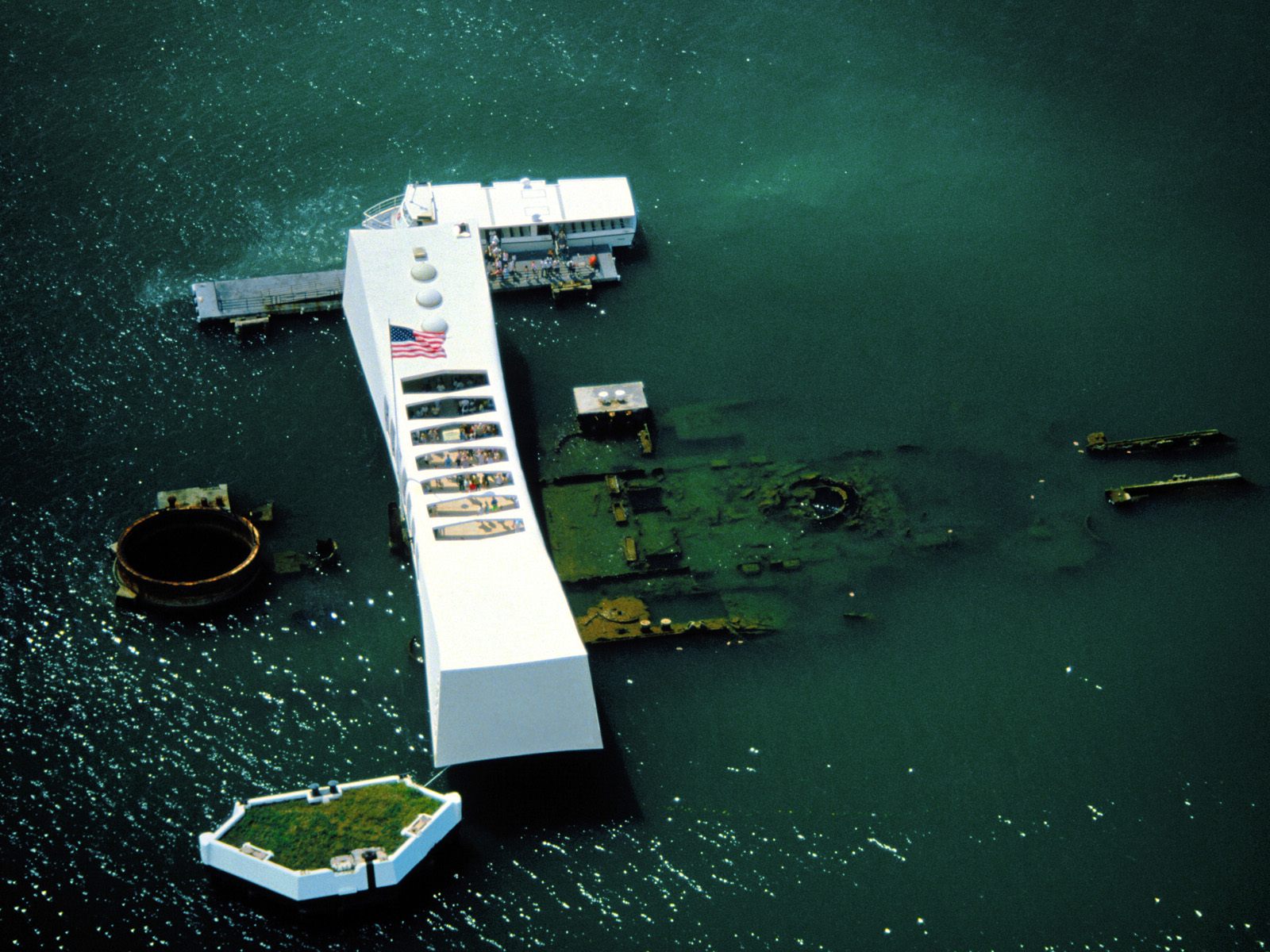
There are not many veterans of Pearl Harbor still with us. Not many left who saw the Japanese planes diving out of the sky, felt the concussions as great battleships shuddered, burned, and sank. Not many left who can stand on the observation deck of the USS Arizona Memorial, gaze at that sunken iron tomb and say, “I knew a guy who went down with that ship.”

On December 7th, we remember what was lost at Pearl Harbor: the lives, the ships, the planes – our national innocence.

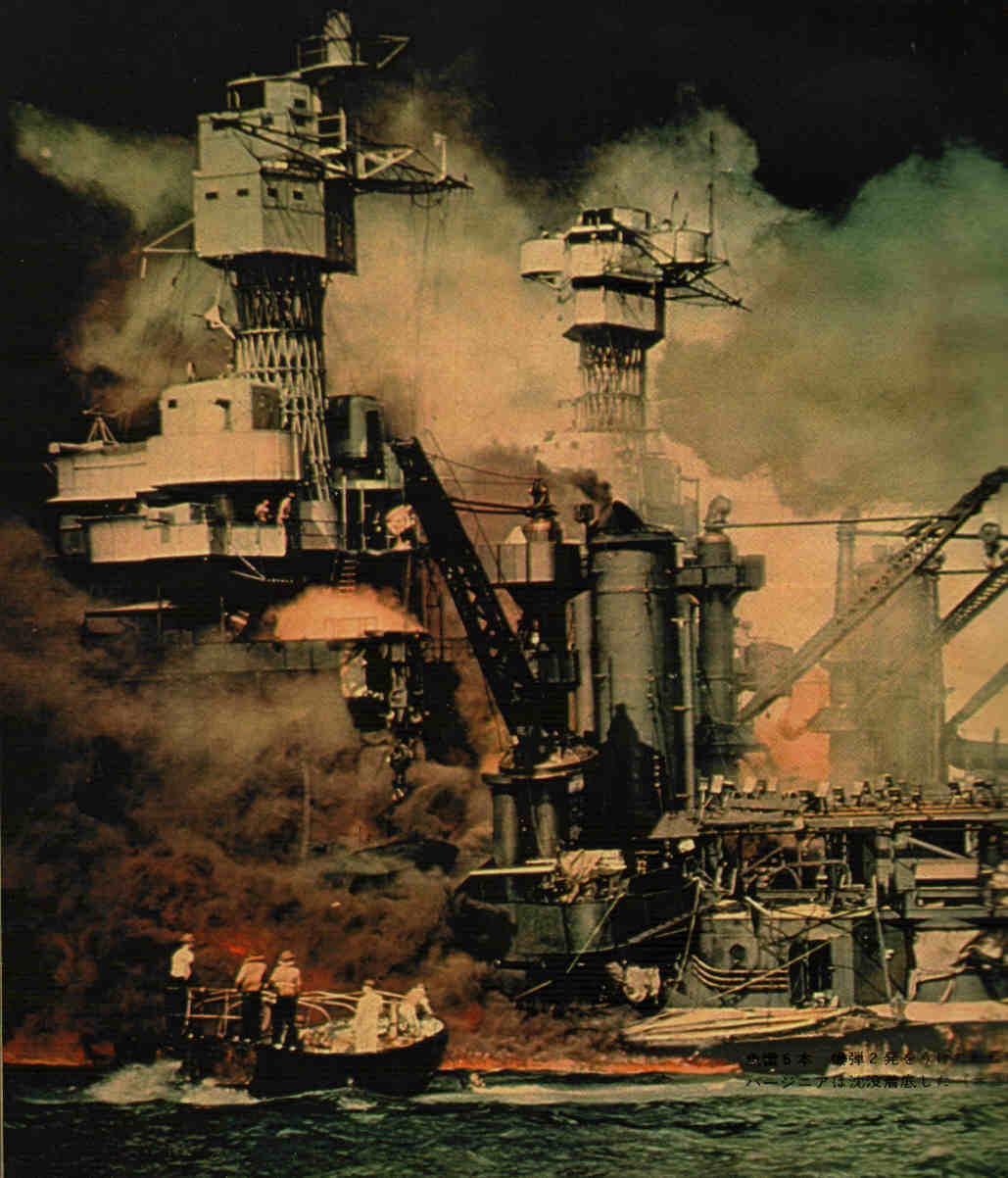
But on this day, we should also remember the miracle of Pearl Harbor: the incredible effort that raised so many of those ships from the bottom of the harbor, patched them up – and sent them back into the fight. Only three of the ships that were bombed in Pearl Harbor on that day of infamy were forever lost to the fleet.

And of the 30 ships in the Japanese fleet that attacked Pearl Harbor, only one survived the war without being sunk.

The dynamism, optimism and resolve displayed by those military crewmen and civilians who, within months, raised and repaired the devastated wreckage of Pearl Harbor are qualities that Americans must call on once again to overcome our national challenges. Would that our leaders would spend less time sowing the fear of future attacks – and more time appealing to the better angels of our national identity.

“Can do” was the unofficial motto of the Seabees, the legendary Navy outfit that led the reconstruction effort at Pearl Harbor.

Where’s that American “Can do” spirit now?

P.S. Click here for a WWII-era Pearl Harbor song I found online. It may seem a bit too upbeat at first, but in the context of our ultimate victory at Pearl Harbor, it’s not too bouncy after all. It’s got that confidence and “Can do” spirit.

$(KGrHqNHJBcE-dPs9M,cBPn+++hkMg~~60_57P.S.S. On this day, let’s remember one of the great WWII POW escape artists. If you have any pals who love The Great Escape or Shawshank Redemption, please point them toward the story of William Ash: Texan, RAF pilot, POW — and a guy who escaped the Nazi prison camps 13 times!
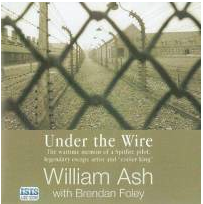
He’s the guy that inspired Steve McQueen’s character in The Great Escape.

Amazon link: http://www.amazon.com/dp/1481088858/

Kindle ebook: (free to Prime members) http://amzn.com/B00AF4I0K8

Comments from authors on UNDER THE WIRE:

9780553817119What a splendid book! A young Texan brought up in the middle of the Depression who pulls himself up by his bootstraps, thereafter hikes to Canada to fly Spitfires for the Brits while America is still neutral. Just as the U. S. enters the war, he is shot down, and another exciting and terrible episode in his life begins. Living under terrible conditions he makes several attempts to escape until he finally succeeds in saving himself and many of his fellow POWs. This is a moving and heroic story of a young man who overcomes all obstacles with a sense of humor and succeeds in the end. Hollywood should snap this book up in a flash. Buy it, read it, enjoy it.

Charles Whiting, author of Hero: Life and Death of Audie Murphy

AshUNDER THE WIRE is a well-written and exciting memoir of wartime captivity that is packed with incident and vividly recreates the oft-neglected early days of Stalag Luft III and the now forgotten mass escape from Oflag XXIB, Schubin — a sort of dress rehearsal for the famous Great Escape. The author himself is one of the great unsung heroes of the Second World War, as are some of those whose adventures he records in this remarkable book. It also makes a refreshing change to read a memoir by someone who is politically literate and knew exactly what he was fighting against and what he was fighting for.’ There are passages in this book – particularly those concerning the political awakening of POWs and their determination to create a better post-war world – that make the reader want to stand up and cheer.

Charles Rollings, author of Wire and Walls, Wire and Worse

UNDER THE WIRE is everything I would expect from a memoir by Bill Ash — fast-paced, exciting and moving, but also colored by his mischievous sense of humor. He has a real gift as a storyteller — the characters and events come off the page as if we were meeting and experiencing them ourselves. Bill Ash was one of the great escape artists of the Second World War, and always managed to put himself in the centre of the action. He endured a lot, but never lost his essential humanity and zest for life, something that comes through very strongly in his book. That’s what makes UNDER THE WIRE such a joy to read — getting to know the irrepressible Ash and reliving his adventures with him.

Jonathan Vance, author of A Gallant Company: The Men of the Great Escape.


7 Comments

Filed under History