Category Archives: Adventure

History & Honeymoon: Part Two

“Forward men, forward for God’s sake…”
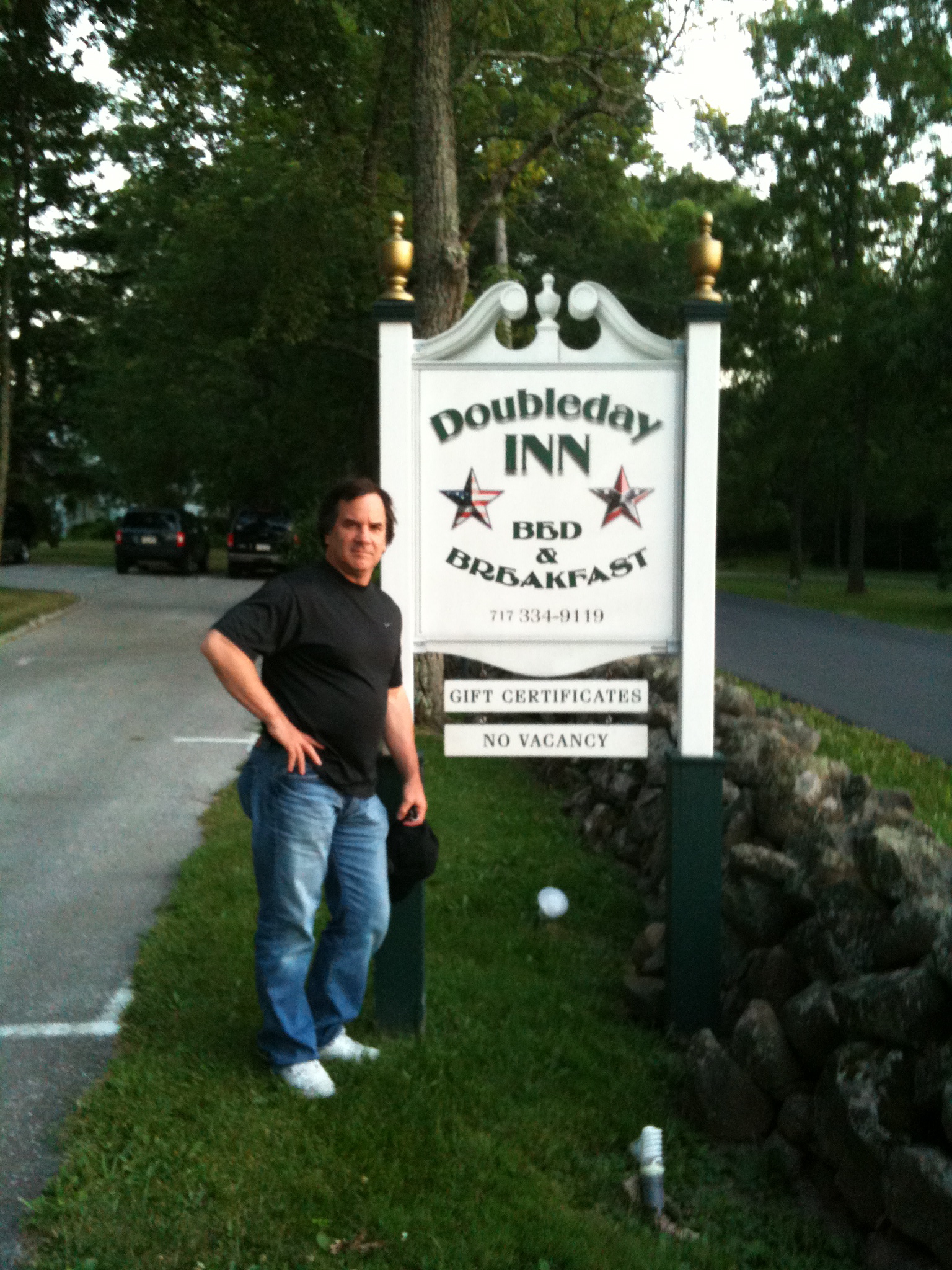
On the morning of July 1st, my wife, Victoria, and I got up early enough to enjoy breakfast at The Doubleday Inn with our housemates — a collection of congenial history buffs and their spouses.

One of our fellow guests, a 40-something Pennsylvanian named John, was there by himself, and this was clearly not his first visit to Gettysburg. It was fun to see how enthused he was about getting out on the battlefield.
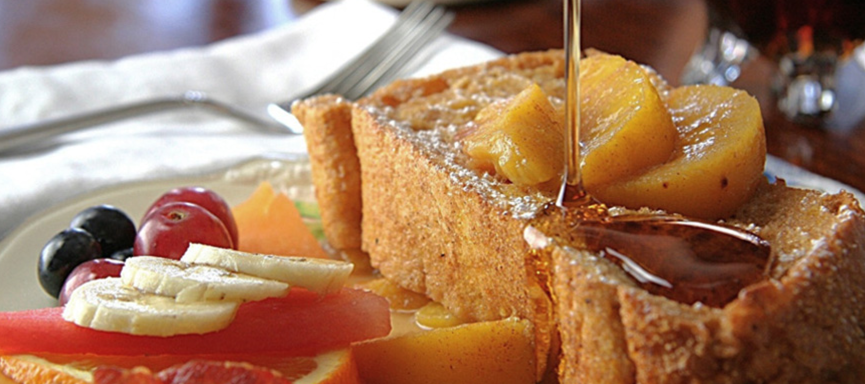
I shared John’s excitement as I downed my breakfast, a delicious, maple syrup drenched version of French toast that proved too heavy for Victoria. She needn’t have worried about the calories: battlefield tramping burns ‘em off big time.

By the time we left the Doubleday Inn on Oak Ridge that morning, headed for the new Gettysburg Visitor Center and Museum, we could imagine General John Buford’s battle-weary cavalry corps falling back under fire from Confederate General Henry Heth’s reinforced infantry to positions along Oak Ridge (and the adjacent McPherson’s Ridge) 147 years ago.

Buford’s boys had been fighting off Heth’s two brigades since 5:00 AM, and here we were, two honeymooning sluggards, just getting into action at 9:00.
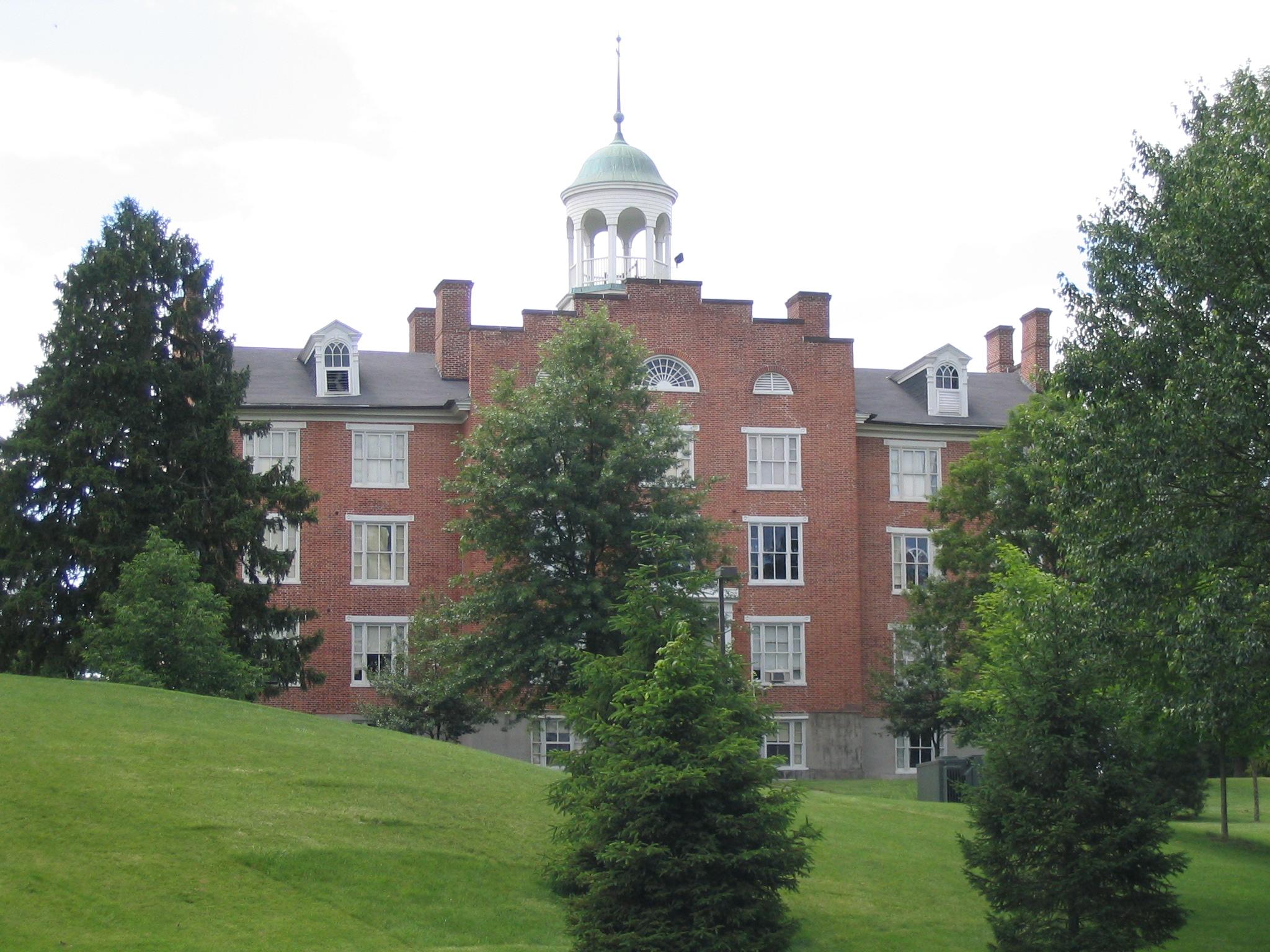
As we drove toward town and the Visitor Center, we could see the distinctive cupola of the Lutheran Seminary along Seminary Ridge, an important landmark on the battlefield in 1863 – and to this day. We could envision a grimly determined General Buford up in that cupola, field glasses in hand, watching the progress of the battle raging to his front, and looking anxiously to the rear for the approach of General Reynolds and his infantry corps.
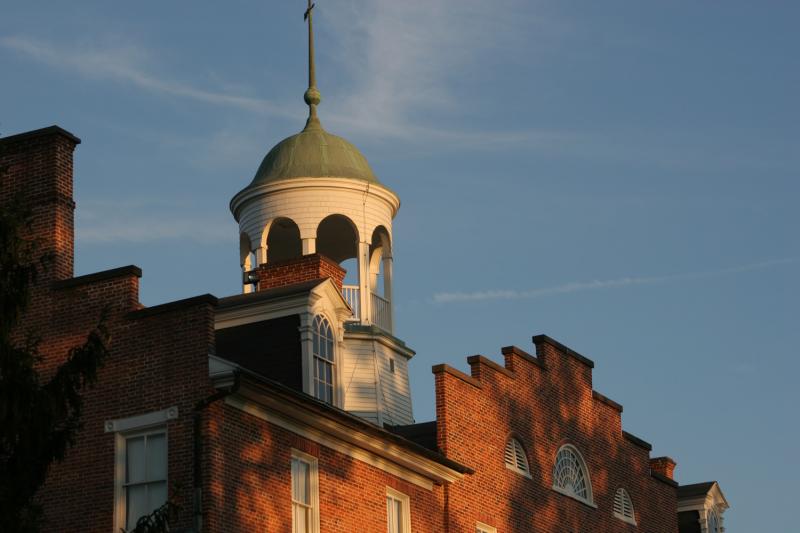
In fact, if we were there on that fateful morning in 1863, General Reynolds would soon be passing us on the road, riding up to the seminary and calling up to Buford, “How goes it, John?” Buford would reply, “The devil’s to pay!” and the next chapter of Gettysburg history would soon be written. But that would have to wait. We wanted to check out the new Visitor Center first.
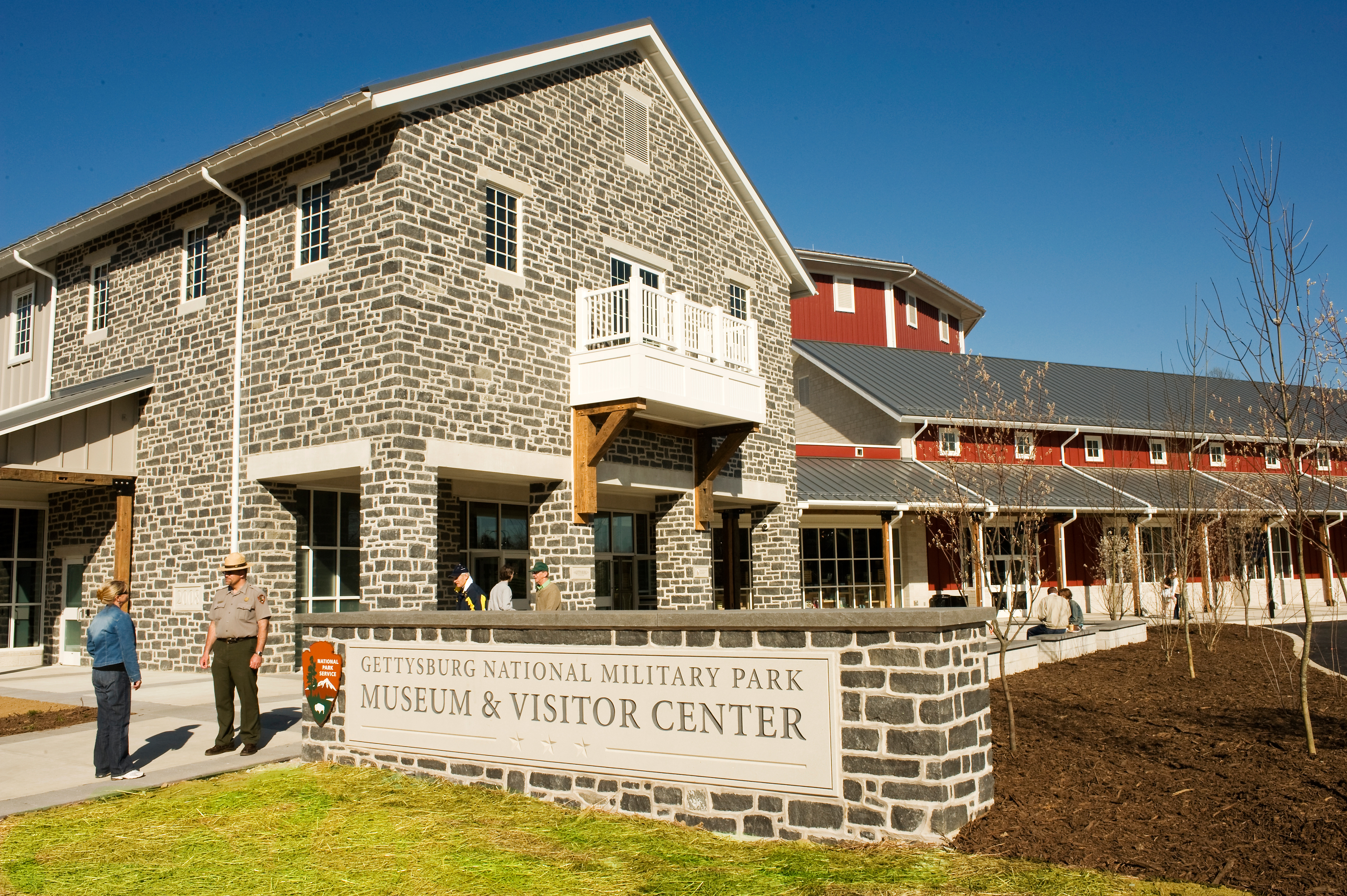
Our hosts at the Doubleday Inn (and several of our fellow guests) had spoken in glowing terms about the wonders of the new Museum and Visitor Center, which opened in April 2008 — and they were not blowing smoke. Victoria and I have been to a lot of National Park visitor centers, and this one blows them all away.
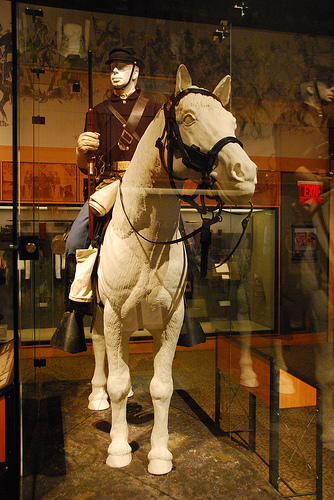
Far more than the usual place to pick up maps, brochures and a gift or two, the Gettysburg Museum and Visitor Center is 22,000 square feet of exhibits, battlefield relics, inter-active exhibits, and multi-media presentations, including the film, “A New Birth of Freedom”, narrated by Morgan Freeman (who also starred in the film, Glory, which triggered my Civil War obsession in 1989).

Victoria and I watched the film and checked out the incredible exhibits – including the stretcher used to carry the mortally wounded Stonewall Jackson from the field at Chancellorsville on May 2, 1863. (Jackson’s death 8 days later would have dramatic repercussions at Gettysburg.)

The humble furnishings of Robert E. Lee’s personal field quarters were also on display, as were hundreds of period muskets, rifles, pistols, artillery shells, uniforms, and other treasures discovered on the battlefield over the years. It would be very easy to spend the entire day there – but with General Reynolds arriving on Seminary Ridge to reinforce Buford and the first day’s fighting heating up – we were eager to get back on the battlefield.

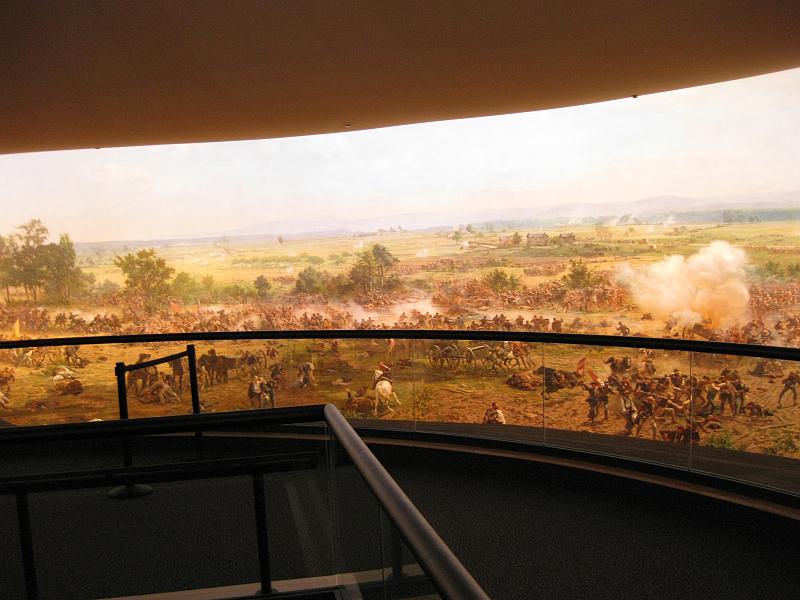
But first, we had to see the fully restored Gettysburg Cyclorama.
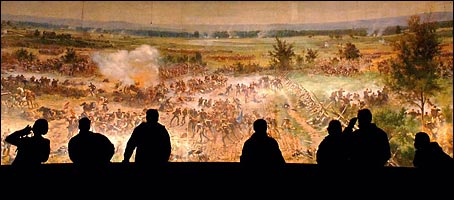
We’d seen it 20 years ago, when it was something of a sideshow attraction along with the old electronic map with its more than 600 lights that, for forty years, tracked the major action in the battle for visitors. Today, in its new home, the Gettysburg Cyclorama — the nation’s largest painting — gets its due.
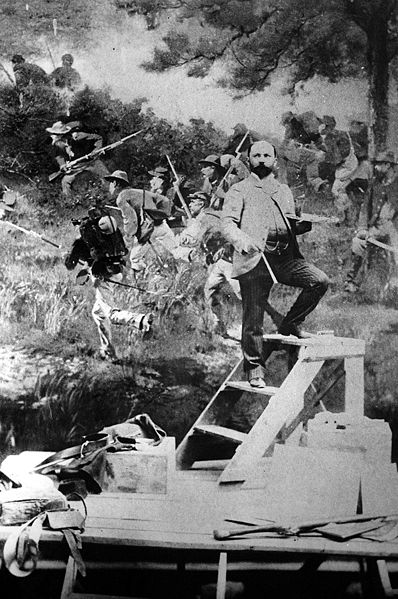
The massive artwork, entitled “The Battle of Gettysburg”, is a 360-degree cyclorama by the French artist Paul Dominique Philippoteaux. The vivid painting wraps around the curved walls of the exhibit, surrounding the viewer with a stunning, colorful, and violent depiction of “Pickett’s Charge” on July 3, 1863 – the climactic action of the three-days of unprecedented valor, fury and sacrifice that was The Battle of Gettysburg. You really have to see it to understand the scale and power of this thing. The whole experience made me proud to think “Your tax dollars at work.”
"Reynolds and the Iron Brigade" by Keith Rocco. © Keith Rocco and Traditional Studios http://www.keithrocco.com

After our rewarding morning at the Visitor Center, we drove back out to McPherson’s Ridge, where Heth’s reinforced Confederate brigades of General A.P. Hill’s corps were about to confront the vanguard of the Union Army of the Potomac, hurriedly deployed by its commander, General John Reynolds. Reynolds First Corps included the famous Iron Brigade, wearing their distinctive tall black hats. For Heth’s rebels, one look at “those damn black hats” made it clear that one of the Union’s hardest-fighting, battle-tested veteran infantry units had now joined the fight for the Gettysburg high ground.
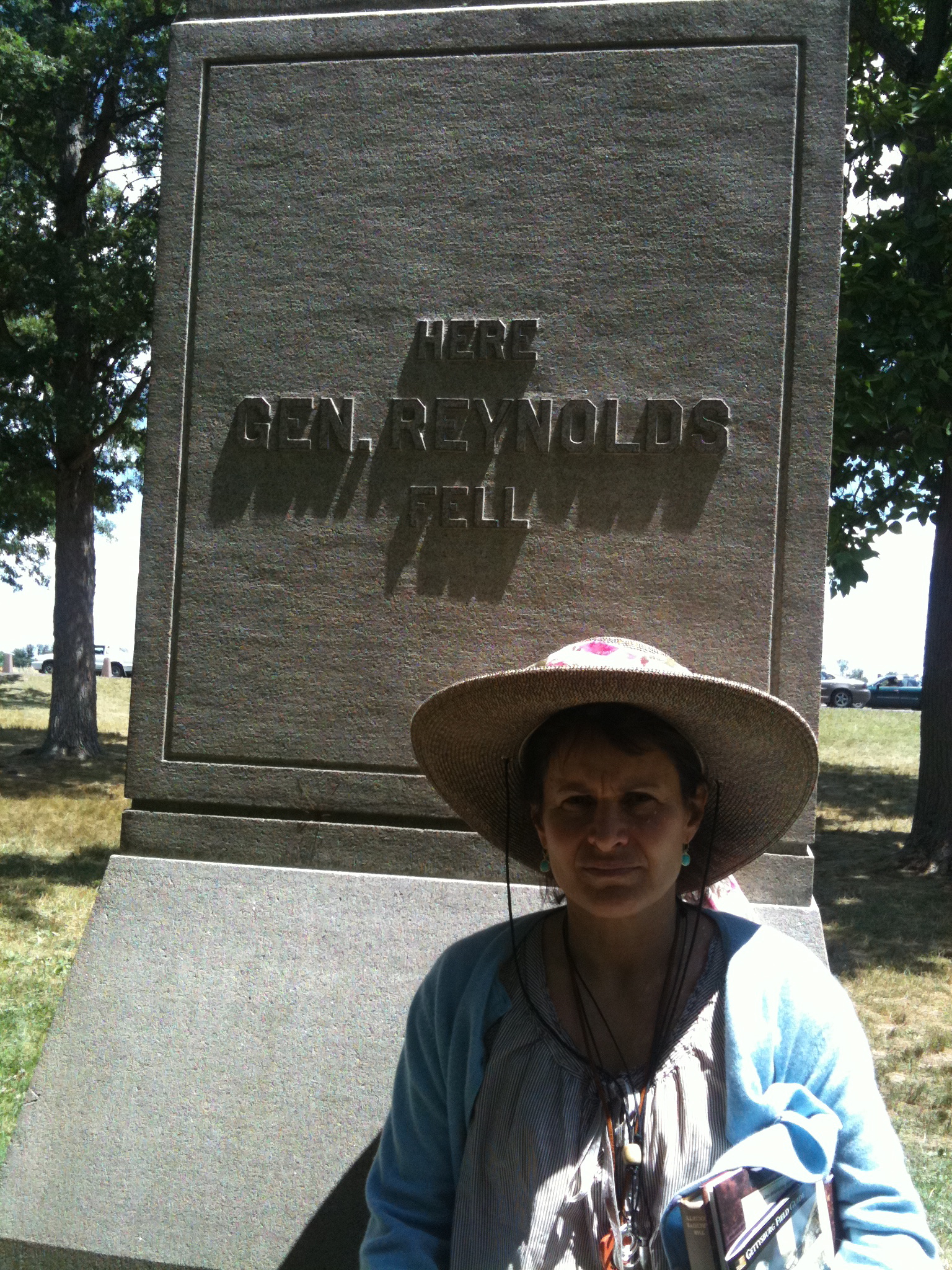
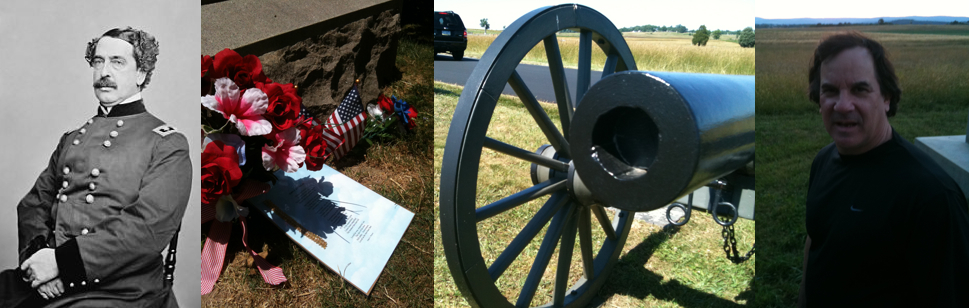
Victoria and I knew that our first stop on McPherson’s Ridge would be a somber one: the spot where Reynolds fell, shot from his horse in the opening moments of the engagement as he urged his troops forward, bellowing, “Forward men, forward for God’s sake and drive those fellows out of those woods!”(Generals led from the front in those days.)

The sudden loss of Reynolds was a brutal blow to the Union cause. John Reynolds wasn’t just any general – he was one of the Union army’s best.
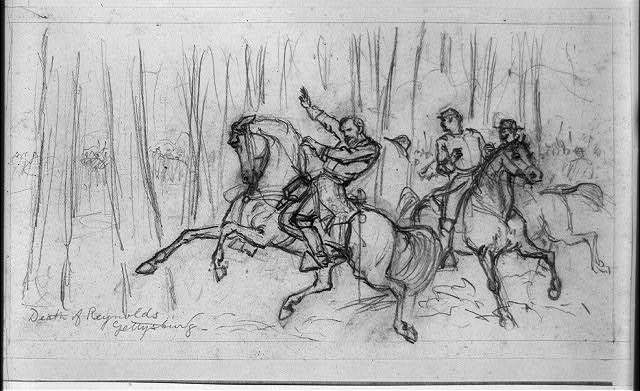
"The Death of Reynolds" by Alfred R. Waud (1828-1891)

Some historians maintain that Lincoln wanted to give Reynolds command of the Army of the Potomac, but that Reynolds demanded more autonomy than Lincoln could grant him. Ultimately, Lincoln put Pennsylvanian George Meade in charge of the Army of the Potomac with Reynolds leading the army’s First, Third, and Eleventh Corps.

Tributes left on July 1, 2010 at the spot where Reynolds fell include a poem someone wrote to honor him. Like the dog biscuits still left for Sallie the regimental mascot, these battlefield tokens always break my heart, yet also fill me with joy that, for some, history is a living thing.
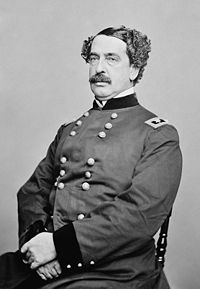
Upon Reynold’s death, command of the Union forces fighting on McPherson’s Ridge and Oak Ridge devolved to General Abner Doubleday. (The Doubleday Inn, get it?) Two years earlier, Captain Doubleday had fired the first shot in defense of Fort Sumter, now, promoted to general, he was called upon to once again play a pivotal role in an epic moment.

And while it may well be that the claim Doubleday invented baseball in 1839 (he was in West Point at the time) is no more than a legend, what he did for the five furious hours after Reynolds death would have been legend enough for any man.
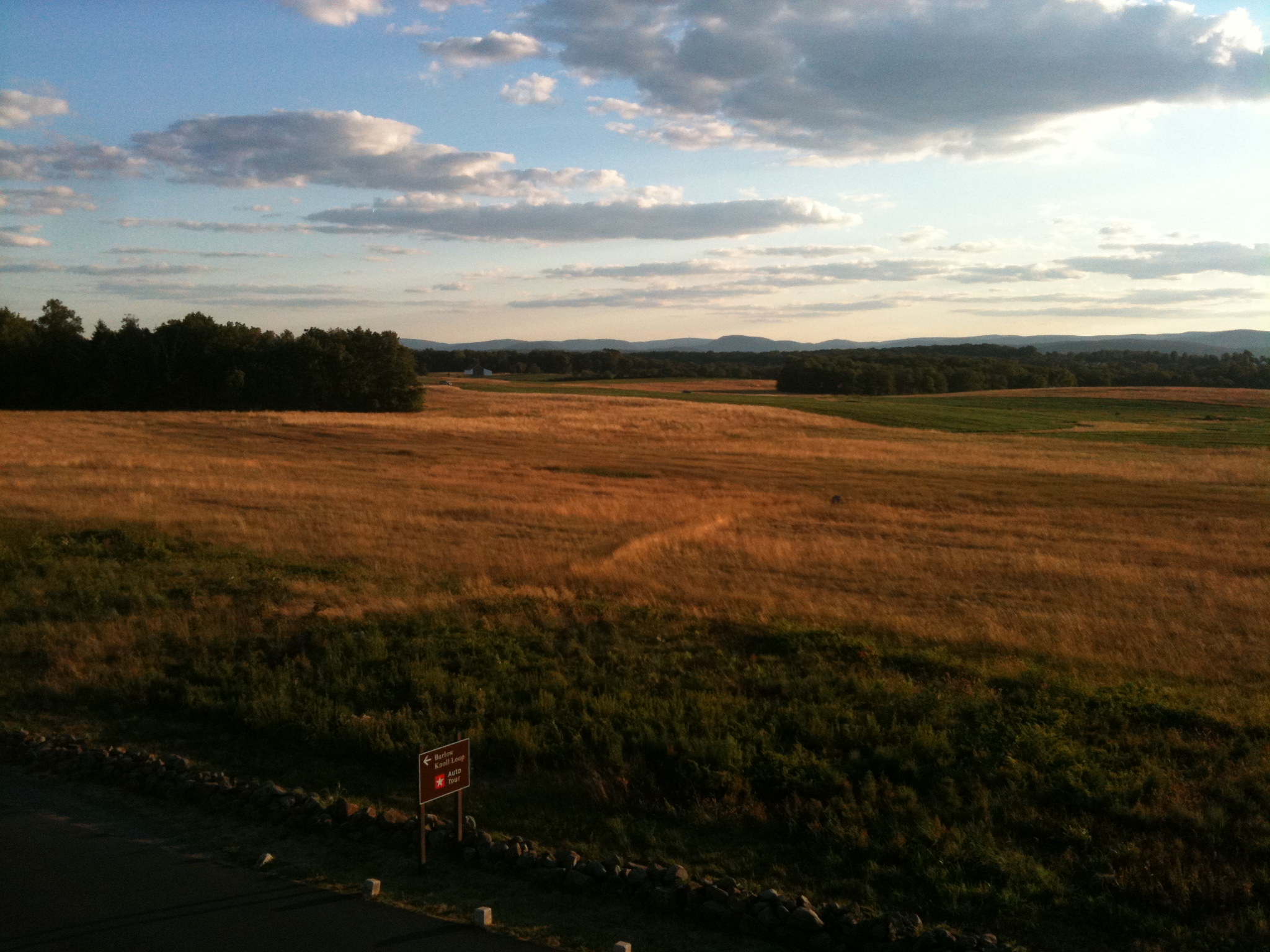
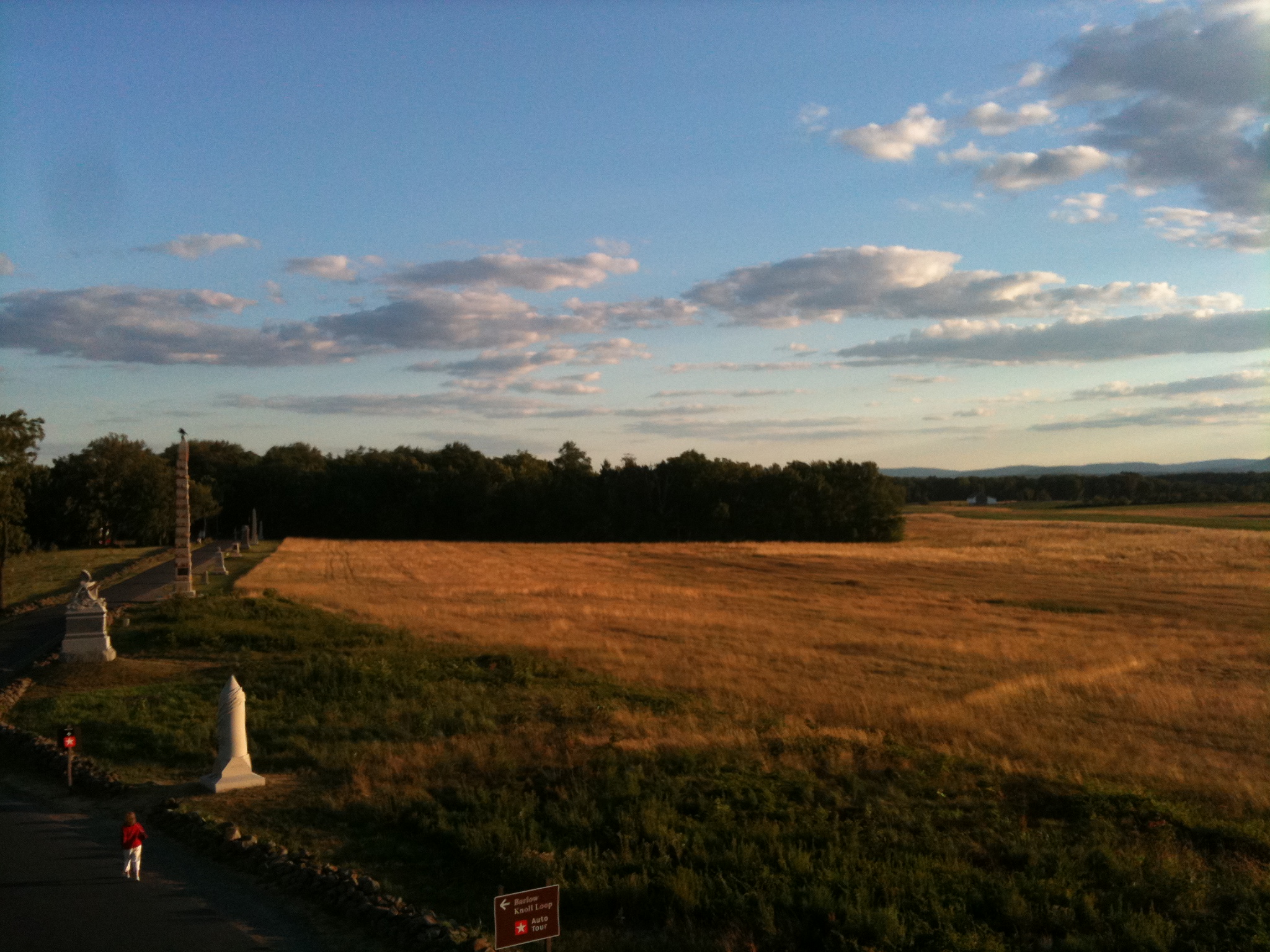
Oak Ridge (McPherson's Ridge is to the left beyond the trees)

Doubleday’s men fought hard all morning, holding fast to the critical ridgelines just outside of town. As the Confederates threw wave upon wave of reinforcements into the fray, Doubleday’s 9,500 men battled ten Rebel brigades numbering more than 16,000, inflicting casualties on their attackers ranging from 35 to 50 percent in various regiments. The monuments that line McPherson’s Ridge and Oak Ridge are silent testaments to the valiant resistance of Doubleday’s troops in the face of overwhelming odds.
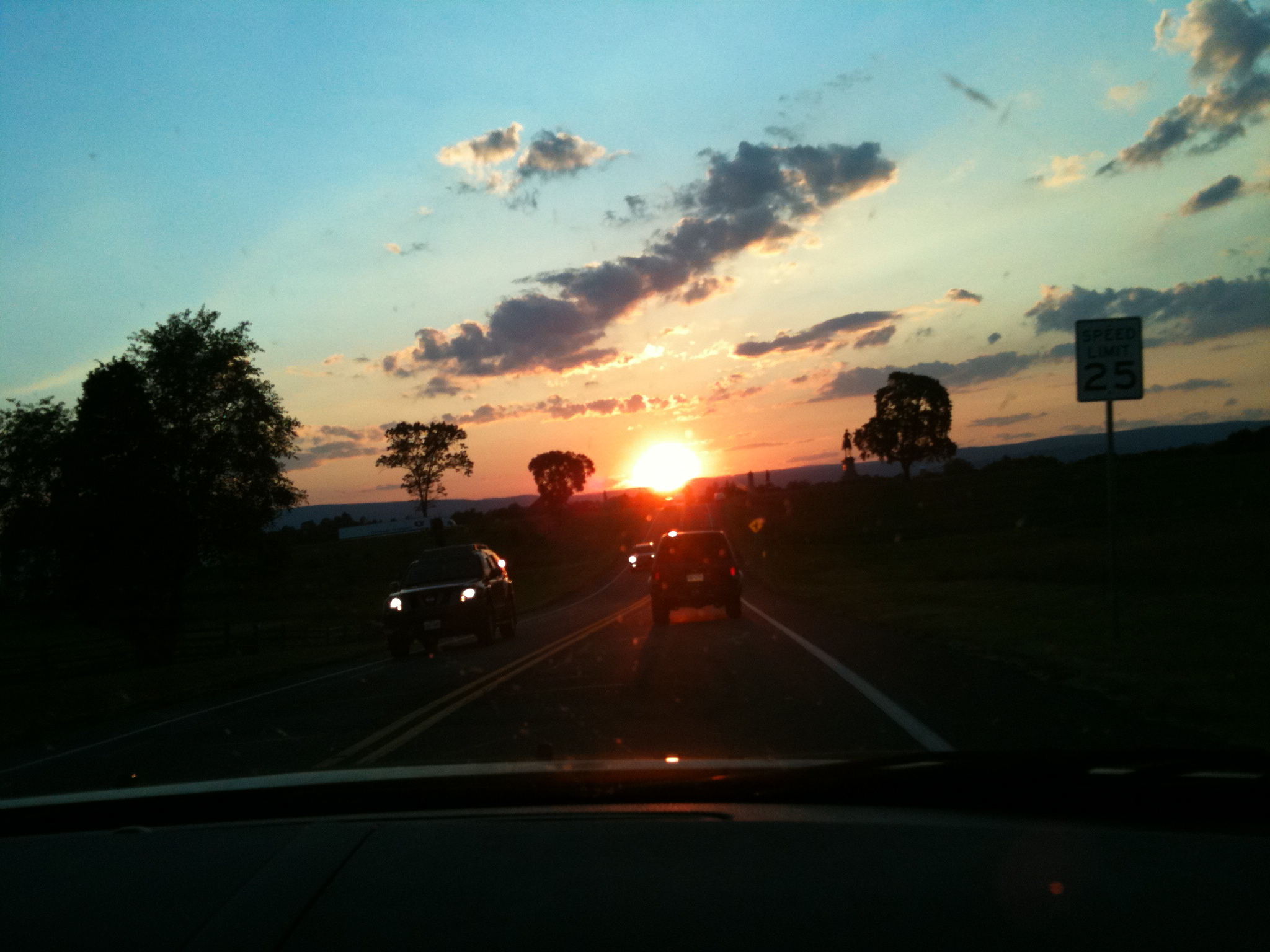
Evening falls on the Chambersburg Pike, looking toward the advancing Confederates.

Eventually, Confederate troops finally pushed Doubleday off those ridgelines, past the Lutheran Seminary, and onto Cemetery Hill — where Union troops were concentrating to secure the high ground overlooking the town and fields below. At day’s end, Doubleday’s First Corps had lost two thirds of its men, dead, wounded, taken prisoner, or missing in action. But their sacrifice saved the day. The gallant stand made by Buford, Reynolds and Doubleday had kept the Confederates from reaching the high ground on Cemetery Hill.

The contest for that high ground – and victory on the bloody Gettysburg battlefield — would last two more days.
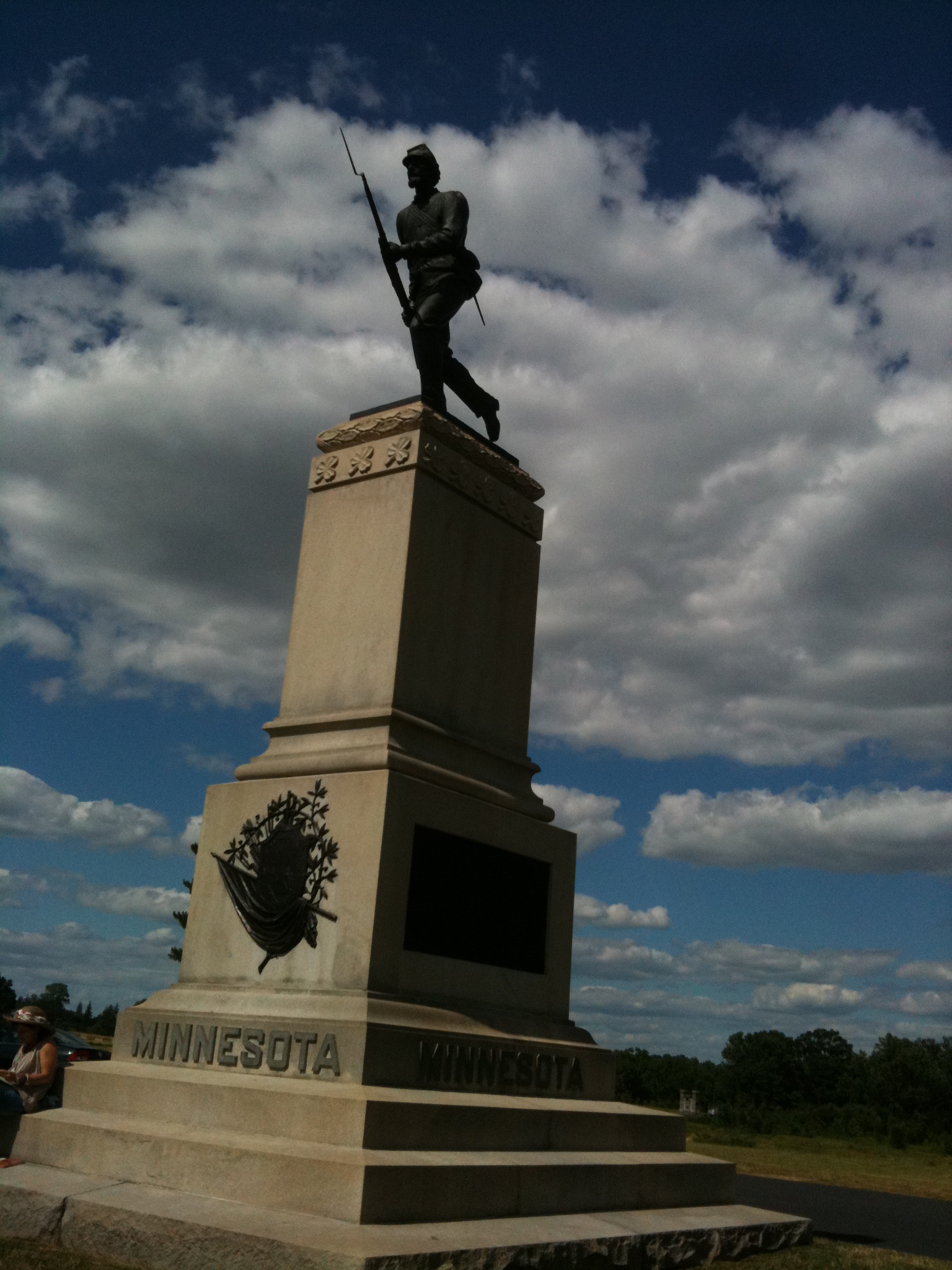
The FIrst Minnesota monument at the base of Cemetery Hill: Heroism on Day #2

Victoria and I returned to The Doubleday Inn with a greater appreciation of the man whose name our pleasant B&B bore.

To be continued…
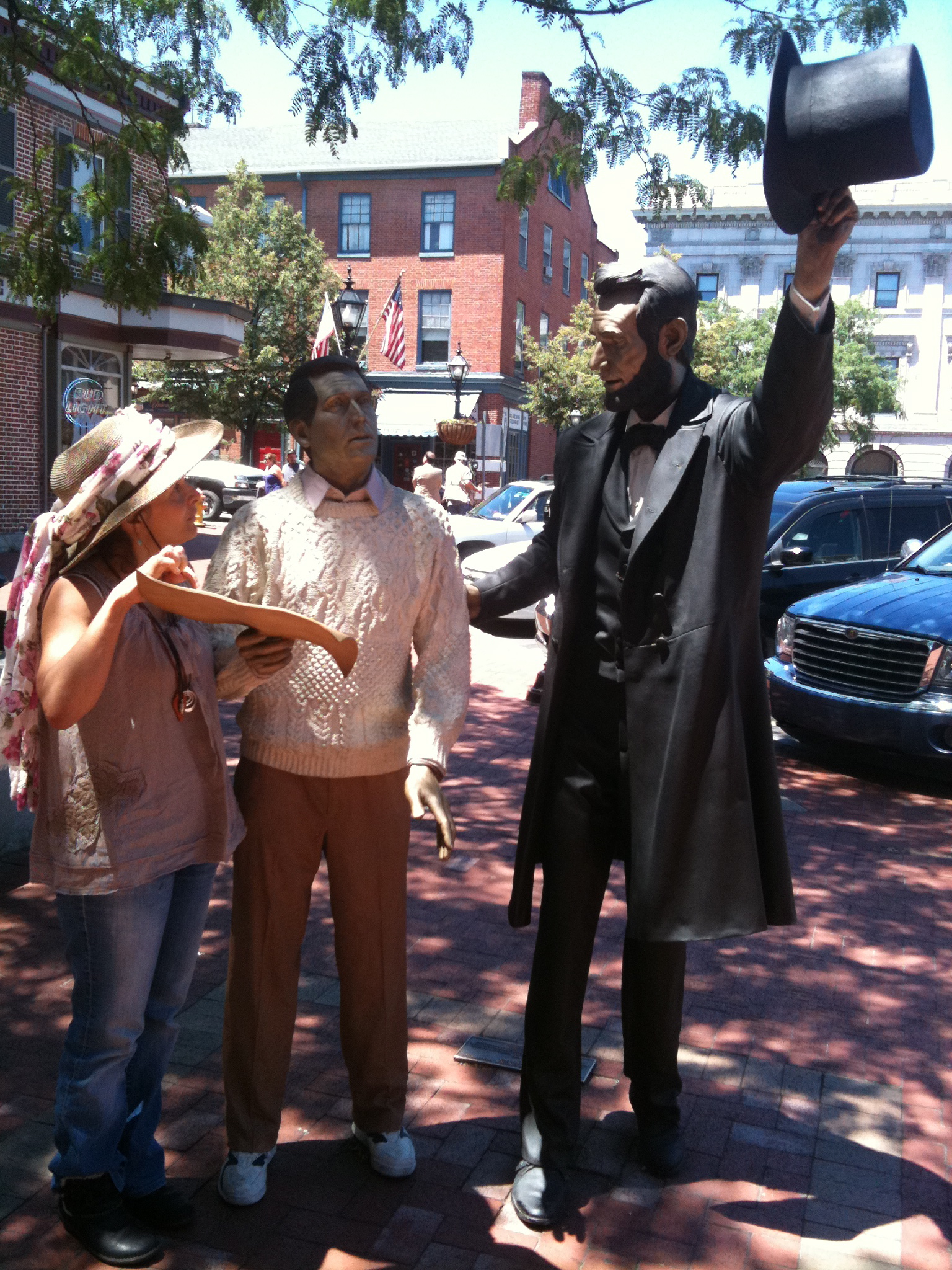
Victoria and a friend ask Honest Abe for directions in downtown Gettysburg.

9 Comments

Filed under Adventure, History

History & Honeymoon: Part One

On Sunday June 27th, my wife Victoria and I gave our last performance of “The Vic & Paul Show” in it’s three-week run at PUSH Lounge in Woodland Hills. It was a satisfying end to a wonderful run — made all the more special by so many great friends, Northwestern pals, and people we dearly love but haven’t seen in ages who showed up to share the experience with us. It had been more than twenty years since we’d done a comedy show together – and exactly twenty years since we’d said “I do” in a Greek Orthodox service on a blistering hot day in Chicago.

With our 20th wedding anniversary on June 30th, the show was essentially a celebration of our two decades of married bliss – and as we struck the stage at PUSH for the last time, our thoughts turned to our upcoming anniversary trip: a return to the great Civil War battlefield at Gettysburg.

We were we going to Gettysburg for our 20th anniversary because that’s where we spent our first honeymoon in 1990. Back then I was in the early throes of a mad crush on Civil War history that was inspired by the Oscar-winning 1989 movie Glory and had continued unabated since. As we planned our nuptials, I gave my darling bride a choice of honeymoon excursions

1. A tour of National League ballparks

2. A tour of Civil War battlefields

That I could even propose two such options to my bride-to-be was proof that I was already the luckiest man in the world – but when she chose the battlefield tour, I was certain that our union (just like the Union that Lincoln’s armies defended on that hallowed ground) would long endure.

Our first stop in 1990 was Gettysburg, and while we did not plan it that way, we arrived on July 1st – the 127th anniversary of the first day of that epic 3-day battle. It was kismet. We were where we were meant to be. Thus, it felt right that on such a momentous marital (and martial) anniversary, we should go back to the small Pennsylvania crossroads town where Robert E. Lee’s 1863 invasion of the North came to a bold and bloody end. Romantic, yes?

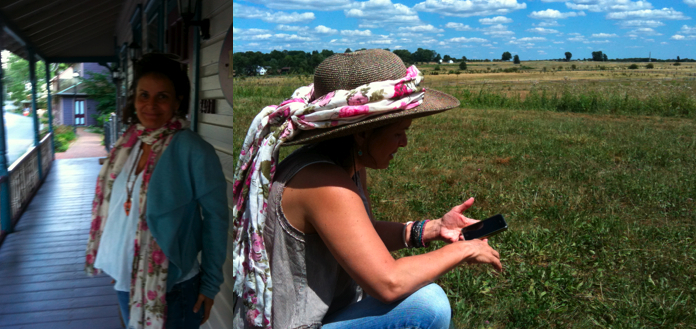
We flew into Philadelphia on June 30th, the eve of the battle, and drove west to Gettysburg. We wanted to make sure that we got to our Bed & Breakfast while these was still light on the battlefield. It was a 3-hour drive and we were hungry, so we stopped for a late lunch. But no service plaza grub would suit this history-loving couple – and with the help of her iPhone, Victoria located the perfect spot for a picturesque and historic nosh just a few miles off the turnpike. So, we turned off at the Morgantown exit, headed for the Inn at Saint Peters Village.

Saint Peters Village was entered onto the National Register of Historic Places in 2003. It’s a small, late 19th century industrial “company village” on the banks of French Creek in Chester County, PA.

For about half a mile, vintage buildings line the main drag that winds up a steep, rocky ravine, with the creek running through giant boulders below. Artists and craftsmen have set up shop in the clapboard 19th century storefronts, and the biggest and most architecturally impressive of these is The Inn at Saint Peter’s Village, where we enjoyed lunch on a large wooden deck overlooking French Creek. It was beautiful. So far, so good.

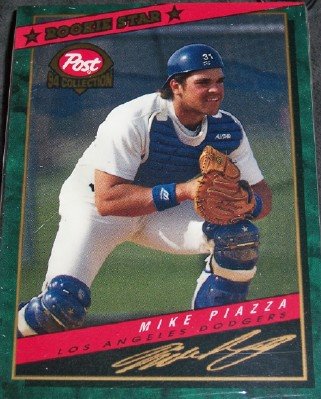
Interestingly, National League baseball managed to re-enter our honeymoon thoughts when our waitress casually mentioned that Mike Piazza’s dad “owned the whole town.” It turns out that arguably the greatest hitting catcher in Major League history (427 Home runs, career .308 batting average) grew up in nearby Phoenixville with his parents, Vince and Veronica. It was nice slice of local history to go with my pizza.

Hey, pizza and Piazza!

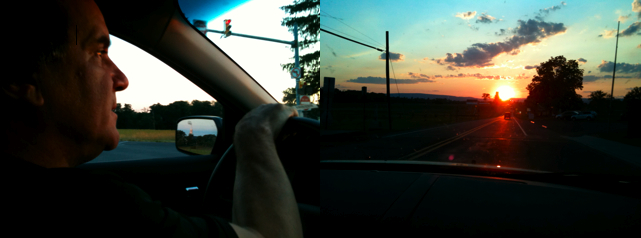
It was nearing 6:00 PM as we drove into Gettysburg down PA Route 30 and onto the old Chambersburg Pike – the same road that General John Buford rode into town with his division of Union cavalry late in the day on June 30th, 1863. That evening long ago, a grimly determined Buford watched with concern as a brigade of Confederate infantry under General Pettigrew probed south from Cashtown along the Chambersburg Pike toward Gettysburg.

Pettigrew’s brigade had been sent by his division commander, General Henry Heth, of A.P. Hill’s Corps in search of much-needed supplies — including a cache of shoes they understood to be in the town.

But when Pettigrew saw Buford’s cavalry arriving south of town, he returned to Cashtown and told Heth and Hill what he had seen. Despite Pettigrew’s claim that Federal cavalry was on the Chambersburg Pike, neither of his superiors believed there was anything more than Pennsylvania militia in Gettysburg.

Fate – and the fighting – would wait until tomorrow. And so, as Victoria and I pulled into the parking lot of The Doubleday Inn, would our own adventures on the Gettysburg battlefield wait until the following day.

The charming house at 104 Doubleday Avenue, now The Doubleday Inn, was built in 1939 and it’s the only B & B or hotel located on the grounds of the Gettysburg National Military Park. It stands on the very ground that Buford and his cavalry would defend the next morning. There are 42 battlefield monuments within a quarter mile of the Inn honoring the regiments that took part in the fierce fighting that took place here on July 1, 1863.

Before we turned in for the night, we took a sunset stroll along Doubleday Avenue on Oak Ridge to check out the monuments lining the road in front of the Inn.

Our favorite was the monument dedicated to the 11th Pennsylvania Volunteer Infantry. All of the monuments at Gettysburg are stirring, heartbreaking testaments to valor and sacrifice – but this one is unique because of a dog.

On the side of the monument that faced the enemy that bloody day is a cast iron representation of the regiment’s beloved mascot, a terrier named “Sallie,” who was said to have hated three things: Rebels, Democrats, and Women.

According to the well-documented story, after the first day’s battle was over, faithful Sallie refused to leave the field where her brave boys had fought and fell. She stayed with her dead soldiers until she was found, weakened and close to death, a day after the battle. Sallie’s regiment nursed her back to health and she fought with them until she was killed in battle in February 1865. Sallie’s boys never forgot their faithful canine comrade – immortalizing her on their regimental monument.

To this day, visitors paying their respects at the 11th Pennsylvania monument on Oak Ridge often leave dog biscuits and bones for the devoted Sallie – as they did on the evening that Victoria and I paused to remember the regiment’s service and sacrifice before going back to the Doubleday Inn to prepare for the next morning:

July 1st – the first day of the Battle of Gettysburg.
To be continued…

11 Comments

Filed under Adventure, History

The Matey’s Log: Newport to Ensenada

Photos by Brad Hall (Except where indicated)

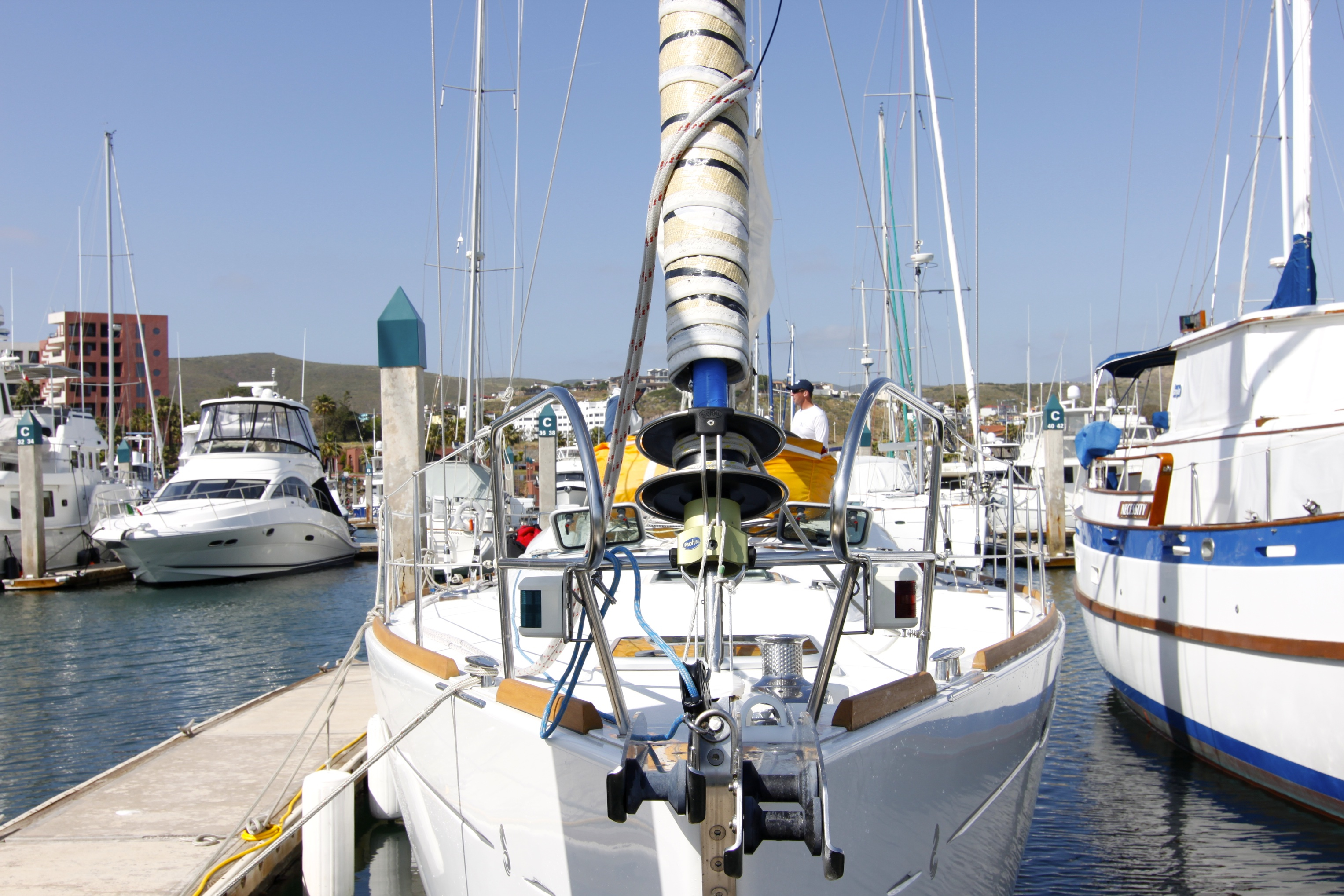
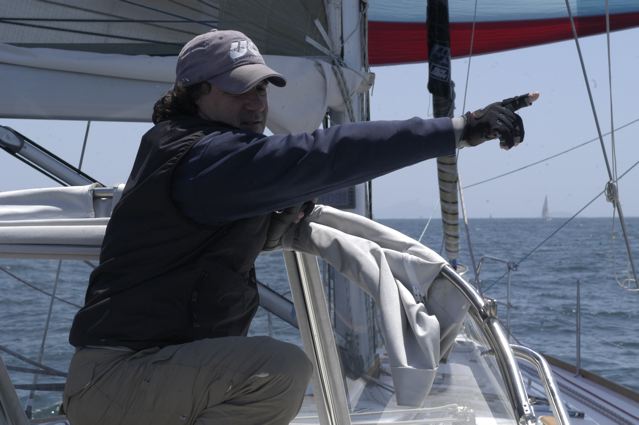
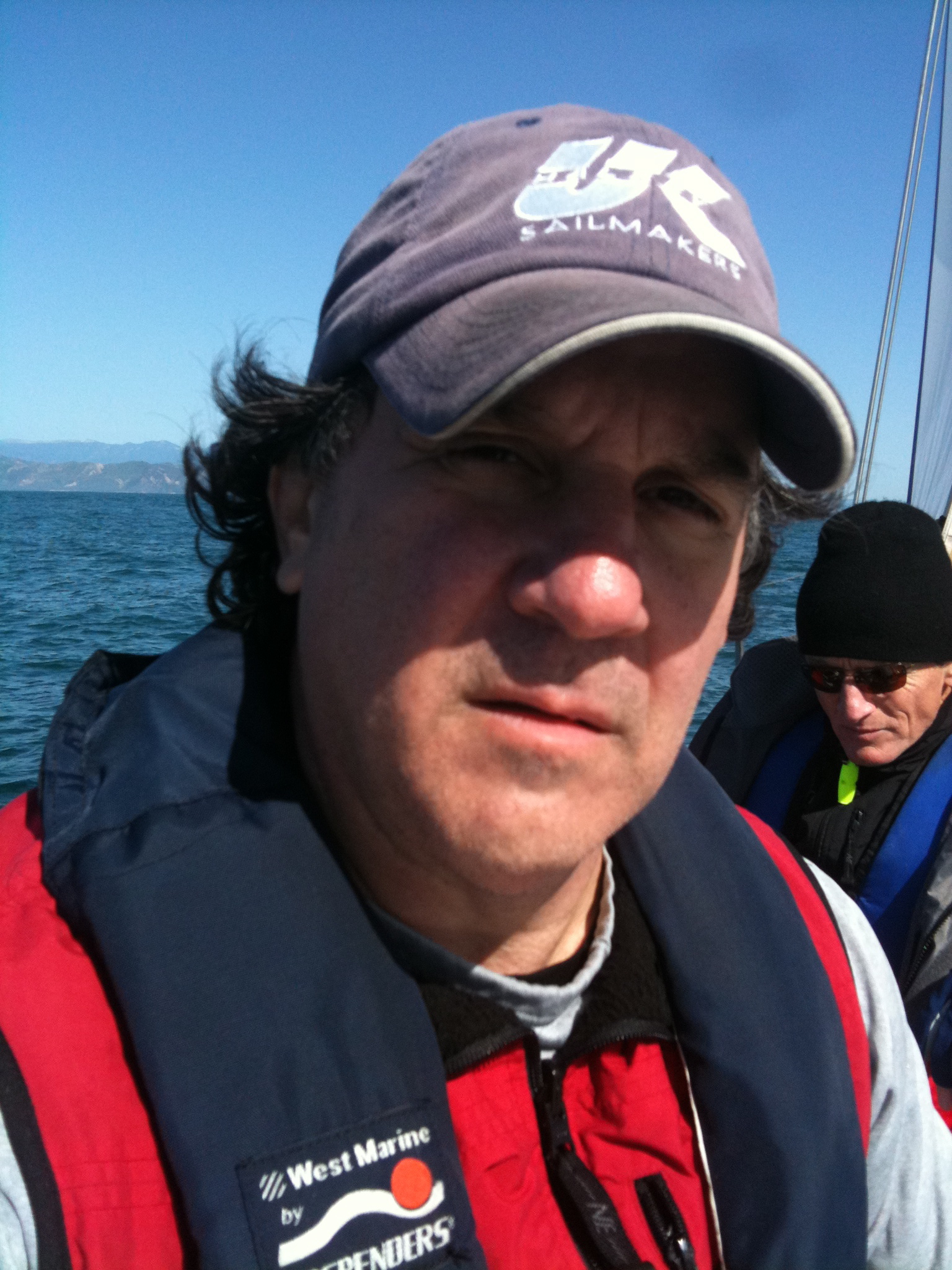
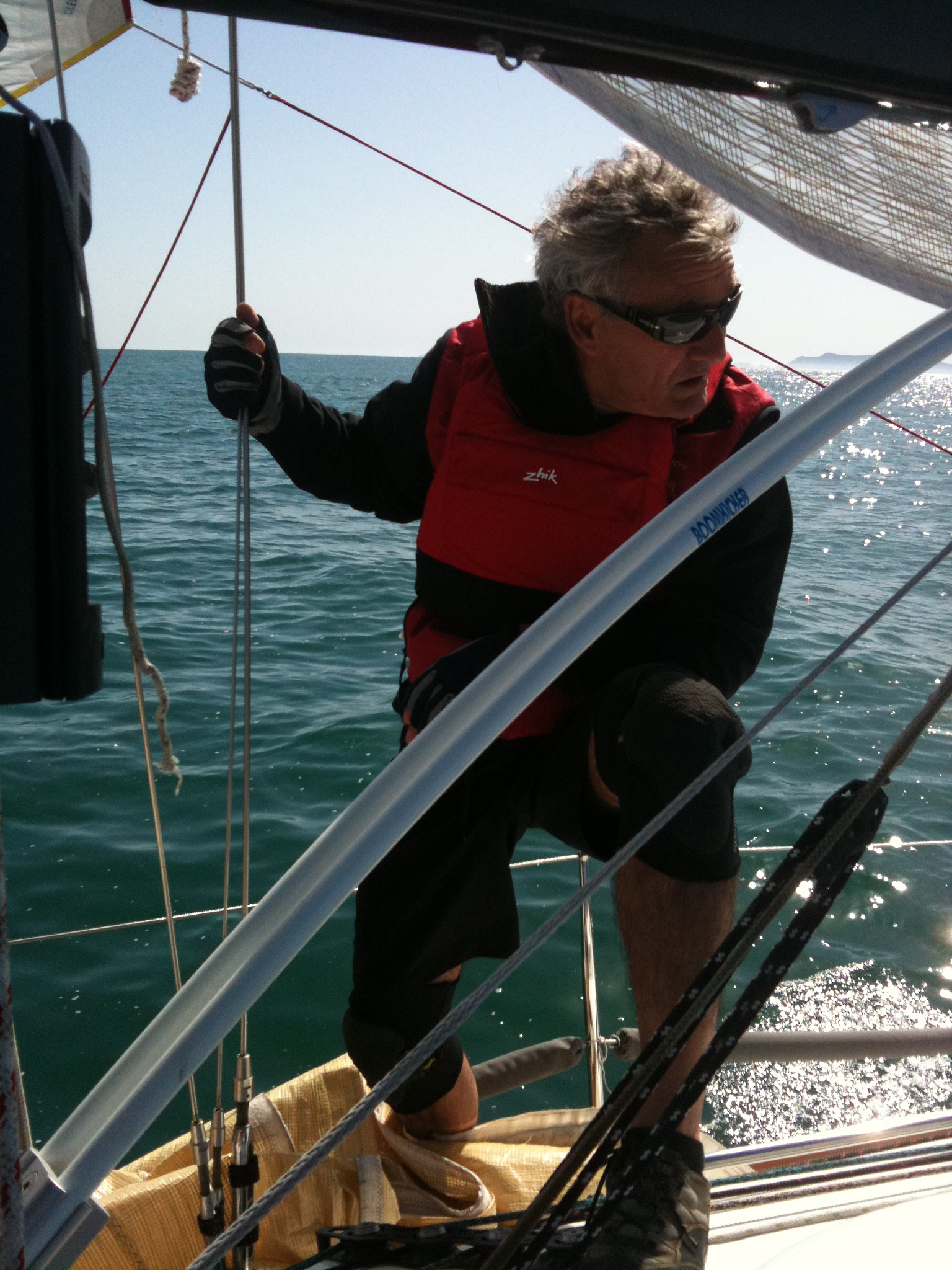
The Newport-to-Ensenada International Yacht Race, which runs 125 nautical miles south from the shores of one of Orange County’s wealthiest enclaves to the historic, struggling Baja port town, is billed as the world’s largest international sailing event. And while I don’t have the experience to know whether it’s truly the “largest international sailing event”, it sure is the biggest sailboat race I’ve ever been in. This was my second year racing from Newport Beach to Ensenada, Mexico with Captains George and Tom and the crack crew of Curiosity — and once again, it was the kind of adventure that inspires men (and women) to go down to the sea in ships.

The Newport-to-Ensenada race was founded in 1947 as a just-for-fun competition for sailors coming out of World War II. And as big as the race has gotten over the years, you get the sense that, for most of the racers, it’s still “just for fun”. (Though certain hyper-competitive, edge-seeking boats with their flaunting of ratings and their profusion of high-tech sails, can take the fun out of “just for fun”. But that’s just the crabby old salt in me talking.)

In the first Newport-to-Ensenada race (called at the time “The Governor’s Cup”) 117 boats paid $22.50 each to race on April 23, 1948. Winds were estimated at 25–35 knots, and only 65 boats finished the race. 62 years later, Captains Moll and Webber not only paid a lot more to enter the race – but high winds would NOT be a problem. If any sailboats failed to finish in 2010, it would be because they eventually fired up their motors in frustration.

A record 675 boats entered the race in 1983, but with the economic slump in 2009, there were only 270 entries. This year, Curiosity was among 217 boats jockeying for position among the crowd of sailboats at the start of the race. As we tacked back and forth in the light air before our 11:00 am start time, our relatively Hollywood-savvy crew was not aware that icons like Buddy Ebsen, Humphrey Bogart and Walter Cronkite had competed in the race. I simply can’t imagine the thrill of racing to the starting line against Bogie and Bacall aboard Santana.

As is our habit in recent races, we managed to get off to a good start – crossing the line among the leaders of the nine boats in our spinnaker class. I have no idea how they rate and organize all the boats into the various classes, but I do know the difference between a boat rigged for a spinnaker and one that isn’t. Thus, of the 217 vessels in the race, we were only competing against 8 of them: Elixir, Paradise Found, Tranquilo, Escapade, Zeus, Dela, Bonnie Belle and Arearea. Chief among our rivals was Elixir, whose higher rating meant that we had to give her time, but whose collection of high-tech sails gave her a distinct edge. In last year’s race, we’d kept Elixir in sight most of the race. However, with Curiosity’s rating hanging around our necks like an albatross, we’d have to finish well ahead of all the boats in our class in order to win. The whole rating thing hurts my brain.

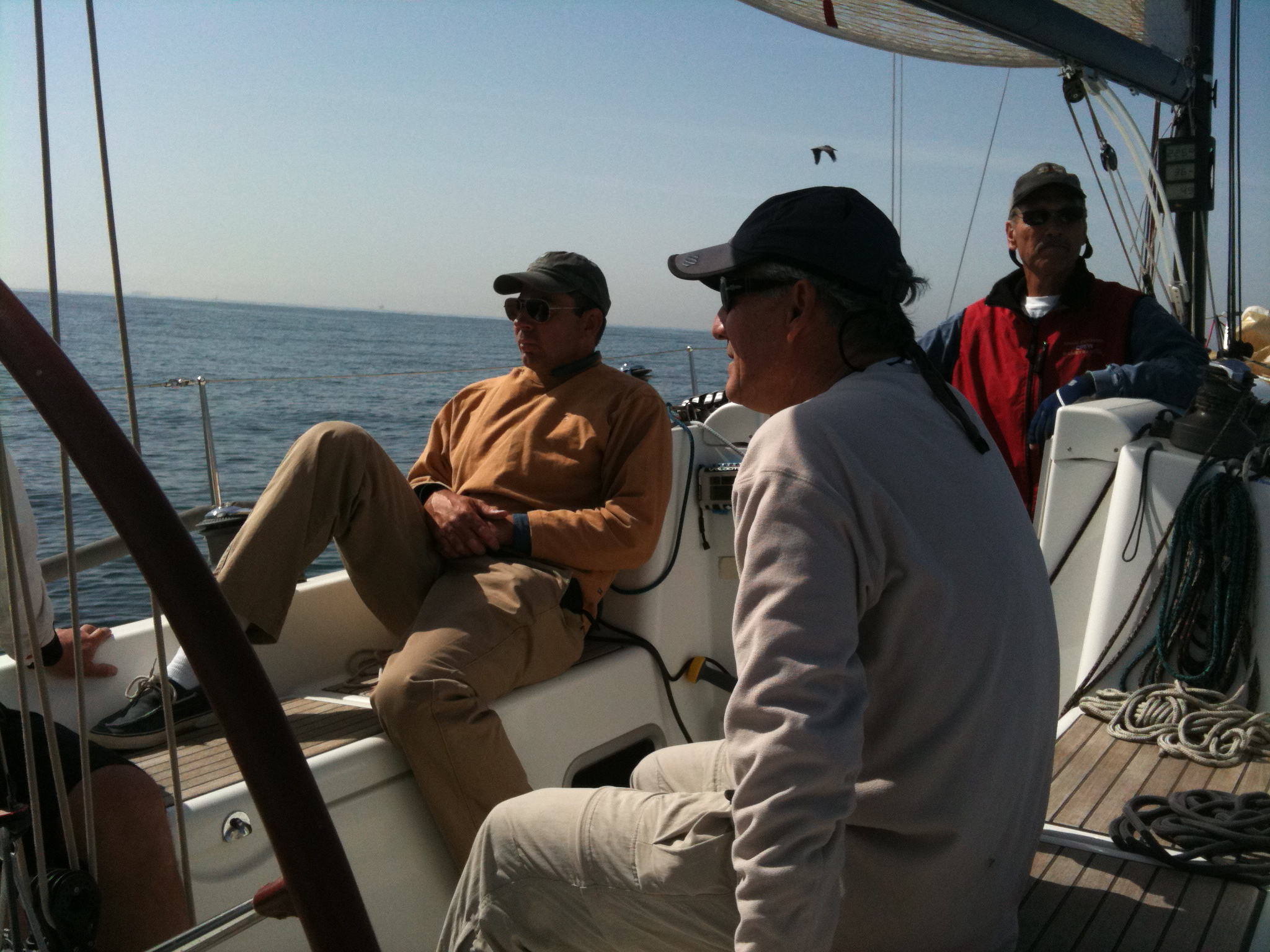
Crewmen Michael, Wiley and Eric, early in the race, headed to Ensenada.

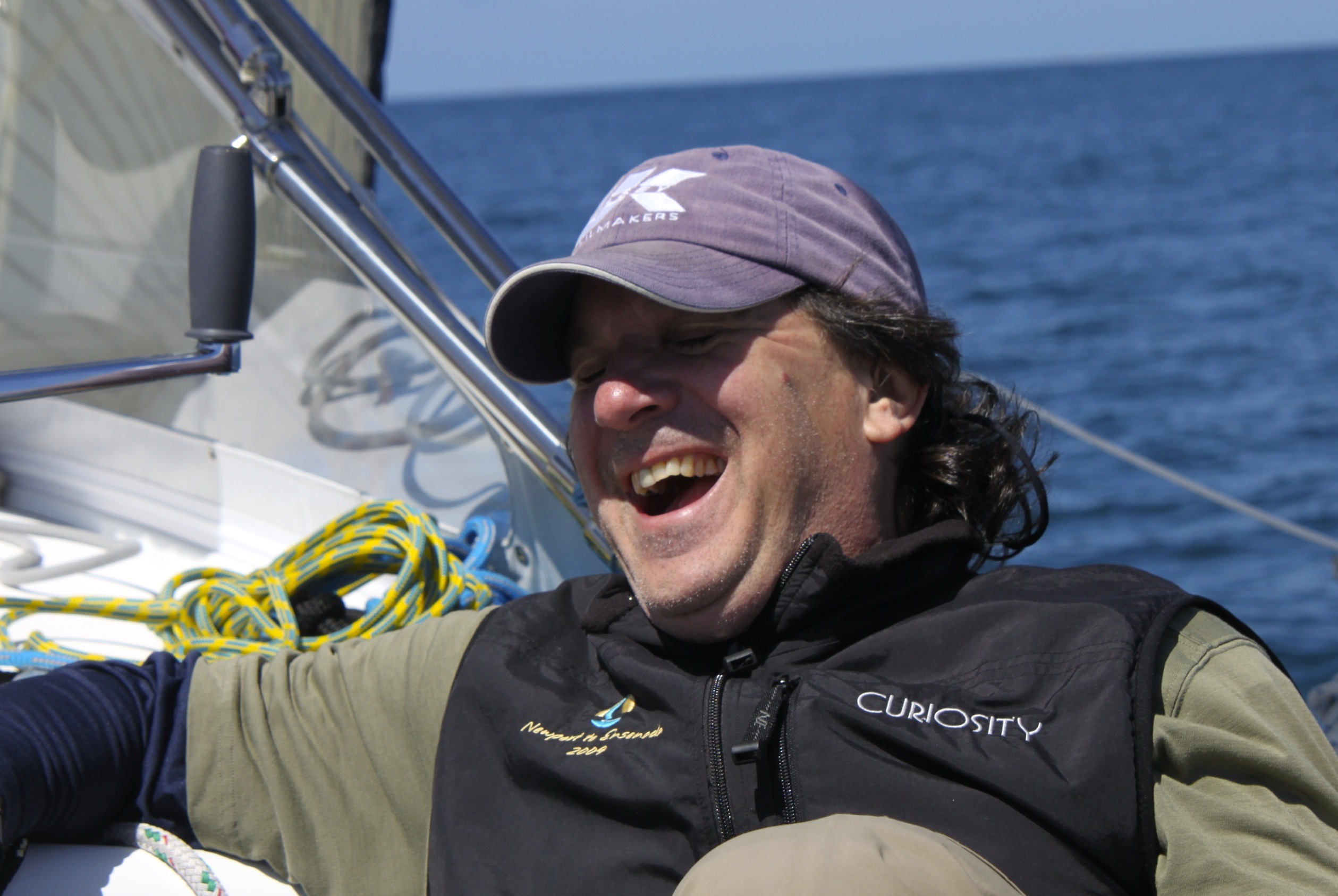
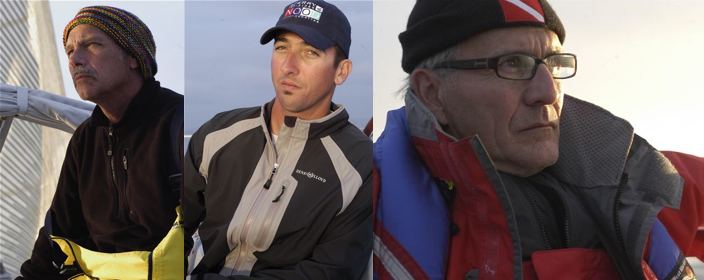
The winds were fair and we managed 6-8 knots of boat speed for much of the way that afternoon. In a long ocean race like this, where you’re simply racing from point A to point B, there’s not a lot for the crew to do between maneuvers – and as we were pointed on a good heading to Ensenada, and conditions were calm, we proceeded to do what sailors often do under such circumstances: drink, smoke cigars, and tell tales. Of all the joys of sailing, none surpass the camaraderie among a crew of jokers and raconteurs on the deck of a fine vessel making way on a brilliant blue sea. And, as late afternoon flowed into evening, our lead bowman, Claude, helped lubricate our merry maritime festivities by supplying his crewmates with a hearty ration of grog. Thanks to Claude’s knowledge of Royal Navy mixology, not a one of us would suffer scurvy on this voyage.
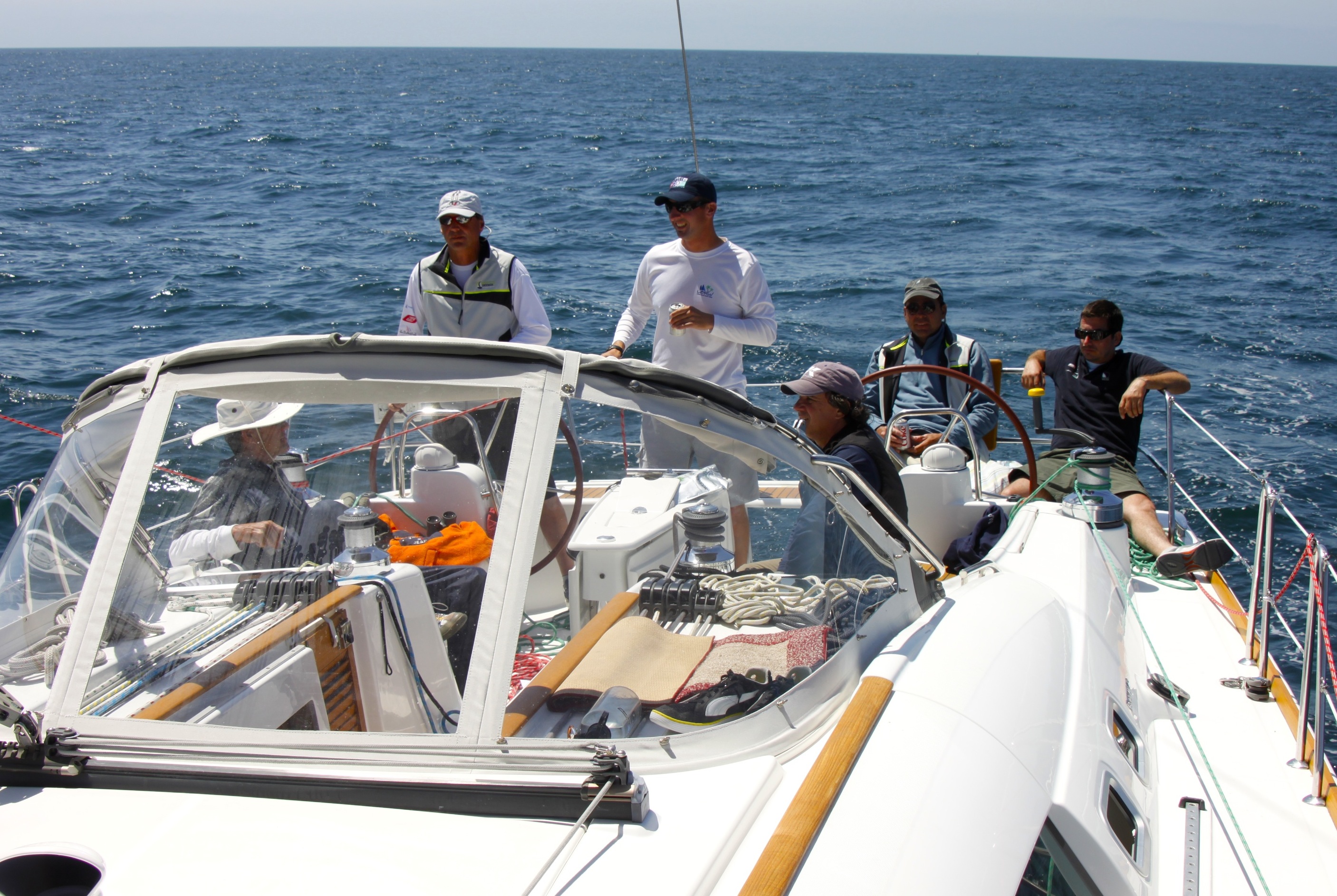
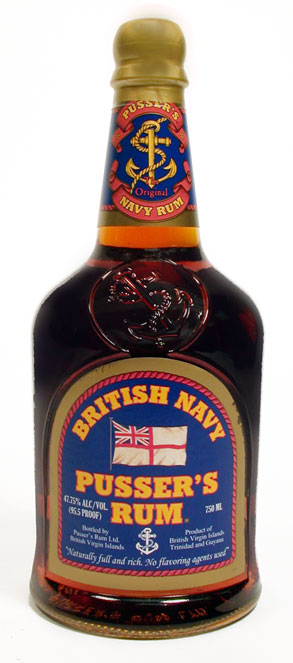
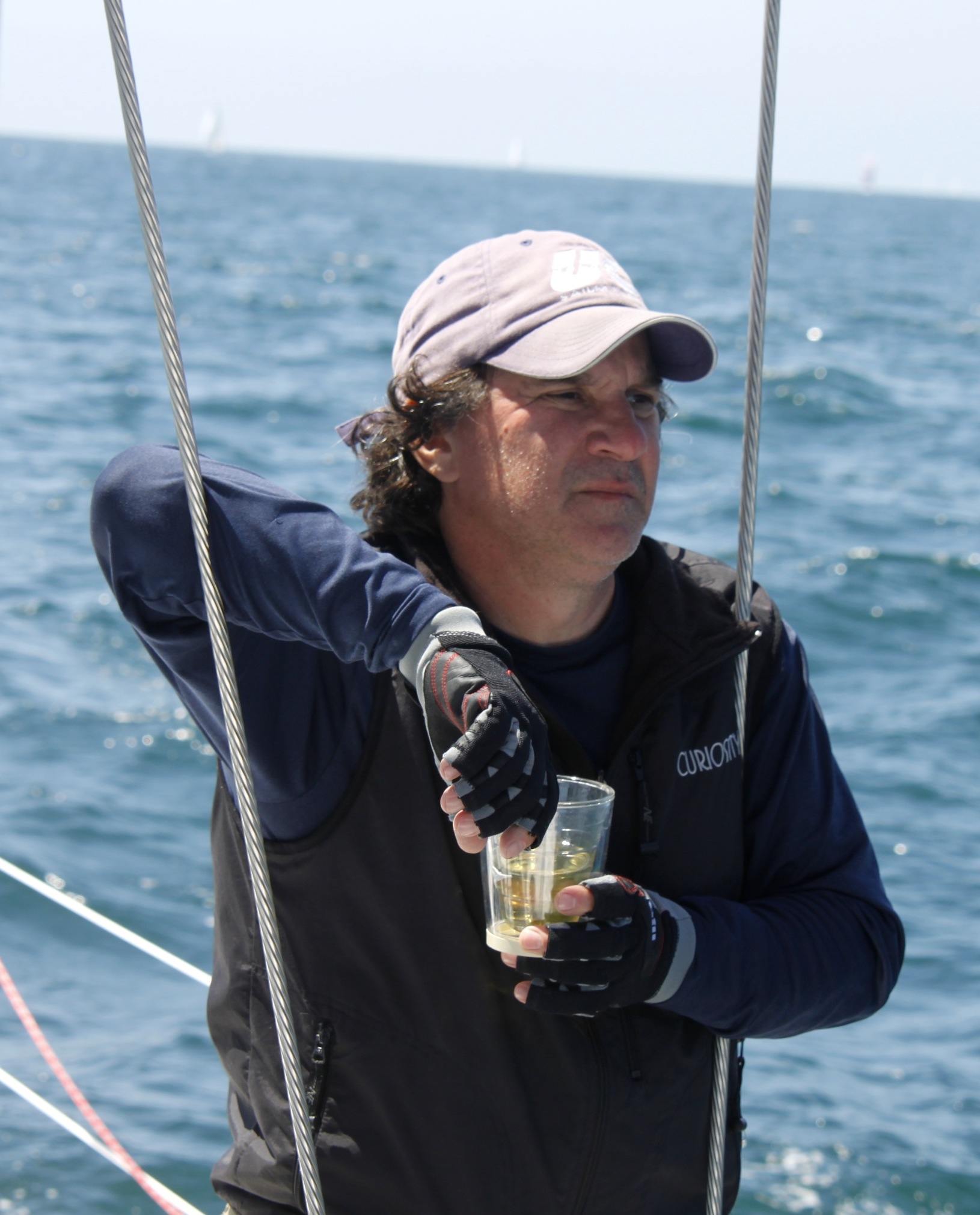
Claude makes his grog in the traditional way: with Pusser’s Rum, according to the English Royal Navy recipe.

— 2 parts water

— 1 part Pusser’s Rum

— Lime juice to taste

— Dark cane sugar to taste

I don’t think Claude actually used dark cane sugar, but he did squeeze plenty of fresh limes by hand.

The cockpit brain trust: Eric and Captain George.

Grog has been a naval staple since it was introduced into the Royal Navy in 1740 by Vice Admiral Edward Vernon (nicknamed “Old Grog” because of his grogram cloak). Grog served two purposes. Not only did it water down the sailors’ rum ration (“what do you do with a drunken sailor?”) — it also warded off scurvy by virtue of all that lime juice. If, as Winston Churchill was reported to have said, “The only traditions of the Royal Navy are rum, sodomy, and the lash” – then, after 1740, in the interest of accuracy, you’d have to replace “rum” with “grog” on that list.

Seeing (and tasting) a good thing, the Continental Navy also adopted the twice-a-day grog ration. But while the relatively- teetotaling American Navy ended the ration on September 1, 1862, the Royal Navy went on swilling watered down rum with lime juice and sugar until July 31, 1970 – when the last call of “Up Spirits” was heard in the Royal Navy. There was no last call on Curiosity that evening, as the grog and the laughter wore into the night.

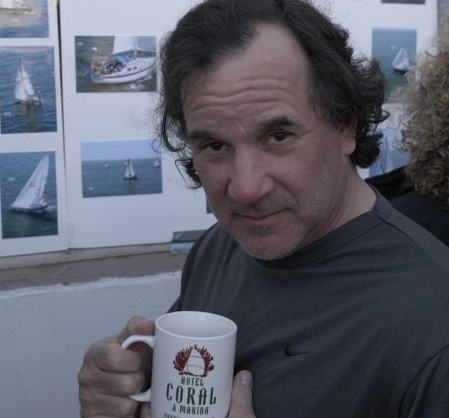
The Matey in repose. (Photo by Sebastian J.)

At some point in the darkness, we crossed into Mexican waters. I was catching a few winks belowdecks at the time – until crewmate Brad Hall awakened me at 4:00 am to help perform one of the trickier evolutions on a sailboat – jibing the spinnaker. As I came up on deck, it was still dark, though illuminated by moonlight. Normally, jibing the spinnaker is a pain but, as the wind was merely a breeze, Brad and I were able to get the job done easily. It would have been much harder to wrestle that spinnaker if a stout wind was filling it.

And that lack of wind soon proved to be our undoing in this race. For most of the next 5-6 hours, we were becalmed. As much as sailors love the word “grog” — “becalmed” is a word we dread, as it means “to render motionless for lack of wind.” And that was our situation, bobbing up and down for hours on a perfectly flat (but terribly beautiful) ocean off the coast of Baja, Mexico.

Sebastian, Tom, and the Matey in the early morning calm.

Captain George, becalmed. (Sebastian J)

How bad is it for a sailboat to be becalmed?

Let us remember that the ancient Greek king Agamemnon sacrificed his lovely daughter Iphigenia to the gods so that his becalmed fleet would have the wind it desperately needed to sail to Troy.

Extended periods of calm made for madness and mutiny aboard sailing ships throughout the centuries. Witness this ominous passage from William Clark Russell’s seafaring adventure, “An Ocean Tragedy”…

Brad, Michael, George, Tom and Wiley in the calm. (Sebastian J)

Captain Tom, Eric and Claude, becalmed. (Sebastian J)

But, for the crew of Curiosity, there may have been madness, but there was no thought of mutiny. We were confident the breeze would pick up at some point during the day – though we saw a couple boats closer to shore give up, turn their motors on, and proceed under power to Ensenada. We were determined to finish the race in the right way, and our resolve was rewarded when the wind picked up late in the morning – and we saw the whales!

Claude was first to see their spouts: two grey whales (or were they humpbacks?), a mother and her calf, cruising side by side, headed north, from their breeding grounds in and around the Sea of Cortez to their northern feeding grounds in the frigid waters off Alaska. The whales were a welcome sight for our slightly exhausted and frustrated crew: a good omen for the rest of our voyage.

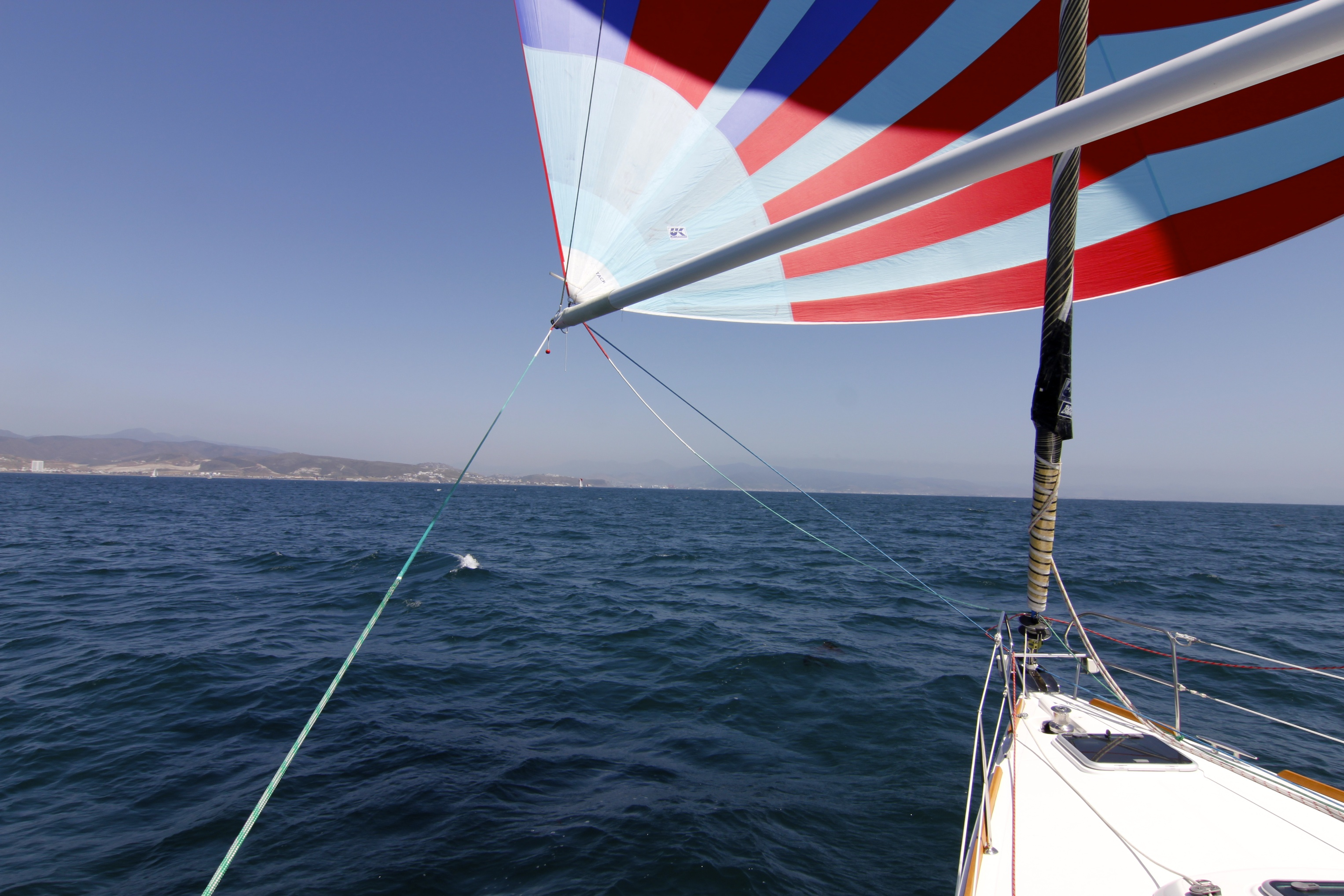
It was nearing 1:00 in the afternoon as we made our final spinnaker run to the finish line in the port of Ensenada De Todos Santos. By now, we were cracking along at 8 knots, a respectable speed, and leaving other boats in our wake. It wasn’t the screaming 12-knot final kick we enjoyed last year, but it cheered us all to bring Curiosity handsomely across the finish line. Our passage from Newport to Ensenada had taken 26 hours, but we had no clue when our 8 competitors had crossed the line.

Pulling into our assigned dock at the marina below our hotel, we noticed that our rival, Elixir, was already in her slip. Elixir had sailed further out into the ocean and caught wind when we, closer to shore, were becalmed. We made our bet, stayed inside, and the wind gods were not with us.

A final toast from the Matey. (Sebastian J)

So, there was nothing left to do but enjoy our one night in Ensenada. The hotel was in a festive mood, with mariachis playing in anticipation of a big wedding that night. Showers were taken, a few more drinks were served – and we all headed to the race headquarters to check out the results. Alas, after times were corrected, taking each boat’s rating into consideration, we finished next to last. But as we toasted Captain Moll that night over a fine dinner, we all felt like winners. It had been a fine voyage, a safe passage, and another great adventure. Here’s to many more!

5 Comments

Filed under Adventure

Return to Yosemite: Snowshoes & Rainbows

The natural power, the grandeur, and the serenity of Yosemite National Park have a grip on my family’s imagination, but while we’ve visited the park several times during the Christmas holidays and in the summer, we had never been to Yosemite when its snow-fed waters were flowing abundantly. We’ve seen Yosemite Falls and Bridalveil Falls reduced to a trickle in an August drought and choked by ice in late December. And though these legendary cataracts are impressive in any season, we could only imagine how impressive they would be in the spring thaw, when the snowpack in the Sierras swells the creeks that cascade over Yosemite’s towering granite cliffs.

On the last weekend in March, we got the chance to see Yosemite’s waterfalls at their free-flowing best – with some very colorful surprises!

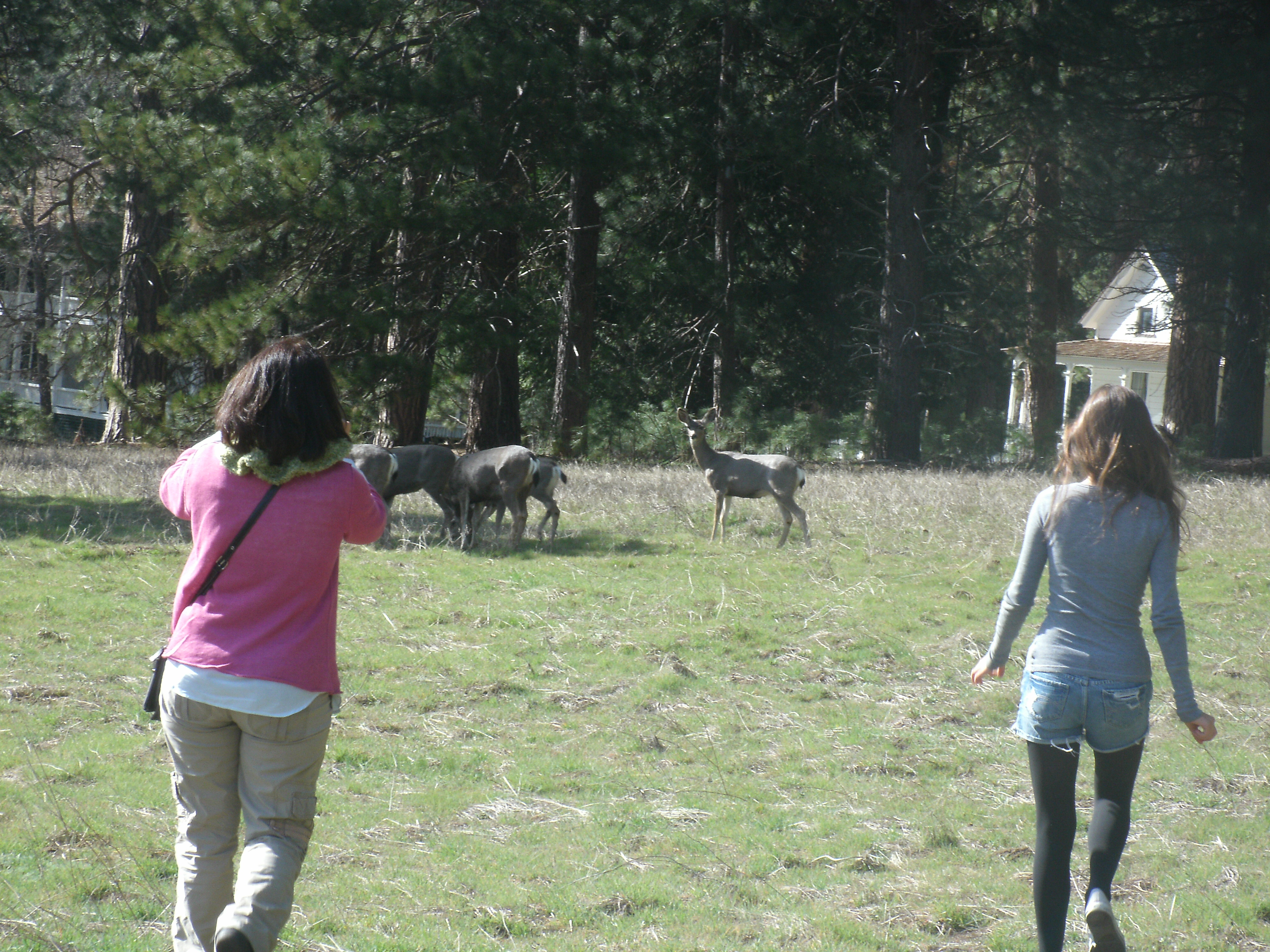
Victoria and Eva encounter deer in Yosemite Valley.

For me, just getting to Yosemite this time was going to be an adventure. Victoria and the girls were driving up to the park on Friday morning, but I was going to be stuck at work until 4:30 pm that day. So, while they enjoyed the scenic car ride up California State Route 99 through the San Joaquin Valley to Fresno, and then northeast on Route 41 up into the mountains to the south entrance of Yosemite – I was leaving my office in Hollywood and sweating it out in traffic on La Cienega Blvd., trying to make my 6:30 flight out of LAX to Fresno.

Eva celebrates her arrival in the Yosemite Valley. Meanwhile, I'm still trying to get there.

Luckily, the travel gods smiled upon me, and I was among the last shuttle load of passengers to board our tiny American Eagle jet to Fresno, landing at 7:30 pm. By 8:30, I was behind the wheel of a rented Jeep (with 4-wheel drive so I wouldn’t have to worry about using chains in the possibly snow-covered mountain roads) and on my way up Route 41. I made Yosemite’s south entrance by 9:45 – and the moonlight hinted at the natural wonders I was passing on my way down to the valley floor.

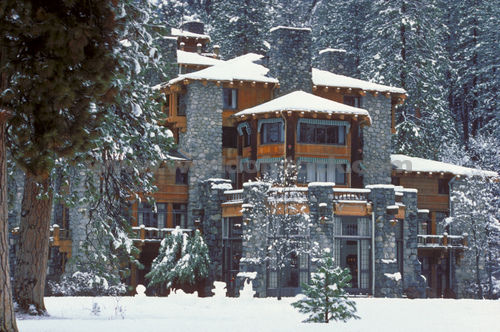
Just before 11:00 pm, I drove up to the Ahwahnee Hotel, named for the the Ahwahneechee – the Native American tribe that inhabited the Yosemite Valley when the white men “discovered” it. I was happy to discover that my family, and the dear friends with whom we would spend the weekend, were waiting for this straggler to arrive.

On our previous visits to Yosemite we’d spent a lot of time at the lovely and historic Ahwahnee, designed by architect Gilbert Stanley Underwood and built in 1927, but we’d never stayed there. We’ve been to the celebrated Bracebridge Dinner in the dining hall at Christmastime, warmed ourselves by the huge fireplaces in the Great Lounge, and enjoyed many dark beers and hot bowls of chili at the Ahwahnee Bar after our winter hikes. This time, we were spending three nights at the Ahwahnee, and I was delighted to join my family and friends for a nightcap on the 6th floor sun porch (which was actually a full moon porch at the time) before retiring to our splendid, comfortable room.

Back in the early 1920´s, Stephen Mather, the National Park Service Director, chose the hotel’s site because of its stunning views of several of Yosemite´s natural landmarks – Half Dome, Yosemite Falls and Glacier Point – but those breathtaking sights would have to wait until morning.
The next morning, we enjoyed a quick breakfast on what was now truly a sun porch. Brilliant sunlight streamed through the windows, and the magnificent sheer cliffs that rise above the hotel were now in view. Those cliffs rise 3,000 feet above the valley floor – and today, we were going to hike to the edge of one of them.

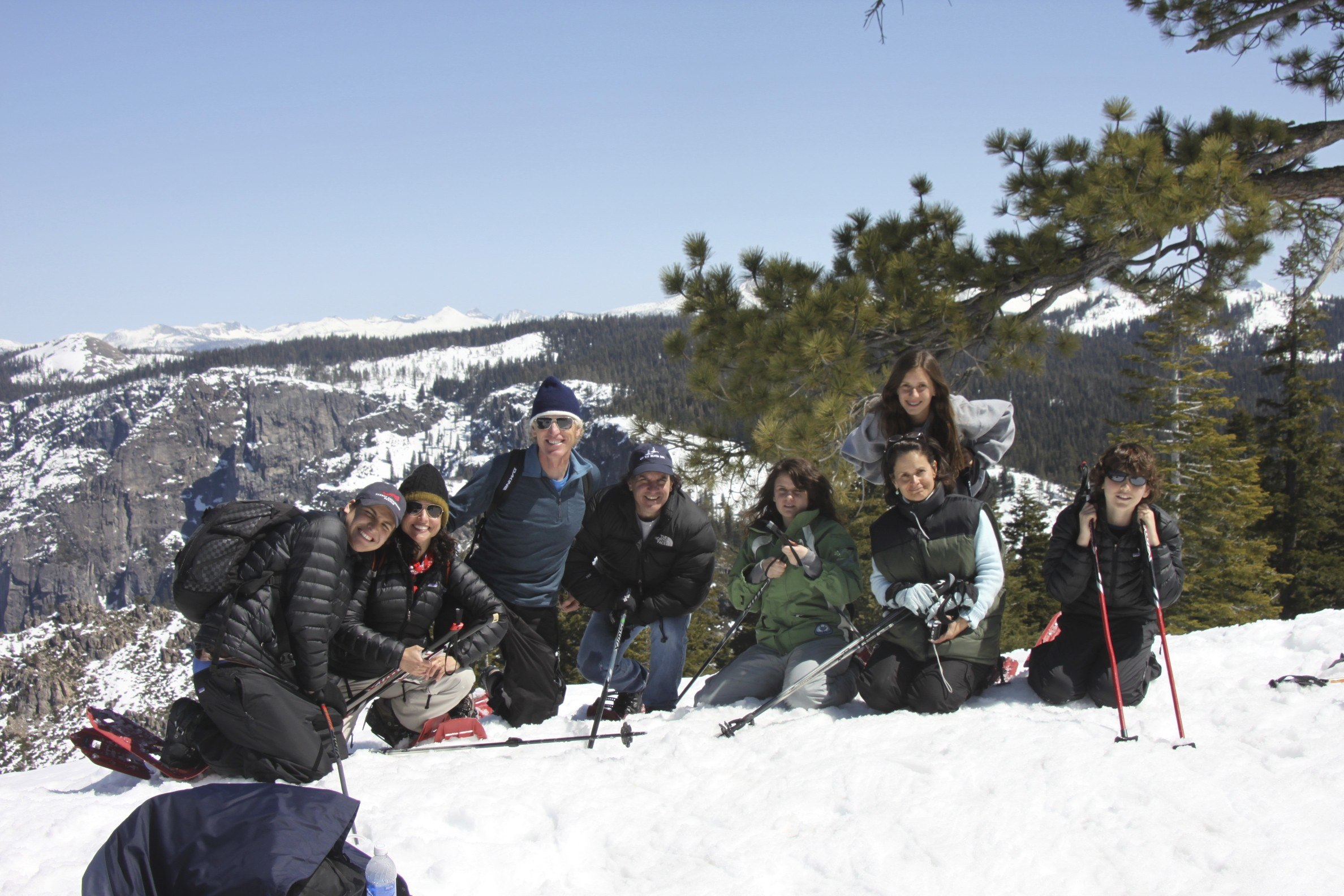
We drove up Route 41 to Badger Pass Road, where we rendezvoused with two naturalists (not to be confused with naturists) who would guide us on an 8-mile snowshoe hike to Dewey Point.

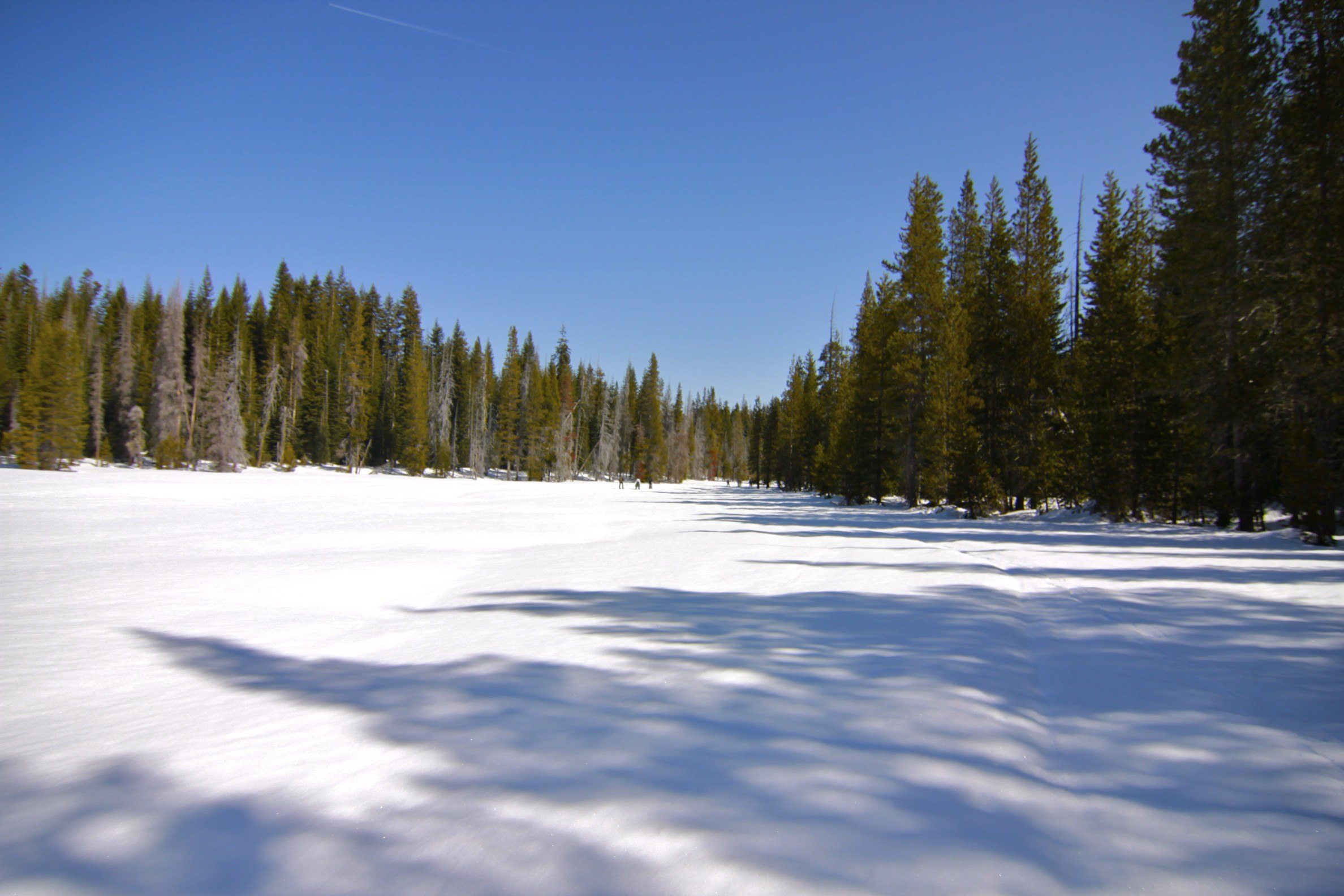
It was my first time wearing snowshoes, and while these weren’t the classic snowshoes I’d known from watching Yukon Mountie movies as a kid, we all put on our red plastic versions and stepped out across the frozen snowpack through stands of lodgepole pines and blindingly white wide open meadows on our way to Dewey Point on the south rim of Yosemite Valley.

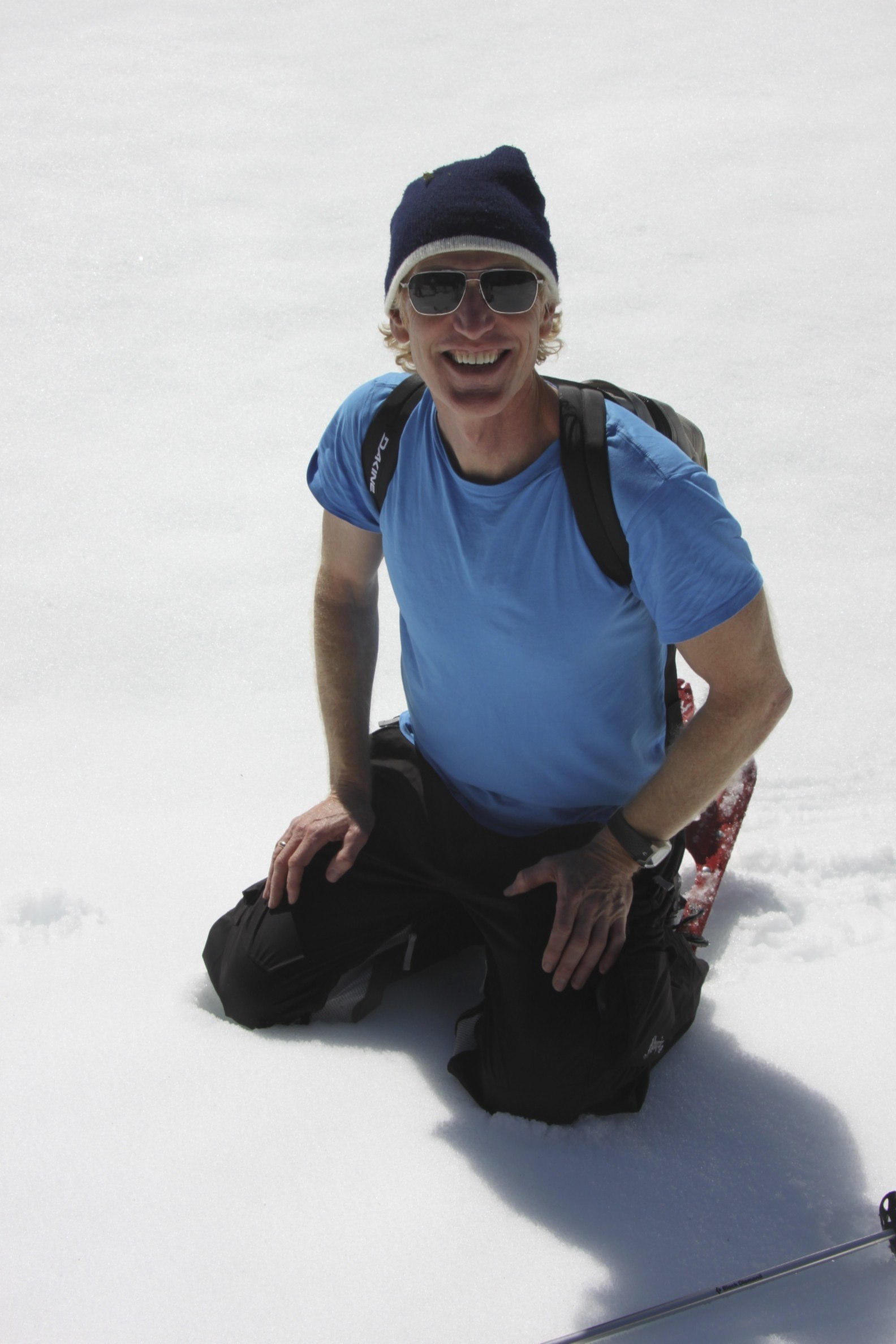
Note: From this point on, all the photos were taken by the tall and talented Brad Hall…

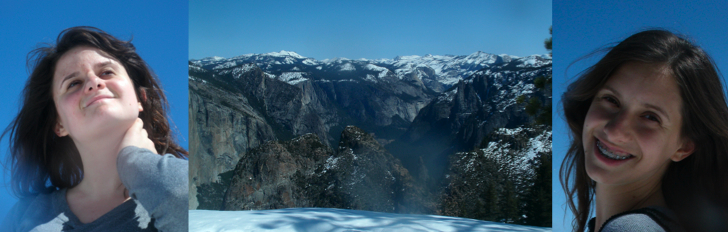
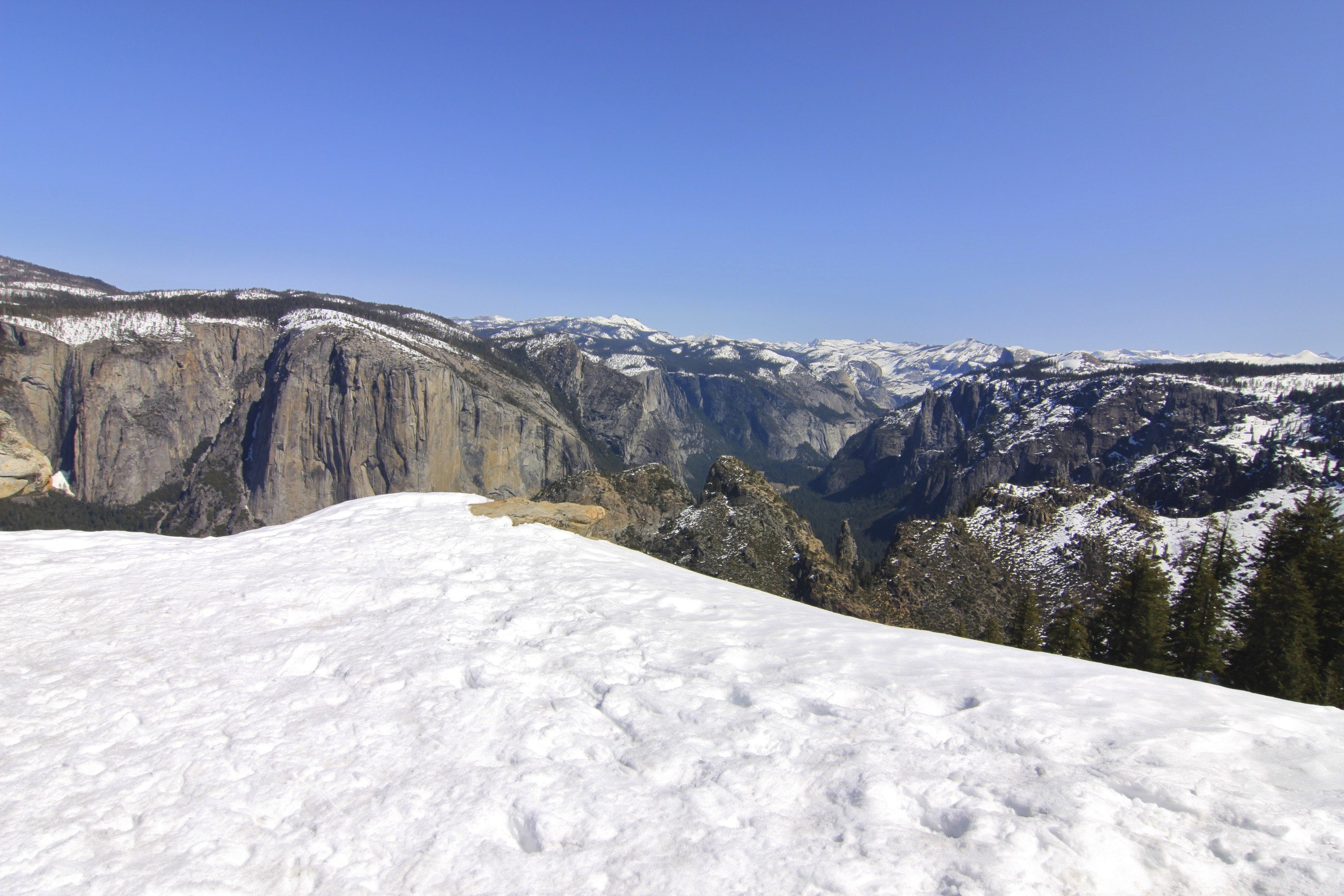
At an elevation of 7,385 feet, the air was crisp, fresh and relatively thin as we reached Dewey Point – where we were rewarded for our efforts on the trail with a stunning panorama from El Capitan to Half Dome – and beyond.

We paused on this glorious ridge to gape in wide-eyed wonder, devour a picnic lunch – and listen to our guides as they described what we were so fortunate to be seeing. Most interesting of all, was the background they gave us on Yosemite’s Native American population, and the local legends they inspired.

Chief among the legends was the story of Chief Tenaya — and the infamous “Curse of Tenaya.”

Me and Vic at Dewey Point.

Tenaya was the leader of the Ahwahneechee tribe — which means “people of the Ahwahnee” (Yosemite Valley) — when white men came to Yosemite for the first time in the 1830’s.  The Ahwahneechee were feared by the surrounding Miwok tribes, who called them “Yosemite” meaning “they are killers.” Some historians say the name is a corruption of the word “Uzumati” meaning “grizzly bear” — which was also a fearsome, deadly appellation. Clearly, Chief Tenaya and his warriors were a badass bunch.

The Barrosse & Hall families: a relatively badass bunch.

By 1851, tensions between Tenaya’s band and the white settlers in the Sierra started to increase, and the state of California decreed that the Yosemite natives should be relocated to reservations outside of the valley. The Mariposa Brigade was enlisted to carry out the relocation – an operation which eventually resulted in the tragic killing of Tenaya’s youngest son.

When Chief Tenaya was informed of his son’s death, he was enraged — and confronted Captain Boling of the Mariposa Brigade, expressing his anger in a fateful curse: ”Kill me, sir captain! Yes kill me, as you killed my son — as you would kill my people if they were to come to you! You would kill all my race if you had the power. You have made me sorrowful, my life dark.  You killed the child of my heart — why not kill the father? You may kill me, sir captain, but you shall not live in peace. I will follow in your footsteps. I will not leave my home, but be with the spirits among the rocks, the waterfalls, in the rivers and in the wind. Wheresoever you go, I will be with you. You will not see me, but you will fear the spirit of the old chief, and grow cold.”

To this day, it’s said that Yosemite Valley is haunted by the spirit of Chief Tenaya’s murdered son — and Native Americans and white folk alike attribute mysterious accidents and unaccountable deaths to the curse of Chief Tenaya. The old chief’s namesake landmark, Tenaya Canyon, located at the northwest corner of the park, is a particularly deadly place. Park rangers refer to it as the “Bermuda Triangle of Yosemite”.

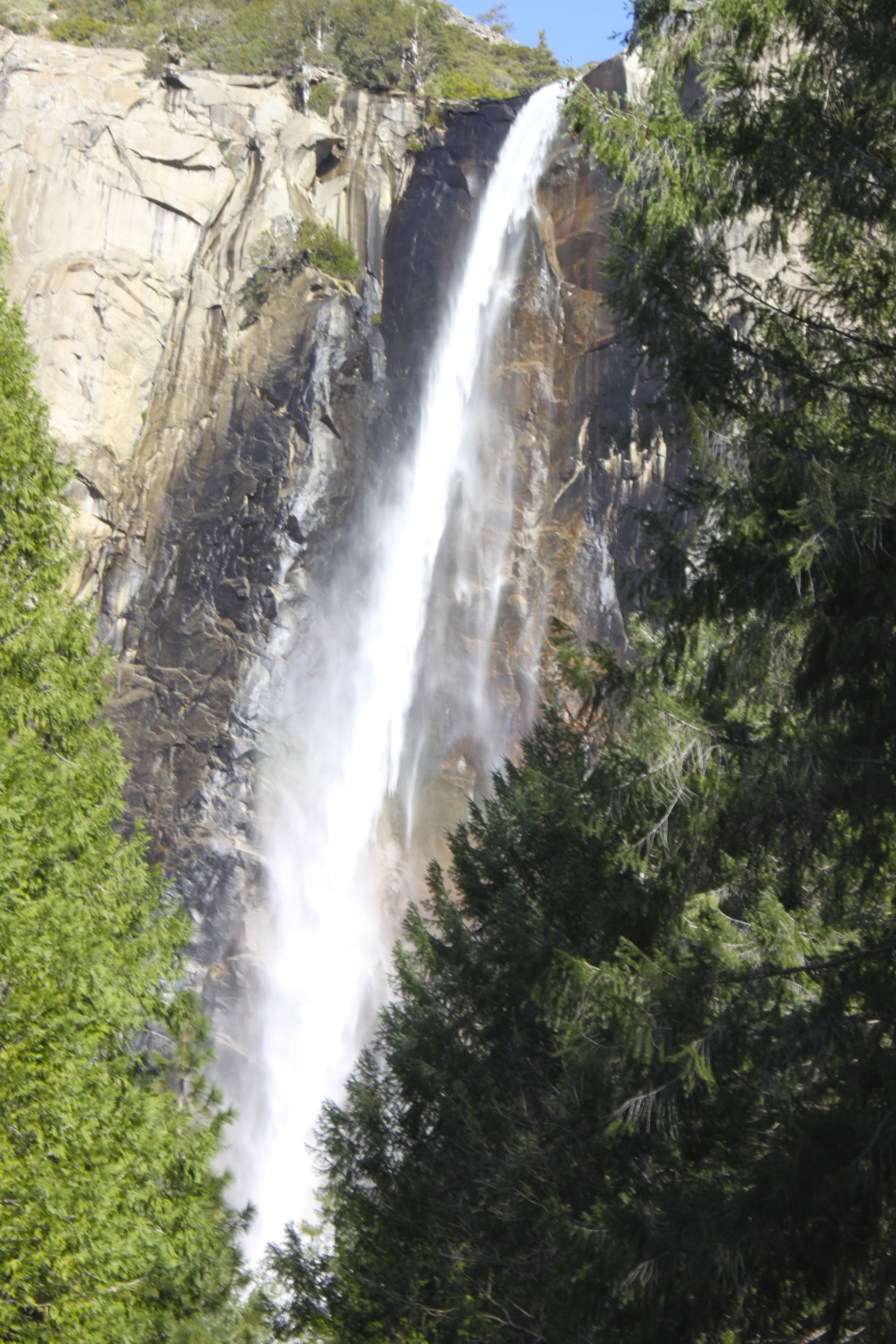
On our way back down Route 41 into the valley after our Dewey Point hike, we came out of the Wawona Road tunnel, and paused to take in the fabulous panoramic view of the Yosemite Valley – featuring Bridalveil Falls. Incredibly, the cascading waters of Bridalveil Falls were lit up by a vivid rainbow: the kind of spectral vision that kept the Valley’s foremost promoter, John Muir, transfixed.

The next day, we explored the wonders of Yosemite Falls. I will let my very good friend Brad Hall’s photos tell the tale of our hike to the lower and upper sections of these landmark cascades. Brad’s inspired camerawork captured the beauty and majesty of Yosemite Falls – and those fabulous, ever-present rainbows!

Victoria's photo of the Bridalveil rainbow.

Many thanks to Brad for his marvelous photography – and for a wonderful weekend together!

Brad turns a pine stump into art.

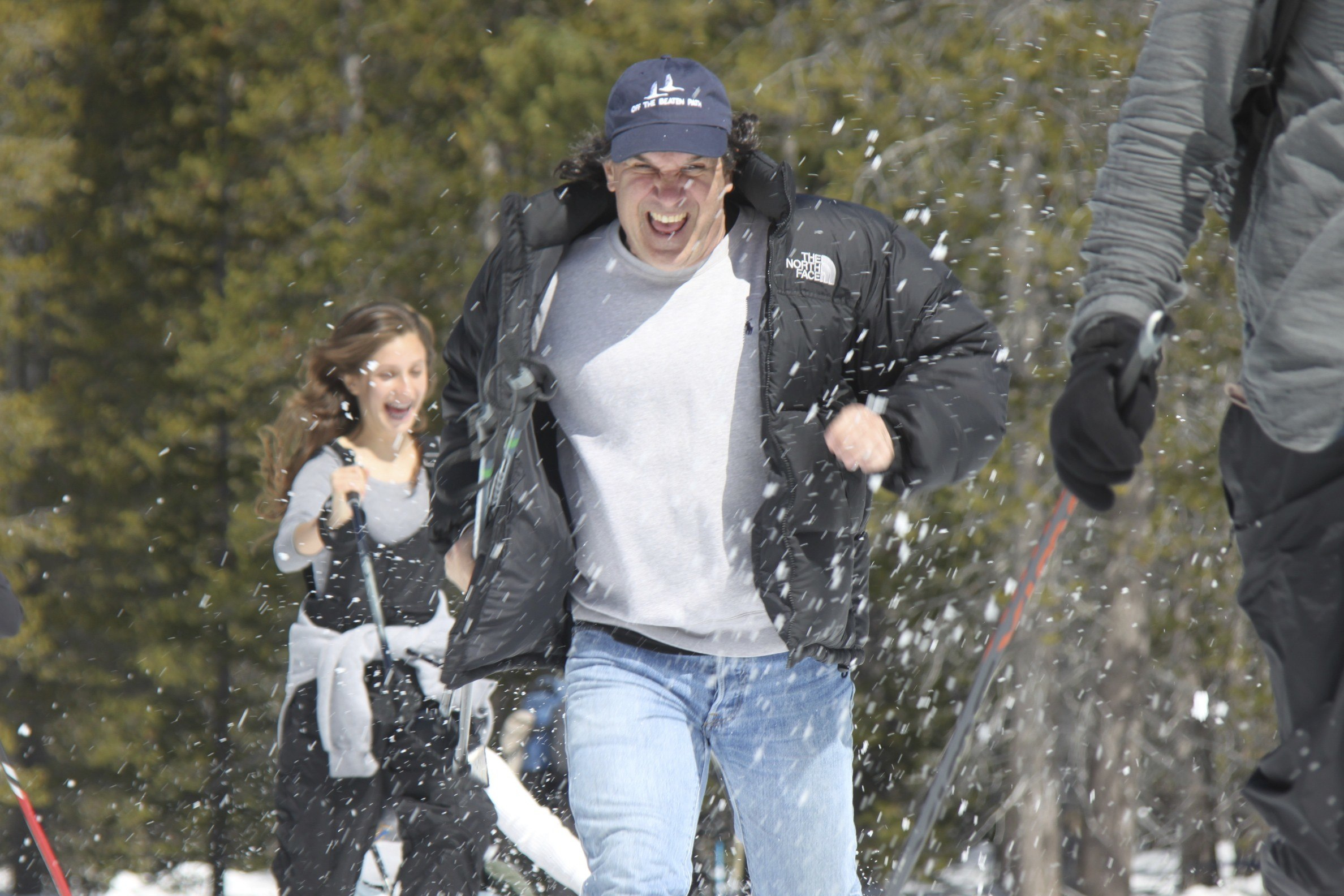
Brad captures my last burst of energy at the end of our snowshoe hike.

Brad Hall: Adventurer, photographer, gentleman.

On the second day, we hiked to Yosemite Falls.

A rainbow on upper Yosemite Falls.

Sugar Pine: Up close & personal

Brad captures the details.

Upper Yosemite Falls.

11 Comments

Filed under Adventure, Beauty

The Matey’s Log: Of Wind & Fog

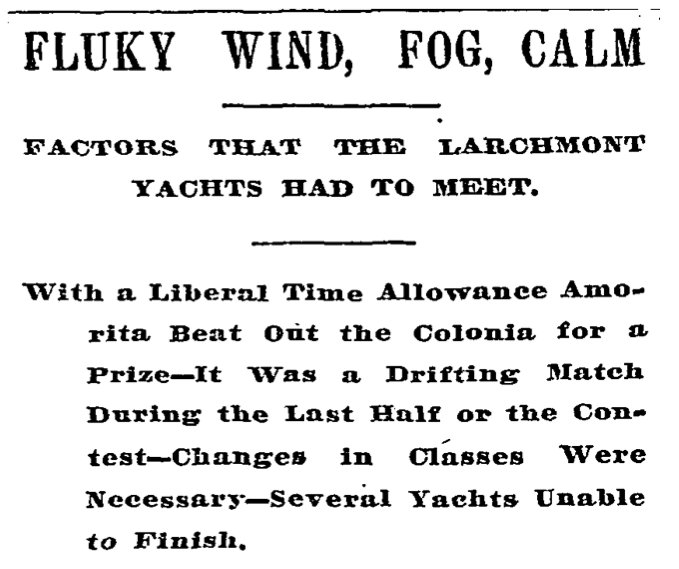
On Wednesday July 23, 1896, The New York Times reported…

Nearly 114 years later, on the other end of the continent, another sailboat race fell victim to fluky winds, fog and calm…

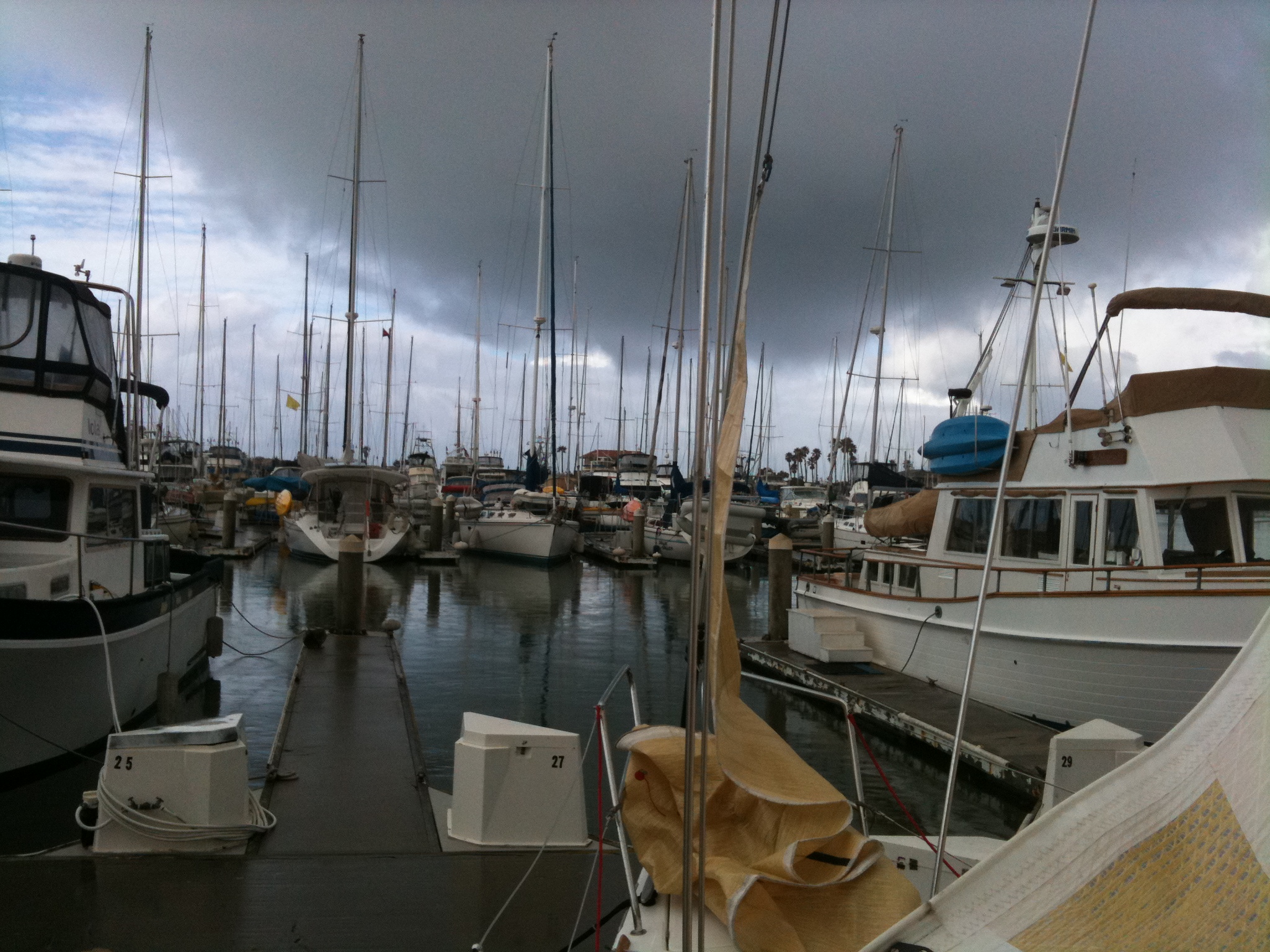
As the crew of Sprit Decision gathered on H Dock in Ventura Harbor to prepare our boat for the third race of the Pierpont Bay Yacht Club’s Spring Series, there was only the slightest suggestion of a breeze. As we rigged our sails and made ready to get underway, we all knew what that anemic zephyr meant.

Light air.

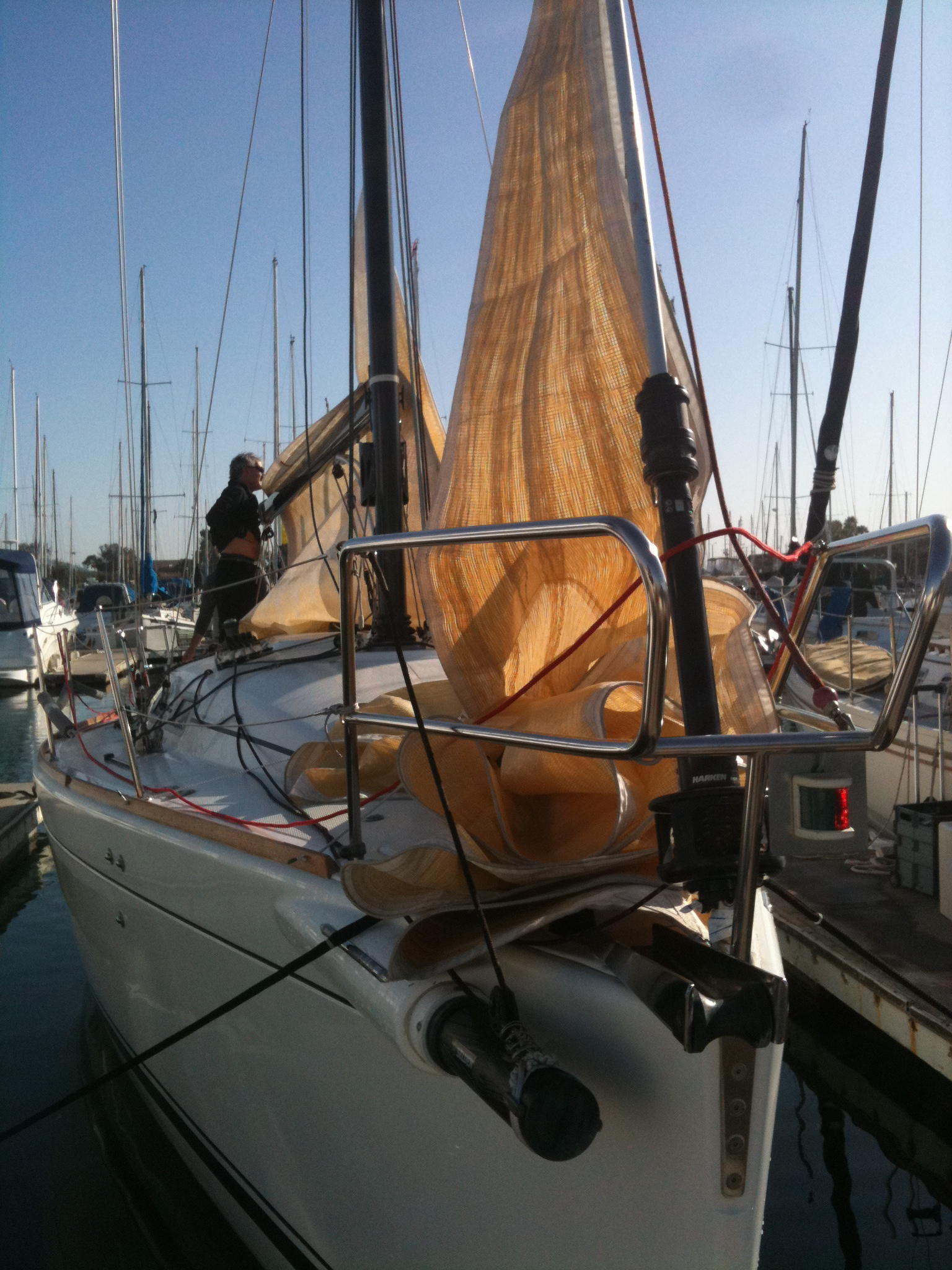
Sprit Decision, a 32’ 9” Beneteau First 10R, is a relatively heavy boat among the contenders in the Spinnaker A class — and she’s not her best in light air. Her advantages of size and design come into play with about 10 knots of wind, and she truly enjoys filling her sails with 15-20 knots, so unless there was going to be a dramatic and unforeseen shift in the weather, Sprit Decision and her crew would be hard pressed to succeed.

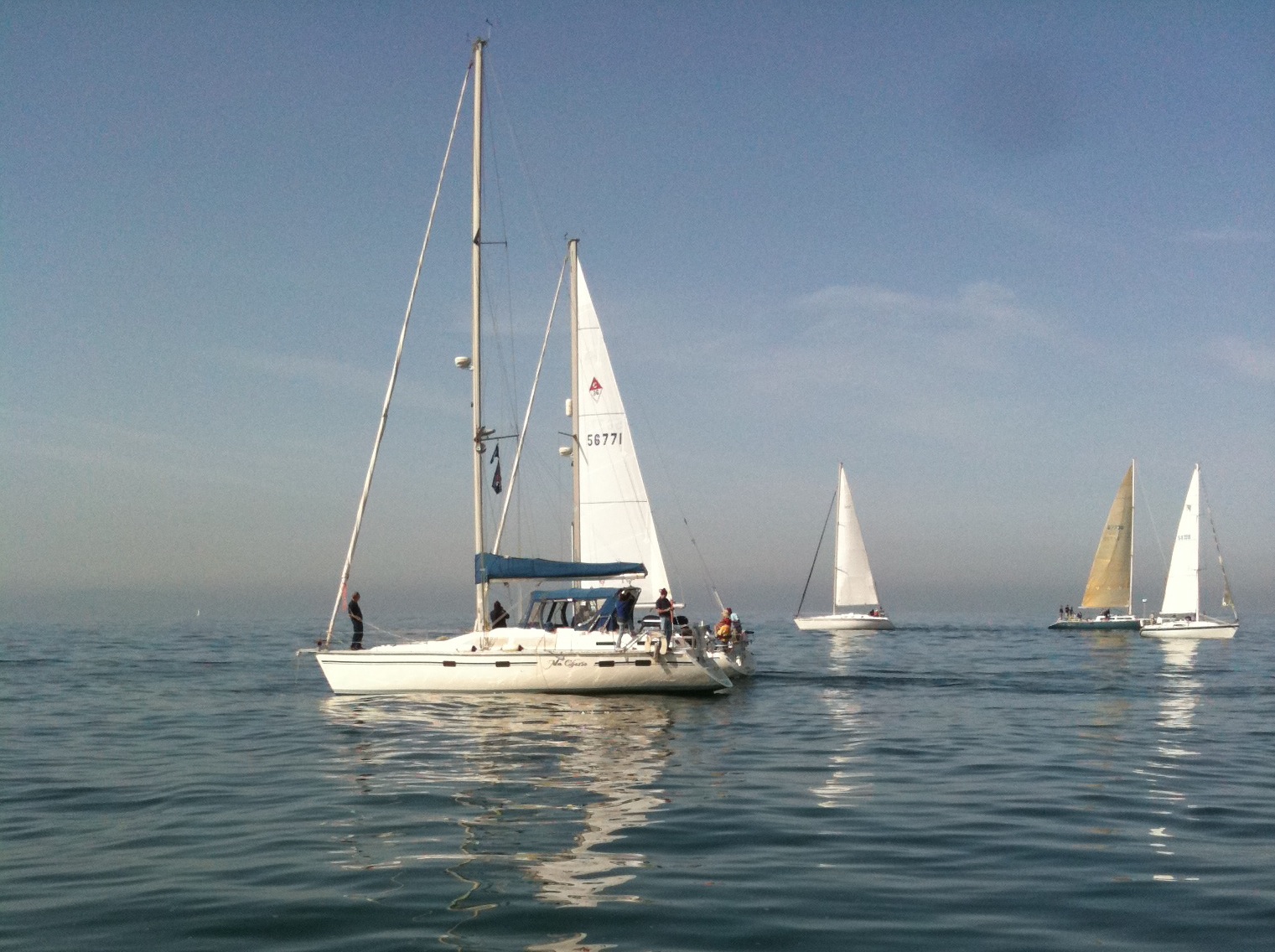
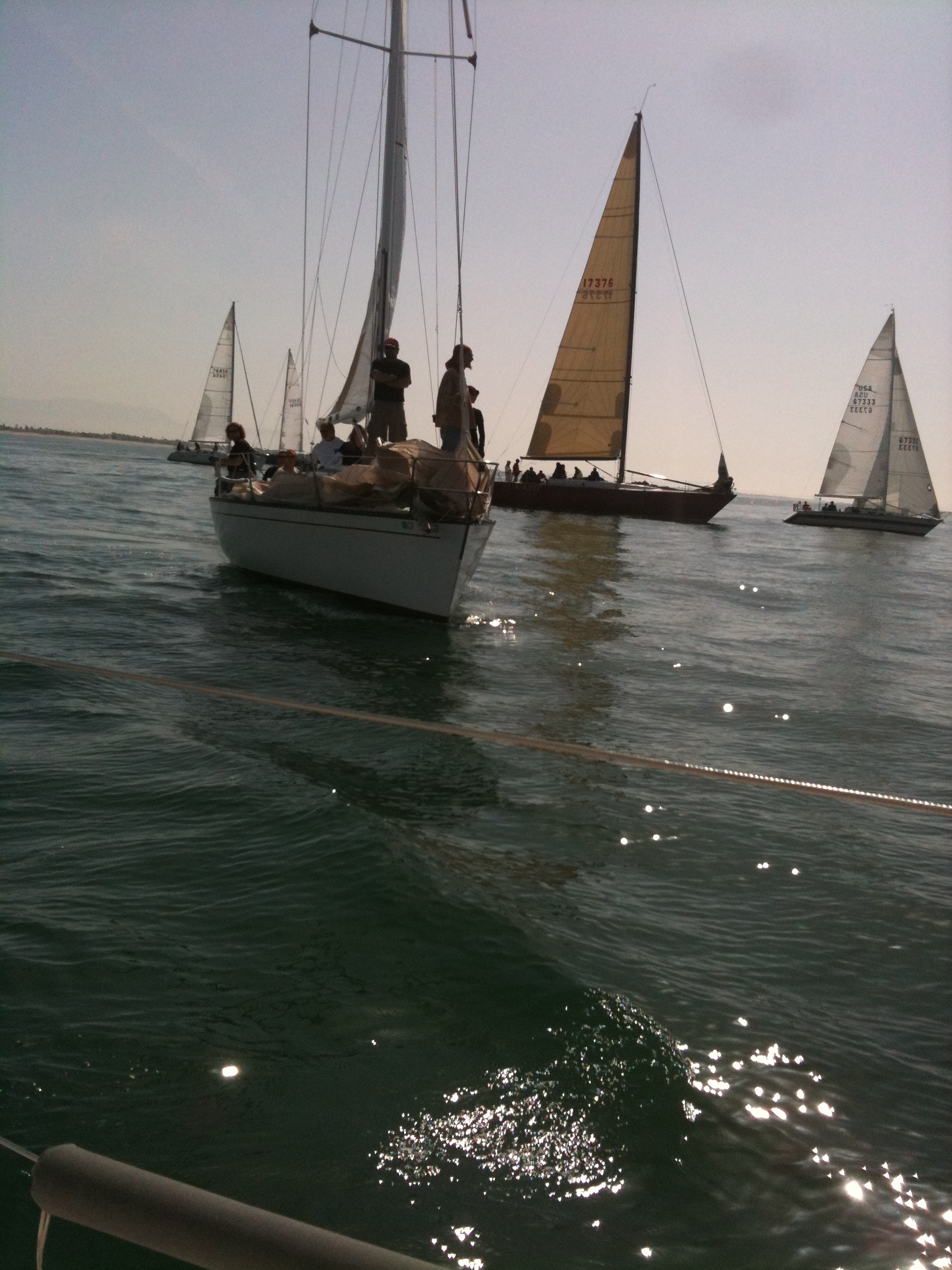
As the boats met at Mandalay buoy for the start of the race, the sea was flat and the wind barely a breath. You know there’s very little wind when, from across the water, you can hear people talking in conversational tones on the other boats.  If anyone had been listening to the conversation aboard Sprit Decision as we moved sluggishly through the glassy water, they would’ve heard Captain George suggest that it might be a “Brophy’s Day” – by which he meant that if there wasn’t going to be any wind for this race, we might as well motor back to the harbor and enjoy a drink or two at Brophy Bros seafood restaurant. None of us took him too seriously. Captain George is always the last man to quit a race.

The start of the race was postponed as race officials chose a new, shorter course for the race. On this day, there would be no grand sail out across the Santa Barbara Channel and around one of the oil platforms. Instead, we’d race a less ambitious course, from buoy to buoy, closer to the coast.

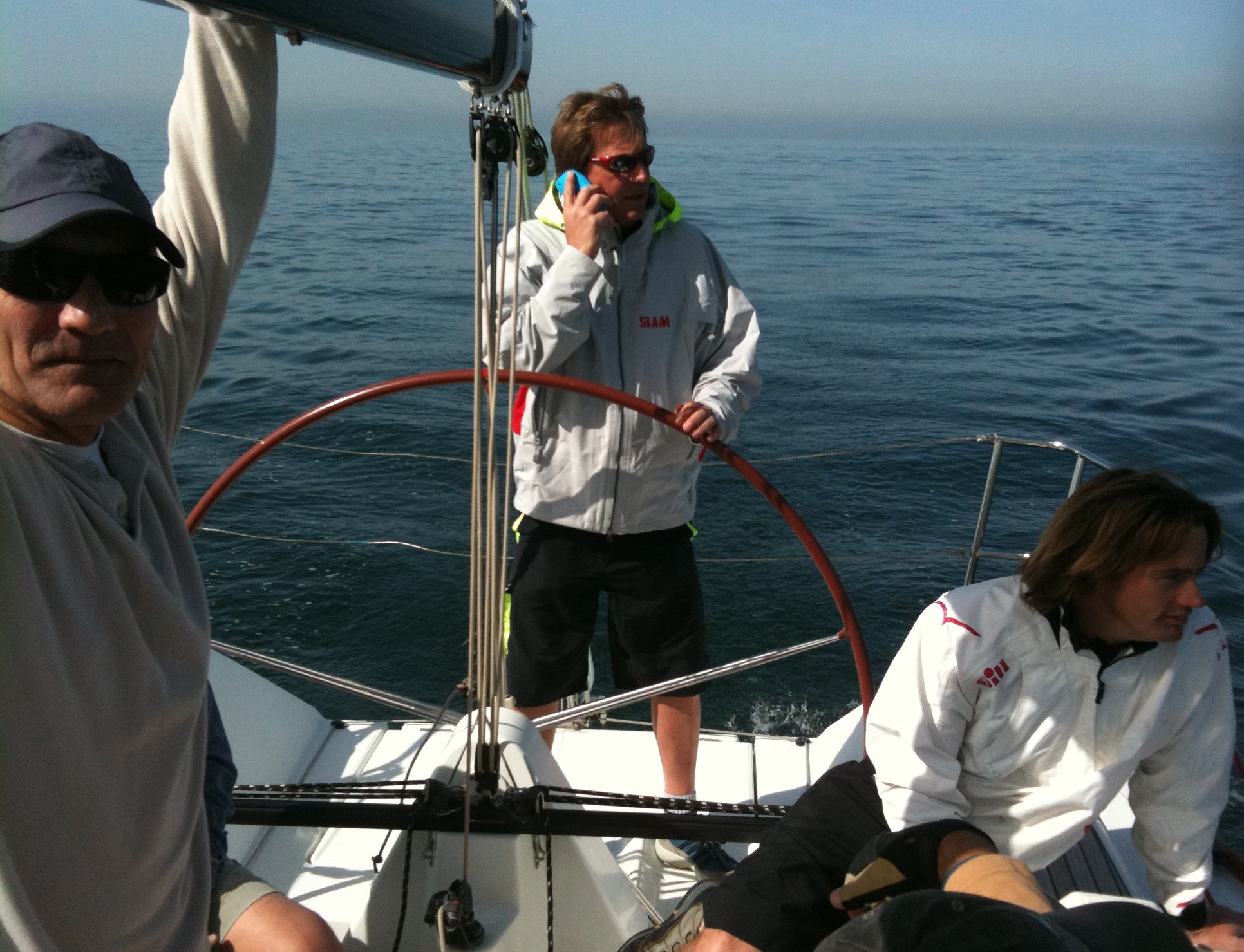
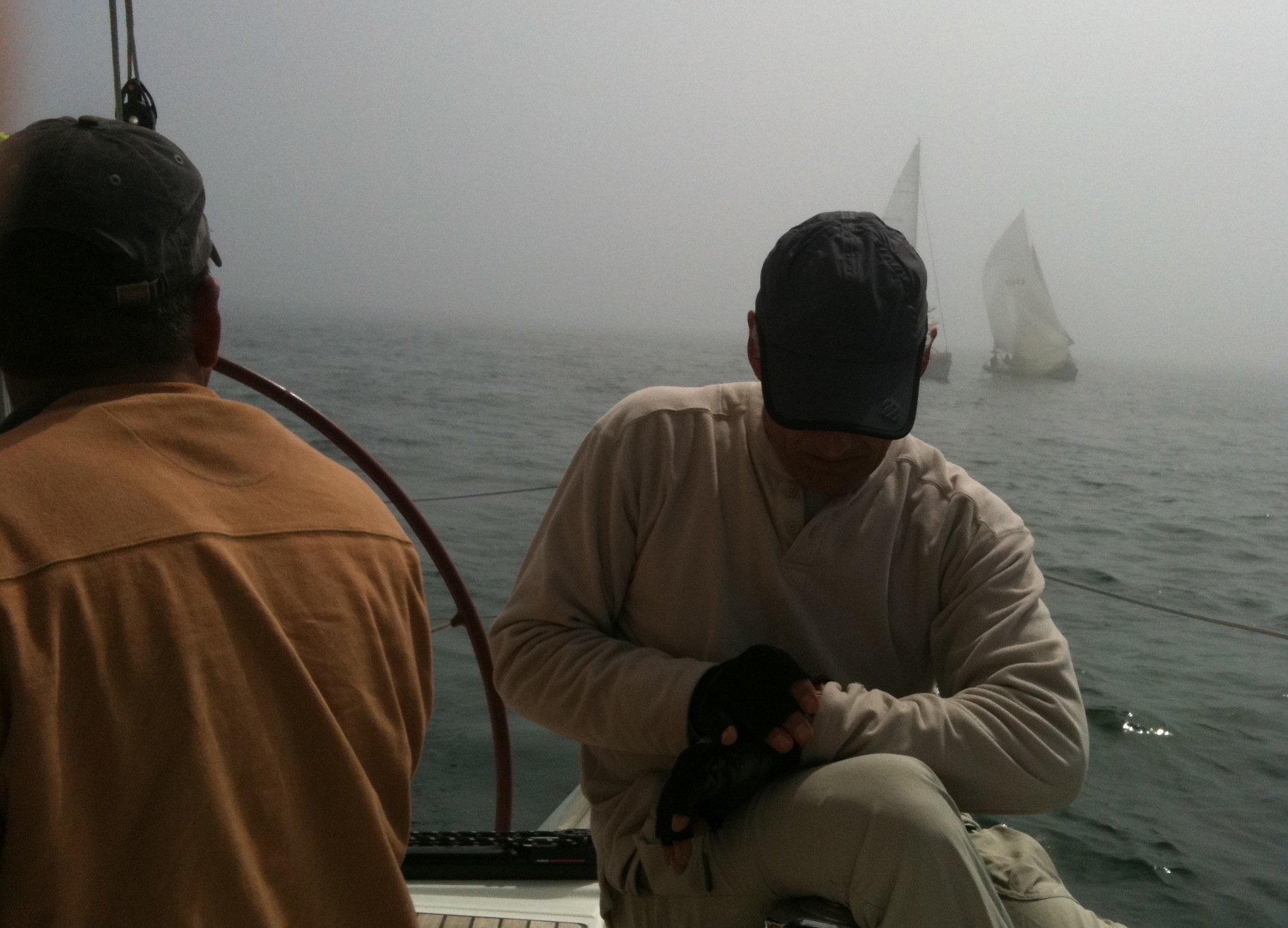
As we jockeyed for position in the light wind, waiting for the five-minutes-to-start warning to sound, our veteran bowman, Claude, looked to the south and saw a line of fog approaching some distance from the south. “That’s not good,” he told me, but he didn’t explain why. That I would learn later in the race.

Bowman Claude sees the fog to the south.

After being surprised with only a one-minute warning prior to the start, we managed to get across the line slightly behind the leaders, and proceeded to the first mark, a buoy to the north of us called “Fish Sticks”. We were making 4.5 knots of boat speed with just 5 knots of wind in our sails. That’s pretty efficient sailing for Sprit Decision.

We rounded Fish Sticks in the back half of the pack – our smaller, less-heavy foes having the advantage in lighter air, but after deploying our spinnaker in a most seamanlike manner, we were soon running back to Mandalay buoy, plowing through the gently rolling seas at 6 knots in 6 knots of wind. We chased down one of the smaller Olson 30’s that had gotten ahead of us, and were hoping to overtake a couple more boats as the wind picked up and our boat speed increased.

As we got to within 200 yards of Mandalay bouy, we could see the fog rolling up toward the buoy from the south. By the time we got to within 50 yards of the mark, it was already getting hard to see the leading boats rounding the buoy in the fog. Soon, we were inside the fog ourselves, and as the fog moving north met the weak air current moving south – they cancelled each other out, the wind stalled, and Sprit Decision rounded Mandalay Buoy at a crawl.

For more info on the how and why of wind & fog, click here.

At that moment in struck me how drastically conditions can change in the Santa Barbara Channel. One moment, you sailing along on a sunny day in light wind on a gentle following current – and the next, you’re becalmed in dense fog on a flat ocean. And you’re watching the sudden, dangerous circus as boats try not to collide with each other while approaching, rounding, and leaving the mark – with little wind to give them power or control.

If you’re a sailor, you may find it interesting to know that we jibed the spinnaker as we rounded the mark and were still flying our kite as we ran northeast back to Ventura Harbor. (I’m still a bit confused as to how these things happen.) What I do know is that within ten minutes, the fog cleared, the wind picked up, and we got across the finish line in Ventura Harbor just as the wind was dying again.

Captain George called me that evening to say we’d finished 5th out of 10 boats in the race. And while we weren’t going to take home any trophies for our effort that day, it had been the best day of light air sailing we’d ever enjoyed racing Sprit Decision.

Our next sailing adventure is the Newport to Ensenada race on April 23rd. I’m hoping that the words “light wind” and “fog” will have no place in the account of that race.

2 Comments

Filed under Adventure, Sports

Sailing with the Tsunami

“So foul and fair a day I have not seen.”

Macbeth (Act 1, Scene 3)

Shakespeare’s doomed, regicidal Macbeth was a soldier, not a sailor, but had the bloody Thane of Cawdor been racing a sailboat in the Santa Barbara Channel on Saturday February 27, 2010 – he could not have described the dichotomous conditions better: fair and foul. And one of the major factors that contributed to this strange day on the water was put in play in a faraway South American country more than 12 hours before the race began.

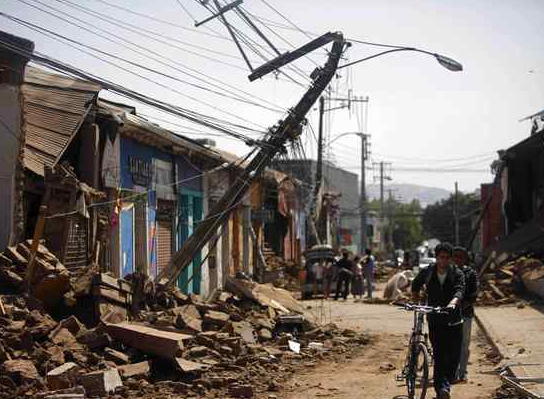
At 10:34 PST on the night before our second sailboat race of the 2010 season, there was a magnitude 8.8 earthquake in Chile — one of the largest temblors ever recorded.

The head of the University of Chile’s Seismology Institute said the quake was “50 times bigger than the one in Haiti.” That might be true, but luckily, compared to Haiti, Chile was well prepared for such a huge shaker. Only 300 people died according to early accounts – but a seismically triggered tsunami was sent racing halfway around the world.

And some 4,900 nautical miles northward toward Ventura, California.

About nine and a half hours after the Chilean quake, Brad Hall and Darroch Greer arrived at my house at 8:00 AM to carpool out to Ventura Harbor for our race. The network weather witches had been heralding a series of storms sweeping down from the north, and indeed, we drove west on the 101 Freeway in and out of patches of rain. We discussed the quake in Chile – but we had no idea it would affect us that day.

We were more concerned about another factor that would make it an odd race. Our supremely capable and experienced lead bowman, Claude Dubreuil, would not be among our crew that day. That meant that leadership of the foredeck would devolve to me. As I’m a relative nautical neophyte — happier to follow orders than give them.

Captain Tom Webber. (Photo by Brad Ball)

I had apprehensions that had nothing to do with the weather. Getting the headsail up and down, rigging, flying, and dousing the spinnaker, these were the maneuvers that occupied my mind. I knew we’d get wet. That was a given. I was hoping there would be enough wind – but not too much. I was hoping I could do my job, not screw up royally – and manage to stay in the boat.

When we arrived at Ventura Harbor, I noticed that the water in the harbor was as muddy and murky as the Mississippi River. Usually, as you walk down the ramp onto H Dock, you can see the harbor bottom. I figured the murk must’ve been churned up by the storms that were already passing through.

Captain George & Michael on our way out of Ventura Harbor. Smooth sailing so far. (Photo by Brad)

Brad's set to haul the jib halyard.

The weather lifted as we pulled out of our slip and sailed out of Ventura Harbor toward the starting line at Mandalay Buoy. There was a heavy swell that promised a wet afternoon — but on our way to the line, we did a pretty good job of getting the headsail up and deploying and jibing the spinnaker, etc, without Claude’s veteran leadership.  Despite the choppy conditions, I managed to stay in the bow and roughly approximate what Master Claude would have done. The few mistakes that I and the foredeck crew made were soon remedied – and we were all feeling pretty good as we approached the starting line

The strangeness began at the start of the race. We were among the first boats to cross the starting line in a crowded, chaotic start. I expected to hear the crunch of fiberglass. Shouts and curses were heard – but miraculously, there were no collisions.

We were among the leaders as we raced toward the first mark, Platform Gail, sailing in and out of a soaking rain.

A cold, soggy Darroch and The Matey on the rail. (Photo by Brad)

The promised storms had arrived on cue, drenching the crew most miserably – but also helping to drive our boat, Sprit Decision, at an average speed of about 8 knots to windward. We were sailing on a direct line to Platform Gail – and aside from the rain – it was a great day so far.

It was a good omen when a pod of playful dolphins starting racing alongside us, darting back and forth across our bow.

Alas, our good fortune would not last.

When we got within a quarter mile of Platform Gail – which we would need to sail around before returning to the finish line at Ventura Harbor – we were suddenly becalmed.  The wind and water both became eerily still. What we didn’t know was that, about this time, 12:24 PM (PST) – a 3-foot tsunami surge from the Chilean quake was arriving in Ventura. It had taken these waves generated by the 8.8-magnitude quake 14 hours to travel from the temblor’s epicenter to our patch of the Pacific. And somehow, the effect was to leave us slack-sailed and drifting in the lazy swell.

Captains Tom & George consider what to do to get our becalmed boat moving again. (Photo by Brad)

Eventually, we got enough of a puff to push us around the oil platform and fill our spinnaker for a downwind run home to Ventura Harbor. As we approached the harbor, our cell phones began to ring with calls from our wives concerned about a tsunami warning. What tsunami warning? We didn’t feel any tsunami…

Then, as we got within a few hundred yards of the harbor mouth, a Coast Guard ship ran out to intercept us. A Coast Guard officer on a bullhorn advised us that we could not enter the harbor because of a surge that was coming out of the harbor.  In my three years of sailing in Ventura and Channel Islands, I’ve never heard of a surge coming out of the harbor – the surf and the tide is usually pushing toward the shore – not out to sea. But the tsunami surge from Chile was hitting the coast and bouncing back out, back and forth — and the two currents were smacking into each other just inside the harbor’s breakwater. It looked like the confluence of two mighty rivers. Strange conditions, indeed. In fact, the Ventura County Sheriff’s Department reported minor damage at the harbor from several buoys getting washing away.

After about 10 minutes of waiting outside the breakwater, the Coast Guard (timing the surge interval) gave us the okay to proceed into the harbor. It was weird to sail into the harbor against such a strong current. And it was yet another lesson in how small – and interconnected — the world is.

As we pulled into our slip, the rain had stopped and the sun was coming back out. Foul was fair again. It was as odd a day on the water as I’d ever experienced.

And I loved every moment of the adventure.

What follows are more photos that Brad Hall, our loblolly boy, took on our voyage.

The Matey (that's me) as we sail out of the harbor. So far, so good.

Foredeck mate Darroch is clearly not wet and miserable yet. Is he thinking about his sandwich?

Captain Tom is also all smiles in the early going. Doubtless, he's thinking about a sandwich!

Tom doesn't look so smiley now, does he?

All's well that ends well.

10 Comments

Filed under Adventure

The Matey’s Log: Sailing Season Begins

Captain George Moll wanted his crew on the H dock in Ventura Harbor at 8:00 am on Saturday morning, February 13. It was a good thing that the race was being run the day before Valentine’s Day. Like golfing, sailing is a sport that takes men out of the house for long stretches of time on the weekend. But sailboat racing is worse than golf because it’s never certain when you’ll be done. 18 holes of golf always take about the same amount of time to complete. The duration of a sailboat race depends upon the vagaries of the wind and conditions on the water. The race was set to start at 11:00 am, and if the gods Aeolus and Poseidon were with us, we could easily be back on the dock by 4:00, as I’d promised my wife, Victoria. Or we could be home much, much later.

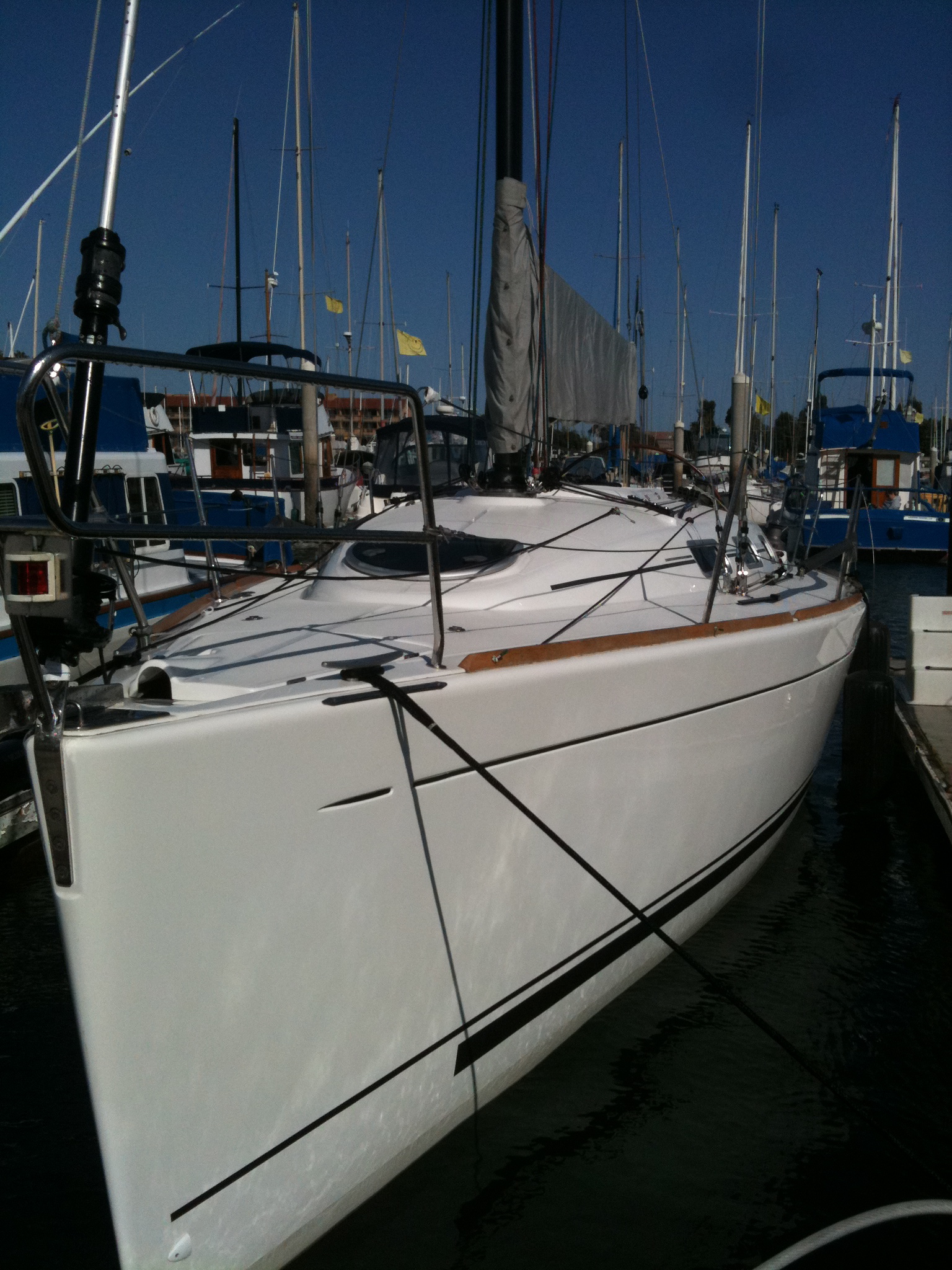
Captain George wanted us at the dock good and early because our boat, a 32-foot Beneteau First 10R named Sprit Decision hadn’t been in a race since early December. The crew was glad to be racing again. We were all veterans of earlier campaigns, though every one of my crewmates is a far more experienced sailorman than I am.  Captain George and Captain Tom Weber own Sprit Decision. George and Tom are a pair of old salts who keep everyone entertained with their crusty maritime Oscar and Felix act. Affable, gentlemanly Michael Froelich skippers his own boat, and is a key member of our crew as a helmsman and sail trimmer. Claude Dubreuil, an expert diver and sailor, is our fearless leader on the foredeck. (I assist Claude on the foc’s’le.) And my longtime buddy, Darroch Greer, may be the new guy on the foredeck crew, but as a diver, sailor and surfer, he’s also much saltier than me.

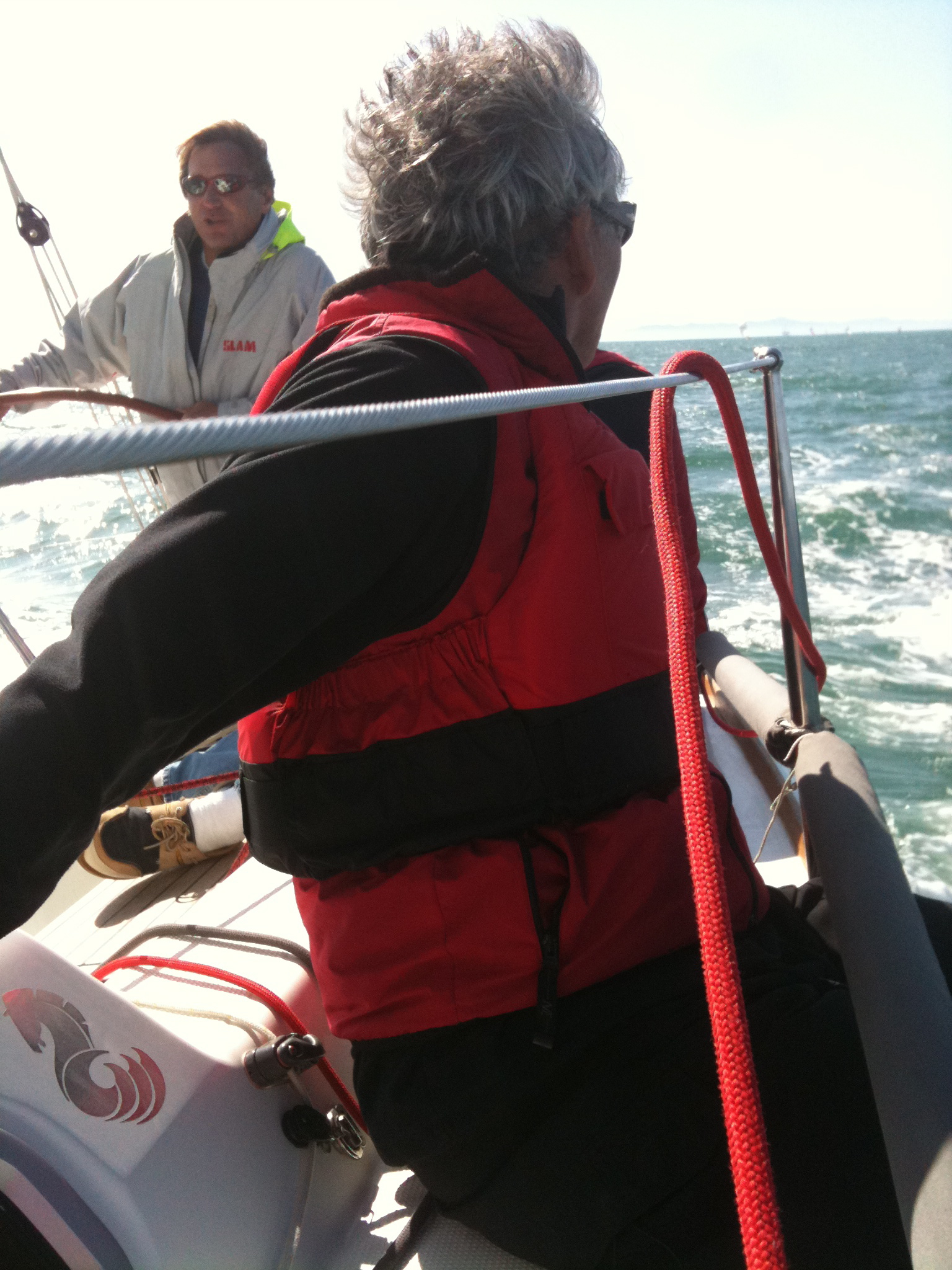
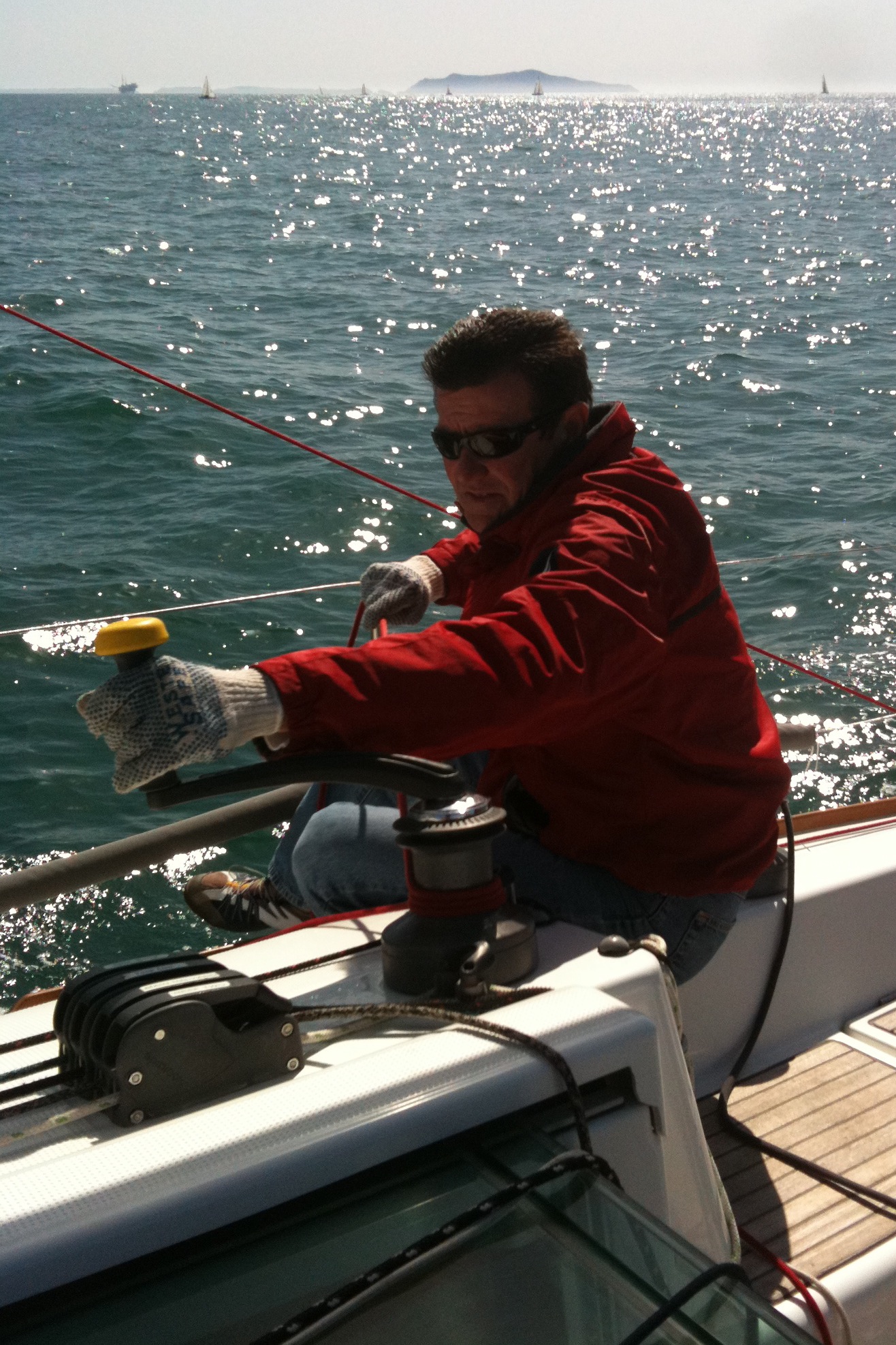
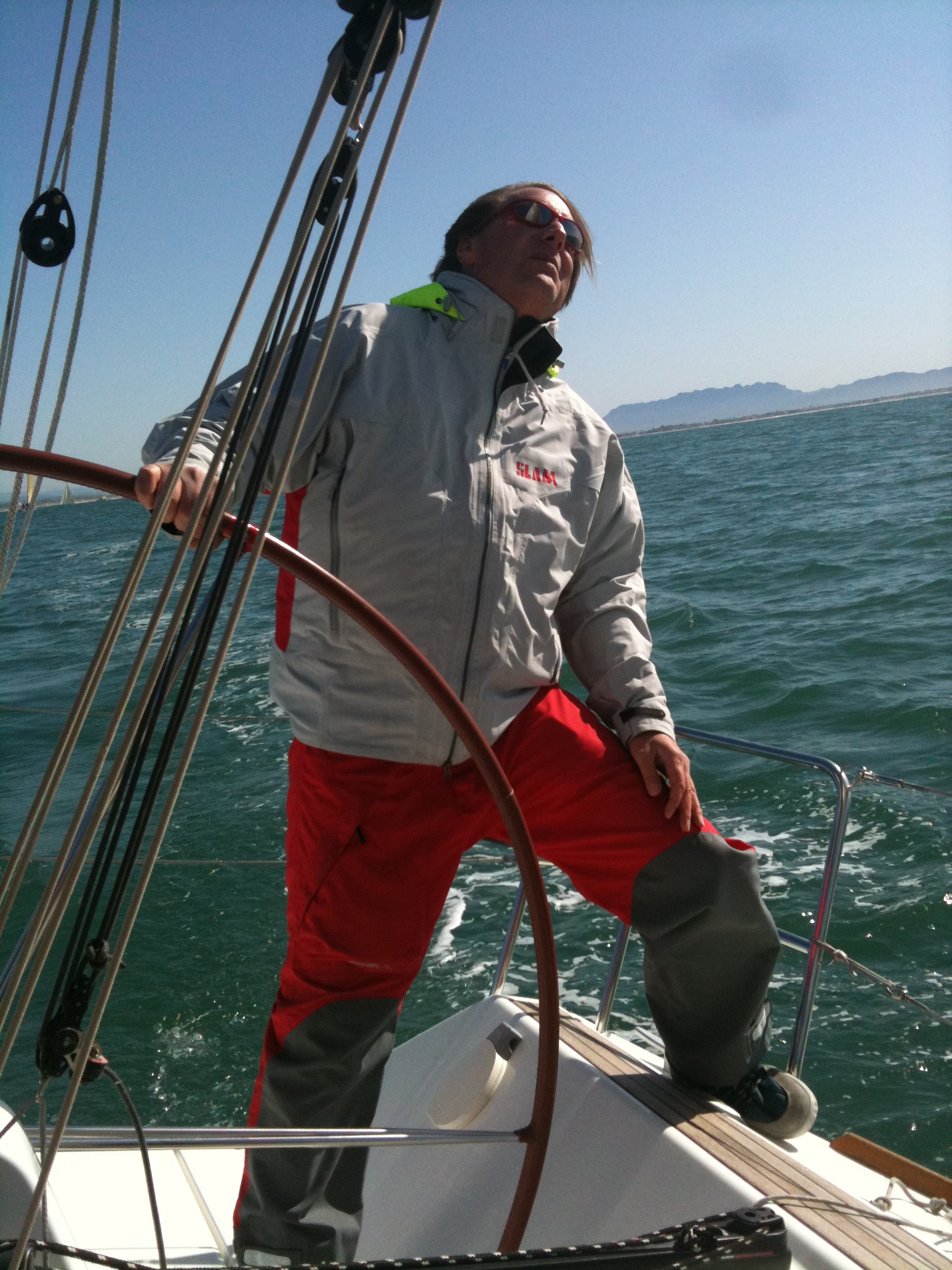
And me? Well, they call me “The Matey”, but my virtues as a sailor extend little beyond blind loyalty to my captain, the strength to haul lines and pump halyards, a knack for cursing like a tar in Nelson’s navy — and a good bit of weight on the rail. All in all, the six of us were a fine crew with which to start the 2010 racing season.

The February 13th race was the first of the Spring Series sponsored by the Pierpont Bay Yacht Club out of Ventura Harbor. Sprit Decision was among the twenty or so boats competing in the spinnaker class. The racecourse began at the Mandalay buoy, across the Santa Barbara Channel, around oil platform Gilda, then back into Ventura Harbor.

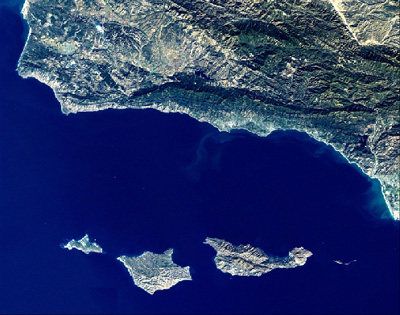
The Santa Barbara Channel is a glorious stretch of blue Pacific Ocean that separates mainland California from the northernmost Channel Islands. It runs between Point Conception and Oxnard on the coast and the islands of Anacapa and San Miguel. It’s as gorgeous a body of water as you’ll find on the planet, and whether you win or lose the race, it’s a pleasure to spend time on these waters.

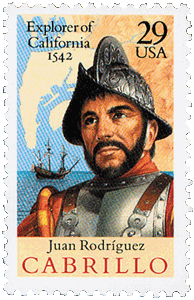
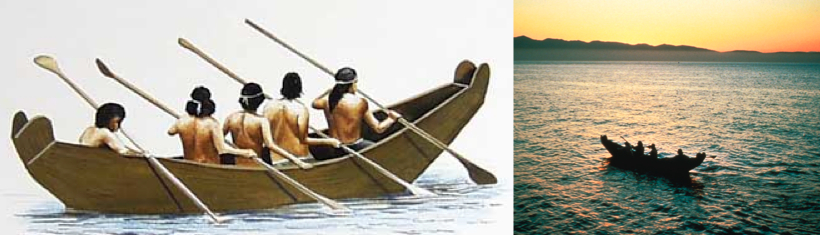
As we sailed out of Ventura Harbor, we saw hard-working souls in two large out-rigger canoes paddling their way back inside the breakwater. It was a reminder that human beings have been navigating the Santa Barbara Channel for centuries – maybe even millennia. For many centuries before they first encountered Europeans in 1542, when Juan Cabrillo and his cohorts arrived from Mexico to “discover” the channel, the Native American Chumash tribe went back and forth across the channel in large, primitive dugout canoes, connecting the islands with their mainland villages and establishing trade between them.

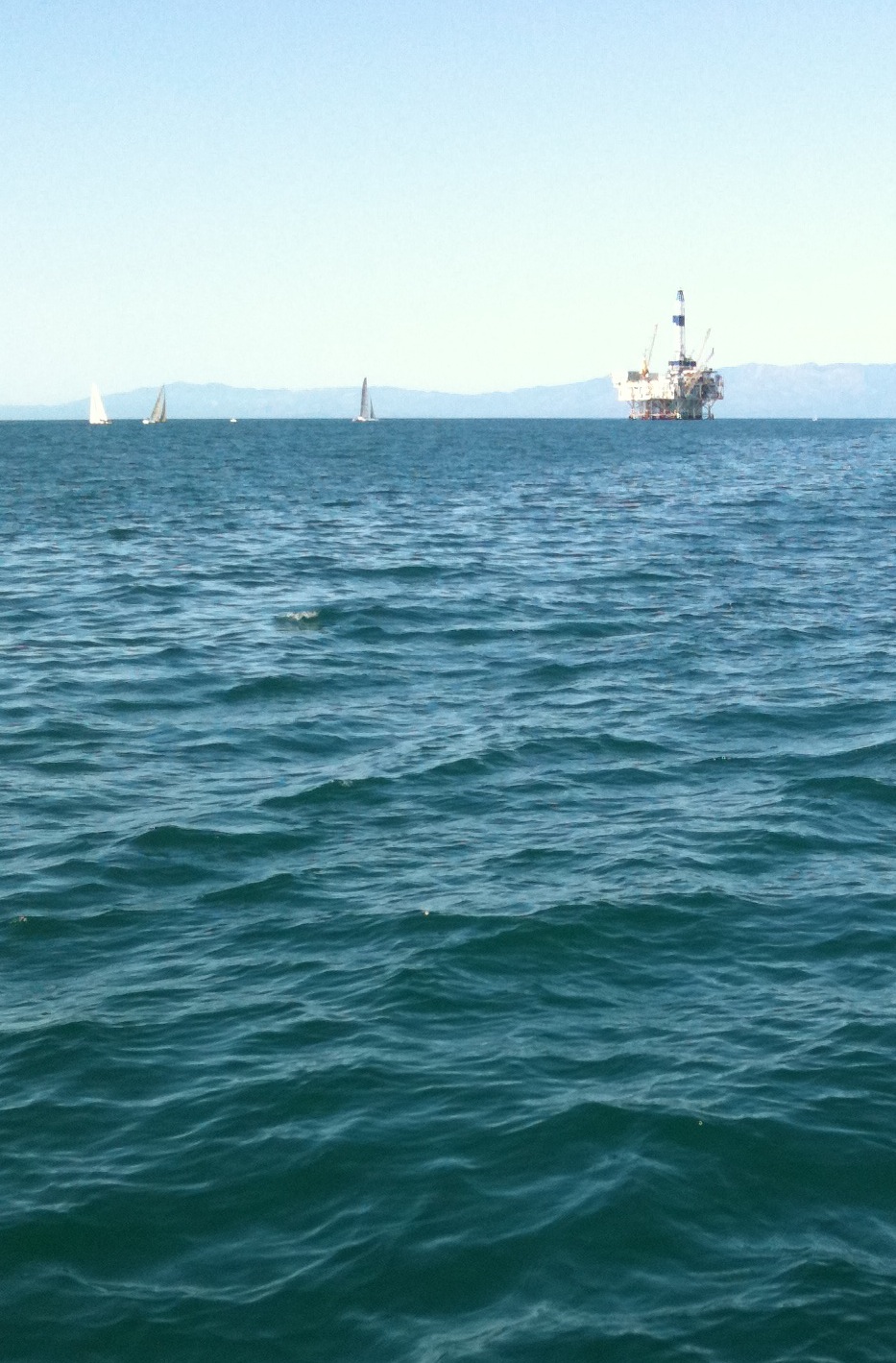
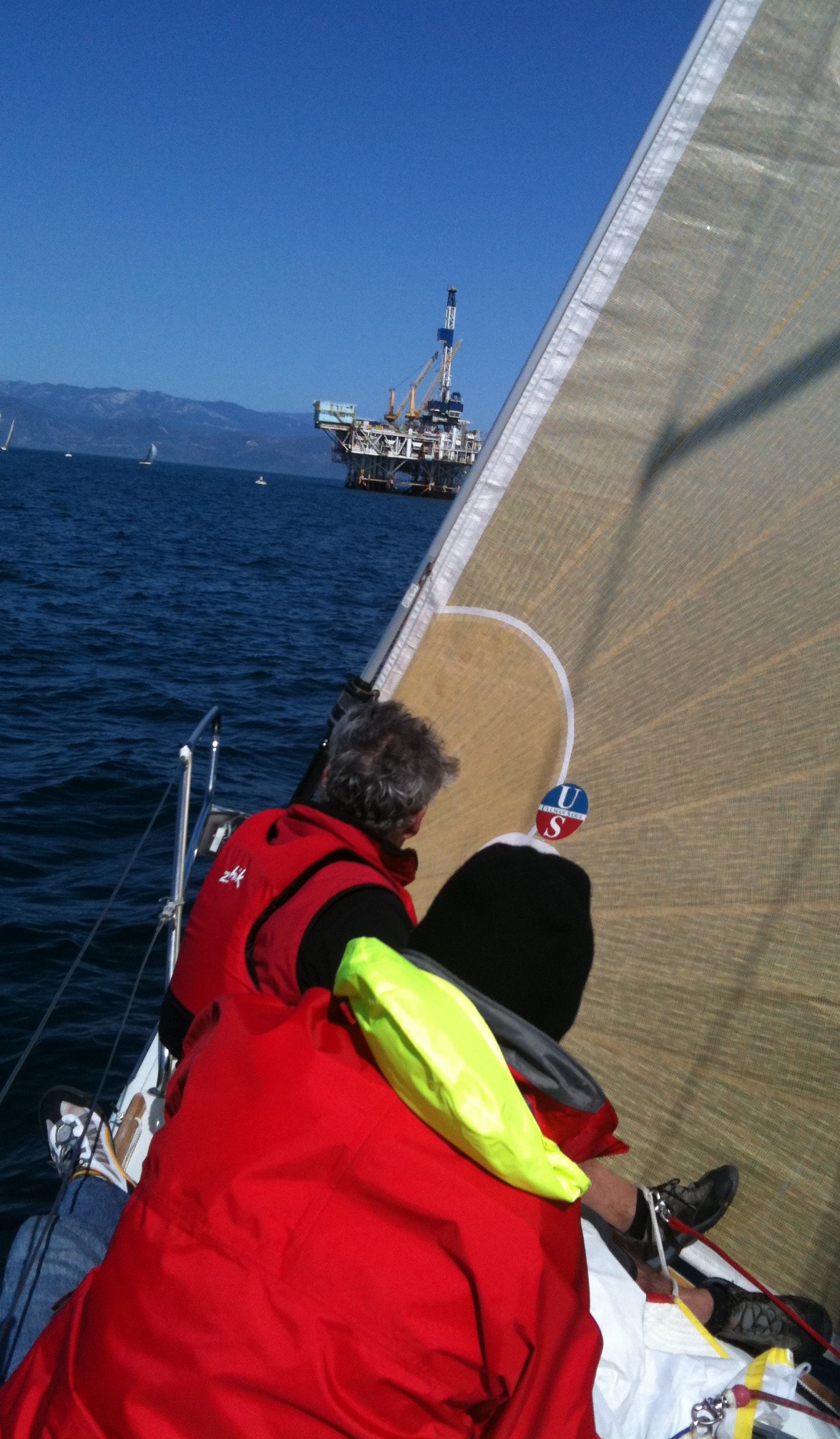
We crossed the starting line just a few seconds after 11:00 am, and were sailing among the leaders, headed for the offshore oil platform called “Gail”. (All the oil platforms in the channel are named after women. It does get lonely on those platforms.) Platform Gail is about 10 miles from Ventura Harbor – and with a steady 10-15 knots of wind, we were showing 7-8 knots of boat speed. At that rate, we’d round Gail within a couple hours. Sprit Decision, her bottom newly-cleaned and treated, was knifing through the large, wide, rolling swells, as we made our way toward Gail.

Gail and her sister platforms are sitting in the Santa Barbara Channel because of the many oil fields below its sea floor. The channel has been mined for over 100 years – and was the site of the very first offshore oil well in 1896.

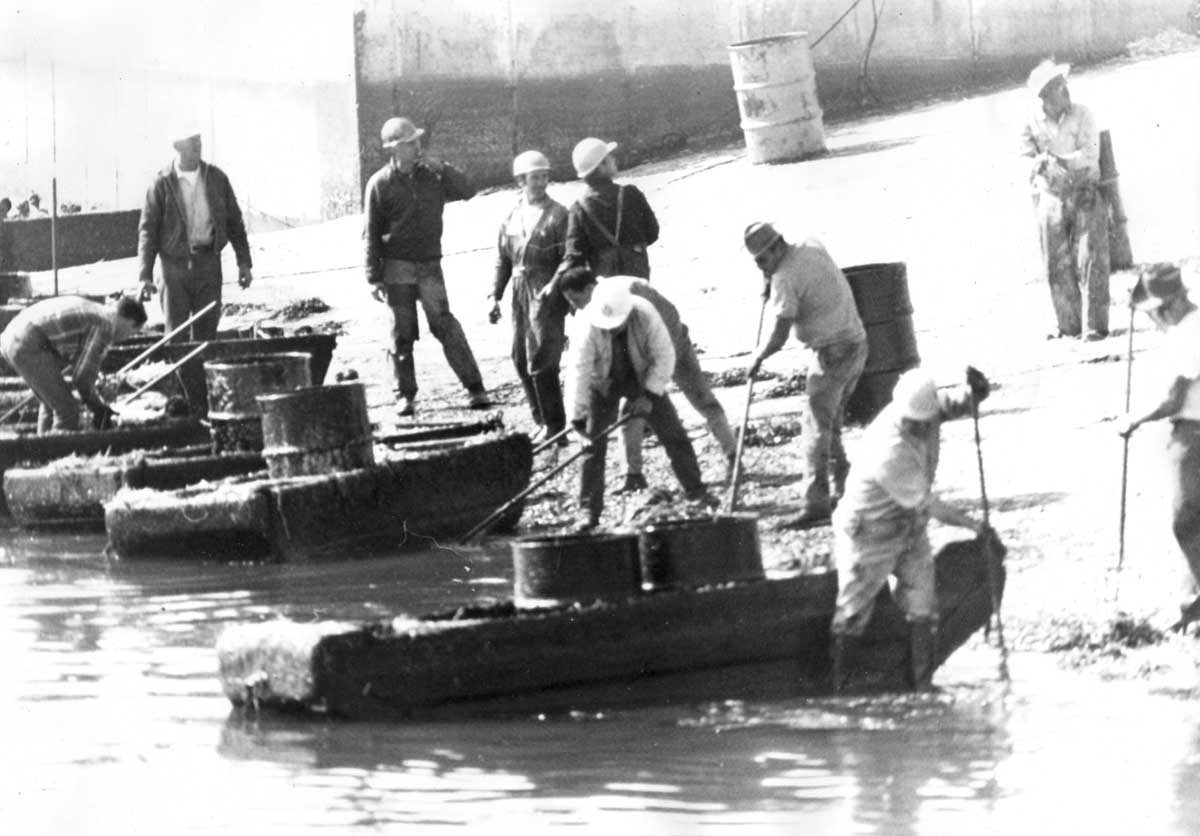
The channel was also fouled by one of the worst oil spills in history in 1969, when the black stuff came oozing out of fissures around a recently drilled offshore well a few miles south of Santa Barbara, blackening hundreds of square miles of water, killing aquatic wildlife, and mucking up the beaches from Goleta to Ventura. That disaster helped to galvanize the nascent environmental movement in the United States.

I must admit, I wasn’t thinking much about that history as we rounded platform Gail because there would soon be important work to do.  Once we got around Gail and were headed back to Ventura Harbor, the wind would generally be on our stern – which meant a spinnaker run to the finish line. Flying the spinnaker is one of the main responsibilities of the foredeck crew, and it’s one of those critical shipboard evolutions that can either kick the boat into a higher gear – or trigger a disaster.

Before the race, we’d practiced deploying the spinnaker – with mixed results. (Among other snafus, I managed to nearly get myself knocked off the boat helping to jibe the spinnaker.) But, rounding Gail, we got our spinnaker flying with very little drama, and were soon making between 10 and 11 knots on our run back to Ventura Harbor.

Claude looks back to admire the swell.

Since the start of the race, the long, rolling swells pushing toward the shore had continued to build – and were now quite large: eight to ten feet from crest to trough. As it was a following sea, Sprit Decision was literally surfing the swells that came in under her stern. The sea, the ship, and the crew were in a great rhythm less than a mile to the finish – but it wouldn’t last.

Suddenly, as we neared the shore and shallower water, the perverse geometry of the sea came into play, and the swell began to fall off more precipitously. The wind was gusting as we were riding down one particularly large swell, and as Sprit Decision’s bow dipped dramatically – a gust of wind drove the spinnaker down toward the trough of the swell.  The boat’s bow was pushed parallel to the rolling swell and the boat was listing heavily to starboard, its rail nearly in the water. In an instant, we were on the verge of getting knocked down and broached by the onrushing swell.

Michael, trimming the spinnaker, came close to a bath when we were nearly knocked down.

Quick work by all hands kept the ship from heeling over disastrously, but it was critical to de-power the spinnaker. (In other words, get the wind out of it, so it wouldn’t be driven into the water, taking us with it.) Alas, one of the spinnaker’s working sheets got hung up on deck cleat! You may not know what all that means – but the bottom line is that we were nearly knocked down a second time before we were able to free that spinnaker line, right the ship, and haul down the spinnaker.  Of course, there are no photos of these wild and wooly moments. At times like that, it’s all hands on deck!

Twenty minutes later, we were across the finish line. It had been an exciting and satisfying first race of the season. I’m not sure where we finished – probably somewhere in the middle of the fleet – but it was a pure joy to survive the experience with Captains Moll and Weber and the gallant men of Sprit Decision.

And, best of all, with the wind as consistently stiff as it was – we finished at 2:00 pm. That’s two hours earlier than I told Victoria I’d be done!  So, I got home earlier than expected.

A good start to the new sailing season, indeed.

What follows is a photo album from the race. All photos were taken on my iPhone — which, luckily, avoided going in the drink.

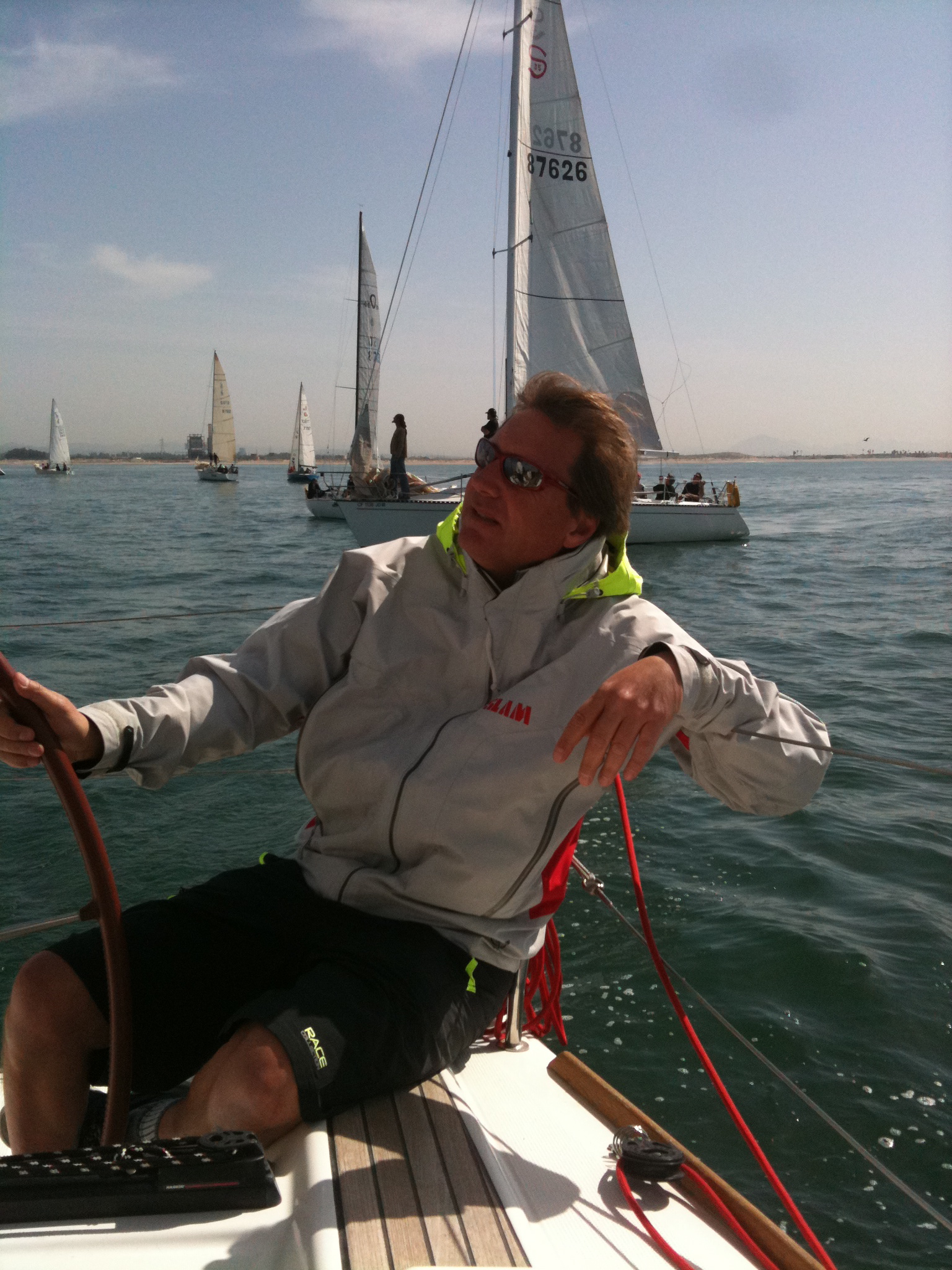
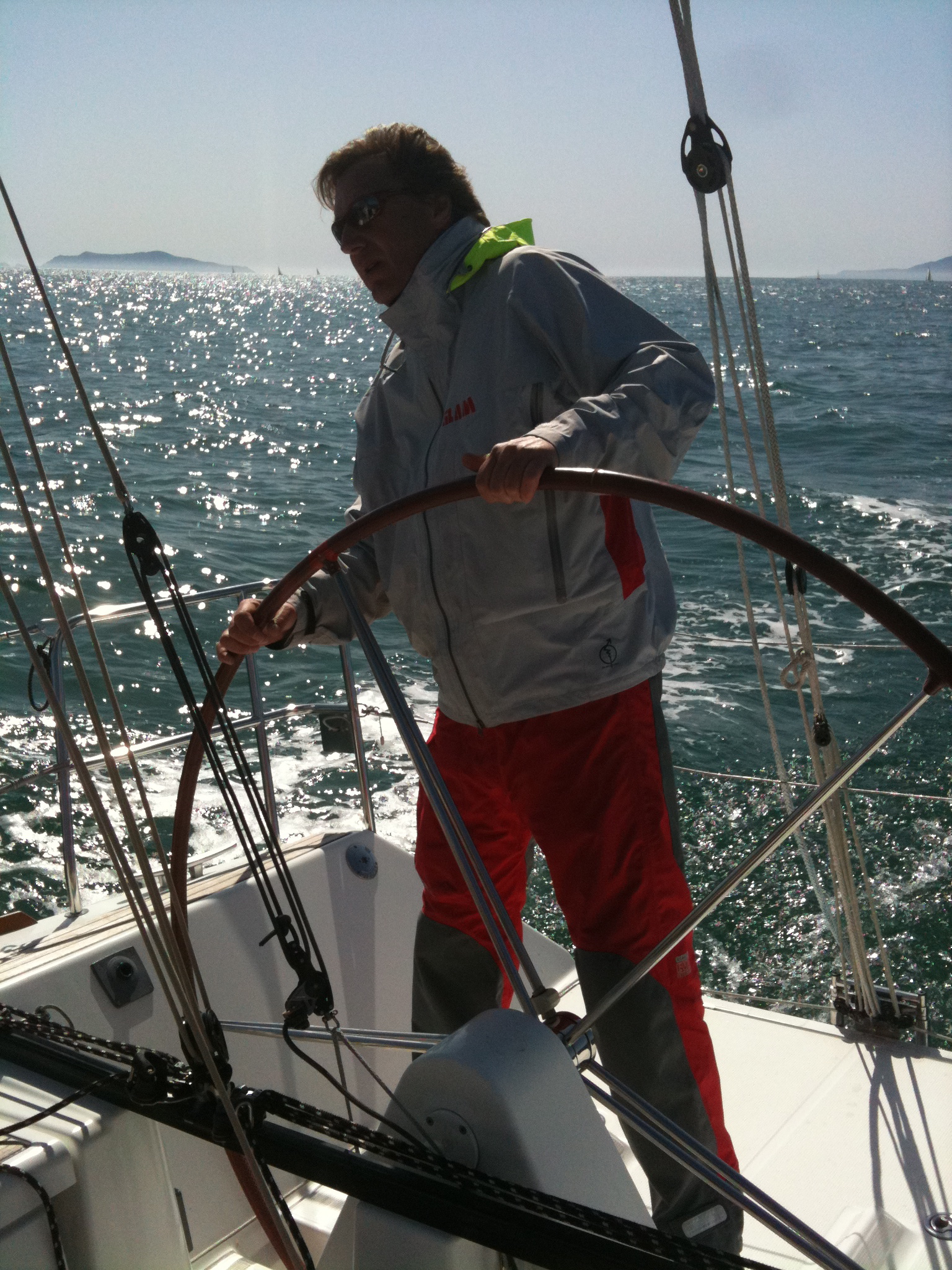
Captain George at the helm.

Captain George at the helm.

Claude, master of the foredeck.

Captain Tom consults the race rules. "Now, which platform is the mark? Gail or Gilda?"

Michael on the rail.

Darroch at the ready on the foredeck.

The Matey.

"So, George! Do you want us to fly the spinnaker now, or what?"

The Matey on the rail, watching the wake go by.

Captain George. Sailor. Leader. Legend.

12 Comments

Filed under Adventure

Wearing Out Adjectives in Praise of Yosemite

For the past three years, our family has spent time during the Christmas holidays in a truly sacred place: Yosemite, the greatest jewel in our treasury of national parks. I can’t imagine that anyone who’s ever visited the Yosemite Valley came away unmoved by its wonders and its power. To see and experience the famous natural landmarks, El Capitan, Half Dome, Bridalveil Falls and Yosemite Falls is to realize that not even Ansel Adams’ incandescent photography can capture the enormity and the splendor of what you’re witnessing.

El Capitan (All photos by my wife, Victoria)

You can take photos, of course – everyone takes photos or draws pictures or paints these majestic scenes – but ultimately the images you take home can never really convey what you saw and felt when you were there. In fact, it’s hard to put it in writing, too. There may be a Native American word that fully describes Yosemite, that synthesizes the natural beauty and divine nature of the place, but you’ll wear out your thesaurus trying to find a completely satisfying adjective in the English tongue.

This past December, we stayed for five days in the tiny town of Wawona, just inside the southern entrance to the park. Long before SUV tires wrapped in snow chains began grinding their way up CA Route 41 and down into the Yosemite Valley, the native Miwok Indians called this spot “Pallachun”, meaning “a good place to stop”. I don’t know why it’s called Wawona today, but it’s still a great place to stop.

A favorite haunt of Yosemite tourists since the mid-1860s, Wawona is primarily known for its namesake hotel, a National Historic Landmark that opened in 1879. The Wawona Hotel is glorious, and we always make it a point to have lunch or dinner there and thaw out in its lovely Victorian lobby – but we’ve never stayed there. Owing to the hotel’s vintage, most rooms don’t have their own bathrooms: not a plus when traveling with children. Or teenage girls, for that matter.

This year, we rented a cabin in Wawona, just a short hike from the hotel, and made day trips to Badger Pass, the Yosemite Valley, Yosemite Falls, the Ahwahnee Hotel (another wonderful man-made landmark), and the Tenaya Lodge (a beautiful and comfortable resort hotel built in recent years in the nearby town of Fish Camp). But our most satisfying experience was our hike to Chilnualna Falls, a lesser-known but wholly adjective-taxing cascade that splashes down a high, rocky 6,200 foot ridge just a few pine-forested, Sequoia-dotted miles northeast of Wawona.

Chilnualna Falls is not only hard to pronounce properly – it, too, is nearly impossible to put into words. “Breathtaking” comes to mind, but it’s overused. And what the kids have done to “awesome” has rendered that marvelous word meaningless.

But where was I? Oh yes, the hike!

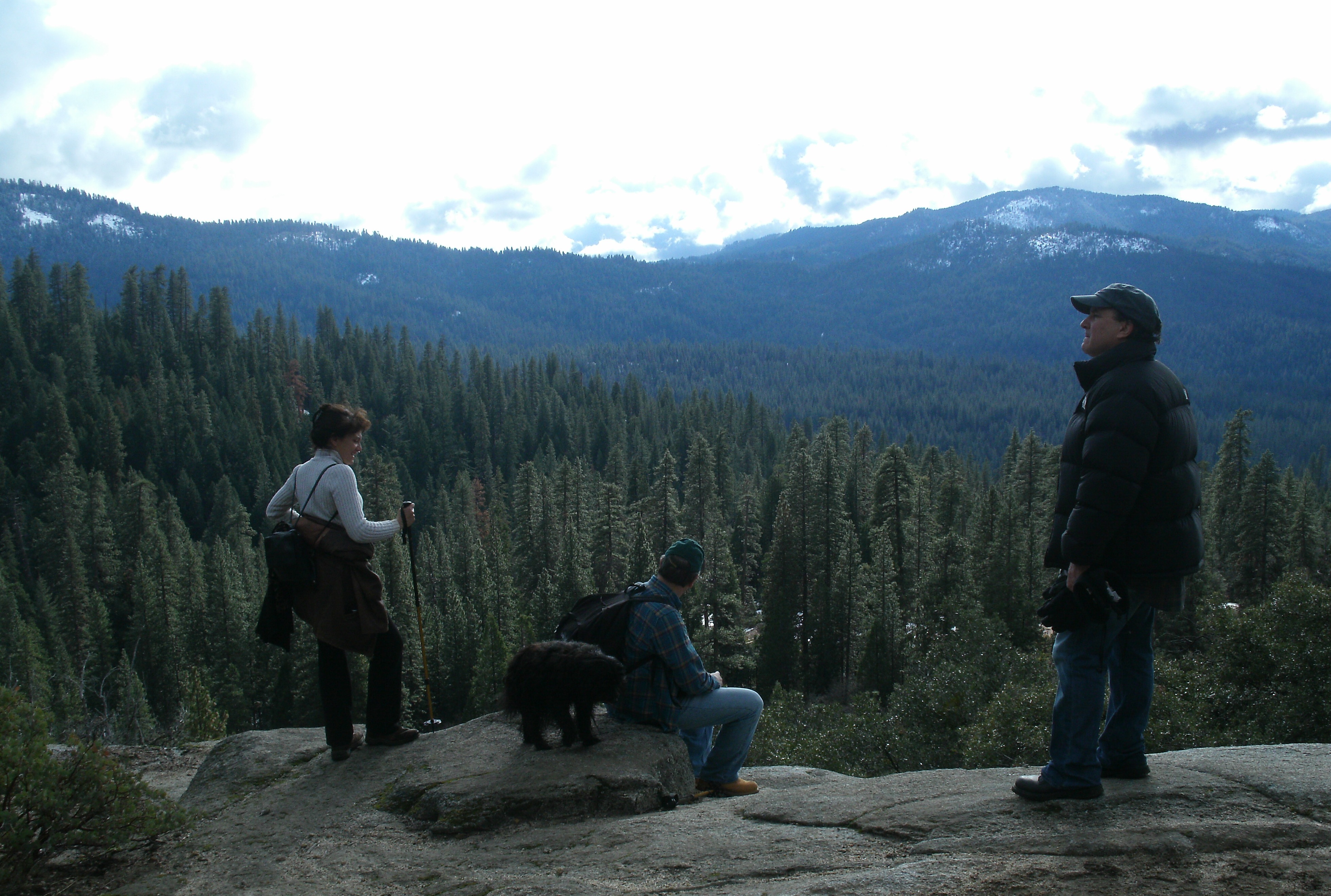
Our good friends Amy & Drew (and their dog Lucy) join me on a scenic overlook along the Chilnualna Trail.

The hike to Chilnualna Falls is about a 5-hour round trip, depending upon how often you wind up stopping to gape slack-jawed at the beauty that surrounds you. (And take more inadequate photos, of course.) The trail rises 2,400 feet in elevation through some of the most gorgeous scenery you’ll ever see, and though I dearly wished that we would, we encountered no bears, cougars, or bobcats. (Though they are, I hope, lurking somewhere in all that dense greenery.) As we hiked the not-too-strenuous trail, Chilnualna Falls revealed itself to be not just one big waterfall – but a miles-long series of rocky cataracts, descending over a jumble of huge moss-covered boulders, flowing from its source: a dramatic 240-foot plunge over the cliff and into the gorge below.

Luckily for us, we weren’t swayed by a negative description of the trail that we’d Googled the night before. After our soul-satisfying, heart-lifting hike on the Chilnualna Falls trail, we could only conclude that the entirely misleading listing at Yosemitehikes.com was deviously written by a Wawona local determined to keep the glories of this natural gem a strictly local treasure.

Generations of Yosemite lovers can be grateful that not all of the park’s fans have been so jealous and greedy regarding its many wonders. The 19th Century naturalist, author, preservationist and founder of the Sierra Club, John Muir, perhaps Yosemite’s greatest (and most protective) fan was also the park’s foremost promoter. Over the course of his many years living and working in the Valley, Muir did his best to put Yosemite into words.

In his 1912 book, The Yosemite, he came pretty damn close.

“The Bridal Veil and Vernal Falls are famous for their rainbows…amid the spray and foam and fine-ground mist ever rising from the various falls and cataracts there is an affluence and variety of iris bows scarcely known to visitors who stay only a day or two. Both day and night, winter and summer, this divine light may be seen wherever water is falling dancing, singing; telling the heart peace of Nature amid the wildest displays of her power.”

That’s pretty evocative stuff — but Muir is almost obsessed with these rainbows.

“Lunar rainbows, or spray bows also abound in the glorious affluence of dashing, rejoicing, hurrahing, enthusiastic spring floods, their colors as distinct as those of the sun and regularly and obviously banded, thou less vivid.  Fine specimens may be found any night at the foot of the Upper Yosemite Fall, glowing gloriously mid the gloomy shadows and thundering waters, whenever there is plenty of moonlight and spray.”

Despite my wife’s constant vigilance (and she was nearly as obsessed as Muir), we never saw a satisfactory example of Muir’s lunar rainbows on our recent trip – but I did manage to capture an image of these spectral shafts of light on our hike along the Chilnualna Falls trail. (See photo at left. Did I mention my wife took all the other photos in this post?)

Now, back to John Muir on Yosemite Falls…

“Though the dark gorge hall of these rejoicing waters is never flushed by the purple light of morning or evening, it is warmed and cheered by the white light of noonday, which, falling into so much foam and spray of varying degrees of fineness, makes marvelous displays of rainbow colors…even at the bottom, in the boiling clouds of spray, there is no confusion, while the rainbow light makes all divine, adding glorious beauty and peace to glorious power.”

To that, I can add no more. After all is written and said, you just have to experience the beauty, peace and power of Yosemite for yourself.  Do it soon. Check out Chilnualna Falls — and keep an eye out for those lunar rainbows.

Our entire Yosemite exploration party pose on the southern fork of the Merced River in Wawona. (Front row: Emilia, Victoria and Eva. Back row: Drew, me, Amy and Lucy)

7 Comments

Filed under Adventure, Beauty