
I’ve written in a variety of formats over the years: plays, comedy revues, poems, songs, sitcoms, documentaries, screenplays – even Bazooka Joe comics. But never a novel. Until now. I recently finished my first novel. It’s unlike anything I’ve written to date. I don’t intend to shop this novel. I’d just like folks to read it. So, I’m presenting the first chapter here. If, and when, ten people “like” this post – I’ll post Chapter Two. And so on. Enjoy.
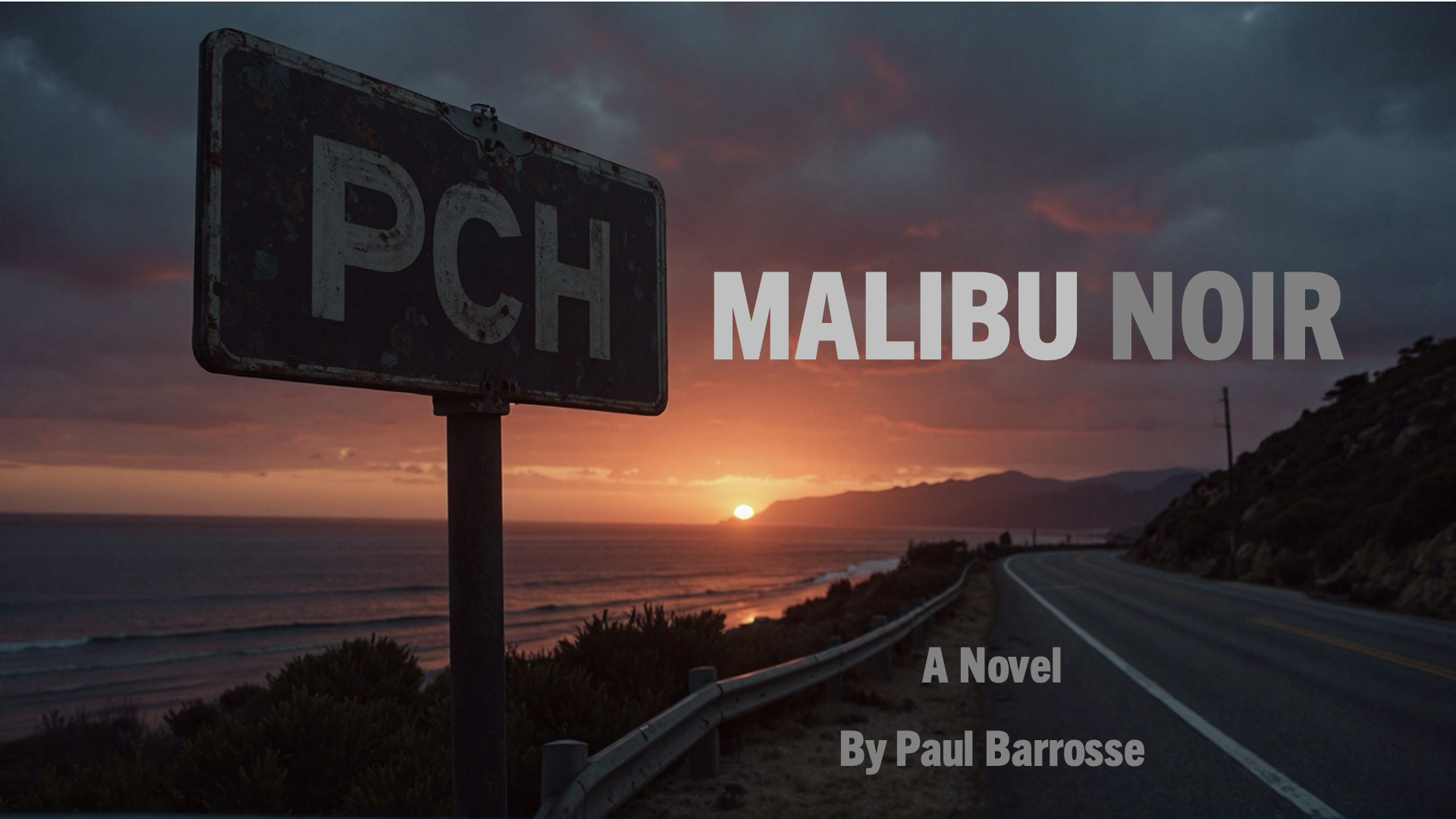
MALIBU NOIR
A Novel by Paul Barrosse
Copyright 2024 All Rights Reserved
Dedicated to my darling Victoria
And to Peter Barrosse
My Dad & Veteran of the Korean War
Chapter One
From where Mike Delaney sat on his stool at Zack’s Oceanside Dive in Malibu, the Pacific Ocean looked anything but pacific. A storm was building, howling hard across the Santa Barbara Channel.
The surf slammed into the jagged rocks and wooden pilings below Zack’s waterfront deck, yet the gal working the bar wasn’t concerned. The crashing waves shivered Zack’s timbers, but 20-year-old Gloria polished her beer and shot glasses with no hint of concern. She was cool. And she was hot.
Gloria and Mike had been flirting for a few months now. At least Mike thought she was flirting with him. He normally did pretty well with girls. He was tall and good looking. Ever since The Asphalt Jungle came out the year before, he sometimes got compared to the movie star Sterling Hayden. Guys would call him “Dix” just to needle him. Yeah, he did okay with the ladies — but Gloria wasn’t just another chick he was looking to score.
Gloria was nice to Mike, but it was hard to tell how much she liked him because she was so damn nice to everybody. Still, he sensed she was extra nice to him. Gloria was the best thing Mike had found since he got back from the war six years ago. Since he survived the war. Swiveling on his bar stool to better track Gloria’s movements, a sharp, painful twinge in his hip reminded Mike how narrowly he survived.
Gloria’s mother, Barbara, owned the joint. Her late husband Zack was an abalone diver who cashed out, sold his boat, and bought the bar from the original owner who moved back East after a Malibu wildfire swept down the hillside and nearly torched the place. Gloria planned to go to college, but when her dad suddenly died of a brain aneurysm, she began helping her mom out at the bar.
Gloria was no typical barmaid. She was special. And Mike Delaney was falling hard for her. He wished he could tell her how crazy he was about her.
He wished he felt better about himself.
Johnnie Ray was crying on the jukebox as Mike tried to get his mind off Gloria by paging through a leftover Los Angeles Times. There wasn’t much news out of Korea lately. The war had ground to a stalemate after Heartbreak Ridge. That was the Army’s show. And a bloody show it was. Mike had found out just a week ago that he knew a couple guys who bought it in that useless battle. He knocked back the rest of his second beer, then waved to Gloria for another.He turned to the sports section to get his mind off war and death.
Mike was a baseball fan, and a pretty good player himself. He started in center field for his high school team and played some ball in the Marines before he was wounded. But a makeshift diamond on a shell-blasted island in the Marshalls was nothing like well-groomed Gilmore Field, where his favorite team played. The Hollywood Stars had ended the ‘51 Pacific Coast League season with a record of 93 wins and 74 losses, but they only finished in second place. Mike soon tossed the paper aside. Winter was the worst for baseball news. There was nothing new on the Stars.
By now, Mike was into his fourth beer — with more to come. Nothing specific drove him to drink. He came out of the war better than a lot of his buddies. He was alive after all. But he didn’t feel settled. He wasn’t over it. Any of it, really. Zack’s was the one place where, gazing at Gloria, he began to feel he was in the right place at the right time. He was dealing with a lot of stuff. It was about Gloria, sure. But it was about a lot more.
By the time Patti Page was singing “The Tennessee Waltz”, Mike was two more beers into his evening. It was his birthday, December 10, 1951. When you’re born between Thanksgiving and Christmas, you learn life doesn’t revolve around you. You get lost in the holiday hubbub. From as early as Mike could remember, he tried to let things roll off his back. He tried not to sweat the small stuff. He practiced being easygoing.
It wasn’t always easy. And he didn’t always succeed.
Most private dicks were anything but easygoing — but the hardboiled thing wasn’t Mike’s bag. Not that his 29 years of life experience didn’t justify cynicism. Hell, total nihilism was an appropriate reaction to what he’d seen and done. But Mike wasn’t wired that way. He signaled Gloria for another beer. He wasn’t into the hard stuff anymore. Mike and strong booze didn’t get along.
Not very long ago, they got along too well.
Gloria handed Mike a new bottle of beer. “That’s number five,” she noted with a smile, before whisking away his empty and moving on to her other customers. Mike felt she served him with an attention she didn’t pay to anyone else. She was even counting his drinks. That proved Gloria cared about him. The goddess Gloria.
For Mike, it was just he and Gloria at the bar that night. Everyone else was a bit player — like extras in the movies being shot all over town, like some rookie on the far end of the Hollywood Stars bench. When the right time came, Mike would be up to bat, he’d knock it out of the park, and Gloria would be his!
With these thoughts in mind, Mike fumbled in his pocket.
It was still there.
He’d found a strange object earlier that day and didn’t know what to make of it.
Mike had been surfing the storm-driven swell off Point Dume and was walking back to his car when he saw something odd lying on the shoulder of Pacific Coast Highway. It was a black rectangular thing about five inches long, three inches wide, and maybe a half-inch thick — heavy for its size. One side of it was metal and the other side was glass. On the metal side it had an image that looked like an apple with a bite taken out of it and “iPhone 3G” written in small letters. On the right side was a button. There were smaller buttons on the left side. Mike tried pressing all the buttons – and must have hit the right one because the object suddenly lit up!
A message appeared on what looked like a tiny television screen. The message was written against a light blue background in German. “Murphy’s Ranch Donnerstagabend 20:00.”
Then the screen went dark.
Mike tried to turn it on again — but no luck. Maybe its battery died. Did the thing even have a battery? What the hell was it? Mike tucked the thing back into his pocket and with an instinct born of detective work, he took out his small reporter’s notebook and wrote, “Murphy’s Ranch Thursday night 8:00.”
Lucky for Mike, German was basically a second language to him. His mother’s family left Hanover just before the First World War, and growing up, German was spoken quite a bit in his home. At UCLA, he majored in chemistry, but took some German classes for an easy ‘A’. When he enlisted, he played down his fluency, afraid he’d be sent to the European front as a translator. A surfer boy from Southern California, he preferred to serve with the Marines in the Pacific. Not that he ever got a chance to surf on Tarawa.
As Mike sat at the bar, mooning at Gloria, he ran over in his mind whether he should show the strange object in his pocket to her – whatever the hell it was. Would she think he was nuts? It mattered a lot to Mike what Gloria thought of him, if she ever did think of him. He decided it was best to keep the damn thing to himself and not mention it. At least not yet.
Mike was just getting to know Gloria. Weeks ago, he dared to ask how old she was — and was stunned to learn she was only nineteen. That she was so much younger than him, — and so innocent — made him nervous. She was just nine years old when the Japs hit Pearl Harbor! What could they possibly have in common? Was she too young for him? Are six bottles of beer too much? Was he too drunk to woo her? His vision of Gloria puttering behind the bar was getting blurry. It was time to go home.
Mike got up, trying not to appear drunk. He didn’t want Gloria to think he was a lightweight. As he got up off his barstool, the old pain shot through his hip, sharp and searing: a too-frequent reminder that the Marine medics didn’t get all the shrapnel out. But six years after a Jap grenade almost cost him his leg, Mike wasn’t feeling sorry for himself. The shrapnel lodged in his hip was a pain in the ass – but it was also a reminder of the injury that punched his ticket off Iwo Jima. Lots of guys didn’t make it off those eight square miles of hell. Sometimes Mike wondered if maybe some vital part of him got left on that volcanic slagheap.
“Hey, Mike!”
He turned to see Gloria advancing with a pot of coffee. “How about a cup of Joe for the road, cowboy?” She was playfully implying he’d had too much to drink — but Mike was thrilled to think she even cared. He drained the cup his goddess offered. Was she sweet on him, too?
Mike set his cup down and Gloria picked it up saying, “Happy birthday.”
“How did you know?”
She smiled. “You told me after beer number one.”
Mike was hoping she didn’t see him blushing as she pirouetted with the coffee pot and put it back on the burner. She glanced back at him for a moment. “Drive safe, Mike. See you tomorrow?”
Mike managed an unsteady, “For sure” and imagined himself blowing Gloria a gallant kiss as he floated out of the bar. The pain in his hip was dulled by the beer — and the pounding of his heart.
“Bobby Thompson got lucky!”
Abe and Iggy sat at the end of the bar, getting into it again. Abe Shatz was a Yankees fan. Ignatz Kalicky bled for the Giants. Ever since the World Series, they had the same argument at varying volumes. They were zealots. If Abe and Iggy weren’t arguing about baseball, they were arguing politics and the Korean War. Peace talks were underway in Panmunjom — but not at their end of the bar. Peace was impossible with those two. Mike was a big fan of peace. The brutal battles to liberate all those islands in the Pacific convinced him that peace was the only answer.
As he walked to his car, Mike could hear the ominous pounding of the surf. His mind wandered to the day, coming soon, when he would summon the nerve and declare his love for Gloria. He’d ask her to marry him — crazy as that might seem. In fact, he’d buy an engagement ring the very next day. He’d do the whole thing first class. She was, after all, the classiest girl he’d ever known.
But should he talk to Gloria’s mother first? Or was that old fashioned? Was he being an idiot? Did Gloria even share his affection? Wasn’t she sending all the right signals? Or did she see him as just another barfly? Should he ask her out on a date before declaring his love? A clap of distant thunder punctuated that thought.
His reverie broken, the shooting pain in his hip returned.
By the time he reached his car, he’d almost forgotten about the odd black object in his pocket. He climbed in behind the wheel and took the thing out to examine it again. The screen was still dark, but he remembered: “Murphy’s Ranch Thursday night 8:00.”
He took a last look through Zack’s window and caught a glimpse of Gloria shutting the place down for the night. Tomorrow, he’d get that ring and find his courage.
Mike’s apartment was less than a mile north of Zack’s, one of three small units in a rundown beach house along Pacific Coast Highway. As he drove home in his beer-fogged state, he pondered how he’d gotten to his 29th birthday in such an unsettled state. He wasn’t always this way. He used to be more certain of himself: certain about what he wanted and how to get it.
He felt like he was at the beginning of a turning point in his life. It wasn’t just about whether he’d ever marry his glorious Gloria. It was the mysterious thing he’d stumbled on. The strange black brick in his pocket. It was “Murphy’s Ranch Thursday night 8:00.”
Drunk as he was, he was more excited about tomorrow than he’d been in years.
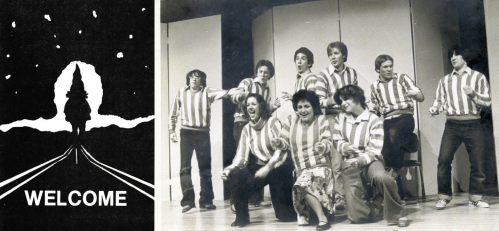
 Produced, written, and performed by students,
  Ass and North by Northwestern. Among the cast were Stew Figa, Jeff Lupetin, Betsy Fink, Suzie Plakson, Tom Virtue, Kyle Hefner, and Dana Olsen. It was the coolest, funniest live performance I’d seen since I hit campus.
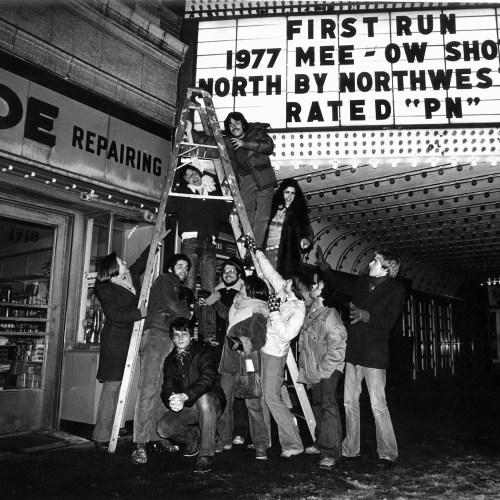 enthusiastic. Mee-Ow was the hippest scene on campus – fast-eclipsing the popularity of
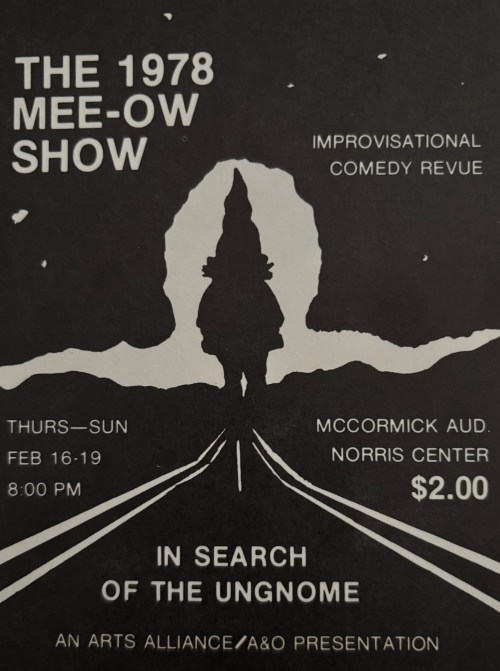 out of hand. Then, Kyle would send us out of the room in groups for a few minutes to work out a rudimentary idea of how to structure a scene from one of these premises.
 If a sketch doesn’t end well, then the next sketch starts from a deficit. It must win back the audience after an awkward moment — and that can kill a running order. That’s why, from those days forward, The Practical Theatre Company has never rested until we’ve done our best to satisfactorily “button” a sketch. (Alas, we don’t always succeed.)
 opportunity for a moment of unexpected, improvised fun with the audience. Confident in the through-line of the sketch and the final button, we could have some improvisational fun when the moment called for it.
 Rush and I shocked the crowd with a sketch called “Biafran Restaurant”. It was a moment in time. We were clad in our underwear, performing a sketch that juxtaposed a terrible African famine with a middle class American dining experience: balancing precariously on the comedic edge as we reminded the audience of an ongoing tragedy. These weren’t easy laughs. And it was glorious. We felt like we were pushing the envelope. And maybe we were. We were college sophomores – just starting to explore our comedic horizons.
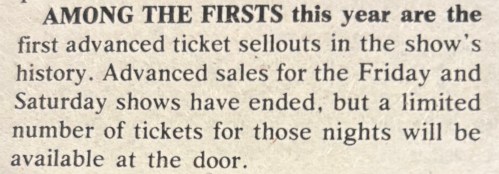 I loved everything about the Mee-Ow Show process: the music, the comedy, the late nights scripting sketches at Rush or Dana’s apartments after rehearsals. And when we performed the shows and the packed crowds laughed every night, I was hooked. I was home.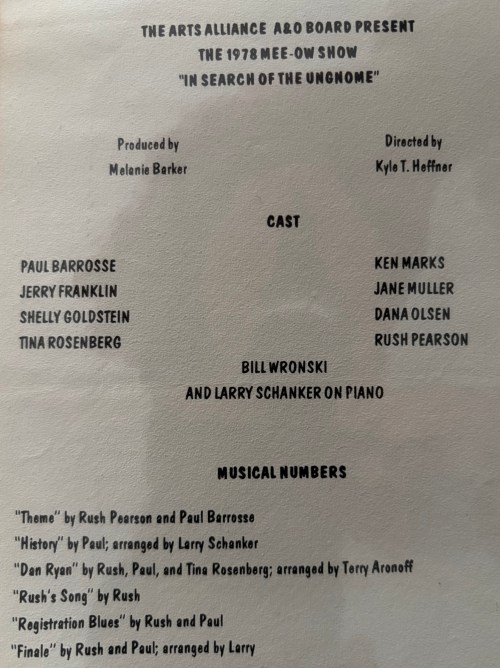


 Paul's Voyage of Discovery & Etc.