
 In his 1940 novel, You Can’t Go Home Again, Thomas Wolfe’s protagonist, George Webber, is an author who writes a book about his hometown – and winds up pissing off his old hometown peeps to the point where he gets death threats. In the novel, Webber comes to the realization that, “You can’t go back home to your family, back home to your childhood … back home to a young man’s dreams of glory and of fame … back home to the old forms and systems of things which once seemed everlasting but which are changing all the time — back home to the escapes of Time and Memory.”
Over the years, the phrase “You can’t go home again” has entered the popular vernacular, representing the notion that once you move away from the place of your birth – especially to a bigger city — it’s impossible to return to your old stomping grounds and find satisfaction. Your fond, gauzy memories of the past will be disappointed by what you find upon your return.
 Well, if Thomas Wolfe had come along with me on my trip back to Cleveland, Ohio this summer, he might have re-written his famous novel. You can go home again. At least you can go home to Cleveland.
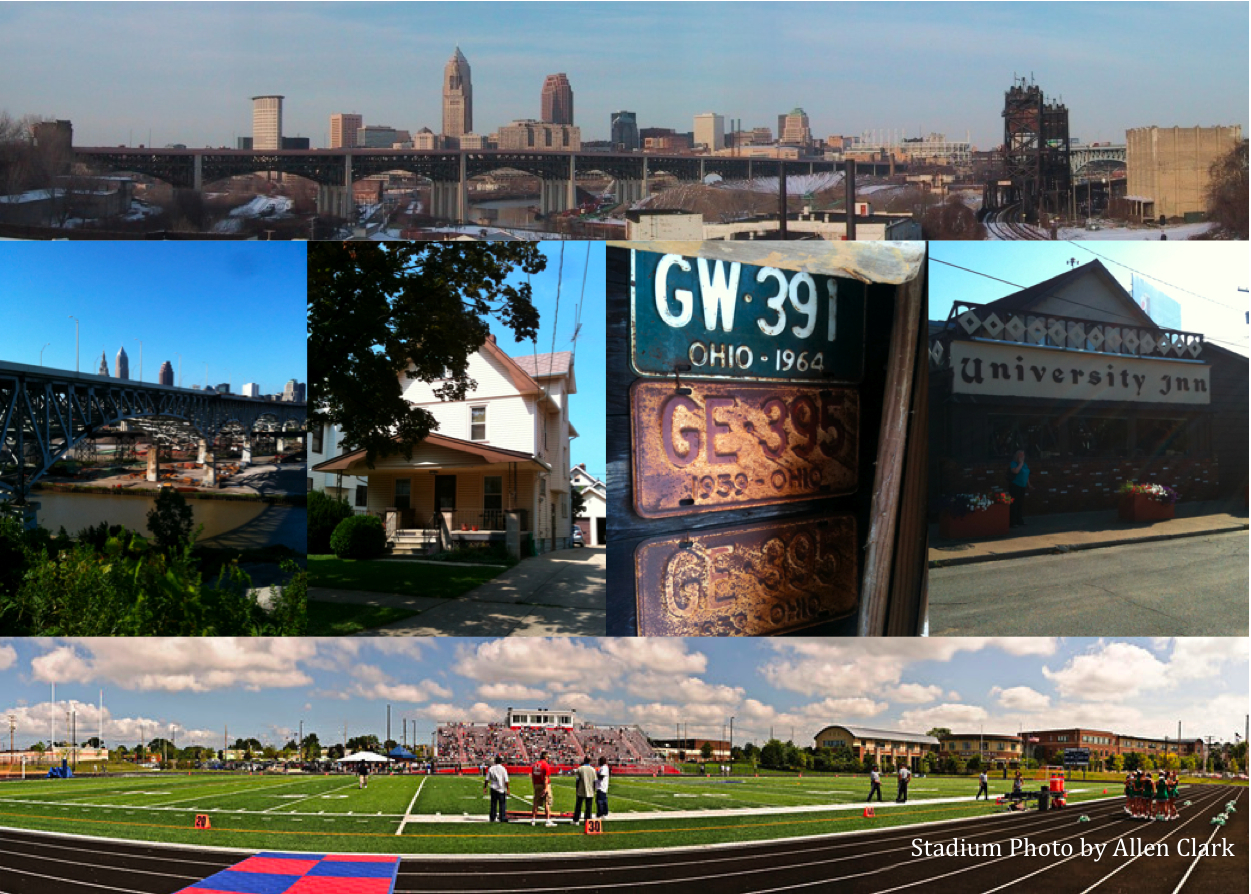
I had two good reasons to return to Cleveland this past August. First, it was time to spend some quality time with my mother and sister – who still live in the same West Side neighborhood that I grew up in. Second, my high school, Cleveland Central Catholic, was hosting an alumni event, culminating in a football game on our brand new football field. (We never had our own home field when I toiled on the gridiron for CCC.) It was a happy confluence of events: a chance to see old friends and family.
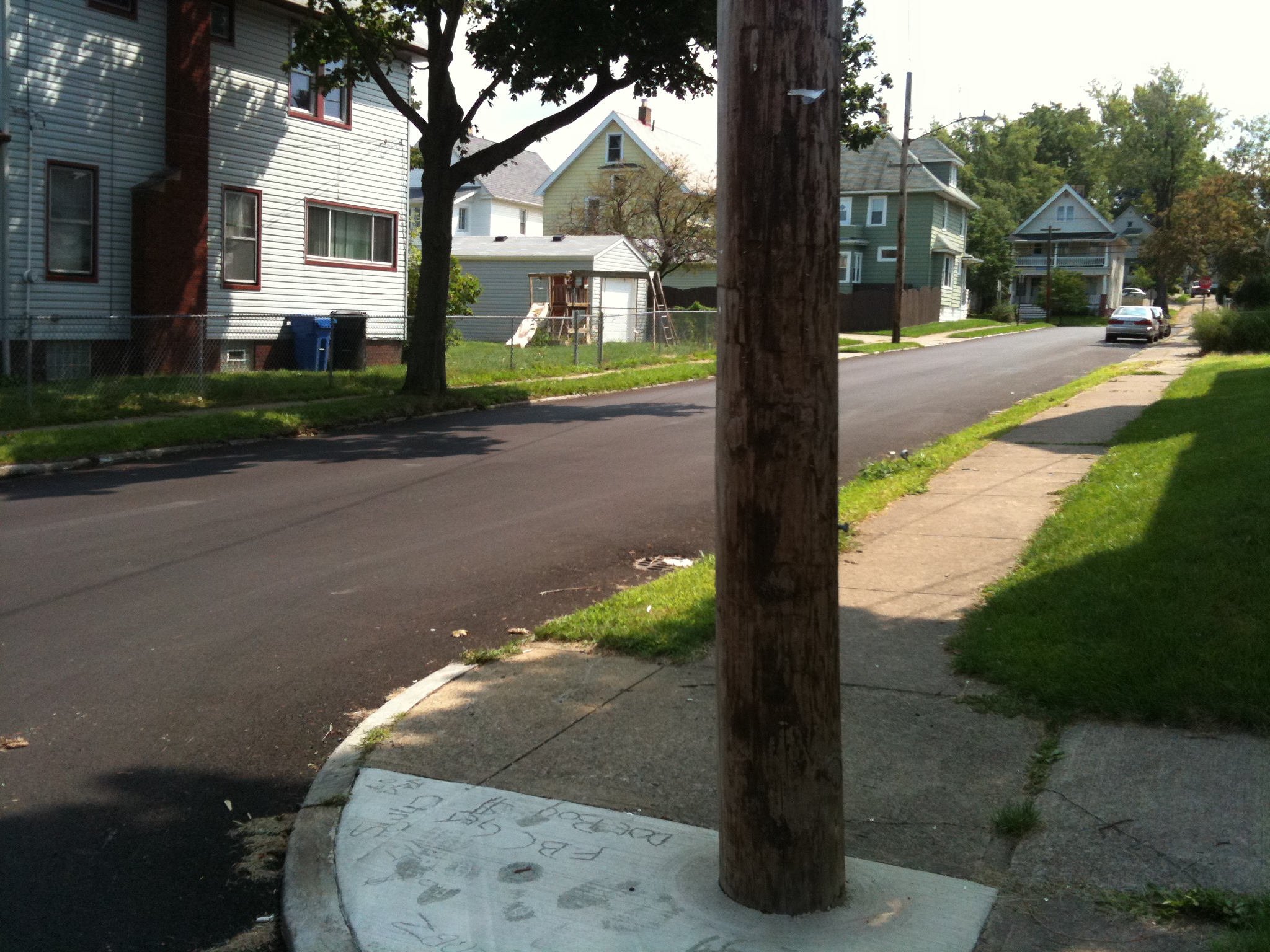 The first impression I got as I drove my rental car into my old neighborhood on Cleveland’s West Side was that the ‘hood had seen better days.
In my youth “Old Brooklyn” was always a working class neighborhood – but that was at a time in the early 60’s to mid 70’s when the working class was more upwardly mobile. The sons and daughters of increasingly unionized factory employees, union steel workers and public school teachers were going to college in record numbers. And I was one of them.
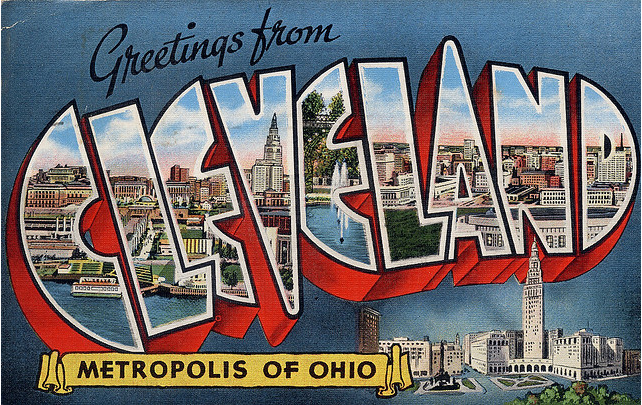 I’ll spare us all the rest of my socio-economic rant. Suffice to say that, like all the big, brawny Rust Belt manufacturing cities that flourished for a hundred years on the Great Lakes, Cleveland has struggled economically in the post Free Trade economy.
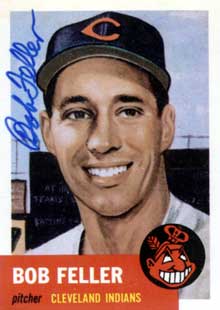 But while it may no longer claim to be “The Best Location in the Nation” – or the largest city in Ohio (the former state capitol backwater, Columbus, now holds that title) — my hometown is a proud old metropolis with strong cultural institutions, from the Cleveland Orchestra to The Cleveland Playhouse, The Cleveland Clinic and it’s beloved Browns and Indians, long-suffering sports franchises with storied histories of heartbreak and glory. It’s the city of Bob Feller and Jim Brown.
‘Nuff said.
The neighborhood I grew up in from first grade until I went away to college is on the West Side near the Cleveland Zoo. My mom’s house is just a block away from the intersection of Pearl Road and State, near the bus barns. (When I was a kid, on a hot day in late summer, the old streetcar tracks could still be seen peeking through the receding asphalt, fanning out from the bus barns.)
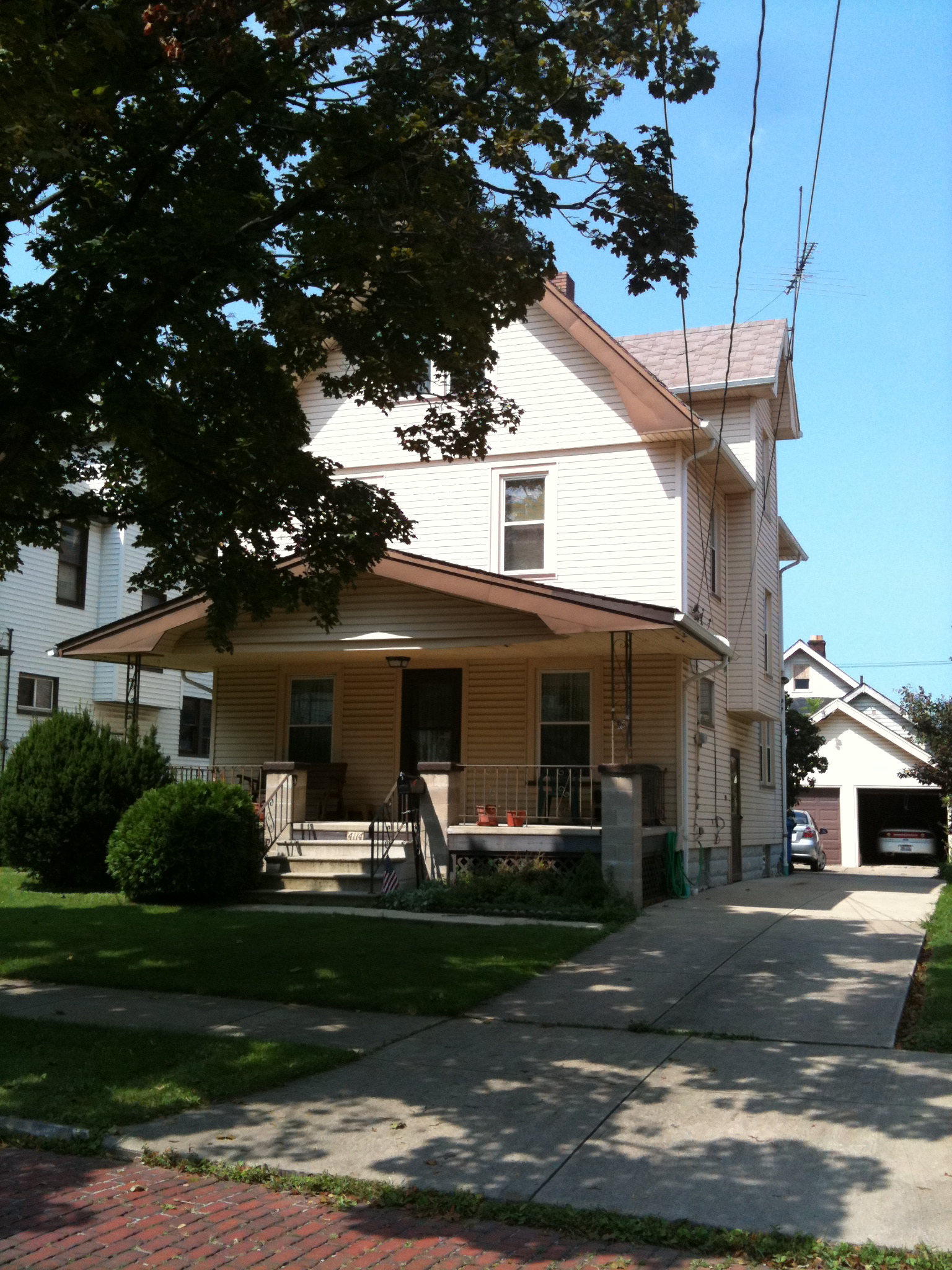 A while ago, folks in my old neighborhood were given the choice of keeping their red brick streets or having them paved with asphalt. My mom’s block voted to keep their bricks. It was good call. Cleveland winters are hell on blacktop. Plus, the brick street gives my mom’s block character. Those bricks were unforgiving when you wiped out on your bike or during games of street hockey and “kick the can” – but they sure look good. Still do.
I took a walk around the neighborhood, down my own Spokane Avenue and along my old paper route on adjacent Henritze Ave. (Oh yeah, remember when ambitious kids could earn some cash and gain experience as young entrepreneurs by delivering the daily newspapers? Don’t get me started.)
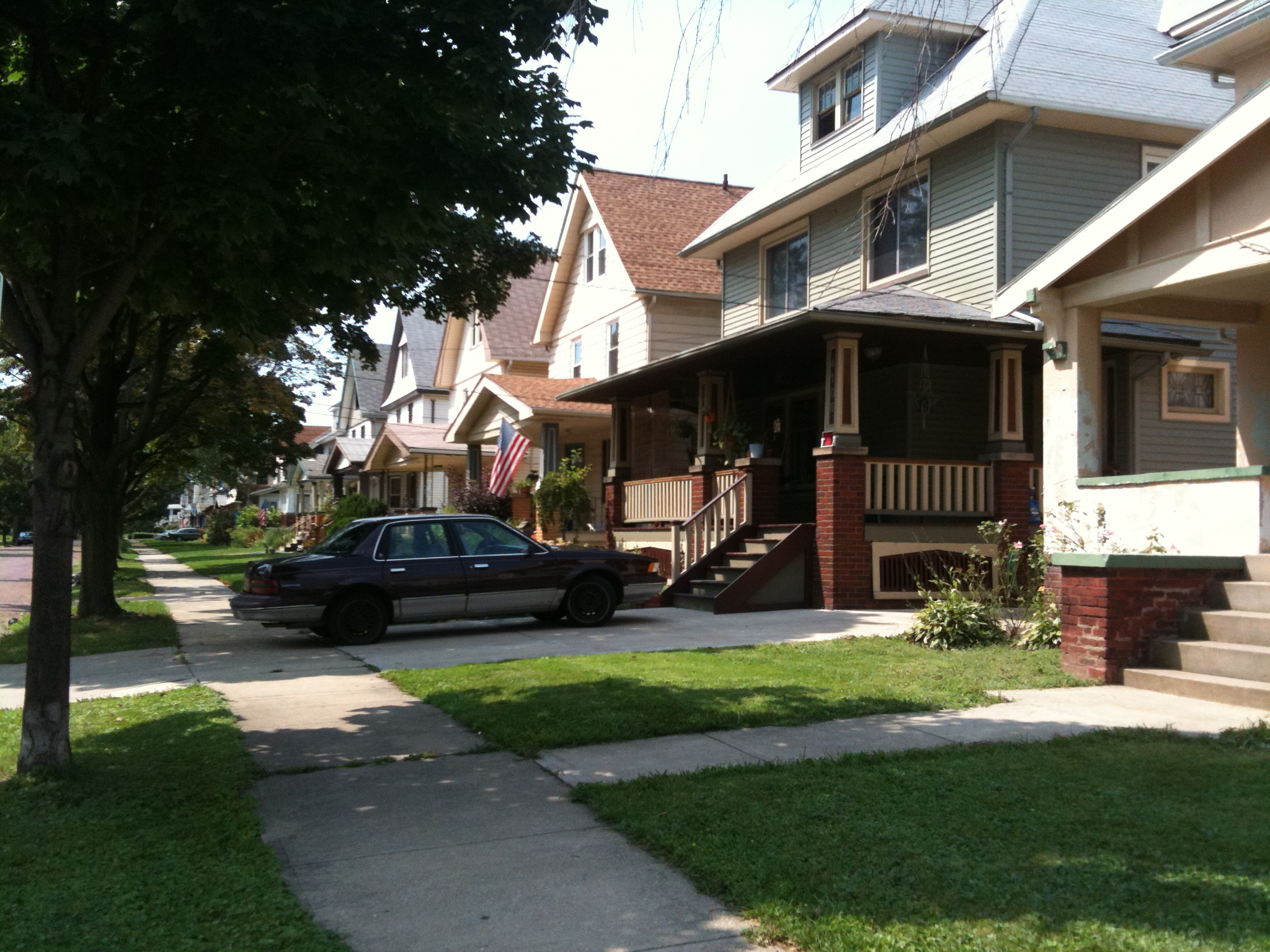 My solitary ramble through this familiar landscape was revelatory. All along my street, and on my old paper route, I saw tidy, well-maintained, middle class homes interspersed with properties that had clearly seen better days. Yet, throughout the neighborhood, I saw people painting their houses and working on their landscaping. I also saw something you don’t see much of in my suburban neighborhood in Woodland Hills, California: porch life. People sitting on their porches and front steps, chatting with neighbors and watching the world go by. And, in this case, one strange, expatriate wanderer.
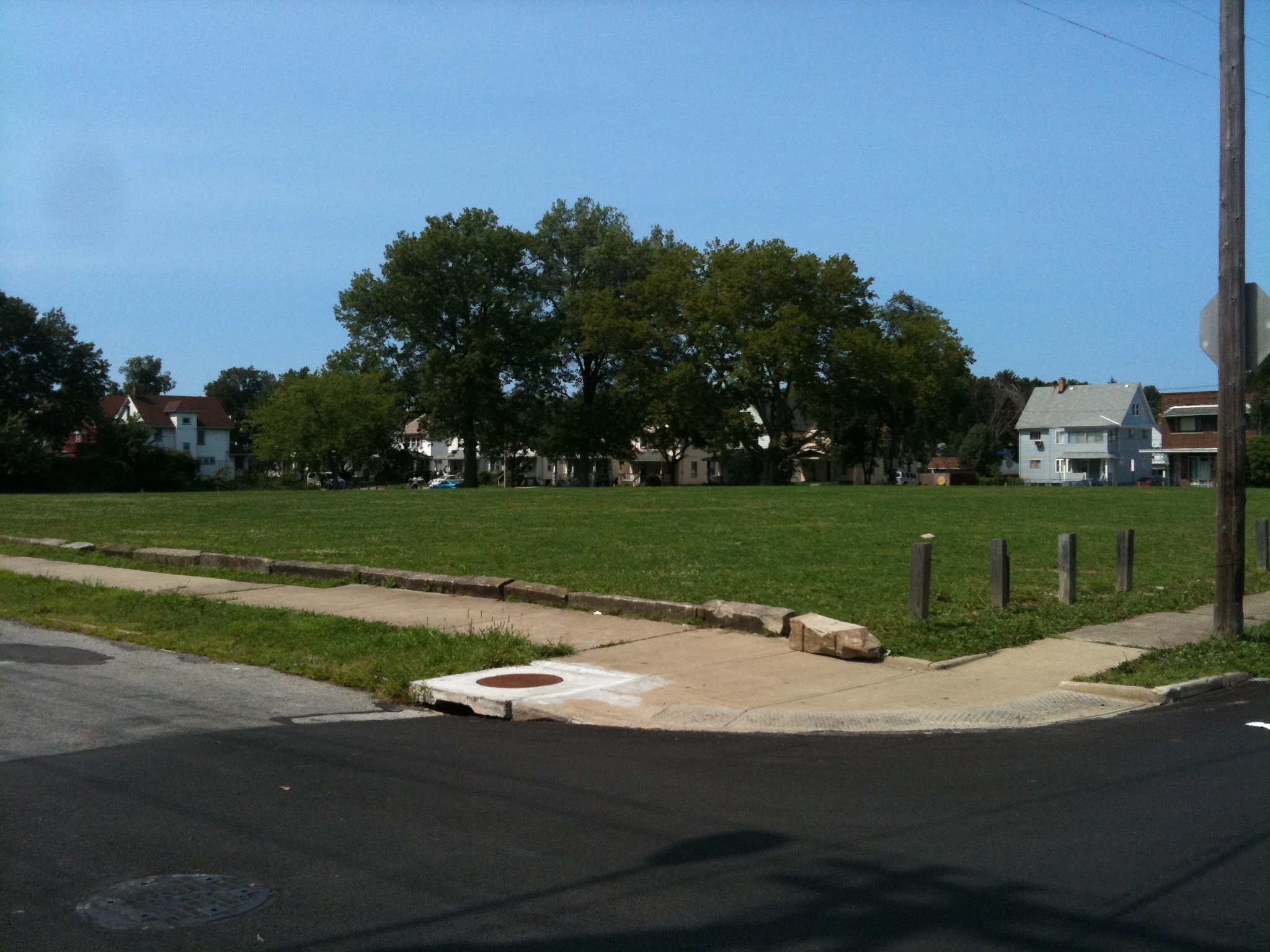 But at the corner of Henritze and West 41st St., I came face to face with a clear and undeniable sign of my neighborhood’s decline: a grassy empty lot that was once Memphis Elementary School. In my day, Memphis School was a vital center of activity in the neighborhood. I never went to school there, but I swung on its swing sets, took advantage of its summer youth programs, and played “strikeouts” against boxes drawn on its walls. And yes, I also learned to avoid the unsavory elements of “The Memphis Gang”. Now, all those childhood memories have been reduced to a patch of lawn.
 When we first moved to Spokane Avenue in the early 60’s, huge, majestic elm trees on each “tree lawn” dominated the far end of our block – their branches reaching across the street to embrace each other. Riding down the street to Scott Tyndall’s house was like entering the forest primeval. Our end of the block had no trees. I remember when the city planted a little maple tree sapling in front of our house.
By the time I began high school, the ravages of Dutch Elm Disease had claimed the big trees down the block – and today, more than three decades later, our little Maple trees now dominate Spokane Avenue. And the tree in front of my house is one of the biggest on the street.
 Ah, my house. I love this house. My family moved here in 1964 (or was it ’65?). I thought we’d moved into a mansion. Built in 1910, as was much of the housing stock in the neighborhood, it’s a 3-story, 1,366 square foot modest Victorian masterpiece – and it served our family of five very, very well. My mom still lives in this house, and she’s done a great job of fixing it up. Adding a bathroom downstairs was brilliant! Renovating the bathroom upstairs was also a great idea.
And leaving my old second floor bedroom untouched is all right with me.
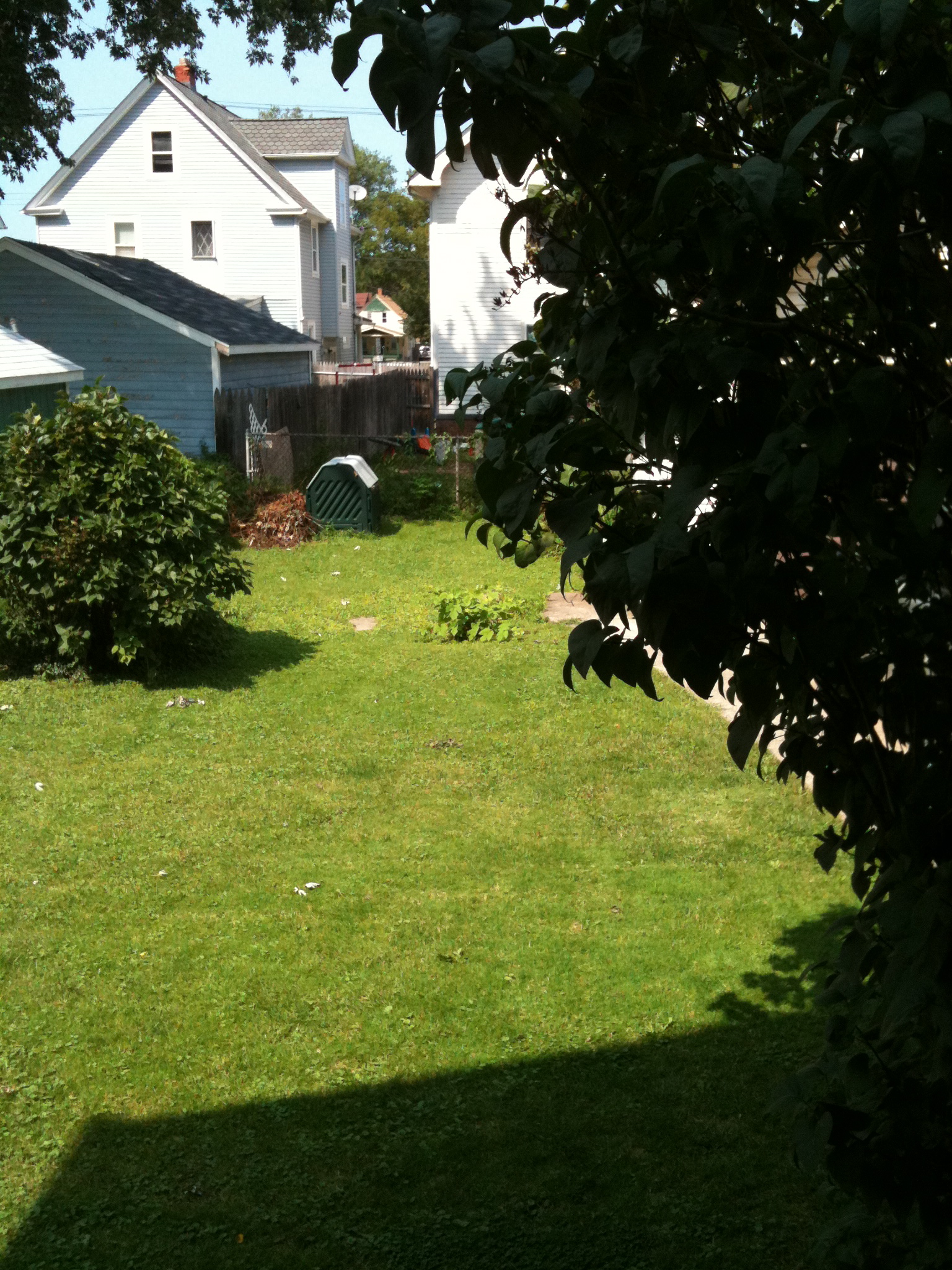 Seeing it now, it’s hard to imagine all the things we did in my backyard.
It looks so small now – but, back in the day, my pals and I found plenty of room to play football (complete with NFL Films-style dramatic self-narration), recreate scenes from “Combat” and “Lost in Space”, play games like “Red Rover” and “Kick the Can” – and compete in our version of “Home Run Derby.”
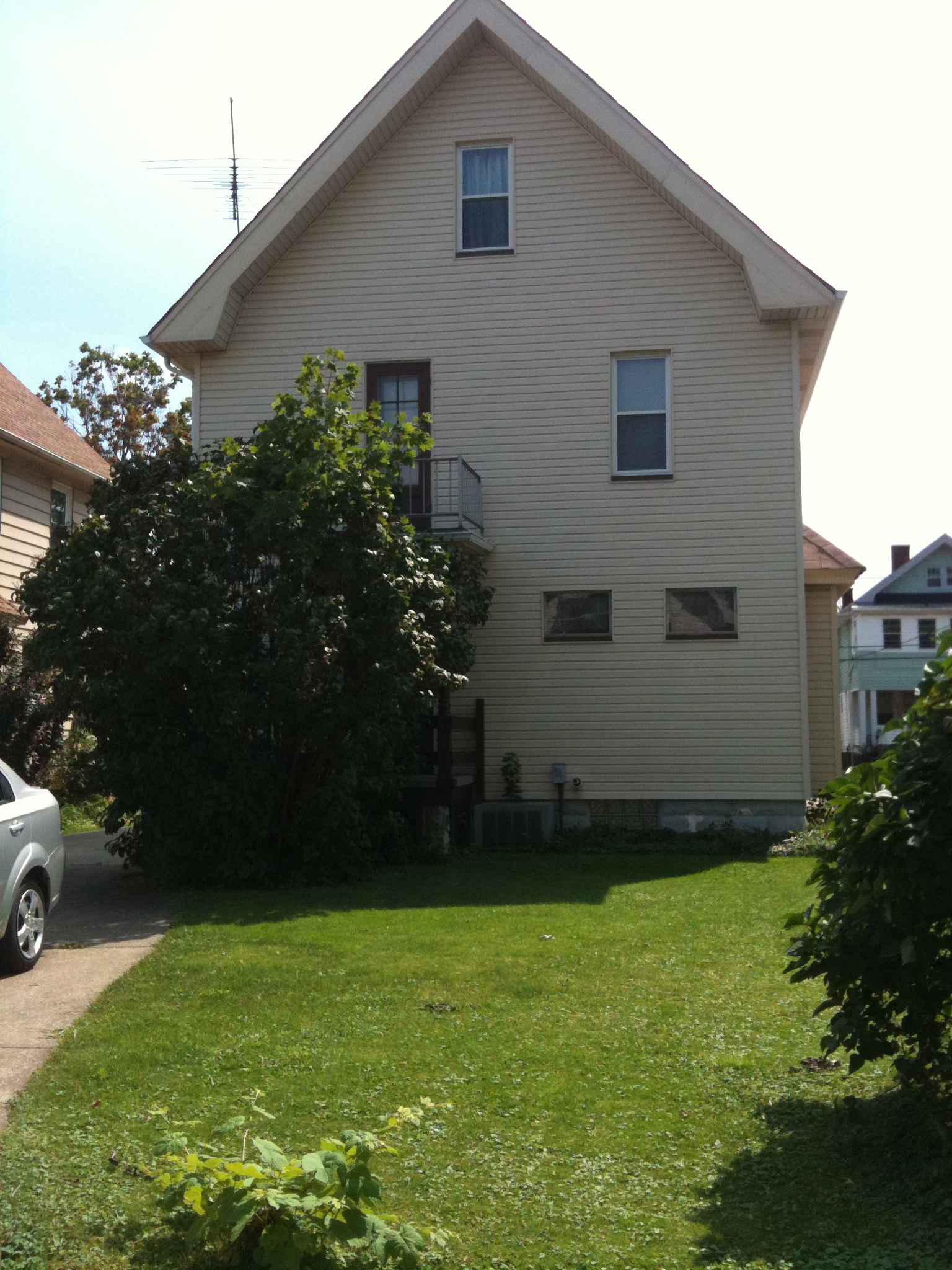 “Home Run Derby” was played with a Wiffle ball. Teams were usually 2 versus 2 — or 3 against 3. The batter stood at home plate facing the back of the house. The pitcher threw the plastic ball – and the batter did his best to loft it onto the second floor porch (a home run) – or onto the roof (also a home run). However, if the ball was hit onto the roof, the fielders had a chance to catch the ball as it rolled off the roof. If they did, the batter was out. Batted balls that hit the house below the second floor were singles. Balls that hit the second floor were doubles. Balls that smacked against the third floor were triples. In every case, if the fielders managed to catch the ball as it rebounded off the wall – the batter was out.
We played “Home Run Derby” for hours. We broke a lot of windows, too.
 That evening, I drove my rental car north to meet some of my high school teachers and friends at Sokolowski’s University Inn, a Tremont area institution that sits on the western rim of The Flats – the industrial flatland through which the Cuyahoga River winds to Lake Erie.
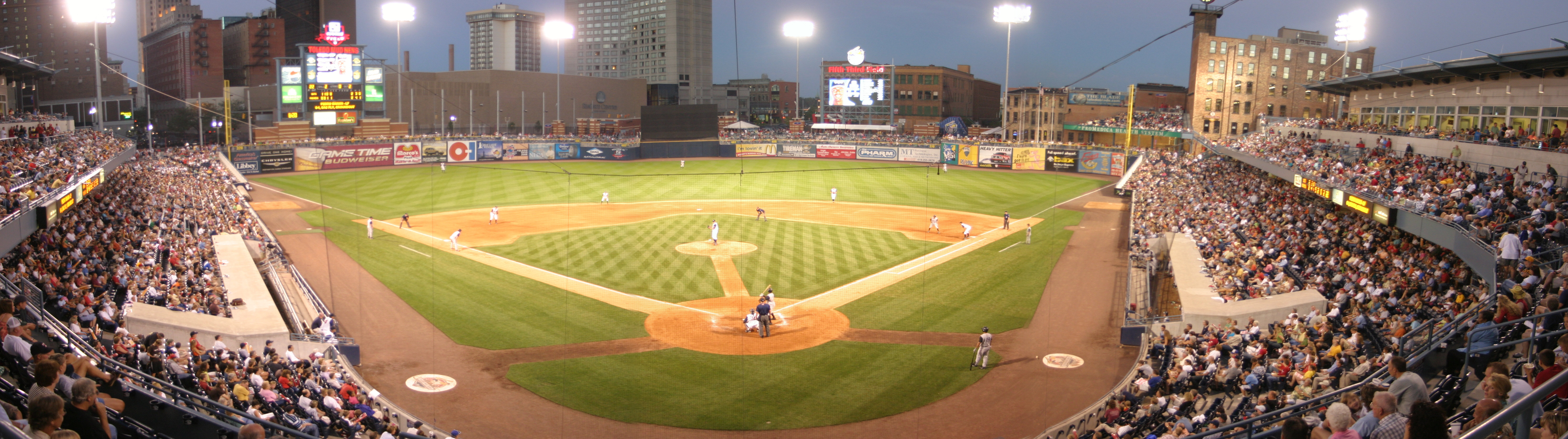
 Across The Flats, in downtown Cleveland, The Jake was hosting a Cleveland Indians game.
Now, I know that a big insurance company purchased the “naming rights” to Jacobs Field — but I’ll start calling that great ballpark “Progressive Field” about the same time I refer to Sears Tower in Chicago as “Willis Tower”. Which is never.
 And speaking of “You can’t go home again” – tell that to former Cleveland Indians star and future Hall of Famer Jim Thome, one of eight Major League ballplayers to hit more than 600 career home runs. On the same weekend that I was returning to my hometown, Jim Thome was at The Jake playing his first game in a Cleveland uniform since the dark day in 2002 when he accepted a six-year $85 million offer from the Philadelphia Phillies.
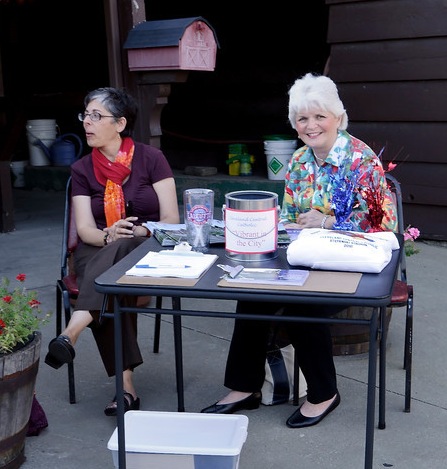
The CCC welcoming committee in front of Sokolowski's. (Photo by Allen Clark)
As Cleveland’s baseball fans warmly welcomed Thome back to town, so too did the Cleveland Central Catholic community gathered at Sokolowski’s welcome the prodigal son who left in 1976 to go to Chicago and attend Northwestern University.
Among the hometown heroes I reconnected with that night were my former Social Studies teacher, the ageless Elda Borroni, my former Art teacher and beloved mentor, Ellen Howard (Ellen Fasko in those days), and my classmate and quirky, creative buddy, Dancin’ Dave Wicinski.
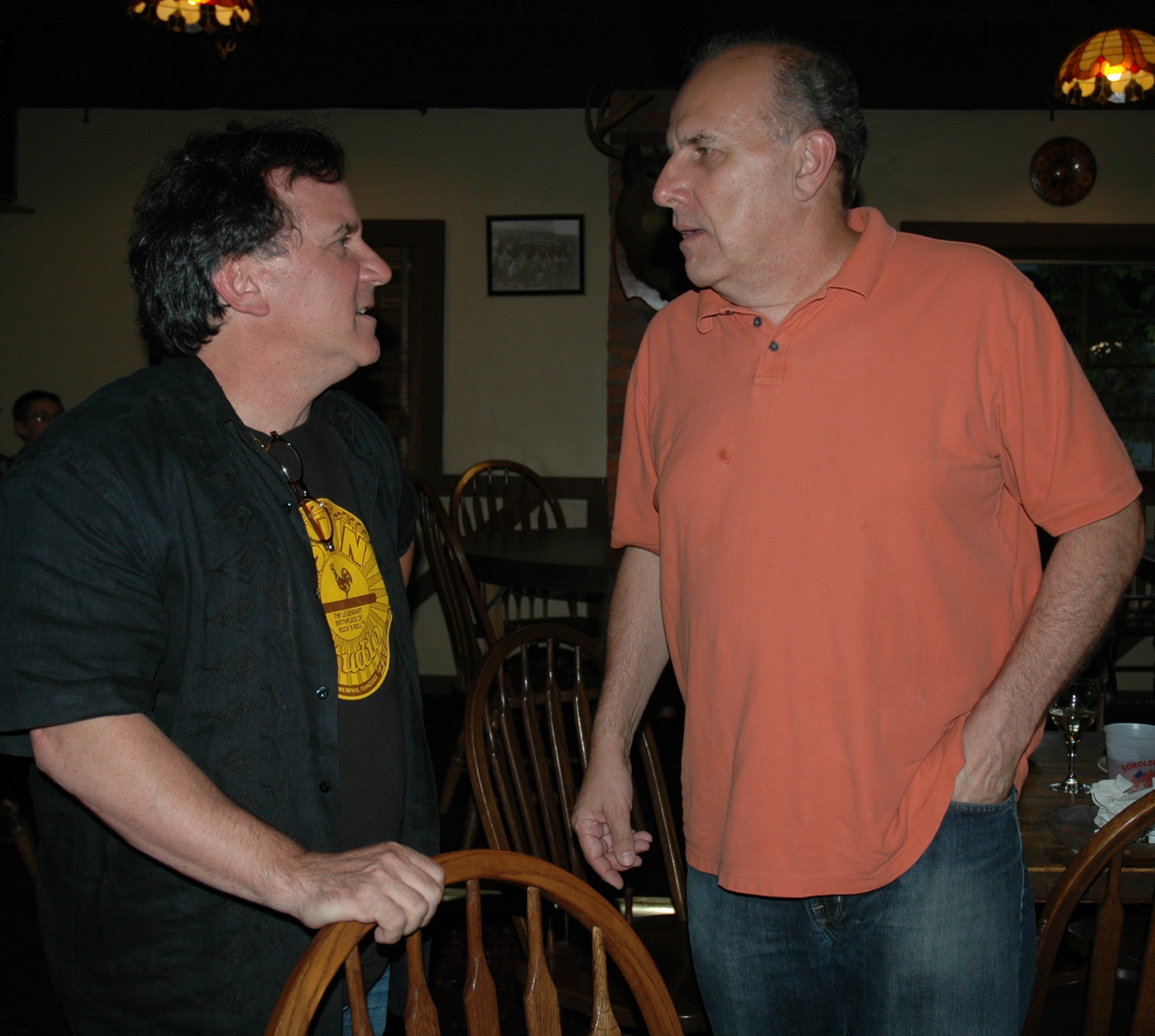
Me and Dancin' Dave, one of my best CCC buddies & a classic character. (Photo by Ellen Howard)

With Elda Borroni, a teacher who challenged me politically and intellectually -- and still does. (Photo by Allen Clark)

With Ellen Howard: my Art teacher, Yearbook advisor, mentor and lifelong friend. If you only have a few teachers like Ellen in your high school years -- you're damn lucky. (Photo by Allen Clark)
 The next day, I brought my mother Mary and sister Nancy to the East Side campus of Cleveland Central Catholic for a back-to-school event for alumni – and a football game at my alma mater’s brand new football field. Before the game, we took a tour of the Forman campus (the former St. Stan’s High School) where I’d spent so much time during my high school years, especially at football practice and in the basement where the Art Department was housed.
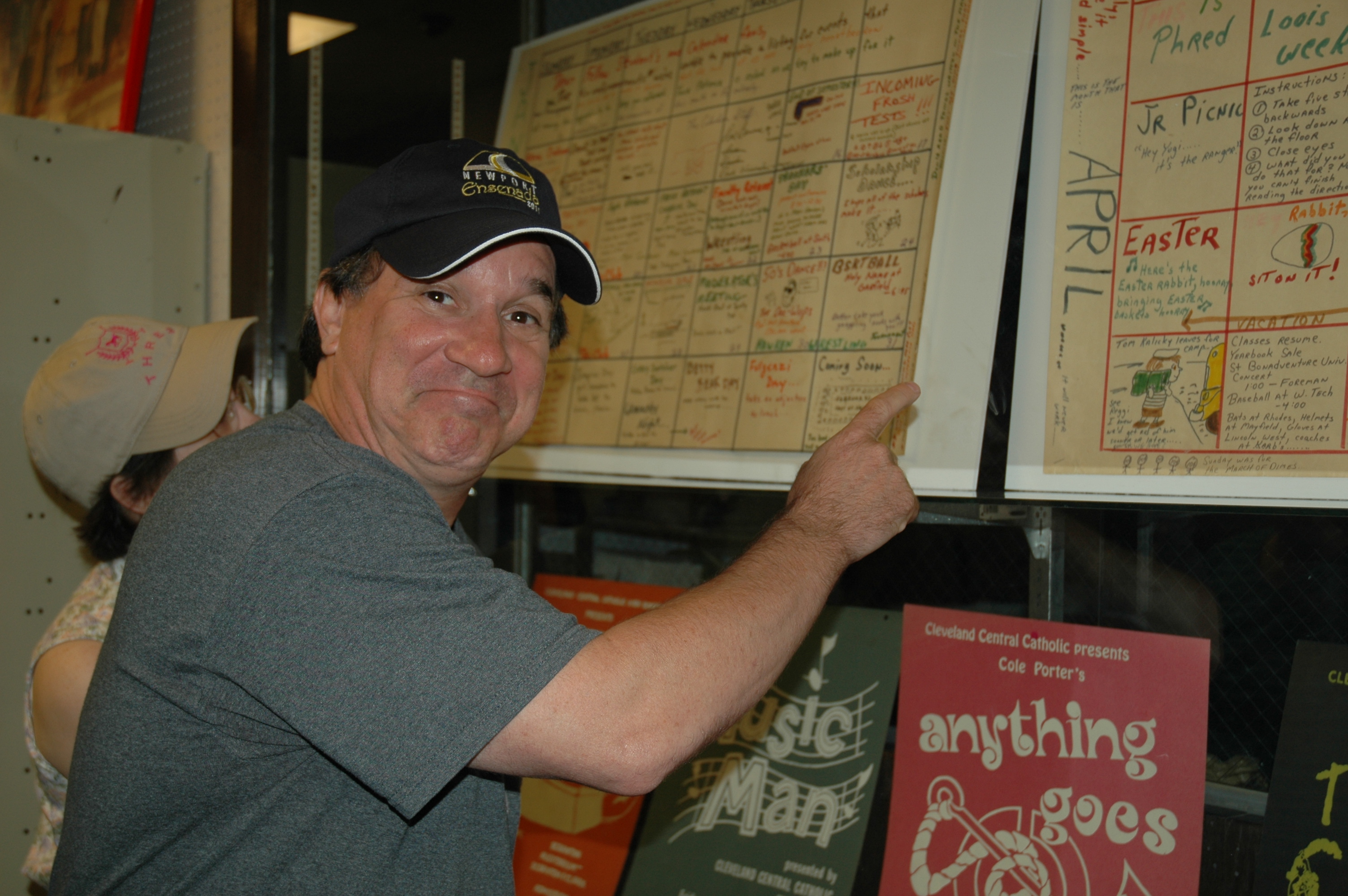
I was thrilled to see some of the school calendars I helped create have been preserved and installed in the Art Department hallway. (Note the "Music Man" poster. I was Prof. Harold Hill in that production.)
 I played football at CCC for four years as an enthusiastic but seriously undersized defensive back and running back. By senior year I was a starting cornerback – and the smallest player on the field in every game I played. And in all those years, we never had our own football field. Our varsity home games were played at Garfield High.
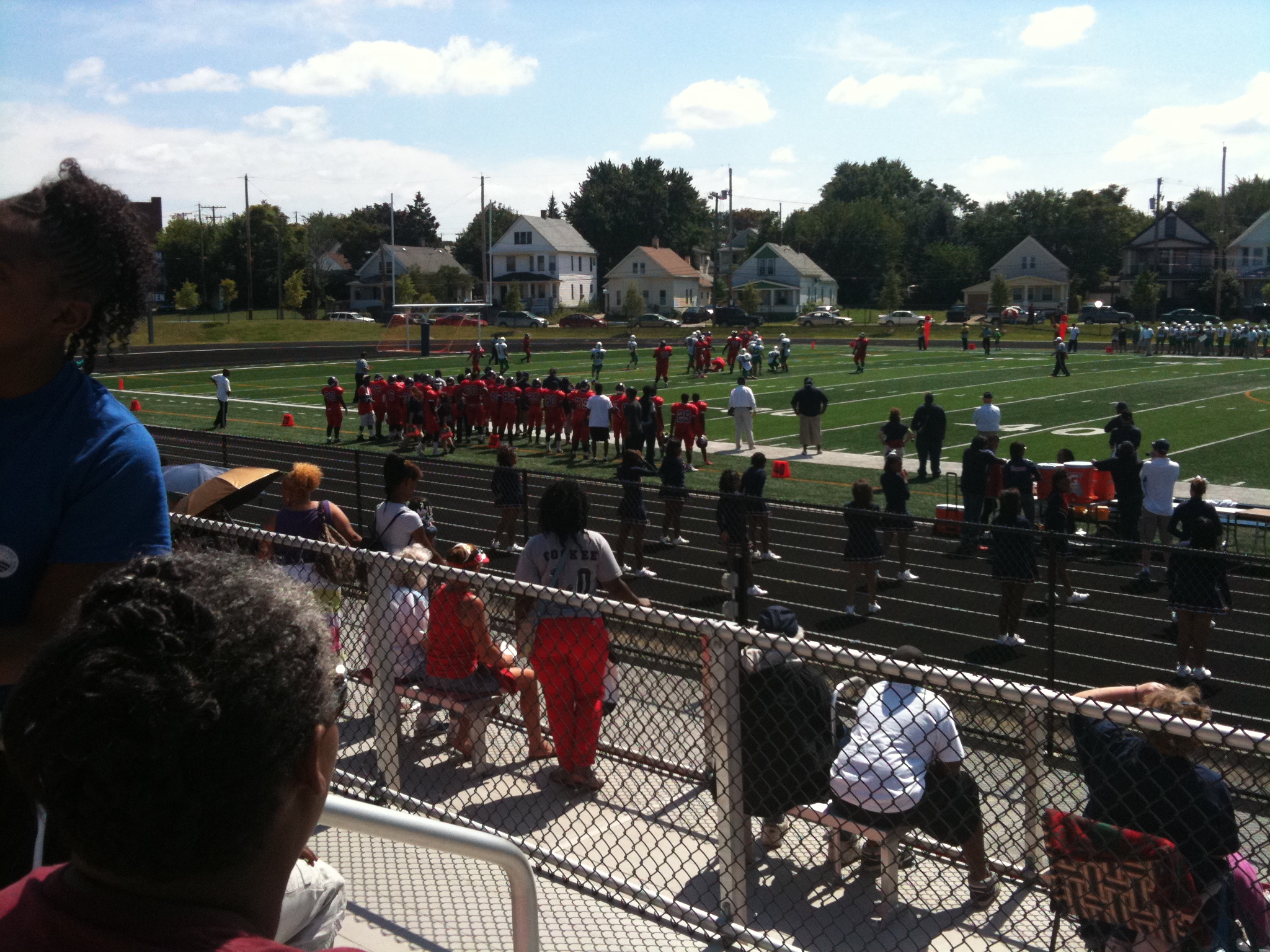
Now, thanks to the generosity and community-minded spirit of the Stefanski family and other CCC alumni donors, we have a splendid new stadium that has helped to rejuvenate a downtrodden, once-proud neighborhood. It’s truly amazing. It’s clear to see that Friday Night lights will be a big deal at CCC.
Check out the following game photos by Central Catholic’s talented official photographer, Allen Clark.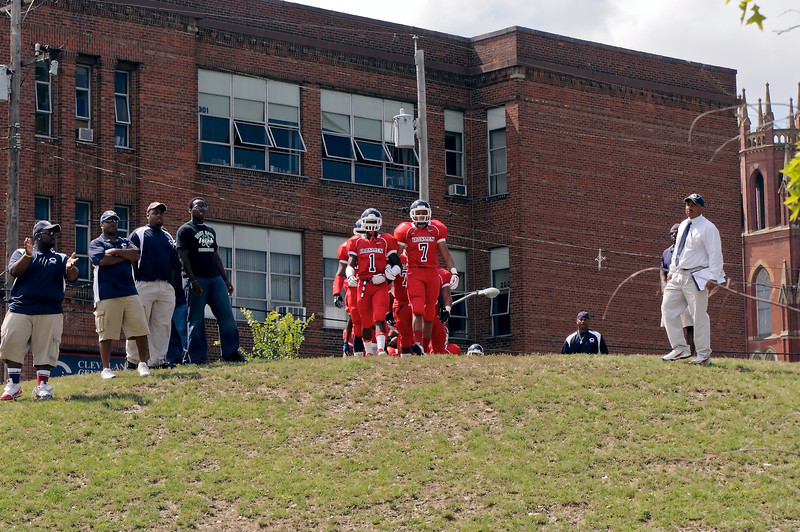


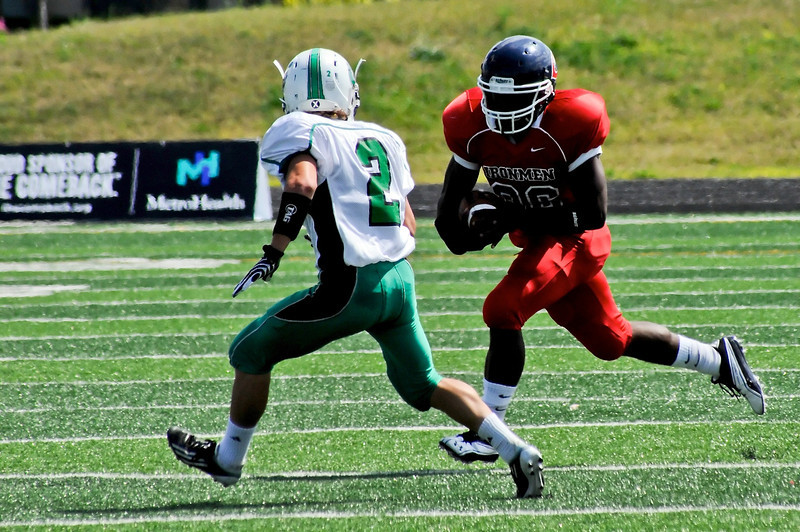


The Cleveland Central Catholic Ironmen won the game, too!
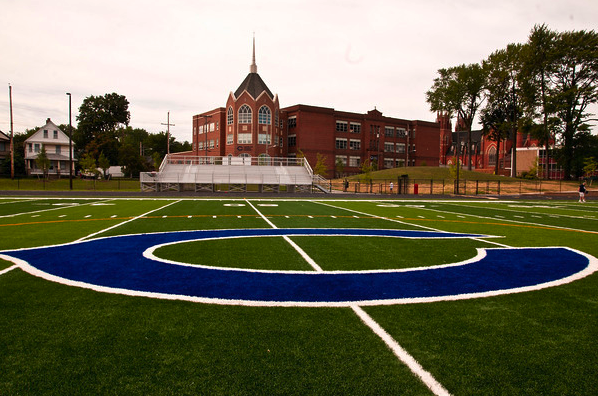
The new football field has truly transformed the whole neighborhood. (Photo by Allen Clark)
 Over the course of the weekend I got to reconnect with my wrestling coach and all-time inspirational hero, Joel Solomon, his younger brother (and my football and wrestling teammate) John Solomon — and Martha Benek, the girl who played Marian the Librarian opposite my fast-talking charlatan, Harold Hill in “The Music Man”. Amazingly enough, Martha is now the librarian at CCC! (I have not, however, been selling marching band instruments from town to town.)
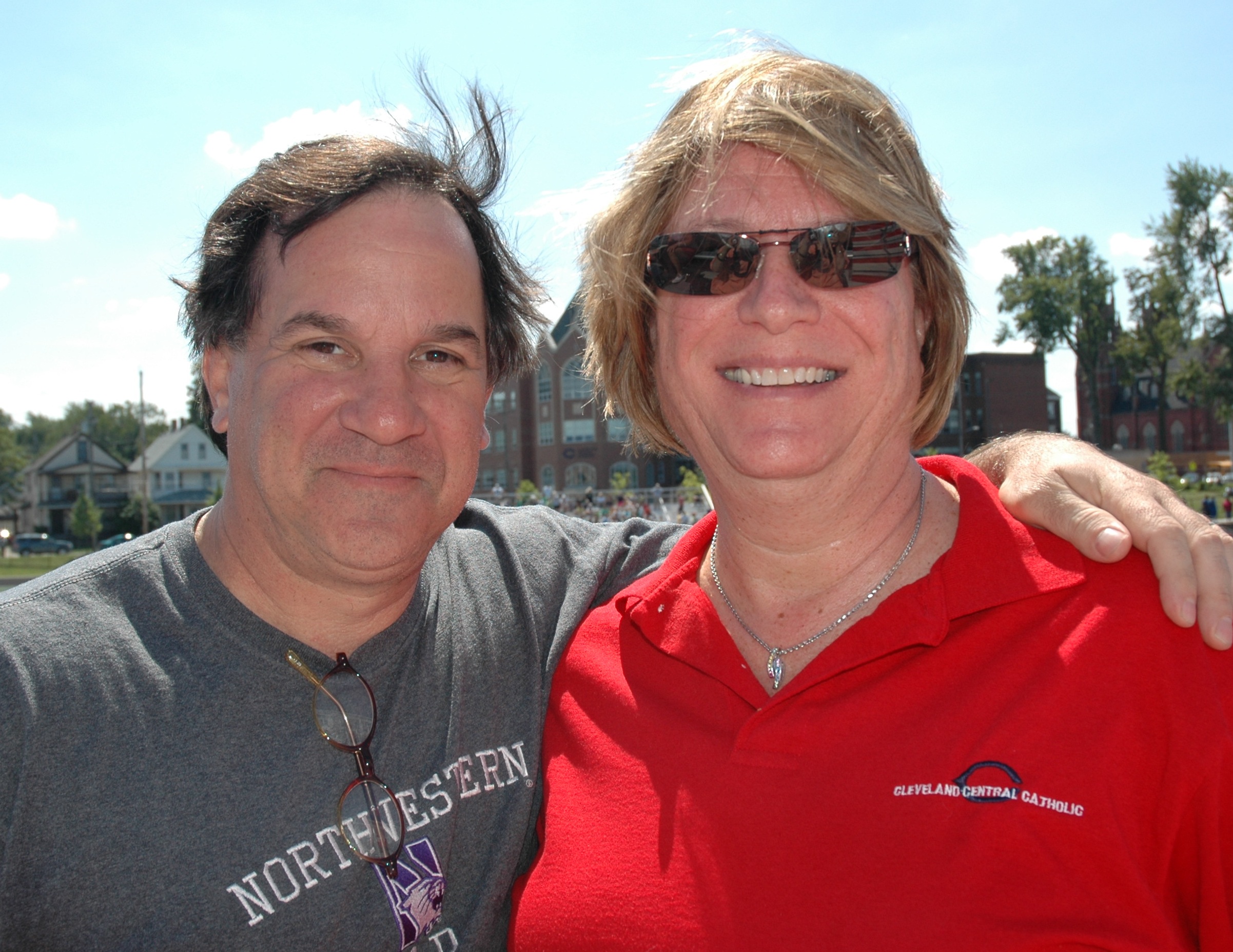
Harold Hill (Paul) and Marian the Librarian (Martha). She's really a librarian!
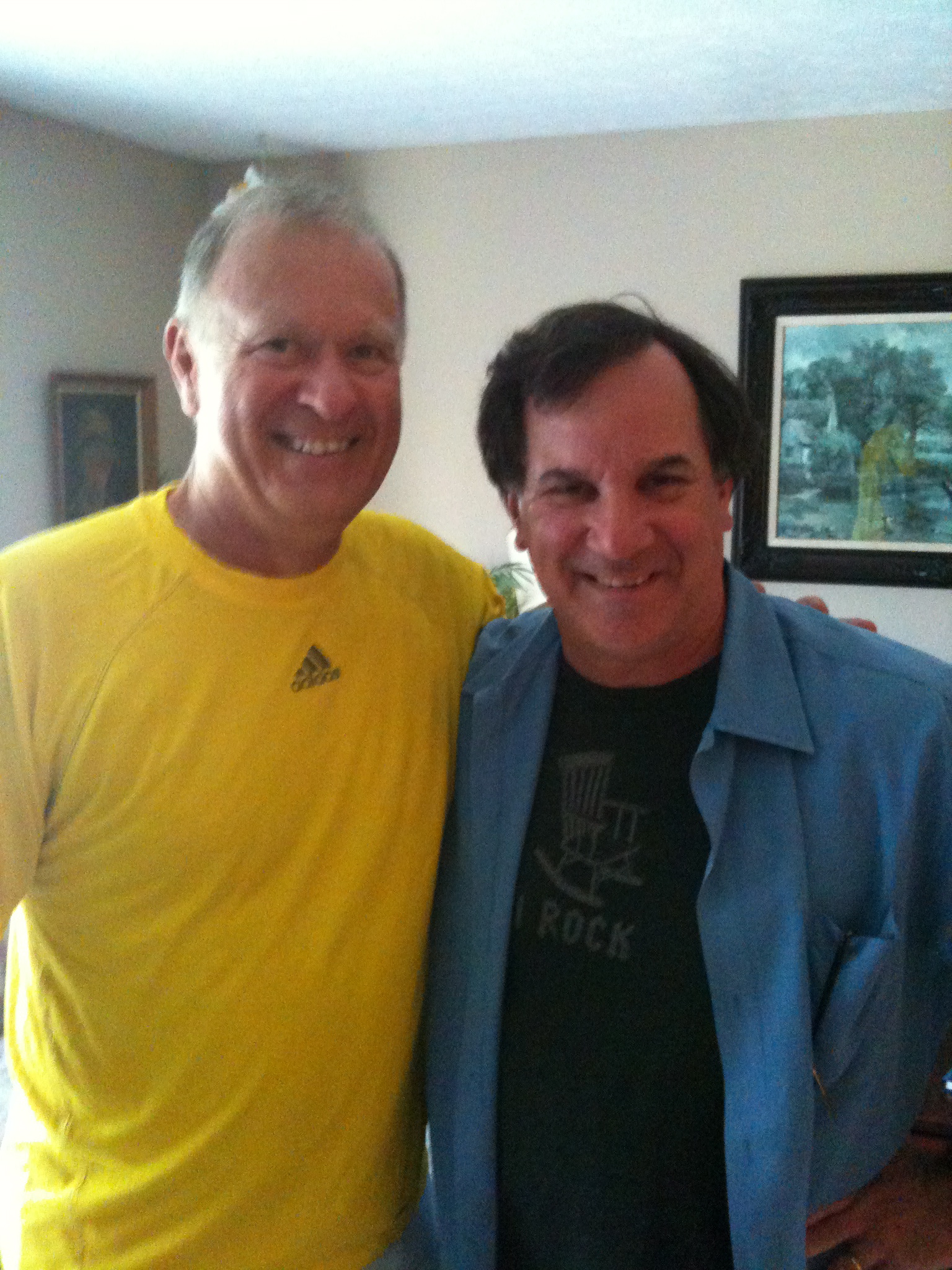 On Sunday, I drove out to Twinsburg, Ohio to spend a delightful afternoon with my former Scranton campus principal, George Costa — and his wonderful and witty wife, my high-spirited high school theatre director, Mary Ann Zampino.
George was the coolest principal you can possibly imagine – and “Zamp” cast me as Marryin’ Sam in “Li’l Abner” and honored me with the title role in “The Music Man”. She was also the person with whom I performed in my first comedy revue.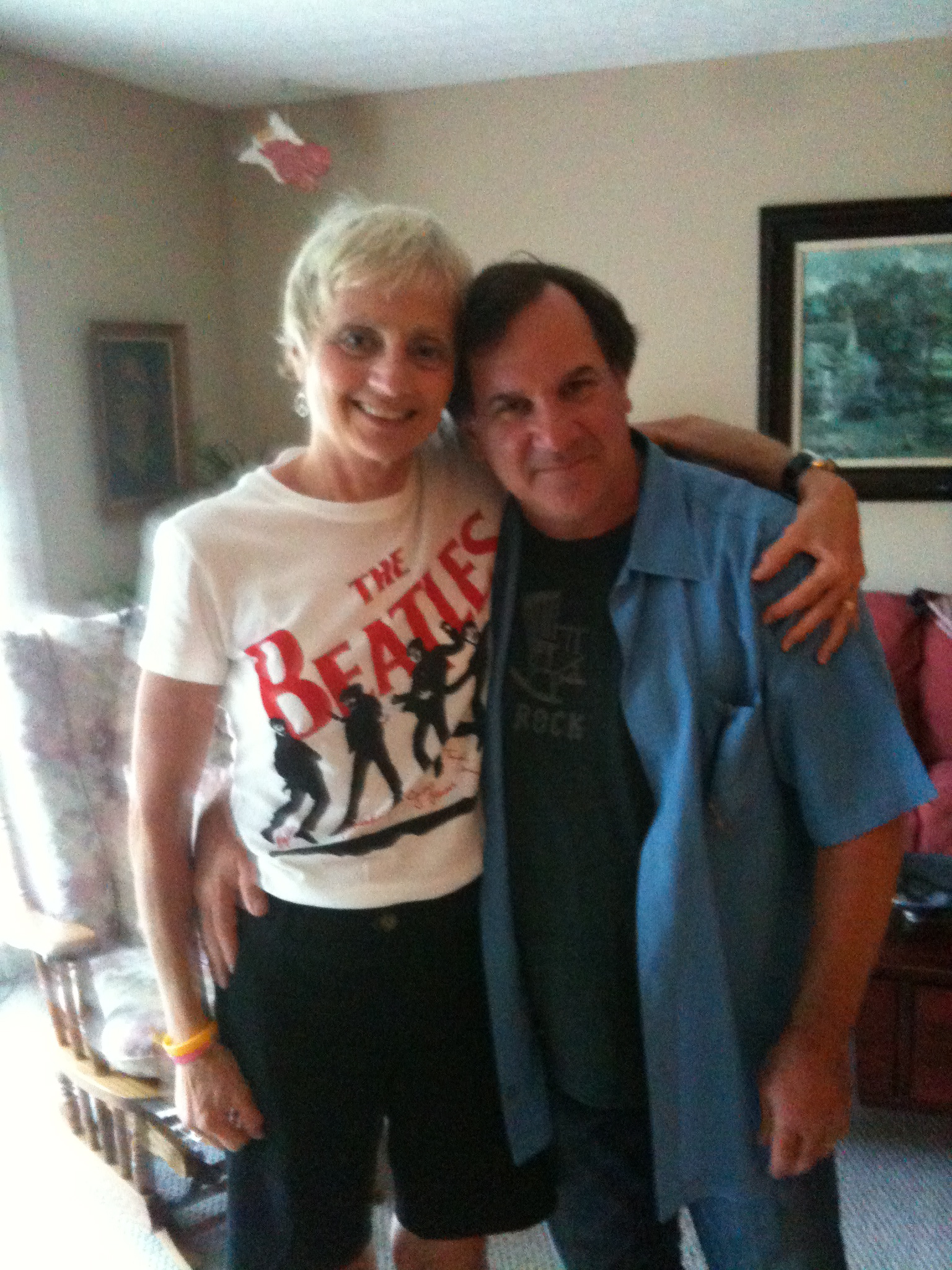
How can you ever say “thank you” to such people? The only way is to see them more often — and share more than just memories.
It was an awesome three days in August spent with wonderful people in the Best Location in the Nation.
You can go home again.
And you should.













 Paul's Voyage of Discovery & Etc.