Tag Archives: history

My First Novel: Chapter Seventeen

Chapter Seventeen

Trying to enter the building Horst had just entered, Mike turned the door handle. It was locked. Of course, it was. Dr. Horst Mueller wasn’t an idiot.

Time was wasting. Mike looked to his right and saw a first story window about fifteen feet away. Beneath it was a large dumpster. It was a chance.

Climbing up onto the dumpster, Mike saw that the window was open a crack. If he could climb through that window without being detected, he could outflank anyone who might be guarding the front door. He needed some luck right now. America needed some luck.

He wedged his fingers into the space at the bottom of the window and pushed upward. The window moved, making a loud squeaking noise. If anyone but a fool was on guard, he’d surely come running toward that sound. But Mike had no choice but to shove the window open, crawl through it, draw his TEC-9 – and blast his way through to that goddamned portal if he must.

But nobody came into the room.

Mike glanced at his phone. The tracker showed Horst was somewhere to Mike’s left. At least that’s where his overcoat was. What floor Horst was on was impossible to know, but Mike knew which direction to go. He checked his TEC-9’s clip, just to be sure. Save for the one slug he put into Horst — Mike was loaded and ready for battle. But, if he got into a gunfight, he’d never be able to sneak up on Horst and Huber. The situation called for getting in close – and quiet.  

With his gun in his right hand, Mike reached with his left and drew his Marine commando knife from the sheath strapped to his shin. He’d drawn lots of blood with it in the Pacific. It was his good luck charm. He’d never left home without it.

Mike could see about twenty feet down the hallway to what looked like it might be the door that Horst would have staggered through. But he didn’t see any guards. That was odd. He figured Horst and Huber would have employed some kind of armed security — and surely their paramilitary pals would be more than happy to provide some muscle.

He couldn’t just rush in like some gung-ho Marine and hope things went his way. He had to know what he was up against. Looking down the hallway, a shadow darkened the wall, followed closely by a second shadow. Both shadows looked to be armed with long guns. The bastards had guards after all.

Moving silently and surely down the hallway, Mike knew he had the drop on these guys. But gunshots would alert Horst and Huber. Mike had to keep the element of surprise — observing the rules he learned on night raids in the jungle. Go in quietly. Get it done quietly. Get out quietly.

Mike saw the guards just seconds before he and the two shadows converged at the front door. He was bigger than either of them, but they were wearing body armor and carrying long guns. They didn’t look like grad students. They looked more like the militia nuts he saw at Murphy’s Ranch.

Flying bullets were random and chaotic. This was a time for what hardened commandos like Mike called wet work. Close-up, physical combat.

He took his commando knife from its sheath.

As the two guards walked past him, Mike bolted from his hiding place, swept in low behind them with his knife — and hamstrung both men. Before they could cry out, he slit their throats. Butchering them without an ounce of remorse. This wasn’t a police matter, or some sordid little case for a private dick. This was war.

But where were Horst and Huber? And how close were they to bringing Hitler and his pals into the future?

Mike moved with purpose in the direction from which the two unfortunate guards had come, his hip complaining loudly. Drops of blood on the white tile floor confirmed he was heading in the right direction. Luckily, the hallway led to just one windowless door. Horst and Huber were likely on the other side. As he got closer, he could hear the muffled sound of electrical buzzing and humming.

Mike’s plan was simple: open the door — surprise the two Nazi masterminds — and pump them both full of lead before they could cause any more misery. Then, he’d place an anonymous call to the cops and get back to Gloria.

Mike gripped the handle on the metal door, turning it as quietly as he could. Again, luck was with him. The door wasn’t locked. The wounded Horst must not be operating at one hundred percent. Whatever timetable he and Huber had for bringing Hitler and his regime into the future would’ve been moved up now that someone was hot on their trail. What if there were more guards on the other side of the door? No matter. Mike’s TEC-9 was on a hair trigger. More guards would only increase the body count.

Mike opened the door quietly and stepped inside — ready to blast away — but there were no armed militia boys to greet him. He crept into a small cloakroom outside a much larger room which bore the title “Physics Lab #7”. Mike could hear the agitated voices of Horst and Huber amid the hum of the time portal machinery.

He locked the door behind him, turning the knob and setting the deadbolt. He wasn’t going to let his prey escape. He crept up close to the laboratory door, listening in.

Speaking in their customary mix of German and English, Huber was telling Horst to shut up about the pain in his wounded shoulder and focus on the work at hand. He called Horst’s impulsive shooting of “some damned old woman” inexcusable. Mike didn’t like hearing anyone talk about Gloria like that, but Huber was right. Horst’s bloody trail would soon lead the cops to those two militia stiffs in the hallway – and right to Physics Lab #7. Mike figured they’d be here inside of a half hour at most.

Sure enough, Dr. Huber was rushing their ultimate plan into action right now.

Dr. Huber went over that plan one more time. Horst was to dial the portal back to January 1, 1945. Huber would emerge from the portal in Berlin and gather Hitler and his top henchmen. If the police started breaking into the lab after Huber is transported to the past, Horst was to destroy this Cal Tech portal. Huber and his Nazi cohort will then pass through the Berlin portal, emerge on today’s date in 2008, and implement plan B.  

Mike understood most of what they were saying. But plan B? The Berlin portal? This was a lot to take in all at once. Could he be hearing this right?

While the two scientists had their backs turned, Huber manipulating dials and Horst taking notes, Mike slipped through the doorway into the lab, ducking out of sight behind some Frankenstein-looking machinery. Should he just kill these creeps now? Destroy their crazy time machine? But what about this Berlin portal? Did Horst and Huber have associates in Germany ready to carry out their plan if for some reason they couldn’t? Plan C perhaps?

As he crouched down, hidden, TEC-9 at the ready, Mike wondered whether it would be a mistake to bump these guys off without truly wrapping up the case: without making sure there’s no way a time-traveling Hitler could escape the fate that history had already recorded? What effect would his miraculous survival and emergence in 2008 have on everything that’s happened in the world since he was supposed to have killed himself in the Fuhrerbunker?

Mike shook his head. These were big thoughts for a guy with less than two years of college.

Just as he did back at Murphy’s Ranch on December 12, 1951 – somehow only six days ago – Mike made a bold decision. He’d follow Huber into the portal. This time into the past. He’d do his best to make damn sure Hitler and his henchmen stayed dead. He wasn’t going to let Gloria take a bullet for nothing. He wasn’t going to let all those gun-toting, racist militia morons rally around the second coming of Hitler. Hell no.

Huber barked final instructions to Horst, who flipped a couple of switches in response. The portal’s machinery hummed at a higher pitch. Raising their hands in salute, the two conspirators exchanged an emotional “Seig Heil!”

Then, Dr. Huber strode into the portal for his trip back to January 1, 1945.

While Horst focused on his time machine’s control panel, Mike crawled unseen toward the portal. Just then, there was a loud banging and shouting at the door. The cops had already arrived! Horst turned his head toward the commotion, freezing for a moment as urgent voices demanded immediate entrance. With Horst momentarily distracted, Mike slipped into the portal.

Ignoring the clamor at the door, Horst turned his attention back to the portal’s controls. He threw one last switch, sending the portal’s occupants back 63 years in time.

As before, there were no sci-fi pyrotechnics inside the portal. Mike experienced no distinct line between present and past. He couldn’t see anything ahead of him. It was as though he was in a cloud. It was surreal. A waking dream.

Mike tried to push away thoughts of Gloria and whether she was going to be okay. He had to focus on staying alive long enough to stop unspeakable horrors from happening. Dr. Huber was somewhere up ahead of him, passing through the portal, moving toward a hideous rendezvous. An appointment with evil.

Suddenly, Mike could see clearly as he emerged from the portal, his adrenaline pumping. He was in the hallway of what appeared to be an underground bunker. Overhead he heard the high-pitched scream of a falling bomb – followed by a blast that shook the ceiling and nearly knock him off his feet. Concrete dust showered him. The smell of cordite was in the air.

Mike was back in the war.

Through the dusty haze and flickering electric light, he saw Huber just five yards ahead of him, getting up slowly from the floor, shaken by the blast. Huber gripped his knee, then began limping down the long hallway. The old scientist never looked back to see if he was being followed. Why would he? He had every reason to think he was alone. And even if he did look back, he wouldn’t see Mike in pursuit. Mike was good at this game.

Upon reaching the bunker’s large, heavy, cast-iron door, Huber sat down and rubbed his injured knee. Outside, the sounds of the air raid continued: the whistling of the falling bombs, the explosions, and the wailing of sirens. It looked like Huber was going to wait until the “all clear” signal sounded before leaving the bunker. It was a good call. It also gave Mike, hidden in the shadows about twenty feet away, a chance to catch his breath and assess the situation.

He had Huber in sight – and the game was on! But Mike had no tracking device on Huber, so he’d have to keep track of his target the normal way. Stalking Huber through the bombed-out streets of Berlin wasn’t going to be easy. For one thing Mike couldn’t trail anybody while dressed in clothes from 2008. He’d have to find something else to wear, perhaps from someone killed in the bombing. Civilian clothes? A uniform? Civies might give him more freedom of movement. If Mike was spotted on the street in uniform, some officer might give him orders he’d have to obey. Orders he wouldn’t completely understand.

Again, Mike wished he’d learned more German growing up.  

Identification was another problem. His California driver’s license, issued in 1948, was worse than useless. It was an absurdity. He’d need to steal an identity. Perhaps from the same corpse who provided his clothes?

Mike’s thoughts were interrupted when another bomb came whistling down, exploding somewhere above the bunker and showering him with another layer of concrete dust. The lights flickered. He was in wartime Berlin alright.

The Allies had been bombing Berlin since ‘43. Mike had read all about those daring daylight raids in The Stars & Stripes when he was at Pearl Harbor, ready to ship out to the South Pacific. It was good news at the time. By ‘45, the tempo of the raids picked up, and large parts of Berlin were reduced to rubble. That’s what was going on up above.

Mike also knew that four hundred miles away in Belgium’s Ardennes Forest, the Nazis’ last big offensive of the war was about to fail. By January 25th – a little more than three weeks away — the Germans will lose the Battle of the Bulge, and retreat to fortifications along Germany’s western border. By April, the Allies will break through the Siegfried Line and close in on Berlin. Russian troops will be marching on the city from the east.

Time was running out for Hitler and his godawful regime. Dr. Huber hoped to throw them a lifeline that stretched into the future. But how did Huber and Horst manage to build a time portal in a Berlin bunker? And does that question even matter now?

Mike thought back to when he was eavesdropping on Horst and Huber at Murphy’s Ranch less than a week ago — back in ’51. Huber had given his protégé fifty-seven years to refine their time portal and build another one in Berlin. As nuts as that sounded to Mike at the time, it now made sense. Horst must have eventually advanced their Cal Tech portal to the point that he could travel back in time months or maybe even years before January of ‘45, ferrying the equipment he needed to build this secret portal in Berlin.

The “all clear” signal had yet to sound. Clearly, old Dr. Huber wasn’t going anywhere for a while, so Mike had a bit more time to think.

It’s possible Huber might’ve gotten permission to build his time portal from the Fuhrer himself. Why not? Hitler always tried to be ahead of the technological curve. He had a secret program to develop Wunderwaffe – high-tech wonder weapons like the supersonic V2 rocket, radio-controlled missiles, and an atomic bomb. If a certified scientific genius like Dr. Otto Huber presented an ambitious plan to build a time machine that would allow the Fuhrer and his top lieutenants to escape the fall of Germany, why not give him a shot?

At this point, Mike was ready to believe anything was possible.

But what would Mike do when the bunker door opened? This wasn’t like storming the beach with a platoon of Marines. Young as they were, Mike and his Leatherneck pals knew what they were going up against on those islands. They’d drilled and trained for it as a unit. They were supported by the navy’s big guns, blasting away at the enemy hidden in the tree line. They didn’t need any ID other than their dog tags — and they didn’t need to find new clothes…

The “all clear” siren began to wail.

For Mike, that siren was not an entirely welcome sound. He would soon be outside, facing lots of unknowns as he tried to stay close to Huber. He wondered if he was in the wrong place at the wrong time. Maybe he should have stayed with Gloria and made certain she was okay. But how could he and Gloria live happily ever after knowing that he’d allowed the worst person in history to travel through time and lead an army of gun-crazy, racist nuts in a new American civil war? The mass killings were already underway. The Bund Boys, Oath Takers, Aryan Patriots and the rest had started slaughtering those who weren’t like them: innocent folk who didn’t think, worship, or vote like them.

Adding actual Third Reich Nazis to that madhouse mix was unthinkable.     

Mike watched from the shadows as Dr. Huber got up slowly, still favoring his gimpy knee. He punched a few buttons on a console next to the door, which was held closed by a series of bars, bolts, and locks. He heard metal grinding against concrete as the massive door slowly opened. A widening shaft of sunlight came through the doorway, revealing a flight of stairs — and chilling blast of wintry air reminded Mike that he wasn’t in southern California anymore.

Suddenly, he had an epiphany. Dr. Huber didn’t know he was being followed. Had no idea who Mike was or what he looked like. That was Mike’s edge. He had to think and move fast. Race to the door, brush past Huber, sprint up the stairs, hide somewhere on the street — and wait for Huber to emerge from the bunker. Then again, wouldn’t that spook Huber? He didn’t even know whether Huber was armed. Mike had scant seconds to act.

Then, a thought flashed in his weary mind — and he caught himself. What the hell was he thinking? The time portal is in this bunker! Why would Mike ever leave it? That would be the dumbest thing he could possibly do. There was no need to track Huber back and forth on his rendezvous with Hitler and company. They’d all have to come back to this bunker – or there’d be no trip to the future. All Mike had to do was stay here and wait for Horst to return with them.

Mike stayed put as Huber stepped through the doorway into the sunlight — and the door closed behind him with a slam that echoed down the long halls of the bunker. The door’s closing turned out all the lights and triggered a mechanism by which the locks, bolts, and bars all slid back into place, sealing the door again.

Now, Mike had no choice. He was stuck in the bunker for the duration. He’d use the time to plan his reception party for the Nazi honchos. He felt for his good-luck knife strapped to his leg. Still there if he needed it. He checked the ammo in his TEC-9 and Horst’s Luger. There were forty-eight rounds left in the TEC-9 and seven in Horst’s Luger. The only bullet missing from the Luger was now in Gloria’s arm. His thoughts returned to Gloria. Was she okay? Was she alive?

Of course, she was alive. He couldn’t entertain any other thought.

Dog tired, Mike sat in the now-quiet darkness. He thought about the bombing raid: a moving blanket of destruction and death. It sounded like the bombers had made two runs over the area. Those flyboys, he figured, must not be all that threatened by what was left of Jerry’s air defenses. Goering’s vaunted Luftwaffe was short on fuel and losing planes and pilots it couldn’t replace. It was no longer capable of shielding the Fatherland. So, the U.S. Eighth Air Force was piling it on.

One month from now, fifteen-hundred American bombers would hit the center of Berlin in one of the largest bombing raids of the war. Mike didn’t want to be in town on that deadly day.

His stomach grumbled. It was way past lunch time.

An awful question chilled Mike’s blood. What if there wasn’t any food in here? If Huber didn’t come back for days – or weeks — how would he survive? Mike took a deep breath. Panic wasn’t going to help. He had to keep positive. Rather than stalking desperate Nazis through the smoldering ruins of Berlin, he’d hunt for food in the bunker.

He had reason to be optimistic. Bunkers like these were built for survival, right? What bomb shelter wouldn’t be stocked with lots of stuff to eat? But it was nearly pitch-black inside. There was now no light in the bunker aside from a thin line of sunlight above its closed iron door. That thin shaft of light didn’t travel very far into the interior. Mike had hundreds of feet of blackness to explore.

He reached into his pocket and found a matchbook. Knowing he had to use this limited resource wisely, he struck a match — which flared, shedding a faint light down a long hallway. The time portal was somewhere back there in the deepest, darkest shadows. But right now, time travel wasn’t top of mind. Mike needed light and warmth. He had to build a fire, then search for food. Starvation wouldn’t help him complete his mission.

With no idea when Herr Huber might return with the Nazi hierarchy in tow, Mike had to stay alive long enough to prevent the insanity of a Third Reich restoration in America. And hopefully, somehow, he could return to Gloria. All he needed was some light in the darkness — and as much good luck as he could possibly get.

Mike walked slowly down the hallway, lighting a new match every twenty-five feet until it burned his fingertips. Once he got a good look inside the bunker — he’d have a better grip on his situation.

1 Comment

Filed under Adventure, Art, Classic Film, History, literature, Novel, Politics, Truth

My First Novel: Chapter Nine

Okay, folks. So, we never quite got to 160 “likes”. We’re stuck in the 150’s. But some readers have reached out to ask when I’ll post Chapter Nine — so here it is! If you are reading these chapters please let me know by “liking” these posts, either on this blog or on my Facebook page. Thanks for reading!

Chapter Nine

Shivering in the falling cold, Mike was relieved to see Horst walk out to the waiting Mercedes. But as the driver opened the door for Horst to join Huber in the backseat, Mike’s momentary relief turned to alarm.

How could he follow Huber’s car when his stolen Impala was hidden several blocks away? By the time he’d retrieve it, Horst and Huber would be long gone. And he had no idea where the two old Nazis were going.

His next thoughts came fast.

Were they going back to Murphy’s Ranch? Then again, the portal might not be there anymore. They may not even be headed to a time portal. They could be meeting with more conspirators, maybe at another time portal. Mike had no idea. He wished he could call the cops for backup – but it was hopeless. What he’d seen and done in the past few days was too nuts to be believed.

Mike knew he was on his own.

He took out his notebook and, driven by training, wrote down the plate number of Huber’s Mercedes. As Huber’s driver started the car, Mike’s iPhone vibrated. The screen lit up with a message: “Old Griffith Park Zoo.” Mike knew nothing about old Griffith Park Zoo, but he knew where Griffith Park Zoo was back in ‘51.

Mike figured maybe Horst and Huber didn’t know their messages were going to the phone that Horst had lost — and he had found!

It was a lucky break. One Mike desperately needed.

As Huber’s car drove away, Mike ran to where he’d stashed his Impala, hot-wired it again, and made the half-hour drive to Griffith Park — taking side streets and staying off the highway. He knew this part of town like the back of his hand. That was another lucky break.

He could use several more.

A little after 5:30 PM, Mike parked his stolen Impala behind the Griffith Park Merry-Go-Round, which was deserted at this late hour. Mike had last seen it more than six decades ago, and it now looked worn and dilapidated.

Mike felt a lot like that vintage carousel.

The small corral for the pony rides looked almost like it did when he was a boy, but the lights in the parking lot weren’t there when he was a kid. At least not these lights. They were brighter than he’d like them to be right now. Trailing his two Nazi targets, Mike preferred the concealing darkness. He moved as fast as he could, walking uphill toward where he knew the zoo should be. Would he find Horst and Huber there? Was he too late?

Mike reached into his jacket for his .45. He didn’t know what to expect.

Cresting the ridge, the rising moon illuminated an eerie scene. The concrete, cave-like, animal enclosures Mike remembered as a child were still there — but all the bars were gone. The animals were gone, too. It was a familiar scene – and it was also very new. Another stark reminder that he was a time traveler.

Mike moved toward the ruined enclosures, careful to stay out of sight. Their concrete walls were covered with a lot of the same crazy, avant-garde paintings he’d seen at Murphy’s Ranch after he passed through the time portal. Was this some wild, city-wide art project? The cold night breeze carried the sound of voices ahead — stopping him in his tracks.

The voices were coming from the other side of a low wall, about five feet high. In the moonlight, Mike could make out silhouettes on the other side of the wall.  He crept up behind it — and took out his .45 for insurance.

He could hear Dr. Huber speaking in German. Horst was doing most of the talking, but he was doing it in English. Mike couldn’t tell how many people were in this clandestine meeting but, besides Horst, he heard the voices of at least a half dozen others. He got out his notebook and, in the rising moonlight, started taking notes on what they were saying.

Of course, they were all talking crazy.  

Compared to Horst and Huber, the other voices sounded much younger. They were all male, though that didn’t mean no women were present. There was just enough light that Mike could see who they were, but he’d have to expose himself to get a better look – and he didn’t dare do that. He was likely outnumbered. Apparently, these guys were members of a paramilitary group calling themselves “The Bund Boys”. They were armed and ready to be part of whatever plot the two old Nazis had cooked up.

The Bund Boys. Mike was well-aware of who “The Bund” were. In the years leading up to the war, The German American Bund backed the Nazis and resisted American intervention against Hitler’s regime — even after the antisemitic horrors of Kristallnacht in ‘38 and the Blitzkrieg invasion of Poland the following year.

The Bund held big rallies in American major cities with Nazi flags flying and stiff-arm salutes. Twenty thousand of these fanatics gathered in New York City for a rally at Madison Square Garden in ‘39. The Nazi followers at Murphy’s Ranch were cozy with The Bund. But after Pearl Harbor, The Bund lost its mojo in America – and the Murphy’s Ranch cabal was rolled up by Hoover’s G-men.

Now, Horst and Huber were conspiring with 21st century American Nazis. The very thought disgusted Mike. Hadn’t he, and millions of Americans, fought to bury Nazism and Fascism once and for all? Yet, the toxic ideology of white supremacy and fascist rule represented by the swastika was still alive in this abandoned corner of Griffith Park – sixty-three years after The Fuhrer blew his brains out in his Berlin bunker.

In the company of these avid young Nazis, neither Horst nor Huber said anything about time travel or their plan to transport the leaders of the Third Reich into the future. Instead, they were talking about something The Bund Boys were calling “Helter-Skelter”.

“Charlie Manson had the right idea,” said one of the Bund Boys. “But he was a nutcase relying on a bunch of strung-out hippies to put his vision into action. That don’t mean he wasn’t right about Helter-Skelter. It you do it right, you can start the race war. There’s a hell of a lot more of us than the coloreds and the foreigners and the faggots. And we’ve got a shit ton more guns. We’re just prepping for the moment when we can touch it off.”

“We’re all in with you two on the white man getting back on top in this country,” said another Bund Boy. “We know old Horst here is a good man – and he told us you can help us. He says you’re some kind of bad ass Nazi genius. That’s why we’re here. We just wanna know how you can help us.”

The guy was obviously addressing Dr. Huber. Huber’s English wasn’t good, so he spoke in German as Horst translated. Truth be told, the Bund Boys probably loved getting the straight dope in Hitler’s mother tongue.  

Through Horst, Huber said he’d spent a lifetime preparing for this great moment, and if they all worked together, the day was coming soon when white Christian men would once again rule America and ultimately the world. Democracy had shown itself to be too weak to oppose godless Communism in Russia and China, and too soft on so-called “civil rights” and “equal opportunity” here in America. The laws of nature don’t recognize equal opportunity. Natural law is the survival of the fittest. “We,” declared Huber, “are white men. God made us supreme among the human races. It is our divine right to reclaim our preeminent place in the world.” Mike was sure he’d have heard a lusty “Sieg Heil!” if this meeting wasn’t on the down low.

Dr. Huber pressed on. Decadent western women now dared to consider themselves equal to men. But once America was re-established as a white Christian nationalist state, the natural order would be restored in the family, in the church, and in the government. The Bund Boys were eating it up. Still, they pressed Dr. Huber. How could he help them make all this come to pass?

Dr. Huber played his cards close to the vest. Mike could tell that the old scientist knew these guys were just useful idiots. The Bund Boys had stockpiled an arsenal of weapons and explosives and they’d developed a loose alliance of like-minded militia groups across the country. They dreamed of igniting a race war, but they had no strategic plan beyond their sick “Helter-Skelter” pipe dreams.

Mike listened as Huber assured the assembled wackos that he had contacts with a powerful group of wealthy, well-connected Nazi leaders who were waiting for the critical moment to make common cause with the right-wing American militia movement. But these great leaders needed to know that men like the Bund Boys had the stomach for a real fight. They needed a sign. They needed to see action. What were the Bund Boys willing to do to demonstrate they were prepared to go to war for the future of the white race?

The Bund Boys asserted their willingness to die for the glorious cause, but they needed more direction. Horst took over, telling them they had to make sure they struck the right targets, and that they did so in coordination with militias across the country – and with overwhelming numbers and firepower. Horst and Huber could help them procure that firepower. The Bund Boys liked the sound of that.

“You’re talking about launching our own Tet Offensive,” said a Bund Boy who seemed to be the lead voice in the group. “Hit the enemy hard in dozens of places all at once.” Mike had no clue what a “Tet Offensive” was — but it sounded ominous.

Horst told the Bund Boys that their next meeting would be at Murphy’s Ranch tomorrow night at 8:00 pm. Operational security required that they each bring just one member of a fellow militia group to attend. “Any man you bring to this meeting must be someone you know and trust more than your own family. A man who would die alongside you. A man you can trust with your life. Write their names on this paper and I will let you know tomorrow morning if they are cleared to attend. There can be no leaks, no stupid mistakes, or it will not end well for you – and for our cause. Great and powerful men are relying on a loyal army. You and your allies can be that army.”

There was a pause as the men wrote down names. Or at least Mike figured that’s what the pause was all about. A minute later, Horst continued. More information would be revealed at the meeting tomorrow night. Powerful weapons would be made available. Until then, they’d communicate through the normal channels. Horst would be their contact. Sure enough, the meeting concluded with a hushed “Sieg Heil!”

Mike hung back in the shadows as the conspirators dispersed. He saw no point in trailing Horst and Huber. The two old Nazis surely needed their rest. Besides, he knew when and where their next move would take place.

Mike returned to his stolen Impala and got behind the wheel. But before he hotwired the ignition again, he took out his iPhone, opened the Google app just like the Apple Genius had showed him, and typed “Tet Offensive” into the search bar. He wasn’t sure he’d spelled “Tet” correctly, but the results came up instantly. He read how the Tet Offensive was a turning point in the Vietnam War. The Vietnam War? Mike had scant time to learn why the U.S. was fighting in Vietnam in 1968. He wasn’t even sure where Vietnam was. The article said that it was another battle against Communism, like the war going on in Korea when Mike stepped through that damned time portal.

But what Mike read next gave him the shakes. The Tet Offensive was a series of surprise attacks launched simultaneously by the North Vietnamese in 100 towns and cities across South Vietnam. Holy shit! If Horst and Huber and their fanatical militia pals were planning something on that scale, it wasn’t something Mike could tackle on his own. He had to bring in local, state, and federal authorities – and fast!

But how could he do that? What would he tell them? What tangible evidence did he have? What would law enforcement think when he rolled out this crazy story? Mike couldn’t even rationally explain who he was or how he got here. His current ID was more than a half-century old. The cops would likely hold him for psychiatric observation. He’d lose any chance to disrupt this insane Nazi scheme. And he’d never be to get back to 1951.

He’d never again see his beloved Gloria.

It was now 7:00 pm, and while a lot had gone down that evening, the night was still young. After a long, bewildering day, Mike yearned to touch home base at Zack’s. He’d have a couple beers, pull himself together and come up with a plan – that is if the cops didn’t collar him in his hot Impala before he got to Malibu. If that happened, all bets were off. Mike decided he’d have to leave the Impala behind and commandeer a new ride.

Mike pulled a blank page out of his notebook, scribbled a message, and left it on the dashboard before getting out of the car with his bag of tools. “Dear cops,” it read, “I stole this from a car lot in Santa Monica. Please see that it gets returned. And don’t bother dusting it for prints.”

“This thief went missing a long time ago.”

4 Comments

Filed under Adventure, Art, Classic Film, History, literature, Politics, Truth

Victory at Pearl Harbor…

(This was orginally posted in 2010.)

The significance of December 7, 1941 is something that most of our parents do not need to be reminded about. It was a shocking, indelible moment for them, much like September 11, 2001 was for another generation of Americans. I don’t want to spend time here comparing those two disastrous attacks: one by a hostile state, the other by a handful of extremists. That’s for another time, another post.

This is a day of remembrance.

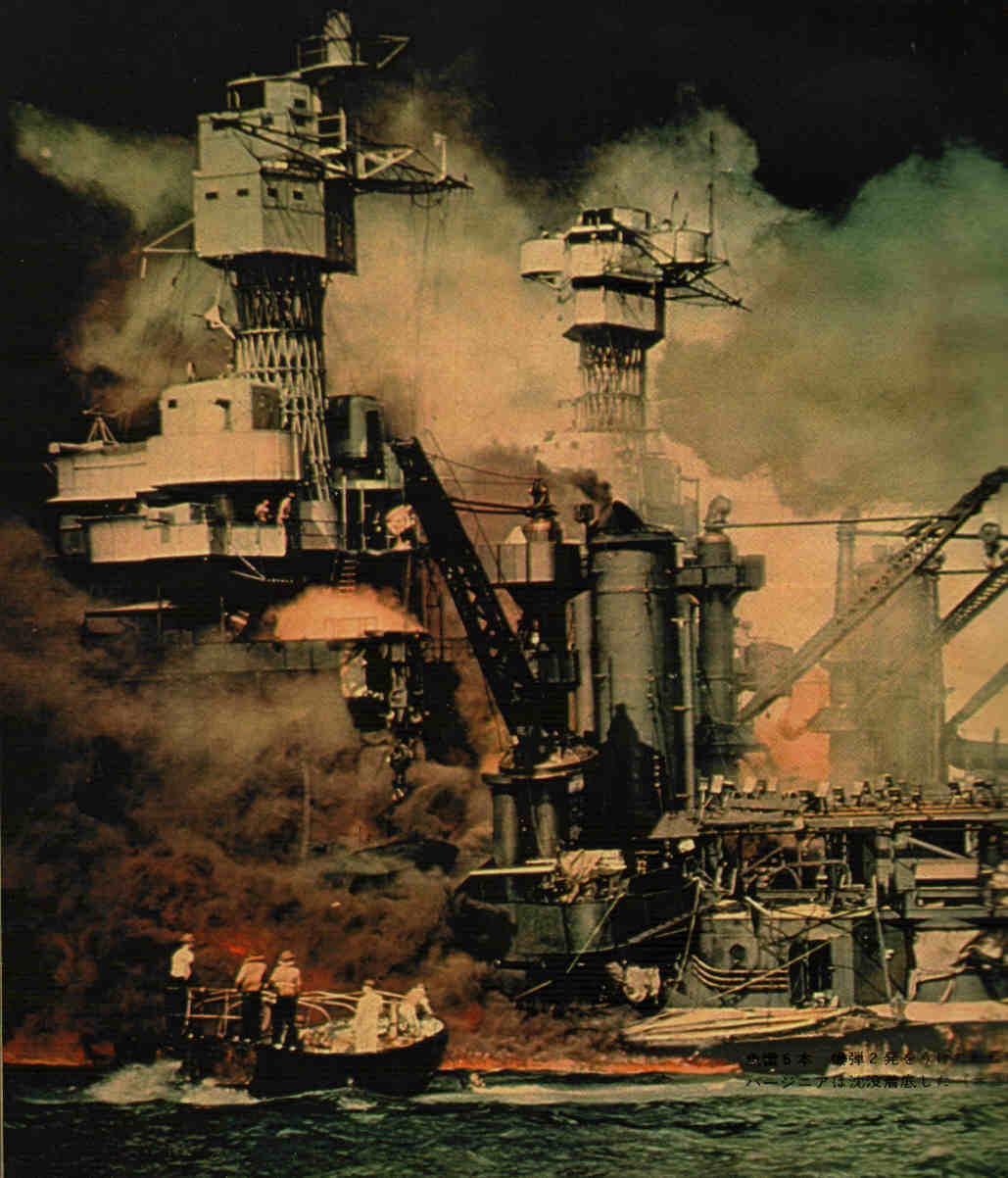
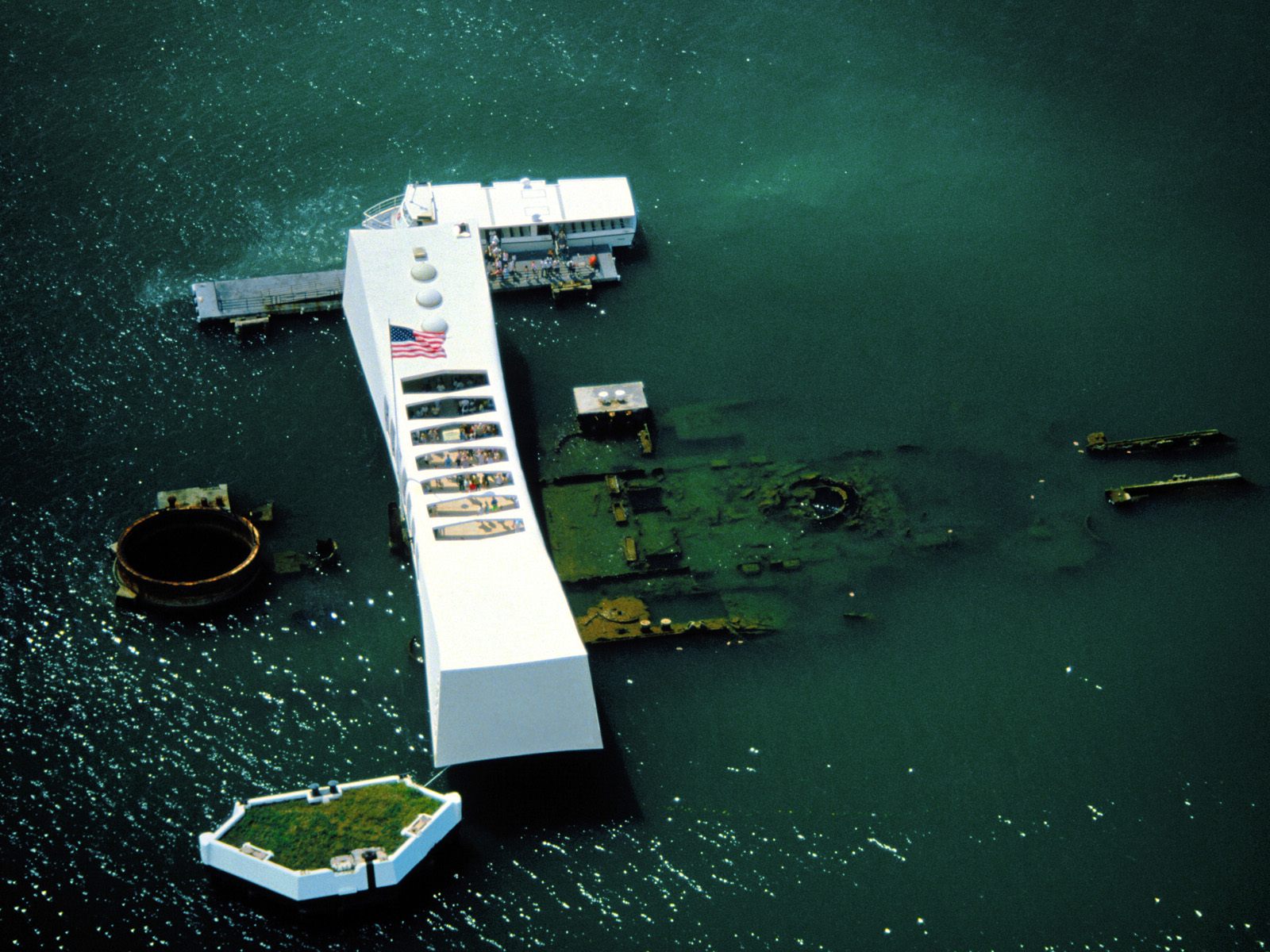
There are not many veterans of Pearl Harbor still with us. Not many left who saw the Japanese planes diving out of the sky, felt the concussions as great battleships shuddered, burned, and sank. Not many left who can stand on the observation deck of the USS Arizona Memorial, gaze at that sunken iron tomb and say, “I knew a guy who went down with that ship.”

On December 7th, we remember what was lost at Pearl Harbor: the lives, the ships, the planes – our national innocence.

But on this day, we should also remember the miracle of Pearl Harbor: the incredible effort that raised so many of those ships from the bottom of the harbor, patched them up – and sent them back into the fight. Only three of the ships that were bombed in Pearl Harbor on that day of infamy were forever lost to the fleet.

And of the 30 ships in the Japanese fleet that attacked Pearl Harbor, only one survived the war without being sunk.

The dynamism, optimism and resolve displayed by those military crewmen and civilians who, within months, raised and repaired the devastated wreckage of Pearl Harbor are qualities that Americans must call on once again to overcome our national challenges. Would that our leaders would spend less time sowing the fear of future attacks – and more time appealing to the better angels of our national identity.

“Can do” was the unofficial motto of the Seabees, the legendary Navy outfit that led the reconstruction effort at Pearl Harbor.

Where’s that American “Can do” spirit now?

P.S. Click here for a WWII-era Pearl Harbor song I found online. It may seem a bit too upbeat at first, but in the context of our ultimate victory at Pearl Harbor, it’s not too bouncy after all. It’s got that confidence and “Can do” spirit.

$(KGrHqNHJBcE-dPs9M,cBPn+++hkMg~~60_57P.S.S. On this day, let’s remember one of the great WWII POW escape artists. If you have any pals who love The Great Escape or Shawshank Redemption, please point them toward the story of William Ash: Texan, RAF pilot, POW — and a guy who escaped the Nazi prison camps 13 times!

He’s the guy that inspired Steve McQueen’s character in The Great Escape.

Amazon link: http://www.amazon.com/dp/1481088858/

Kindle ebook: (free to Prime members) http://amzn.com/B00AF4I0K8

Comments from authors on UNDER THE WIRE:

9780553817119What a splendid book! A young Texan brought up in the middle of the Depression who pulls himself up by his bootstraps, thereafter hikes to Canada to fly Spitfires for the Brits while America is still neutral. Just as the U. S. enters the war, he is shot down, and another exciting and terrible episode in his life begins. Living under terrible conditions he makes several attempts to escape until he finally succeeds in saving himself and many of his fellow POWs. This is a moving and heroic story of a young man who overcomes all obstacles with a sense of humor and succeeds in the end. Hollywood should snap this book up in a flash. Buy it, read it, enjoy it.

Charles Whiting, author of Hero: Life and Death of Audie Murphy

AshUNDER THE WIRE is a well-written and exciting memoir of wartime captivity that is packed with incident and vividly recreates the oft-neglected early days of Stalag Luft III and the now forgotten mass escape from Oflag XXIB, Schubin — a sort of dress rehearsal for the famous Great Escape. The author himself is one of the great unsung heroes of the Second World War, as are some of those whose adventures he records in this remarkable book. It also makes a refreshing change to read a memoir by someone who is politically literate and knew exactly what he was fighting against and what he was fighting for.’ There are passages in this book – particularly those concerning the political awakening of POWs and their determination to create a better post-war world – that make the reader want to stand up and cheer.

Charles Rollings, author of Wire and Walls, Wire and Worse

UNDER THE WIRE is everything I would expect from a memoir by Bill Ash — fast-paced, exciting and moving, but also colored by his mischievous sense of humor. He has a real gift as a storyteller — the characters and events come off the page as if we were meeting and experiencing them ourselves. Bill Ash was one of the great escape artists of the Second World War, and always managed to put himself in the centre of the action. He endured a lot, but never lost his essential humanity and zest for life, something that comes through very strongly in his book. That’s what makes UNDER THE WIRE such a joy to read — getting to know the irrepressible Ash and reliving his adventures with him.

Jonathan Vance, author of A Gallant Company: The Men of the Great Escape.


1 Comment

Filed under History

Victory at Pearl Harbor…

(This was orginally posted in 2010.)

The significance of December 7, 1941 is something that most of our parents do not need to be reminded about. It was a shocking, indelible moment for them, much like September 11, 2001 was for another generation of Americans. I don’t want to spend time here comparing those two disastrous attacks: one by a hostile state, the other by a handful of extremists. That’s for another time, another post.

This is a day of remembrance.

There are not many veterans of Pearl Harbor still with us. Not many left who saw the Japanese planes diving out of the sky, felt the concussions as great battleships shuddered, burned, and sank. Not many left who can stand on the observation deck of the USS Arizona Memorial, gaze at that sunken iron tomb and say, “I knew a guy who went down with that ship.”

On December 7th, we remember what was lost at Pearl Harbor: the lives, the ships, the planes – our national innocence.

But on this day, we should also remember the miracle of Pearl Harbor: the incredible effort that raised so many of those ships from the bottom of the harbor, patched them up – and sent them back into the fight. Only three of the ships that were bombed in Pearl Harbor on that day of infamy were forever lost to the fleet.

And of the 30 ships in the Japanese fleet that attacked Pearl Harbor, only one survived the war without being sunk.

The dynamism, optimism and resolve displayed by those military crewmen and civilians who, within months, raised and repaired the devastated wreckage of Pearl Harbor are qualities that Americans must call on once again to overcome our national challenges. Would that our leaders would spend less time sowing the fear of future attacks – and more time appealing to the better angels of our national identity.

“Can do” was the unofficial motto of the Seabees, the legendary Navy outfit that led the reconstruction effort at Pearl Harbor.

Where’s that American “Can do” spirit now?

P.S. Click here for a WWII-era Pearl Harbor song I found online. It may seem a bit too upbeat at first, but in the context of our ultimate victory at Pearl Harbor, it’s not too bouncy after all. It’s got that confidence and “Can do” spirit.

$(KGrHqNHJBcE-dPs9M,cBPn+++hkMg~~60_57P.S.S. On this day, let’s remember one of the great WWII POW escape artists. If you have any pals who love The Great Escape or Shawshank Redemption, please point them toward the story of William Ash: Texan, RAF pilot, POW — and a guy who escaped the Nazi prison camps 13 times!

He’s the guy that inspired Steve McQueen’s character in The Great Escape.

Amazon link: http://www.amazon.com/dp/1481088858/

Kindle ebook: (free to Prime members) http://amzn.com/B00AF4I0K8

Comments from authors on UNDER THE WIRE:

9780553817119What a splendid book! A young Texan brought up in the middle of the Depression who pulls himself up by his bootstraps, thereafter hikes to Canada to fly Spitfires for the Brits while America is still neutral. Just as the U. S. enters the war, he is shot down, and another exciting and terrible episode in his life begins. Living under terrible conditions he makes several attempts to escape until he finally succeeds in saving himself and many of his fellow POWs. This is a moving and heroic story of a young man who overcomes all obstacles with a sense of humor and succeeds in the end. Hollywood should snap this book up in a flash. Buy it, read it, enjoy it.

Charles Whiting, author of Hero: Life and Death of Audie Murphy

AshUNDER THE WIRE is a well-written and exciting memoir of wartime captivity that is packed with incident and vividly recreates the oft-neglected early days of Stalag Luft III and the now forgotten mass escape from Oflag XXIB, Schubin — a sort of dress rehearsal for the famous Great Escape. The author himself is one of the great unsung heroes of the Second World War, as are some of those whose adventures he records in this remarkable book. It also makes a refreshing change to read a memoir by someone who is politically literate and knew exactly what he was fighting against and what he was fighting for.’ There are passages in this book – particularly those concerning the political awakening of POWs and their determination to create a better post-war world – that make the reader want to stand up and cheer.

Charles Rollings, author of Wire and Walls, Wire and Worse

UNDER THE WIRE is everything I would expect from a memoir by Bill Ash — fast-paced, exciting and moving, but also colored by his mischievous sense of humor. He has a real gift as a storyteller — the characters and events come off the page as if we were meeting and experiencing them ourselves. Bill Ash was one of the great escape artists of the Second World War, and always managed to put himself in the centre of the action. He endured a lot, but never lost his essential humanity and zest for life, something that comes through very strongly in his book. That’s what makes UNDER THE WIRE such a joy to read — getting to know the irrepressible Ash and reliving his adventures with him.

Jonathan Vance, author of A Gallant Company: The Men of the Great Escape.


5 Comments

Filed under History

Victory at Pearl Harbor…

(This was orginally posted in 2010.)

The significance of December 7, 1941 is something that most of our parents do not need to be reminded about. It was a shocking, indelible moment for them, much like September 11, 2001 was for another generation of Americans. I don’t want to spend time here comparing those two disastrous attacks: one by a hostile state, the other by a handful of extremists. That’s for another time, another post.

This is a day of remembrance.

There are not many veterans of Pearl Harbor still with us. Not many left who saw the Japanese planes diving out of the sky, felt the concussions as great battleships shuddered, burned, and sank. Not many left who can stand on the observation deck of the USS Arizona Memorial, gaze at that sunken iron tomb and say, “I knew a guy who went down with that ship.”

On December 7th, we remember what was lost at Pearl Harbor: the lives, the ships, the planes – our national innocence.

But on this day, we should also remember the miracle of Pearl Harbor: the incredible effort that raised so many of those ships from the bottom of the harbor, patched them up – and sent them back into the fight. Only three of the ships that were bombed in Pearl Harbor on that day of infamy were forever lost to the fleet.

And of the 30 ships in the Japanese fleet that attacked Pearl Harbor, only one survived the war without being sunk.

The dynamism, optimism and resolve displayed by those military crewmen and civilians who, within months, raised and repaired the devastated wreckage of Pearl Harbor are qualities that Americans must call on once again to overcome our national challenges. Would that our leaders would spend less time sowing the fear of future attacks – and more time appealing to the better angels of our national identity.

“Can do” was the unofficial motto of the Seabees, the legendary Navy outfit that led the reconstruction effort at Pearl Harbor.

Where’s that American “Can do” spirit now?

P.S. Click here for a WWII-era Pearl Harbor song I found online. It may seem a bit too upbeat at first, but in the context of our ultimate victory at Pearl Harbor, it’s not too bouncy after all. It’s got that confidence and “Can do” spirit.

$(KGrHqNHJBcE-dPs9M,cBPn+++hkMg~~60_57P.S.S. On this day, let’s remember one of the great WWII POW escape artists. If you have any pals who love The Great Escape or Shawshank Redemption, please point them toward the story of William Ash: Texan, RAF pilot, POW — and a guy who escaped the Nazi prison camps 13 times!

He’s the guy that inspired Steve McQueen’s character in The Great Escape.

Amazon link: http://www.amazon.com/dp/1481088858/

Kindle ebook: (free to Prime members) http://amzn.com/B00AF4I0K8

Comments from authors on UNDER THE WIRE:

9780553817119What a splendid book! A young Texan brought up in the middle of the Depression who pulls himself up by his bootstraps, thereafter hikes to Canada to fly Spitfires for the Brits while America is still neutral. Just as the U. S. enters the war, he is shot down, and another exciting and terrible episode in his life begins. Living under terrible conditions he makes several attempts to escape until he finally succeeds in saving himself and many of his fellow POWs. This is a moving and heroic story of a young man who overcomes all obstacles with a sense of humor and succeeds in the end. Hollywood should snap this book up in a flash. Buy it, read it, enjoy it.

Charles Whiting, author of Hero: Life and Death of Audie Murphy

AshUNDER THE WIRE is a well-written and exciting memoir of wartime captivity that is packed with incident and vividly recreates the oft-neglected early days of Stalag Luft III and the now forgotten mass escape from Oflag XXIB, Schubin — a sort of dress rehearsal for the famous Great Escape. The author himself is one of the great unsung heroes of the Second World War, as are some of those whose adventures he records in this remarkable book. It also makes a refreshing change to read a memoir by someone who is politically literate and knew exactly what he was fighting against and what he was fighting for.’ There are passages in this book – particularly those concerning the political awakening of POWs and their determination to create a better post-war world – that make the reader want to stand up and cheer.

Charles Rollings, author of Wire and Walls, Wire and Worse

UNDER THE WIRE is everything I would expect from a memoir by Bill Ash — fast-paced, exciting and moving, but also colored by his mischievous sense of humor. He has a real gift as a storyteller — the characters and events come off the page as if we were meeting and experiencing them ourselves. Bill Ash was one of the great escape artists of the Second World War, and always managed to put himself in the centre of the action. He endured a lot, but never lost his essential humanity and zest for life, something that comes through very strongly in his book. That’s what makes UNDER THE WIRE such a joy to read — getting to know the irrepressible Ash and reliving his adventures with him.

Jonathan Vance, author of A Gallant Company: The Men of the Great Escape.


7 Comments

Filed under History